

Note: This article contains affiliate links. If you click on these links and make a purchase, I may earn a small commission at no extra cost to you. This helps support my research and content. Read my full affiliate disclosure here.
If your Honda Civic feels loose in corners, tracks poorly, or makes clunking noises over bumps, the rear lower control arm is often the culprit. Replacing this component can restore proper wheel alignment, reduce vibration, and improve rear-end stability for safer, more predictable handling. This guide covers the top rear lower control arms shortlisted for the Civic and explains the performance and durability differences that matter.You will find products chosen for fitment accuracy, bushing quality, and corrosion resistance. Below we outline how each option was evaluated so you can pick the right rear lower control arm for routine maintenance or a focused suspension refresh.
Looking for other parts? See all Honda Civic parts & accessories.
Top Picks at a Glance
| Best Overall The best all-around choice for most situations | Detroit Axle Rear Left Lower Control Arm (Driver Side) |  |
| Best Quality Built to a higher standard if you want something more solid | Detroit Axle Rear Lower Control Arms Pair for 2016–2021 Honda Civic |  |
| Best Value The sweet spot between price and what you get | ADIGARAUTO Rear Lower Control Arms (pair) for Honda Civic 1996–2000 / Acura EL 1997–2000 |  |
| Best Budget The cheapest option that still gets the job done reliably | TRQ Rear Lower Control Arm, Driver Side (2016–2020 Honda Civic) |  |
| Highest Rated A top-rated pick with lots of positive feedback | Detroit Axle Rear Right Lower Control Arm (Passenger Side) |  |
| Best Seller A high-volume bestseller chosen again and again | TRQ Rear Lower Control Arm Set for 2016–2020 Honda Civic (2-piece) |  |
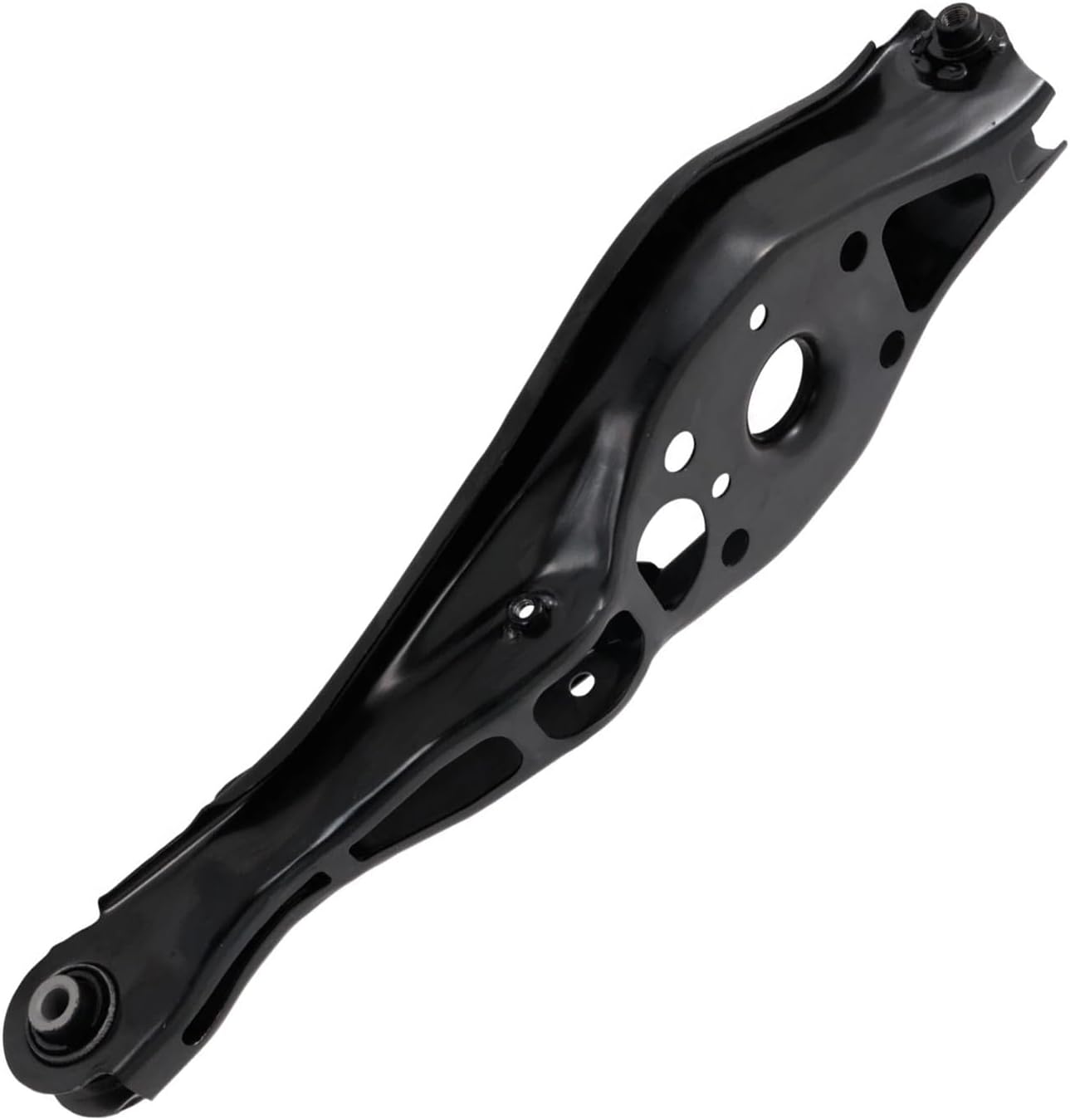
1. Detroit Axle Rear Left Lower Control Arm (Driver Side)
| Fit Type | Vehicle Specific Fit |
|---|---|
| Auto Part Position | Rear Left Lower |
| Auto Part Orientation | Drivers Side |
| Included Components | Rear Left Lower Rearward Control Arm |
This Detroit Axle rear left lower control arm replaces the factory rear lower arm on compatible Honda Civics and is sold as a single driver-side unit. It installs in the rear suspension to restore proper wheel location and camber after a worn or damaged arm causes steering pull, uneven tire wear, or alignment problems. The part is built to a replacement spec and Detroit Axle reports impact, wear, and fatigue testing plus a 10-year warranty for backing. Buyers will appreciate that the arm ships with the ball joint and mounting points preassembled so it can be fitted using standard suspension tools and an alignment afterward. Practical benefits include a like-for-like fit for the listed Civic applications, a familiar stamped-metal design that balances cost and durability, and positive user reports of straightforward installation. Limitations are that this is a single-side replacement so expect to buy the companion arm if both sides need attention, and some installers prefer to check supplied hardware and swap to heavier flange nuts or washers where factory locators differ. A wheel alignment is required after installation to ensure correct handling and tire life.
Best for: Buyers who want a direct replacement part to restore rear suspension geometry on a listed Honda Civic and prefer an affordable, tested aftermarket control arm that installs with common tools.
Less Ideal for: People seeking a performance-tuned or heavy-duty upgrade for track use or vehicles with modified suspension should consider specialty arms instead.
- Vehicle-specific fit for listed Honda Civic model years for straightforward replacement.
- Includes the rear left lower control arm preassembled with ball joint and mounting points for easier installation.
- Undergoes impact, wear, and fatigue testing and is backed by a 10-year warranty.
- Positive user feedback reporting correct fit and improved handling after installation.
- Sold as a single driver-side arm so both sides require separate purchases if needed.
- Nut or hardware supplied may not suit all vehicle steering knuckle sleeve configurations and some installers upgrade fasteners.
Verdict: A tested, vehicle-specific rear lower control arm that gives a straightforward, factory-style replacement to restore handling and alignment on compatible Honda Civics.
2. Detroit Axle Rear Lower Control Arms Pair for 2016–2021 Honda Civic

| Fit Type | Vehicle Specific Fit |
|---|---|
| Auto Part Position | Rear Lower |
| Included Components | Rear Lower Rearward Control Arms |
| Unit Count | 2.0 Count |
These Detroit Axle rear lower control arms replace the factory rearward lower arms on compatible 2016–2021 Honda Civics to restore suspension geometry and handling. The kit ships as a pair and includes preinstalled bushings and ball joints, so installation is straightforward for a DIYer with basic tools or a technician. In real-world use the parts firm up rear-end stability, reduce play that causes clunks, and help maintain proper alignment after worn arm removal. Detroit Axle says the parts undergo impact and fatigue testing and the listing notes a 10-year warranty. Fitment is vehicle-specific, which reduces modification or adjustment at installation, but a small number of reviewers report premature bushing wear so longevity may vary with driving conditions. Expect to do a wheel alignment after fitting; if you value precise handling, these arms will likely bring the rear suspension back to near-factory behavior at a lower cost than dealer replacements.
Best for: Buyers who want to restore or improve rear-end handling on a 2016–2021 Honda Civic without paying dealer prices and who plan to do or pay for a post-install alignment.
Less Ideal for: Drivers seeking a lifetime performance upgrade for aggressive track use should consider heavy-duty or performance-specific suspension components instead.
- Vehicle-specific design for direct fit to 2016–2021 Honda Civic rear lower location
- Comes as a pair with bushings and ball joints preinstalled for faster installation
- Built to pass impact and fatigue testing with a long 10-year warranty backing
- Widely reviewed with many users reporting improved stability and smoother ride after replacement
- Some customer reports of early bushing deterioration under heavy use which may reduce service life
Verdict: A cost-effective, vehicle-specific rear lower arm pair that restores factory handling and stability for 2016–2021 Honda Civics.
3. ADIGARAUTO Rear Lower Control Arms (pair) for Honda Civic 1996–2000 / Acura EL 1997–2000

| Fit Type | Vehicle Specific Fit |
|---|---|
| Auto Part Position | Lower |
| Auto Part Orientation | Rear |
| Manufacturer Part Number | K641202-Q2 |
These ADIGARAUTO rear lower control arms are a direct-fit replacement for 1996–2000 Honda Civic and 1997–2000 Acura EL rear lower positions. Each arm arrives with bushings and ball joints preinstalled, which speeds installation and reduces the need for extra parts or pressing operations. The manufacturer says the arms are stress-tested, finished with a corrosion-resistant coating, and built to match factory geometry so steering and alignment are restored to like-new behavior. In practice this makes them a good option for DIYers or mechanics repairing worn suspension that causes loose rear handling or uneven tire wear. Fitment feedback from owners of the target Civics is positive, and the included components simplify labor time. Limitations to note are that this is an aftermarket part rather than a factory-branded assembly and the product page emphasizes verifying exact compatibility for your submodel; if you need a lifetime warranty or dealer-backed support you may prefer an OEM-sourced arm. Installation may still require standard suspension tools and alignment after fitment.
Best for: Buyers who want a practical, cost-effective repair that restores rear suspension behavior with minimal extra parts or labor and who prefer a DIY-friendly, ready-to-install replacement.
Less Ideal for: Drivers seeking dealer-sourced parts with manufacturer-backed warranties or those who require verified long-term warranty coverage should consider dealer or OEM alternatives.
- Direct vehicle-specific fit for late 1990s Honda Civic and Acura EL models
- Preinstalled bushings and ball joints reduce installation time and extra labor
- Corrosion-resistant finish for better durability in wet or salted conditions
- Built to match factory suspension geometry to restore handling and alignment
- Aftermarket part rather than a factory-branded unit which may matter to some buyers
Verdict: If you want an affordable, ready-to-install rear lower control arm that restores handling on 1996–2000 Honda Civics, this pair is a practical, time-saving choice.
4. TRQ Rear Lower Control Arm, Driver Side (2016–2020 Honda Civic)

| Fit Type | Vehicle Specific Fit |
|---|---|
| Auto Part Position | Rear Left Lower |
| Material Type | Alloy Steel |
| Included Components | Control Arm; bushings included |
This TRQ rear lower control arm replaces the driver side lower rearward arm on 2016–2020 Honda Civic models and is intended as a direct-fit replacement to restore rear suspension geometry. It ships as a single pre-assembled arm with bushings included and is made from alloy steel for corrosion resistance and durability. Typical use is a like-for-like repair when a worn or damaged factory arm causes uneven tire wear, poor rear-end stability, or alignment issues. The practical benefits are straightforward: factory-style fitment reduces installation time, included bushings eliminate sourcing separate parts, and TRQ provides DIY videos to guide installation. Expect improved rear tracking and a smoother ride compared with a failing arm. Limitations to note are that this is a single-side part so buyers replacing both sides must purchase a second unit, and it is non-adjustable so final alignment may still require a shop alignment after installation. Also verify the specific Civic trim fitment before ordering since the listing targets several model/trim combinations.
Best for: Buyers wanting an affordable, direct-fit replacement to restore rear suspension function on a 2016–2020 Honda Civic and who prefer a DIY-friendly part with installation guidance.
Less Ideal for: Drivers seeking an adjustable performance arm for tuning alignment or those who need a left-and-right pair included in one purchase should consider other options.
- Direct, vehicle-specific fit for 2016–2020 Honda Civic driver side rear lower position
- Pre-assembled with bushings included to simplify DIY installation
- Alloy steel construction for strength and corrosion resistance
- Manufacturer provides installation videos and documentation to assist homeowners
- Sold as a single control arm so replacing both sides requires two purchases
- Non-adjustable design means a wheel alignment will likely be needed after installation
Verdict: A practical, budget-focused direct-fit rear lower control arm that lets DIY Civic owners quickly restore rear suspension stability.
5. Detroit Axle Rear Right Lower Control Arm (Passenger Side)

| Fit Type | Vehicle Specific Fit |
|---|---|
| Auto Part Position | Rear Right Lower |
| Auto Part Orientation | Passengers Side |
| Included Components | Rear Right Lower Rearward Control Arm |
This Detroit Axle rear right lower control arm is a direct replacement for the passenger-side lower rearward link on listed Honda Civic years. It is used where a worn or damaged factory control arm causes alignment drift, uneven tire wear, clunking, or degraded handling. The part is built and tested for impact, wear, and fatigue and ships as a single, vehicle-specific unit ready for bolt-in installation by a mechanic or competent DIYer. Practical benefits include restoring proper suspension geometry and steering feel and avoiding premature tire wear after replacement. The product carries a long 10-year warranty which reflects the manufacturer’s confidence in durability. Limitations to expect are that this listing is a single-side arm so you may need to buy the matching side separately, and installation may require alignment afterwards. Fit depends on selecting the exact Civic application, so confirm model and trim fitment before ordering.
Best for: Buyers who prioritize a durable, factory-style suspension repair and want a like-for-like replacement to restore handling and alignment on a Honda Civic.
Less Ideal for: If you prefer a performance-tuned suspension upgrade or need both sides replaced at once without purchasing an extra part, consider alternatives.
- Vehicle-specific fit for direct bolt-in replacement on listed Honda Civic applications
- Manufacture testing for impact, wear, and fatigue aimed at long-term durability
- Ships as a complete rear lower control arm ready to install without additional parts included
- Backed by a lengthy 10-year manufacturer warranty
- Sold as a single passenger-side arm rather than a paired set
Verdict: A durable, vehicle-specific rear lower control arm that restores factory suspension geometry and reliability on compatible Honda Civic models.
6. TRQ Rear Lower Control Arm Set for 2016–2020 Honda Civic (2-piece)

| Fit Type | Vehicle Specific Fit |
|---|---|
| Auto Part Position | Rear |
| Unit Count | 2 |
| Exterior | Machined |
| Manufacturer | TRQ |
These TRQ rear lower control arms replace the left and right rearward lower arms on compatible 2016–2020 Honda Civic models. The kit ships as two preassembled control arms intended for direct-fit replacement, so installation is straightforward for a competent DIYer or an independent shop. In use they restore rear suspension geometry and reduce play that causes uneven tire wear and wandering at highway speeds. Notable features include machined exterior finish, factory-style mounting points, and TRQ’s catalog of installation videos that simplify the process. Practical benefits are improved stability, a firmer rear feel after worn-arm replacement, and avoiding the labor of sourcing separate bushings. Limitations are that this is a direct replacement for the listed Civic years and trims only, and buyers should confirm the exact part references against their vehicle because some year/model serial breaks exist; alignment after installation is recommended to prevent premature tire wear.
Best for: Buyers who prioritize a reliable, factory-style replacement to restore rear suspension function on a covered Honda Civic and prefer a straightforward install with supporting instructions.
Less Ideal for: Drivers seeking performance-tuned or upgraded suspension components or those who need parts for vehicles outside the listed Civic years and trims should look elsewhere.
- Sold as a matched two-piece set covering both driver and passenger rear lower arms
- Preassembled, vehicle-specific fit simplifies installation and reduces modification needs
- Machined exterior and factory-style mounting points for consistent fit and function
- Manufacturer provides step-by-step installation videos to support DIY repairs
- Fitment is limited to specific 2016–2020 Civic models so you must verify compatibility before purchase
Verdict: A matched, preassembled two-piece rear lower arm kit that restores factory suspension geometry on compatible 2016–2020 Honda Civics.
Choosing the Right Honda Civic Rear Lower Control Arm: Key Factors to Consider
Fitment and Mounting Geometry
Correct fitment is critical because even small deviations in arm length or mounting hole location change wheel alignment and handling. Ensure the replacement matches the Civic's rear suspension geometry, including the distance between mounting points and the angle of the arm. Misalignment can cause premature tire wear and unpredictable cornering behavior.
When assessing fitment, confirm the arm uses the same mounting hole diameters and bushing seat dimensions as the factory piece. If the arm requires adapters or different bushings, factor in the additional parts and labor. A bolt-in arm that aligns with factory torque specs minimizes the risk of installation errors and preserves intended suspension kinematics.
Bushing Type and Durability
Bushings control compliance, noise isolation, and alignment retention. Softer rubber bushings provide a quieter ride and better vibration damping but can allow more movement under load, which affects handling. Stiffer polyurethane or bonded bushings reduce movement and help maintain alignment but may transmit more NVH into the cabin.
Check bushing construction for bonded versus slip-fit designs and look for quality sealing to keep out dirt and moisture. The lifespan of the bushing depends on material, exposure to road salts, and load cycles, so choose a bushing type that matches your priorities between comfort and control.
Arm Material and Corrosion Resistance
The structural material and surface treatment determine strength and long-term durability. Forged or stamped steel arms offer strength and predictable deformation characteristics, while some aftermarket options use heavier gauge steel or additional reinforcement to resist bending. Critical to longevity is the finish: a robust coating, e-coat, or powder coat helps prevent rust in climates with road salt or heavy moisture.
Assess whether the manufacturer specifies plating, powder coat thickness, or other anti-corrosion processes. Welding quality at reinforcement points matters for longevity; look for smooth, fully-penetrated welds rather than tack welds that can fail under repeated stress.
Alignment Stability and Ride Effects
Rear lower control arms play a direct role in toe and camber behavior during suspension travel. An arm that flexes or allows bushing movement under load can shift alignment dynamically, affecting straight-line stability and cornering predictability. If you prioritize crisp handling, seek arms with reduced deflection characteristics and firmer bushing options.
For daily-driven Civics, balance is key: you want an arm that keeps alignment within tolerance without making the ride harsh. Consider how the arm interacts with other rear suspension components, since worn parts elsewhere can mask or exaggerate the arm's performance impact.
Serviceability and Replacement Parts
Think about future maintenance. Some arms accept replaceable bushings and hardware, which makes periodic refresh easier and often cheaper over the vehicle's life. Others use bonded or fully assembled designs that require replacing the entire arm if a bushing fails.
Evaluate the availability of replacement bushings and compatible mounting hardware. If you plan to reuse OEM bolts or adjust camber/toe with eccentric bushings, confirm the replacement arm accommodates those procedures so alignment shops can work without extra modification.
Installation Complexity and Required Tools
Installation can range from straightforward bolt-in swaps to jobs requiring press tools or specialized alignment fixtures. Determine whether the arm is a direct bolt-in that uses existing fasteners, or if it needs new bolts, washers, or pressed-in bushings. Some designs ship with hardware pre-installed which reduces shop time, while others require pressing bushings into place.
Also consider torque specifications and whether the bushings should be preloaded or tightened with the suspension at curb height. If you plan to do the work yourself, verify whether a hydraulic press, ball joint separator, or alignment is required so you can budget time and avoid damage during installation.
Common Symptoms of a Failing Rear Lower Control Arm
Recognizing failure signs early prevents secondary damage to tires and other suspension components. Pay attention to clunking or knocking noises from the rear when driving over bumps, which often indicate degraded bushings or loose mounting hardware. A feeling of looseness in the rear during cornering, or wandering at highway speeds, can signal excessive play or arm deformation.
Uneven or accelerated tire wear on the rear edges is another key symptom. If you notice toe changes after minor impacts or the vehicle consistently pulls to one side, inspect the rear lower control arm along with bushings and mounting points for visible wear or movement.
- Clunking or knocking over bumps
- Rear-end looseness or wandering in corners
- Uneven rear tire wear
- Visible rust, cracks, or bent arm structure
When to Replace Instead of Rebuild
Deciding between replacing the entire arm or rebuilding depends on the arm's condition and part design. If the arm shows structural damage such as bends, cracks, or multiple failing welds, replacement is the safer option. Rebuilding may be appropriate when bushings are the only worn component and the arm accepts serviceable bushing inserts.
Also consider economics and future reliability. A worn arm with surface corrosion may be serviceable after cleaning and new bushings, but deep pitting or compromised welds justify replacement to avoid recurring failures.
- Replace for structural damage or severe corrosion
- Rebuild only when bushings are the sole issue and arm accepts replacements
- Consider long-term reliability and labor costs when choosing
Preparing for Installation and Alignment
Before starting work, gather correct torque specs and any recommended replacement hardware. Inspect related components such as trailing arms, sway bar links, and wheel bearings since worn adjacent parts can affect alignment post-install. If your chosen arm has eccentric bushings for alignment adjustments, plan to have toe and camber checked after installation.
While some home mechanics can perform the swap, final alignment typically requires professional equipment. Tightening certain fasteners with the suspension loaded at curb height may be necessary to prevent premature bushing wear or altered geometry.
- Have torque specs and hardware ready
- Inspect adjacent suspension components
- Plan for a professional alignment after installation
Materials and Finishes That Hold Up in Harsh Climates
If you drive in regions with road salt or regular moisture, prioritize control arms with proven corrosion protection. E-coating followed by powder coat or multi-stage plating resists rust better than thin paint. Stainless or galvanized fasteners also extend service life where road salts accelerate corrosion.
Inspect welds and crevice protection in the design. Areas where two pieces join or where pockets trap moisture are the first places rust appears, so a finish that reaches these zones is valuable for long-term durability.
- E-coat plus powder coat offers strong corrosion resistance
- Galvanized or stainless hardware reduces fastener failure
- Examine welds and crevice sealing for longevity
How Suspension Upgrades Affect Rear Lower Control Arm Choice
If you have upgraded springs, dampers, or anti-roll bars, the control arm must work with the altered suspension dynamics. Stiffer components place higher loads on the arm and bushings, which can accelerate wear if the arm is not built to handle increased stress. Choose an arm with compatible bushing stiffness and reinforced structure for upgraded setups.
For modest performance upgrades aimed at better handling without compromising ride comfort, select arms that maintain some compliance. For track-focused setups, consider arms designed for higher stiffness and serviceable bushings to allow frequent maintenance.
- Match arm stiffness to upgraded suspension components
- Reinforced arms suit higher-load applications
- Maintain serviceability for frequent-performance use
Still looking for the perfect fit?
Select your Honda Civic configuration to see the most relevant Lower Control Arms recommendations
How We Chose the Best Honda Civic Rear Lower Control Arm
We prioritized candidates that directly address the typical failure modes and performance goals for Honda Civic rear suspensions. Evaluation focused on fitment accuracy to factory mounting points, bushing type and material, arm construction and finish, ease of installation, and long-term corrosion resistance. We also considered design features that affect alignment retention, such as reinforced mounting ears and preload-friendly bushing orientation. Where available, we noted whether the arm accepts OEM-style replacement bushings to support future serviceability.Excluded items included universal or multi-vehicle arms that require extensive modification, assemblies intended solely for track use with no concern for everyday ride comfort, and parts lacking clear material or dimensional specifications. We favored options with clear specifications for control arm length, bushing inner diameter, and recommended torque values so owners and technicians can verify fit before installation. Practical factors such as warranty coverage and documented construction methods were also part of the review filters.
Our full evaluation process is outlined in our review methodology.
FAQ
How long do rear lower control arm bushings typically last on a Civic?
It depends on driving conditions and bushing material. Rubber bushings in everyday driving often last many years, while exposure to road salt and heavy loads shortens life. Polyurethane bushings last longer under load but can transfer more noise. Regular inspections catch wear before failure.
Can I replace rear lower control arm bushings without changing the entire arm?
Sometimes yes. If the arm accepts replaceable bushings and shows no structural damage, you can press out old bushings and install new ones. However, some arms use bonded or non-serviceable bushings, which require replacing the whole arm when the bushing fails.
Will a worn rear lower control arm affect alignment?
Often. Excessive bushing play or a bent arm changes wheel location under load, which alters toe and camber and can produce uneven tire wear or handling issues. Replacing worn arms is a necessary step to restore and maintain correct alignment.
What noises indicate a failing rear lower control arm?
Clunking, knocking, or popping from the rear when going over bumps or during directional changes commonly point to worn bushings or loose mount hardware. Squeaks may indicate dry bushings, while metallic knocks can suggest structural looseness.
Do I need a professional alignment after installing a new rear lower control arm?
Usually yes. Installing a new arm can change static wheel alignment, and some arms require torqueing with the suspension at curb height. A post-installation alignment ensures toe and camber are within spec for safe handling and even tire wear.
Are upgraded bushings worth it for a daily-driven Civic?
It depends on priorities. Upgraded, stiffer bushings improve alignment retention and responsiveness but often increase noise and vibration. For most daily drivers, a quality rubber bushing balances comfort and control, while stiffer options suit those seeking sharper handling.
Final Verdict
When choosing a rear lower control arm for your Honda Civic, prioritize correct fitment and durable bushing construction to preserve alignment and rear stability. Balance bushing stiffness against comfort depending on whether you want quieter daily driving or firmer handling. Also factor in material finish and serviceability so the part lasts through seasonal exposure and maintenance cycles.Ultimately, pick the arm that matches your driving style and maintenance preferences: a bolt-in, serviceable arm with corrosion protection for long-term reliability, or a stiffer design if you need more precise alignment under load. Either way, plan for a post-installation alignment to lock in the intended handling characteristics.
Explore More:
- Check out all Honda Civic parts & accessories
- Explore Lower Control Arms Maintenance & Repair Guides
- Explore Suspension & Steering
- Browse all Auto Parts
