

Note: This article contains affiliate links. If you click on these links and make a purchase, I may earn a small commission at no extra cost to you. This helps support my research and content. Read my full affiliate disclosure here.
Upgrading or replacing a lower control arm on a Honda Civic Si matters because these components directly affect steering precision, alignment stability, and ride comfort. Whether you are responding to worn suspension parts or aiming to sharpen handling, choosing the right lower control arm ensures the chassis behaves predictably under everyday driving and spirited cornering.This guide narrows six top choices for Civic Si owners and explains why each made the shortlist. We focus on fitment, build quality, and bushing design so you can decide which option matches your goals and driving style. Read on for the evaluation criteria and practical advice before the product list.
Looking for other parts? See all Honda Civic parts & accessories.
Top Picks at a Glance
| Best Overall The best all-around choice for most situations | UNITHUB Front Lower Control Arm and Front End Kit for Honda Civic Si 2002–2005 (8‑Piece) |  |
| Best Quality Built to a higher standard if you want something more solid | PTNHZ Rear Billet Aluminum Lower Control Arms, Pair |  |
| Best Value The sweet spot between price and what you get | Vipcar Front Lower Control Arm Suspension Kit with Ball Joints for 2002–2005 Honda Civic Si |  |
| Best Budget The cheapest option that still gets the job done reliably | Marketplace Auto Parts Front Left Lower Control Arm for 2006–2011 Honda Civic Si |  |
| Highest Rated A top-rated pick with lots of positive feedback | TRQ Front Steering & Suspension 8-Piece Kit for 2006–2011 Honda Civic Si |  |
| Most Popular A crowd favorite that many people choose with confidence | MAC Front Lower Control Arms, Ball Joints and Tie Rods Kit for Honda Civic Si (2006–2011) |  |
1. UNITHUB Front Lower Control Arm and Front End Kit for Honda Civic Si 2002–2005 (8‑Piece)

| Fitment | Honda Civic Si 2.0L 2002-2005; SiR 2.0L 2002-2004 |
|---|---|
| Included Components | 2 lower control arms, 2 sway bar links, 2 outer tie rod ends, 2 lower ball joints |
| Manufacturer Part Number | UH-CA25003 |
| Brand Name | UNITHUB |
This UNITHUB 8-piece front-end kit bundles both front lower control arms with ball joints, sway bar links, and outer tie rod ends so you can replace most common front suspension components in one job. It is vehicle-specific for Honda Civic Si 2.0L 2002–2005 and SiR 2002–2004, which simplifies ordering and reduces the chance of mismatched parts. In use the kit restores steering linkage and suspension mounting points after wear or damage, and including both sides plus related hardware means alignment shops can address toe and camber issues without chasing additional parts. The parts appear to follow factory-fit geometry and are useful for owners doing a full front suspension refresh or repairing damage from potholes or minor collisions. Limitations are typical of bundled aftermarket kits: fit and long-term durability can vary by brand versus factory parts and some installers may prefer factory-brand replacements or upgraded performance pieces for aggressive driving. This kit is best when you want a one-stop replacement to get a Civic Si back to proper front-end function quickly.
Best for: Buyers who want a balanced, practical solution to refresh the front suspension on an early-2000s Civic Si without sourcing parts individually, especially DIYers or independent shops tackling a full front-end replacement.
Less Ideal for: Drivers seeking performance upgrades, high-mileage OEM-matched replacements, or those who prefer to replace single components rather than an entire kit should consider other options.
- Complete 8-piece kit includes both lower control arms, both sway bar links, two outer tie rod ends, and two lower ball joints for a one-stop front-end rebuild
- Vehicle-specific fit for Honda Civic Si 2.0L 2002–2005 and SiR 2002–2004 reduces part compatibility guesswork
- Includes components needed to correct steering and suspension geometry after wear, simplifying alignment and installation
- Aftermarket bundle may not match factory parts in long-term durability or exact fit in every case
Verdict: A convenient, vehicle-specific front-end kit that lets balanced buyers replace the major front suspension parts on a 2002–2005 Civic Si in a single service visit.
2. PTNHZ Rear Billet Aluminum Lower Control Arms, Pair

| Fit Type | Vehicle Specific Fit |
|---|---|
| Auto Part Position | Lower |
| Auto Part Orientation | Rear |
| Material Type | Aluminum, Polyurethane |
These PTNHZ rear billet aluminum lower control arms replace the factory rear lower arms on 1996–2000 Honda Civic models and the specified Si/SiR variants. They are built around a modular billet design that lets you service or replace individual components and rebuild the bushings without swapping the whole arm. CNC aluminum bushing inserts resist corrosion common with stock steel inserts while the polyurethane bushings are firmer than rubber, which sharpens rear-end response and improves durability for spirited driving. Installation follows the factory mounting points so a competent DIYer or a shop can fit them without major modifications, though the kit does not include detailed instructions. Expect a firmer ride and crisper handling rather than a plush daily comfort feel. These arms offer a good balance of weight savings, corrosion resistance, and rebuildability for drivers who want a long-lasting, performance-oriented rear suspension upgrade, but they are not a passive comfort upgrade and may transmit more road noise and vibration.
Best for: Drivers who prioritize sharper handling and durable rear suspension components for sporty street use or track days on 1996–2000 Honda Civics and want a serviceable upgrade over factory arms.
Less Ideal for: Buyers seeking a softer, comfort-focused rear ride or a maintenance-free, lifetime part should consider softer-bushed replacements or different suspension upgrades.
- Billet aluminum construction with CNC bushing inserts reduces corrosion and adds strength
- Polyurethane bushings increase durability and improve rear-end responsiveness for spirited driving
- Modular design allows individual component replacement and bushing rebuilds
- Vehicle-specific fit for 1996–2000 Honda Civic models simplifies installation
- Firmer polyurethane bushings can increase road noise and vibration compared with softer bushings
Verdict: A durable, serviceable rear lower control arm set that sharpens handling for performance-focused Civic owners.
3. Vipcar Front Lower Control Arm Suspension Kit with Ball Joints for 2002–2005 Honda Civic Si

| Fit Type | Vehicle Specific Fit |
|---|---|
| Auto Part Position | Front |
| Manufacturer Warranty Description | 12 Month |
This Vipcar kit replaces the vehicle's front lower control arms and several steering and suspension wear items in one package. It includes two control arms, two sway bar links, two ball joints, and two tie rod ends so you can rebuild the front suspension and restore alignment points without sourcing individual parts. The parts are vehicle-specific to Civic Si/SiR fitments and claim to match factory mounting locations, which simplifies installation for a professional or experienced DIY mechanic. The practical benefit is time saved and consistent component matching across the front suspension, which helps eliminate play, restore steering response, and extend tire life. Limitations are that the kit is for the Si/SiR trims only and professional installation is recommended to ensure correct alignment and safety; buyers should expect alignment and possible ancillary labor costs after replacement. Overall, this is a sensible, ready-made option for replacing multiple worn front suspension parts at once on the specified Civics.
Best for: Buyers who prioritize practical, time-saving repairs and want a single kit to renew the front suspension on their Civic Si/SiR rather than sourcing multiple separate parts.
Less Ideal for: Drivers looking for individual high-performance or aftermarket tuned components, or owners of non-Si Civic models seeking parts for those vehicles.
- Complete kit includes control arms, sway bar links, ball joints, and tie rod ends for a coordinated replacement
- Vehicle-specific fit for 2002–2005 Civic Si and 2002–2004 Civic SiR to match factory mounting points
- Replaces multiple OEM part numbers so you do not need to source individual components
- Bundled parts simplify repair and reduce time compared with buying separate components
- Intended for Si and SiR trims only and is not compatible with standard Civic Coupe or Sedan configurations
Verdict: A practical, all-in-one front suspension kit that renews worn control arms and related steering components on 2002–2005 Civic Si models to restore steering feel and alignment points.
4. Marketplace Auto Parts Front Left Lower Control Arm for 2006–2011 Honda Civic Si

| Fit Type | Vehicle Specific Fit |
|---|---|
| Auto Part Position | Front Left Lower |
| Auto Part Orientation | Drivers Side |
| Material Type | Alloy Steel |
| Unit Count | 1.0 Count |
This front left lower control arm replaces the factory unit on 2006–2011 Honda Civic Si models and is intended for drivers who need a direct-fit suspension arm without modifying other components. Constructed from alloy steel and supplied as a single unit, it is built to meet or exceed factory specifications and is aimed at restoring correct suspension geometry and steering feel after wear or damage. Installation is straightforward for anyone with basic mechanical skills or a shop; because it is a vehicle-specific fit, bolt holes and mounting points match factory locations which reduces alignment issues after installation. The practical benefits are improved handling stability and renewed suspension durability at a lower cost than many OEM-priced parts. Limitations include no bundled hardware or additional bushings noted in the listing, so you may need to reuse or separately purchase installation components, and the listing does not include explicit torque specs or detailed instructions for alignment steps after replacement.
Best for: Buyers looking to replace a worn or damaged front lower control arm on a Honda Civic Si on a budget and who prioritize a direct-fit, factory-quality replacement to restore handling without aftermarket modification.
Less Ideal for: Drivers seeking upgraded performance suspension components or those who want a complete kit with new bushings and mounting hardware included.
- Vehicle-specific fit for 2006–2011 Honda Civic Si to simplify installation
- Alloy steel construction meant to meet or exceed factory specifications
- Supplied as a single front left lower arm for direct replacement
- Designed to restore factory suspension geometry and steering feel
- Listing does not specify included hardware or bushings which may require separate purchase
Verdict: A budget-friendly, vehicle-specific alloy steel replacement that restores factory suspension geometry for 2006–2011 Honda Civic Si owners.
5. TRQ Front Steering & Suspension 8-Piece Kit for 2006–2011 Honda Civic Si
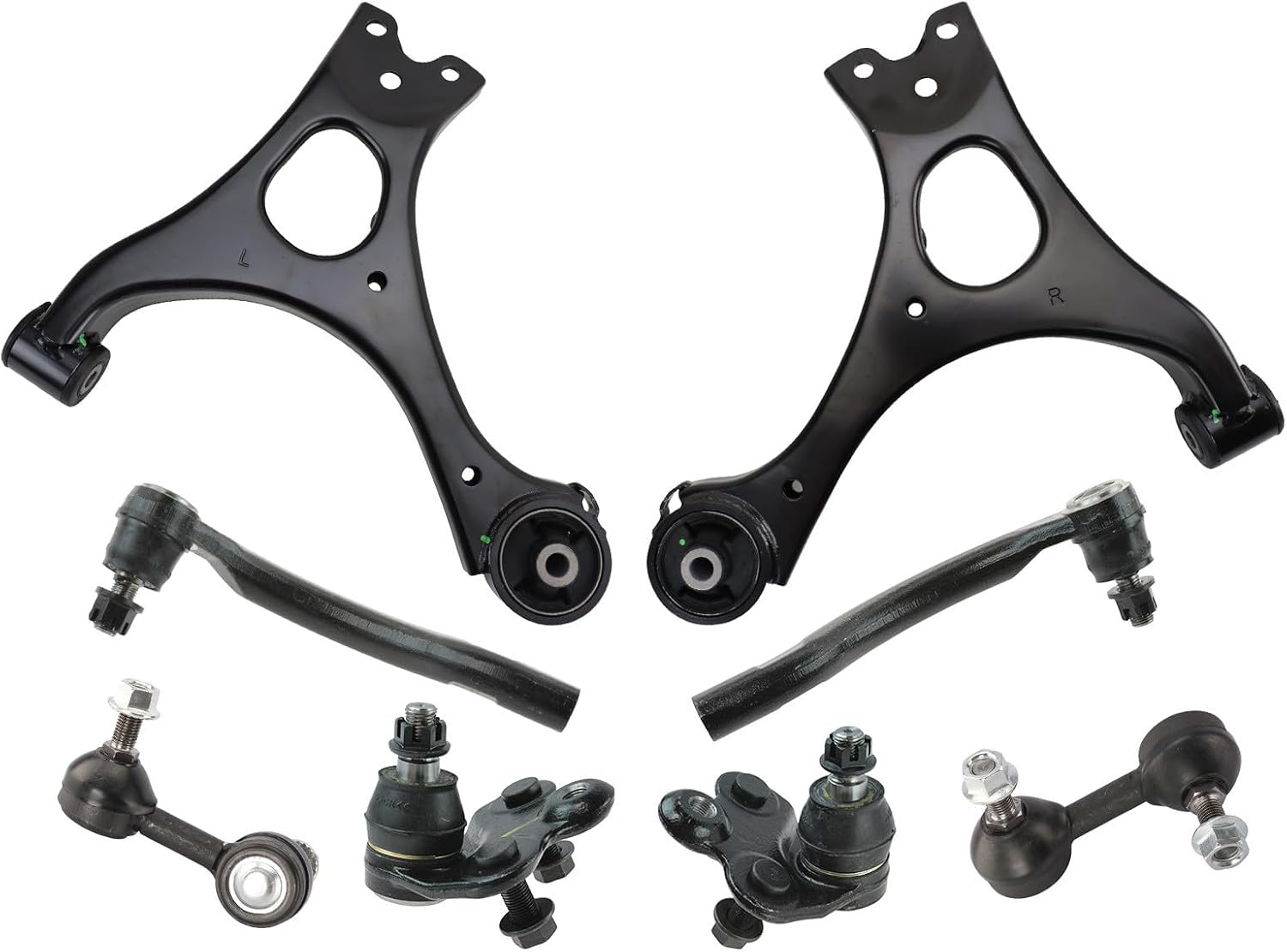
| Model | TRQ PSA43256 8 Piece Steering & Suspension Kit |
|---|---|
| Position | Front |
| Pre-greased | Yes |
| Anti-Corrosion Coated | Yes |
This TRQ eight-piece front steering and suspension kit is designed to restore steering and suspension components to factory-style performance on 2006–2011 Civic Si models. It includes two lower control arms with preinstalled ball joints, two outer tie rods, and two sway bar links so you can replace worn parts in one job rather than sourcing pieces separately. Components arrive pre-greased and finished with an anti-corrosion coating to reduce early wear and simplify installation and maintenance. TRQ emphasizes direct-fit application and supplies installation videos to guide a DIYer or independent shop through the replacement. The practical benefit is a coordinated refresh of front suspension parts that improves road feel and handling while eliminating stepwise failures from mismatched components. The kit is limited to front-position parts only and does not include inner tie rods, bushings beyond what ships with the control arms, or labor, so expect a full-arm replacement to take standard shop time and tools if you do not have experience removing pressed-in ball joints.
Best for: Buyers who prioritize long-term, reliable repairs and want a coordinated, factory-style refresh of the front suspension on a 2006–2011 Civic Si without juggling multiple part sources.
Less Ideal for: Drivers looking for a minimal single-part repair or performance-tuned aftermarket arms should consider single-component replacements or performance-specific options instead.
- Complete front kit reduces time sourcing individual parts for a coordinated repair
- Pre-greased ball joints and anti-corrosion coating lower initial maintenance needs
- Designed as direct-fit replacements to match factory mounting points and simplify installation
- Includes installation videos to help DIYers and independent shops through the job
- Covers only front suspension items so additional worn steering components may still need separate purchase
Verdict: If you want a dependable, factory-style front suspension refresh for a 2006–2011 Honda Civic Si, this complete TRQ kit makes the job straightforward and reliable.
6. MAC Front Lower Control Arms, Ball Joints and Tie Rods Kit for Honda Civic Si (2006–2011)

| Fit Type | Vehicle Specific Fit |
|---|---|
| Auto Part Position | Front |
| Auto Part Orientation | Drivers Side |
| Material Type | Alloy Steel, Aluminum |
This MAC chassis kit replaces the front lower control arms, ball joints, inner and outer tie rods and sway bar links on 2006–2011 Honda Civic Si 2.0L models. It is supplied as a driver and passenger side lower arm each with a pressed-in ball joint and improved bushing, plus the full set of outer and inner tie rods and two sway bar links so you can rebuild the front suspension in one job. The mix of alloy steel and aluminum parts aims to balance strength and weight, and the kit is marketed as a vehicle-specific fit to simplify installation. For a DIYer or independent shop this reduces sourcing and ensures components match in wear and geometry. Customer feedback is mixed: many note accurate fitment and solid initial quality while some report premature ball-joint or arm failures and occasional missing pieces in shipped kits. Expect easier installation and restored steering feel when the kit is complete, but inspect all parts on receipt and be prepared to return or replace individual items if defects appear.
Best for: Buyers who prioritize restoring steering and suspension performance with a single, vehicle-specific kit and who value upfront social proof to reduce purchase risk.
Less Ideal for: If you need a lifetime-durable, high-end performance upgrade or a brand-backed long warranty, consider OEM replacement parts or premium aftermarket options instead.
- Complete front suspension kit includes both lower control arms, inner and outer tie rods and sway bar links for a single repair.
- Vehicle-specific fit for 2006–2011 Civic Si reduces compatibility guesswork during installation.
- Constructed from alloy steel and aluminum to provide a balance of strength and reduced mass.
- Includes improved bushings and pressed-in ball joints so no separate sourcing is required.
- Some customers report premature ball-joint or control arm failures indicating variable long-term durability.
- A few buyers received incomplete kits or missing parts, requiring returns or supplemental purchases.
Verdict: A full front suspension replacement kit tailored for 2006–2011 Civic Si owners who want a one-stop repair with matching components and straightforward fitment.
Choosing the Right Honda Civic Si Lower Control Arm: Key Factors to Consider
Fitment and Mounting Geometry
Accurate fitment is the single most important factor for Civic Si lower control arms. Incorrect mounting holes, altered arm length, or changed pivot points can shift suspension geometry and create unwanted toe or camber changes. That affects tire wear and handling balance.
Confirming that the arm matches factory mounting points and bolt patterns reduces the need for additional adjustments. Some replacement arms replicate OE geometry exactly while others offer slight offsets for adjustability. For everyday street use, matching stock geometry preserves predictable steering and alignment settings.
Material and Construction Quality
The material and how the arm is constructed determine strength and longevity. Forged or billet components generally resist bending and fatigue better than thin stamped parts, which can be more susceptible to corrosion and stress cracking over time. Coatings and plating also matter on road salt or coastal vehicles.
Consider whether the arm includes reinforcement in high-stress zones and whether welds are continuous and smooth. Higher build quality usually translates to longer life and fewer warranty or replacement worries for owners who drive frequently or on rough roads.
Bushing Type and Compliance
Bushings control how much movement the lower control arm allows relative to the chassis, directly influencing ride comfort, steering feel, and noise. Softer rubber bushings damp road harshness and reduce noise transfer, making them ideal for daily-driven Civics. Stiffer polyurethane bushings offer crisper steering response but can increase noise and vibration.
Some arms use bonded bushings or press-in designs that improve durability but may be harder to service. Think about whether you prioritize comfort or sharper feedback when choosing bushing materials and tune the selection to your driving habits.
Ball Joint Quality and Serviceability
Lower control arms often include a ball joint that connects to the steering knuckle. A durable, well-sealed ball joint resists contamination and premature wear, maintaining steering precision. Some assemblies feature replaceable ball joints while others are integrated, which affects long-term maintenance.
Serviceable designs let you replace the ball joint without swapping the entire arm, which can be more economical over time. Verify boot sealing and preload specifications when possible to ensure dependable operation under Civic Si driving conditions.
Alignment Adjustability
Certain replacement lower control arms provide adjustable mounting slots or eccentric bolts so you can correct camber and caster during alignment without shims. For a Civic Si, this adjustability can help dial in handling after lowering or when correcting for wear.
If you plan suspension modifications or expect to restore alignment after installation, choose arms that offer straightforward adjustment. Keep in mind that more adjustable designs may require careful setup to avoid unintended geometry changes.
Durability Versus NVH Tradeoffs
There is a practical tradeoff between durability and noise, vibration, and harshness. Stiffer components and bushings typically last longer and improve steering precision, but they transmit more road noise and vibration into the cabin. Softer, OE-like bushings mute harshness but may wear faster under aggressive driving.
Consider local road conditions and driving style when weighing this tradeoff. For Civic Si owners who use the car as a daily driver with occasional spirited drives, a balanced design that moderates both durability and NVH often provides the best ownership experience.
When To Replace Lower Control Arms On A Civic Si
Watch for specific symptoms that indicate lower control arm wear or failure. Common signs include uneven tire wear, wandering steering, or a loose feeling at the front end during cornering. Hearing clunks or feeling knocks over bumps also points to worn bushings or ball joints.
Regular inspections during service intervals help catch early wear. If you notice any of the symptoms, have a technician check bushing play, ball joint integrity, and mounting points before the problem affects alignment or tire life.
- Check for torn or missing bushing material
- Feel for excessive play at the ball joint with wheel lifted
- Inspect for visible bending, cracks, or corrosion on the arm
How Bushing Choices Affect Ride And Steering
The type of bushing installed in a lower control arm defines how the suspension isolates road inputs. Rubber bushings absorb vibration and reduce noise but allow more compliance. Polyurethane or stiffer bonded bushings cut movement for tighter steering response at the expense of increased cabin noise.
Consider the Civic Si's use case. If you commute daily and want less road noise, prioritize compliant bushings. If you track the car or prefer sharper turn-in, choose firmer bushings but accept some NVH penalties.
- Rubber: quieter, more compliant, OEM-like feel
- Polyurethane: firmer, more responsive, more NVH
- Bonded bushings: durable, service tradeoffs
Installation Tips For Civic Si Lower Control Arms
Preparing for installation reduces shop time and alignment hassles. Have the vehicle securely lifted and weight off the suspension to avoid binding bushings during bolt tightening. Replace mounting hardware when service recommendations call for it.
After installation, always perform a full alignment. Torque all fasteners to factory specifications and, if relevant, set any adjustment features to a baseline before aligning. Test the car at low speed first to confirm no unusual noises or steering behavior.
- Support the control arm when removing bolts to avoid stressing ball joints
- Use anti-seize or recommended thread locker where specified
- Always follow torque sequence and final torque values
Maintaining Lower Control Arms To Extend Service Life
Routine inspections and targeted maintenance extend the life of lower control arms. Keep an eye on bushing condition and address torn boots or water intrusion early. Clean any road grime or salts and inspect for surface corrosion periodically.
If your Civic Si sees track use or rough roads, check mounting bolts and ball joint boots more frequently. Replacing worn bushings before they damage the arm or knuckle can save time and money in the long run.
- Inspect boots and bushings every 6,000 to 12,000 miles
- Rinse off corrosive road salt after winter driving
- Address alignment or handling changes promptly
Upgrading Versus Replacing With OE-Style Arms
Decide whether you need a direct OE-style replacement or an upgraded arm with performance-oriented features. OE-style arms restore original NVH and alignment characteristics and are often the fastest path back to stock handling. Upgraded arms may offer stiffer bushings, adjustable mounts, or stronger construction for demanding use.
Choose an upgraded arm only if you understand the tradeoffs. Performance-focused arms can require more frequent inspection and may prompt an alignment setup tailored to stiffer components.
- OE-style: predictable comfort and alignment retention
- Upgraded: improved strength and adjustability, potential NVH increase
Still looking for the perfect fit?
Select your Honda Civic configuration to see the most relevant Lower Control Arms recommendations
How We Chose the Best Honda Civic Si Lower Control Arm
We prioritized options that deliver consistent fitment and long-term durability for the Honda Civic Si. Evaluation emphasized correct mounting geometry and bolt pattern compatibility so the arm maintains alignment settings and does not introduce unwanted changes to suspension geometry. Materials and construction quality were weighed next, including stamped versus forged components and corrosion resistance for longevity.Bushing and joint design were critical criteria because these determine NVH behavior and steering feedback. We examined whether arms use rubber, polyurethane, or bonded bushings, and considered serviceability of ball joints. Ride and handling impact guided our consideration of stiffness and compliance balance.Ease of installation and availability of alignment-related adjustment features were also factored in, since many Civic Si owners reinstall with minimal shop time. We excluded products that lacked clear vehicle-specific fitment information or used nonstandard mounting hardware that would require modification. The final shortlist reflects those that best meet fitment, strength, bushing design, and installation practicality for the Civic Si.
Our full evaluation process is outlined in our review methodology.
FAQ
How can I tell if my Civic Si lower control arm needs replacement?
Look for uneven tire wear, clunking over bumps, or loose steering feel. A visual inspection for torn bushings, excessive play at the ball joint, or visible damage to the arm also indicates replacement is needed.
Can I replace just the bushings instead of the entire lower control arm?
It often depends on the arm design. Some arms have serviceable press-in bushings or replaceable components, while others use bonded assemblies that are difficult to service. Evaluate serviceability before deciding to press out bushings.
Will stiffer lower control arm bushings improve handling on the Civic Si?
Stiffer bushings reduce compliance and can sharpen steering response, but they typically increase noise and vibration in the cabin. The net benefit depends on whether you prioritize track performance or daily comfort.
Do I need an alignment after replacing a lower control arm?
Yes. Installing a new lower control arm can change toe or camber slightly, so a full alignment ensures proper tire wear and predictable handling. Some arms require alignment more than others if they offer adjustability.
How long should a lower control arm last on a Civic Si?
Service life varies with driving conditions and bushing material. Under normal street use, arms can last many years, but exposure to rough roads, salt, or aggressive driving shortens lifespan. Regular inspections help catch wear early.
What causes knocking sounds from the front suspension after installation?
Knocks can come from loose hardware, improperly torqued bolts, or binding bushings if the suspension was not at the correct ride height during installation. Recheck torque values, mounting orientation, and ball joint seating to pinpoint the cause.
Final Verdict
When selecting a lower control arm for a Honda Civic Si, prioritize correct fitment and bushing design that match your driving needs. Strong construction and well-sealed ball joints improve longevity, while bushing material determines the balance between comfort and steering precision.Decide whether you want an OE-style replacement for stock comfort or an upgraded arm for firmer handling, and plan for a full alignment after installation. With those priorities in mind, you can choose an option that restores handling and maintains predictable steering for your Civic Si.
Explore More:
- Check out all Honda Civic parts & accessories
- Explore Lower Control Arms Maintenance & Repair Guides
- Explore Suspension & Steering
- Browse all Auto Parts
