

Note: This article contains affiliate links. If you click on these links and make a purchase, I may earn a small commission at no extra cost to you. This helps support my research and content. Read my full affiliate disclosure here.
If your 2012-2015 Honda Civic is showing steering wander, uneven tire wear, or clunking over bumps, a worn lower control arm can be the culprit. For the FB and FG chassis used in these model years, choosing a direct-fit lower control arm that matches the factory geometry matters for alignment, ride quality, and long-term bushing life. This guide covers seven shortlisted lower control arms chosen for their fitment, construction, and bushing design. We explain what to watch for, the symptoms that indicate replacement, and the evaluation criteria used to narrow the field. Read on to find the right option for returning solid handling to your Civic.
Looking for other parts? See all Honda Civic parts & accessories.
Top Picks at a Glance
| Best Overall The best all-around choice for most situations | Detroit Axle 8pc Front Suspension Kit with Lower Control Arms and Tie Rods for 2012-2015 Honda Civic / 2013-2015 Acura ILX |  |
| Best Quality Built to a higher standard if you want something more solid | MOOG RK622038 Front Left Lower Control Arm with Ball Joint |  |
| Best Value The sweet spot between price and what you get | TRQ Front Lower Control Arm and Ball Joint 4-Piece Set for 2012 Honda Civic |  |
| Best Budget The cheapest option that still gets the job done reliably | PM Auto Front Left Lower Control Arm with Ball Joint for 2012-2015 Honda Civic |  |
| Highest Rated A top-rated pick with lots of positive feedback | Detroit Axle Front Lower Control Arms with Ball Joints, 2‑pc Set |  |
| Most Popular A crowd favorite that many people choose with confidence | Detroit Axle Front Left Lower Control Arm with Ball Joint |  |
| Best Seller A high-volume bestseller chosen again and again | Detroit Axle 4pc Front Suspension Kit — Front Lower Control Arms with Ball Joints and Sway Bar End Links |  |
1. Detroit Axle 8pc Front Suspension Kit with Lower Control Arms and Tie Rods for 2012-2015 Honda Civic / 2013-2015 Acura ILX

| Fit Type | Vehicle Specific Fit |
|---|---|
| Auto Part Position | Front Lower |
| Manufacturer Part Number | 8CS50730 |
| Manufacturer Warranty Description | 10-Year |
This Detroit Axle kit bundles the most common front-end wear items into one package: two front lower control arms with preinstalled ball joints, two inner tie rod ends, two outer tie rod ends, and two sway bar end links. It is designed as a direct-fit, vehicle-specific replacement for 2012–2015 Honda Civic and 2013–2015 Acura ILX applications, so installation is straightforward for a DIYer with basic suspension tools or a mechanic. The control arms are made from a premium alloy and the manufacturer says the parts undergo impact and fatigue testing to match factory fit and function. Having all matching components in one kit helps restore steering feel and front-end alignment more quickly than replacing items piecemeal. Limitations to note are that this is a front lower/front-end kit only and does not include ball joints or related parts beyond what is listed, so additional front suspension work may still be required depending on vehicle condition. Also professional alignment after installation is necessary to ensure proper tire wear and handling.
Best for: Buyers who want a balanced, practical repair that replaces the main front suspension wear parts at once to restore steering and alignment without sourcing separate components.
Less Ideal for: If you only need a single part or are restoring a modified performance suspension, this packaged replacement kit may be more than you require or not match upgraded components.
- Complete front-end kit covers lower control arms, inner and outer tie rod ends, and sway bar links for a coordinated repair
- Direct-fit, vehicle-specific design simplifies installation and reduces modification
- Control arms made from premium alloy for corrosion resistance and increased rigidity
- Includes preassembled ball joints on the lower control arms to save assembly time
- Kit is limited to front lower control arms, tie rods, and sway bar links and does not address other suspension components
Verdict: Choose this kit when you want a convenient, vehicle-specific bundle to refresh the Civic/ILX front suspension and restore factory-style steering feel.
2. MOOG RK622038 Front Left Lower Control Arm with Ball Joint

| Fit Type | Vehicle Specific Fit |
|---|---|
| Auto Part Position | Front Left Lower |
| Material Type | Alloy Steel |
| Item Type Name | Control Arm and Ball Joint Assembly |
The MOOG RK622038 is a direct-fit front left lower control arm with an integrated ball joint designed for 2012 Honda Civic and 2013–2015 Acura ILX applications. It replaces a worn arm to correct steering play, reduce uneven inner tire wear, and restore proper suspension geometry. Built from alloy steel with heat-treated structural elements and corrosion-resistant coatings, the arm is intended for everyday driving and spirited street use where durable, predictable handling matters. Installation is straightforward because it is vehicle-specific and supplied as a single replacement unit, so shops and experienced DIYers can expect a near-factory fit without extensive modification. The integrated ball joint simplifies part matching but means you replace the whole assembly rather than just the joint. This part focuses on durability and restored ride control rather than being a lightweight or race-oriented upgrade, so drivers seeking aggressive track tuning or adjustable geometry should consider performance-specific arms instead.
Best for: Buyers who want a durable, factory-replacement lower control arm to restore steering precision and suspension geometry on a 2012–2015 Civic/ILX without modifying the vehicle.
Less Ideal for: Drivers seeking adjustable, track-focused suspension components or lighter aftermarket arms for competitive use should look at performance-specific alternatives.
- Vehicle-specific direct-fit design for easier installation and proper alignment
- Alloy steel construction with heat-treated sections for added structural strength
- Corrosion-resistant coatings on studs to extend service life
- Integrated ball joint supplied reduces part-matching issues
- Not designed as a lightweight or adjustable performance arm; intended for restored factory-style handling only
Verdict: Choose this MOOG control arm if you need a durable, vehicle-specific replacement that restores factory steering feel and suspension geometry.
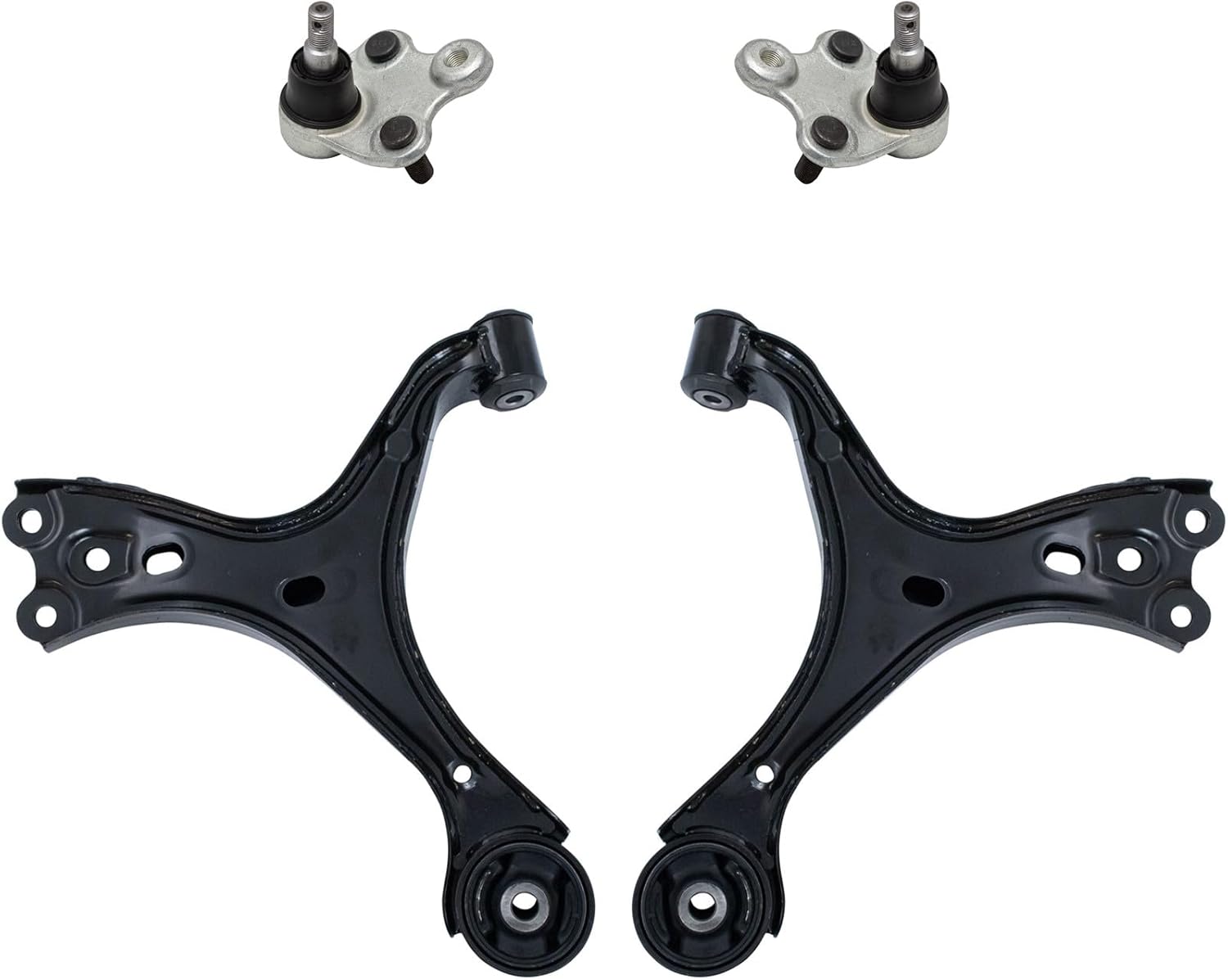
3. TRQ Front Lower Control Arm and Ball Joint 4-Piece Set for 2012 Honda Civic
| Fit Type | Vehicle Specific Fit |
|---|---|
| Auto Part Position | Front Lower |
| Material Type | Alloy Steel |
| Included Components | 2 Front Lower Ball Joints, 2 Front Lower Control Arms |
This TRQ kit supplies two front lower control arms and two lower ball joints packaged as a direct-fit replacement for 2012 Honda Civic front suspension with automatic transmission. Designed from alloy steel, the pre-assembled control arms simplify a DIY swap and reduce the chance of fitment issues compared with buying separate parts. In practice the set restores worn bushings and removed steering noise, and reviewers report a factory-quality ride once installed. TRQ also provides installation videos to guide weekend mechanics, but expect a moderately difficult job that may require an assistant, an impact tool, and a front alignment afterward. The kit does not include fasteners or any additional forward suspension ball joints that some vehicles may use, so plan to source replacement bolts if the originals are corroded. Build quality looks robust, though a few users noted inconsistent ball joint longevity on high-mileage vehicles, so professional inspection after installation is sensible.
Best for: Buyers who want a practical, ready-to-install replacement to restore front-end feel and eliminate worn-bushing noise on a 2012 Honda Civic while minimizing time spent sourcing separate parts.
Less Ideal for: Drivers who prefer to replace only individual components or need a lifetime-guaranteed heavy-duty performance upgrade should consider other specialist options.
- Complete 4-piece kit includes both front lower control arms and matching ball joints for a single job.
- Vehicle-specific fit reduces test-fit and modification during installation.
- Alloy steel construction provides strong, durable control arms built for road use.
- Pre-assembled components and available DIY videos help simplify a weekend repair.
- Does not include replacement mounting bolts or additional forward ball joints some setups require.
- Some reviewers reported premature ball joint wear on high-mileage applications.
Verdict: A practical, vehicle-specific 4-piece kit that gets a 2012 Honda Civic's front lower suspension back to factory-like performance with minimal part hunting.
4. PM Auto Front Left Lower Control Arm with Ball Joint for 2012-2015 Honda Civic

| Auto Part Position | Front Left Lower |
|---|---|
| Material Type | Cast Iron |
| Included Components | Control Arm, Ball Joint |
| Fit Type | Vehicle Specific Fit |
This PM Auto front left lower control arm replaces the factory arm and includes a pressed-in ball joint and rubber bushing for vibration damping. It is built from cast iron and ships as a single driver-side unit intended for 2012–2015 Honda Civic L4 applications listed in the fitment. In use it restores steering geometry and wheel location after a worn or damaged arm is removed, helping with alignment, handling stability, and reducing clunking or vibration. The rubber bushing and high-strength structure are intended to improve noise and impact resistance compared with heavily worn originals. As a budget-conscious replacement, it provides a straightforward swap for routine suspension repairs, though the cast-iron construction is heavier than some aftermarket aluminum performance arms and may not match premium fit-and-finish from higher-end brands. Verify the specific engine and transmission fit before buying and plan for a post-install alignment to ensure proper tire wear and handling.
Best for: Buyers looking for an affordable, direct-fit replacement to restore steering feel and eliminate suspension noise on a 2012–2015 Civic should consider this part.
Less Ideal for: Drivers seeking a lightweight performance upgrade or an OEM-matching premium finish should look at higher-end or aluminum options instead.
- Includes integrated ball joint for a single replacement part
- Cast iron construction offers high strength and durability
- Rubber bushing helps reduce noise and vibration during normal driving
- Heavier cast-iron design compared with lightweight aftermarket aluminum arms
Verdict: A cost-focused, cast-iron direct replacement that restores handling and eliminates clunks on 2012–2015 Honda Civic front left lower suspension at a budget-friendly level.
5. Detroit Axle Front Lower Control Arms with Ball Joints, 2‑pc Set

| Fit Type | Vehicle Specific Fit |
|---|---|
| Auto Part Position | Front Lower |
| Material Type | Alloy Steel |
| Manufacturer Part Number | K622038_K622039 |
These Detroit Axle front lower control arms replace the factory front lower arms and come as a two-piece kit with press-in ball joints already installed. They are intended for direct fitment to the specified vehicle applications and are typically used when worn bushings or failing ball joints cause looseness, noise, or poor handling. Constructed from alloy steel and finished in black, the assemblies are designed to match factory mounting points so installation is straightforward for a competent DIYer or shop. Practical benefits include eliminating the need to press out old ball joints, restoring steering feel and suspension geometry, and reducing the chance of uneven tire wear. Reviewers report good fitment across multiple models and multi-year durability when installed and aligned correctly. Limitations to note are that the ball joints appear to be sealed and non-serviceable so you cannot re-grease them during routine maintenance, and mounting hardware may not be included with every order so verify what arrives before starting installation.
Best for: Buyers prioritizing a durable, factory-style replacement to restore steering precision and suspension stability after worn lower arms or noisy ball joints have developed.
Less Ideal for: If you prefer rebuildable, greasable ball joints or need a kit that guarantees replacement mounting hardware included, look at alternatives that explicitly supply serviceable joints and fasteners.
- Vehicle-specific, direct-fit design for straightforward replacement
- Comes as a complete arm assembly with ball joint installed to avoid separate pressing
- Alloy steel construction and factory-style finish for durability
- Widely reported consistent fit and good real-world durability by other buyers
- Ball joints are sealed and not serviceable so they cannot be greased during routine maintenance
- Some orders may arrive without new mounting bolts or hardware
Verdict: Choose this Detroit Axle two-piece lower control arm set when you want a direct-fit, factory-quality replacement that restores steering feel without the need to press in ball joints.
6. Detroit Axle Front Left Lower Control Arm with Ball Joint

| Fit Type | Vehicle Specific Fit |
|---|---|
| Auto Part Position | Front Left Lower |
| Auto Part Orientation | Drivers Side |
| Material Type | Alloy Steel |
This Detroit Axle front left lower control arm arrives as a complete replacement assembly with an integrated ball joint to restore proper front suspension geometry on compatible 2012–2015 Honda Civic and Acura ILX applications. Built from alloy steel and sold as a vehicle-specific fit, the part is intended to be a direct swap for a worn or damaged lower control arm and is used when steering pull, uneven tire wear, or clunking at the front suspension indicate a failed arm or ball joint. The assembled unit eliminates the need to press in a new ball joint, speeding installation for a DIYer or a shop. Detroit Axle states the part undergoes impact and fatigue testing and backs it with a long warranty, which may reassure buyers who prioritize reliability and social proof. Expect factory-style fit and function, though professional alignment after installation is required. Buyers should confirm fitment against the listing chart before ordering since this is a vehicle-specific component and selection errors are common with suspension parts.
Best for: Buyers who want a ready-to-install, factory-style replacement that reduces installation steps and who value proven parts backed by broad customer feedback.
Less Ideal for: People looking for performance-tuned suspension upgrades or adjustable aftermarket control arms should consider purpose-built options instead.
- Integrated ball joint in the assembly removes need for separate pressing or replacement
- Made from alloy steel for strength and durability under road loads
- Vehicle-specific fit aimed at direct replacement for the listed Civic/ILX years
- Sold as a complete front left lower control arm assembly so installation is faster
- Requires confirming exact fitment for the specific year/configuration to avoid ordering the wrong side or revision
Verdict: A ready-to-install, alloy-steel front left lower control arm with integrated ball joint that restores factory-style suspension fitment for 2012–2015 Honda Civic and Acura ILX.
7. Detroit Axle 4pc Front Suspension Kit — Front Lower Control Arms with Ball Joints and Sway Bar End Links

| Vehicle fitment | 2012–2015 Honda Civic, select 2013–2015 ILX models |
|---|---|
| Kit contents | 2 front lower control arms with ball joints, 2 sway bar end links |
| Manufacturer | Detroit Axle |
| Manufacturer part number | 4CS50728 |
| Position | Front Lower |
This Detroit Axle kit bundles two front lower control arms with integrated ball joints plus two sway bar end links to restore front suspension geometry and steering feel on compatible 2012–2015 Honda Civic and ILX applications. Installation is the typical direct-replacement procedure: remove the worn arms and end links, swap in the assemblies and torque to factory specs. Notable features include ball joints with grease zerks for serviceability and components tested for impact, wear, and fatigue. In use the kit returns a firmer, more controlled ride and eliminates play that causes wandering or uneven tire wear. Because the lower arms come as complete assemblies there is less pressing or ball-joint labor compared with separate parts, which speeds up a shop or DIY job. Expect factory-style fit and finish and broad user reports of straightforward fitment. Be aware this is an aftermarket replacement so finish and long-term corrosion resistance can vary with environment, and installation on high-mileage cars may require some extra effort to remove old fasteners.
Best for: Buyers who want a reliable, like-new steering feel and prefer replacement parts that install with minimal extra fabrication or ball-joint pressing; suited for owners prioritizing a low-risk, practical repair over performance upgrades.
Less Ideal for: This kit is not aimed at drivers seeking performance suspension tuning or lowered/modified ride heights where upgraded performance arms would be required.
- Complete front lower arm assemblies with ball joints reduce installation labor compared with separate components
- Ball joints include grease zerks for periodic servicing and longer joint life
- Kit matches factory fit for the listed 2012–2015 Honda Civic and compatible ILX models
- Components undergo impact, wear, and fatigue testing to help ensure durability
- As an aftermarket replacement, long-term corrosion resistance and finish may not exactly match higher-end factory-quality parts
Verdict: A practical, ready-to-install front lower control arm kit that restores factory steering feel and reduces installation hassle for 2012–2015 Honda Civic and compatible ILX models.
Choosing the Right 2012-2015 Honda Civic Lower Control Arm: Key Factors to Consider
Fitment and Chassis Compatibility
Correct fitment to the 2012-2015 (FB and FG) Civic chassis is the single most important factor. A direct-fit lower control arm uses the factory mounting points and keeps the suspension geometry within the designed tolerances, which affects steering response, tire wear, and alignment stability. Even small differences in bushing location or arm length can change camber and toe settings, so parts that specify FB and FG compatibility reduce installation time and the need for alignment corrections.
When shopping, confirm the arm matches your Civic submodel and any particular suspension options. Some arms are labeled for front applications while others are designed for rear or multi-link setups; on the Civic, focus on the correct front lower control arm variant unless your vehicle uses a documented rear lower control arm design. Proper fitment also eases installation and minimizes the risk of interference with brake lines, sway bar links, or steering components.
Bushing Type and Durability
Bushing design controls how much NVH passes through the suspension and how the arm manages suspension loads. Rubber bushings provide a quieter ride and better absorption of road shocks, which can be beneficial for daily-driven Civics. Stiffer polyurethane or bonded bushings improve steering precision and durability but can transmit more noise and vibration into the cabin.
Consider the expected driving conditions: city commuting with potholes and noise sensitivity favors softer bushings, while performance-oriented or high-mileage use benefits from firmer, longer-lasting materials. Also check whether bushings are replaceable or serviceable; replaceable bushing designs extend the life of the arm and can reduce total ownership cost compared with sealed assemblies.
Material and Construction Quality
Lower control arms are commonly stamped steel, forged steel, or cast aluminum. Construction affects strength, fatigue life, and weight. Stamped steel arms are typically cost-effective and strong enough for everyday driving, while forged components may offer superior fatigue resistance under heavy loads. Aluminum reduces unsprung weight and can improve ride responsiveness but may behave differently under repeated stress and requires appropriate corrosion protection.
Look for arms with consistent welds, uniform plating or coating to resist corrosion, and reinforcement in high-stress areas. Poorly finished parts can corrode quickly where road grit and salt accumulate, shortening service life and potentially leading to failure.
Alignment Compatibility and Adjustability
Some replacement lower control arms maintain factory alignment settings, while others introduce limited or no adjustability. For the 2012-2015 Civic, maintaining factory camber and caster helps preserve predictable handling and even tire wear. If an arm alters the mounting geometry, you will likely need alignment corrections that could require additional parts or adjustment hardware.
Parts that allow minor alignment tuning can be helpful when correcting for worn components elsewhere in the suspension, but that extra adjustability should not be a substitute for proper installation and a full alignment after replacement. Ensure the chosen arm will not prevent the shop from achieving alignment specifications for the FB and FG Civic.
Corrosion Resistance and Finish
Road salt, moisture, and road debris accelerate corrosion on suspension components. A durable finish or plating reduces the risk of premature failure at welds, mounting points, or bushing interfaces. Zinc plating, powder coat, or e-coat finishes are common; the important thing is consistent coverage and protection of threaded areas and crevices.
Corrosion control is particularly relevant if you drive in wet or coastal climates. A control arm that resists rust will maintain structural integrity and ease removal in future service, saving labor if bushings or ball joints need replacement down the road.
Installation and Serviceability
Ease of installation affects labor time and the likelihood of a proper job. Direct-fit arms that reuse factory hardware and retain accessible mounting points are quicker to install, reducing shop time and cost. Consider whether the arm includes replaceable bushings or ball joints and how accessible those components are when serviced.
Also evaluate whether the arm comes with clear instructions and if any special tools or press work are required. Parts that require extensive disassembly or the removal of steering knuckles add complexity and expense. For many owners, a part that trades minor adjustability for straightforward installation is the better practical choice.
Common Symptoms of a Failing Lower Control Arm
Lower control arm symptoms often show up as steering looseness, clunking noises over bumps, or uneven tire wear. On the FB and FG Civic, worn bushings or ball joint play change the control arm articulation and can let the wheel move relative to the suspension under load, producing feel changes at the steering wheel.
Drivers may notice a pull to one side during braking or a vague steering center; those signs typically appear gradually. You might also hear a metallic clunk when going over speed bumps or during sharp turns if the bushing is failing or the ball joint is worn.
- Clunking or popping noises at the front suspension
- Uneven inner or outer tire wear
- Vibration through the steering wheel at low speeds
- Visible movement at the control arm bushing when pried
Inspection Checklist for the 2012-2015 Civic (FB and FG)
A visual and hands-on inspection can help confirm whether the lower control arm needs replacement. With the vehicle safely lifted, check for cracked or split bushing rubber, excessive rust at pivot points, and play in the ball joint. Use a pry bar to test for bushing movement and swing the wheel to check for ball joint slop.
Also inspect adjacent components such as sway bar end links, tie rods, and strut mounts, because multiple worn parts can produce overlapping symptoms. Photograph any damage and mark which side shows more wear to prioritize repairs.
- Look for split or collapsed bushing material
- Check ball-joint stud for play and torn boot
- Inspect welds and coatings for corrosion
- Confirm no interference with brake lines or ABS wiring
DIY Vs Professional Replacement Considerations
Replacing a lower control arm can be a feasible DIY project for mechanically comfortable owners with basic tools and a torque wrench. Tasks include safely lifting the vehicle, supporting it with jack stands, removing the wheel, and unbolting the control arm from the subframe and knuckle. A shop press or ball joint separator may be required if bushings or ball joints are pressed in.
If you lack the tools to press bushings, or if the replacement arm affects alignment geometry, professional installation is often the safer choice. A post-replacement alignment is strongly recommended to restore proper camber and toe settings on the FB and FG Civic.
- DIY feasible with mechanical experience and proper tools
- Ball-joint removal or bushing press may be needed
- Always perform a full alignment after replacement
Maintaining New Control Arms for Longevity
Once installed, regular inspections will extend the service life of the new lower control arms. Check bushings and joints during routine tire rotations or oil changes, and clean off road salt and grime to reduce corrosion. Addressing tears in boots or loose hardware early prevents accelerated wear.
Torque checks on mounting bolts after the first few hundred miles can catch any settling or loosening in new components. For arms with replaceable bushings, plan periodic service rather than replacing the entire arm when only the bushing shows wear.
- Inspect during tire rotations
- Clean and treat finish in corrosive climates
- Re-torque mounting hardware after initial break-in
When a Ball Joint or Bushing Alone Is Enough
Sometimes symptoms stem from a worn ball joint or a single failed bushing rather than the entire arm. Replacing just the failed component can be a cost-effective option if the arm is otherwise structurally sound and not corroded. Verify that the serviceable part is available and that removal does not require destroying the arm.
If bushings are bonded or the ball joint is integrated and not serviceable without cutting or pressing, a full-arm replacement becomes the practical choice. Always weigh labor and the future maintenance picture when deciding between a component-level repair and swapping the whole arm.
- Check whether bushings are replaceable
- Assess ball joint condition and boot integrity
- Factor long-term serviceability into the decision
Compatibility with Alignment Procedures
Certain replacement arms are designed to maintain factory alignment settings, while others require the technician to adjust camber or toe after installation. For the FB and FG Civic, maintaining factory mounting geometry simplifies alignment and reduces labor time. If the arm offers limited adjustability, ensure the alignment shop can achieve specifications without additional hardware.
When replacing both sides, parts that keep geometry symmetrical are preferred to avoid compensating adjustments that could mask other wear. Ask the installer whether a computerized alignment is necessary and whether additional tie rods or strut components might need to be corrected concurrently.
- Prefer arms that preserve factory geometry
- Confirm alignment shop can meet FB and FG specs
- Replacing both sides can simplify alignment
Still looking for the perfect fit?
Select your Honda Civic configuration to see the most relevant Lower Control Arms recommendations
How We Chose the Best 2012-2015 Honda Civic Lower Control Arm
We prioritized parts that restore correct suspension geometry and maintain safe steering response for the 2012-2015 Honda Civic (FB and FG). Evaluation emphasized precise fitment to factory mounting points, bushing material and design, and the strength of the control arm construction. We gave extra weight to arms that support camber and caster alignment without extensive aftermarket modification, and to options that use high-quality bushings or provide replaceable bushing designs. Corrosion resistance and finish were included because salt and wet climates accelerate failure on lower arms, and warranty coverage and seller support were considered as proxies for part reliability.Excluded items included universal or heavily modified arms that require welding, extensive fabrication, or non-factory mounting locations. We also excluded arms that do not allow for proper alignment settings on the FB and FG Civic. Our final list reflects parts that balance durability, ease of installation, and preservation of factory suspension geometry.
Our full evaluation process is outlined in our review methodology.
FAQ
How do I tell if my Civic needs a lower control arm replacement?
Common indicators include clunking noises over bumps, excessive play at the steering wheel, and uneven tire wear. A visual inspection with the car lifted can reveal torn bushing rubber, rusted pivot points, or ball joint movement that confirm the need for replacement.
Can I replace only the bushings instead of the whole lower control arm?
Sometimes yes. If the arm itself is structurally sound and the bushings are serviceable or replaceable, swapping the bushings can be cost-effective. If bushings are bonded or the arm shows significant corrosion, full-arm replacement is usually safer and more durable.
Will replacing lower control arms affect my alignment?
Replacing lower control arms can change camber and toe settings, so a full alignment is recommended after installation. Choosing arms that match factory geometry reduces the amount of adjustment required during the alignment.
Are polyurethane bushings a good choice for my 2012-2015 Civic?
Polyurethane bushings last longer and can improve steering response, but they typically transmit more noise and vibration than rubber. They are a reasonable choice if you prioritize sharper feel and durability, but rubber may be preferable for a quieter daily-driven Civic.
How often should I inspect lower control arms on my Civic?
Inspect the arms at least during every tire rotation or once a year, and sooner if you notice steering changes or unusual noises. Regular inspections in wet or salted-road climates are especially important to catch corrosion early.
Can I drive with a worn lower control arm?
Driving with a significantly worn lower control arm is not advisable because it can worsen steering control, increase tire wear, and eventually lead to component failure. If you notice strong symptoms, limit driving and have the suspension inspected promptly.
Final Verdict
When choosing a replacement lower control arm for a 2012-2015 Honda Civic (FB and FG), prioritize fitment that preserves factory geometry, robust bushing design, and corrosion-resistant construction. Decide between softer bushings for comfort and firmer designs for longevity and steering precision based on how you use the car. Factor in installation complexity and whether bushings or ball joints are serviceable, since that affects long-term maintenance costs. With these tradeoffs in mind, pick the option that best balances handling, noise tolerance, and durability to get reliable performance from your Civic's front suspension.
Explore More:
- Check out all Honda Civic parts & accessories
- Explore Lower Control Arms Maintenance & Repair Guides
- Explore Suspension & Steering
- Browse all Auto Parts
