

Note: This article contains affiliate links. If you click on these links and make a purchase, I may earn a small commission at no extra cost to you. This helps support my research and content. Read my full affiliate disclosure here.
If your 2006-2011 Honda Civic feels loose in the front end or makes clunks over bumps, replacing worn suspension links can restore safe steering and predictable handling. This guide focuses on lower control arms built to fit 2006-2011 Civics, often listed with the FA and FG chassis code, and it highlights options that address fitment, bushing life, and alignment stability.You will find a short list of the top lower control arms we shortlisted for this Civic generation, along with the evaluation criteria used and practical advice on installation and maintenance. Read on to see which attributes matter most for daily driving and longevity.
Looking for other parts? See all Honda Civic parts & accessories.
Top Picks at a Glance


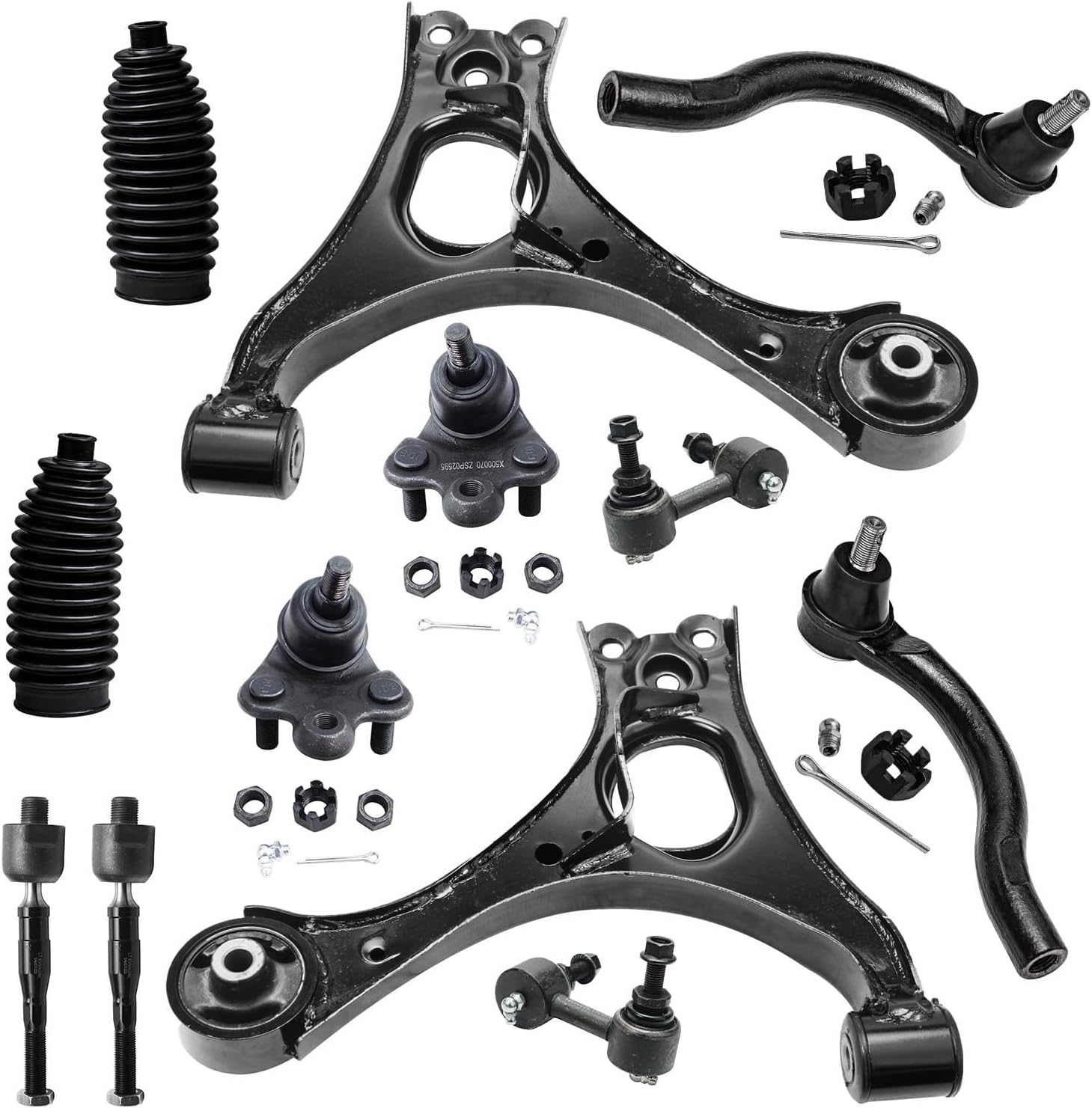
1. Detroit Axle Front Control Arms Suspension Kit for 2006–2011 Honda Civic (1.8L)
| Fit Type | Vehicle Specific Fit |
|---|---|
| Auto Part Position | Front |
| Material Type | Alloy Steel |
| Unit Count | 2.0 Count |
This Detroit Axle kit supplies the main front suspension components needed when refreshing worn lower control arms on 2006–2011 Honda Civic 1.8L models. The package includes two lower control arms with preinstalled ball joints, inner and outer tie rods with boots, sway bar end links, and clamps so you can replace multiple wear items at once instead of sourcing parts separately. Built from alloy steel and labeled as vehicle-specific fit, the parts are meant to restore steering response and suspension geometry after years of play or damage. For a DIY mechanic the kit simplifies a multi-component repair and reduces compatibility guesswork; a shop can also install the whole front end assembly in one visit. Expect factory-style replacement performance rather than performance upgrades since these are designed to match factory fit and function. Buyers should plan for alignment after installation and be aware that any rusty or bent knuckles and related hardware may still need separate attention.
Best for: Buyers seeking a practical, all-in-one front suspension refresh for a 2006–2011 Civic who prioritize restoring factory steering feel and reliability over performance upgrades.
Less Ideal for: Shoppers looking for performance suspension parts or aftermarket upgrades aimed at track use should consider tuned or performance-specific components instead.
- Complete kit replaces multiple front suspension components in one purchase, reducing parts-matching errors.
- Vehicle-specific fit for 2006–2011 Honda Civic 1.8L makes installation straightforward.
- Alloy steel construction and components tested for impact and fatigue offer durability for road use.
- Designed as factory-style replacements so it does not improve performance beyond stock handling.
Verdict: Choose this kit if you want a single, vehicle-specific package to restore worn front suspension parts and get your Civic back to factory steering feel.
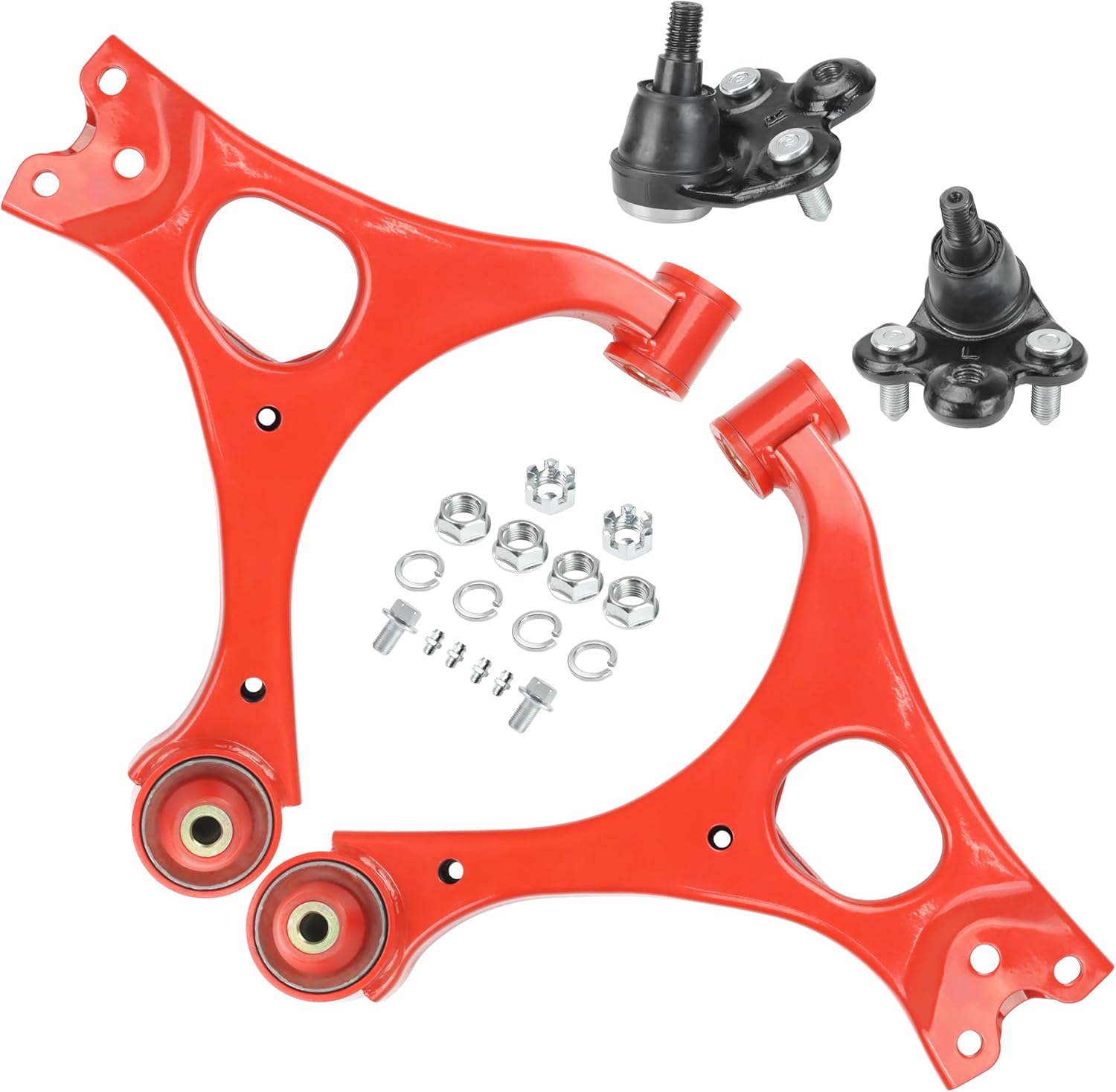
2. SKUCH Front Lower Control Arms and Ball Joints 4pc Kit for 2006–2011 Honda Civic
| Fit Type | Vehicle Specific Fit |
|---|---|
| Auto Part Position | Front Lower |
| Material Type | Alloy Steel |
| Included Components | 2 control arms and 2 lower ball joints |
This 4-piece front lower control arm and ball joint kit is a direct-fit replacement for 2006–2011 Honda Civic models, intended to restore front suspension geometry without modifications. It replaces both lower control arms and both lower ball joints, and arrives with preinstalled polyurethane bushings to provide firmer, more consistent steering feedback compared with aging rubber mounts. The alloy steel arms have a red protective coating that resists corrosion and gives the underside a performance look. Installation is simplified by the preassembled joints and bushings, though a professional alignment after fitting is recommended to lock in correct tracking and tire wear. For a driver focused on sharper response and reduced play, the PU bushings help maintain alignment under load and over time, but the firmer mount will transmit a bit more road feel than stock rubber. This kit is practical for repairing worn suspension components and for enthusiasts seeking a noticeable improvement in steering precision without complex modification.
Best for: Drivers who prioritize sharper steering response and longer-lasting suspension components and want a straightforward, vehicle-specific upgrade for a Civic front end.
Less Ideal for: Drivers seeking the softest possible ride or those who prioritize NVH comfort over handling improvements should consider alternatives with rubber bushings.
- Direct-fit 4-piece set replaces both front lower control arms and ball joints for a complete front-end refresh.
- Upgraded polyurethane bushings offer improved durability and firmer, more consistent steering feel compared with rubber.
- Preassembled ball joints and bushings simplify installation and reduce labor time.
- Red protective coating on alloy steel helps resist corrosion and improves underside appearance.
- Stiffer polyurethane bushings increase transmitted road noise and harshness compared with original rubber mounts.
Verdict: A direct-fit front lower control arm and ball joint kit with polyurethane bushings that sharpens steering and restores front-end stability for 2006–2011 Honda Civic owners seeking performance-minded improvement.
3. Detroit Axle Front Lower Control Arms with Ball Joints (pair)

| Fit Type | Vehicle Specific Fit |
|---|---|
| Auto Part Position | Front Lower |
| Material Type | Alloy Steel |
| Unit Count | 2.0 Count |
| Manufacturer Warranty Description | 10 Years |
This Detroit Axle kit supplies both front lower control arms with integrated ball joints as a direct vehicle-specific replacement for 2006–2011 Honda Civic and Acura CSX models. Installed as a pair, the units restore proper suspension geometry and steering stability after worn or damaged arms cause uneven tire wear, wandering, or clunking. Made from alloy steel and finished in black, the arms are intended for bolt-in replacement and come preassembled with ball joints to reduce install time. The product advertises fatigue and impact testing and includes a long 10-year warranty that signals durability expectations. Practical benefits include replacing two arms at once for consistent alignment behavior and avoiding separate ball-joint press work. Limitations are typical of aftermarket control arms: they are a direct replacement rather than a performance upgrade, and alignment is required after installation; professional installation may be preferable for the ball-joint press and torque specs. Good fitment verification before purchase is recommended to ensure exact vehicle and engine submodel compatibility.
Best for: Buyers looking to replace worn front lower control arms efficiently and cost-effectively, prioritizing a straightforward bolt-in repair and predictable handling restoration.
Less Ideal for: Shoppers after performance or heavy-duty upgraded suspension components or those who prefer factory-brand parts for dealership-level sourcing should look elsewhere.
- Sold as a matched pair for consistent suspension geometry
- Preinstalled ball joints reduce installation time and complexity
- Alloy steel construction with advertised impact and fatigue testing
- Vehicle-specific fit for 2006–2011 Civic/CSX to simplify selection
- Designed as a direct replacement, not a suspension performance upgrade
Verdict: A practical, ready-to-install pair of front lower control arms with preinstalled ball joints that restore factory-style handling on 2006–2011 Honda Civic and Acura CSX models.
4. maXpeedingrods Front Lower Control Arm Kit (2 pcs) for Honda Civic 2006–2011 / Acura CSX 2006–2011

| Fit Type | Vehicle Specific Fit |
|---|---|
| Auto Part Position | Front |
| Material Type | Alloy Steel |
| Unit Count | 2.0 Count |
This two-piece front lower control arm kit replaces worn arms on 2006–2011 Honda Civic and Acura CSX non‑Si models. Constructed from alloy steel with a powder-coated finish, the arms aim to resist rust and provide a durable, direct replacement for factory units. Typical use is restoring steering stability and removing clunking or play from the front suspension; installers report the parts fit without modification when dimensions match factory locations. The kit ships with driver and passenger side arms and is intended for owners who want a budget repair that restores ride quality and cornering confidence rather than a performance upgrade. Because these are economy replacement parts, they deliver good value and improved handling for daily driving but are not engineered for track or heavy-duty racing use. Installation is straightforward for anyone with basic mechanical experience, though shops may be needed for alignment after installation. The manufacturer offers technical support and a limited warranty for added reassurance.
Best for: Buyers looking for an affordable, direct-fit replacement to restore steering feel and eliminate suspension noise on a 2006–2011 Civic or Acura CSX who prioritize value and dependable everyday performance.
Less Ideal for: Drivers who want upgraded performance suspension for track use or heavy-duty applications should consider higher-spec or performance-oriented control arms instead.
- Vehicle-specific fit for 2006–2011 Honda Civic and Acura CSX non‑Si models simplifies replacement
- Alloy steel construction with powder-coated finish for corrosion resistance
- Includes both left and right front lower control arms for a complete axle repair
- Reports of solid fit and immediate handling improvement from users
- Not designed for performance or racing use; built as an economy replacement
- Ball joints may be retained or replaced separately depending on your purchase or vehicle condition
Verdict: A practical, budget-friendly pair of front lower control arms that restore factory-like steering stability for 2006–2011 Honda Civic and Acura CSX owners.
5. KDSA Front Lower Control Arm with Ball Joint, 2-Pack (K620382 K620383) for 2006–2011 Honda Civic / Acura CSX

| Fitment | 2006-2011 Acura CSX; 2006-2011 Honda Civic (1.8L & 1.3L) |
|---|---|
| Included Components | Front left and front right lower control arm with ball joint |
| Material Type | Alloy Steel |
| Auto Part Position | Front Lower |
This KDSA two-piece front lower control arm kit replaces both driver and passenger lower arms and includes integrated ball joints for a direct-fit repair on 2006–2011 Honda Civic and Acura CSX. Made from alloy steel and produced to factory-style standards, the arms are intended for suspension restoration and steering alignment after worn components are removed. Buyers will notice that the assemblies come ready to bolt in, which simplifies installation and reduces shop time compared with rebuilding old arms. The manufacturer highlights precision tolerances to help ensure alignment settings remain within range after fitting. Practical benefits include restoring steering feel, reducing clunks from worn joints, and returning front suspension geometry to spec. Limitations are that this is a vehicle-specific replacement so it covers only the listed Civic/CSX applications and that durability depends on installation quality and local driving conditions. Expect a straightforward replacement for owners focused on dependable, factory-quality suspension repairs rather than performance upgrades.
Best for: Buyers who prioritize a dependable, factory-quality replacement to restore steering and suspension function on a 2006–2011 Civic or CSX and want a direct-fit kit that installs without major modification.
Less Ideal for: Shoppers seeking performance-tuned or heavy-duty aftermarket arms for aggressive driving, lowered setups, or non-listed vehicles should look at purpose-built alternatives.
- Sold as a matched 2-piece set including left and right lower arms with ball joints for complete front-end replacement
- Manufactured from alloy steel and built to factory-style standards for a familiar fit and function
- Pre-assembled ball joints and precision tolerances simplify installation and reduce alignment adjustment time
- Designed specifically for 2006–2011 Honda Civic and Acura CSX fitment so compatibility is vehicle-specific
- Coverage is limited to the listed Civic and CSX model years and engine variants
- Longevity can vary with driving conditions and depends on correct installation and alignment
Verdict: If you need a straightforward, factory-style replacement to restore front suspension and steering on a 2006–2011 Civic or CSX, this matched two-arm kit delivers a direct-fit solution.
6. Detroit Axle Front Lower Control Arms Kit for 2006–2011 Honda Civic (Non‑Si)

| Fit Type | Vehicle Specific Fit |
|---|---|
| Auto Part Position | Front |
| Material Type | Alloy Steel |
| Part Interchange Info | K620382 K620383 |
This Detroit Axle kit supplies both left and right front lower control arms as direct-fit replacements for 2006–2011 Honda Civic (non‑Si) models. The parts are made from alloy steel and are marketed as vehicle-specific, so installation typically involves swapping the old arms for the new ones and then performing a wheel alignment. Buyers report that the arms bolt in cleanly and restore firmer steering feel with reduced clunking from worn components. The construction is described as high-strength and rust-resistant, which should help on cars that see daily driving and occasional potholes. These arms do not include separate ball-joint service fittings and some users noted that greaseable fittings are not present, so long-term serviceability depends on the sealed joints. Fast installers and home mechanics will appreciate that the kit focuses on straightforward fit and function rather than performance tuning, but those wanting rebuildable or greasable joints may prefer an alternative. Overall the kit offers a practical, value-oriented replacement to refresh suspension geometry on Civic models in the listed years.
Best for: Buyers who want a straightforward, factory-quality replacement to stop suspension noise and restore steering stability on a 2006–2011 Civic without chasing upgraded or rebuildable components.
Less Ideal for: Drivers seeking greasable or performance-oriented control arms for track use or heavy-duty off‑road duty should look at rebuildable or aftermarket performance options.
- Vehicle-specific direct-fit design for 2006–2011 Honda Civic non‑Si models
- Alloy steel construction marketed for improved strength and corrosion resistance
- Supplies both driver and passenger lower control arms for a matched replacement
- Reported to install with factory-alignment tolerances and restore firmer steering feel
- Sealed ball joints lack grease fittings which limits field serviceability
Verdict: A practical, factory-style pair of front lower control arms that reliably restore steering feel and remove play for 2006–2011 Civic non‑Si owners.
7. SCITOO Front Suspension Kit for Honda Civic (2006–2011) — 8‑Piece

| Fitment | 2006–2011 Honda Civic 1.8L |
|---|---|
| Included parts | Lower control arms with ball joints, inner/outer tie rod ends, sway bar end links |
| Material | Alloy steel, stainless steel |
| Exterior | Electrophoretic coating |
This SCITOO front suspension kit supplies the key front-end components you need when restoring worn steering and suspension on a 2006–2011 Honda Civic 1.8L. The kit bundles driver and passenger lower control arm assemblies with pressed-in ball joints, inner and outer tie rod ends, and sway bar end links, so you can replace multiple wear items in one service. Parts are electrocoated and supplied pre-greased where applicable, which simplifies installation and helps resist corrosion. Buyers report the pieces fit like factory replacements and thread/bushing interfaces align with factory mounting points, making the kit suitable for a shop job or experienced DIYer with proper tools. The practical benefit is reduced labor overhead versus sourcing individual parts and fewer compatibility headaches. Limitations are that it is a vehicle-specific aftermarket kit rather than an original brand part and professional installation is recommended for safety and correct alignment; you should also verify exact fit for your trim before ordering. A one-year replacement policy is noted by the seller but check local support options for warranty service.
Best for: Buyers who want a cautious, straightforward repair path to restore front suspension and steering on a 2006–2011 Civic without hunting down separate parts, and who prefer reducing repeat shop visits by replacing all common wear items at once.
Less Ideal for: Owners seeking original manufacturer branded components or those who prefer sourcing individual premium parts for staged repairs should look elsewhere.
- Complete eight-piece kit replaces lower control arms, ball joints, inner and outer tie rod ends, and sway bar end links in one purchase
- Parts come pre-greased and electrocoated to help with corrosion resistance and faster installation
- Reported to match factory mounting points and fitment for 2006–2011 Honda Civic 1.8L, reducing compatibility issues and rework
- Aftermarket supplier kit rather than factory-brand parts which may differ slightly in long-term durability
Verdict: A practical, all-in-one front suspension kit that simplifies replacing worn lower control arms and steering links on 2006–2011 Honda Civics, ideal for buyers who want a low-risk complete repair.
Choosing the Right 2006-2011 Honda Civic Lower Control Arm: Key Factors to Consider
Fitment and Compatibility
Correct fitment is critical because even small deviations change suspension geometry, which affects toe and camber on the front axle. For the 2006-2011 Civic (FA and FG), confirm mounting hole spacing, ball joint orientation, and whether the arm is intended for the front lower position. Mismatched arms can lead to accelerated tire wear and poor steering response.
Pay attention to whether the arm is sold as left or right and whether it includes the ball joint and hardware. Some arms are complete, others are the bare casting that requires transfer of existing ball joints or bushings. Choosing the correct compatibility avoids extra labor and additional parts during installation.
Bushing Type and Durability
Bushings control how much compliance exists between the control arm and subframe, influencing noise, vibration, harshness, and steering feel. Rubber bushings offer a quieter ride and absorb road buzz, but they wear faster. Polyurethane bushings increase steering precision and longevity but can transmit more noise and require periodic lubrication.
Consider the typical driving conditions. If you face rough roads, a bushing compound that resists tearing and oil contamination will last longer. Inspect whether bushings are bonded, serviceable, or replaceable separately when planning maintenance.
Ball Joint Quality and Serviceability
The ball joint links the control arm to the steering knuckle and is a common wear item. A robust ball joint with a durable boot and corrosion-resistant stud maintains steering accuracy and prevents sudden failures. Some replacement arms include a pre-installed ball joint, which simplifies installation, while others require reuse of the original joint.
If the ball joint is replaceable, check if it is press-fit or bolt-in. Bolt-in ball joints are easier to service in a home garage. Also consider whether grease fittings are provided, as zerk fittings allow periodic lubrication that extends joint life.
Material and Corrosion Resistance
Lower control arms endure road salt, water, and debris. Materials and coatings affect how long the arm resists rust and structural degradation. Steel stamped arms are economical but must have good galvanic protection; cast or forged designs can offer higher strength but may cost more.
Assess the finish: powder coating, epoxy, or galvanization improve longevity. Pay attention to weld quality on multi-piece arms and whether protection extends to mounting surfaces and inner cavities, since trapped moisture accelerates corrosion.
Alignment and Geometry Preservation
A replacement arm should preserve the factory suspension geometry so wheel alignment falls within service limits without excessive shims. Even small differences in arm length or bushing compliance change camber and toe, affecting handling and tire life. For the 2006-2011 Civic, arms that maintain OEM ball joint height and pivot location minimize the need for additional alignment correction.
If an arm alters ride height or caster, it can change steering returnability and stability at highway speeds. Confirm whether the arm is designed to be a direct replacement or if additional alignment adjustments are typically required.
Mounting Hardware and Included Components
Installation time and complexity depend on what accompanies the arm. Some options include new ball joints, bushings, mounting bolts, and alignment sleeves, which reduces parts sourcing and labor. Others require transferring hardware from the old arm, which can be problematic if bolts are corroded or studs are damaged.
Verify torque specifications and whether the vendor provides proper-grade fasteners. Using correct hardware ensures attachment integrity and helps maintain factory torque values that affect NVH and structural behavior.
Common Symptoms That Point to a Worn Lower Control Arm
Recognizing early signs helps avoid secondary damage to tires, steering components, and wheel bearings. For the 2006-2011 Civic, common symptoms include uneven tire wear, clunking over bumps, wandering at highway speeds, and noticeable play in the steering wheel.
Lower control arm-specific symptoms often overlap with worn tie rods or struts, so a methodical inspection is necessary. Check the arm for torn bushings, excessive ball joint play, and rusted mounting points when diagnosing.
- Uneven inner or outer tire wear on the front wheels
- Clunking or knocking noises during acceleration, braking, or over bumps
- Loose or wandering steering at speed
- Vibration or shimmy through the steering wheel
Inspection Steps and Quick Tests
A curb-to-curb visual and hands-on inspection can reveal many issues. With the vehicle on jack stands and the wheel removed, check for torn bushing rubber, excessive gap at the ball joint, and rust around mounting bolts.
Perform a pry-bar test by applying moderate leverage between the arm and subframe to feel for bushing compliance or play. For ball joints, grab the knuckle and attempt to move it up and down; visible movement or clicking indicates joint wear.
- Look for grease leaks or split ball joint boots
- Measure side-to-side play at the ball joint with a dial indicator if available
- Compare both sides to identify asymmetric wear
Replacing Bushings Vs. Replacing the Entire Arm
Deciding whether to replace bushings only or the entire control arm depends on arm condition, availability of replacement bushings, and labor considerations. If the arm is structurally sound with minimal corrosion, pressing in new bushings can be economical and retain factory geometry.
However, many owners opt for a full arm replacement when the arm shows surface rust, welded repairs, or when the ball joint is worn. A complete arm avoids the need for a hydraulic press and reduces the risk of improper bushing seating.
- Bushings-only: lower parts cost, requires press and time, preserves OEM arm
- Full arm replacement: often includes ball joint, easier install, removes corrosion concerns
Installation Tips for Home Mechanics
When installing replacement lower control arms on a 2006-2011 Civic, work with the suspension unloaded and use correct-size torque tools. Tighten mounting hardware to factory torque specs with the vehicle at ride height when required to avoid pre-loading rubber bushings.
Replace corroded bolts and use anti-seize sparingly on threads that require removal later. If the selected arm includes grease fittings, lubricate after installation and at scheduled intervals to extend joint life.
- Always torque bolts to factory values with the suspension settled if the procedure calls for it
- If reusing hardware, inspect threads and replace any corroded fasteners
- Perform a full alignment after installation to correct toe and camber
How Choice of Bushing Compound Changes Ride Quality
The bushing compound directly influences ride comfort and steering feedback. Softer rubber compounds absorb more road harshness and reduce road noise, which benefits daily commuting. Stiffer polyurethane increases steering responsiveness and longevity but may transmit more vibration into the cabin.
For drivers concerned about street noise in the Civic, choose a higher-quality rubber or a polyurethane design with integrated damping features. Consider that stiffer bushings can accelerate adjacent component wear if the rest of the suspension is aging.
- Rubber: quieter, more compliant, shorter life
- Polyurethane: firmer feel, longer life, may need lubrication
Post-Installation Alignment and Long-Term Checks
After fitting new lower control arms, a professional alignment is essential to restore proper toe and camber. Minor differences between new and old components can push the alignment out of spec, causing handling issues and uneven tire wear.
Perform periodic inspections at mileage intervals or after winter to check for bushing deterioration and bolt tightness. Early detection of noise or play can prevent costly downstream damage to tires and steering links.
- Get a full four-wheel alignment after installation
- Recheck torque and inspect bushings after 500 miles
- Schedule visual inspections annually or after harsh driving conditions
Still looking for the perfect fit?
Select your Honda Civic configuration to see the most relevant Lower Control Arms recommendations
How We Chose the Best 2006-2011 Honda Civic Lower Control Arm
We prioritized items that directly affect alignment stability, bushing durability, corrosion resistance, and correct OEM-style fitment for 2006-2011 Honda Civic vehicles. Each candidate had to match factory mounting points and dimensions so ball joint geometry and ride height remain consistent. We also weighed the type and quality of bushings because they determine NVH, steering feel, and service life for this chassis. Strength and material construction were considered to ensure the arm resists bending and fatigue under typical road loads.Fitment accuracy was a gate: we excluded any component lacking clear vehicle-specific fit information for 2006-2011 Civic applications. We also filtered out arms that required frame modification or custom welding, since most owners need a direct-replacement solution. Finally, we considered documented user feedback about longevity and common failure modes for this model range and prioritized items with better reported durability and fewer fitment complications.
Our full evaluation process is outlined in our review methodology.
FAQ
What causes lower control arm bushings to wear on a Civic?
Bushings wear from repeated load cycles, exposure to road salt and oil, and mechanical abrasion. Heavier loads, potholes, and aggressive driving accelerate deterioration, and older rubber compounds can dry-rot over time.
Can I drive with a worn lower control arm on my 2006-2011 Civic?
You can drive short distances, but prolonged use risks uneven tire wear and compromised steering control. If you notice clunks, wandering, or vibration, address the issue promptly to avoid more extensive suspension damage.
Are replacement lower control arms for the 2006-2011 Civic hard to install at home?
Difficulty depends on tools and experience. A basic home mechanic can perform the swap with jack stands, common hand tools, and a torque wrench, but press-fit bushings or ball joints may require specialized tools or shop assistance.
Do I need an alignment after replacing a lower control arm?
Yes. Even direct-replacement arms can alter toe and camber slightly. A professional alignment ensures proper tire wear and restores expected steering behavior.
How can I tell if the ball joint on the lower control arm is failing?
Signs include play in the steering knuckle, clunking noises over bumps, and visible boot damage or grease leakage. A physical test involves checking for vertical movement at the knuckle while the vehicle is raised.
Is it better to replace bushings or the entire arm when bushings fail?
If the arm is free of structural damage and corrosion, replacing bushings can be cost-effective. If the arm shows significant rust, bent geometry, or a worn ball joint, a full arm replacement is often the more reliable choice.
Final Verdict
When choosing lower control arms for a 2006-2011 Honda Civic, prioritize correct fitment, bushing quality, and robust ball joint construction to preserve steering precision and tire life. Balance the tradeoff between ride comfort and steering responsiveness when selecting bushing compounds, and favor arms that minimize the need for corrective alignment.Ultimately, select a direct-replacement arm that matches factory geometry and includes necessary hardware when possible. That approach reduces installation complexity and helps you return the Civic to safe, predictable handling with minimal follow-up work.
Explore More:
- Check out all Honda Civic parts & accessories
- Explore Lower Control Arms Maintenance & Repair Guides
- Explore Suspension & Steering
- Browse all Auto Parts
