

Note: This article contains affiliate links. If you click on these links and make a purchase, I may earn a small commission at no extra cost to you. This helps support my research and content. Read my full affiliate disclosure here.
If you own a 1996-2000 Honda Civic, worn control arms can make steering vague, accelerate tire wear, and cause alignment trouble. Choosing the right replacement part matters because it restores suspension geometry and maintains safe handling for this generation of Civic often identified by chassis codes EJ, EK, and EM. This guide covers the top short-listed control arms that suit the Civic from those model years and explains the evaluation criteria we used, including fitment accuracy and component durability. Read on to understand the symptoms that point to a failing control arm and the practical factors that should guide your replacement decision.
Looking for other parts? See all Honda Civic parts & accessories.
Top Picks at a Glance


1. Detroit Axle Front End 10-piece Control Arms Suspension Kit for 1996–2000 Honda Civic

| Fit Type | Vehicle Specific Fit |
|---|---|
| Auto Part Position | Front |
| Item Weight | 20.15 Pounds |
| Manufacturer Part Number | 10CS2500957 |
This Detroit Axle 10-piece front end kit is a complete replacement package for the Civic front suspension, supplying two upper control arms with ball joints, two lower ball joints, inner and outer tie rod ends, and sway bar links. It is designed as a direct-fit, vehicle-specific replacement for 1996–2000 Honda Civic applications and aims to restore steering response and front-end geometry after wear or accident damage. The control arms are made from premium alloy with corrosion resistance and reinforced structure to handle repeated impact loads, while the included ball joints and tie rod ends let you replace multiple wear items in one job. For DIYers and independent shops this reduces parts hunting and repeat labor. Installation is straightforward for anyone familiar with front suspension work, though alignment after installation is required. The kit covers most common Civic trim levels listed but is limited to that model range only, so cross-vehicle fitment is not applicable. Buyers should expect standard replacement-grade components rather than upgraded performance parts.
Best for: Buyers who want a single, vehicle-specific kit to refresh the entire front suspension on a 1996–2000 Civic and prioritize convenience, consistent fit, and restoring factory driving feel.
Less Ideal for: Enthusiasts seeking performance-tuned suspension components or owners who need parts for other vehicle models should look elsewhere.
- Complete kit replaces multiple front suspension wear items at once saving time and coordination
- Direct-fit vehicle-specific design simplifies installation and reduces modification
- Premium alloy construction claims improved corrosion resistance and structural rigidity
- Includes both inner and outer tie rod ends plus sway bar links so steering and sway components are refreshed together
- Components are standard replacement quality and not aimed at performance or track upgrades
Verdict: A convenient all-in-one front suspension kit that restores worn steering and suspension components on 1996–2000 Honda Civics with factory-style fit and construction.
2. Metrix Premium Chassis Parts Front Upper Control Arm Pair with Ball Joint (Fits 1996–2000 Honda Civic / 1997–2000 Acura EL)

| Fit Type | Vehicle Specific Fit |
|---|---|
| Auto Part Position | Front Upper |
| Material Type | Carbon Steel |
| Manufacturer Warranty Description | 3 Year / 36,000 miles Limited Warranty |
These Metrix front upper control arms replace the left and right assemblies and include pressed-in ball joints and necessary cotter pins for installation. Built from carbon steel with corrosion-resistant coating, they are intended as direct-fit, vehicle-specific replacements so installation is straightforward for a mechanic or experienced DIYer. The greasable design supports routine lubrication to extend service life and the parts are manufactured to certify against industry quality standards. In real-world use you can expect restored steering precision and stable handling after replacing worn arms, which helps reduce uneven tire wear and steering pull. The parts come as a matched pair which simplifies front-end repairs and alignment. Limitations are that these are steel replacement arms rather than lightweight aluminum performance pieces, so they do not reduce unsprung mass for track-focused builds; also you should budget for a wheel alignment after installation and follow torque and service instructions to avoid premature wear.
Best for: A Honda Civic owner focused on restoring or improving front-end handling and steering precision who prioritizes a durable, factory-quality replacement over lightweight performance upgrades.
Less Ideal for: Not the best choice for racers or track enthusiasts seeking lightweight suspension components or marginal unsprung-mass reductions.
- Vehicle-specific matched pair simplifies front-end repairs and ensures fitment.
- Includes integrated ball joints and cotter pins for a near-complete replacement assembly.
- Greasable design lets technicians add grease to extend service life.
- Manufactured to certified quality standards for reliable, factory-quality performance.
- Steel construction increases durability but does not lower unsprung weight for performance driving.
Verdict: Choose these Metrix steel control arms when you want a durable, vehicle-specific front upper arm pair that restores steering accuracy and long-term reliability.
3. BOXI Front Upper Control Arm with Preassembled Ball Joint (Set of 2)

| Fit Type | Vehicle Specific Fit |
|---|---|
| Auto Part Position | Front |
| Material Type | Alloy Steel |
| Included Components | Control arms come pre-assembled with ball joints |
| Manufacturer Warranty Description | 3 year warranty |
These BOXI front upper control arms arrive as a matched pair with ball joints already pressed in, so they replace the factory units on compatible Civic and Acura EL models without extra assembly. They are made from alloy steel and marketed as direct-fit replacements that aim for factory-quality fit, with a high-strength structure intended to resist repeated impacts and corrosion. Installation is straightforward for a competent DIYer or mechanic because the assemblies are vehicle-specific and come ready to bolt in. In use they restore correct upper control arm geometry and steering stability after worn originals, and the preinstalled ball joints remove the need for a press. Limitations to consider are that the listing covers only 1996–2000 Honda Civic and 1997–2000 Acura EL fitment so you must confirm year and submodel, and brand testing claims are descriptive rather than independently verified. The kit includes both driver and passenger arms and carries a three-year warranty for added reassurance.
Best for: Buyers who want a practical, ready-to-install factory-style replacement to restore steering geometry and suspension performance on late 1990s Civics or Acura ELs with worn upper control arms.
Less Ideal for: Not a good choice for shoppers needing parts for other vehicles or those seeking performance-tuned aftermarket suspension components.
- Comes as a matched pair with ball joints preinstalled for faster, simpler installation
- Vehicle-specific direct-fit design reduces modification or fabrication during replacement
- Alloy steel construction and reinforced structure aim to improve durability and resistance to corrosion
- Replaces OEM part numbers K90450 and K90451, matching factory placement and orientation
- Compatibility is limited to the specified 1996–2000 Honda Civic and 1997–2000 Acura EL applications so it is not universal
Verdict: If you need a straightforward, ready-to-install pair of front upper control arms to bring a 1996–2000 Honda Civic or 1997–2000 Acura EL back to factory-style steering and suspension performance, this BOXI kit is a practical choice.
4. TUCAREST Rear Upper Control Arm Assembly, Left and Right Pair

| Fit Type | Universal Fit |
|---|---|
| Auto Part Position | Left and Right pair |
| Material Type | Steel |
These TUCAREST rear upper control arms are a budget-friendly replacement kit intended to restore the rear suspension geometry on compatible late 1990s Honda models. Made from steel and supplied as left and right pieces, they are built to match the fit and function of the original parts so installation is a straightforward direct replacement for mechanics or competent DIYers. Notable features include factory-style mounting points and prefinished black coating that helps resist corrosion out of the box. In practice the arms provide the expected wheel control and maintain alignment when replacing worn or damaged originals, improving ride stability and tire wear compared with failing components. Limitations are that this is a basic, universal-fit aftermarket part so buyers should verify vehicle fitment closely before ordering and expect the finish and long-term corrosion resistance to be typical of economy replacement parts rather than premium coated assemblies. Overall the kit is a practical, cost-focused option for restoring rear suspension function on the specified Civic model years.
Best for: Buyers looking to repair worn rear suspension on a tight budget and who prioritize restoring safe alignment and handling with a straightforward direct-replacement part.
Less Ideal for: Shoppers seeking a long-term premium upgrade with advanced coatings or performance-tuned geometry should consider higher-end aftermarket or OEM options instead.
- Sold as a left and right pair for a complete rear-side replacement
- Steel construction for durable basic strength
- Engineered to match original mounting points for straightforward direct replacement
- Prefinished coating helps resist corrosion during initial service life
- Universal fit designation means buyers must confirm exact vehicle compatibility before installation
Verdict: A cost-conscious, direct-replacement rear upper control arm pair that restores suspension function on compatible late 1990s Honda Civics without premium frills.
5. Detroit Axle Front Upper Control Arms with Ball Joints (pair) for 1996–2000 Honda Civic / 1997–2000 Acura EL
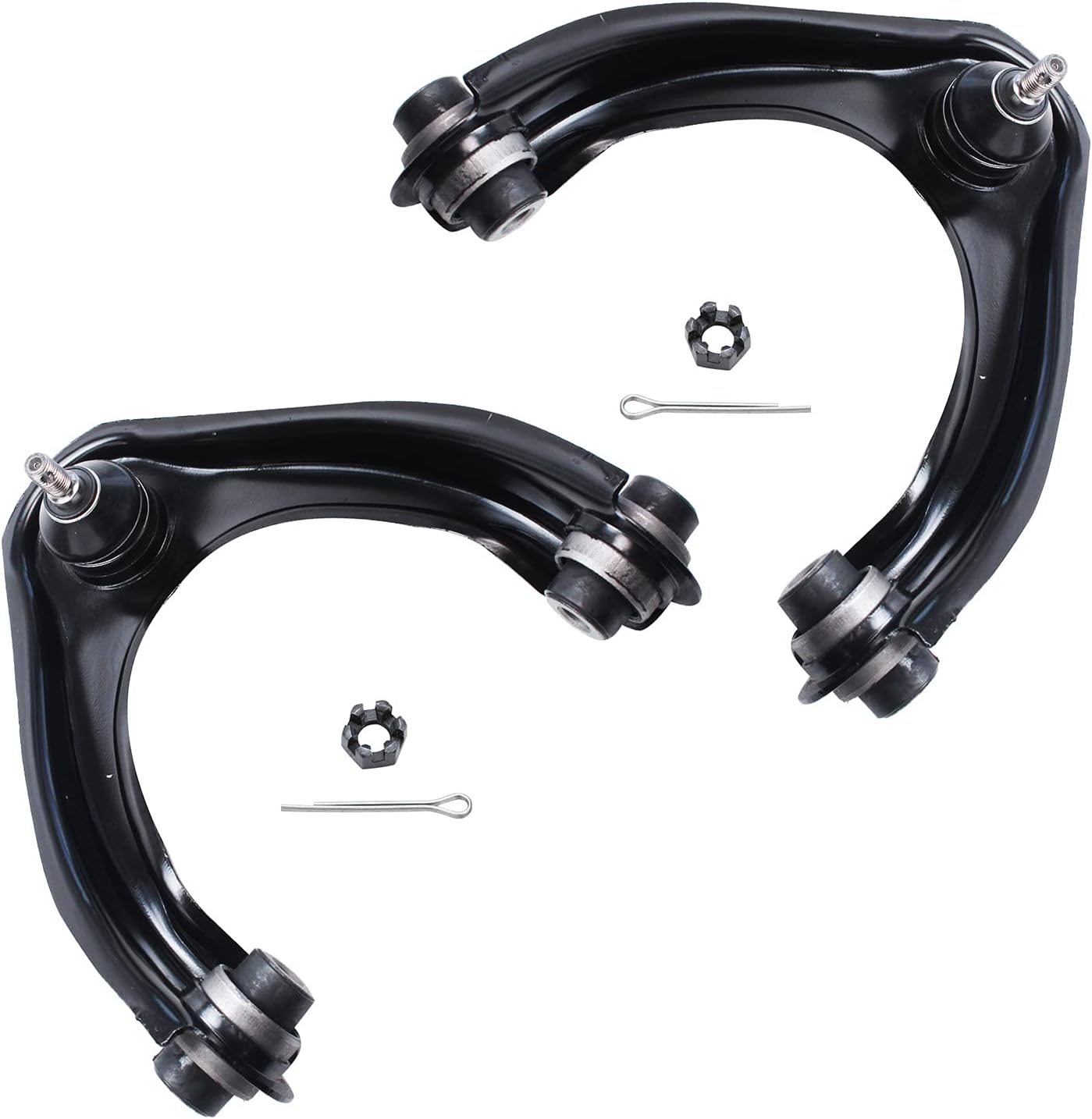
| Fit Type | Vehicle Specific Fit |
|---|---|
| Auto Part Position | Upper |
| Auto Part Orientation | Drivers Side |
| Kit Includes | 2 Front Upper Control Arm w/Ball Joint Assembly |
These Detroit Axle front upper control arms come as a paired kit with preinstalled ball joints and are intended to replace worn or damaged factory upper arms on 1996–2000 Honda Civic and 1997–2000 Acura EL models. Installation is typical for suspension arm swaps: remove the old arms, transfer any needed hardware, and bolt the new assemblies into place. The arms are marketed as vehicle-specific and built to meet factory-quality fit and function, which simplifies alignment and reduces setup work after installation. Practical benefits include receiving both driver and passenger upper arms together and ball joints already attached to save time during the job. The parts appear robust for street use and routine commuting, and the listing highlights a long warranty backing. Limitations to note are that this is a direct replacement part without performance upgrades, so it will restore stock handling but not improve sporty steering feel or provide adjustable geometry. Buyers should also verify exact fit for their model year and inspect included hardware during installation.
Best for: A buyer who prioritizes a dependable, factory-like replacement to restore original steering and suspension behavior on a 1996–2000 Civic or a 1997–2000 Acura EL and wants a straightforward swap with minimal parts sourcing.
Less Ideal for: Not the best choice for drivers seeking upgraded performance, adjustability, or heavy-duty off-road modifications; those users should look at performance or adjustable aftermarket arms.
- Sold as a matched pair with ball joints preinstalled for faster installation
- Vehicle-specific fit reduces likelihood of fitment hassles and alignment surprises
- Constructed and positioned to match factory replacement function for everyday driving
- Includes a long manufacturer warranty that indicates manufacturer confidence
- Not a performance or adjustable control arm—no aftermarket handling improvements
- Hardware transfer or additional components may be required depending on vehicle condition
Verdict: Choose this paired, preassembled replacement to get reliable, factory-quality front upper control arms that restore original steering and suspension function on 1996–2000 Honda Civic and 1997–2000 Acura EL models.
6. Detroit Axle Front Left Upper Control Arm with Ball Joint Assembly

| Fit Type | Vehicle Specific Fit |
|---|---|
| Auto Part Position | Front Left Upper |
| Auto Part Orientation | Drivers Side |
| Material Type | Alloy Steel |
| Manufacturer Part Number | K90451 |
This Detroit Axle front left upper control arm arrives as a complete, vehicle-specific assembly preinstalled with bushings and a ball joint so it is ready to install without sourcing additional parts. It replaces the factory upper control arm on compatible 1996 to 2000 Honda Civic and 1997 to 2000 Acura EL applications and is built from alloy steel with a factory-style design intended to restore proper steering geometry and suspension response. Typical use is a direct replacement during a front suspension refresh or when a worn arm causes noise, uneven tire wear, or loose steering. Notable features include the preassembled ball joint, vehicle-specific fit, and a long warranty offering from the brand. In real-world terms that means fewer installation steps, less shop time, and immediate compatibility when the part number matches. Limitations are that fit depends on exact model/year matching and the listing images may not always match the shipped unit, so double-check part interchange information and mounting points before installation.
Best for: Buyers who prioritize a ready-to-install, factory-style replacement that restores steering and suspension performance and who rely on others' positive installation experiences when choosing parts.
Less Ideal for: Drivers who need a universal or adjustable control arm for modified suspension setups or those who prefer performance-tuned aftermarket arms.
- Comes preassembled with bushings and ball joint for straightforward installation
- Built from alloy steel for durability and to restore factory steering feel
- Vehicle-specific fit reduces the need for modification during replacement
- Includes part interchange info to verify correct application
- Images on the listing may not always match the exact unit received
Verdict: A ready-to-install, vehicle-specific front left upper control arm that restores factory steering feel with minimal fuss.
7. Detroit Axle Pair Front Lower Control Arms for 1996–2000 Honda Civic / 1997–2000 Acura EL

| Fit Type | Vehicle Specific Fit |
|---|---|
| Auto Part Position | Front Lower |
| Material Type | Steel |
| Manufacturer Warranty Description | 10-Year |
This Detroit Axle kit replaces both front lower control arms with stamped steel assemblies intended for direct-fit installation on specified 1996–2000 Honda Civic and 1997–2000 Acura EL models. The pair includes left and right arms built from steel with reinforced structure and factory-style mounting points so you can swap out worn or damaged arms without modifying suspension geometry. Typical use is a like-for-like replacement during front suspension repair or when addressing uneven tire wear, clunks, or poor steering feedback. The heavy-gauge construction and corrosion-resistant finish aim to improve durability over worn originals, and the parts are advertised as meeting factory fit and function which simplifies installation for experienced DIYers or professional installers. Limitations are that these are stamped steel replacement arms rather than upgraded aftermarket performance arms, so they prioritize value and serviceability over lighter weight or race-grade stiffness. Also the product listing focuses on vehicles with stamped steel control arms, so confirm your car's original control arm style before buying.
Best for: Buyers who want a straightforward, reliable replacement to restore factory handling and eliminate front-end wear noises, and who prioritize proven fit and long-term durability over performance upgrades.
Less Ideal for: Drivers looking for lightweight, performance-oriented suspension upgrades or custom-tuned arms should consider aftermarket performance options instead.
- Sold as a matched left and right pair for complete front-end replacement
- Stamped steel construction with corrosion-resistant finish for durability
- Direct-fit, vehicle-specific design intended to simplify installation
- Reinforced structure to handle repeated impact loads and restore steering stability
- Not a performance upgrade; designed as a factory-style replacement rather than a lighter or stiffer aftermarket arm
Verdict: Pick this matched pair if you need a dependable, factory-style front lower control arm replacement that restores original fit and steering behavior.
Choosing the Right 1996-2000 Honda Civic Control Arm: Key Factors to Consider
Fitment and Chassis Compatibility
Correct fitment is the fundamental consideration when replacing control arms on a 1996-2000 Honda Civic. The arm must match the Civic's mounting geometry for the EJ, EK, and EM-era suspension to preserve factory alignment and avoid introducing steering pull or uneven tire wear.
Fitment also affects whether additional modifications are necessary. A direct-fit arm reduces installation time and eliminates the need for custom bushings or adapters. Confirming compatibility with any specific trim-level suspension mounting points will prevent surprise issues at installation and ensure the part interacts properly with the steering knuckle and subframe.
Bushing Type and Durability
Bushings control how the arm cushions road inputs and affect steering feedback. Rubber bushings isolate noise and vibration but can compress and wear quicker, leading to slop in the suspension. Polyurethane bushings last longer and provide crisper steering response but may transmit more vibration into the cabin.
Evaluate bushing construction and expected service life for the typical driving you do. For a Civic that sees daily commuting on rough roads, a bushing rated for higher abrasion and with good sealing against moisture will reduce premature replacement and maintain alignment over time.
Ball Joint Quality
Many front control arms incorporate a ball joint that links the arm to the steering knuckle. The ball joint must allow smooth articulation without play while resisting contamination and wear. A failing ball joint produces clunking noises, uneven tire wear, and can compromise steering control.
Look for ball joints with effective seals, durable bearing surfaces, and specifications that match the Civic's original steering geometry. Replaceable or serviceable ball joints can simplify future maintenance compared with permanently pressed-in types.
Material and Construction
Control arms come in different constructions, such as stamped and welded steel, cast components, or forged pieces. Stamped steel arms are common and cost-effective, while forged or thicker-gauge pieces can offer greater stiffness and durability. Welding quality, corrosion-resistant coatings, and reinforcement at high-stress points all matter for longevity.
Choose construction that matches your driving conditions and expectations. A Civic used in salted winter roads benefits from good corrosion protection, while a car that sees spirited driving may benefit from a stiffer, better-braced arm to hold alignment under load.
Serviceability and Replacement Parts
Consider whether bushings and ball joints are replaceable separately from the entire arm. Serviceable components reduce long-term ownership cost because you can renew just the worn parts instead of replacing the whole arm. Availability of common part numbers and compatibility with OEM-style replacement components simplifies repairs.
Also factor in whether the arm design allows conventional alignment adjustments at the control arm fasteners. Arms that permit easy alignment changes at installation save time and ensure you can reach proper toe and camber settings without additional aftermarket hardware.
Impact on Alignment and Handling
A replacement control arm directly affects alignment settings and handling behavior. Slight differences in bushing compliance or mounting point tolerances can change toe and camber under load, which affects steering feel and tire wear. For the 1996-2000 Civic, maintaining close-to-factory geometry is important for predictable handling.
If you plan suspension modifications elsewhere, choose an arm that supports your alignment goals. Otherwise, opt for parts that preserve factory geometry to avoid unplanned alignment corrections after installation.
Common Symptoms of a Failing Control Arm
Understanding the typical signs of failure helps you decide when replacement is necessary. Worn control arm components often produce clunking or popping noises during acceleration, braking, or when rolling over bumps. Steering may feel loose or wander, and you might notice uneven tire wear concentrated on one edge.
Other symptoms include vibration through the steering wheel at certain speeds and visible play when the vehicle is lifted and the wheel is rocked. Pay special attention to bushing deterioration and ball joint play because addressing those early often prevents secondary damage to tires and alignment.
- Clunking or knocking noises over bumps
- Steering wander or loose steering feel
- Uneven or accelerated tire wear
- Vibration through the steering wheel
- Visible bushing cracking or ball joint play on inspection
Inspection Steps Before You Buy
Do a visual and physical inspection before deciding to replace the arm. With the car safely lifted, check for cracked, deformed, or missing bushings and any evidence of corrosion or impact damage on the arm itself. Rock the wheel to check for ball joint play and observe any abnormal movement at the mounting points.
Document any visible part numbers or casting marks to help confirm compatibility. If you find evidence of excessive wear but are unsure of the root cause, an alignment shop or mechanic can measure play and suspension geometry to decide whether the arm or a related component is at fault.
- Lift vehicle securely and support on jack stands
- Check bushing condition and look for cracks
- Test ball joint play by rocking the wheel
- Inspect for bent or kinked arm structure
- Record part numbers or markings for fitment checks
Installation Considerations and Alignment
Installation of a direct-fit control arm on a Civic from 1996-2000 typically requires basic hand tools and a torque wrench, but some steps demand care to avoid introducing alignment errors. Fasteners should be torqued to factory specifications with the suspension unloaded when specified to prevent bushing preloading.
After replacement, a professional alignment is recommended to restore toe and camber to specification. Some control arms include eccentric bushings or slotted mounting holes that allow for fine alignment adjustment during installation. Account for any needed alignment when planning the job to avoid repeat trips.
- Torque fasteners to factory specs
- Consider preloading recommendations for bushings
- Plan for a post-installation alignment
- Use replacement hardware if original bolts show wear
When to Replace Bushings or Ball Joints Only
In many cases you can replace worn bushings or a worn ball joint without replacing the entire arm. This can be cost-effective when the arm structure is sound and free of corrosion or bends. Confirm that the replacement bushing or ball joint matches the arm design and that installation tools are available for pressing or servicing the parts.
However, if the arm shows structural damage, significant corrosion, or previous poor repairs, full-arm replacement is the safer choice. Also consider the long-term value of a new arm with fresh bushings and ball joint versus repeated partial repairs.
- Replace only bushings if arm structure is intact
- Use correct pressed-in components and tools
- Consider full replacement if corrosion or bends are present
- Serviceable ball joints reduce future labor
Maintaining Control Arm Health Over Time
Regular inspection and preventative maintenance extend control arm life. Keep an eye on bushing condition during oil changes or tire rotations and clean road salt or grime from critical mounting areas. Applying corrosion protection to exposed metal surfaces can delay rust-related weakening.
Address suspension noises and alignment drift promptly. Riding on a Civic with worn arm components accelerates wear on steering and tire components, so timely attention prevents larger repairs down the line.
- Inspect bushings at regular service intervals
- Clean and protect exposed metal from corrosion
- Have alignment checked after any suspension work
- Replace worn components before they damage tires
Still looking for the perfect fit?
Select your Honda Civic configuration to see the most relevant Control Arms recommendations
How We Chose the Best 1996-2000 Honda Civic Control Arm
We narrowed the field by prioritizing fitment, structural integrity, and serviceability specific to the 1996-2000 Honda Civic. Fitment checks included correct mounting points, compatible bushings, and ball joint orientation for EJ, EK, and EM chassis configurations. Material and construction reviews focused on stamped steel versus forged components, weld quality, and corrosion protection because those aspects determine long-term durability under varied road conditions.We also considered bushing design and ball joint type since these influence ride characteristics and alignment stability. Serviceability criteria included availability of replacement bushings and ball joints, as well as whether the arm allows conventional alignment adjustments. Noise and vibration characteristics under load were factored in to anticipate everyday driving comfort. Exclusions included any control arms lacking clear fitment data for the 1996-2000 Civic, items that require extensive modification, or parts incompatible with common Civic suspension setups. The final shortlist favors direct-fit parts that balance longevity, alignment performance, and ease of installation.
Our full evaluation process is outlined in our review methodology.
FAQ
How can I tell if a control arm is bad on my 1996-2000 Civic?
Often you will notice clunking noises, a loose steering feel, or uneven tire wear. With the car lifted, check for visible bushing cracks and ball joint play by rocking the wheel; measurable free play indicates a problem.
Is it necessary to replace the whole control arm when bushings wear out?
It depends. If the arm structure and ball joint are in good condition, replacing only the bushings can be economical. If the arm shows corrosion, bending, or the ball joint is worn, full-arm replacement is usually safer.
Will replacing control arms affect alignment on my Civic?
Yes. Control arm replacement alters suspension geometry, so a professional alignment is recommended after installation to restore toe and camber and prevent premature tire wear.
Can I install a control arm myself with basic tools?
Many direct-fit arms can be installed with common hand tools, but some steps require a torque wrench and press tools for bushings. If you are not comfortable performing suspension work, professional installation reduces risk.
How long do control arm bushings typically last on this Civic?
Bushing life often depends on driving conditions. Under normal driving, rubber bushings may last several years, while polyurethane lasts longer. Exposure to salt, potholes, and heavy loads shortens service life.
Are ball joints replaceable separately from the control arm?
Often ball joints are replaceable depending on the arm design. Serviceable ball joints allow you to replace the joint without removing the entire arm, which can lower long-term maintenance costs.
Final Verdict
For the 1996-2000 Honda Civic, prioritize correct fitment, bushing durability, and ball joint quality when selecting control arms. Consider whether you want serviceable components for future maintenance and make sure the chosen arm preserves factory geometry or offers the alignment adjustments you need. Balance stiffness and comfort based on how you drive and plan to have a professional alignment after installation. By focusing on these priorities you can restore handling, extend tire life, and regain predictable steering for your Civic.
Explore More:
- Check out all Honda Civic parts & accessories
- Explore Control Arms Maintenance & Repair Guides
- Explore Suspension & Steering
- Browse all Auto Parts
