

Note: This article contains affiliate links. If you click on these links and make a purchase, I may earn a small commission at no extra cost to you. This helps support my research and content. Read my full affiliate disclosure here.
If your Honda Civic DX is showing reduced throttle response, increased engine noise, or a burning smell, the exhaust manifold may be the source. Selecting the right exhaust manifold matters because it controls exhaust flow, seals against leaks at the cylinder head, and must tolerate high heat cycles specific to the Civic DX engine bay and mounting points. This guide presents a short list of the top exhaust manifolds chosen for fit, durability, and heat management for the Civic DX.Each shortlisted option meets the core requirements for correct fitment and flange alignment for the Civic DX. We evaluated candidates across sealing reliability, thermal performance, material quality, and ease of installation so you can pick the solution that best matches your maintenance or performance goals. Read on to see the top picks and how we compared them.
Looking for other parts? See all Honda Civic parts & accessories.
Top Picks at a Glance
| Best Overall The best all-around choice for most situations | MOSTPLUS Exhaust Manifold with Catalytic Converter for 2001–2005 Honda Civic 1.7L |  |
| Best Quality Built to a higher standard if you want something more solid | Dorman Manifold Converter 673-608 (Center, machined) |  |
| Best Value The sweet spot between price and what you get | PHILTOP Front Catalytic Converter Kit for 2001–2005 Honda Civic 1.7L |  |
| Best Budget The cheapest option that still gets the job done reliably | Auto Shack Exhaust Manifold Catalytic Converter Direct Fit for 2001–2005 Honda Civic DX / 2001–2005 Acura EL 1.7L |  |
| Highest Rated A top-rated pick with lots of positive feedback | SAROTIN Catalytic Converter for Honda Civic 1.6L (1996–2000) Front Inner |  |
| Most Popular A crowd favorite that many people choose with confidence | DNA MOTORING Front Catalytic Converter, Direct-Fit for 1996–2000 Honda Civic (D16Y7) |  |
| Best Seller A high-volume bestseller chosen again and again | Dorman Driver Side Exhaust Manifold Kit with Gaskets and Hardware |  |
1. MOSTPLUS Exhaust Manifold with Catalytic Converter for 2001–2005 Honda Civic 1.7L

| Fitment | 2001–2005 Honda Civic 1.7L 4-cylinder (not 2005 EX) |
|---|---|
| OEM Part Number | 18160-PLM-A50, 18160-PLM-A00, 674-608 |
| Special Features | Includes heat shield |
| Construction | Stainless steel (seller stated) |
This MOSTPLUS unit replaces the factory manifold and catalytic converter with a single bolt-on assembly for 2001–2005 Honda Civic 1.7L engines (not for 2005 EX). It is intended as a direct-fit factory-spec replacement so you can remove a cracked manifold or failed converter without welding or major modification. The part ships with gaskets, bolts, and a heat shield and uses OE-style flanges to simplify installation. In use it restores exhaust routing and emissions control and many buyers report it clears check engine lights when oxygen sensors are functioning. Practical benefits include lower cost relative to dealer parts and a one-piece install that saves time. Limitations to note are variable fitment tolerances around the heat shield and welded nuts that occasionally need minor rework during install, and the part is not CARB compliant for California emissions standards. Some buyers report long-term durability issues vs higher-priced replacements, so expect a budget-oriented service life.
Best for: Buyers who want an affordable, ready-to-install replacement to get a high-mileage Civic back on the road quickly while prioritizing immediate function and lower repair cost.
Less Ideal for: Drivers who must meet California emissions rules or who want a long-term premium catalytic solution should consider certified or higher-end replacements instead.
- Direct-fit design with OE-style flanges for bolt-on installation
- Includes heat shield, gaskets, and mounting hardware for a complete replacement
- Lower cost alternative to dealer manifold/cat assemblies which reduces repair expense
- Made from stainless steel construction per seller and tested before shipment
- Not CARB compliant and therefore not legal for California emissions-controlled vehicles
- Fitment may require minor trimming or adjustment of the heat shield and welded nuts during installation
- Some users reported shorter-term degradation of the catalytic packing compared with higher-end converters
Verdict: A budget-friendly, bolt-on manifold and catalytic converter that gets 2001–2005 Civic 1.7L cars back on the road fast with minimal modification.
2. Dorman Manifold Converter 673-608 (Center, machined)

| Model | 673-608 |
|---|---|
| Position | Center |
| Bolt Pattern (Number of Holes) | 8 |
| Exterior | Machined |
This Dorman manifold converter combines the exhaust manifold and catalytic converter into a single direct-replacement unit designed for compatible 2001–2005 Honda Civic and 2001–2005 Acura EL models. It arrives as a kit with the gaskets and downpipe hardware needed to complete the swap, which speeds installation and reduces trips to the parts store. The part is machined to factory-style tolerances and is offered in CARB-compliant variants so it can meet emissions rules in stricter states. In real-world use it replaces the common cracked-manifold failure on these Civics and many buyers report straightforward bolt-on installs with only basic tools and an oxygen sensor socket required. Quality control appears mixed: many customers praise fit and smog-pass success while a minority report missing hardware, subpar supplied bolts, or weld defects that required returns. Expect a lower cost than a factory manifold and a faster single-order repair, but inspect the package on arrival and be prepared to reuse some original fasteners if needed.
Best for: Buyers who want a cost-effective, emissions-legal replacement to cure the known cracked-manifold problem on early-2000s Civics and prefer a one-part solution that simplifies installation and smog testing.
Less Ideal for: If you need an exact OEM part with guaranteed factory fasteners or want the highest-end performance tuning part, consider a higher-grade aftermarket or factory replacement instead.
- Direct-replacement design matched to original fit for compatible Civic/Acura years
- Includes gaskets and downpipe hardware for a one-order repair
- CARB-compliant option available for states with strict emissions requirements
- Cheaper alternative to factory manifold/catalytic converter assemblies
- Some units have arrived with missing or lower-quality hardware and occasional weld or thread defects
Verdict: A practical, emissions-legal one-piece replacement that gets early-2000s Civics back on the road affordably and with fewer installation hassles.
3. PHILTOP Front Catalytic Converter Kit for 2001–2005 Honda Civic 1.7L
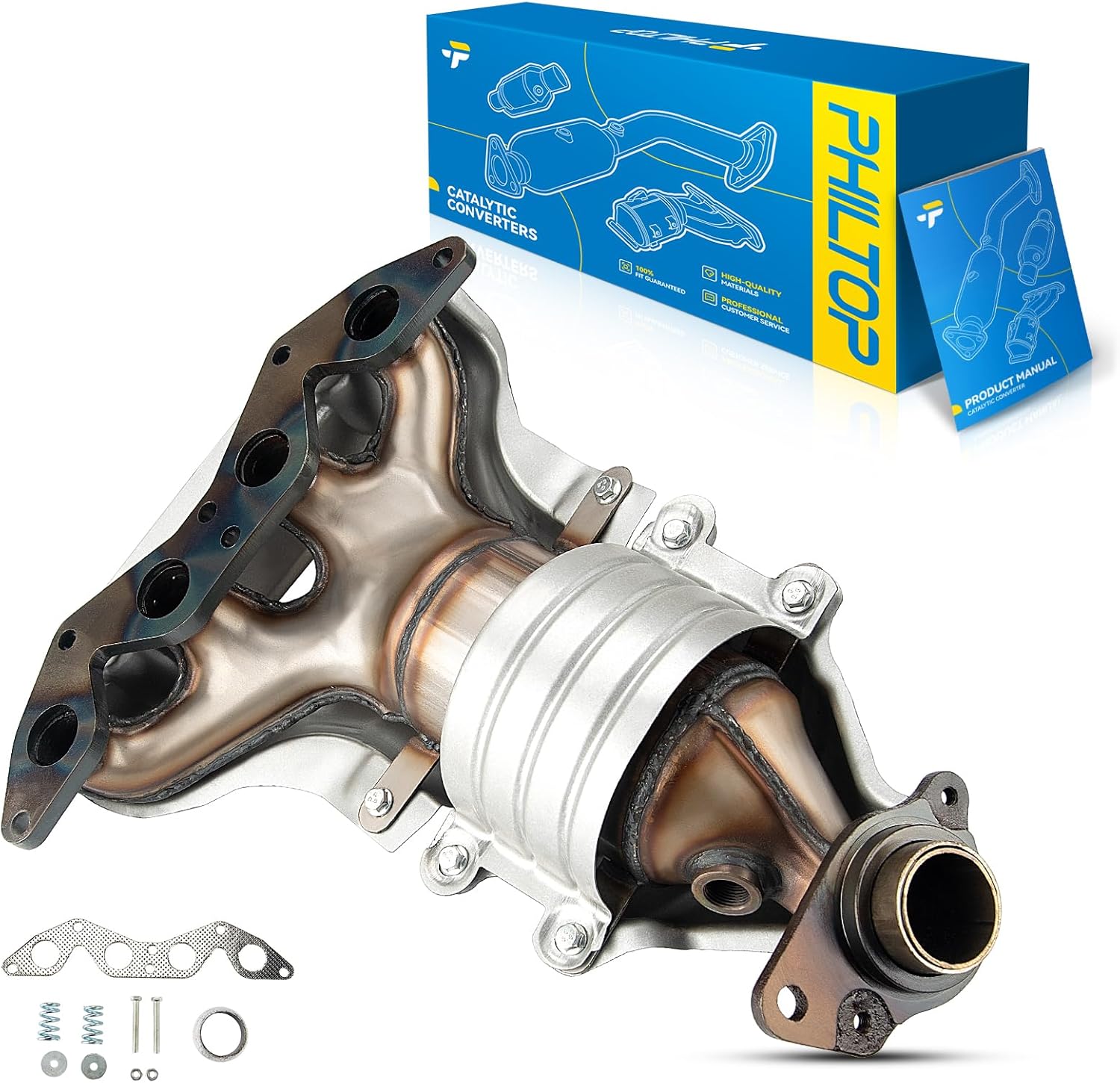
| Fitment | 2001–2005 Honda Civic 1.7L |
|---|---|
| Position | Front |
| Material | Aluminized stainless steel body |
| Certification | EPA-compliant federal emissions |
| Includes | OE-style gaskets and mounting hardware |
This PHILTOP front catalytic converter kit replaces the factory front converter on 2001–2005 Honda Civic 1.7L models. It uses an aluminized stainless steel body with a double-layer high-temperature ceramic carrier to restore catalytic function while aiming to reduce backpressure and improve exhaust flow. The kit ships with OE-style gaskets and basic hardware so most installations can be completed in a few hours without modification. Real-world benefits include quieter operation if the original unit was damaged, restored emissions control on federal-rule vehicles, and potential modest improvements in drivability from reduced restriction. Reported issues among buyers include inconsistent or low-quality clamps and fasteners and occasional fitment or missing-part problems, so expect to verify parts on arrival and be prepared to swap hardware or weld if necessary. This converter is EPA-compliant so it cannot be used where stricter state aftermarket rules apply. For budget-minded repairs on compatible Civics this is a practical replacement, but double-check fitment and the included hardware before starting the job.
Best for: Buyers seeking a cost-conscious, factory-replacement front catalytic converter to restore emissions function and normal exhaust flow on a 2001–2005 Civic 1.7L and willing to inspect or swap the supplied hardware.
Less Ideal for: Do not choose this if your vehicle is registered in a state that requires a different certified converter or if you need a guaranteed plug-and-play kit with premium hardware and heat-shield compatibility.
- Direct-fit design for 2001–2005 Civic 1.7L with OE-style gaskets and mounting points for bolt-on installation
- Aluminized stainless steel body and high-temperature ceramic substrate intended to resist corrosion and maintain flow
- EPA-compliant federal emissions unit for states that accept federal converters
- Includes gaskets and basic hardware to complete most installations without modification
- High-flow internal honeycomb substrate to reduce backpressure compared with a clogged unit
- Included clamps and bolts have mixed quality reports and may need replacement or welding
- Not legal for sale or installation in states with stricter aftermarket converter rules
Verdict: A practical, direct-replacement front catalytic converter for 2001–2005 Civic 1.7L owners who want a budget-conscious, EPA-compliant fix to restore emissions and exhaust flow.
4. Auto Shack Exhaust Manifold Catalytic Converter Direct Fit for 2001–2005 Honda Civic DX / 2001–2005 Acura EL 1.7L
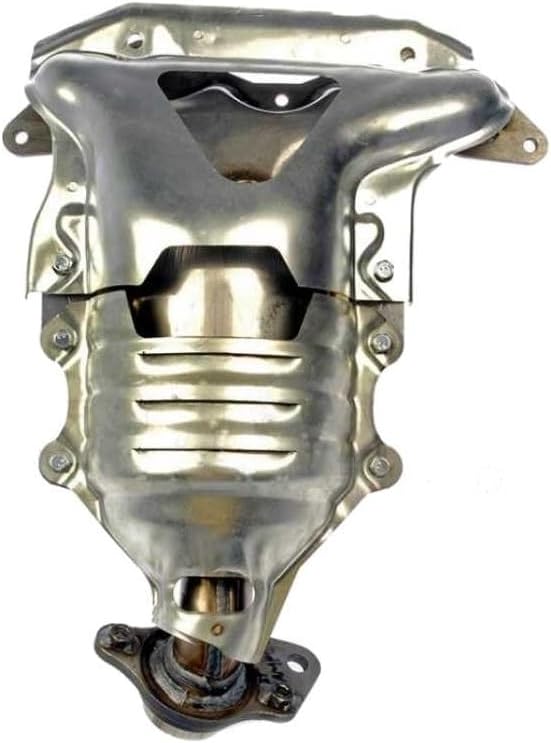
| Exterior | Stainless Steel and Ceramic |
|---|---|
| Item model number | EMCC00013 |
| Manufacturer | Auto Shack |
| OEM Part Number | 10674608, 674-608, 674608 |
This Auto Shack exhaust manifold with integrated catalytic converter replaces the factory manifold on 2001–2005 Honda Civic DX and 2001–2005 Acura EL 1.7L applications and is intended as a budget-friendly, direct-fit replacement. It arrives as a complete unit with stainless steel exterior and ceramic catalyst media so you replace the whole assembly rather than separate pieces. Typical use is a like-for-like repair to restore emissions controls and exhaust routing after failure or damage. Buyers report the unit bolts up cleanly in many installations but may require minor adjustments such as elongating a mounting hole, reshaping the outer heat shield, or swapping spring bolts to align with the exhaust pipe. The listing warns it is 46-state legal and not CARB compliant, so it is unsuitable for states with stricter rules. Practical benefits are simplified installation compared with piecing together a converter and manifold, factory-style fitment for most cars in the listed years, and a lower cost than many OEM replacements. Expect to replace O2 sensors when installing to avoid false P0420 codes and consider professional installation if you prefer no fabrication or sensor work.
Best for: Budget-minded owners who need a full manifold-plus-catalytic converter replacement for a 2001–2005 Civic DX or Acura EL and want a lower-cost, factory-style assembly that gets the vehicle back on the road.
Less Ideal for: Owners in states with strict emissions rules or anyone who requires a CARB-compliant part should avoid this unit and seek a certified alternative.
- Complete manifold and catalytic converter assembly simplifies replacement compared with sourcing separate parts
- Stainless steel exterior and ceramic catalyst media for corrosion resistance and emissions control
- Direct-fit design for 2001–2005 Honda Civic DX and 2001–2005 Acura EL 1.7L minimizes modification in many installations
- Meets federal emissions standards for sale in 46 states
- Not CARB certified and therefore illegal for use in California, Colorado, New York, and Maine
- Some units may require minor fitment tweaks such as enlarging mounting holes, adjusting the heat shield, or replacing supplied spring bolts
Verdict: A cost-effective, direct-fit manifold with integrated catalytic converter for 2001–2005 Civic DX and Acura EL owners who need an affordable factory-style replacement outside of CARB states.
5. SAROTIN Catalytic Converter for Honda Civic 1.6L (1996–2000) Front Inner

| Fitment | Honda Civic 1.6L 1996-2000 |
|---|---|
| Material | 409 stainless steel |
| Substrate | Cordierite ceramic carrier |
| O2 Sensor Ports | 2 |
| Outlet Type | 3 Bolt Welded Flange |
This SAROTIN catalytic converter is a direct-replacement front inner unit engineered for Honda Civic 1.6L models from 1996 to 2000. It is built from 409 stainless steel with a cordierite ceramic substrate and includes two O2 sensor ports and welded flanges to match the factory exhaust manifold connections. Typical use is to clear a P0420 code, restore proper emissions control, and reduce exhaust noise associated with a failing converter. The direct-fit design means installation requires no cutting or welding on cars with matching flanges, which simplifies swapping it into the exhaust system. The product emphasizes upgraded catalyst materials to improve conversion efficiency and expected lifespan versus low-end alternatives. Important limitations are that it is EPA compliant but not CARB compliant, so it is not legal for sale or use in some states, and the cordierite substrate has different thermal durability than metallic substrates under extreme conditions. For someone prioritizing a reliable, factory-style replacement this unit offers a practical balance of fitment and emissions performance, but buyers in CARB states will need a different, approved option.
Best for: Buyers who want a dependable, factory-style replacement to restore emissions function and quiet a worn converter with minimal installation hassle.
Less Ideal for: Drivers who need a California or Colorado legal CARB-compliant converter or those who regularly subject the exhaust to extreme heat cycles should look at alternate, state-approved options.
- Direct replacement fit designed for 1996–2000 Honda Civic 1.6L to simplify installation
- 409 stainless steel construction for corrosion resistance in the exhaust environment
- Includes two O2 sensor ports so original sensors can be reused without adapters
- EPA compliant to address emissions faults like P0420 and restore proper conversion
- Not CARB compliant so it is illegal in some states and not suitable if you need a California-compliant part
- Uses a cordierite ceramic substrate which is more vulnerable to thermal shock than metallic substrates in extreme conditions
Verdict: A straightforward, factory-style direct-fit catalytic converter for 1996–2000 Honda Civic 1.6L drivers who prioritize reliable emissions restoration without extensive modification.
6. DNA MOTORING Front Catalytic Converter, Direct-Fit for 1996–2000 Honda Civic (D16Y7)

| Compatible models | 1996–2000 Civic Non-EX and SI; 1996–1997 Del Sol S |
|---|---|
| Engine fitment | D16Y7 |
| Position | Front |
| Construction | Cast iron and aluminized steel |
| OEM part numbers | 18160P2EA10, 18160P2EA12 |
This DNA MOTORING catalytic converter replaces the front section of the exhaust on 1996–2000 Honda Civic models with the D16Y7 engine and 1996–1997 Del Sol S. It is a direct-fit, OEM-style replacement built from cast iron and aluminized steel with a catalytic core intended to lower emissions and restore mileage. Typical use is as a factory-replacement part when the original converter is clogged, damaged, or failing emission checks. The product ships with welded O2 sensor bungs and a thick flange surface, so some installers report needing to use antiseize and modify the gasket or flange to achieve a perfect seal. Strengths include EPA OBD-II approval for federal-emissions vehicles and construction aimed at durability. Limitations are that it is not legal in CARB states and some buyers report fitment and internal-core durability issues that may require minor welding or rework. Expect a lower-cost, functional substitute for an OEM unit if you are comfortable verifying flange fit and performing light adjustments during installation.
Best for: Buyers who want an affordable, functional factory-style replacement to restore emissions performance on a Civic with the D16Y7 engine and are comfortable doing or overseeing minor fitment tweaks.
Less Ideal for: Drivers in CARB-regulated states or those who need a guaranteed factory-perfect, no-modification replacement right out of the box should look elsewhere.
- Direct-fit design for 1996–2000 Civic D16Y7 engines making installation straightforward for experienced installers
- EPA OBD-II approved for federal-emissions models so it can clear emissions checks outside CARB states
- Constructed from cast iron and aluminized steel for corrosion resistance and basic durability
- Includes welded O2 sensor bungs so sensor locations are preserved without aftermarket modifications
- Not legal for sale or use in states with CARB regulations such as California, New York, and Maine
- Some customers report inconsistent flange alignment, incorrect hardware, or internal catalyst issues that may require trimming, rework, or welding
Verdict: A cost-effective federal-emissions direct-fit catalytic converter for D16Y7 Civics when you need a working factory-style replacement and can handle minor installation adjustments.
7. Dorman Driver Side Exhaust Manifold Kit with Gaskets and Hardware

| Material | Cast Iron |
|---|---|
| Bolt Pattern (Number of Holes) | 6 |
| Manufacturer | Dorman Products |
| Includes | Manifold, manifold gasket, flange gasket, 3 studs, 3 nuts |
This Dorman driver-side exhaust manifold kit is a direct-fit replacement designed to replace a failed factory manifold and comes with the gaskets and fasteners needed for installation. Made of ductile cast iron, the manifold resists warping and cracking better than lower-grade iron, which helps with long-term durability. The kit includes a manifold gasket, flange gasket, three studs and three nuts so you can complete a single-side repair without sourcing extra parts. It is reverse-engineered from factory parts for a close fit and machined mating surfaces help the flange seal cleanly. In practice this suits routine exhaust repairs where you want a one-order solution and fewer trips to the parts store. Potential drawbacks are fit interference reported by some users around nearby sensors that may require minor trimming and that paper-faced gaskets in the box can arrive bent; careful inspection before install is advised. For risk-averse buyers, the cast-iron construction and included hardware minimize variables during a replacement job.
Best for: Buyers who want a dependable, factory-style replacement that reduces uncertainty during a repair and who prefer receiving all required parts in one kit to avoid follow-up trips.
Less Ideal for: Do not choose this if you expect a custom performance upgrade or if you do not want to make minor clearance modifications when fit issues arise around sensors.
- Ductile cast iron construction resists warping and cracking compared with cheaper materials.
- Includes required gaskets and hardware for a complete single-side repair.
- Reverse-engineered for direct-fit to factory mating surfaces for easier installation.
- Machined exterior surfaces improve sealing at the flange.
- Some buyers reported interference with nearby sensors that required trimming or minor modification.
- Included ring gasket has occasionally arrived bent in shipping and may need inspection or replacement.
Verdict: A sturdy cast-iron, direct-fit manifold kit that minimizes installation uncertainty by including all gaskets and hardware for a single-side exhaust repair.
Choosing the Right Honda Civic DX Exhaust Manifold: Key Factors to Consider
Fitment and Flange Alignment
Correct fitment is the single most important factor for a Civic DX exhaust manifold because even slight misalignment causes manifold leaks, exhaust pulses, and uneven back pressure.
Inspect flange flatness and port shape when evaluating options. Manifolds that match the Civic DX head port geometry reduce the need for gasket over-compression and help ensure consistent torque across studs or bolts. Also consider how the manifold routes toward the rest of the exhaust system to avoid clearance issues with heat shields, the starter, or suspension components.
Sealing Surface and Gasket Compatibility
A reliable sealing surface prevents exhaust leaks that cause noise, poor performance, and potential damage to nearby sensors. Look for machined or ground flange faces and a design that accepts OE-style or high-temperature gaskets.
Gasket compatibility matters because some manifolds require a specific multi-layer steel or compressed graphite gasket to seal under thermal cycling. Consider whether replacement gaskets are widely available and whether the manifold design allows for easy gasket changes without disturbing adjacent components.
Material and Thermal Durability
Material choice and construction determine how the manifold handles repeated heating and cooling cycles. Cast iron provides good thermal mass and resistance to cracking under many conditions, while stainless steel or tubular designs can offer lighter weight and faster warm-up but may require thicker wall construction to resist fatigue.
Also evaluate surface treatments like ceramic coating or high-temperature paint that reduce corrosion and help manage underhood temperatures. For Civic DX owners, prioritize materials and finishes that resist salt and road debris if you drive in corrosive conditions.
Flange-To-Header Transition and Flow Characteristics
How the manifold transitions from the flange to the header runners affects exhaust scavenging and back pressure. Smooth transitions and consistent runner lengths help maintain engine efficiency and throttle response, especially on naturally aspirated engines common in Civic DX models.
If you are replacing a cracked or leaking manifold, pick a design that restores consistent flow without introducing restrictive steps or abrupt changes in cross-sectional area. Balanced runner geometry also reduces uneven heat distribution across cylinders.
Ease Of Installation And Accessibility
Installation ease is important because the Civic DX engine bay can be tight around the manifold. Consider manifolds with accessible fastener locations, clearances for heat shields, and designs that allow installation with the intake and accessories in place when possible.
Some manifolds require removal of ancillary parts for access to studs or bolts. If you plan to DIY, choose a manifold with straightforward bolt access and clear instructions. Also factor in whether new studs, longer bolts, or specific torque sequences are recommended to avoid post-installation leaks.
Durability Against Cracks And Corrosion
Manifolds experience thermal stress and road exposure, making resistance to crack formation and corrosion a critical buying factor. Look for thicker wall sections at stress points, reinforced welds, and corrosion-resistant coatings to extend service life.
Check whether the design reduces stress risers at collector joints and includes support brackets or flanges that disperse loading from the exhaust system. For older Civic DX examples, consider manifolds that are purpose-built to replace corroded OEM units without requiring additional reinforcement.
Common Exhaust Manifold Symptoms On The Civic DX
Several symptoms often indicate manifold issues on a Honda Civic DX. A ticking or tapping noise during cold start that grows louder under acceleration is a classic sign of a leaking manifold flange or failed gasket. You may also notice a distinct exhaust smell in the engine bay or inside the cabin when seals are compromised.
- Tapping noise on cold start or under load
- Decreased throttle response or rough idle
- Burning smells near the firewall or engine bay
- Visible soot or black streaks near flange edges
How To Diagnose An Exhaust Manifold Leak
To diagnose a manifold leak on the Civic DX, perform a visual inspection first for cracked casting, fractured welds, or soot buildup at flange joints. While the engine is cold, check that flange bolts or studs are present and not backed out. You can then run the engine briefly and listen near the manifold area for escaping exhaust using a length of hose as a stethoscope to pinpoint leaks.
If you suspect a small leak that is not obvious, feel for air movement around flange seams while an assistant lightly revs the engine. Also inspect the manifold-to-downpipe connection and any integrated sensor ports for missing gaskets or loose fasteners.
- Visual inspection for cracks and soot
- Use a hose to localize hissing sounds
- Check bolt torque and stud condition
- Inspect gasket seating surfaces and sensor ports
When To Replace Instead Of Repairing
Minor flange warping or small gasket failures can sometimes be resolved with resurfacing and new gaskets. However, replacement is usually the safer option if you find hairline cracks in the casting, fractured runners, or repair history showing recurring leaks. Replacement avoids repeat labor and the risk of a repair failing under heat cycling.
Severe corrosion, multiple cracked welds at the collector, or missing mounting points that cannot be reliably restored are further reasons to replace the manifold rather than attempt a repair. Replacement also gives an opportunity to choose improved materials or coatings that better suit your local climate.
- Replace for visible cracks or multiple leaks
- Replace if previous repairs have failed repeatedly
- Replace if mounting points are compromised
Installation Considerations For Civic DX Owners
Plan the installation with the engine cool and the battery disconnected to reduce injury risk. Use anti-seize on studs and grade-appropriate fasteners where recommended. Replace manifold gaskets and any rusted studs during installation to ensure a long-lasting seal. Torque bolts in the sequence specified by service manuals to prevent distortion of flanges.
If you are swapping a manifold, check whether heat shields or nearby components need temporary removal for access. After installation, run the engine and re-torque fasteners to the specified values after a short heat cycle to confirm a settling seal.
- Use new gaskets and anti-seize on studs
- Follow torque sequence and re-torque after heat cycle
- Remove heat shields if required for access
Still looking for the perfect fit?
Select your Honda Civic configuration to see the most relevant Exhaust Manifolds recommendations
How We Chose the Best Honda Civic DX Exhaust Manifold
We focused on selection criteria that matter for exhaust manifolds on the Honda Civic DX. Primary evaluation dimensions included flange and port alignment to ensure correct fit at the cylinder head, gasket seating surfaces and manifold flatness to minimize leakage, and material and coating choices that influence thermal cycling durability and corrosion resistance. Heat-management features such as thermal shielding, ceramic coatings, or thick-wall castings were assessed because they affect longevity and nearby component temperatures.We also considered bolt pattern compatibility and fastener access in the Civic DX engine bay, since difficult mounting can deter proper installation and torque sequencing. Emissions and vacuum compatibility were reviewed where relevant to ensure no interference with sensor locations or manifold-integrated ports. Exclusions included any unit that required cylinder-head modification, nonstandard adapter plates, or significant ECU changes. Units that fit only with major exhaust system rework were not included. The shortlist favors options that balance long-term sealing, durability, and straightforward installation for typical Civic DX owners.
Our full evaluation process is outlined in our review methodology.
FAQ
What are the most common causes of exhaust manifold cracks on a Civic DX?
Cracks typically result from repeated thermal cycling that creates stress at sharp corners or welds, corrosion from road salts, or impacts from debris. Older manifolds with thin-wall sections are especially prone to fatigue cracking.
Can I drive with a minor exhaust manifold leak on my Civic DX?
Driving short distances may be possible, but even small leaks can increase engine noise, reduce efficiency, and allow exhaust gases into the engine bay. Prolonged driving risks damage to nearby sensors and heated components, so repair or replacement should be scheduled promptly.
How do I know if my manifold gasket needs replacing?
Signs include exhaust noise at the flange, soot buildup around the gasket, and intermittent ticking sounds during acceleration. If the gasket has been exposed to overheating or is several years old, proactive replacement during manifold work is wise.
Is it necessary to replace studs or bolts when installing a new manifold?
Often yes. Studs and bolts can seize or stretch from repeated heating cycles, making proper torque difficult to achieve. Replacing fasteners with the correct grade and length helps ensure a secure, leak-free installation.
Will a cracked exhaust manifold affect the catalytic converter on my Civic DX?
A crack can change exhaust flow and temperature distribution, which may stress downstream components over time. While a single small crack is unlikely to immediately damage the converter, unresolved leaks can contribute to sensor errors and inefficient combustion that affect emissions systems.
Final Verdict
Prioritize fitment, sealing reliability, and material durability when choosing an exhaust manifold for a Honda Civic DX. Good flange alignment and gasket compatibility minimize the most common leak issues, while robust materials and coatings reduce the chance of crack-related failures over time. Balance ease of installation against long-term durability so you do not trade short-term convenience for repeated repairs. With the right choice, you restore proper exhaust flow, reduce noise, and protect downstream components so you can drive with confidence.
Explore More:
- Check out all Honda Civic parts & accessories
- Explore Exhaust Manifolds Maintenance & Repair Guides
- Explore Exhaust & Emissions
- Browse all Auto Parts
