

Note: This article contains affiliate links. If you click on these links and make a purchase, I may earn a small commission at no extra cost to you. This helps support my research and content. Read my full affiliate disclosure here.
Picking the right Honda Civic exhaust manifold matters because it affects engine efficiency, noise, and emissions behavior. A correct manifold restores proper exhaust flow and helps avoid leaks that can harm performance or create unsafe fumes.This guide presents the seven shortlisted options we considered the top choices for Honda Civic owners. We evaluated each on fitment, material quality, heat management, and durability to help you decide which manifold suits your goals. Read on to see the main factors that informed our selections.
Looking for other parts? See all Honda Civic parts & accessories.
Top Picks at a Glance
| Best quality Built to a higher standard if you want something more solid | Dorman Driver Side Exhaust Manifold Kit (includes gaskets and hardware) |  |
| Best Value The sweet spot between price and what you get | A-Premium Exhaust Manifold Catalytic Converter with Gasket Kit for Honda Civic / Acura EL 2001–2005 1.7L |  |
| Best budget The cheapest option that still gets the job done reliably | AutoShack Exhaust Manifold with Catalytic Converter Direct Fit for 2001–2005 Honda Civic 1.7L |  |
| Highest Rated A top-rated pick with lots of positive feedback | MOSTPLUS Exhaust Manifold with Catalytic Converter for 2001–2005 Honda Civic 1.7L |  |
| Most popular A crowd favorite that many people choose with confidence | Auto Dynasty Front Catalytic Converter Exhaust Manifold for 2001–2005 Honda Civic 1.7L |  |
| Best Seller A high-volume bestseller chosen again and again | DNA MOTORING Catalytic Converter Compatible with 1996–2000 Honda Civic D16Y7 |  |
1. Dorman Driver Side Exhaust Manifold Kit (includes gaskets and hardware)

| Material | Cast Iron |
|---|---|
| Manufacturer | Dorman Products |
| Bolt Pattern (Number of Holes) | 6 |
| Manufacturer Part Number | 674-522 |
This Dorman exhaust manifold kit replaces a warped or cracked driver-side manifold with a ductile cast iron unit designed for durability under high heat. It is supplied as a complete repair kit with the manifold, manifold gasket, flange gasket, three studs and three nuts so you can perform a single-purchase replacement without repeated trips for parts. The part is reverse-engineered to match factory fit for a straightforward install and the machined exterior suggests decent sealing surfaces at the flanges. Practical buyers will appreciate the emphasis on higher-grade iron to resist future cracking and the included hardware that streamlines installation. Limitations are typical of replacement manifolds: it is a direct replacement rather than a performance header, so it will not increase power or significantly change exhaust tone, and buyers should confirm exact Scion xD engine and year fitment before ordering.
Best for: Convenience-driven owners seeking a straightforward, one-purchase repair solution who prioritize a reliable factory-style replacement and minimal parts sourcing.
Less Ideal for: Enthusiasts seeking performance exhaust upgrades or owners who want an aftermarket header for increased power and sound should look elsewhere.
- Complete kit includes manifold plus gaskets and hardware for a single-order repair
- Constructed from ductile cast iron to better resist warping and cracking from heat
- Reverse-engineered for direct-fit installation to match factory mounting points
- Machined exterior surfaces aid flange sealing and fitment
- Designed as a factory-style replacement so it does not provide performance gains
- Fitment must be confirmed for specific Scion xD engine year and trim before purchase
Verdict: A convenient, all-in-one factory-style replacement manifold kit built from ductile iron to reduce future warping and cracking.
2. A-Premium Exhaust Manifold Catalytic Converter with Gasket Kit for Honda Civic / Acura EL 2001–2005 1.7L

| Vehicle fitment | Honda Civic 2001–2005, Acura EL 2001–2005 1.7L |
|---|---|
| Position | Front |
| Body material | Stainless Steel |
| Inlet type | 6 Bolt Welded Flange |
| EPA compliant | Yes (restricted in some states) |
This A-Premium assembly combines the exhaust manifold and catalytic converter into a single direct-fit unit intended for front-side installation on 2001–2005 Honda Civic and Acura EL 1.7L engines. It arrives with a gasket and mounting hardware and uses a 6-bolt welded flange inlet and a 2-bolt welded flange outlet, so it is intended to replace the factory piece without major piping changes. Typical use is a DIY or shop replacement to clear an exhaust leak, stop a check-engine code, or pass emissions testing when federal regulations permit. Practical benefits include stainless steel construction for corrosion resistance and EPA-compliant internals where allowed, plus included hardware to simplify installation. Reported issues from some buyers include occasional fitment variation that can require slight modification or reuse of original springs and the possibility of manufacturing defects on a small number of units. The part carries a one-year unlimited-mileage guarantee from the brand, but buyers should inspect fitment carefully before installation and be prepared for minor adjustments during mounting.
Best for: Practical optimizers who want a cost-effective, near-factory replacement to fix exhaust leaks or clear emission-related codes without paying dealer prices.
Less Ideal for: Buyers who need guaranteed factory-quality fit with zero modification or those in states where this EPA-compliant converter is restricted should consider alternatives from authorized dealers or state-compliant suppliers.
- Direct-fit design for 2001–2005 Honda Civic and Acura EL 1.7L to simplify replacement
- Stainless steel body helps resist corrosion compared with cheaper materials
- Includes gasket and mounting hardware to reduce the number of extra parts needed
- EPA-compliant where allowed, enabling emissions tests to be passed in many states
- Some units show fitment variance and may require minor modifications or reuse of original springs
- A small number of buyers reported early failures, indicating variable long-term reliability
Verdict: A budget-friendly, mostly direct-fit manifold/converter that lets practical DIYers restore emissions compliance and stop exhaust leaks with some risk of fitment variation.
3. AutoShack Exhaust Manifold with Catalytic Converter Direct Fit for 2001–2005 Honda Civic 1.7L
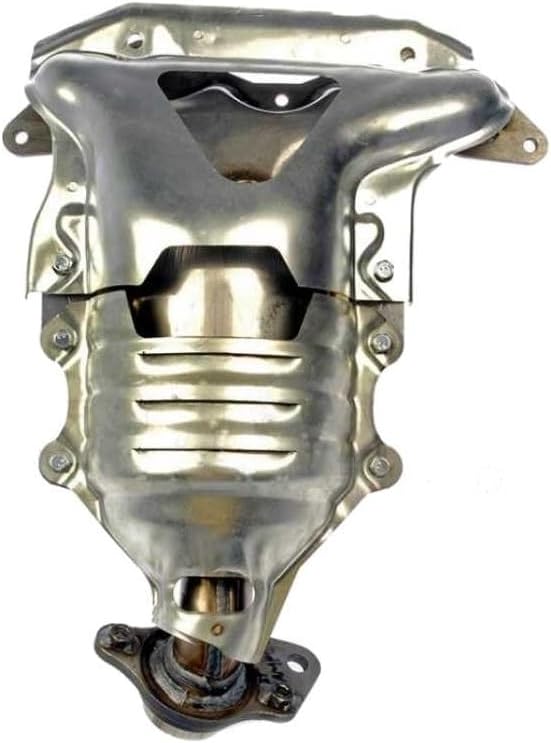
| Fitment | 2001-2005 Honda Civic 1.7L FWD |
|---|---|
| Exterior | Stainless Steel and Ceramic |
| Includes | 1 Catalytic Converter with Exhaust Manifold |
| Legal | EPA compliant for 46 states |
This AutoShack unit combines the exhaust manifold and catalytic converter into a single direct-fit assembly for 2001–2005 Honda Civic 1.7L engines, simplifying replacement of a failed converter or cracked manifold. It arrives as a 100 percent new part with stainless steel and ceramic construction and is intended to bolt onto the existing exhaust system with professional installation recommended. Buyers will appreciate the integrated bundle reduces the number of parts to source and streamlines installation compared with replacing components separately. The part is EPA compliant for most states but not legal in California, Colorado, New York, or Maine, so check registration before buying. Several owners report minor fitment tweaks are sometimes needed such as enlarging a mounting hole or adjusting heat shield tabs and swapping O2 sensors during installation is advised to avoid false emissions codes. For a budget-focused replacement this unit delivers core function and decent materials, but expect some light modification and professional labor to get a trouble-free fit.
Best for: Value-oriented Civic owners who need a complete, lower-cost replacement and prioritize getting a working, emissions-compliant unit without buying multiple separate parts.
Less Ideal for: Owners in states with stricter emissions rules or anyone unwilling to accept light fitment adjustments and professional installation should consider factory-quality or certified alternatives.
- Integrated manifold and catalytic converter simplifies replacement and reduces part-count during installation
- Stainless steel and ceramic construction designed for corrosion resistance and high-temperature durability
- Direct-fit design intended for 2001–2005 Honda Civic 1.7L which minimizes custom fabrication for most installs
- EPA compliant for 46 states, meeting federal emissions standards outside restricted states
- Not legal for sale or use in California, Colorado, New York, or Maine due to state emissions regulations
- Some customers report minor alignment or mounting-hole modifications and heat shield adjustment required
- Includes nuts or spring bolts that may not be preinstalled which can complicate installation in tight spaces
Verdict: A budget-friendly, integrated manifold and catalytic converter that gets your 2001–2005 Civic back on the road but may need minor fitment tweaks and is not legal in several states.
4. MOSTPLUS Exhaust Manifold with Catalytic Converter for 2001–2005 Honda Civic 1.7L

| Fitment | 2001-2005 Honda Civic 1.7L 4-cylinder (not for 2005 EX) |
|---|---|
| OEM Part Numbers | 18160-PLM-A50, 18160-PLM-A00, 674-608 |
| Special Features | Including heat shield |
| Exterior | Painted |
This MOSTPLUS exhaust manifold combines the manifold and catalytic converter into a single direct-fit assembly intended for 2001–2005 Honda Civic 1.7L (non‑EX) applications. It bolts on using factory-spec flanges and ships with gaskets and hardware to simplify installation, so it is typically used as a one-piece replacement when the original manifold or converter is cracked or clogged. The unit is painted and built from stainless steel according to the seller, and it includes a heat shield to protect nearby components. Buyers report the part often fits with minimal modification, clears check engine lights when paired with working O2 sensors, and can restore emissions function quickly. Trade-offs include non-CARB compliance, occasional fitment tweaks around the heat shield or welded nuts, and mixed long-term durability reports from users who experienced internal breakdown after extended use. Expect an affordable, ready-to-install replacement that may require light trimming or filing during fit-up on some cars.
Best for: Reliability-focused owners looking for a straightforward, budget-friendly factory-replacement manifold/converter to get a daily-driven Civic back to reliable operation quickly.
Less Ideal for: Drivers in California or other CARB-restricted areas who must meet state emissions rules and buyers seeking a premium long-life catalytic solution without potential fitment adjustments.
- Direct-fit design using factory-style flanges for bolt-on installation
- Includes heat shield, gaskets and hardware for a more complete replacement
- Constructed from stainless steel and painted for corrosion resistance
- Reported to clear check engine codes when oxygen sensors are functioning properly
- Not C.A.R.B. compliant so it is not legal for emissions-restricted states
- Some units require minor trimming or adjustment to the heat shield or flange area for perfect fitment
- Mixed user reports on long-term durability, with occasional premature internal failure
Verdict: An affordable, bolt-on manifold with integrated catalytic converter that restores emissions function and fitment quickly for 2001–2005 Honda Civic 1.7L owners.
5. Auto Dynasty Front Catalytic Converter Exhaust Manifold for 2001–2005 Honda Civic 1.7L

| Position | Bottom |
|---|---|
| Special Features | Direct OEM Replacement, Oxygen Sensor Plug, Rust-Resistant, Stainless Steel Construction |
| Manufacturer | Auto Dynasty |
| Compatible Vehicles | 2001-2005 Honda Civic DX LX CX VX HX 1.7L |
This Auto Dynasty front catalytic converter exhaust manifold replaces the original exhaust manifold and integrated converter on 2001–2005 Honda Civic 1.7L federal-emission vehicles. Designed as a direct replacement, it includes an oxygen sensor plug and uses stainless steel construction with mandrel bends and TIG welds to resist corrosion and hold up under heat. Installation is intended to be straightforward with a bolt-on fit that requires no drilling or modification if the part matches your vehicle. In practice buyers report mixed fitment results: when the flange and clearance align it installs quickly and restores exhaust flow, but some users needed to clearance the block, add a flange spacer, or transfer the old flange to stop leaks and ensure a proper seal. This part is not legal for sale or use in certain states with stricter emissions rules. If you want a convenient, lower-cost factory-style replacement for an older Civic and accept occasional minor fitment adjustments, this manifold is a practical option; if you need guaranteed perfect fitment or state-compliant emissions certification, consider alternatives.
Best for: Buyers who prioritize convenience and want a ready-made, factory-style replacement to get an older Civic back on the road quickly without sourcing OEM parts.
Less Ideal for: Drivers who need guaranteed perfect fitment without any modification or who require parts certified for restricted-state emissions programs should look elsewhere.
- Stainless steel construction with mandrel bends and TIG welds for corrosion and heat resistance
- Includes oxygen sensor plug for straightforward connection to the factory wiring
- Sold as a direct replacement intended to bolt in without drilling or modification
- Designed specifically for 2001–2005 Honda Civic 1.7L federal-emission models
- Several buyers reported imperfect flange alignment causing leaks or interference with the engine block
- Not legal for sale or use in California, New York, Colorado, or Maine emissions-controlled models
Verdict: A convenient, lower-cost stainless steel factory-style replacement for 2001–2005 Civic 1.7L owners who accept possible minor fitment tweaks and limited emissions legality.
6. DNA MOTORING Catalytic Converter Compatible with 1996–2000 Honda Civic D16Y7

| Compatible Models | 1996–2000 Honda Civic Non‑EX and Si; 1996–97 Del Sol S |
|---|---|
| Engine Fitment | D16Y7 |
| Position | Front |
| OEM Part Numbers | 18160P2EA10, 18160P2EA12 |
This DNA MOTORING catalytic converter is a direct-fit replacement for the front converter on 1996–2000 Honda Civic Non‑EX and Si cars using the D16Y7 engine. It installs in place of the factory unit and restores catalytic function to reduce emissions and clear related trouble codes. The part is built from cast iron and aluminized steel with a durable catalyst core and welded oxygen sensor bungs so you can reuse or fit replacement sensors. Buyers report it fits without major modification in many cases and will get a vehicle back to passing EPA-style emissions checks outside CARB states. Expect an aftermarket feel: some customers needed to enlarge bolt holes, adjust gaskets, or swap supplied hardware to get a perfect fit, and long-term internal durability has mixed feedback. This unit is aimed at practical repairs where restoring emissions compliance and removing a check engine light matter more than achieving OEM longevity or CARB certification.
Best for: A risk‑averse mainstream buyer who needs a practical, federal‑emissions replacement to stop an emissions‑related check engine light and get an older Civic back on the road with minimal fuss.
Less Ideal for: Do not choose this if you need a CARB‑compliant converter or expect factory‑level longevity without occasional fitment tweaks and hardware swaps.
- Direct-fit design for 1996–2000 Honda Civic Non‑EX and Si models with D16Y7 engine
- EPA OBD‑II approved for federal emissions models so it can restore emissions compliance outside CARB states
- Constructed from cast iron and aluminized steel for basic strength and durability
- Not legal for use in CARB states such as California and New York
- Fitment and hardware quality can vary requiring minor modification or replacement bolts
- Some users reported internal catalyst failures over extended high-mileage use
Verdict: A practical federal‑emissions direct‑fit catalytic converter for D16Y7 Civics that restores emissions function and clears related codes.
Looking for the perfect fit?
Select your Honda Civic configuration to see the most relevant Exhaust Manifolds recommendations
Choosing the Right Honda Civic Exhaust Manifold: Key Factors to Consider
Material and Construction
The material determines how well a manifold withstands repeated heat cycles and resists cracking. Cast iron is often robust against thermal fatigue but can be heavier, while stainless steel offers better corrosion resistance and lighter weight. Weld quality, flange thickness, and the presence of reinforcing ribs all influence long-term durability.
Look for manifolds with consistent wall thickness and quality joins to reduce the chance of stress fractures. Material choice also affects heat retention and expansion characteristics, which in turn affect gasket life and sealing consistency.
Fitment and Flange Alignment
Accurate fitment is crucial because misaligned flanges lead to exhaust leaks and installation difficulty. Flange flatness and bolt hole alignment determine how evenly a manifold compresses gaskets and how much stress is placed on bolts and studs.
A manifold that matches factory mounting points minimizes the need for additional machining or adapter components. Good fitment also reduces the risk of exhaust manifold symptoms such as ticking noises, loss of low-end torque, or fumes entering the cabin.
Heat Management
How a manifold manages heat affects nearby components, emissions equipment, and engine bay temperatures. Thermal coatings, ceramic insulation, or thick-walled construction can reduce radiant heat and protect wiring, hoses, and intake components.
Effective heat management also slows gasket degradation and helps prevent cracks from thermal cycling. Consider whether the manifold design vents heat toward the exhaust system efficiently or concentrates it in ways that require additional shielding.
Sealing and Gasket Interface
The interface between the manifold and the cylinder head is where leaks most commonly occur. The mating surface finish, use of integrated or matched gaskets, and whether the design includes locating dowels all influence sealing performance.
A firm, even clamp load across the flange keeps sealing surfaces in contact as the assembly heats and cools. Inspect designs that promote even compression and reduce the likelihood of warp or gasket blowout, which are common failure modes.
Durability and Crack Resistance
Repeated heating and cooling can produce stress that leads to cracks. Durability depends on both material properties and design features that distribute stress away from high-strain areas. Reinforced junctions, smooth internal transitions, and fewer welded seams typically last longer under cyclical loads.
Also consider corrosion resistance since rust can accelerate failure. Manifolds that incorporate corrosion-resistant alloys or protective finishes tend to maintain structural integrity and sealing performance over time.
Serviceability and Installation
Ease of installation matters for owners who perform their own work or for minimizing shop labor. Features that simplify service include accurate hole alignment, accessible nut and bolt locations, and compatibility with factory hardware. Some designs reduce the need to remove other components during installation.
Also think about long-term serviceability: replaceable gaskets, available hardware kits, and clear installation guidance reduce the chance of improper installation that can cause leaks or fastener failures.
How We Chose the Best Honda Civic Exhaust Manifold
We focused on components specifically designed to fit Honda Civic engines and evaluated candidates across several measurable dimensions. Key criteria included material and construction quality to resist heat and cracking, precision of fit to minimize sealing issues, flange flatness and bolt hole alignment that affect installation, and thermal management features that reduce heat transfer to nearby components. We also considered long-term durability indicators such as corrosion resistance and warranty coverage where available. Ease of installation and compatibility with common exhaust systems were assessed to reflect real-world serviceability. We excluded options that required extensive modification or did not provide clear fitment specifications for Honda Civic models. The result is a list filtered for parts that prioritize correct fit, reliable sealing, and long-term robustness for Civic owners.
Our full evaluation process is outlined in our review methodology.
FAQ
What are common exhaust manifold symptoms I should watch for?
Common symptoms include a ticking or tapping noise that varies with engine speed, reduced low-end torque, and a noticeable exhaust smell in the cabin. You may also see decreased fuel efficiency or a check engine light triggered by exhaust-related sensors. These signs often indicate a leak or crack in the manifold or a failing gasket.
How do I diagnose an exhaust manifold leak?
Diagnosis often starts with listening for a ticking noise near the engine at cold start and under acceleration. A visual inspection for soot or exhaust staining around the flange and fasteners can reveal leaks. In some cases a smoke test or a careful pressure test can confirm a leak without removing the manifold.
Can I swap an aftermarket manifold with the stock unit without modifications?
Many replacement manifolds are designed to match factory mounting points, but compatibility depends on the exact engine and model year. Check fitment specifications and whether the manifold requires different fasteners or modifications. Expect some installations to need new gaskets or hardware to ensure a proper seal.
How long do exhaust manifolds typically last?
Longevity varies based on material, engine operating conditions, and maintenance. Well-made manifolds that resist corrosion and thermal fatigue often last many years, while thinner or poorly finished units can develop leaks or cracks sooner. Regular inspections can catch early signs of failure before they cause bigger problems.
Will replacing the exhaust manifold help with performance?
Replacing a damaged or leaking manifold can restore proper exhaust flow, reduce backpressure, and eliminate power loss caused by leaks. While a direct performance increase is most noticeable when correcting a fault, choosing a design that improves flow or heat management can yield small efficiency or throttle response benefits in some cases.
Conclusion
Prioritize fitment, material quality, and sealing reliability when choosing a Honda Civic exhaust manifold. These factors have the biggest impact on long-term durability, noise levels, and engine performance.Balance heat management and serviceability with construction that resists cracking. If you focus on correct fit and good flange sealing, you are most likely to avoid common tradeoffs and get reliable operation over time.
Explore More:
- Check out all Honda Civic parts & accessories
- Explore Exhaust Manifolds Maintenance & Repair Guides
- Explore Exhaust & Emissions
- Browse all Auto Parts
