

Note: This article contains affiliate links. If you click on these links and make a purchase, I may earn a small commission at no extra cost to you. This helps support my research and content. Read my full affiliate disclosure here.
Upgrading the exhaust on a 1996-2000 Honda Civic can free up intake and combustion efficiency, sharpen throttle response, and deliver a more engaging sound. For EJ, EK, and EM chassis Civic owners, a cat-back exhaust system is one of the most effective bolt-on changes that balances performance gains with relatively simple installation.This guide covers six shortlisted cat-back options chosen for fitment to the 1996-2000 Civic platform, evaluating build materials, backpressure and flow characteristics, mounting and hanger design, and the expected sound profile. Read on to see which systems match your priorities and how installation and maintenance differ between styles.
Looking for other parts? See all Honda Civic parts & accessories.
Top Picks at a Glance
| Best Overall The best all-around choice for most situations | BRExhaust Direct-Fit Replacement Cat-Back Exhaust System Kit |  |
| Best Quality Built to a higher standard if you want something more solid | MagnaFlow Street Series Cat-Back Exhaust System 15646 |  |
| Best Value The sweet spot between price and what you get | DNA MOTORING Cat-Back Exhaust System for 1992–2000 Honda Civic |  |
| Best Budget The cheapest option that still gets the job done reliably | Auto Dynasty 4" Rolled Double-Walled Tip Cat-Back Exhaust System for 1992–2000 Honda Civic Coupe/Sedan |  |
| Highest Rated A top-rated pick with lots of positive feedback | DNA Motoring Stainless Steel Cat-Back Exhaust System for 1992–2000 Honda Civic Coupe/Sedan |  |
| Most Popular A crowd favorite that many people choose with confidence | Spec-D Tuning 4" Burnt Tip Stainless Steel Cat‑Back Exhaust for 1992–2000 Honda Civic |  |
1. BRExhaust Direct-Fit Replacement Cat-Back Exhaust System Kit

| Fitment | 1996-2000 Honda Civic 1.6L |
|---|---|
| Material | Aluminized steel |
| Design | Mandrel-bent, multi-piece direct-fit |
| Warranty | Two year coverage for aluminized systems |
This BRExhaust cat-back kit replaces the exhaust from just behind the last catalytic converter and is intended as a straightforward factory-style replacement for 1996–2000 Honda Civic 1.6L models. The system is mandrel-bent and made from corrosion-resistant aluminized steel to provide durability and maintain exhaust flow similar to the factory part. Its multi-piece, bolt-on design and included gaskets, clamps, and hardware make it possible for a competent DIYer or a small shop to install without cutting or fabrication, and the adjustable sections help route around axles and brackets for a better fit. The kit keeps emissions equipment intact so the vehicle remains compliant. Expect a near-stock sound and performance rather than a performance-tuned tone or power gain. The package-centered approach and layout reduce fitment hassles, though the aluminized steel is less rust-resistant than stainless options over many years in harsh climates.
Best for: Buyers who want a reliable, factory-style cat-back replacement that is easy to install and restores proper fit and function on a 1996–2000 Civic without chasing performance gains.
Less Ideal for: Drivers seeking a performance-oriented exhaust with louder tone, increased power, or premium long-term corrosion resistance should consider performance or stainless options instead.
- Direct-fit multi-piece design simplifies installation around axles and brackets
- Includes all necessary gaskets, clamps, and hardware in one box
- Mandrel-bent piping preserves exhaust flow for near-factory performance
- Aluminized steel construction offers improved corrosion resistance over bare steel
- Aluminized steel is less long-term corrosion-resistant than stainless steel options
- Designed for stock-like sound and function rather than increasing power or aggressive tone
Verdict: A practical, easy-to-install direct-fit cat-back kit that restores factory exhaust fit and function for 1996–2000 Honda Civic 1.6L owners who want reliable, stock-like performance.
2. MagnaFlow Street Series Cat-Back Exhaust System 15646

| Inlet Connection Type | Bolt-On |
|---|---|
| Main Piping Diameter | 2.25" |
| Tip Diameter | 4" |
| Tip Finish | Polished |
| Material | Stainless Steel |
The MagnaFlow Street Series cat-back is a bolt-on replacement exhaust engineered to improve flow, give a deeper four-cylinder tone, and recover measurable power on Civic engines. Designed for 1992–2000 Civic submodels, the system uses 2.25 inch main piping, stainless steel straight-through mufflers, and a polished 4 inch tip to deliver a resonant but not excessively raspy sound. It is typically used as a direct-fit upgrade to a worn stock system or as part of basic bolt-on performance mods. Notable features include CNC-precision robotic construction, stainless materials for corrosion resistance, and hardware intended for do-it-yourself installation. In real-world use buyers report quicker throttle response, better midrange torque, and an interior sound that is lively without being annoying at cruise. Installation may require basic automotive knowledge and some Civic variants have tight clearances that can affect fitment, so confirm vehicle trim before buying. The system leans toward a sportier sound and louder performance than stock, which is desirable for drivers chasing engagement but may be too vocal for those wanting near-silent operation.
Best for: Drivers who want a reliable, performance-oriented cat-back that adds midrange power and a deep, engaging exhaust note while using a mostly bolt-on install approach.
Less Ideal for: Buyers seeking a near-silent, factory-like exhaust or those unwilling to check trim-specific fitment and possibly adjust installation should consider other options.
- Stainless steel construction resists corrosion and improves longevity
- Dyno-proven design and 2.25 inch piping that can boost midrange power and throttle response
- Straight-through mufflers produce a deep MagnaFlow tone without harsh rasp
- Bolt-on fit with included hardware aimed at DIY installation
- Sound is noticeably louder than stock and may be intrusive for noise-sensitive drivers
- Some Civic trims report tight clearances or muffler fitment issues requiring verification before purchase
Verdict: Choose this MagnaFlow Street Series cat-back if you want a durable, dyno-backed upgrade that adds midrange power and a deep, sporty exhaust note to your 1996–2000 Civic.
3. DNA MOTORING Cat-Back Exhaust System for 1992–2000 Honda Civic

| Materials | 304 Stainless Steel |
|---|---|
| Inlet / Outlet Diameter | 2.25" OD / 2.5" OD |
| Tip Diameter | 4.5" OD |
| Compatible Models | 92–00 Honda Civic Coupe/Sedan (96–00 DX/LX may need extra piping) |
This DNA MOTORING cat-back replaces the stock rear exhaust from the catalytic converter back and uses mandrel-bent 304 stainless tubing, a low-restriction muffler, and a tuned resonator to improve exhaust flow and sound. It is typically used by owners who want more horsepower, better throttle response, and a deeper exhaust note without changing the engine itself. The kit includes gasket hardware and a rounded burnt-tip muffler for a finished look and is built for durability with TIG-welded flanges. In practice you can expect a noticeable increase in low-end torque and a louder, more aggressive tone; the manufacturer claims 15–25 HP gains, though actual gains depend on engine condition and complementary mods. Installation may require a professional and for some DX/LX models from 1996–2000 extra piping is needed for proper fit. The system improves aesthetics and sound but can be louder than stock and may need welding or additional parts on certain vehicle variants.
Best for: Buyers who want a practical, budget-conscious performance upgrade that increases low-end power and gives the Civic a more aggressive sound while keeping a factory-style fit and finish.
Less Ideal for: Drivers who need a quiet, near-stock exhaust or a bolt-in system guaranteed to fit all 1996–2000 Civic variants without modification should look elsewhere.
- Mandrel-bent T-304 stainless steel construction for corrosion resistance and strength
- Low-restriction muffler and tuned resonator aimed at reducing backpressure and improving flow
- Includes gaskets and installation hardware for a more complete kit
- Rounded burnt-tip muffler provides a polished, finished appearance
- May require additional piping or professional installation for some 1996–2000 DX/LX models
Verdict: A cost-effective stainless cat-back that delivers stronger low-end performance and an aggressive exhaust note for 1996–2000 Civics when you want real-world gains without major engine work.
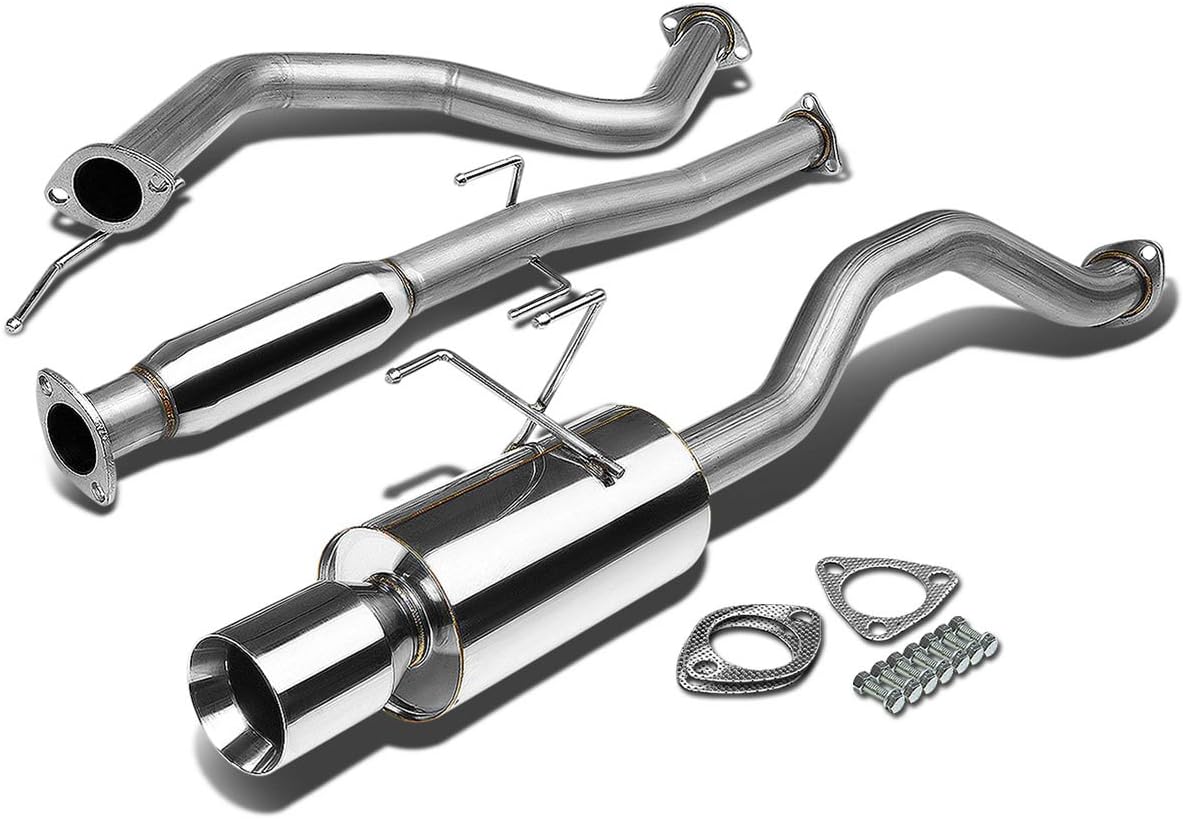
4. Auto Dynasty 4" Rolled Double-Walled Tip Cat-Back Exhaust System for 1992–2000 Honda Civic Coupe/Sedan
| Material Type | Stainless Steel |
|---|---|
| Compatible with Vehicle Type | Car |
This Auto Dynasty cat-back replaces the factory rear section on compatible 1992–1995 Civic coupe/sedan and 1996–2000 Civic EX sedans (not hatchbacks) to deliver a more aggressive exhaust note and improved exhaust flow. Constructed from T-304 stainless steel with mandrel bends and TIG-welded flanges, the system aims to resist corrosion and maintain fitment while increasing low-end torque and peak power by the seller-stated 15 to 25 horsepower. The 2.25" piping and a 4" double-walled rolled tip give a noticeably deeper tone without extreme rasp at cruising speed. Installation is intended to be straightforward for someone with basic tools, making it suitable for DIY fitting. Expect the sound and perceived performance gains to be the main benefits for the money, but note this unit is not CARB compliant and therefore not legal for use on California emission models. Build quality is reasonable for a budget-focused system, though you should inspect hangers and flanges during installation and be prepared to address minor fitment tweaks on older cars.
Best for: Buyers on a tight budget who want a straightforward way to add a louder, throaty exhaust and modest performance gains to a compatible 1992–1995 Civic coupe/sedan or 1996–2000 Civic EX sedan while keeping installation simple.
Less Ideal for: Drivers who need a California-legal, emissions-compliant solution or those seeking precision-engineered high-end performance parts with guaranteed dyno-verified gains.
- T-304 stainless steel construction offers good corrosion resistance for the price
- Mandrel-bent 2.25" piping promotes smoother exhaust flow and potential power gains
- Rolled 4" double-walled tip provides a deeper, fuller exhaust tone
- TIG-welded CNC flange improves sealing and durability at the connection points
- Not CARB compliant so it cannot be used on California emission vehicles
Verdict: A cost-conscious cat-back that delivers a deeper exhaust tone and reasonable durability for Civic coupe and sedan owners who want sound and basic performance improvement without a premium price.
5. DNA Motoring Stainless Steel Cat-Back Exhaust System for 1992–2000 Honda Civic Coupe/Sedan

| Configuration | 92-00 Honda Civic Coupe / Sedan |
|---|---|
| Material | T-304 Stainless Steel |
| Pipe Diameter | 2.25 Inches |
| Included Components | Catback exhaust with hardware/gaskets |
This DNA Motoring cat-back replaces the factory rear exhaust on 1992–2000 Honda Civic coupe and sedan models with a full 2.25-inch stainless steel system built from T-304 and mandrel-bent piping. It is typically used to reduce back pressure, strengthen exhaust flow, and produce a deeper, smoother tone while the manufacturer claims a dyno-proven 15–25 horsepower and low-end torque gain. Notable features include TIG-welded flanges, a resonator to reduce drone, and a double-walled muffler tip for a finished look. In real-world use you can expect a louder, more aggressive sound and improved throttle response compared with stock, plus corrosion resistance from stainless construction. Limitations are that power gains depend on the rest of the engine setup and tuning, and installation may require basic exhaust tools and hangers alignment; buyers should also be prepared for a firmer tone that may be louder at cruising speeds. Fitment is specific to the listed Civic years and models so confirm configuration before ordering.
Best for: Buyers who prioritize a durable, factory-quality replacement that improves exhaust flow and delivers a stronger sound and low-end response for everyday driving and light performance use.
Less Ideal for: Avoid this if you want a quiet, near-stock exhaust or if you lack basic tools or access to a shop for proper fitment and alignment during installation.
- T-304 stainless steel and mandrel bends provide corrosion resistance and smooth exhaust flow
- Includes resonator and low-restriction muffler design to reduce drone while improving tone
- TIG-welded CNC flange and supplied hardware aim to simplify installation and increase durability
- Designed to reduce back pressure which can improve low-end torque and throttle response
- Claimed horsepower gains depend on vehicle condition and supporting modifications and are not guaranteed for every engine
Verdict: A durable stainless steel cat-back built for 1992–2000 Civics that reliably improves exhaust flow, low-end torque feel, and produces a deeper, sportier tone.
6. Spec-D Tuning 4" Burnt Tip Stainless Steel Cat‑Back Exhaust for 1992–2000 Honda Civic

| Material | T-304 stainless steel |
|---|---|
| Outlet tip | 4" burnt tip |
| Pipe diameter | 2.5" piping |
| Silencer | Removable |
| Fitment note | 1992–1995 DX/LX/EX 2/4dr; 1996–2000 EX; 1999–2000 Si coupe |
This Spec-D Tuning cat-back replaces the mid and rear exhaust on compatible Civic models with mandrel-bent T-304 stainless piping, a removable silencer, and a 4 inch burnt tip for an aggressive look and sound. It is typically used to replace a worn factory rear exhaust or to add a louder, deeper tone and modest flow improvements; the listing claims up to 15 horsepower increase though real gains depend on the rest of the setup. The kit includes gaskets, hangers, and bolts so it bolts up to the car but no installation instructions are provided so professional installation is recommended. Notable features are the CNC mandrel bends for smoother flow, the option to install or remove the silencer to tune volume, and the stainless construction for corrosion resistance. Practical benefits are improved exhaust note, a sportier rear appearance, and relatively complete hardware for a direct-fit swap. Limitations include a loud, raucous tone for some tastes, possible tip clearance issues on lowered cars, and mixed long-term durability reports from users compared with higher-end brands.
Best for: Buyers wanting a budget-friendly, vehicle-specific cat-back that delivers a much louder, deeper exhaust note and a sporty appearance while accepting aftermarket sound and occasional fitment tweaks.
Less Ideal for: Drivers who prioritize a quiet, factory-like exhaust or who need a long-term, premium-backed system for heavy daily driving should consider higher-end alternatives.
- Vehicle-specific fitment for listed 1992–2000 Civic models simplifies installation.
- T-304 stainless steel with CNC mandrel bends for improved flow and corrosion resistance.
- Includes hangers, bolts and gaskets so fewer extra parts are needed.
- Removable silencer lets you dial sound level from louder to more subdued.
- No installation instructions included so professional installation is recommended.
- Some users report seam or weld failures after extended use on the muffler.
- 4" tip can hang low and may contact rear bumpers on lowered vehicles.
Verdict: A cost-conscious, vehicle-specific stainless cat-back that gives 1996–2000 Civic owners an aggressive sound and look with the flexibility to tune volume via a removable silencer.
Choosing the Right 1996-2000 Honda Civic Cat-back Exhaust System: Key Factors to Consider
Fitment and Chassis Compatibility
Correct fitment matters because a system that does not account for the 1996-2000 Civic's exhaust routing, hanger locations, and factory clearances will require modification. Verify the part is specified for the EJ, EK, and EM or EJ, EK, and EM chassis, or for the combined 1996-2000 Civic range, to ensure the bends, flange types, and tailpipe exit align with the stock mounting points.
Poorly fitting systems can lead to stress on hangers, rattles, exhaust leaks at flange connections, or contact with suspension and body components. Even when small adaptions are possible, expect increased labor time and potential for fabrication costs. For owners keeping the car street-legal, proper fitment also helps avoid unwanted turbulence and noise that can arise from misaligned joints.
Material and Corrosion Resistance
Material choice affects longevity, sound stability, and appearance. Stainless steel alloys resist rust far better than aluminized or mild steel, which is especially important for Civic owners in regions with road salt or humid climates. The grade of stainless steel and the thickness of tubing both influence how long the system maintains structural integrity and appearance.
Weld quality and the use of quality clamps or flanges also impact how well a system holds up over time. Consider whether replacement of hangers or hardware is a realistic future cost, and whether the manufacturer uses thicker tubing in critical areas such as bends or near the muffler body to reduce deformation from heat cycling.
Sound Character and Cabin Drone
Different muffler and resonator choices produce distinct sound signatures, from a mellow, low-volume tone to a louder, raspier performance note. For a 1996-2000 Civic, pay attention to whether the system emphasizes low-end rumble, midrange bark, or high-frequency rasp, since each interacts differently with typical Civic engines and cabin insulation.
Cabin drone is a common concern on long drives. Systems that remove resonators or use straight-through mufflers can increase drone at cruising RPMs. Look for systems that describe resonator placement, muffler internals, and any design features intended to reduce unwanted resonance if you plan to use the car as a daily driver.
Backpressure and Flow Characteristics
Exhaust diameter, bend radius, and muffler internals determine backpressure and flow. For the stock Civic engines found in the 1996-2000 range, moderate increases in diameter can help high-RPM power without sacrificing low-end torque. Excessively large piping can reduce scavenging and torque at lower RPMs where most street driving happens.
Consider the overall system design rather than diameter alone. Smooth mandrel bends and gradual transitions help preserve exhaust velocity and scavenging. If you run additional engine modifications, match the exhaust flow characteristics to those changes to avoid creating powerband gaps.
Installation Complexity and Hardware
Installation time and required skills influence cost and feasibility for DIYers. Systems that reuse OEM flanges and hangers typically install faster and with fewer surprises. Some cat-back systems include complete bolt-on hardware, while others assume you will reuse stock clamps and hangers or obtain replacements.
Be realistic about whether you have the tools and space to lift the car safely and perform hanger alignment and gasket replacement. Systems that require cutting, welding, or extensive bracket fabrication should be expected to need professional assistance and can increase total ownership cost beyond the part price.
Muffler and Tailpipe Options
Tailpipe finish, diameter, and muffler style affect aesthetics and sound. Polished stainless tips resist discoloration and maintain appearance, while brushed or ceramic-coated finishes offer different looks and heat properties. The choice of single versus dual tips changes exhaust flow splits and can alter perceived loudness.
Muffler internals—chambered, baffled, or straight-through perforated cores—determine how harsh or refined the tone will be. Consider whether you prefer a subtle upgrade that keeps daily comfort or a more aggressive setup that prioritizes track-oriented sound. For the Civic, tip placement and exit angle should also clear the bumper and avoid scorching paint or plastics.
Why a Cat-Back Is a Practical Upgrade for 1996-2000 Civics
A cat-back exhaust system replaces the piping and muffler downstream of the catalytic converter, which brings measurable benefits without altering emissions control hardware. For many Civic owners, this delivers a balance of improved flow, modest gains in throttle response, and an upgraded exhaust tone while keeping the catalytic converter in place.
Because the 1996-2000 Civic platform is lightweight and often lightly modified, the cat-back is a practical way to extract usable on-road benefits without requiring engine-internal changes. It also tends to be less invasive to install than header or intake upgrades, and it preserves the OEM mounting points when designed specifically for the EJ, EK, and EM layouts.
- Improves exhaust flow downstream of the cat without touching emissions hardware
- Provides tangible sound and throttle response changes for street driving
- Often uses OEM hangers and flanges for simpler installation
Common Exhaust Layouts and What They Mean
Cat-back systems for this Civic typically come in a few layout styles: single exit with a straight-through muffler, single exit with a chambered muffler, and dual-exit configurations. Single-exit straight-through designs usually prioritize flow and a louder sound. Chambered mufflers aim to smooth the tone and reduce harshness while retaining some performance benefit.
Dual-exit layouts can change the visual balance of the rear end and sometimes affect how exhaust pulses split within the system. The physical routing of the pipe around suspension components and the spare tire well can also vary between designs, so confirm that the layout matches your Civic's underside arrangement.
- Straight-through: higher flow, louder tone
- Chambered/baffled: quieter, smoother sound
- Dual-exit: visual impact, possible tone changes
Installation Tips for DIY Enthusiasts
Prepare by lifting the car safely with jack stands and supporting the exhaust with a secondary support. Have replacement gaskets, anti-seize, and new bolts or clamps on hand to avoid reusing corroded hardware. Test-fit the system loosely before tightening clamps to allow alignment with hangers and the bumper exit.
Address common issues such as misaligned hangers by slightly bending the hangers back into place or using replacement rubber insulators. If a system requires cutting near the flange or modifying heat shields, take time to mark cut lines and protect the body and wiring from sparks and sharp edges.
- Use anti-seize on flange bolts to ease future removal
- Test-fit before final tightening to prevent misalignment
- Replace corroded hardware rather than reusing it
Sound Management Strategies
If you want a louder exhaust note without persistent drone, look for systems that include a mid-pipe resonator or use internal baffling tuned to the Civic's typical cruising RPM. Adding a resonator downstream of the muffler can tame peak frequencies that contribute to cabin drone while preserving the overall tone.
For owners who need to balance street civility with occasional spirited driving, consider exhaust accessories such as removable resonators or exhaust valves if available for your system. These let you change character without a new system, though they add complexity to installation.
- Mid-pipe resonators reduce cruising drone
- Baffled mufflers smooth harsh frequencies
- Removable components offer flexible sound tuning
Maintenance and Longevity Considerations
Inspect hangers, clamps, and welds periodically, especially after driving on salted roads or in wet conditions. Surface rust often begins at welds and clamps, so keeping these areas clean and occasionally coated with high-temp paint or anti-corrosion spray can extend life.
Plan for possible gasket or clamp replacement after a few years of use, and keep an eye on tip alignment to avoid contact with the bumper. Regularly check for leaks at flanges and joints, as exhaust leaks affect performance and can raise cabin noise.
- Check hangers and clamps annually in corrosive climates
- Look for leaks at flange joints
- Protect exposed tips and welds from road salt
Matching Exhaust Choice to Engine and Use Case
Consider how you use your Civic. A daily-driven, mostly street car benefits from a modestly flowing system that prioritizes low- and mid-range torque and low cabin drone. A weekend track car with higher RPM use may benefit from a more free-flowing straight-through design that prioritizes high-RPM power.
If you have additional engine modifications, such as a higher-flow intake or cam changes, choose an exhaust whose flow capacity aligns with those upgrades to avoid creating a mismatch that sacrifices low-end drivability for top-end gains.
- Daily drivers: balanced flow and noise control
- Track-focused: higher-flow, less restrictive designs
- Match exhaust capacity to other engine modifications
Still looking for the perfect fit?
Select your Honda Civic configuration to see the most relevant Cat-back Exhaust Systems recommendations
How We Chose the Best 1996-2000 Honda Civic Cat-back Exhaust System
We focused selection on systems that specifically fit the 1996-2000 Honda Civic EJ, EK, and EM chassis and that address the most important practical concerns for daily-driven and lightly modified Civics. Primary evaluation criteria included material and corrosion resistance, measured or described flow characteristics, exhaust routing and hanger compatibility, and the muffler or resonator design that shapes sound and cabin drone. We also considered installation complexity, including whether standard tools and stock mounting points are used and whether cutting or welding is commonly required.Excluded from consideration were full header-to-tail manifolds, systems that require extensive fabrication or custom frame work, and units that only list universal fit without 1996-2000 Civic-specific documentation. We prioritized systems with clear fit notes for the EJ, EK, and EM generation and those that use durable hardware and welds. Final picks balance durability, realistic performance gains for this displacement and engine range, and practical installation expectations for owners who may perform the work at home or with a local shop.
Our full evaluation process is outlined in our review methodology.
FAQ
Will a cat-back exhaust improve low-end torque on my 1996-2000 Civic?
It often depends on the system. Moderate increases in pipe diameter and smoother bends can improve midrange and high-RPM flow, but excessive diameter can reduce low-end torque. Choose a system tuned for street use to preserve everyday drivability.
Can I install a cat-back myself on an EJ, EK, and EM Civic?
Many owners can install a cat-back with basic tools, jack stands, and a helper. Expect to replace corroded bolts or gaskets and allow time for alignment. Systems that require cutting or welding typically need professional help.
How loud will a new cat-back be compared with stock?
Loudness varies by muffler internals and resonator presence. Straight-through designs are usually louder and more aggressive. Chambered or resonated systems aim for a milder tone and reduced cabin drone.
Does a stainless steel cat-back last longer than an aluminized one on these Civics?
Stainless steel generally resists corrosion better and will usually outlast aluminized steel, especially in areas with road salt or frequent moisture. Higher-grade stainless and thicker tubing improve longevity further.
Will changing only the cat-back affect emissions or the catalytic converter?
A cat-back replaces components downstream of the catalytic converter and does not alter the converter itself. It should not affect emissions hardware, but ensure the system maintains proper clearances so sensors and heat shields remain functional.
What should I check for when buying a used cat-back for my 1996-2000 Civic?
Inspect for rust around welds and flanges, check hangers and tip alignment, and verify that the routing matches EJ, EK, and EM chassis requirements. Confirm flange and bolt patterns match your exhaust outlet to avoid compatibility issues.
Final Verdict
When choosing a cat-back for a 1996-2000 Honda Civic, prioritize correct EJ, EK, and EM fitment, corrosion-resistant materials, and a muffler design that matches how you use the car. Balance flow improvements with the need to maintain low-end torque if the Civic is a daily driver, and factor in installation complexity when deciding between bolt-on and more involved systems.Focus on realistic performance goals and long-term durability. By matching the exhaust layout and sound profile to your driving habits and ensuring the system uses quality materials and hardware, you can confidently upgrade the Civic's exhaust without unexpected tradeoffs.
Explore More:
- Check out all Honda Civic parts & accessories
- Explore Cat-back Exhaust Systems Maintenance & Repair Guides
- Explore Exhaust & Emissions
- Browse all Auto Parts
