

Note: This article contains affiliate links. If you click on these links and make a purchase, I may earn a small commission at no extra cost to you. This helps support my research and content. Read my full affiliate disclosure here.
Upgrading the cat-back exhaust on a 2006-2011 Honda Civic can sharpen throttle response, reduce exhaust restrictions, and change the car s tone without altering emissions hardware. For owners of the 2006-2011 Civic (FA and FG), picking the right system matters because fitment, hanger locations, and bumper cutouts vary across body styles and years.This guide covers our six shortlisted cat-back exhaust systems chosen for consistent fitment and build quality on the FA and FG platform Civics. We evaluate each option for fit, materials, sound character, and ease of installation so you can find a system that matches your daily driving or performance goals. Read on for what to expect from each style and the decision points that matter for this Civic platform.
Looking for other parts? See all Honda Civic parts & accessories.
Top Picks at a Glance
| Best Overall The best all-around choice for most situations | J2 Engineering Stainless Steel Dual Muffler Catback Exhaust System |  |
| Best Quality Built to a higher standard if you want something more solid | MagnaFlow Street Series Cat-Back Exhaust System 16687 for 2006–2011 Honda Civic |  |
| Best Value The sweet spot between price and what you get | PHILTOP Exhaust Pipe Kit for 2006–2011 Honda Civic 1.8L |  |
| Best Budget The cheapest option that still gets the job done reliably | SPEC-D TUNING N1 Catback Exhaust System for 2006–2011 Honda Civic Si 2‑Door |  |
| Highest Rated A top-rated pick with lots of positive feedback | SPEC-D Tuning Stainless Steel Catback Exhaust System with Burnt Tip for 2006–2011 Honda Civic 4‑Door |  |
| Most Popular A crowd favorite that many people choose with confidence | DNA MOTORING Catback Exhaust System for 2006–2011 Honda Civic |  |
1. J2 Engineering Stainless Steel Dual Muffler Catback Exhaust System

| Compatible Models | 2007-2011 Honda Civic Si 4-Door 2.0L l4 |
|---|---|
| Material | T-304 stainless steel |
| Major Piping Diameter | 2.25" |
| Muffler Tip Size | 4.5" rolled tips |
| Flange Type | TIG welded CNC machine flange |
This J2 Engineering cat-back replaces the factory rear section with mandrel-bent T-304 stainless piping, dual mufflers, and 4.5 inch rolled tips to give the 2007–2011 Civic Si a louder, deeper tone and reduced backpressure. It is typically used as a direct-fit performance upgrade for street cars seeking a noticeable sound and a claimed horsepower gain; the listing cites dyno-proven increases of 15 to 25 hp or low-end torque. Construction details such as TIG-welded flanges and CNC mandrel bends point to durability and easier installation alignment. Practical benefits include a sharper exhaust note, potential responsiveness improvement, and corrosion resistance from stainless steel. Important limitations are that performance claims depend on vehicle condition and supporting mods, the system may be louder than some buyers want for daily driving, and professional installation may be required for best fit and seal. Gaskets and hardware are included but no fitment for other Civic model years is indicated.
Best for: A Civic Si owner seeking a durable, bolt-on cat-back that increases sound and real-world responsiveness while prioritizing an all-round balance of performance and daily usability.
Less Ideal for: Drivers who need a very quiet or strictly factory-like exhaust for daily commuting or who expect guaranteed horsepower gains without further supporting modifications.
- T-304 stainless steel construction for corrosion resistance and durability
- Mandrel-bent piping and TIG-welded flanges for smoother exhaust flow and reliable joints
- Dyno-backed claim of measurable horsepower and low-end torque gains
- Dual mufflers with large 4.5 inch rolled tips for a deeper, aggressive exhaust note
- Performance gains are claimed and will vary with vehicle condition and other modifications
- Sound level may be too aggressive for drivers who prefer a quiet stock character
Verdict: Choose this stainless steel cat-back if you want a durable, bolt-on exhaust that noticeably deepens tone and can improve low-end power on a 2007–2011 Civic Si.
2. MagnaFlow Street Series Cat-Back Exhaust System 16687 for 2006–2011 Honda Civic

| Model Name | MagnaFlow Performance Exhaust System 16687 |
|---|---|
| Fitment | 2006–2011 Honda Civic |
| Material | Stainless steel |
| Series | Street Series |
| Includes | Hangers and installation hardware |
The MagnaFlow Street Series cat-back (model 16687) replaces the Civic’s factory rear exhaust with a single-piece system designed to improve exhaust flow and give the car a fuller, deeper tone without being overly loud. It is typically used as a direct-fit replacement for 2006–2011 Civic models and includes hangers and hardware to support a DIY or shop install. Notable features are stainless steel construction, CNC-precision manufacturing, and dyno-validated flow tuning that can yield small gains in midrange power and a more responsive feel when accelerating. The system is built to resist corrosion and comes with a limited lifetime construction warranty. Fitment reports are mixed: many owners report an easy install and noticeably better sound while some experienced fitment or clearance issues on certain sedan configurations that required trimming or minor modification. Also expect modest performance gains rather than dramatic horsepower increases; pairing with supporting mods may show the best results.
Best for: Buyers who want a durable, factory-style cat-back that sharpens throttle response and delivers a fuller, sportier exhaust note while keeping noise levels reasonable.
Less Ideal for: Drivers seeking major horsepower gains or an aggressive, race‑level exhaust note should look at more performance-focused systems or supporting engine modifications.
- Stainless steel construction for long-term corrosion resistance
- Dyno-tuned design aimed at improving exhaust flow and midrange response
- Includes hangers and hardware for straightforward installation
- Tuned Street Series sound that is deeper and resonant without excessive loudness
- Some users report fitment or clearance problems on certain sedan variants requiring trimming or minor modification
Verdict: A durable, dyno-tuned cat-back that gives 2006–2011 Civics a richer sound and modest performance improvement with mostly straightforward installation.
3. PHILTOP Exhaust Pipe Kit for 2006–2011 Honda Civic 1.8L

| Compatible vehicles | 2006–2011 Honda Civic L4 LX/EX/DX 1.8L |
|---|---|
| Construction | Stainless steel |
| Sections included | Intermediate muffler, after-stage muffler, tail pipe |
| Welding | TIG welded CNC-formed bends |
| Manufacturer | PHILTOP |
This PHILTOP exhaust pipe kit replaces the mid and rear sections of the exhaust on 2006–2011 Honda Civic 1.8L models, providing a factory-style replacement with stainless-steel construction. The kit includes an intermediate muffler, after-stage muffler, and tail pipe and is TIG welded for cleaner joints and improved sealing. In use it serves to expel exhaust gases, reduce excessive vibration and road noise, and can slightly improve exhaust flow which may help throttle response under load. Buyers report generally good fitment when installed as a direct replacement, though some vehicles required minor adjustment of hangers or trimming of long pipes to sit correctly. The system produces a deeper tone than stock and can be louder under acceleration; adding a resonator or fine-tuning the silencer may be needed if you prefer a quieter setup. Overall it is a budget-friendly stainless replacement that balances durability and sound but may need small modifications during installation on some cars.
Best for: Buyers who want an affordable, durable factory-replacement style mid/rear exhaust for a 2006–2011 Civic 1.8L and are willing to do light fitment tweaks during installation to get correct hanger and tailpipe alignment.
Less Ideal for: If you require a strictly quiet, factory-silent exhaust or expect a guaranteed bolt‑perfect fit with zero adjustments, consider a higher-end branded system or dealer replacement instead.
- Stainless-steel construction for corrosion resistance and high-temperature stability
- TIG-welded joints and CNC-formed bends for consistent fit and sealing
- Includes intermediate and after-stage mufflers plus tail pipe for a complete mid/rear replacement
- Reported to fit directly on many 2006–2011 Civic 1.8L installations with minimal modification
- Some users needed to adjust or trim hangers and pipes for proper alignment on certain vehicles
- Deeper, louder exhaust tone under acceleration may be too aggressive for drivers seeking a quiet factory sound
Verdict: A cost-effective stainless mid/rear exhaust replacement for 2006–2011 Civic 1.8L owners who want durable factory-style performance and are comfortable making small installation adjustments.
4. SPEC-D TUNING N1 Catback Exhaust System for 2006–2011 Honda Civic Si 2‑Door

| Fitment | 2006–2011 Honda Civic Si 2Dr |
|---|---|
| Product type | Cat-back exhaust system |
| Automotive fit type | Vehicle Specific Fit |
The SPEC-D TUNING N1 cat-back is a direct-fit replacement for 2006–2011 Civic Si coupes that focuses on adding aggressive sound and an aftermarket look without complex modification. Installation is straightforward for a DIYer or a shop since the system is built as a vehicle-specific fit and bolts into the factory hangers in most reports. The system produces a pronounced low-end rumble and becomes much louder at higher rpm, with owners noting the option to use or remove a silencer to tune volume. Practical benefits include fast shipping and an affordable price compared with higher-end brands. Expect basic construction quality and visible welds, and several users report accelerated surface rust over time, so longevity may lag behind pricier stainless systems. If you prioritize a deep, attention-getting exhaust note on a budget and accept potential durability limits, this is a useful upgrade; those seeking refined sound control or long-term corrosion resistance should consider higher-grade alternatives.
Best for: Buyers on a tight budget who want a straightforward, bolt-on way to add a louder, deeper exhaust note to a 2006–2011 Civic Si coupe and value sound and price over long-term corrosion resistance.
Less Ideal for: Drivers seeking a refined, quiet or highly durable stainless system for long-term ownership or professional-level finish should look at higher-end options.
- Vehicle-specific design for 2006–2011 Civic Si 2-door eases installation
- Delivers a deep, loud exhaust tone especially at high RPMs
- Affordable option compared with premium cat-back systems
- Simple bolt-on fitment using factory hangers so little to no modification needed
- Construction and weld quality are basic and may show visible imperfections
- Prone to surface rusting over time compared with higher-grade stainless systems
Verdict: A low-cost, direct-fit cat-back that gives 2006–2011 Civic Si coupes a deep, aggressive sound for buyers prioritizing loud tone and affordability.
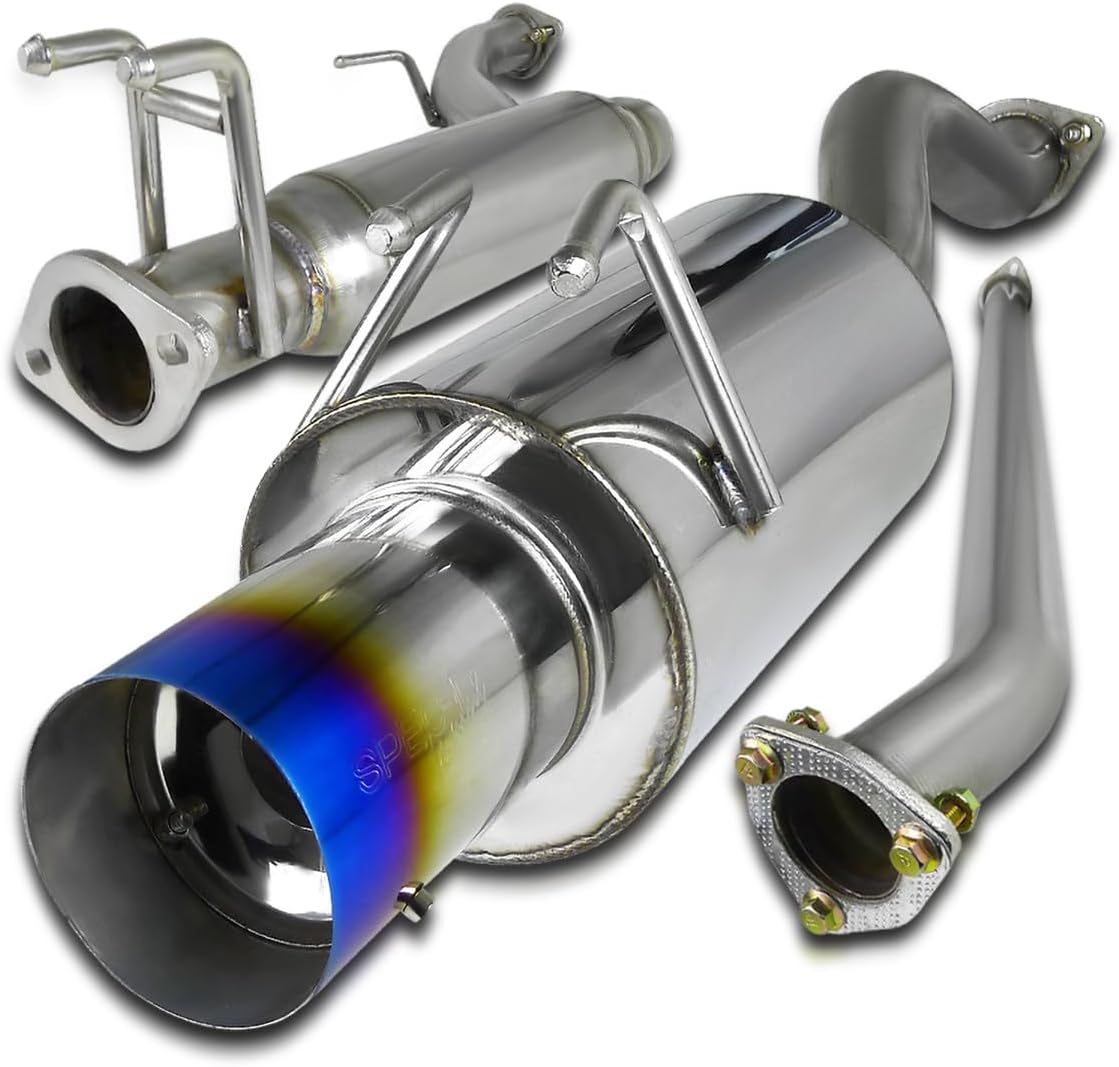
5. SPEC-D Tuning Stainless Steel Catback Exhaust System with Burnt Tip for 2006–2011 Honda Civic 4‑Door
| Material | Stainless Steel |
|---|---|
| Fitment | 2006–2011 Honda Civic 4DR Sedan |
| Inlet Connection Size | 2.5 Inches |
| Configuration | Center/Dual |
This SPEC-D Tuning cat-back replaces the factory rear exhaust on 2006–2011 Honda Civic 4‑door sedans to give the car a deeper rumble and a sportier look with a burnt-tip finish. It is a mostly bolt-on setup intended to attach to the existing downpipe and hangers, and the system includes a removable silencer so you can tune the loudness without additional parts. Construction is stainless steel and inlet size is 2.5 inches, which helps resist corrosion better than mild steel and keeps the tip cooler in use. Buyers report straightforward installation for someone with basic tools, though older cars with seized or welded-on bolts may need extra effort or a shop. Some units show minor fitment angle issues that can be corrected by bending or trimming, and internal packing or silencer hardware has failed for a minority of users over time. For drivers who want a reliable, affordable way to add a low, throatier tone and an OEM-style fit without a full exhaust overhaul, this is a practical option.
Best for: Drivers who prioritize a dependable, factory-style replacement that improves exhaust sound and resists corrosion while keeping installation simple and maintenance manageable.
Less Ideal for: Those seeking a high-performance engineered system for maximum flow gains or a perfect race-grade fit should consider premium brands or custom-fabricated options instead.
- Vehicle-specific fit for 2006–2011 Honda Civic 4‑door sedans simplifies installation
- Stainless steel construction offers better corrosion resistance than cheaper materials
- Removable silencer lets you adjust sound level without extra mods
- Bolt-on design works with stock hangers and requires no welding in most cases
- Some units require minor bending or adjustment for perfect flange alignment
- A minority of users reported interior packing or silencer hardware failing after months of use
Verdict: A cost-effective, stainless steel cat-back that reliably upgrades sound and appearance for 2006–2011 Civic 4‑door sedans while keeping installation straightforward.
6. DNA MOTORING Catback Exhaust System for 2006–2011 Honda Civic

| Compatible models | 2006–2011 Honda Civic EX/LX/DX |
|---|---|
| Material Type | T-304 Stainless Steel |
| Inlet/Main piping | 2.25" OD |
| Muffler tip | 4" round burnt |
| Silencer | Removable |
This DNA MOTORING cat-back system replaces the rear exhaust from the catalytic converter back with mandrel-bent T-304 stainless piping, a tuned muffler and a 4-inch round burnt tip to change sound and flow. It is intended for bolt-on installation on 2006–2011 Honda Civic EX/LX/DX models and includes a removable silencer and an extension for sedan fitment. In use it produces a deeper, louder tone with reduced drone thanks to the resonator and muffler design, and the manufacturer advertises measurable low-end power gains. The stainless construction and CNC TIG-welded flanges should resist corrosion better than mild steel options, though fitment and finish can vary on aftermarket systems so test-fitting and hardware checks are recommended. Buyers wanting a louder, sportier exhaust will appreciate the tone and visual upgrade from the larger tip, while those looking for a purely subtle or OEM-quiet replacement may find it louder than expected. Installation is straightforward for experienced DIYers or shops but may need alignment tweaks for perfect clearance.
Best for: A buyer who values verified community feedback and wants a louder, performance-oriented exhaust for their 2006–2011 Civic while prioritizing corrosion resistance and bolt-on fitment.
Less Ideal for: Not a good choice for drivers who need a near-stock quiet exhaust or strict compliance with local noise regulations.
- T-304 stainless steel and mandrel bends for better corrosion resistance and smoother flow
- CNC TIG-welded flanges for durable joints
- Removable silencer gives sound-level flexibility
- Includes sedan extension for correct fit on multiple Civic body styles
- Performance gain claims are manufacturer-stated and may vary by vehicle and tuning
Verdict: Choose this DNA MOTORING cat-back if you want a durable stainless upgrade that delivers a louder, deeper tone and bolt-on fitment for 2006–2011 Civics.
Choosing the Right 2006-2011 Honda Civic Cat-back Exhaust System: Key Factors to Consider
Fitment and Hanger Alignment
Exact fitment matters more on the Civic FA and FG platform than on many vehicles because hanger locations and bumper exits changed slightly across body styles and trim levels. A system that matches the stock hanger points reduces installation time and lowers the risk of misaligned tailpipes that could contact the bumper.
Incorrect hanger alignment can cause stress on welds, increase vibration transfer into the cabin, and create uneven tailpipe gaps. When evaluating options, confirm the kit lists 2006-2011 Civic FA and FG fitment and includes any required adapter pieces or reinforced hangers to account for factory variations.
Material and Corrosion Resistance
Material choice impacts longevity, especially for year-round drivers in regions with road salt or frequent moisture. Stainless steel alloys resist corrosion better than mild steel and often carry longer usable life, while aluminized steel is less expensive but will show surface rust earlier.
Weld quality, flange hardware finish, and the presence of thick-wall tubing also influence how well a system holds up. For the Civic, where replacement options are readily available, prioritize corrosion-resistant materials if you expect multi-year ownership or live in corrosive climates.
Exhaust Diameter and Flow
Exhaust diameter affects backpressure and power delivery. On a naturally aspirated Civic four-cylinder, moderate increases in pipe diameter can reduce restriction without hurting low-end drivability, but oversized piping may reduce scavenging and throttle response.
Consider the stock manifold and midpipe size when selecting a cat-back. Systems designed for slightly larger flow are appropriate when paired with intake or cam changes, but for largely stock engines, choose diameters that balance improved flow with retained torque.
Muffler Design and Sound Character
Muffler internal geometry determines how the system sounds at idle, under load, and at cruise. Chambered designs produce a deeper tone, straight-through or perforated cores increase rasp and volume, and added resonators reduce drone at highway speeds.
For a Civic used daily, many owners prefer a system that increases presence under acceleration but limits cabin drone. Assess whether the kit offers resonators or multiple muffler options and read notes on expected sound levels at typical highway RPMs.
Installation Complexity
Installation time and required tools vary from simple bolt-on swaps to kits that need minor cutting or welding. Most buyers want a bolt-on cat-back that uses factory hangers and includes gaskets and hardware. More complex installs may require lifts, cutting, or specialty tools.
Factor in your own mechanical comfort and access to a lift or shop. Kits that supply complete hardware and clear instructions reduce ambiguity and lower labor costs if you plan professional installation.
Legal and Emissions Considerations
Local regulations may restrict certain exhaust modifications, especially those that alter emissions equipment or exceed noise limits. A cat-back that leaves the catalytic converter and sensors in place usually maintains emissions compliance, but noise output can still run afoul of local ordinances.
Check local vehicle code and any inspection requirements before choosing a system. Some manufacturers provide notes on street-legal status in various regions; prioritize options that keep emissions hardware intact to avoid registration problems.
Sound Profiles and How They Translate to Daily Driving
Different cat-back designs produce distinctive sound signatures that affect ownership enjoyment. On the 2006-2011 Civic (FA and FG), smaller four-cylinder displacement emphasizes midrange tones, so muffler choice has an outsized influence on perceived loudness and quality.
If you want a stronger presence under acceleration but minimal highway drone, look for systems with tapered sections and a separate resonator. If a louder, sportier rasp is the goal, straight-through cores will amplify higher frequencies but may increase in-cabin drone at steady RPMs.
- Chambered mufflers: deeper tone, less rasp at high rpm
- Straight-through cores: louder, more aggressive sound
- Resonators: reduce drone at cruising speeds
Installation Tips for 2006-2011 Civic Owners
Prepare by raising the car safely on jack stands or using a lift to access hangers and flange connections. Have penetrating oil and the correct socket sizes ready, as factory bolts can be seized from years of heat exposure.
When removing the factory cat-back, mark hanger locations and inspect rubber isolators for wear. Reusing good-condition hangers helps maintain correct alignment. If the kit requires minor trimming of heat shields or adjustment to a bumper cutout, measure twice before cutting and follow the included templates closely.
- Apply anti-seize to new flange bolts to ease future removal
- Hand-tighten hangers before fully torquing bolts to allow alignment
- Test-fit tailpipes before final tightening to verify bumper clearance
Resonators, Mufflers, and Drone Management
Drone is a common complaint when upgrading exhausts, especially on lightweight cars like the Civic. Systems that pair a moderately free-flowing muffler with one or two resonators can deliver a lively sound without steady-state thrum inside the cabin.
Consider the expected cruising RPM range of your driving. Highway-heavy owners should prioritize systems explicitly tuned to minimize cabin resonance at 2,000 to 3,000 rpm. Also remember that interior modifications and aftermarket wheels can change perceived drone.
- Multiple resonators can smooth tone but add weight
- Muffler packing choices affect midrange warmth
- Pay attention to tailpipe exit angle to avoid reflective noise against the bumper
Materials and Long-Term Maintenance
Stainless steel systems typically last longer and withstand the thermal cycling common to daily-driven Civics. Weld quality and thicker wall tubing slow corrosion and reduce the chance of joint failure after several seasons on the road.
Regular inspections of hangers, clamps, and flange seals extend service life. Rinsing the underside after exposure to salt and watching for early surface rust on aluminized components are simple maintenance steps that preserve functionality.
- Inspect welds and clamps annually for stress cracks
- Replace worn rubber isolators to prevent metal-on-metal wear
- Use high-temperature anti-seize on bolts during reassembly
Matching Exhaust Choice to Engine Modifications
If your Civic has intake, cam, or turbo changes planned, pipe diameter and flow capability become more important. Mild bolt-on intake upgrades often pair well with modestly larger cat-back piping, but turbo or high-flow cam setups may benefit from an even freer-flowing design.
For largely stock engines, avoid oversized piping that can blunt low-end response. For modified engines, check that the cat-back complements upstream components to maintain scavenging and boost response when applicable.
- Stock engines: moderate diameter, balanced muffler design
- Intake/cam: slightly larger diameter acceptable
- Forced induction: coordinate whole system flow characteristics
Still looking for the perfect fit?
Select your Honda Civic configuration to see the most relevant Cat-back Exhaust Systems recommendations
How We Chose the Best 2006-2011 Honda Civic Cat-back Exhaust System
We focused editorial selection on items that reliably fit the 2006-2011 Honda Civic (FA and FG) platform and offered distinct tradeoffs in sound, materials, and installation complexity. Primary evaluation criteria included fitment accuracy to FA and FG hangers and bumper geometry, construction material and corrosion resistance, internal muffler design and resulting sound profile, and exhaust diameter or flow characteristics relevant to the Civic s 4-cylinder displacement.Secondary filters weighed installation demands and hardware completeness, vibration and drone tendencies at cruising speeds, and the presence of options such as resonators or axle-back compatibility. We excluded any systems that required cutting major factory components, extensive fabrication, or modifications to emissions equipment. Also excluded were poorly documented kits without clear fitment notes for 2006-2011 Civics.The final selections favor bolt-on solutions with clear fitment guidance, durable materials, and documented sound profiles so owners can match performance and comfort priorities without guessing about compatibility or installation difficulty.
Our full evaluation process is outlined in our review methodology.
FAQ
Will a cat-back exhaust change emissions on my 2006-2011 Civic?
A true cat-back replaces the piping downstream of the catalytic converter and typically leaves emissions hardware and sensors in place, so catalytic function is not changed. Local testing protocols vary, so confirm regional inspection rules to ensure the modification remains compliant.
How loud will a typical cat-back be on the FA and FG platform Civic?
Loudness depends on muffler core and resonator configuration. Many systems increase presence under acceleration but keep steady-state drone modest. Expect a noticeable difference versus stock, with some kits offering quieter resonated options and others aimed at a sportier, louder character.
Can I install a cat-back myself on a 2006-2011 Civic?
Many owners can install a bolt-on cat-back with basic tools and a safe way to elevate the car. However, seized bolts, tight hanger fitment, or minor trimming may complicate some installs. If you are unsure about using a lift or cutting, consider professional installation.
Does pipe diameter affect everyday drivability on the Civic?
Yes. Mild increases in diameter can reduce restriction and improve top-end power without harming low-end torque. Oversized piping for this four-cylinder platform can reduce scavenging and make throttle response feel less crisp at lower RPMs.
What parts of the system should I inspect regularly after installation?
Check hangers and clamps for looseness, inspect welds for cracks, and look for any contact between tailpipes and the bumper. Also monitor flange seals for exhaust leaks and verify that rubber isolators are not deteriorating from heat exposure.
Final Verdict
Choose a cat-back that balances the sound and flow you want with reliable fitment to the 2006-2011 Civic (FA and FG) platform. Prioritize systems that match factory hanger locations and use corrosion-resistant materials if you plan to keep the car long term. Consider how loudness at cruise and installation complexity fit your daily use.Your final choice should reflect the tradeoffs between sound character, durability, and ease of installation. Pick the option that aligns with whether you prioritize a subtle, street-friendly tone or a more aggressive sound, while keeping fitment and legal considerations front of mind.
Explore More:
- Check out all Honda Civic parts & accessories
- Explore Cat-back Exhaust Systems Maintenance & Repair Guides
- Explore Exhaust & Emissions
- Browse all Auto Parts
