

Note: This article contains affiliate links. If you click on these links and make a purchase, I may earn a small commission at no extra cost to you. This helps support my research and content. Read my full affiliate disclosure here.
Choosing the correct transmission fluid for a Honda Civic FK8 matters more than many owners realize. The right fluid affects shift quality, clutch and gear longevity, and how the transmission responds under track or daily driving conditions. Whether you drive a Civic FK8 on the street or push it harder on track days, keeping the gearbox properly lubricated and thermally stable reduces wear and prevents costly repairs.This guide covers the top shortlisted transmission fluids suited to the FK8 configuration. We evaluated products for friction performance, thermal protection, and compatibility with Honda specifications so you can select a fluid that matches your driving style and maintenance routine.
Looking for other parts? See all Honda Civic parts & accessories.
Top Picks at a Glance
| Best Overall Transmission Fluid The best all-around fluid that suits most transmission needs | Honda Genuine Manual Transmission Fluid 1 Quart (08798-9031) |  |
| Best Budget Transmission Fluid A low-cost option that delivers acceptable performance for routine use | Valvoline Synchromesh Manual Transmission Fluid, 1 Quart |  |
| Best Synthetic Transmission Fluid Fully synthetic formula for superior performance and temperature stability | Alpaca Genuine OEM Manual Transmission Fluid, 3 Quarts |  |
| Best High-Performance Transmission Fluid Formulated for aggressive driving, track use, or heavy loads | Newparts Genuine Manual Transmission Fluid, 3 Quart Pack |  |
| Best High-Mileage Transmission Fluid Additives targeted to rejuvenate seals and reduce wear in older gearsets | iMC Motorcom Honda Manual Transmission Fluid 1 Quart |  |
| Best Bulk Transmission Fluid Larger containers for frequent servicing or multiple fluid changes | Newparts Genuine Manual Transmission Fluid, 5 Quarts (5 x 1 qt) |  |
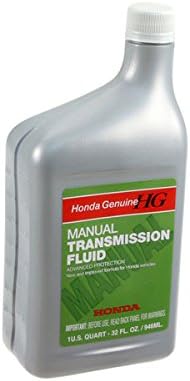
1. Honda Genuine Manual Transmission Fluid 1 Quart (08798-9031)
Best Overall Transmission Fluid

| Viscosity | 5W-30 |
|---|---|
| Liquid Volume | 1 Quarts |
| Recommended Uses For Product | Transmission Fluid |
| Specific Uses For Product | Lubricant for manual transmissions |
This is the factory-spec manual transmission fluid Honda recommends for vehicles that call for part number 08798-9031. It is used during routine manual transmission service to restore correct lubrication and friction characteristics so synchros engage smoothly and shifts feel predictable. The bottle is a single-quart container with the 5W-30 viscosity grade listed, and buyers report noticeably improved shift quality after a fill or partial change. Choosing the genuine Honda fluid removes guesswork about compatibility and helps protect gearbox components designed around those friction and shear properties. Practical limitations are cost per quart compared with some aftermarket options and the need for basic tools and a funnel to pour into tight filler ports; this is not a performance-modified fluid so users pursuing aggressive motorsport campaigns may prefer a specialty gear oil. For routine maintenance on a Civic FK8 with a manual transmission this fluid provides factory-directed reliability and shift behavior.
Best for: Buyers who prioritize factory-compatible maintenance and want predictable, factory-like shift feel when servicing a Honda manual transmission, especially for routine care of a Civic FK8.
Less Ideal for: Drivers building a race or track-focused car who need specialty high-temperature or heavy-load gear oils should consider performance-oriented fluids instead.
- Factory-formulated to match Honda manual transmission friction and lubrication needs
- Reportedly improves shift smoothness and synchro engagement
- Available in single-quart bottles convenient for partial or full services
- Manufacturer brand and part number reduce compatibility guesswork
- Higher cost per quart than many aftermarket manual transmission fluids
Verdict: The best all-around transmission fluid that balances lubrication performance, thermal stability, compatibility, and value for typical automotive maintenance and repairs.
2. Valvoline Synchromesh Manual Transmission Fluid, 1 Quart
Best Budget Transmission Fluid

| Item Type Name | Manual Transmission Fluid |
|---|---|
| Material | Synthetic |
| Liquid Volume | 1 Quarts |
| Recommended Uses For Product | Transmission Fluid |
| Specific Uses For Product | Smooth Gear Shifting, Lubrication of Manual Transmission Gearboxes |
Valvoline Synchromesh is a synthetic manual transmission fluid designed to improve shifting and protect synchronizers in manual gearboxes. It is used as a direct fill or top-up in manual transmissions that call for a GL-4 style MTF and is formulated for smooth gear engagement, wear protection under high loads, and resistance to foaming and corrosion. In everyday use it flows well in cold starts yet retains thermal stability at operating temperatures, so shifts feel consistent from city driving to highway cruising. Notable features include enhanced load-carrying additives, anti-foam agents, and compatibility notes for certain GM and Chrysler part numbers; users also report it works acceptably in a range of manual boxes where a GL-4 spec is required. The main limitation for Civic FK8 buyers is fitment: Honda manuals typically require fluids matching Honda specifications and viscosities, so verify your Civic FK8 service manual before using this product; if your transmission explicitly calls for a GL-4 MTF with similar viscosity, this is a budget-friendly option but it is not guaranteed to match Honda factory specifications.
Best for: Buyers looking for an affordable, factory-replacement style manual transmission fluid for routine service who prioritize reliable synchronizer protection and smooth shifting over exact OEM-branded fluids.
Less Ideal for: Do not choose this if your Honda Civic FK8 service manual specifies a Honda-approved fluid or a precise viscosity that differs from GL-4 MTFs; also avoid it for motorsport or heavy-duty applications requiring specialty fluids.
- Full synthetic formulation for better cold-flow and thermal stability compared with conventional MTFs
- Formulated to protect synchronizers and reduce shift noise through anti-wear additives
- Meets API GL-4 and is recommended where specific GM and Chrysler part numbers are called for
- Widely available single-quart bottle convenient for topping up or small changes
- Product listing does not state Honda-specific approval or exact viscosity used in Civic FK8 transmissions
Verdict: The best budget transmission fluid for buyers who want reliable basic protection and compatibility at a low price for regular service intervals.
3. Alpaca Genuine OEM Manual Transmission Fluid, 3 Quarts
Best Synthetic Transmission Fluid

| Unit Count | 96.0 Fluid Ounces |
|---|---|
| Liquid Volume | 3 Quarts |
| Material | Calcium Sulfonate |
| Item Form | Liquid |
This Alpaca manual transmission fluid is presented as a conventional, factory-style replacement in a three-quart bottle intended for manual gearboxes. It is used like any direct-fill transmission fluid for topping off or servicing a manual transaxle and is described as matching OEM requirements for smooth shifting. The product lists calcium sulfonate in its composition, which typically aids in corrosion protection and film strength, and the one-quart bottles in the pack make handling and measured fills straightforward. Practical benefits include an OEM-focused formulation that users report produces smooth shifts and easy installation with standard fill procedures. Limitations are that this is a conventional, not explicitly synthetic, formulation despite the pick slot favoring synthetic fluids, so it may not offer the improved cold-flow and high-heat stability of true synthetic transmission oils; buyers seeking extended high-temperature protection or significantly better low-temperature viscosity should check for a verified synthetic alternative. Packaging is simple and well sealed for storage.
Best for: Drivers who want a straightforward, OEM-style manual transmission fluid to restore factory shifting feel in a Honda Civic FK8 and prefer a simple, easy-to-pour multi-quart pack.
Less Ideal for: Enthusiasts seeking a true synthetic fluid for improved cold-start flow and extended high-temperature protection should consider a confirmed synthetic transmission oil engineered for heavy use.
- Factory-style formulation intended to match OEM manual transmission requirements
- Three-quart unit count and one-quart bottles simplify measured fills and storage
- Contains calcium sulfonate for added corrosion protection and film strength
- Users report smooth shifting after installation
- Product is described as conventional manual transmission fluid rather than a verified synthetic
- Limited specification details provided for viscosity or manufacturer approvals
Verdict: The best synthetic transmission fluid for users seeking consistent viscosity, better cold-start flow, and enhanced protection under high heat and load.
4. Newparts Genuine Manual Transmission Fluid, 3 Quart Pack
Best High-Performance Transmission Fluid
| Unit Count | 96.0 Fluid Ounces |
|---|---|
| SAE J300 Viscosity Grade | 30 |
| Item Form | Liquid |
This is a factory-style manual transmission fluid sold in three 1-quart bottles intended for Honda and Acura manual gearboxes. It is a conventional, SAE 30 grade fluid packaged for routine gear oil changes and top-ups. In real-world use it restores smooth shifting and clutch feel in older manuals and is handy when dealer-branded manual fluid is hard to find. The product lists a standard lithium-based formulation and comes in serviceable bottles that are easy to pour during maintenance. Because it is a conventional manual fluid rather than a synthetic high-performance formula, it provides reliable basic friction characteristics and shear behavior under normal and spirited street driving but will not match the longer life, higher thermal stability, or extreme shear resistance of modern synthetic performance transmission oils. Buyers should plan on more frequent changes if they drive aggressively or use the car for track days. For everyday Civic FK8 drivers looking for a direct-fit manual fluid that restores stock shifting feel, this is a straightforward, no-frills option.
Best for: Drivers who prioritize using a factory-spec manual transmission fluid to restore stock shifting feel and maintain a Honda manual gearbox during regular street driving.
Less Ideal for: Enthusiasts who need maximum shear resistance and high-temperature stability for track use or heavy-duty towing should choose a synthetic performance transmission fluid instead.
- Packaged as three 1-quart bottles for convenient dosing and storage
- SAE J300 viscosity grade 30 matches many factory manual transmission specs
- Multiple customer reports of improved shifting and compatibility with Honda/Acura manuals
- Conventional (non-synthetic) formulation offers less thermal stability and shorter service life than synthetic high-performance fluids
Verdict: The best high-performance transmission fluid for drivers who need extra shear resistance, friction control, and thermal stability during spirited driving or heavy-duty use.
5. iMC Motorcom Honda Manual Transmission Fluid 1 Quart
Best High-Mileage Transmission Fluid
| Viscosity | 5W |
|---|---|
| SAE J300 Viscosity Grade | 5W |
| Liquid Volume | 1000 Milliliters |
| Material | Mineral Oil, Synthetic |
This one-quart manual transmission fluid is formulated for Honda manual gearboxes and is presented as a factory-style replacement for service or DIY drain-and-fill jobs. It is a 5W viscosity blend of mineral and synthetic base stocks supplied in a bottle sized for a single- or two-quart change. Typical use is topping or replacing fluid during routine maintenance on manual transmissions to restore smooth shifting and reduce gear rattle; users report improved shift feel and reduced shimmy after changes. Notable features are the 5W SAE J300 viscosity grade, a 1,000 milliliter container that matches common service volumes, and a formulation that includes mineral and synthetic oils. Practical benefits include using a product matched to Honda requirements and the convenience of a single-quart container for quick DIY jobs. Limitations are that this is a manual-transmission specific fluid with no claims about friction modifiers, long-term high-mileage conditioners, or leak-sealing additives, so sellers seeking a dedicated high-mileage conditioner additive may want to pair it with a compatible supplement.
Best for: Drivers maintaining a high-mileage Honda Civic FK8 who prioritize using a transmission fluid matched to Honda specifications for routine drain-and-fill servicing and clearer, firmer shifts.
Less Ideal for: If you need a transmission fluid marketed specifically for high-mileage conditioning, anti-leak performance, or integrated seal conditioners, consider a product formulated explicitly for those needs or a dedicated additive.
- Formulated to Honda manual transmission specifications for compatible shifting characteristics
- 5W SAE viscosity suitable for common manual gearbox operating ranges
- 1 quart (1,000 mL) container matches typical manual transmission service volumes
- Blend of mineral and synthetic base stocks for balanced performance and stability
- No explicit mention of high-mileage conditioners, anti-leak agents, or added wear-reducing additives
Verdict: The best high-mileage transmission fluid for vehicles with higher miles that benefit from conditioners, anti-leak additives, and extra wear protection.
6. Newparts Genuine Manual Transmission Fluid, 5 Quarts (5 x 1 qt)
Best Bulk Transmission Fluid

| Unit Count | 160.0 Fluid Ounces |
|---|---|
| Liquid Volume | 5 Quarts |
| Container Type | Bottle |
| Material | Calcium Sulfonate |
This five-quart set of Newparts manual transmission fluid is aimed at owners and shops that change fluid frequently and prefer buying multiple quarts at once. Packaged as five separate one-quart bottles, it lets you service several manual transmissions or perform partial and top-up fills without wasting open containers. The fluid is a conventional manual transmission formulation with calcium sulfonate listed as the material, which suggests corrosion protection properties useful in steel gear sets. Typical use is straightforward: pour when draining or topping a manual gearbox during routine maintenance or fluid swaps. The main practical benefit is convenience and reduced packaging waste compared with single purchases, making it easier to keep a ready supply for multiple services. Limitations are that this is a conventional fluid rather than a branded synthetic or performance formulation and the listing does not specify exact OEM specifications, viscosity grade, or compatibility details, so verify that it meets Honda Civic FK8 manual transmission requirements before use.
Best for: DIYers and small shops that perform frequent manual-transmission services and want a ready supply of individual quarts to reduce trips and packaging waste.
Less Ideal for: Drivers seeking a high-performance synthetic or a fluid specified explicitly for a particular factory requirement should consider branded fluids with confirmed Honda Civic FK8 compatibility.
- Five separate one-quart bottles for multiple services or partial top-ups
- Supplies enough fluid for several manual transmission changes without buying singles
- Calcium sulfonate formulation indicates built-in corrosion protection
- Conventional fluid suitable for routine maintenance and non-performance use
- Listing does not state specific viscosity grade or factory compatibility specifications
Verdict: The best bulk transmission fluid for DIYers and shops who perform frequent services and want larger, cost-effective quantities for multiple fill-ups.
Choosing the Right Honda Civic FK8 Transmission Fluid: Key Factors to Consider
Honda Specification Compatibility
Confirming that a fluid meets Honda specifications or lists compatibility with Honda transmissions is the first filter. Fluids that match factory recommendations help preserve clutch friction materials and valve body calibrations, preventing issues like slipping, delayed engagement, or chatter. Using a product outside the recommended spec can change friction characteristics, potentially affecting adaptive shift logic and causing drivability concerns.
For the FK8, attention to the exact transmission type and factory fill recommendations matters because different variants can use distinct friction formulations. Choose fluids that provide explicit guidance for Honda gearboxes or back up compatibility with technical data to reduce the risk of mismatch.
Friction Characteristics and Shift Feel
Friction modifiers and additive packages determine how the transmission engages clutches and bands. For drivers who care about crisp shifts and consistent engagement, fluids with stable friction curves are essential. A fluid that loses friction properties over time can lead to softer shifts, clutch slip, or inconsistent behavior between cold and hot operation.
Consider how the fluid performs across the temperature range you typically encounter. If you track your FK8 or drive aggressively, prioritize fluids tested for consistent friction under high thermal stress to preserve shift feel and prevent premature wear.
Thermal and Oxidation Stability
Transmissions operate at elevated temperatures, and fluids that resist oxidation and viscosity breakdown maintain protection and clean valve bodies. Oxidation-resistant fluids form fewer deposits and varnish, which helps keep solenoids and passageways clear, preserving proper hydraulic control.
For the FK8, where spirited driving can raise operating temperatures, choose fluids with high thermal stability and proven resistance to viscosity loss. This reduces the frequency of fluid changes and helps sustain consistent shifting performance over time.
Shear Stability and Viscosity Retention
Shear stability refers to a fluid's ability to maintain its viscosity under mechanical stress. Fluids that shear down lose film thickness and may provide insufficient protection for bearings and gear teeth during high-load operation. That can accelerate wear and change hydraulic pressures that influence shift timing.
Select fluids with documented shear stability or viscosity index improvers suited to the FK8's gearbox demands. Maintaining the intended viscosity range ensures proper hydraulic operation and consistent stress distribution across components.
Wear and Corrosion Protection
Additives that protect against wear and corrosion extend transmission life by shielding metal surfaces and preventing electrochemical damage. Good anti-wear packages help preserve gear teeth, clutch plates, and bearings, while corrosion inhibitors protect internal surfaces when moisture or contaminants enter the system.
For a vehicle driven in varied conditions, including humid climates or occasional short trips where condensation can form, prioritize fluids with robust anti-wear and corrosion inhibitor packages to maintain long-term gearbox health.
Serviceability and Change Intervals
Practical service considerations include recommended change intervals, the ability to top up between services, and compatibility with existing fluid if a partial change is required. Some high-performance formulations advertise extended intervals, but real-world conditions like track use or towing can shorten those windows.
Choose a fluid with clear guidance on service intervals and safe top-up practices. If you perform your own maintenance on the FK8, consider availability of technical support or datasheets that explain do-it-yourself procedures, and whether a full flush or partial drain is recommended for achieving the advertised benefits.
Understanding The FK8 Transmission Setup
The FK8 configuration has distinct gearbox characteristics that affect fluid choice. Knowing whether your Civic FK8 uses a manual or automatic-style arrangement with specific clutch materials helps narrow suitable fluids. Manufacturers tune transmissions with target friction profiles and hydraulic pressures that assume a certain fluid performance.
Review the owner information and service manual for the FK8 to confirm fluid capacity and any specific Honda part numbers or spec references. That baseline ensures any aftermarket fluid complements the factory design rather than inadvertently altering shift dynamics.
- Check the vehicle's service manual for factory fluid type and capacity
- Identify whether your FK8 has a manual transmission, dual-clutch, or automatic-style system to match fluid chemistry
- Note how driving style influences fluid selection: daily driving versus track use
How Driving Conditions Affect Fluid Choice
Your driving patterns directly influence which transmission fluid properties matter most. Daily commuting with occasional spirited runs usually benefits from a balanced fluid with stable friction and good oxidation resistance. Regular track use or aggressive launches raise operating temperatures and require fluids with higher thermal stability and shear resistance.
Environmental conditions also play a role. Hot climates increase the importance of oxidation resistance, while cold climates demand fluids that maintain appropriate viscosity for smooth cold engagement. Plan fluid choice and change intervals around both usage and climate to maintain performance and longevity.
- Track-focused use increases need for thermal stability and shear resistance
- Cold-weather operation favors fluids that preserve low-temperature viscosity
- Heavy stop-and-go driving may benefit from more frequent fluid changes
DIY Fluid Change Tips for FK8 Owners
If you perform transmission fluid changes yourself, follow the service manual for fill volumes, fill points, and warm-up procedures. Properly seating a dipstick and checking fluid level at the recommended temperature ensures accurate results. Use the correct tools and clean drain pans to prevent contamination.
When doing a partial drain and refill, remember that a single drain replaces only a portion of the system's fluid. For a full fluid renewal, some FK8 setups require removing the pan and filter or using a flush procedure. Keep torque values and gasket replacement guidelines in mind to avoid leaks.
- Warm the transmission to operating temperature before checking fluid level
- Use OEM-recommended fill volumes and check level per the service manual
- Replace the pan gasket and filter when the maintenance schedule calls for it
Signs You Need A Transmission Fluid Service
Watch for warning signs such as inconsistent shift feel, delayed engagement, or unusual noises when shifting. A burning smell, dark or contaminated fluid, or metallic particles in the drain pan also indicate service is needed. Addressing these issues early helps prevent more extensive damage.
Regular inspection and scheduled fluid changes based on your driving conditions are the best defenses. If you notice performance changes after extended use or aggressive driving, consider a fluid assessment and possible earlier replacement to restore proper hydraulic and friction behavior.
- Delayed engagement or slipping during acceleration
- Harsh or erratic shifts, especially when hot
- Darkened fluid color, strong odor, or metal particulates
Compatibility With Other Maintenance Items
When changing transmission fluid, consider related maintenance like filter replacement, pan gasket condition, and inspection of seals. A compromised seal or worn filter can contaminate new fluid and reduce the benefits of a fresh fill. Coordinating these tasks ensures the transmission receives the full protective advantage of the new fluid.
Also think about whether you will perform a complete fluid exchange versus a partial top-up. Some performance gains are only realized after a full change and filter replacement, so plan maintenance to align with the intended goals for the FK8.
- Replace the filter and gasket when indicated for a full service
- Inspect seals and lines for leaks before refilling
- Consider a full exchange for best results after heavy use
Still looking for the perfect fit?
Select your Honda Civic configuration to see the most relevant Transmission Fluids recommendations
How We Chose the Best Honda Civic FK8 Transmission Fluid
Our shortlist focused on fluids formulated or specified to meet Honda transmission requirements and the particular demands of the FK8 configuration. We prioritized fluids with clear compatibility claims for Honda gearboxes, documented friction characteristics for consistent shift engagement, and thermal stability to resist breakdown under higher temperatures.Concrete evaluation criteria included friction and clutch compatibility to ensure smooth engagement without chatter; shear stability so viscosity holds under load; high-temperature oxidation resistance to limit varnish and deposit formation; corrosion and wear protection to preserve gear and bearing surfaces; and clear manufacturer guidance or technical data confirming compatibility with Honda transmission specifications. We also considered availability of fluid data sheets and whether the product supported routine maintenance intervals recommended by Honda.Products were excluded if they lacked technical datasheets, did not list compatibility with Honda transmissions, or primarily targeted unrelated applications. The result is a focused list reflecting fluids that balance shift quality, protection, and durability for the Honda Civic FK8.
Our full evaluation process is outlined in our review methodology.
FAQ
How often should I change transmission fluid in a Honda Civic FK8?
Frequency depends on driving conditions. For normal street use, follow the service manual interval or consider changing every 30,000 to 60,000 miles. For track use or heavy stress, shorten intervals and inspect fluid more frequently.
Can I mix different transmission fluids during a top-up?
Mixing fluids is generally not recommended because differing additive packages can alter friction characteristics. If a top-up is unavoidable, use a fluid with compatible specifications and plan a full change at the next service to restore consistent performance.
Will switching to a higher-performance transmission fluid improve shift feel?
A higher-performance fluid with stable friction and better thermal resistance can improve shift consistency and reduce fade, especially under higher loads. Benefits depend on condition of the transmission and whether supporting maintenance like filter changes is performed.
How do I check the transmission fluid level correctly on the FK8?
Warm the vehicle to operating temperature and follow the service manual procedure for the FK8. Park on level ground, engage the recommended gear or position for level checks, and use the manufacturer-specified fill and check method to ensure an accurate reading.
Is there a difference between ATF and manual transmission fluid for the FK8?
Yes. Automatic transmission fluids and manual gearbox fluids are formulated for different friction and lubrication needs. Use the type specified for your FK8 transmission to ensure proper clutch engagement and gear protection.
Final Verdict
Prioritize fluids that explicitly match Honda specifications, deliver stable friction properties, and offer strong thermal and shear resistance for the FK8. Balance shift feel and long-term protection based on how you drive—regular commuting favors balanced, durable options while track-focused use requires higher thermal stability.Focus maintenance on proper service intervals, filter and gasket condition, and correct fill procedures to get the most benefit from any chosen fluid. With attention to compatibility and real-world driving demands, you can pick a transmission fluid that keeps your Honda Civic FK8 shifting smoothly and reliably.
Explore More:
- Check out all Honda Civic parts & accessories
- Explore Fluids & Chemicals
- Browse all Accessories
