

Note: This article contains affiliate links. If you click on these links and make a purchase, I may earn a small commission at no extra cost to you. This helps support my research and content. Read my full affiliate disclosure here.
If you own a 2012-2015 Honda Civic, choosing the correct transmission fluid can noticeably affect shift feel, component longevity, and maintenance intervals. The 2012-2015 Civic chassis codes (FB and FG) cover models with several transmission options, so using the right fluid spec is important whether you have a manual, conventional automatic, or CVT-equipped car.This guide presents a shortlist of the top transmission fluids suited to the 2012-2015 Honda Civic. We evaluated fluids based on viscosity stability, friction characteristics, additive chemistry, and compatibility with Honda service specs. Read on to see the options and practical guidance for selecting and maintaining the right fluid for your Civic.
Looking for other parts? See all Honda Civic parts & accessories.
Top Picks at a Glance
| Best Overall Transmission Fluid Top recommended ATF that balances compatibility, protection, and reliability | Honda DW-1 Automatic Transmission Fluid, 1 qt (Pack of 4) |  |
| Best Budget Transmission Fluid An affordable, no-frills ATF that meets basic OEM specs | Valvoline MaxLife Multi-Vehicle Full Synthetic ATF 1 qt |  |
| Best OEM ATF (DW-1) Genuine OEM-formula DW‑1 bottles for exact factory compatibility and warranty peace-of-mind | Honda Genuine ATF DW-1 Automatic Transmission Fluid, 2-Quart |  |
| Best CVT HCF-2 Fluid Specialty CVT fluid formulated to control shudder and protect CVT clutches | Idemitsu CVT Transmission Fluid HCF‑2 (5 Quart) |  |
| Best Multi‑Quart Value Pack Bulk multi-quart packs that save per-quart cost for full fluid changes | Honda DW-1 Automatic Transmission Fluid, 1 qt (pack of 12) |  |
| Best Aftermarket Synthetic Alternative High-quality synthetic ATF designed to meet or exceed Honda performance requirements | Idemitsu ATF Type H-Plus Automatic Transmission Fluid, 5 qt |  |
| Best Complete Service Kit Service bundle that includes ATF plus drain washer or small hardware for one-stop maintenance | Honda Genuine ATF DW-1 Automatic Transmission Fluid 4-Quart Service Kit |  |
1. Honda DW-1 Automatic Transmission Fluid, 1 qt (Pack of 4)
Best Overall Transmission Fluid

| Brand | Honda |
|---|---|
| Material | ATF |
| Liquid Volume | 128 Fluid Ounces |
| SAE J300 Viscosity Grade | 5W-40 |
| Number of Items | 4 |
This is factory-quality Honda DW-1 ATF supplied in one-quart bottles sold as a four-pack for drain-and-fill service. It is formulated for automatic transmissions and is used to maintain smooth, consistent shifts and protect clutch packs and hydraulic components. For DIY maintenance on 2012–2015 Honda Civic models that call for DW-1, the four-quart pack covers a typical drain-and-fill and leaves a spare quart for topping off after a short break-in drive. Buyers will appreciate sealed OEM bottles that pour cleanly and the fluid's wide viscosity range that helps protect during hot and cold operation. The practical benefit is confidence in compatibility with Honda transmissions and predictable shift feel after a service. Limitations are that it is a factory replacement fluid rather than a high-mileage or synthetic aftermarket performance oil, so it does not promise extended drain intervals beyond factory recommendations and offers no universal cross-vehicle claims outside the specified Honda formulation.
Best for: A DIY Honda owner who prioritizes using factory-quality fluids for reliable shifting and straightforward transmission maintenance on 2012–2015 Civic models.
Less Ideal for: Drivers seeking extended drain intervals, specialty high-performance ATF, or fluids marketed for non-Honda vehicles should consider aftermarket options instead.
- Genuine Honda formula matched to factory specifications for Honda automatic transmissions
- Sold in a four-pack that covers a typical Civic drain-and-fill and leaves a spare quart
- Sealed OEM bottles for clean storage and easy pouring during DIY service
- Wide viscosity range helps maintain protection across a range of temperatures
- Not marketed as a long-drain or high-performance synthetic option beyond factory service intervals
Verdict: Choose this pick if you want a universally compatible, high-performance transmission fluid that delivers reliable shifting and long-term protection for a DIY service.
2. Valvoline MaxLife Multi-Vehicle Full Synthetic ATF 1 qt
Best Budget Transmission Fluid

| Brand | Valvoline |
|---|---|
| Form | Full synthetic ATF |
| Liquid Volume | 1 Quarts |
| Flash Point | 394 Degrees Fahrenheit |
Valvoline MaxLife Multi-Vehicle ATF is a full synthetic transmission fluid intended as a broadly compatible option for light-duty vehicles. It is used for flush-and-fill or top-up services where the vehicle calls for a compatible ATF or certain CVT fluids. The formula focuses on thermal and viscosity stability plus anti-wear and conditioning additives to reduce seal leaks, smooth gear engagements, and resist breakdown under heat. In everyday use it can refresh shift feel on higher-mileage transmissions and help prevent the common causes of wear and deposit formation that shorten transmission life. Because it is labeled multi-vehicle, it simplifies maintenance when the Honda Civic requires a compatible ATF and you want a single fluid for routine servicing. Limitations: always confirm the Civic model year and transmission spec before use since some Honda transmissions specify a particular fluid chemistry; this bottle does not replace cases where a manufacturer-specific CVT fluid is required.
Best for: Drivers who need an affordable, factory-quality replacement for routine ATF maintenance and prefer a single full-synthetic fluid that can work across multiple light-duty vehicles, including compatible Honda Civics in the 2012–2015 range.
Less Ideal for: Do not use this product if your Civic’s service manual specifies a unique manufacturer-only transmission or CVT fluid chemistry or if you require exact factory-prescribed fluid for warranty or specialized performance needs.
- Full synthetic formula offers improved thermal and viscosity stability versus conventional ATF
- Multi-vehicle compatibility reduces the need to buy brand-specific fluids for routine service
- Additives target seal conditioning and anti-wear protection to help extend transmission life
- Widely available single-quart bottles are convenient for DIY flushes and top-ups
- Not guaranteed to match every Honda factory-specified CVT or proprietary ATF; always verify compatibility before use
Verdict: Pick this if you're watching cost but still need a fluid that meets required specifications and provides acceptable protection for routine maintenance.
3. Honda Genuine ATF DW-1 Automatic Transmission Fluid, 2-Quart
Best OEM ATF (DW-1)

| Brand | Honda |
|---|---|
| Manufacturer | HONDA |
| Model | FBA_08200-9008 |
| Package Quantity | 1 |
This is Honda’s genuine DW‑1 automatic transmission fluid supplied in a two‑quart package for topping up or servicing transmissions that require the DW‑1/ATF‑Z1 specification. It is used the same way as other ATFs: pour into the transmission fill or service port during a fluid change or top‑off, then check the level and condition per the vehicle service manual. The product is factory-formulated to match Honda’s shift feel, friction characteristics, and hydraulic properties, so it preserves the transmission’s designed shift quality and control logic. Buyers will appreciate the brand match and consistency compared with aftermarket substitutes. The main limitation is scope: this fluid is intended for Honda transmissions that explicitly call for DW‑1, so it is not a universal ATF replacement and should not be used where a different specification is required. Packaging is simple and straightforward for DIY or shop use but you will need the correct fill procedure and tools for a proper service.
Best for: Buyers who prioritize using the factory-specified fluid to maintain factory shift characteristics and stay consistent with manufacturer recommendations when servicing 2012–2015 Honda Civics.
Less Ideal for: Drivers who need a multi‑vehicle or universal ATF solution or who have transmissions that call for a different fluid specification should consider compatible alternatives.
- Factory-formulated DW‑1 matches Honda transmission friction and shift feel
- Sold under the Honda brand for compatibility and warranty alignment
- Convenient two‑quart size suitable for top‑offs and small fluid changes
- Only appropriate for transmissions that specify DW‑1 and not a universal ATF
Verdict: Select this slot if you want the factory-specified DW‑1 formula to ensure exact compatibility and preserve factory shift characteristics and warranty compliance.
4. Idemitsu CVT Transmission Fluid HCF‑2 (5 Quart)
Best CVT HCF-2 Fluid

| Volume | 5 Quart |
|---|---|
| Manufacturer | Idemitsu |
| Fitment note | For Honda CVTs requiring HCF‑2 |
| Application | Not for AT or DCT |
Idemitsu CVT Transmission Fluid HCF‑2 is formulated specifically for Honda CVTs that call for HCF‑2 specification and is sold in a five quart jug suitable for a service refill. It combines high‑quality base oils with proprietary additives to reduce shudder, stabilize friction characteristics for smooth belt and clutch engagement, and resist oxidation and thermal breakdown for longer fluid life. In practice this means consistent, quiet shifting and protection against clutch wear on CVT units when used as the correct Honda‑spec fluid. The product is intended only for CVT applications and not for automatic or dual clutch transmissions, so fitment matters. Buyers trading a factory replacement fluid for a high‑quality aftermarket option will appreciate the reported real‑world use in Honda vehicles and the fuel efficiency benefit from friction modifiers. The main compromise is that any benefit depends on correct HCF‑2 requirement and proper service procedure; it does not change mechanical issues or replace needed repairs.
Best for: Drivers who need a direct HCF‑2 replacement for Honda CVTs and prioritize smooth, shudder‑free belt and clutch operation during routine maintenance.
Less Ideal for: People looking for a universal ATF or a fluid for non‑CVT transmissions should choose a product designed for those gearbox types instead.
- Meets Honda HCF‑2 specification for correct CVT fitment.
- Formulated to reduce shudder and maintain consistent friction for smooth belt and clutch operation.
- Additives resist oxidation and thermal breakdown to extend fluid service life.
- Friction modifiers can contribute to modest fuel efficiency improvements.
- Not suitable for conventional automatic or dual clutch transmissions; limited to HCF‑2 CVT applications.
Verdict: Choose this when your car requires an HCF‑2 CVT formulation to prevent shudder, maintain smooth belt/clutch operation, and protect continuous-variable transmissions.
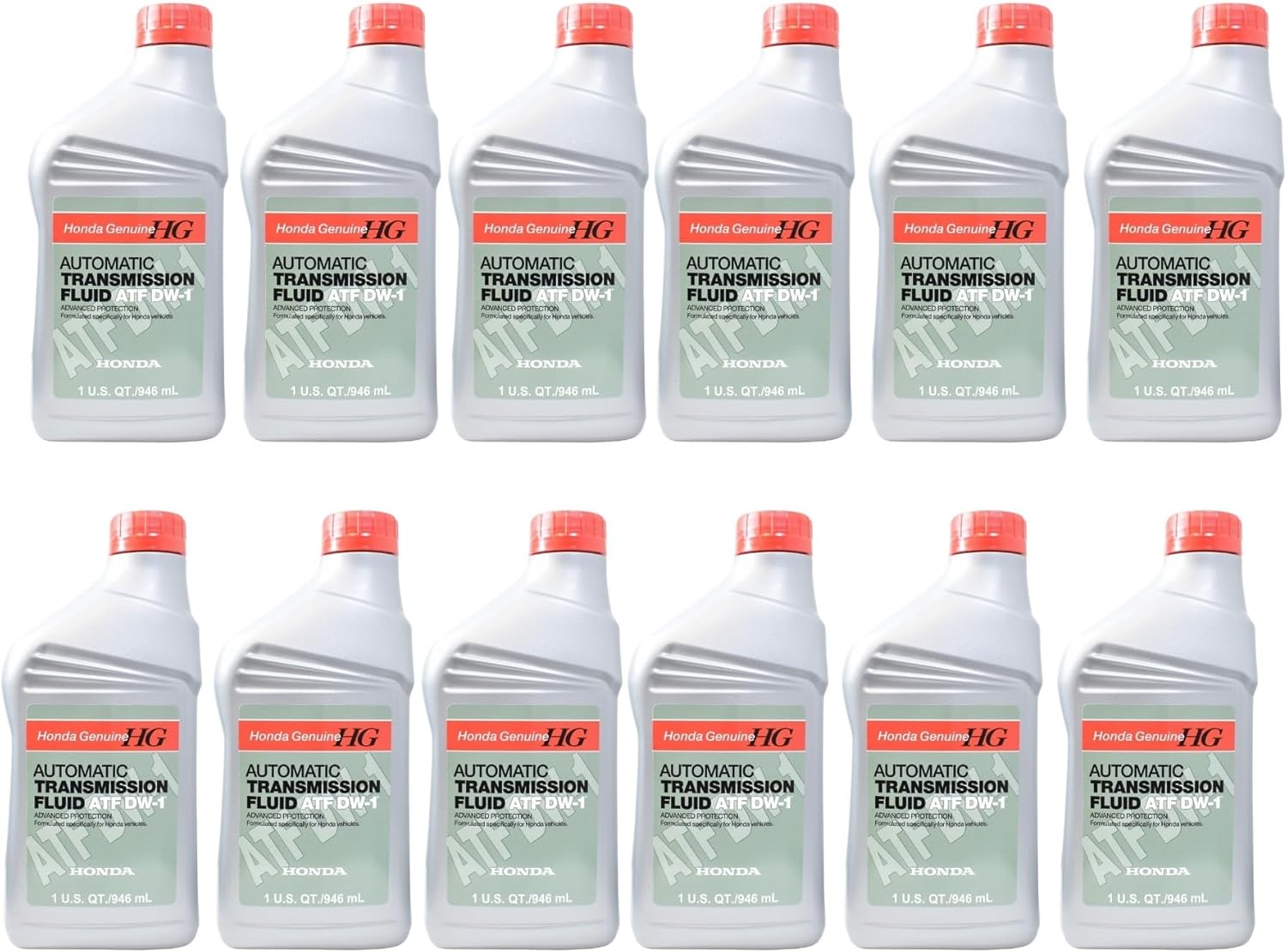
5. Honda DW-1 Automatic Transmission Fluid, 1 qt (pack of 12)
Best Multi‑Quart Value Pack
| Liquid Volume | 32 Fluid Ounces per bottle |
|---|---|
| Unit Count | 384.0 Fluid Ounces total |
| SAE J300 Viscosity Grade | 5W-30 |
| OEM Part Number | DW-1 |
This is the factory Honda DW-1 automatic transmission fluid packaged as twelve 1-quart bottles for owners doing full-service transmission maintenance. It is the same fluid recommended by Honda for compatible transmissions and is typically used for drain-and-fill services or multi-step exchange procedures where multiple quarts are required. The pack makes it easy to keep enough fluid on hand for a complete service or to service several vehicles without running back to the store. Because it is a genuine Honda product, expect consistent viscosity and formulation that supports precise shifting and helps reduce wear. The main downside is the upfront cost and bulk; the case is heavier and takes more storage space than single quarts, and it may be more fluid than needed for one short job. For routine drain-and-fill maintenance on Honda transmissions, though, the convenience of a service-sized pack outweighs the storage and price considerations for anyone planning multiple quarts.
Best for: Buyers planning a full transmission service or who service several Hondas and want to stock a service-sized quantity of manufacturer-specified fluid to ensure correct performance.
Less Ideal for: Drivers who only need a single quart for a top-up or who lack space to store a 12-quart case should consider buying individual bottles instead.
- Factory-formulation DW-1 fluid matched to Honda transmission specifications
- Pack of 12 quarts supplies enough fluid for a full service or multiple vehicles
- Consistent viscosity and clean formulation help maintain smooth, precise shifting
- Packaging is double sealed and compliant with transit regulations
- Large case requires significant storage space and is heavy to handle
- Higher upfront cost compared with buying a single quart
Verdict: Pick this option if you plan a full transmission service and want to save money by buying multiple quarts or a service-sized kit at once.
6. Idemitsu ATF Type H-Plus Automatic Transmission Fluid, 5 qt
Best Aftermarket Synthetic Alternative

| Recommended uses | Honda and Acura vehicles with ATF Z-1 or DW-1 specs |
|---|---|
| Unit count | 5 Quarts |
| Container type | Bottle |
| Viscosity | 5.800 cSt at 100°C; 49.0 at 40°C |
| Upper temperature rating | 258 Degrees Fahrenheit |
Idemitsu Type H-Plus is a synthetic ATF made specifically to meet Honda and Acura Z-1/DW-1 requirements and is sold in a 5 quart bottle for service jobs. In use it replaces factory Honda ATF and is intended for drain-and-fill or staged three-change refreshes commonly recommended for older Civics; the formula emphasizes optimized viscosity and friction control to restore smooth shifts and clutch performance. Notable features include advanced anti-wear additives and resistance to oxidation and thermal breakdown, which help transmission components run cooler and extend fluid life compared with conventional fluids. For a 2012–2015 Civic this means crisper, more consistent shift feel and potentially longer intervals between changes when the vehicle is driven normally. The main limitation is that a single 5 qt bottle does not fully flush most transmissions without multiple changes, so expect to use extra fluid or follow the recommended multi-stage replacement process to remove old, dark fluid completely.
Best for: Buyers who want a factory-compatible synthetic that improves shift smoothness and protects transmission internals while staying cost-effective for routine maintenance on 2012–2015 Honda Civics.
Less Ideal for: Drivers planning a one-pass full flush who do not want to perform multiple drain-and-fill stages should consider a larger volume service or shop-level flush instead.
- Formulated to meet Honda ATF Z-1 and DW-1 specifications for direct compatibility with Honda transmissions
- Synthetic formulation with anti-wear and anti-oxidation additives for longer fluid life
- Optimized viscosity and friction modifiers to improve shift quality and clutch engagement
- Sold in a 5 quart bottle sized for typical transmission service jobs
- Single 5 quart bottle is not enough for a full fluid exchange in many transmissions without repeating drain-and-fill steps
Verdict: Choose this aftermarket synthetic when you want OEM-level protection with potential performance or longevity advantages over conventional fluids at competitive pricing.
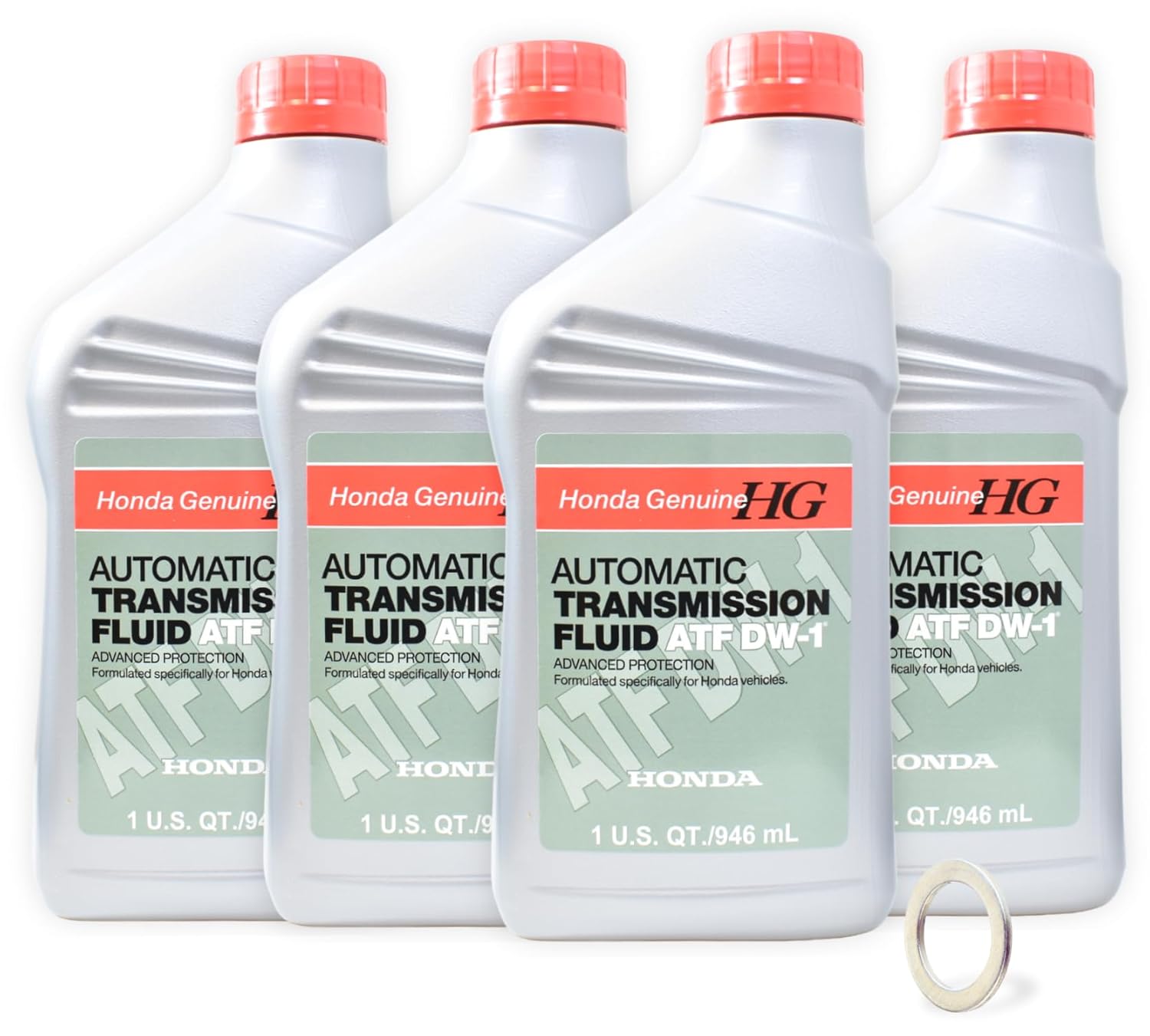
7. Honda Genuine ATF DW-1 Automatic Transmission Fluid 4-Quart Service Kit
Best Complete Service Kit
| Liquid Volume | 4 Quarts |
|---|---|
| Unit Count | 128.0 Fluid Ounces |
| SAE J300 Viscosity Grade | 10W-30 |
| Includes | (4) 1-qt bottles + 18 mm drain plug washer |
This Honda Genuine ATF DW-1 service kit supplies four 1-quart bottles of the manufacturer-specified automatic transmission fluid plus a new 18 mm drain plug washer, making a drain-and-fill service straightforward for a single maintenance interval. The fluid is engineered by Honda to deliver consistent friction characteristics for smooth shifts, protection against oxidation and wear, and stable cold-flow performance, so it suits routine transmission maintenance on vehicles requiring DW-1. Typical use is a DIY drain-and-fill or a single-interval shop service where you want the exact factory-specified fluid and a fresh crush washer included. The kit removes the need to track down separate parts and reduces the chance of using the wrong fluid. Limitations are that four quarts may not be enough for a full flush on some transmissions and this product is intended only for vehicles that call for DW-1, so verify your Civic's specification before buying.
Best for: Buyers who want a ready-to-use, OEM-matched service kit that simplifies a DIY drain-and-fill and ensures they use the correct fluid and hardware for their Honda Civic.
Less Ideal for: People planning a multi-qt full flush or who need fluid for several vehicles should purchase larger quantities or additional kits.
- Factory-formulated DW-1 fluid matched to Honda transmission requirements
- Includes four 1‑quart bottles for an easy drain-and-fill service
- Comes with an 18 mm drain plug washer so you replace the crush washer during service
- Engineered to improve shift feel and resist thermal breakdown
- Quantity may be insufficient for a complete transmission fluid flush on some models
Verdict: Select this pick if you prefer a ready-to-use kit that bundles the correct fluid with essential service hardware for a cleaner, faster DIY fluid change.
Choosing the Right 2012-2015 Honda Civic Transmission Fluid: Key Factors to Consider
Manufacturer Specification and Compatibility
Honda publishes specific fluid recommendations and service specifications for each transmission type in the Civic lineage. Ensuring the fluid explicitly meets the Honda spec for 2012-2015 (FB and FG) models reduces the risk of incorrect friction characteristics, which can lead to rough shifting, clutch chatter, or premature wear.
Compatibility is not just about bottle labels. Check technical data sheets for stated fitment to Honda automatics, CVTs, or manual gearboxes that were factory-installed on the Civic. Using a fluid that lacks the correct chemical profile for your transmission type often voids the practical benefits of an otherwise high-quality formulation.
Frictional Properties and Shift Quality
Friction modifiers and the overall friction curve of a fluid determine how smoothly gearsets and clutch packs engage. For automatic and CVT systems in the 2012-2015 Civic, a fluid with appropriate friction behavior helps minimize shudder, hesitation, and harsh engagements during temperature changes.
Look for fluids with published friction test data or those described as meeting Honda friction requirements. For manual transmissions, clutch compatibility is critical if the gearbox shares fluid with the clutch housing. Fluids that are too slippery or too aggressive can cause slipping or grabbing respectively.
Viscosity Stability and Shear Resistance
Viscosity affects film strength under load and influence on hydraulic actuation. A fluid that hold its viscosity across temperature cycles ensures predictable shift timing and protection under heavy loads. Shear stability is especially important in transmissions where mechanical shear can thin the oil over time, leading to reduced film strength.
Choose fluids with viscosity grades and shear test results appropriate for the Civic's operating conditions. For owners in hot climates or frequent towing or spirited driving, prioritize fluids with proven high-temperature viscosity retention.
Oxidation Resistance and Service Life
Oxidation and breakdown shorten fluid life and form deposits that interfere with valves, clutches, and sensors. Fluids with robust antioxidant additives and detergency resist varnish formation and maintain clarity of filter and valve function over miles.
Consider the recommended service interval and whether the fluid's datasheet reports extended drain capabilities. Fluids designed to resist oxidation help maintain consistent shift quality and reduce the frequency of full fluid replacements.
Thermal Performance and Cold-Flow Characteristics
The Civic experiences wide ambient temperature swings in many regions, so a fluid's cold-flow properties affect cold-start shift feel while its thermal performance governs behavior at high operating temperatures. Good low-temperature viscosity ensures early-morning gear engagements do not feel harsh, and high-temperature stability prevents breakdown under sustained load.
Select a fluid whose pour point and low-temperature viscosity align with your local climate, and whose high-temperature data show minimal volatility to avoid vapor lock or oxidative thinning.
Serviceability and Maintenance Considerations
Some transmission fluids require special change procedures, like multiple flush passes, specific fill volumes, or particular fill heights at temperature. For DIY owners, availability of correct fill procedures and easy access to service information matters a lot.
Consider whether the fluid is compatible with the Civic's existing filter and drain procedures, whether it requires a torque-converter-only fill protocol, and how straightforward it is to verify correct fluid level after service. Ease of sourcing and clear service guidance reduce the chance of maintenance errors.
Understanding Transmission Options for 2012-2015 Civic (FB and FG)
The 2012-2015 Honda Civic range used several transmission types depending on trim and market: manuals, conventional automatics, and continuously variable transmissions. Identifying which transmission your Civic has is the first step toward selecting the correct fluid.
You can confirm the transmission type through the owner's manual, service sticker, or by checking the vehicle identification details. Knowing whether your car uses a CVT or a traditional automatic is essential because fluid chemistry and friction characteristics differ significantly between those systems.
- Manual gearboxes often specify a different fluid chemistry designed for gear and synchronizer protection.
- Conventional automatics rely on specific frictional properties to control clutch pack engagement.
- CVTs require special viscous and friction formulas to protect belt or chain drives and pulleys.
How to Identify the Right Fluid on the Vehicle
Start by checking the owner's manual or the transmission service section for the exact specification. If those are not available, a service sticker under the hood or a printed service history can indicate the required fluid type.
When in doubt, match the fluid to the transmission family: use CVT-rated fluids for CVT units and ATF meeting Honda automatic specifications for conventional automatics. For manuals, select a gear oil or manual-transmission fluid that aligns with the gearbox rating in the manual.
- Look for manufacturer codes and spec numbers on product technical sheets.
- Avoid guessing based on bottle color or universal labels; technical compatibility matters more than marketing.
Signs Your Civic Needs a Fluid Service
Common symptoms of degraded transmission fluid include delayed or harsh shifts in automatics, shudder or slip in CVTs, and noisy or hard-shifting manuals. Unusual odour, darkened fluid color, or metallic particles on the drain plug also indicate the need for service.
Routine intervals vary, but fluid condition and driving patterns should guide replacement. If you notice a change in shift quality or smell burnt fluid, plan a fluid inspection and possible change.
- Delayed engagement at startup or inconsistent shift timing.
- Shudder under low-speed acceleration in CVT-equipped cars.
- Noisy gear changes or grinding in manual transmissions.
Fluid Change Best Practices for the Civic
Follow the vehicle-specific fill procedure and the recommended fluid level checks. Many automatic transmissions require filling to a specified level at a particular operating temperature to ensure accurate measurement. For CVTs, maintaining the correct level is critical because underfill or overfill affects belt tension and pulley operation.
Use proper capture and disposal methods for used fluids and replace filters or gaskets as recommended. Record the service details, including fluid brand, spec, and mileage, to inform future maintenance choices.
- Warm the transmission to operating temperature before checking level where the procedure requires it.
- Replace the pan gasket or drain plug washer if the service document recommends it to prevent leaks.
Climate and Driving Style Considerations
Your local climate and how you drive influence which fluid properties matter most. Hotter regions heighten the need for oxidation-resistant fluids with strong high-temperature viscosity, while colder areas require better cold-start flow characteristics.
Frequent towing, spirited driving, or heavy stop-and-go traffic increases thermal stress on the fluid. In those cases, favor fluids with broader thermal stability and documented shear resistance to preserve protective film strength under load.
- Hot climates: prioritize oxidation resistance and high-temperature viscosity retention.
- Cold climates: prioritize low-temperature viscosity and pour point performance.
- Aggressive driving: prioritize shear stability and anti-wear additives.
DIY Vs Professional Service: What to Expect
A DIY fluid change can be straightforward for manuals and some automatics if you have the right tools, access to the drain plug, and a way to properly fill and check levels. CVT changes can be more complex and sometimes require specific fill procedures or tools available at professional shops.
If you choose professional service, confirm the shop uses a fluid that matches Honda specifications for 2012-2015 Civics and that they follow temperature-dependent fill protocols when required. Request that they document fluid spec and service details on the invoice for future reference.
- DIY owners should have the correct funnel, torque wrench, and a way to measure fluid temperature if needed.
- Ask the service provider to show fluid technical data or spec references if you have concerns about compatibility.
Still looking for the perfect fit?
Select your Honda Civic configuration to see the most relevant Transmission Fluids recommendations
How We Chose the Best 2012-2015 Honda Civic Transmission Fluid
We prioritized fluids that meet Honda service specifications and that demonstrate stable viscosity, compatible friction modifiers, and proven oxidation resistance. Primary evaluation criteria included viscosity grade and thermal stability to ensure consistent performance across operating temperatures; frictional properties and clutch compatibility to preserve smooth shifts and prevent slippage in automatic and CVT units; additive package quality, including anti-wear and corrosion inhibitors important for gear and bearing longevity; and manufacturer compatibility statements or technical data that align with Honda recommendations for 2012-2015 Civics.We also considered shear stability and long-term oxidative durability since Civics are commonly driven in mixed city and highway conditions. Fluids with clear technical documentation on compatibility with CVT or conventional automatics were favored for clarity of fitment. Fluids that require special procedures or nonstandard drains that could complicate normal maintenance cycles were excluded.Excluded from consideration were products lacking technical support data, fluids that do not meet Honda-specified performance categories, and generic blends with uncertain additive chemistry. Our final picks are those that meet the vehicle scope, offer documented specs, and balance protection with everyday drivability.
Our full evaluation process is outlined in our review methodology.
FAQ
How often should I change transmission fluid in a 2012-2015 Civic?
Service intervals depend on transmission type and driving conditions. Many manuals recommend regular inspection and periodic changes; for automatics and CVTs, check the owner's service schedule and monitor fluid condition. Severe driving conditions often require more frequent service.
Can I use the same ATF in the CVT and the conventional automatic?
No. CVTs and conventional automatics generally require different fluid chemistries and frictional properties. Use a fluid specifically rated for CVT units on CVT-equipped Civics and ATF that meets Honda automatic specs on conventional automatics.
Will switching to a different fluid improve shifting in my Civic?
Switching to a fluid that matches the correct Honda specification and has better thermal or friction characteristics can improve shift feel if the previous fluid was degraded or incompatible. However, switching brands without matching specs may cause adverse effects.
Is there a difference between ATF and transmission fluid for a manual Civic?
Yes. Manual transmissions often require gear oils or manual-transmission fluids with different additive packages targeting gear and synchronizer wear. Automatic transmission fluids are formulated for hydraulic operation and clutch friction and are not always suitable for manuals.
Can I perform a partial fluid drain instead of a full flush on the Civic?
Partial drain methods remove some but not all fluid and can be suitable between full services. For many Civics, a pan drop and refill or an exchange that follows the manufacturer's guidance can restore fluid condition without full system flushes, but confirm the recommended procedure for your transmission type.
What are common signs of CVT fluid degradation in this Civic range?
Typical signs include low-speed shudder, hesitation under light acceleration, and unusual noises from the transaxle. Darkened fluid color or a burnt odour are additional indicators that the CVT fluid needs inspection or replacement.
Final Verdict
Choosing the right transmission fluid for a 2012-2015 Honda Civic comes down to confirming the transmission type and matching a fluid that meets Honda's specifications for that gearbox. Prioritize fluids with the correct friction characteristics, stable viscosity across temperatures, and proven oxidation resistance to preserve shift quality and component life.Balance maintenance practicality with fluid performance: for most owners, selecting a fluid that aligns with the Civic's service recommendations and that offers clear technical backing provides the best tradeoff between reliability and cost. Follow proper fill and level procedures to ensure the expected performance benefits are realized.
Explore More:
- Check out all Honda Civic parts & accessories
- Explore Fluids & Chemicals
- Browse all Accessories
