

Note: This article contains affiliate links. If you click on these links and make a purchase, I may earn a small commission at no extra cost to you. This helps support my research and content. Read my full affiliate disclosure here.
Choosing the right transmission fluid for a Honda Civic Si matters more than many owners realize. The wrong fluid can cause noisy shifts, reduced efficiency, and premature wear in either the manual or automatic driveline components fitted to the Si.This guide presents the top shortlisted transmission fluids suited to the Civic Si and explains the criteria used to evaluate them. You will get practical guidance on what to look for based on real-world driving demands and maintenance scenarios, plus a clear transition into the recommended options and why they made the list.
Looking for other parts? See all Honda Civic parts & accessories.
Top Picks at a Glance
| Best Overall Transmission Fluid A well-rounded choice balancing compatibility, performance, and reliability | Honda Genuine Manual Transmission Fluid 1 Quart (08798-9031) |  |
| Best Budget Transmission Fluid An affordable option that covers routine fluid changes without breaking the bank | iMC Motorcom Manual Transmission Fluid 1 Quart |  |
| Best OEM Honda Transmission Fluid Genuine factory-formula fluids sold in single quarts or multi‑pack configurations | Honda DW-1 Automatic Transmission Fluid, 1 qt, Pack of 4 |  |
| Best Low-Viscosity ATF Thin, fuel‑economy focused ATF designed for modern low‑viscosity transmissions | Honda Genuine ATF-Type 3.1 Automatic Transmission Fluid, 4-Quart Pack | 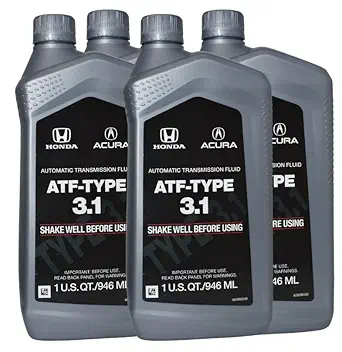 |
| Best 1-Gallon Bulk ATF Large single‑gallon containers for garages, multiple vehicles, or high‑volume jobs | Valvoline Import Multi-Vehicle Full Synthetic ATF, 1 Gallon |  |
| Best Complete Service Kit Multi‑quart kits that include extras like drain washers or service hardware | Honda Genuine ATF DW-1 Automatic Transmission Fluid 4-Quart Service Kit |  |
1. Honda Genuine Manual Transmission Fluid 1 Quart (08798-9031)
Best Overall Transmission Fluid

| Viscosity | 5W-30 |
|---|---|
| Liquid Volume | 1 Quarts |
| Recommended Uses For Product | Transmission Fluid |
| Specific Uses For Product | Lubricant for manual transmissions |
This genuine Honda manual transmission fluid is the factory‑specified lubricant for Honda manual gearboxes and is sold in a one‑quart bottle for DIY service. It is used when flushing or refilling a manual transmission to restore the shift feel and maintain proper synchro operation. The formulation is aimed at low friction and consistent viscosity so shifts stay predictable and components receive correct lubrication. Practical benefits include confidence that the fluid matches the transmission designers intent, likely improved shift quality after a change, and compatibility with Honda manual transmissions that list this part number. The bottle format is convenient for single‑service jobs but you may need more than one if your gearbox holds over a quart. This product is a single‑purpose manual transmission fluid so it is not a multi‑use gear oil and does not replace specific differential or specialized high‑performance fluids. For Civic Si owners looking to maintain factory shift feel, this is the straightforward, factory‑matched option.
Best for: DIY mechanics who prioritize using a factory‑specified fluid to preserve shift quality and long‑term transmission health in Honda Civic Si manual gearboxes.
Less Ideal for: Drivers seeking a multi‑vehicle or multi‑purpose gear oil or those who need high‑performance or racing transmission fluids should consider specialty alternatives.
- Factory‑matched formulation for Honda manual transmissions ensures correct friction and lubrication behavior
- Helps restore or maintain smooth, predictable shifting and synchro engagement
- Convenient 1 quart bottle size suitable for small service jobs and topping off
- Sold as a single quart so larger fill volumes may require multiple bottles
Verdict: This pick is for DIY mechanics who want a dependable, factory‑spec or universally compatible fluid that delivers smooth shifting and proven long-term protection.
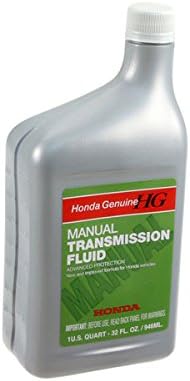
2. iMC Motorcom Manual Transmission Fluid 1 Quart
Best Budget Transmission Fluid
| Unit Count | 33.814 Fluid Ounces |
|---|---|
| SAE J300 Viscosity Grade | 5W |
| Material | Mineral Oil, Synthetic |
This manual transmission fluid is presented as a direct-fit, factory-quality replacement for Hondas and Acuras that require a 5W manual trans fluid. It is sold in a one‑quart bottle and is intended for routine drain-and-fill service on manual gearboxes. Buyers can expect a straightforward mineral/synthetic blend that matches the SAE J300 5W viscosity grade listed on the label, which helps maintain shift smoothness and can reduce gear noise on older gearsets. The product is easy to pour from the bottle during DIY fluid changes and is suitable for the usual maintenance intervals rather than performance or motorsport use. Limitations: it is a single‑grade, basic formula without performance additives aimed at heavy-duty or modified transmissions, so drivers seeking extended-change intervals or specialized friction characteristics should look at premium alternatives. Overall it is a sensible, budget-focused choice for owners who want a reliable, OEM-style manual gearbox fluid for routine service.
Best for: Buyers looking for an affordable, factory-style manual transmission fluid for routine maintenance on a Honda Civic Si who prioritize reliable, OEM-like behavior over specialty performance.
Less Ideal for: Drivers seeking long-life, high-performance fluids for track use, heavily modified transmissions, or extended drain intervals should consider premium or application-specific fluids instead.
- Matches SAE J300 5W viscosity grade suitable for Honda manual gearboxes
- Mineral and synthetic blend balances cost with basic protection
- One‑quart bottle size is convenient for DIY drain-and-fill jobs
- Many user reports of smoother shifting and reduced gear noise after change
- Basic formula without high-end additives for extended service or extreme loads
Verdict: Choose this slot if you need a low-cost, reliable fluid for routine maintenance that meets basic ATF/CVT specifications without premium additives.
3. Honda DW-1 Automatic Transmission Fluid, 1 qt, Pack of 4
Best OEM Honda Transmission Fluid

| Brand | Honda |
|---|---|
| Material | ATF |
| Liquid Volume | 128 Fluid Ounces |
| Number of Items | 4 |
| SAE J300 Viscosity Grade | 5W-40 |
This is the factory-formulated Honda DW-1 automatic transmission fluid supplied in one-quart bottles as a four-pack. It is intended for drain-and-fill or top-off service on Honda transmissions that specify DW-1, and its wide viscosity range helps protect and cool gearsets while maintaining smooth shift feel. Buyers will appreciate that each bottle is sealed and easy to pour with a funnel and that the pack quantity matches the typical amount needed for a single transmission service on many Honda models. Practical benefits include consistent, factory-quality fluid chemistry that avoids compatibility concerns and helps preserve transmission shift quality and longevity. The main limitation is scope: this product is the specific Honda formulation so it is not a multi-vehicle universal fluid and must be used only where DW-1 is specified; also one should follow the vehicle manufacturer guidance for exact fill volume and procedure. For routine maintenance and topping off, the OEM fluid removes guesswork and reduces risk of transmission noise or shift issues from using an incompatible alternative.
Best for: Buyers who want the exact factory transmission fluid to preserve factory shift characteristics and stay compatible with warranty or service requirements when servicing a Honda Civic Si.
Less Ideal for: People seeking a universal aftermarket ATF for multiple makes or those who need a different spec than DW-1 should consider other fluids.
- Genuine Honda formulation matched to factory specifications
- Four one-quart bottles provide the typical amount for a single service
- Sealed bottles that are easy to pour and store
- Wide viscosity range for protection and stable shifting
- Only suitable where the manufacturer specifies DW-1 formulation
Verdict: This label is for buyers who prioritize exact factory formulation and warranty-friendly OEM compatibility when refilling or topping off their transmission.
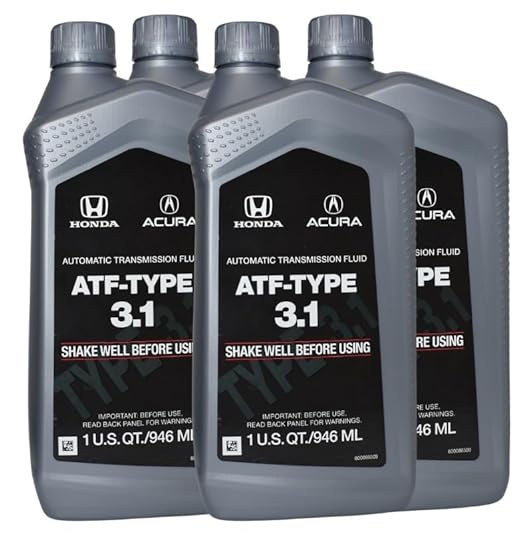
4. Honda Genuine ATF-Type 3.1 Automatic Transmission Fluid, 4-Quart Pack
Best Low-Viscosity ATF
| Material | Synthetic |
|---|---|
| Liquid Volume | 4 Quarts |
| Specific Uses For Product | Honda Vehicles |
| SAE J300 Viscosity Grade | 5W-40 |
This Honda Genuine ATF-Type 3.1 comes as a four-quart pack of factory-formulated transmission fluid designed specifically for Honda systems that call for ATF 3.x. It is a low-viscosity synthetic blend intended to improve fuel economy and provide smooth, precise shifts by using additives tuned to Honda's transmission design. Typical use is a drain-and-refill or top-up on Honda transmissions labeled for ATF-Type 3.1; buyers report firmer yet smoother shifts and improved downshift quality after replacement. The product matches the factory fill spec and replaces part 08200-9017, so it avoids compatibility guesses that can come with universal ATFs. The main limitations are cost compared with generic ATF and that it must only be used in transmissions specified for Honda ATF-Type 3.1; it is not a universal fluid. For DIY maintenance the sealed quart bottles and factory spec give confidence and make routine service straightforward, while professional shops will appreciate the exact match to Honda requirements.
Best for: Buyers who prioritize factory-specified fluids and want a thinner ATF to help fuel economy and crisper shift feel in Honda transmissions requiring ATF-Type 3.1.
Less Ideal for: Drivers who need a multi-vehicle or universal transmission fluid solution or who are seeking a lower-cost generic ATF for non-Honda applications.
- Low-viscosity synthetic formulation aimed at improved fuel economy and smoother shifting.
- Factory-engineered to meet Honda ATF-Type 3.1 specifications for direct compatibility.
- Comes in four sealed quart bottles making drain-and-fill or top-up jobs convenient for DIY or shop use.
- Higher per-quart cost than many generic or multi-vehicle ATF options.
Verdict: Use this category if you want a low‑viscosity formulation that helps fuel economy and optimized shifting in transmissions requiring thinner ATF.
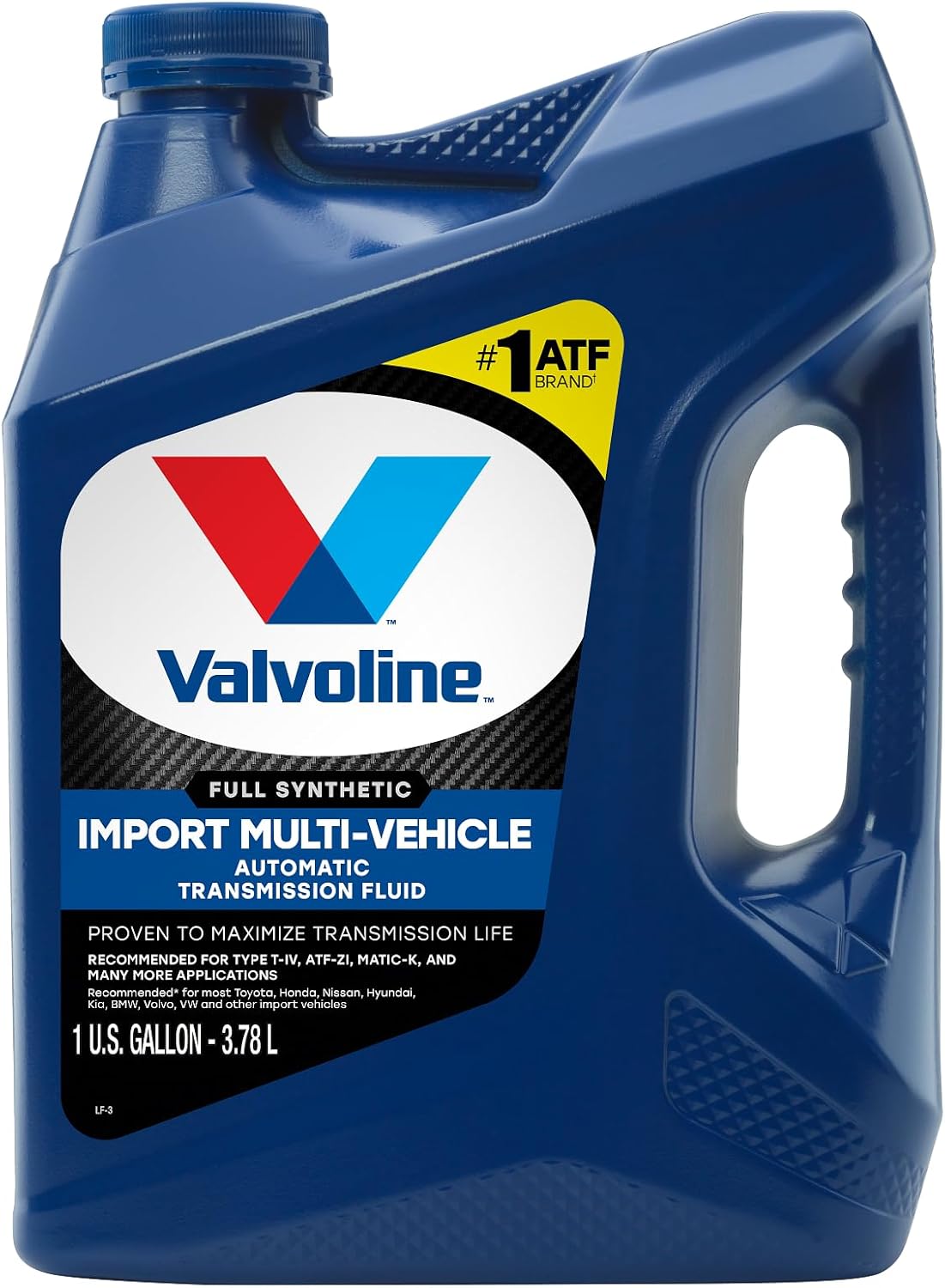
5. Valvoline Import Multi-Vehicle Full Synthetic ATF, 1 Gallon
Best 1-Gallon Bulk ATF
| Unit Count | 128 Fluid Ounces |
|---|---|
| Item Type Name | Automatic Transmission Fluid |
| Flash Point | 390 Degrees Fahrenheit |
Valvoline Import Multi-Vehicle ATF is a full-synthetic transmission fluid packaged in a one-gallon bottle intended for routine service and topping off. It is formulated with thermal- and viscosity-stable base oils plus friction modifiers and anti-wear additives to promote smooth shifts, reduce wear, and resist breakdown under heat. As a gallon-sized option it suits DIYers who perform multiple drain-and-fill cycles or want to keep spare fluid on hand. Users report improved shift quality after service and compatibility with many import specifications such as Toyota Type T, Nissan Matic series, Subaru ATF-HP and several Mitsubishi/Hyundai/Kia specs. Practical benefits include enhanced low-temperature flow during cold starts and stronger film protection at operating temperatures, which helps maintain consistent shift feel. Limitations are that you must confirm the Civic Si transmission spec before use because not all Hondas require the same fluid formulation, and a full flush or proper fill procedure may be needed to get expected results rather than a single drain-and-fill. The one-gallon bottle is convenient for multiple services but may be overkill if you only need a single small top-up.
Best for: DIY enthusiasts who perform regular transmission maintenance on their Civic Si and want a single-gallon supply for multiple drain-and-fill services or to keep a spare on hand.
Less Ideal for: Drivers who only need a small top-up or who prefer to use Honda factory-specified branded fluid should consider smaller containers or the manufacturer fluid instead.
- Full-synthetic formulation for improved thermal and viscosity stability
- Engineered additives for smoother shifting and anti-wear protection
- One-gallon bottle allows multiple drain-and-fill cycles or spare fluid storage
- Covers a wide range of import transmission specs commonly found on many vehicles
- Not guaranteed to match every Honda transmission specification so fitment check required
Verdict: This slot suits DIYers who prefer buying a gallon at a time for multiple services or to keep on hand for frequent fluid changes.
6. Honda Genuine ATF DW-1 Automatic Transmission Fluid 4-Quart Service Kit
Best Complete Service Kit
| Liquid Volume | 4 Quarts |
|---|---|
| Unit Count | 128.0 Fluid Ounces |
| SAE J300 Viscosity Grade | 10W-30 |
| Manufacturer | American Honda Motor Company |
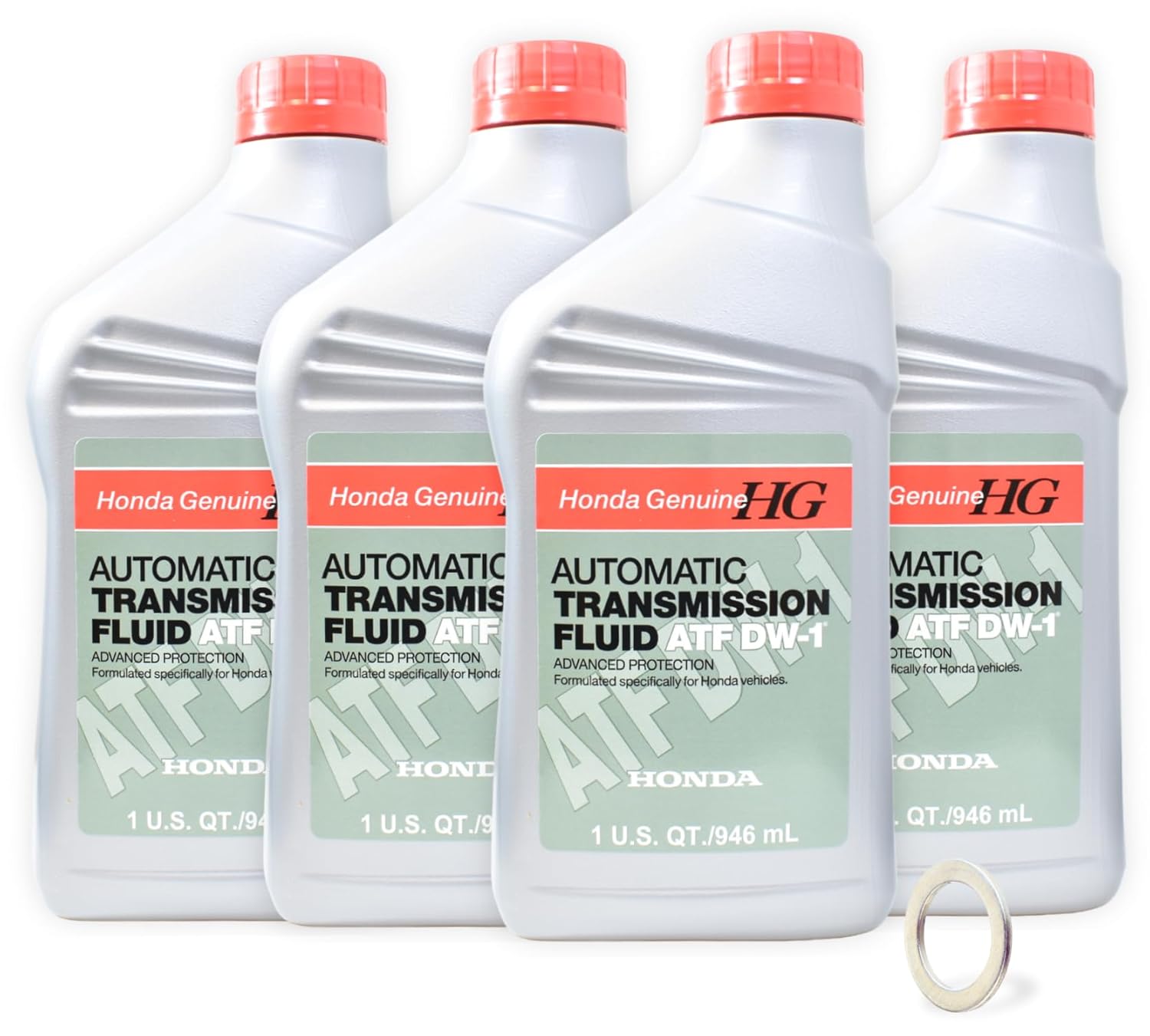
This Honda Genuine ATF DW-1 service kit supplies four 1-quart bottles of factory-formulated automatic transmission fluid plus a new 18 mm drain plug washer to complete a drain-and-fill service. It is intended for Honda transmissions specifying DW-1 and is used in routine maintenance to restore hydraulic and friction characteristics for smoother shifts and reduced noise. The fluid’s formulation emphasizes consistent cold-flow performance, oxidation resistance, and protection against wear so gear changes stay predictable under normal driving. Bundling the crush washer with the quarts saves a stop at the parts counter and reduces the chance of leaks after a drain. The kit does not include a filter, pan gasket, or tools, so it fits best for a simple drain-and-fill rather than a full pan service or overhaul. For Civic Si owners who want factory-quality fluid and a ready-to-use set of quarts plus the small hardware needed for the drain, this kit is convenient and reliable.
Best for: Buyers who want a single purchase that supplies the exact Honda-specified fluid and the small hardware needed to perform a straightforward drain-and-fill on their Civic Si, prioritizing factory compatibility and convenience.
Less Ideal for: Drivers planning a full transmission pan service, filter replacement, or a complete fluid flush should choose a more comprehensive kit or additional parts and tools.
- Factory-formulated DW-1 fluid engineered for Honda transmissions
- Includes four 1-quart bottles for a complete drain-and-fill session
- Comes with an 18 mm drain plug washer to help prevent leaks after service
- Formulation resists oxidation and supports smooth, consistent shifting
- Does not include a transmission filter, pan gasket, or tools needed for a full pan service
Verdict: Choose a complete service kit when you want quarts plus the small parts needed for a flush or drain-and-fill in one convenient purchase.
Choosing the Right Honda Civic Si Transmission Fluid: Key Factors to Consider
Compatibility With Honda Specs
Confirming compatibility with Honda specifications is the first priority. Honda Si transmissions, whether the manual gearbox or an automatic variant, require fluids with specific friction characteristics and additive packages. Using a fluid that matches the manufacturer's spec helps ensure correct clutch engagement, steady torque converter lockup, and predictable shift timing.
Compatibility also reduces the risk of seal swelling or shrinkage that can lead to leaks. For owners, this means checking technical literature or product data sheets for listed approvals and stated compatibility with Honda transmissions before committing to a fluid.
Friction Characteristics And Shift Feel
Friction behavior directly affects how smoothly gears engage and how firmly the torque converter locks up. Fluids formulated for stable, consistent friction help avoid shudder, slipping, or a vague shift feel during normal and aggressive driving.
For a performance-oriented Civic Si, look for products that maintain consistent friction across temperature ranges and over service life. This ensures predictable clutch engagement in a manual or controlled shift behavior and lockup timing in an automatic application.
Viscosity And Shear Stability
Viscosity influences film strength and hydraulic pressure behavior inside the transmission. Fluids with the correct viscosity for the Civic Si help maintain proper clearances and pressure for gear actuation and synchronizer operation.
Shear stability is important because repeated mechanical stress can thin a fluid over time, degrading protection. Choose fluids with proven shear stability so viscosity holds up between service intervals, especially if you do spirited driving that repeatedly loads the transmission.
Thermal Resistance And Oxidation Control
Transmissions generate heat, particularly under aggressive driving or in stop-and-go traffic. A fluid that resists oxidation and thermal breakdown will preserve additive performance and avoid sludge or varnish buildup that can impede valve bodies or clutch surfaces.
Thermal resistance also ties to service life. Fluids with robust antioxidant packages typically require less frequent changes and maintain performance longer under higher operating temperatures.
Wear Protection And Additive Chemistry
Wear protection additives like anti-wear agents, detergents, and dispersants preserve gear teeth, bearings, and synchronizer surfaces. For the Civic Si, which can see elevated loads, a fluid with effective anti-wear chemistry helps extend component life.
Understand the additive balance because too aggressive friction modifiers can harm synchronizer performance, while too little leaves metal-on-metal contact. The right chemistry strikes a balance between smooth engagement and protective film formation.
Serviceability And Maintenance Considerations
How easy it is to change the fluid affects long-term ownership. Consider drain and refill accessibility, whether the fluid requires a full flush or simple drain, and the recommended change interval. Some high-performance fluids have longer life but may need specific procedures to achieve a full exchange.
Also account for how frequently you drive aggressively versus commuting. If you push the car regularly, plan on shorter intervals and choose a fluid whose performance remains stable under more frequent stress.
Manual Gearbox Needs For The Si
The Civic Si's manual transmission depends on a fluid that supports synchronizer friction and rapid, positive shifts. Manual gearbox fluids differ from automatic formulations because they must allow smooth engagement of dog clutches and synchronizers without causing grabby behavior or delayed mating.
When selecting a product for the manual gearbox, prioritize a fluid that specifies suitability for manual transmissions or lists friction characteristics appropriate for synchronizers. Also consider the service interval and how the fluid handles shear when the gearbox is subjected to repeated aggressive shifts.
- Look for explicit compatibility with manual transmissions
- Prioritize shear-stable viscosities for long-lasting film strength
- Avoid fluids with overly aggressive friction modifiers that could cause shudder
Automatic Transmission Considerations
For automatic-equipped Si variants, torque converter lockup behavior and hydraulic control sensitivity are critical. Automatic transmission fluids must deliver consistent friction for clutch packs and predictable pressure responses for valve bodies to maintain crisp, reliable shifts.
Select an ATF that lists compatibility with Honda automatic systems and notes good thermal stability. Pay attention to feedback from technical data sheets on torque capacity and friction durability for sustained performance under load.
- Ensure the ATF matches Honda automatic transmission requirements
- Thermal stability prevents fade during prolonged spirited driving
- Stable friction prevents slip and preserves shift firmness
Temperature And Climate Effects
Ambient temperature affects viscosity and cold-start shift behavior. In colder climates, a fluid that maintains flow and pressure on startup prevents harsh engagements and wear during the first moments of operation. In warmer climates or under hard use, the ability to resist thinning at high temperatures protects component surfaces.
Choose a fluid whose operating range and viscosity profile suit the climates where you drive the Civic Si most often. Technical datasheets typically show viscosity at multiple temperatures; use that data to match the fluid to your conditions.
- Check viscosity-temperature data for cold start and high-temp behavior
- Consider seasonal service intervals if you experience extreme temperatures
- Balance low-temperature fluidity with high-temperature film strength
DIY Change Tips For Owners
Many Civic Si owners perform transmission fluid changes themselves. For manual transmissions, a drain and refill may be straightforward, but achieving a full exchange can be more involved. For automatic transmissions, some units require specific fill and torque procedures to avoid overfilling or aeration.
When doing a DIY change, always warm the transmission to operating temperature if the procedure calls for it, use the correct fill level method, and follow torque specs for drain plugs and fill components. Use a clean funnel and catch pan to avoid contamination and dispose of used fluid properly.
- Warm the transmission before drain when recommended
- Use correct fill method and level checks to avoid overfilling
- Keep tools and containers clean to prevent contamination
Signs Your Transmission Fluid Needs Attention
Watch for changes in shift feel, unusual noises, slipping, or inconsistent engagement as indicators that the fluid may be degraded. Dark, burnt-smelling fluid on inspection is another sign that thermal breakdown has occurred and a service is due.
Routine checks of fluid condition and level can prevent minor issues from becoming major repairs. Pay particular attention after track days, towing, or other high-load events that accelerate fluid aging.
- Unusual shifts or noises after warm-up
- Dark or burned-smelling fluid on inspection
- Frequent high-load use shortens fluid life
Environmental And Disposal Notes
Used transmission fluid is a regulated waste stream in many jurisdictions. Collect drained fluid in sealed containers and follow local disposal or recycling rules. Improper disposal can harm the environment and may be subject to fines.
When planning maintenance, factor in responsible disposal or recycling locations and keep a record of service dates to demonstrate proper handling over the life of the vehicle.
- Store used fluid in sealed, labeled containers
- Locate approved recycling or disposal facilities before service
- Keep service records showing fluid changes and disposal steps
Still looking for the perfect fit?
Select your Honda Civic configuration to see the most relevant Transmission Fluids recommendations
How We Chose the Best Honda Civic Si Transmission Fluid
We selected fluids based on technical compatibility, thermal performance, friction control, and long-term durability for the Honda Civic Si drivetrains. Primary evaluation criteria included fluid chemistry and additive package to ensure proper clutch engagement and torque converter behavior, viscosity grade and shear stability to preserve film strength under load, and temperature tolerance to resist breakdown during spirited driving or heavy traffic. We also considered manufacturer-specified approvals and meeting Honda service fill specifications where applicable, plus compatibility with either the Si's manual synchronizers or automatic transmission components.Practical service factors were part of the filter set too: longevity between recommended service intervals, ease of drain and refill for common DIY procedures, and whether the fluid supports stable shifting feel across ambient temperatures. Products that lacked clear technical data on friction modifiers, shear stability, or compatibility with Honda specifications were excluded. We prioritized fluids that balance shift quality and component protection for typical Si owners who drive enthusiastically but expect reliable daily use.
Our full evaluation process is outlined in our review methodology.
FAQ
How often should I change transmission fluid in a Honda Civic Si?
It depends on driving style and the transmission type. Under normal driving, many manufacturers suggest periodic intervals, but spirited driving or heavy use often calls for shorter intervals. Check the vehicle's maintenance guidance and monitor fluid condition, changing sooner if the fluid smells burned or has darkened.
Can I use automatic transmission fluid in the manual gearbox?
Usually no. Manual gearboxes and automatic transmissions require different friction properties and additive balances. Using ATF in a manual gearbox can change synchronizer behavior and may lead to poor engagement. Always use a fluid specified for manual applications when required.
Will switching to a high-performance fluid improve shifting immediately?
You may notice crisper or more consistent shifts after switching, especially if the previous fluid was degraded. The extent of improvement depends on the fluid's friction characteristics and the current condition of internal components. Significant improvement is less likely if mechanical wear is already present.
Is it OK to top off transmission fluid between changes?
Topping off is acceptable for small adjustments to maintain correct level, but it should not replace a full service if the fluid is old or contaminated. Mixing different fluid chemistries can alter performance, so use the same type as the existing fill when topping off.
How do I check transmission fluid level on a Civic Si?
Procedures vary by transmission type and year, but common steps include warming the vehicle to operating temperature, parking on level ground, and using the manufacturer method for checking level. Refer to service documentation for the exact process and do not overfill, as overfilled transmissions can cause aeration and shifting problems.
Are synthetic fluids better for the Civic Si transmission?
Synthetic fluids generally offer better thermal stability and shear resistance than conventional oils, which can translate to longer life and more consistent performance, especially under higher loads. However, compatibility with Honda specifications and friction requirements is the deciding factor, not simply synthetic status.
Final Verdict
For the Honda Civic Si, prioritize fluids that meet Honda compatibility requirements and deliver stable friction behavior across temperature ranges. Balance viscosity and shear stability with wear protection so the transmission keeps shifting crisply during everyday driving and spirited use.Decide based on your driving habits: choose a fluid with stronger thermal and oxidation resistance if you push the car frequently, or pick a long-life, spec-compliant option if you mostly commute. Following the maintenance intervals and checking fluid condition regularly will help you pick confidently and protect the transmission over time.
Explore More:
- Check out all Honda Civic parts & accessories
- Explore Fluids & Chemicals
- Browse all Accessories
