

Note: This article contains affiliate links. If you click on these links and make a purchase, I may earn a small commission at no extra cost to you. This helps support my research and content. Read my full affiliate disclosure here.
If you own a 2007-2018 Jeep Wrangler you know a tired shock absorber can turn daily driving or trail runs into a bouncy, uncontrolled experience. Whether your Wrangler is a JK or JKU era daily driver or a dedicated trail rig, choosing the right shock absorbers affects ride comfort, axle control, and component longevity. This guide shortlists the top shock absorbers suited to the 2007-2018 Wrangler chassis span and explains why each option made the cut. We evaluated ride quality, damping consistency, mounting fit and durability to narrow the field to the most practical replacements. Read on to see the criteria we used and practical advice for front and rear shock replacement and common symptoms that indicate worn shocks need attention.
Looking for other parts? See all Jeep Wrangler parts & accessories.
Top Picks at a Glance
| Best Overall The best all-around choice for most situations | Bilstein B6 4600 Front and Rear Shock Absorbers Kit |  |
| Best Quality Built to a higher standard if you want something more solid | FOX 2.0 Performance Reservoir Shock Set (set of 4) |  |
| Best Value The sweet spot between price and what you get | Rough Country N3 Rear Shock Absorbers (0-3") for Jeep Wrangler JK |  |
| Best Budget The cheapest option that still gets the job done reliably | ASAPE Front and Rear Shock Absorber Kit for 2007–2018 Jeep Wrangler |  |
| Highest Rated A top-rated pick with lots of positive feedback | Bilstein B8 5100 Series Front & Rear Shock Set for 2007–2018 Jeep Wrangler (1.5–3" Lift) |  |
| Most Popular A crowd favorite that many people choose with confidence | Rancho RS5000X Gas Shocks Set (Fits 2007–2018 Jeep Wrangler JK) |  |
| Best Seller A high-volume bestseller chosen again and again | Detroit Axle 4-Piece Shock Absorber Kit for 2007–2018 Jeep Wrangler |  |
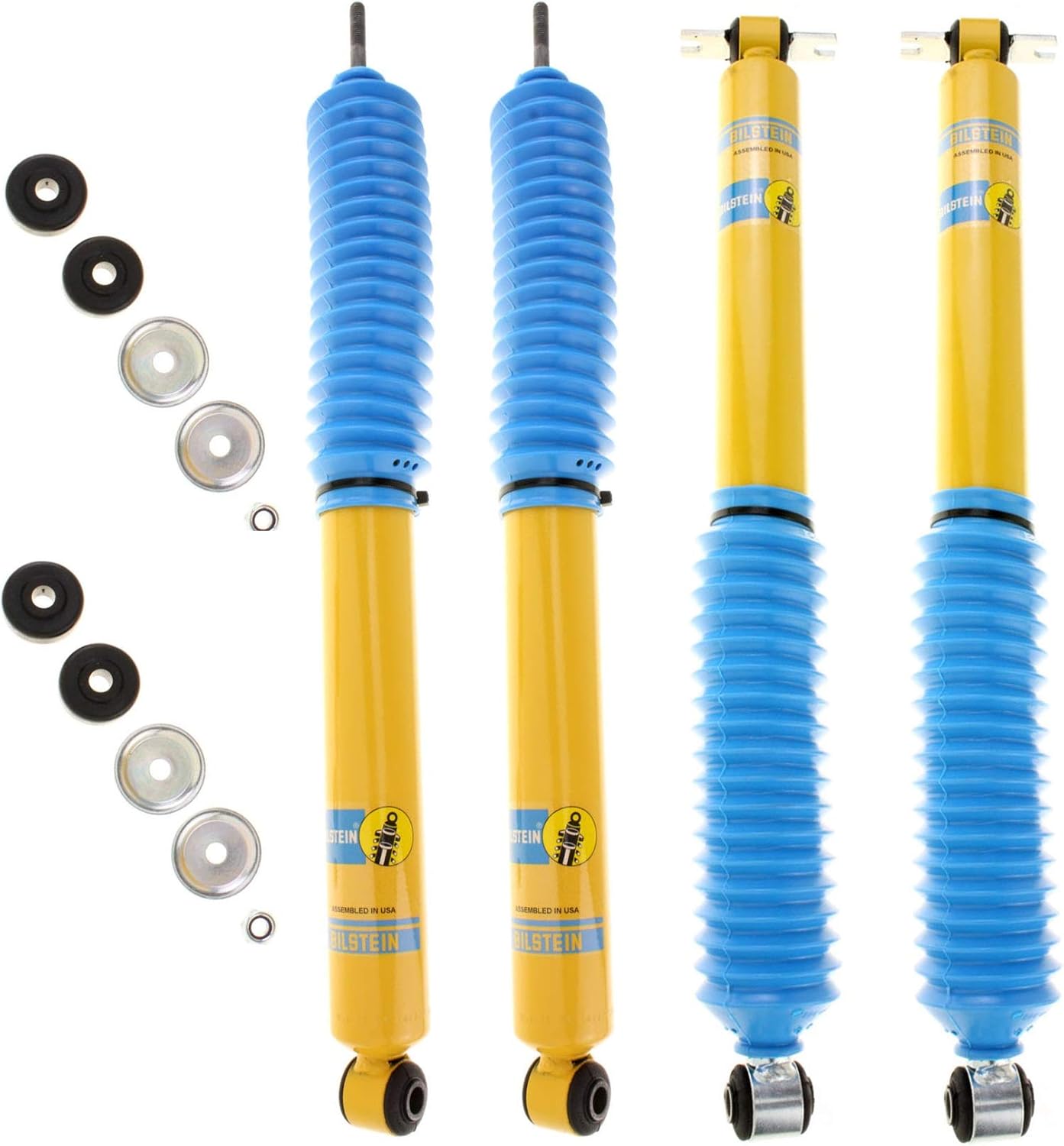
1. Bilstein B6 4600 Front and Rear Shock Absorbers Kit
| Brand | Newparts |
|---|---|
| Position | Front |
| Gas design | Nitrogen-infused 46mm monotube |
| Valving | Digressive piston design |
| Warranty | Limited lifetime warranty |
The Bilstein B6 4600 kit replaces the factory shocks with valved, vehicle-specific monotube units that aim to deliver a firmer, more controlled ride on and off road. These nitrogen-charged shocks use a digressive piston design to react quickly to changing surfaces, which reduces fade and keeps handling predictable when you encounter rough trails or highway bumps. Installation is bolt-on with included hardware and designed to work with factory springs, though several owners report the front upper fitting requires an Allen key in a tight space and can be fiddly without a lift or the right tools. In daily driving the shocks noticeably calm body motions and improve steering feedback; off road they resist fading under repeated impacts. The kit carries a limited lifetime warranty and is tuned for specific year and load conditions, so you get a modeled balance between comfort and control rather than a soft, plush ride.
Best for: Buyers who want a durable, factory-quality shock that improves stability and handling both on pavement and on trails while keeping installation close to stock fitment and setup.
Less Ideal for: If you prioritize the softest possible ride or need shocks tuned for heavy-duty racing or extreme lift modifications, this kit is not the best match.
- Direct-fit, bolt-on design with hardware included for quick replacement
- Nitrogen-charged 46mm monotube and digressive valving provide consistent, fade-free damping
- Tuned for specific vehicle year and load conditions to balance on-road comfort and off-road control
- Works with factory springs so no spring change required
- Front upper mounting requires holding an Allen-style fitting in a tight space which can complicate DIY installation
Verdict: A practical, vehicle-tuned shock kit that noticeably tightens handling and resists fade for balanced on-road and off-road performance.
2. FOX 2.0 Performance Reservoir Shock Set (set of 4)

| Brand Name | FOX Factory |
|---|---|
| Model Number | 985-24-015 |
| Set Name | Set of 4 |
| Compatible with Vehicle Type | Car |
| Automotive Fit Type | Vehicle Specific Fit |
These FOX 2.0 performance reservoir shocks replace factory dampers on lifted Wrangler vehicles and bring race‑inspired damping to street and off‑road use. They are a set of four with remote reservoirs that increase oil capacity and reduce fade under repeated bumps, so they hold consistent damping on long trail runs or when carrying heavier loads. The aluminum bodies and painted finish resist corrosion and the kit includes necessary washers, bushings, reservoir clamps, and nuts for installation while reusing factory mounting bolts. Users report noticeably firmer, more controlled handling and a smoother ride over rough roads compared with basic replacement shocks. Limitations to consider: the kit assumes a 1.5–3.5 inch lift and mounting plates or shock boots are sold separately, and some buyers have experienced minor parts fitment issues that required vendor followup. Installation can be done in a driveway but correct orientation and reservoir clamp placement must be checked before final tightening.
Best for: Enthusiasts wanting firmer, more consistent damping for spirited on‑road driving and aggressive trail use on a lifted Wrangler, prioritizing handling and heat‑resistant performance.
Less Ideal for: Drivers who keep their Wrangler at stock ride height or who want a plush, comfort‑focused daily ride should consider other, non‑reservoir shock options.
- Remote reservoirs increase oil capacity and reduce heat‑related fade for sustained off‑road use
- Factory‑replacing fitment for 1.5–3.5 inch lifted Wrangler applications simplifies swap‑out
- Aluminum construction and painted finish improve corrosion resistance and durability
- Includes washers, bushings, clamps, and nuts needed for installation (mounting bolts are reused)
- Intended specifically for lifted setups (1.5–3.5 in) so not suitable for stock‑height vehicles without modification
- Some users reported a missing or mislocated reservoir clamp requiring seller support
Verdict: Buy these if you need durable, reservoir‑equipped shocks that deliver firmer, fade‑resistant damping for a lifted Wrangler focused on performance.
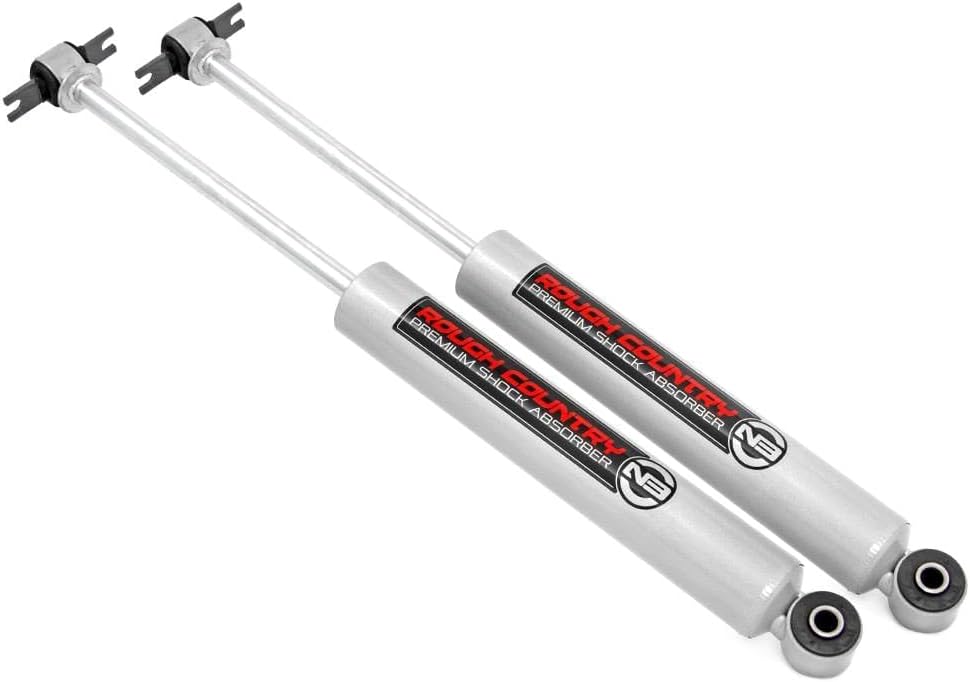
3. Rough Country N3 Rear Shock Absorbers (0-3") for Jeep Wrangler JK
| Auto Part Position | Rear |
|---|---|
| Compatible with Vehicle Type | 2007-2017 4WD Jeep Wrangler |
| Included Components | (2) Premium N3 Shock Absorbers |
| Material Type | Alloy Steel, Rubber, Zinc |
These Rough Country N3 rear shock absorbers are built for lifted and stock JK Wranglers that need firmer damping and improved control. They use nitrogen charging and a 10-stage variable valving design to reduce fade and keep wheel contact over rough terrain, while rubber bushings and a spring-loaded piston rod seal help durability in off-road conditions. Typical use is rear suspension replacement or pairing with a 2.5–3 inch lift where riders want a firmer, more controlled feel than aging factory shocks. Installation is straightforward for a mechanically inclined owner or installer because they are vehicle-specific fitment and come as a matched pair. Practical benefits include noticeably improved handling and reduced bottoming on trails, plus a painted finish and alloy-steel construction for corrosion resistance. Expect a firmer ride on pavement compared with softer touring shocks, and owners seeking the plushest daily comfort may find them a bit stiff for strictly street use.
Best for: Buyers who want a durable, budget-friendly upgrade that tightens rear handling and stands up to light to moderate off-road use while fitting a lifted or stock JK Wrangler.
Less Ideal for: Drivers who prioritize the softest possible daily highway ride or who want adjustable comfort settings should look at touring or adjustable shock options instead.
- Nitrogen-charged with 10-stage variable valving for consistent damping under load
- Vehicle-specific rear fitment for 2007–2018 Jeep Wrangler JK simplifies installation
- Alloy steel construction and painted finish resist corrosion in off-road use
- Includes rubber bushings and spring-loaded rod seal for improved durability
- Tends to deliver a firmer, stiffer ride on pavement compared with comfort-oriented shocks
Verdict: A durable, vehicle-specific rear shock pair that delivers firmer, more controlled handling for JK Wranglers with 0–3 inch lifts.
4. ASAPE Front and Rear Shock Absorber Kit for 2007–2018 Jeep Wrangler

| Compatible models | 2007-2017 Jeep Wrangler; 2018 Jeep Wrangler JK |
|---|---|
| Includes | 4 shock absorbers |
| Auto Part Position | Front |
| Automotive Fit Type | Vehicle Specific Fit |
This ASAPE four-piece shock kit is a budget-friendly direct replacement for 2007–2017 Jeep Wrangler and 2018 Wrangler JK models, intended to restore basic ride damping and reduce road vibrations. Installation is straightforward since the units arrive complete and claim vehicle-specific fit, so a typical DIYer can swap the front and rear shocks without special tools. The shocks are marketed as going through quality checks and offer a metal finish that resists everyday wear. In practice these will improve comfort and stability over worn originals, making daily driving and highway cruising more controlled. Expect them to perform well for commuting and moderate off-road use, but they are not positioned as heavy-duty or performance-tuned components, so aggressive rock crawling or heavy-load towing may reveal limits in damping consistency and longevity. For the price-conscious buyer they present a practical way to refresh ride quality without major expense, though long-term durability compared with premium aftermarket shocks may be lower.
Best for: Owners wanting an affordable, straightforward replacement to restore daily driving comfort and stability on 2007–2018 Jeep Wrangler models without spending on premium suspension upgrades.
Less Ideal for: Drivers who do frequent aggressive off-road driving, carry heavy loads regularly, or want tuned performance suspension should consider higher-spec aftermarket shocks.
- Direct replacement fit for 2007–2017 Jeep Wrangler and 2018 Wrangler JK, simplifying installation
- Arrives complete and ready to install so no extra parts or special tools are required
- Improves ride comfort and reduces road vibrations compared with worn shocks
- Metal exterior finish offers basic durability against everyday wear
- Not described as performance or heavy-duty shocks, so may underperform in extreme off-road or heavy-load situations
- Limited manufacturer information on damping technology and long-term durability
Verdict: A cost-effective, ready-to-install shock kit to quickly restore everyday ride comfort on 2007–2018 Jeep Wrangler models.
5. Bilstein B8 5100 Series Front & Rear Shock Set for 2007–2018 Jeep Wrangler (1.5–3" Lift)

| Compatible vehicle | 2007-2017 Wrangler; 2018 Wrangler with 1.5-3" lift |
|---|---|
| Design | 46mm monotube |
| Valving | Digressive piston |
| Fitment | Direct fit with hardware |
The Bilstein B8 5100 set replaces the factory shocks on 2007–2017 Jeep Wrangler and 2018 Wrangler models with a 1.5–3 inch lift, delivering firmer, more controlled damping over rough roads and trails. These monotube shocks use digressive valving that reacts to changing surfaces, giving more compliance on small bumps and stronger resistance on bigger impacts. They are sold as a direct-fit kit with hardware and are tuned for this application, so you get improved ride comfort, reduced fade on long runs, and better handling when cornering or carrying extra load. Installation can be straightforward for the rear but tight clearance and some bushing fit issues are reported for the front passenger side, so expect a bit more time and possibly reusing original bushings. The shocks run stiffer than some economy options, which benefits stability and control but may feel firmer on-road. For anyone wanting a durable, performance-oriented upgrade for a lifted Wrangler, these shocks strike a good balance between daily drivability and off-road capability.
Best for: Buyers who prioritize long-term, ride-quality improvements and dependable, tuned damping for a lifted Wrangler used for both daily driving and off-road trails.
Less Ideal for: If you want an ultra-soft, plush highway-only ride or need adjustable damping for frequent setup changes, choose a different shock tailored to comfort or adjustability.
- Monotube 46mm design provides consistent, fade-free performance under heavy use
- Digressive valving reacts to changing surfaces for a better mix of comfort and control
- Tuned specifically for lifted Wrangler applications for improved handling
- Includes hardware for direct-fit installation
- Front passenger-side installation can be tight and may require extra time or minor trimming
- Supplied bushings have reported fitment issues, forcing some users to reuse originals
Verdict: Choose the Bilstein 5100 set if you want a durable, performance-tuned shock that improves handling and resists fade on a lifted 2007–2018 Jeep Wrangler.
6. Rancho RS5000X Gas Shocks Set (Fits 2007–2018 Jeep Wrangler JK)

| Brand | Rancho |
|---|---|
| Model Number | RS5000 X |
| Set Name | Set of 4 |
| Auto Part Position | Front |
| Material Type | Metal |
The Rancho RS5000X set is a direct-fit replacement shock kit for 2007–2018 Jeep Wrangler JKs, built around a gas-pressurized twin-tube design with Rancho's progressive rebound and compression valving. Install typically reuses factory mounting bolts and includes the washers, bushings, and nuts needed, and the shocks are sized to work at factory ride height or with up to 2 inches of lift. In use the larger 2.25-inch body and 150 PSI gas charge increase fluid capacity and reduce foaming, which helps control heat and fade during extended highway runs or light off-road trails. The progressive valving softens initial impacts yet firms up for bigger hits, so drivers report reduced high-speed shudder and improved cornering stability. Expect a firmer than stock feel that many owners prefer for control but that may read as stiffer on very smooth roads. One installation nuisance is limited clearance at the front passenger top mount on some JKs, which can make that bolt fiddly to access.
Best for: Buyers who value proven real-world performance and want a firmer, more controlled ride for daily driving and light off-road use backed by many positive owner reports.
Less Ideal for: If you prioritize the softest possible highway comfort or plan extreme lift heights beyond the stated 2-inch range, consider a different damper tuned for plushness or long-travel lifts.
- Vehicle-specific fit for 2007–2018 Jeep Wrangler JK for straightforward replacement
- Gas-pressurized twin-tube design reduces foaming and helps resist shock fade
- Larger 2.25-inch body increases fluid capacity for cooler operation under load
- Progressive rebound and compression valving smooths small bumps while engaging for larger impacts
- Ride is noticeably firmer than factory shocks which may feel harsh to drivers prioritizing plush comfort
Verdict: A durable, vehicle-specific gas shock set that tightens Wrangler JK handling and reduces high-speed shudder while holding up to light off-road use and moderate lifts.
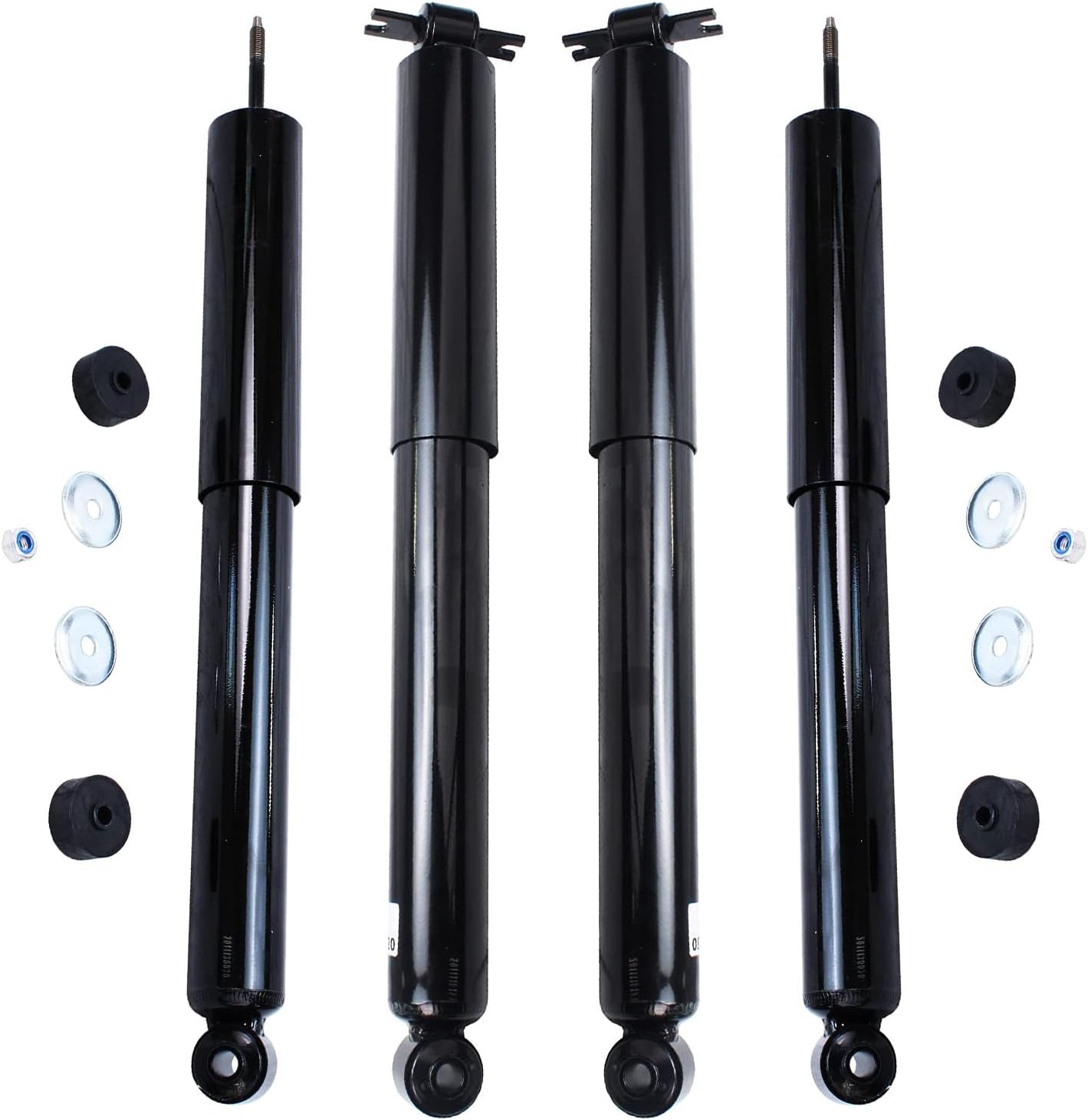
7. Detroit Axle 4-Piece Shock Absorber Kit for 2007–2018 Jeep Wrangler
| Fitment range | 2007–2018 Jeep Wrangler (JK) models |
|---|---|
| Kit contents | 2 front shocks + 2 rear shocks |
| Finish | Black metal |
| Manufacturer | Detroit Axle |
| Item model number | 437285×2, 437287×2 |
This Detroit Axle kit supplies two front and two rear complete shock absorbers intended as direct replacements for 2007–2018 Jeep Wrangler models. Installation is straightforward for anyone comfortable with basic suspension work or a local shop; the parts arrive as a matched set so you replace all four corners at once to restore balanced damping. The shocks are built from metal with a factory-style finish and are tested by the brand for impact and fatigue, which helps explain why many owners report improved stability, reduced bounce, and a smoother ride after swapping worn units. Practical benefits include a full-vehicle refresh in one purchase and a claimed long warranty that provides extra confidence. Expect a ride tuned for comfort rather than aggressive off-road control, and a few reviewers note variations in labeling or firmness between batches, so inspect parts on arrival and keep original packaging until fitment is confirmed.
Best for: Buyers who want a straightforward, factory-style replacement to restore everyday ride comfort and steering stability on a 2007–2018 Wrangler without upgrading to heavy-duty off-road shocks.
Less Ideal for: Not the best choice for owners seeking performance-oriented or heavy-load/off-road damping where stiffer, purpose-built shock absorbers are required.
- Complete matched kit covers both front and rear for balanced handling when replacing all four shocks
- Vehicle-specific fitment for 2007–2018 Jeep Wrangler simplifies selection and installation
- Metal construction and reported impact and fatigue testing suggest reasonable durability
- Many buyers report noticeably improved ride comfort and easier installation compared with dealer parts
- Tuned toward a softer, comfort-oriented feel rather than firm off-road performance
- Some customers reported inconsistent labeling or earlier signs of wear in isolated cases
Verdict: A budget-friendly, vehicle-specific four-shock kit that quickly restores smooth, stable daily driving for 2007–2018 Jeep Wranglers.
Choosing the Right 2007-2018 Jeep Wrangler Shock Absorber: Key Factors to Consider
Damping Characteristics and Valve Tuning
Damping determines how the shock controls body motion after a bump and how it reacts to sustained forces like cornering or heavy braking. For a Wrangler, look for valving that balances low-speed comfort and high-speed control so the vehicle does not pitch excessively on highway braking or wallow in corners. Valve tuning also affects off-road performance. A shock tuned with progressive valving will allow softer response over small bumps while resisting bottoming on larger impacts. For owners who mix street and trail use, consistent rebound control is crucial to keep the axle settled and minimize suspension pack-down after repeated hits.
Mounting Fit and Stroke Length
Correct mounting hardware, eyelet or stud dimensions, and stroke length ensure the shock operates across its intended travel without causing binding or premature wear. On the 2007-2018 Wrangler range, small differences between early and late JK and JKU mounting layouts mean confirming fitment avoids installation issues. Stroke length also ties into bump-stop engagement. A shock that is too short can allow the axle to compress past its bump stops, while an overlong shock may overextend on full droop. Proper fitment maintains intended ride height and suspension geometry, which is vital for steering feel and tire wear.
Build Quality and Corrosion Resistance
Shocks are exposed to road grime, mud, and salt, so materials and protective finishes matter for long service life. Look for nickel or zinc plating on piston rods, robust seals, and protective boots on exposed shafts. A shock with thicker-walled cylinders or reinforced mounting eyes will withstand repeated loading better. Corrosion resistance reduces the chance of leaking seals and binding shafts, common failure points that lead to loss of damping performance. For Wrangler owners who take their rigs off-road or live in coastal areas, this factor can significantly extend replacement intervals.
Gas-Charged Versus Twin-Tube Design
Gas-charged monotube designs typically offer more consistent damping under heavy use because the gas charge reduces foaming of the hydraulic fluid. Twin-tube shocks can provide a softer initial ride and are often more cost effective, but they may heat up and fade faster under repeated impacts. Deciding between these designs depends on your driving style. If you regularly tackle rough trails or carry heavy loads, a more robust monotube option may keep damping consistent. For primarily on-road driving with occasional gravel or fire-road detours, a well-tuned twin-tube shock can be a comfortable, practical choice.
Travel, Clearance, and Off-Road Durability
Axle articulation and ground clearance are central to Wrangler capability. A shock that limits available travel or protrudes in a way that risks damage during rock crawling can compromise performance. Choose shocks designed to preserve factory travel or to match any lift and tire changes already installed. Durability features such as remote reservoirs, thicker shafts, and external compression adjusters can benefit owners who push the suspension hard. Consider whether added components fit within your vehicle layout without risking contact with obstacles under extreme articulation.
Installation and Serviceability
Ease of installation affects both cost and downtime. Direct-fit replacements that reuse factory mounts and bushings reduce labor. Some shocks include serviceable components or rebuild kits, which can extend service life for owners who prefer to maintain parts instead of replacing them. Also factor in torque specifications, needed hardware, and whether common hand tools suffice. Owners planning DIY front or rear shock replacement should confirm whether top-mount access requires special steps or lifting procedures to safely remove and install replacements.
Understanding Generation Fit: JK and JKU Notes
The 2007-2018 Wrangler span covers several production generations and chassis details that affect shock selection. Owners will commonly see references to JK and JKU geometry differences; confirming the generation code for your exact model year helps avoid fitment surprises.
When discussing replacement options, check the mounting type and whether the shock is specified for front or rear use. Fronts and rears often have different stroke and mounting styles even within the same generation, so treat each corner individually when planning a shock absorber replacement.
- Confirm year and body configuration before ordering parts.
- Front shocks usually differ in length and mount from rear shocks.
- Some later 2018 JK and JKU changes affect mounting brackets compared with earlier JK and JKU parts.
Common Shock Failure Symptoms to Watch For
Worn shocks produce distinctive symptoms that help you decide between repair and replacement. Frequent signs include excessive bouncing after bumps, a nose-down attitude under braking, and uneven tire wear. You may also notice shock absorber noise such as clunks or rattles originating from worn mounts or internal components.
Hydraulic leaks on the shock body or excessive corrosion are clear indicators that damping performance has been compromised. Pay attention to handling changes during cornering or when driving over mid-speed bumps; if the Wrangler feels loose or wanders more than usual, worn shocks are often the culprit.
- Bounce test: press down on a corner and observe rebound; more than two oscillations usually indicates worn damping.
- Inspect for oil on the shock body or around mounts.
- Listen for clunks, ratchets, or thumps that occur over bumps or during steering inputs.
Front Versus Rear Shock Considerations
Front shock absorbers handle both vertical impacts and the steering-related dynamics of the front axle. They are typically tuned for quicker rebound control to stabilize steering and reduce dive on braking. When replacing front shocks, be mindful of steering geometry and any preload or swaybar interactions that affect ride feel.
Rear shock replacement often focuses on axle control and load carrying. Rear shocks must maintain axle alignment during acceleration and heavy loads, and their valving can be tuned to prevent excessive squat or axle hop. If you tow, carry heavy gear, or frequently have two-up passengers, select rear damping that resists bottoming and keeps the axle settled.
- Replace corners in pairs to maintain balanced handling.
- Check bushing condition during replacement and reuse factory hardware only if in good condition.
- Verify shock length at full droop and compression after installation.
Maintenance Tips to Extend Shock Life
Routine inspection helps catch failures early. Clean exposed shafts and boots after off-road trips to remove grit that accelerates seal wear. Tighten mounting hardware to spec and replace degraded bushings to prevent metal-on-metal movement that causes noise and accelerated wear.
If you store the vehicle for extended periods, support it off the suspension or cycle the shocks periodically to prevent seals from setting. Consider corrosion inhibitors on exposed hardware and regular visual checks in areas where salt or heavy mud are common.
- Inspect shocks visually every 6 months or after heavy off-road use.
- Replace any torn boots or pitted piston rods promptly.
- Torque mount bolts to factory specs at installation and recheck after initial miles.
When to Swap Shocks Yourself and When to Use a Pro
Many owners can handle front and rear shock replacement with common hand tools, a jack, and jack stands. Direct-fit shocks that reuse factory bushings are the easiest to install. Follow safe lifting practices and support the axle to avoid sudden droop that can damage lines or brake components.
Choose a professional if the job requires spring compressors, complicated mount access, or if you lack workspace and jacking equipment. A shop can also verify alignment and test-drive adjustments for damping-related complaints.
- DIY tasks: removing and installing direct-fit shocks, swapping bushings, and basic torqueing.
- Leave jobs requiring spring removal or complex mount disassembly to trained technicians.
- A pro can perform a post-installation road test and check for unintended noises or binding.
Adjustable Shocks and Aftermarket Features
Adjustable compression or rebound allow owners to tune ride firmness to their use case. Low-speed compression changes the feel over body motions and slow undulations, while high-speed settings influence abrupt impacts. Remote reservoirs increase fluid capacity and heat rejection for consistent damping under repeated impacts.
Before selecting an adjustable option, assess whether the added complexity matches your needs. Adjustable features are useful for owners who switch between towing, on-road touring, and aggressive off-road driving, but they add components that require occasional inspection and setup.
- Start with factory-like settings and adjust gradually, testing road and trail behavior between changes.
- Record adjustments so you can return to a baseline setting.
- Consider whether extra components fit safely within your Wrangler's undercarriage and do not introduce snag points.
Still looking for the perfect fit?
Select your Jeep Wrangler configuration to see the most relevant Shock Absorbers recommendations
How We Chose the Best 2007-2018 Jeep Wrangler Shock Absorber
We prioritized selection criteria that matter to Wrangler owners across the 2007-2018 model span, balancing real-world use and longevity. Key evaluation points included damping performance under both on-road and light off-road loads, mounting and fitment accuracy for JK and JKU generation configurations, and resistance to fluid fade or gas loss over time. Build quality and corrosion protection were weighed for owners who encounter wet or salty conditions. Ride height compatibility and stroke length were checked to confirm proper axle travel and bump-stop engagement for common Wrangler setups. Ease of installation and availability of direct-fit bushings or hardware were considered for owners planning DIY replacement. We excluded specialty race-only or extreme competition shocks that sacrifice day-to-day comfort for track use. Also filtered out options lacking clear fitment data for the 2007-2018 Jeep Wrangler chassis range. The final list reflects damping characteristics, durability, installation practicality, and documented fit for front and rear mounting locations important to Wrangler use cases.
Our full evaluation process is outlined in our review methodology.
FAQ
How can I tell if my Wrangler's shocks need replacing?
Common indicators include excessive bouncing after a bump, visible oil leaks on the shock body, increased braking dive, and clunking noises over rough surfaces. A bounce test at each corner that yields more than two oscillations usually means the shock is worn.
Should I replace front and rear shocks at the same time?
It is best practice to replace shocks in pairs on the same axle to maintain balanced damping. If fronts are new but rears are worn, handling can feel uneven, so consider replacing both front or both rear at once.
Can I install replacement shocks myself on a JK and JKU Wrangler?
Many direct-fit shocks can be installed by a competent DIYer with a jack, stands, and basic hand tools. Jobs that require spring removal or access to confined mounts are better left to a professional. Always follow safe lifting practices and factory torque specifications.
Will upgraded shocks change my Wrangler's ride height?
Most replacement shocks are designed to match factory ride height when used with stock springs. Shocks with longer or shorter stroke must be matched to your suspension setup; if you have a lift or different springs, confirm stroke and mounting clearance before installation.
What maintenance helps extend shock life on a Wrangler?
Regularly clean shafts and boots after off-road use, inspect for leaks or damaged seals, replace torn protective boots, and torque mounting hardware to spec. Addressing corrosion early and replacing worn bushings helps prevent premature failure.
Are gas-charged shocks better for off-road use?
Gas-charged monotube shocks tend to resist fluid foaming and maintain more consistent damping during repeated impacts, which benefits rough off-road use. However, twin-tube designs can provide a comfortable ride for mixed on-road and light off-road driving.
Final Verdict
For the 2007-2018 Jeep Wrangler, prioritize damping consistency, correct stroke and mounting fit, and corrosion-resistant construction when selecting shock absorbers. Consider whether your driving mix leans toward street comfort or heavy off-road use and choose gas-charged or twin-tube designs accordingly. Replacing shocks in matched pairs, inspecting mounts and bushings, and verifying stroke clearance will keep handling predictable and extend component life.
Explore More:
- Check out all Jeep Wrangler parts & accessories
- Explore Shock Absorbers Maintenance & Repair Guides
- Explore Suspension & Steering
- Browse all Auto Parts
