

Note: This article contains affiliate links. If you click on these links and make a purchase, I may earn a small commission at no extra cost to you. This helps support my research and content. Read my full affiliate disclosure here.
If you own a 1997-2006 Jeep Wrangler you know how much the suspension affects daily driving and off-road use. Worn or tired shock absorbers make the ride floaty, increase body roll, and reduce traction when turning or climbing. This guide focuses on shock absorber options specifically suited to the 1997-2006 Wrangler chassis and driving demands, covering both front and rear units. We shortlisted seven top-rated shock absorbers that match the Wrangler's mounting and load characteristics and evaluated each on damping performance, build quality, and durability. Read on to see which types best restore ride comfort, reduce shock absorber noise, and address common shock absorber symptoms. Next up are the product picks and how they stack by use case and installation considerations.
Looking for other parts? See all Jeep Wrangler parts & accessories.
Top Picks at a Glance
| Best Overall The best all-around choice for most situations | Rancho RS5000X Gas Shock Set for 1997–2006 Jeep Wrangler TJ (3.5" Lift) |  |
| Best Quality Built to a higher standard if you want something more solid | Bilstein B8 5100 Front & Rear Shock Set for 1997–2006 Wrangler (5–6" Lift) |  |
| Best Value The sweet spot between price and what you get | Rancho RS5000X Front Shock Set for 1997–2006 Jeep Wrangler TJ (2–3" lift) |  |
| Best Budget The cheapest option that still gets the job done reliably | AUTOMUTO 4-Piece Shock Absorber Kit for 1997–2006 Jeep Wrangler |  |
| Highest Rated A top-rated pick with lots of positive feedback | Rancho RS5000X Gas Shocks Set for 1997–2006 Jeep Wrangler TJ |  |
| Most Popular A crowd favorite that many people choose with confidence | TRQ Front Shock Absorber Set (1997–2006 Jeep Wrangler) |  |
| Best Seller A high-volume bestseller chosen again and again | Rough Country N3 Front and Rear Shock Set for 1997–2006 Jeep Wrangler TJ (3.5–6" lift) |  |
1. Rancho RS5000X Gas Shock Set for 1997–2006 Jeep Wrangler TJ (3.5" Lift)

| Compatible years | 1997-2006 |
|---|---|
| Fitment | Jeep Wrangler TJ |
| Lift compatibility | 3.5" front and rear lift |
| Shock type | Gas-pressurized twin-tube |
The Rancho RS5000X set replaces the factory-style shocks on 1997–2006 Jeep Wrangler TJs lifted about 3.5 inches and aims to smooth highway bumps while keeping control off-road. These gas-charged, twin-tube shocks use Rancho's progressive rebound and compression valving to soften small impacts and scale up damping as conditions demand, helping reduce harsh initial hits and minimizing shock fade. The larger 2.25-inch body increases fluid capacity for cooler operation over varied speeds and temperatures. Install is straightforward for a DIY mechanic though some rear mounting hardware can be stubborn on older Jeeps and the larger cylinder may interfere with modified drivetrains or CV driveshafts in certain setups. The shocks come with necessary washers, bushings, and nuts but reuse factory shock bolts. Users report noticeably improved comfort and control compared with worn lift kit shocks, but the painted finish is thin and may show rust over time if not treated. For a balanced mix of on-road civility and off-road capability at a midrange cost, these deliver strong practical value.
Best for: Buyers seeking a balanced upgrade that improves daily driving comfort without sacrificing off-road capability for a lifted TJ; ideal for owners prioritizing ride quality and stability across mixed road and trail use.
Less Ideal for: Drivers planning significant drivetrain modifications that reduce clearance around the shock body or those who want a firmer, competition-oriented damping feel.
- Progressive rebound and compression valving smooths small bumps and increases control on bigger impacts
- Gas pressurized twin-tube design reduces foaming and helps resist shock fade
- Larger 2.25-inch body increases fluid capacity for cooler operation across varied temperatures
- Includes necessary washers, bushings, and nuts for a complete set install
- Paint finish is thin and prone to surface rust without additional protection
- Larger cylinder profile can interfere with some upgraded driveline setups or require mounting changes
Verdict: A well-rounded shock set that noticeably improves ride comfort and control for lifted 1997–2006 Jeep Wrangler TJs while remaining practical for daily and trail use.
2. Bilstein B8 5100 Front & Rear Shock Set for 1997–2006 Wrangler (5–6" Lift)

| Compatible years | 1997–2006 Wrangler |
|---|---|
| Lift fitment | 5–6 inch front & rear lift |
| Design | 46mm monotube |
| Set configuration | Front & Rear 4-piece set |
The Bilstein B8 5100 front and rear shock set is a direct-fit replacement engineered for 1997–2006 Jeep Wranglers with 5–6 inch lifts and long arm kits. Built around a 46mm monotube design and digressive valving, these shocks deliver consistent, fade-resistant damping and react quickly to changing terrain, which helps keep the vehicle composed on rough trails while smoothing highway bumps. They are tuned for this Wrangler application, so installation is straightforward and includes hardware. In practice you can expect firmer handling and reduced bottoming when compared with stock shocks, plus improved control under heavier off-road loads. The monotube layout also dissipates heat better during extended spirited driving. Limitations are that these shocks are tuned to a lifted setup so they will feel firmer than comfort-focused replacements, and they are a single-valve monotube design rather than an adjustable reservoir style for on-the-fly damping changes.
Best for: Buyers who prioritize improved performance and control for a lifted Wrangler and want a straightforward, vehicle-specific upgrade that balances off-road dependability with firmer on-road handling.
Less Ideal for: Drivers seeking a plush, comfort-oriented street ride or those who want adjustable, race-style reservoir shocks for frequent fine-tuning should consider other options.
- Monotube design provides consistent, fade-resistant damping under extended use
- Digressive valving reacts quickly to changing road and trail conditions
- Tuned specifically for lifted 1997–2006 Wrangler applications for direct-fit installation
- Improves on-road handling and reduces bottoming during off-road use
- Non-adjustable damping means no in-vehicle tuning for different driving conditions
Verdict: If you want a durable, direct-fit upgrade that sharpens handling and controls a 5–6 inch lifted 1997–2006 Wrangler, the Bilstein B8 5100 set is a performance-focused choice.
3. Rancho RS5000X Front Shock Set for 1997–2006 Jeep Wrangler TJ (2–3" lift)

| Auto Part Position | Front |
|---|---|
| Compatible with Vehicle Type | Jeep |
| Automotive Fit Type | Vehicle Specific Fit |
| Material Type | Steel, Iron |
The Rancho RS5000X front shocks are a vehicle-specific replacement designed for 1997–2006 Jeep Wrangler TJ models with 2.5–3" lift kits. They use a gas-pressurized twin-tube design with Rancho’s progressive rebound and compression valving to smooth initial impacts and provide better control over rough pavement and moderate off-road terrain. The larger 2.25" body and all-weather fluid help the shocks run cooler and resist fade during longer drives. In practice these deliver a noticeably firmer, more controlled ride and reduced body roll compared with worn stock units, while still allowing reasonable articulation for trail use. The construction includes a nitro-carburized piston rod and sintered iron piston for durability, although the factory paint is thin and may require additional coating in salty climates. Installation is straightforward for a DIYer with basic tools, but buyers should verify all mounting hardware and recheck fasteners after a few drives as the shocks bed in.
Best for: Buyers who prioritize a practical, cost-effective upgrade that noticeably improves on- and light off-road handling while retaining reliable, vehicle-specific fitment and simple installability.
Less Ideal for: Drivers seeking premium, heavy-duty race or extreme rock-crawling shocks with advanced adjustability or long-term corrosion protection without additional coating.
- Vehicle-specific valving tuned for TJ Wrangler lift setups improves initial impact control and reduces harshness at low speeds
- Gas-pressurized twin-tube design and larger shock body increase fluid capacity to resist fade and maintain consistent damping
- Durable internal components including a nitro-carburized piston rod and sintered iron piston for structural strength
- All-weather hydraulic fluid rated to operate across a wide temperature range for dependable performance in varied climates
- Factory paint coating is thin and prone to surface rust in corrosive environments
Verdict: A budget-friendly, vehicle-tuned shock that significantly improves ride control and handling for lifted 1997–2006 Wrangler TJs while staying easy to install.
4. AUTOMUTO 4-Piece Shock Absorber Kit for 1997–2006 Jeep Wrangler
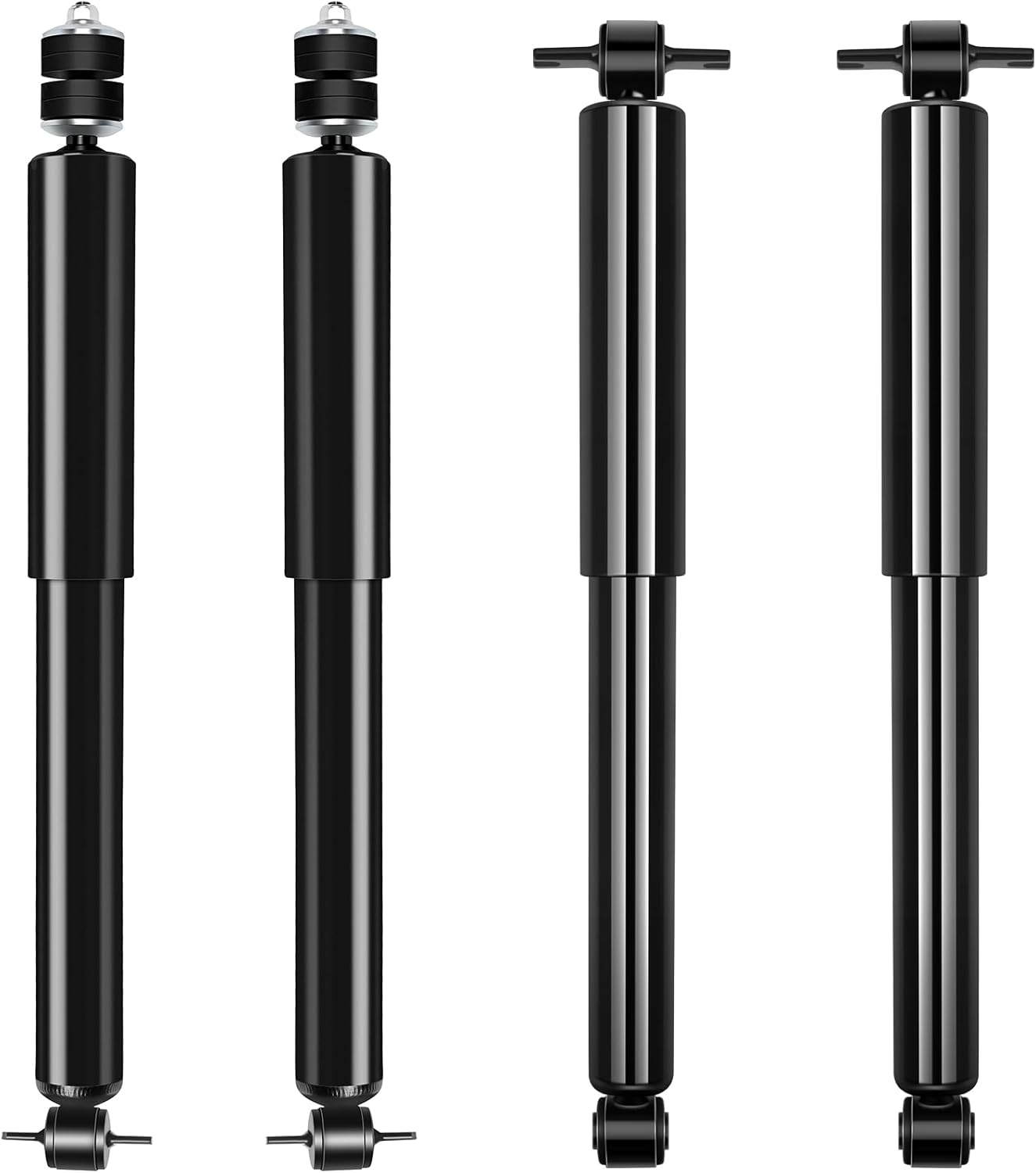
| Compatible vehicle | 1997-2006 Jeep Wrangler |
|---|---|
| Material Type | Alloy Steel |
| Auto Part Position | Front, Rear |
| Automotive Fit Type | Vehicle Specific Fit |
This four-piece AUTOMUTO shock kit replaces the front and rear dampers on 1997–2006 Jeep Wranglers with a vehicle-specific fit. Designed as a direct replacement, the shocks use alloy-steel construction, treated surfaces to resist corrosion, and upgraded piston rods and oil seals intended to reduce wear and prevent leaks. In everyday use they aim to restore cushioning and reduce bounce from worn original shocks, improving ride comfort and reducing impacts transferred to chassis components. Installation is straightforward for someone with basic tools since the kit is offered as a drop-in fit. Expect a noticeable improvement over worn units at a lower cost than premium branded shocks, though long-term durability varies across user reports and some buyers find ride quality only adequate rather than refined. These are best for restoring function and comfort on a budget rather than for heavy off-road performance or extended lifespan under severe duty.
Best for: Jeep owners who need an affordable, direct-fit replacement to restore cushioning and stop excessive bounce without paying for premium-brand performance.
Less Ideal for: Drivers who demand long-term heavy-duty off-road performance or the smoothest possible highway ride should consider higher-end or specialty shocks instead.
- Vehicle-specific kit covers both front and rear for 1997–2006 Jeep Wrangler
- Alloy steel construction with surface treatment to resist corrosion
- Improved piston rod and oil seal design to reduce leakage and wear
- Sold as a complete 4-piece set for a lower-cost replacement option
- Mixed long-term durability reported by users, with some units failing earlier than expected
- Ride refinement is average and not comparable to higher-end or performance shocks
Verdict: A budget-friendly, direct-fit four-shock kit that gets a 1997–2006 Jeep Wrangler riding more comfortably without expensive upgrades.
5. Rancho RS5000X Gas Shocks Set for 1997–2006 Jeep Wrangler TJ

| Brand | Rancho |
|---|---|
| Model Number | RS5000X |
| Auto Part Position | Front |
| Automotive Fit Type | Vehicle Specific Fit |
| Compatible with Vehicle Type | SUV |
The Rancho RS5000X front gas shocks are a direct-fit, vehicle-specific replacement tuned for 1997–2006 Jeep Wrangler TJs that aim to improve on-froad handling and off-road control. They use a twin-tube, gas-pressurized design with Rancho's progressive engagement valving and a larger 2.25-inch body to increase fluid capacity, run cooler, and resist shock fade under repeated use. In practice that means reduced harsh hits over potholes and trail obstacles, smoother response over washboard surfaces, and crisper steering feel compared with worn stock units. Construction details like a nitro-carburized piston rod, sintered iron piston, and protective boot add durability for long-term service. Installation is straightforward and the set includes necessary hardware for the front fitment. Expect a firmer ride than soft stock shocks, which improves control but may feel less plush on very smooth pavement. For owners prioritizing long-term stability and resistance to heat-related fade, these strikes a practical balance between daily driving refinement and off-road robustness.
Best for: Jeep owners who want a reliable, longer-lasting front shock that improves steering control and resists heat-related fade during regular street use and occasional off-road driving.
Less Ideal for: Drivers seeking the softest possible ride comfort or ultra-aggressive off-road travel who should consider specialty, heavy-duty, or long-travel shock options instead.
- Progressive engagement valving reduces harsh initial impacts and smooths low-speed roughness
- Gas pressurized twin-tube design increases fluid capacity to resist shock fade
- Robust construction with nitro-carburized piston rod and sintered iron piston for durability
- Vehicle-specific tuning for 1997–2006 Jeep Wrangler TJ front fitment
- Firmer ride feel compared with softer-stock shocks, which some drivers may find less comfortable on smooth roads
Verdict: A durable, vehicle-tuned front shock set that prioritizes consistent handling and resistance to fade for 1997–2006 Jeep Wrangler TJs.
6. TRQ Front Shock Absorber Set (1997–2006 Jeep Wrangler)

| Fitment | 1997–2006 Jeep Wrangler front |
|---|---|
| Unit count | 2 Piece |
| Material Type | Metal |
| Manufacturer Warranty Description | 2 years |
The TRQ front shock absorber set replaces both front shocks with preassembled, vehicle-specific units meant for 1997–2006 Jeep Wrangler models. Typical use is straightforward: swap the worn front driver and passenger shocks to restore ride control and reduce vibration. Notable features include a machined metal finish, preassembled components for easier installation, and a large library of installation videos from the manufacturer. In real-world driving the shocks tend to firm up handling, reduce nose dive under braking, and even out tire wear compared with worn units. Many users report improved comfort and a factory-like ride, while a few call out quality-control issues such as defective units or mismatched hardware in the package. Installation is generally simple for DIYers but double-check included nuts and fasteners before you start so you are not surprised by incorrect thread sizes. The kit comes with a two-year manufacturer warranty which provides added protection if a problem appears shortly after installation.
Best for: Buyers who prioritize proven user feedback and want a direct-fit replacement they can install themselves to restore factory ride feel on a 1997–2006 Jeep Wrangler.
Less Ideal for: People seeking heavy-duty or performance-tuned off-road shocks for aggressive rock-crawling should consider purpose-built performance options instead.
- Direct-fit, vehicle-specific front shock set for 1997–2006 Jeep Wrangler to simplify replacement.
- Preassembled components and manufacturer installation videos make DIY installation faster and clearer.
- Machined metal finish and construction that restores firmer handling and reduces vibration.
- Includes both driver and passenger front shocks so you replace the axle as a matched pair.
- Some customers report occasional defective units or incorrect hardware included in the package.
Verdict: A practical, direct-fit front shock kit with strong user feedback and DIY-friendly installation that quickly restores factory-like ride and handling to 1997–2006 Jeep Wranglers.
7. Rough Country N3 Front and Rear Shock Set for 1997–2006 Jeep Wrangler TJ (3.5–6" lift)

| Compatible with Vehicle Type | 1997-2006 Jeep Wrangler TJ 4WD |
|---|---|
| Included Components | (4) N3 Shock Absorbers |
| Manufacturer Warranty Description | 3 year |
| Extended Length | 54 Millimeters |
The Rough Country N3 shock set replaces the factory shocks on 1997–2006 Jeep Wrangler TJ models and is tuned for 3.5 to 6 inch lifts. These nitrogen-charged, 10-stage variable-valving absorbers aim to smooth highway driving while still allowing competent off-road performance. The 54mm fast-cooling body and spring-loaded piston rod are built to handle sustained use, and rubber bushings reduce start-up noise and vibration. Installation is straightforward for anyone with basic suspension experience or a qualified mechanic, and the shocks come as a four-piece set covering front and rear. Practical benefits include noticeably firmer control at highway speeds, reduced bounce over larger bumps, and compatibility with common TJ lift heights. Limitations to keep in mind are reports of inconsistent longevity on some units and occasional fitment or bushing issues in a few reviews, so follow-up inspections after installation are important. This is a performance-minded replacement for TJ owners who need improved handling with a lifted Jeep rather than a precision racing shock.
Best for: Buyers who prioritize a smoother, more controlled ride for a lifted 1997–2006 Wrangler TJ and prefer a direct-fit replacement that balances on-road comfort with off-road capability.
Less Ideal for: Drivers seeking premium, long-lasting performance shocks for extreme rock crawling or professional competition should consider higher-end monotube or remote-reservoir options instead.
- Vehicle-specific fit for 1997–2006 Jeep Wrangler TJ with lift compatibility
- Nitrogen-charged, 10-stage variable valving for balanced on- and off-road damping
- 54mm fast-cooling shock body and spring-loaded piston rod for durability under stress
- Includes rubber bushings to reduce noise and vibration
- Some customer reports of premature failure or bushing deterioration on a subset of units
- Occasional fitment challenges reported for rear shock installation
Verdict: A practical, vehicle-specific shock set that improves ride control for lifted 1997–2006 Jeep Wrangler TJs while staying easy to install and inspect.
Choosing the Right 1997-2006 Jeep Wrangler Shock Absorber: Key Factors to Consider
Damping Characteristics and Valving
Damping controls how quickly the suspension absorbs bumps and returns to equilibrium. For the 1997-2006 Wrangler, you want valving that balances low-speed comfort with high-speed control so the vehicle does not feel floaty on pavement nor harsh on trails. Valving that is too soft increases body roll and can exacerbate car handling problems when cornering or braking. Conversely, overly firm valving can transfer jolts into the cabin and increase shock absorber noise. Consider progressive or velocity-sensitive valving if you switch frequently between street and off-road driving because it adapts better across a wider range of inputs.
Construction Quality and Seal Design
A high-quality seal and chromed shaft help prevent fluid loss and pitting from dirt and water intrusion. The 1997-2006 Wrangler often encounters mud and stone chips, so robust seal geometry and protective boots extend service life and reduce the need to replace worn shocks prematurely. Look for hardened piston rods, corrosion-resistant coatings, and a dust boot or wiper. These features reduce the chance of shock absorber symptoms like leaking or rough piston operation and protect internal components that affect long-term damping consistency.
Mounting Type and Fitment for Front and Rear
Correct mounting style matters because the Wrangler uses specific top and bottom mounts and may have different shock lengths between front and rear. Fitment that matches the Wrangler's mounting points ensures proper stroke and bump-stop engagement, which affects both ride height and control. A front shock absorber that is too long or too short can change suspension geometry under compression, while incorrect rear shock replacement can cause binding or early wear. Always verify the replacement matches the Wrangler's specified clearances and eye or stud configurations.
Intended Use Case: Street, Off-Road, or Mixed
Shock absorber design often targets a primary use case. Street-focused units emphasize comfort and reduced noise, while off-road-oriented shocks prioritize large-stroke control and heat management during sustained rough use. Mixed-use or touring-oriented shocks try to balance both. For a 1997-2006 Wrangler that sees trail work and highway driving, choose a shock with adequate mid- and high-speed damping and durable internals that resist cavitation. Understanding your typical driving conditions will guide whether to favor comfort or aggressive control.
Heat Management and Fluid Stability
Shocks convert kinetic energy into heat; sustained pounding or long descents will raise operating temperatures. Fluid formulation and internal valving determine how well the damping remains consistent as temperatures rise. Poor heat management can lead to fade and inconsistent performance, especially under heavy off-road use. Components such as larger fluid chambers, remote reservoirs, or valving designed to limit shock fade improve repeatable performance. For the Wrangler, where low-speed trail inputs can be frequent, stable damping under thermal stress keeps handling predictable.
Serviceability and Warranty Support
Serviceable or rebuildable shocks let owners replace seals or gas charges without swapping the entire unit, which can be cost-effective for vehicles used heavily off-road. Warranty terms and the availability of replacement seals or cartridges are practical considerations for long-term ownership. Check whether the manufacturer supports rebuilds and the expected warranty coverage for out-of-the-box defects. A clear service path reduces downtime and secures the investment in better-performing shock absorbers.
1997-2006 Wrangler Generations and Chassis Notes
The 1997-2006 Jeep Wrangler period includes the TJ, LJ, and TJU generation, which has distinct suspension geometry and mounting details compared with earlier or later Wranglers. When selecting shocks, confirm the unit is specified for TJ, LJ, and TJU-year mounting and stroke lengths so the shock operates across the full travel without overextending the bump stop.
Some owners run lifted setups or heavier accessories, which change the effective load on front and rear shocks. If you have a lift or added weight, choose a shock rated for the axle load and ride height you maintain, rather than assuming stock-length units will be adequate.
- TJ, LJ, and TJU chassis-specific fitment is essential for correct stroke and mount type
- Lifted or heavily accessorized Wranglers may require shocks with different valving or lengths
Front Vs Rear Shock Considerations
Front shock absorbers on the TJ, LJ, and TJU Wrangler handle steering-induced loads and contribute strongly to roll control. They should have valving tuned to manage repeated compression cycles without transferring excessive shock absorber noise into the steering wheel or cabin.
Rear shock replacement should prioritize axle control under load and towing or cargo weight. Rear units often see larger axle articulation on trails, so consider shocks that maintain damping consistency through extended travel.
- Front shocks influence steering feel and roll; select for responsive damping
- Rear shocks control axle movement and should handle increased cargo or passenger loads
Symptoms That Indicate You Need New Shocks
Common shock absorber symptoms include excessive bouncing after a bump, increased body roll when cornering, and noticeable dipping under braking. You may also hear clunking or a rattling that points to loose mounts or degraded internals.
Visible signs such as oil leaks or pitted shafts are clear indicators for replacement. Track symptoms to both front and rear locations because the Wrangler can exhibit different issues at each axle depending on use.
- Excessive rebound or prolonged bouncing
- Visible oil leaking from the shock body
- Increased nose dive under braking or rear squat under acceleration
- Unusual noises during articulation
Installation and Basic Replacement Notes
Replacing shocks on the 1997-2006 Wrangler is typically straightforward but requires correct torque specifications and attention to mount condition. Inspect bushings, studs, and hardware while the shock is removed and replace any corroded or worn components to prevent transfer of noise and premature failure.
When reinstalling, compress the suspension slowly and confirm bump stops and dust boots are seated properly. If you are changing spring rates or ride height, measure shock length and stroke to avoid situations where the shock bottoms out or exceeds its travel.
- Inspect and replace worn mounting hardware and bushings
- Verify shock length and stroke before final installation
- Use proper torque and safety supports when removing and installing shocks
Noise and Vibration Troubleshooting
Shock absorber noise can come from leaking internals, worn bushings, or loose mounts. Distinguish between rattles from external hardware and groaning that may indicate internal wear. A test drive over a variety of surfaces helps isolate whether the noise tracks with suspension compression or wheel rotation.
Address mounting hardware first because replacing shocks without correcting loose bolts or degraded bushings will not eliminate clunks. Also check for contact between tires and body components that could be mistaken for shock-related noise.
- Differentiate mount and bushing noise from internal shock noise
- Perform a road and trail test to narrow down the source
- Inspect surrounding components to rule out unrelated rattles
Upgrading for Off-Road Use
If you use the TJ, LJ, and TJU Wrangler on trails regularly, consider shocks with features that resist overheating and cavitation during repeated large impacts. Options include larger fluid volumes, gas-charged designs, or external reservoirs for more consistent damping under sustained loads.
Choose valving that manages low-speed comfort without sacrificing mid- and high-speed control. This balance helps the Wrangler remain composed on highways while still providing confidence over rocks and washboard trails.
- Look for thermal stability and larger fluid capacities
- Prefer valving that covers both low-speed comfort and high-speed control
Still looking for the perfect fit?
Select your Jeep Wrangler configuration to see the most relevant Shock Absorbers recommendations
How We Chose the Best 1997-2006 Jeep Wrangler Shock Absorber
We prioritized criteria that matter for the 1997-2006 Jeep Wrangler owner and that are verifiable from product specifications and independent fitment data. Key evaluation points included damping performance across load ranges, durability of seals and shafts to resist off-road contamination, and compatible mounting geometry for the Wrangler's front and rear mounting points. We also considered construction materials and finish that affect corrosion resistance, the availability of rebuildable or serviceable designs, and whether the unit preserved proper ride height and bump-stop engagement under typical loads. We excluded products without clear fitment information for the 1997-2006 Wrangler or those intended only for heavily modified suspension setups that change mounting points. Units with ambiguous claims about valving or unproven, proprietary fluids were also filtered out. In short, the list favors shock absorbers that deliver predictable damping, long-term durability in mixed on/off-road use, and straightforward replacement for the Wrangler's front and rear positions.
Our full evaluation process is outlined in our review methodology.
FAQ
How often should I inspect shocks on a 1997-2006 Wrangler?
Inspect shocks at least once a year and after any major off-road outings. Check for leaks, damaged boots, and loose mounts because early detection prevents more serious suspension damage.
Can I replace just the front shocks and leave the rear alone?
You can replace only the front or rear if the other axle shows no symptoms, but mismatched damping can change vehicle balance. It is usually best to replace shocks in axle pairs to maintain consistent handling characteristics.
What are common shock absorber symptoms I should watch for?
Watch for excessive bouncing after bumps, increased body roll, nose dive under braking, and visible oil leaks. Clunking or abnormal noises during articulation also indicate potential shock or mounting issues.
Will a lift on my Wrangler require different shocks?
A lift changes shock length and valving requirements. Many stock-length shocks will not provide the correct stroke once the vehicle is lifted, so select shocks specifically rated for your lift height to avoid overextension or premature wear.
Is it worth choosing serviceable shocks for heavy trail use?
Serviceable shocks can be cost-effective for heavy users because seals and gas charges can be refreshed. They also allow owners to tune damping over time, which is helpful if driving conditions or vehicle load change frequently.
What should I check if I hear shock absorber noise after replacement?
Verify mounting hardware torque and inspect bushings for proper seating. Ensure dust boots and bump stops are in place and look for contact points that could produce noise separate from the shock itself.
Final Verdict
For the 1997-2006 Jeep Wrangler prioritize shocks that match TJ, LJ, and TJU mounting and stroke while offering valving suited to your mix of on-road and off-road driving. Tradeoffs are normal: softer valving improves short-bump comfort but may increase body roll, while firmer valving tightens control at the cost of some ride harshness. Decide first on intended use and any suspension modifications, then choose shocks that address damping, durability, and proper fitment. Replacing worn shocks in axle pairs and addressing mounting hardware will yield the most noticeable improvement in ride quality and handling confidence.
Explore More:
- Check out all Jeep Wrangler parts & accessories
- Explore Shock Absorbers Maintenance & Repair Guides
- Explore Suspension & Steering
- Browse all Auto Parts
