

Note: This article contains affiliate links. If you click on these links and make a purchase, I may earn a small commission at no extra cost to you. This helps support my research and content. Read my full affiliate disclosure here.
Towing with a 2015-2020 Ford F-150 places extra demands on braking stability and driver confidence. The right trailer brake controller helps synchronize your truck and trailer brakes so stops feel predictable, reduces trailer sway risk, and shortens stopping distance under load. This guide covers the top shortlisted options for the F-150 (2015 through 2020 models), selected for compatibility with factory wiring and common towing setups.We focus on real-world factors that matter to F-150 owners: braking responsiveness, installation complexity, adjustability for different trailer weights, and in-cab ergonomics. Below are the top picks and the evaluation criteria used to narrow the field, followed by detailed buying guidance and practical tips for installation and setup.
Looking for other parts? See all Ford F-150 parts & accessories.
Top Picks at a Glance
| Best Overall Trailer Brake Controller A balanced, reliable controller with proven fit, features, and performance | Tekonsha Prodigy P2 Trailer Brake Controller |  |
| Best Budget Trailer Brake Controller An inexpensive replacement or basic controller that restores towing brakes affordably | DICMIC Trailer Brake Control Module for 2015–2020 Ford F-150 |  |
| Best OEM Replacement Module In-dash direct-replacement modules designed to snap into factory dash locations | Ford Dash-Mounted Trailer Brake Control Module Kit (FL3Z-19H332-AA) |  |
| Best Universal Proportional Controller Standalone proportional controllers that auto-sense trailer braking for smoother stops | REDARC Tow-Pro Liberty Electric Trailer Brake Controller |  |
| Best Multi‑Axle / Heavy‑Duty Controller High-capacity controllers rated for 2–3 axles and heavier tow loads | REDARC Tow-Pro Elite Electric Trailer Brake Controller |  |
| Best Portable / Bluetooth Controller Portable controllers with wireless or app control for temporary or multi-vehicle use | CURT Echo 51180 Mobile Bluetooth Trailer Brake Controller (Portable) |  |
Tekonsha Prodigy P2 Trailer Brake Controller
Best Overall Trailer Brake Controller

| Manufacturer | Tekonsha |
|---|---|
| Brand | Tekonsha |
| Manufacturer Part Number | 90885, 3035 |
| Compatible Trailer Axles | Up to four-axle systems |
The Tekonsha Prodigy P2 is a proportional brake controller designed to provide smooth, automatic trailer braking that mirrors your truck's deceleration. It installs as a plug-and-play unit on Ford trucks with a factory tow package and can be mounted with several orientations thanks to its 360 degree rotation option. Use it daily to tow trailers up to four axles while the front-mounted manual lever and easy-to-turn gain dial let you fine tune braking force on the road. Practical benefits include consistent proportional braking that reduces trailer push or surge, an intuitive single-dial setup, and compatibility with electric-over-hydraulic systems and standard wiring harnesses. Limitations are that installation is easiest on F-150s already equipped with the correct Ford connector and some users may need an additional relay or adapter to access a full 7-pin connector; the included harness length may constrain mount location choices. For DIY mechanics the P2 hits a strong balance of reliability, adjustability, and straightforward setup for typical Ford F-150 towing tasks.
Best for: DIY-minded Ford F-150 owners who want a dependable, easy-to-install proportional controller that delivers consistent braking without complicated setup.
Less Ideal for: Drivers who need wireless integration, app control, or advanced diagnostics beyond basic proportional control should consider higher-end or specialized units.
- Proportional braking mirrors truck deceleration for smoother stops
- Simple single-dial gain control and a manual override lever for on-road tuning
- Multiple mounting orientations including 360 degree rotation for flexible placement
- Includes universal wiring harness compatible with common Ford tow packages
- May require an extra relay or adapter to activate all trailer connector functions on some trucks
- Pre-made harness length can limit preferred mounting locations
Verdict: The best all-around trailer brake controller for DIY mechanics who want dependable braking performance, easy setup, and features that cover most towing needs.
DICMIC Trailer Brake Control Module for 2015–2020 Ford F-150
Best Budget Trailer Brake Controller

| Manufacturer | DICMIC |
|---|---|
| Manufacturer Part Number | DICMIC-P211 |
| OEM Part Number | FL3Z-19H332-AA, GL3Z-2C006-CA, JL3Z-2C006-AA |
| Terminal Quantity | 14 Pins |
| Mounting Location | Dashboard |
This DICMIC brake control module is a direct-fit replacement designed to plug into the factory dash connector and restore the truck's trailer brake control functions without splicing wires. It installs at the dashboard mounting location and uses a 14-pin connector to match the original harness, so most installs are simple plug-and-play once the vehicle's body control module has the trailer brake option enabled. In use it provides consistent braking response for everyday towing and eliminates warning messages or erratic brake behavior reported with failed factory modules. Notable features include metal and plastic construction for durability and compatibility with multiple F-150 V6 and V8 engines across 2015–2020. The limitation is that this is a basic replacement unit with no extra adjustment interfaces or advanced towing features, and enabling the module in the truck may require a scan tool such as Forscan. For buyers needing a straightforward, budget-friendly swap that gets trailer brakes working again, this is a practical option; those wanting a feature-rich aftermarket controller should look elsewhere.
Best for: Buyers who need an inexpensive, functional replacement to restore factory trailer braking on a 2015–2020 F-150 without extra features and who prioritize easy installation over customization.
Less Ideal for: Drivers who want adjustable, feature-rich aftermarket controllers with manual gain, proportional control, or additional user controls should consider a dedicated aftermarket unit instead.
- Direct replacement that plugs into the factory 14-pin connector for simplified installation
- Compatible with 2015–2020 Ford F-150 engine variants listed, avoiding wiring modifications
- Compact, factory-style module that removes trailer-disconnect warnings and restores normal brake function
- Solid metal and plastic construction for durable everyday towing use
- Does not add advanced user controls or tuning features found on standalone aftermarket controllers
- May require enabling through a vehicle scan tool to activate the brake controller function
Verdict: A low-cost controller for buyers who need a functional, no-frills unit or direct replacement without spending on premium features.
Ford Dash-Mounted Trailer Brake Control Module Kit (FL3Z-19H332-AA)
Best OEM Replacement Module
| Connector Type | Plug-In |
|---|---|
| Operation Mode | Manual |
| Current Rating | 5 Amps |
| Number of Terminals | 2 |
| Specification Met | OEM |
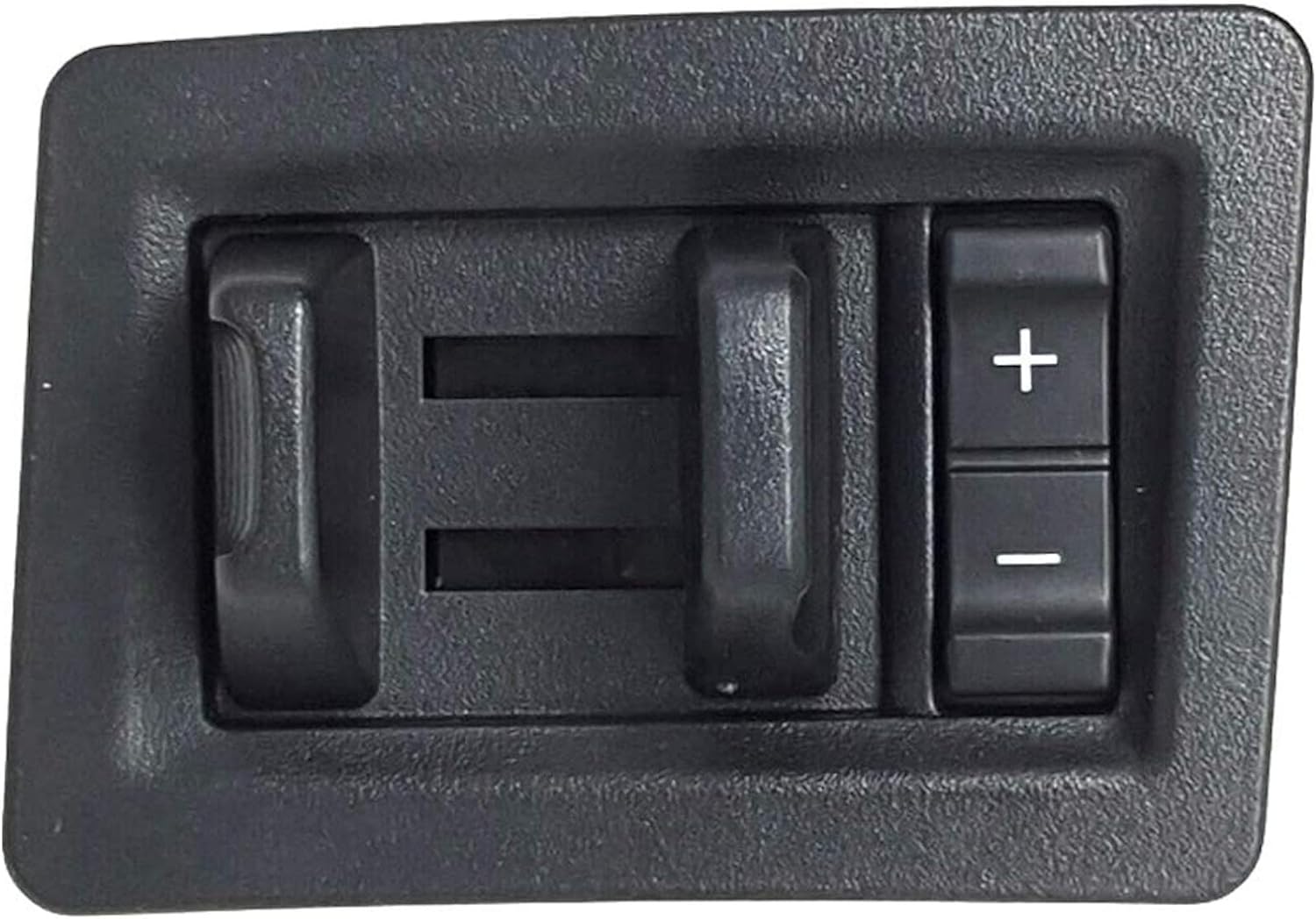
This is Ford's factory dash-mounted trailer brake controller kit designed to be a direct fit for 2015 F-150 dashboards. It plugs into the existing vehicle harness and installs behind dash trim so the controller sits integrated with the dash for a factory appearance and ergonomics. Typical installation requires removing dash trim, plugging the unit into the factory connector, installing the supplied fuse, and activating the controller through the truck computer using dealer service or a tool like FORScan. The module provides manual operation, a two-terminal plug-in connection, and a 5 amp contact rating with silver contacts for reliable conductivity. The main advantages are factory wiring compatibility and a built-in look that places the control in a natural location for quick access while towing. Limitations are the need to confirm pre-wiring and the 30A fuse presence on trucks without a tow package and the requirement to enable the feature in the truck computer after physical install. Some users reported intermittent failures with non-OEM units, so this OEM kit avoids that risk but still depends on correct activation and wiring to function.
Best for: Buyers who want a true drop-in factory replacement that restores in-dash trailer brake control and appearance and who are comfortable enabling the module with dealer service or a diagnostic tool.
Less Ideal for: Do not choose this if your truck lacks the required pre-wiring and you do not want to add harnessing or use software tools to activate vehicle features.
- Direct plug-in fit to factory dash harness for a clean, integrated install
- Factory-quality contacts and OEM specification reduce risk of electrical issues seen with cheap clones
- Manual operation and integrated dash placement make it easy to modulate trailer brakes without looking away from the road
- Includes factory-style fuse and matches instrument illumination for a cohesive dash appearance
- Requires computer activation after installation using dealer software or a third-party tool
- Only fits trucks that have the wiring and fuse slot populated or require additional harnessing
Verdict: Choose this slot if you want a drop-in, dash-mounted replacement that matches factory wiring and restores original in-dash brake control functionality.
REDARC Tow-Pro Liberty Electric Trailer Brake Controller
Best Universal Proportional Controller

| Voltage | 12 Volts |
|---|---|
| Supports | 1–2 axles |
| Item model number | EBRH-ACCNA |
The REDARC Tow-Pro Liberty is a proportional brake controller that senses vehicle deceleration and applies smooth, proportional power to trailer brakes for stable, predictable stopping. It is a single-unit design with a remote dash knob connected by a short cable, so most of the electronics mount out of sight under the dash while the slim control dial sits in a blank switch or bezel. Typical use is everyday towing of single- or dual-axle trailers where you want the controller to automatically match braking force to vehicle deceleration rather than using a timed pulse. Notable features include active calibration, built-in sway control, and an RJ45-style remote lead that simplifies routing and replacement. Practical benefits are a near-factory look, reduced knee-bumping compared with bulkier box controllers, and easy set-and-forget operation for highway towing. Limitations include the need to buy a vehicle-specific wiring harness separately for factory-style integration in some trucks and occasional complaints about the remote button mounting depth and fit in very shallow dash panels.
Best for: Buyers who prioritize automatic, proportional trailer braking and a discreet, factory-like dash installation for everyday towing and highway use.
Less Ideal for: Those who need a simple plug-and-play controller with an included vehicle-specific harness or users who frequently tow unusually heavy or nonstandard braking setups requiring more advanced features.
- Proportional, self-sensing braking for smoother, more stable trailer control
- Compact remote dial gives a near-factory dash appearance and reduces knee interference
- Active calibration and sway control improve performance with and without a trailer
- RJ45-style remote cable simplifies routing and allows easy replacement
- Vehicle wiring harness for factory-style integration is sold separately
- Remote head assembly can be deep and tricky to fit in very shallow mounting locations
Verdict: Pick a universal proportional controller when you want self-sensing, proportional braking behavior that adjusts power to trailer brakes automatically for improved stability.
REDARC Tow-Pro Elite Electric Trailer Brake Controller
Best Multi‑Axle / Heavy‑Duty Controller
| Fit | 1–3 axles |
|---|---|
| Voltage | 12V/24V compatible |
| Included wiring | Universal harness and remote head cable |
| Mount type | Remote head with dash knob |
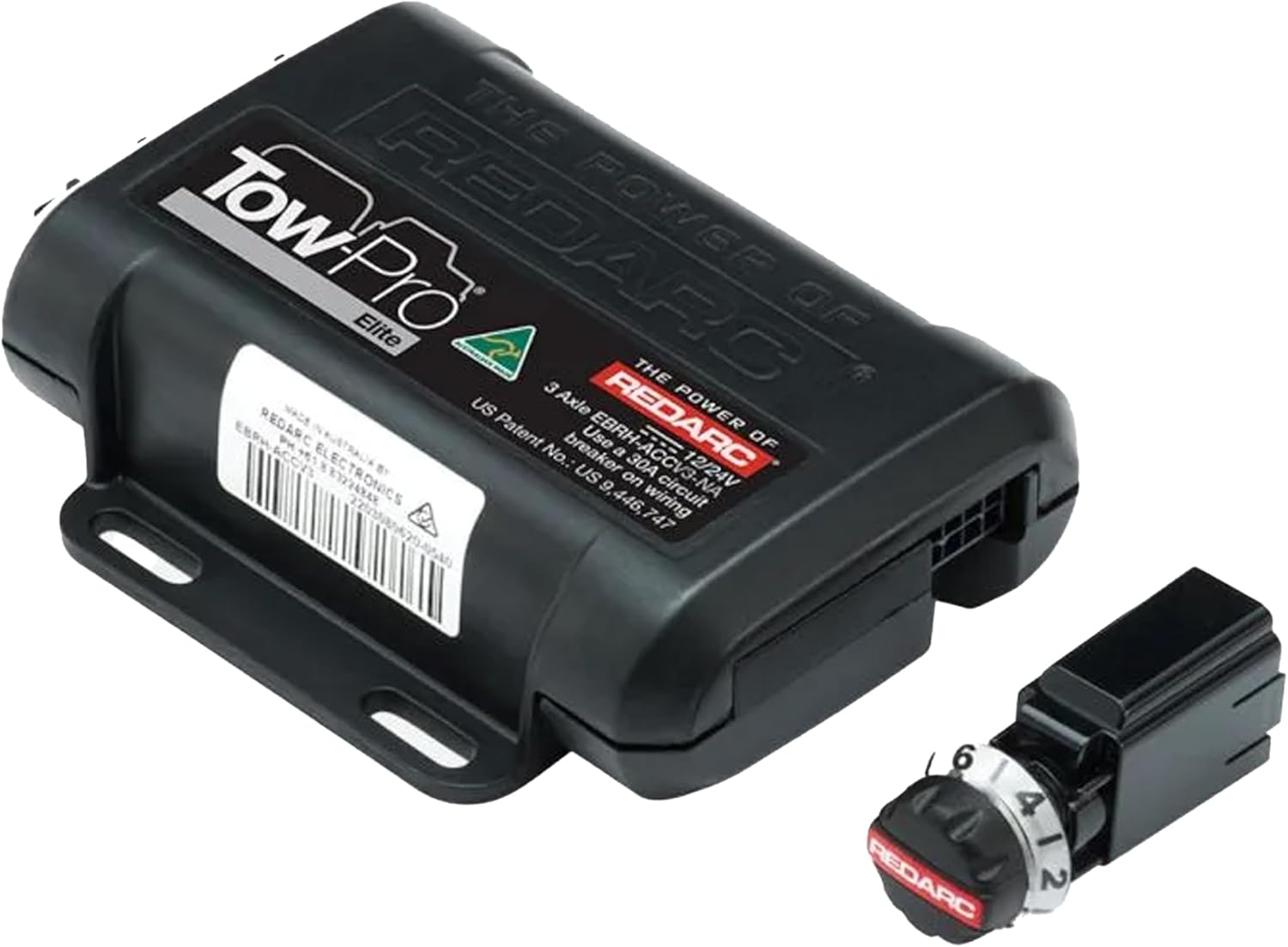
The REDARC Tow-Pro Elite is a remote-mount electric brake controller designed to deliver smooth, proportional braking on-road while also offering a manual mode for precise low-speed or off-road control. It mounts discreetly behind the dash with a small push-knob head that integrates cleanly into factory switch slots, and the harness and universal mount aim to simplify installation in modern trucks. Active calibration and built-in sway control help reduce trailer pull and provide predictable stops when towing heavier multi-axle loads, while support for 1–3 axles covers most medium to heavy trailers you would pair with a 2015–2020 F-150. Practical benefits include a compact dash footprint, responsive proportional braking for highway stability, and a manual override for technical maneuvers. Limitations are that full factory-style plug compatibility depends on the vehicle harness availability and you may need a vehicle-specific harness or splicing for some F-150 trims; the small control knob can be harder to adjust precisely compared with larger slider controls.
Best for: Buyers who regularly tow medium to heavy trailers with multi-axle brakes and prioritize a compact, factory-style controller that delivers proportional braking and stability on highways.
Less Ideal for: Drivers who need an out-of-the-box plug-in solution for an uncommon vehicle wiring setup or who prefer a large, easy-to-grip manual adjustment interface.
- Proportional braking for smooth, predictable stops at highway speeds
- Remote-mounted compact knob preserves dash space and a factory look
- Supports 1–3 axles to handle multi-axle trailer brake arrays
- Active calibration and sway control improve stability when towing heavier loads
- May require a vehicle-specific wiring harness or splicing for some F-150 configurations
Verdict: This slot fits controllers built for larger trailers and heavier towing, offering higher output and settings tuned for multi-axle brake arrays.
CURT Echo 51180 Mobile Bluetooth Trailer Brake Controller (Portable)
Best Portable / Bluetooth Controller
| Model | 51180 |
|---|---|
| Connection | 7-way RV blade plug |
| Control | Bluetooth smartphone app |
| Brakes supported | 2 to 4 trailer brakes |
| Features | Tri-axis accelerometer; automatic calibration |
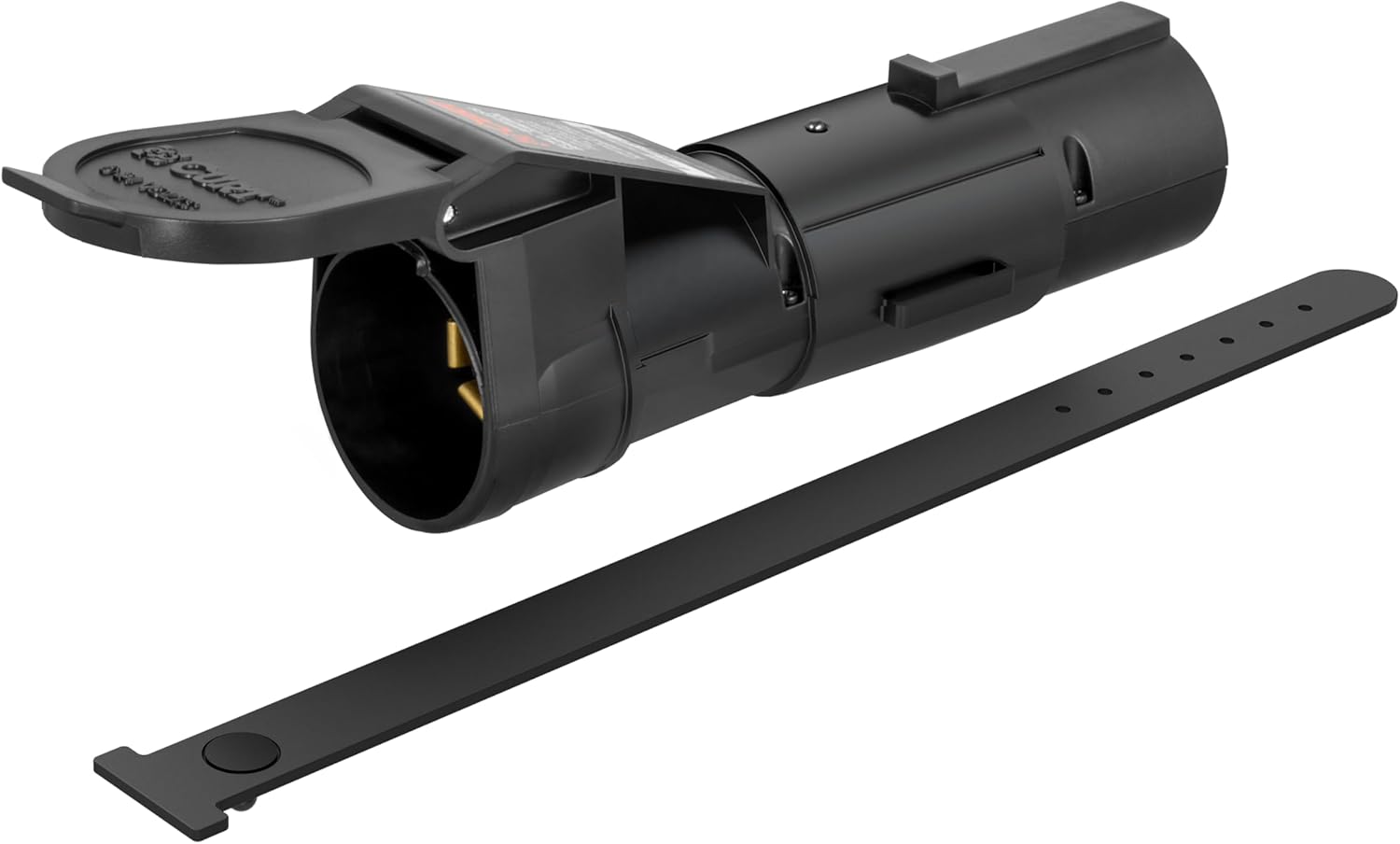
The CURT Echo mobile is a plug-and-play, Bluetooth trailer brake controller designed to sit at the 7-way connector and be controlled from your phone. It pairs with the OneControl/Smart Control app on iOS or Android to set maximum output, sensitivity, and to save multiple vehicle-trailer profiles. Installation is simple: plug Echo between the trailer plug and the vehicle 7-way and provide a fused auxiliary power feed so it can operate and retain settings. The device uses a tri-axis accelerometer for proportional braking and supports two to four trailer brakes. Its potted enclosure and retention strap improve durability and connection security for outdoor use. Practical benefits include easy transfer between vehicles, no under-dash installation, and on-the-fly tuning from your phone. Important limits to consider are reliance on a phone for full control and occasional Bluetooth pairing or connectivity quirks reported by some users, plus the unit protrudes from the 7-way which can require securing to avoid strain or ground clearance issues on low sockets.
Best for: DIY owners who want a movable, no-harness solution and prioritize convenience and in-trip tuning via a smartphone when towing an F-150 from 2015 to 2020.
Less Ideal for: Drivers who prefer a permanently mounted under-dash controller or those who need a solution that does not depend on a phone for configuration or frequent connection checks.
- Truly portable plug-and-play design for easy transfer between vehicles
- Bluetooth app control with adjustable max output, sensitivity, and saved profiles
- Tri-axis accelerometer enables proportional braking for smoother stops
- Potted enclosure and locking tab improve weather resistance and connection durability
- Protrudes from the 7-way plug and can reduce ground clearance or require extra securing
- Depends on smartphone Bluetooth which can be finicky on some phones and may drop connection
Verdict: This pick is for DIYers who prefer a portable controller or Bluetooth-enabled unit that can move between vehicles and be controlled from a phone or handset.
Choosing the Right 2015-2020 Ford F-150 Trailer Brake Controller: Key Factors to Consider
Compatibility With 2015–2020 F-150 Wiring
Confirming electrical compatibility matters because many F-150s have a factory brake controller harness or a dedicated connector location under the dash. Choosing a controller that matches the truck's connector or follows Ford wiring color codes avoids the need for aftermarket adapters and reduces installation time. A plug-and-play match preserves vehicle circuitry and minimizes the chance of loose connections that can cause intermittent braking or vehicle electrical faults.
Even when a harness is not present, consider the routing of the brake signal, 12V ignition feed, ground, and brake power lead. Controllers with clear wiring diagrams and pre-made harness kits tailored to the 2015–2020 F-150 will simplify the process and reduce the likelihood of wiring errors that compromise safety.
Proportional Versus Time-Delayed Braking
Proportional controllers sense truck deceleration and apply the trailer brakes in proportion to the towing vehicle's braking force. For F-150 owners who tow a variety of trailers and weights, proportional response provides smoother, more natural braking and reduces jerk during stops. Time-delayed controllers apply a preset ramp of brake power and can work adequately for light, consistent loads but often require more driver intervention when trailer weight changes.
Understanding typical towing use for your F-150 helps determine which system suits you. If you frequently tow heavier or variable loads, proportional control typically yields better stability and less wear on both tow vehicle and trailer braking systems.
Adjustability and User Controls
Adjustable gain, sensitivity, and an easy-to-reach manual override are important for fine-tuning brake feel and for emergency use. On the F-150, an in-cab controller with intuitive controls allows you to increase or decrease trailer braking force for uphill, downhill, or fully loaded conditions without needing to stop and rewire. Clear displays or tactile indicators help you confirm settings while on the road.
Also consider memory features or presets if you tow different trailers frequently. Controls that are too small, poorly lit, or awkward to mount can make adjustment while driving unsafe or impractical.
Installation Complexity and Mounting Options
Installation complexity affects total ownership cost and the time needed before you can safely tow. Controllers that offer multiple mounting brackets, low-profile in-dash options, or simple under-dash mounting generally fit the ergonomic layout of the F-150 cab better. Easy access to the truck's brake controller connector, fuses, and power runs reduces the need to remove panels.
Consider whether the controller requires drilling, routing heavy gauge wires through the firewall, or tapping into the vehicle's fuse box. Units designed to work with existing F-150 harnesses reduce risk during installation and help maintain a factory-like finish in the cab.
Manual Override and Emergency Use
A clearly positioned manual override paddle or button is essential for correcting trailer behavior without using the truck brakes. On the F-150, an override that is reachable without taking your eyes off the road improves safety if the trailer begins to sway or is pushing the tow vehicle. The override should give predictable modulation rather than abrupt engagement.
Also evaluate how the controller behaves when the manual override is used repeatedly during a trip. Consistency in response prevents surprises and helps drivers manage trailer momentum in challenging situations like steep descents or sudden slowdowns.
Durability and Weather Resistance
Towing exposes electronics to vibration, temperature swings, and sometimes moisture. Controllers with robust housings, sealed controls, and quality connectors will last longer in typical F-150 towing scenarios. Durability matters especially if you tow off-road, in coastal areas, or in seasonal weather extremes.
Look for units that use corrosion-resistant terminals and have replacement parts or accessible service documentation. A controller that continues to function reliably reduces maintenance downtime and ensures consistent trailer braking performance over time.
Why a Dedicated Controller Matters for F-150 Towing
The Ford F-150 is frequently used for heavier loads and varied towing situations where the truck's own brakes cannot safely control trailer momentum alone. A dedicated trailer brake controller coordinates the trailer brakes with the truck and reduces the chance of trailer push, sway, or longer stopping distances. For 2015–2020 F-150s, which may be fitted with a variety of hitch and wiring options, a controller designed for in-cab use offers more precise control than improvised solutions.
Beyond safety, a proper controller reduces wear on the F-150's brake system by sharing braking duties more evenly. That can translate into fewer emergency stops and a calmer towing experience for both short trips and long hauls.
- Synchronizes trailer braking with truck deceleration
- Reduces trailer sway and push during stops
- Distributes braking load to reduce wear on the tow vehicle
Common Installation Locations in the F-150 Cab
F-150 owners typically mount controllers under the dash near the steering column, on the lower dash panel, or within easy reach of the driver on the center console. The chosen location should allow line of sight or tactile access to controls without obstructing driver legroom or airbags.
Controllers that offer both low-profile and surface mount brackets adapt to different cab trims and accessory layouts. When planning installation, identify the factory brake controller connector location or the typical routing for brake signal, ground, and power to choose the least invasive mounting path.
- Under-dash near steering column for discrete install
- Center console mounting for quick access to controls
- Surface-mount brackets for versatile placement
Setting Up Gain and Sensitivity for Different Trailer Loads
Properly setting gain and sensitivity ensures the trailer brakes engage smoothly across light to heavy loads. Start with conservative settings and perform low-speed brake tests in a safe area to observe trailer behavior. Increase gain gradually if the trailer lags behind the truck during stops, and reduce it if the trailer feels jerky or locks wheels.
If you tow multiple trailers, document preferred settings for each load and consider a controller with presets or easily adjustable knobs. This reduces on-the-road fiddling and improves consistency when changing trailers.
- Perform low-speed tests after initial setup
- Increase gain slowly to avoid wheel lock
- Record preferred settings for each trailer configuration
Wiring Tips and Avoiding Common Pitfalls
When installing a controller, route power leads away from high-heat sources and moving components. Use proper gauge wire for the brake output and secure connections with corrosion-resistant terminals. If your F-150 has a factory connector, match pinouts exactly rather than repurposing wires that can affect other vehicle systems.
Avoid common wiring mistakes such as using a switched accessory circuit for the controller power or relying on ground points that are intermittently clean. Test continuity and verify the controller reacts correctly to the truck brake pedal before finalizing the installation.
- Use correct gauge wire and corrosion-resistant terminals
- Match factory pinouts when a harness is present
- Avoid tapping accessory circuits for controller power
Maintaining and Troubleshooting Your Controller
Regularly inspect connectors and mounting hardware for signs of corrosion, loosening, or wear. Clean contacts and replace frayed wires to prevent intermittent braking faults. If your controller has diagnostic LEDs or error indicators, consult the documentation to interpret alerts quickly.
For intermittent braking or lack of trailer response, check the ground and brake output wiring first, then confirm the controller senses truck deceleration correctly. Keeping a basic wiring tool kit and spare fuses in the truck simplifies roadside troubleshooting.
- Inspect connectors and wiring periodically
- Keep spare fuses and basic tools for troubleshooting
- Consult diagnostic indicators for quick fault isolation
Still looking for the perfect fit?
Select your Ford F-150 configuration to see the most relevant Trailer Brake Controllers recommendations
How We Chose the Best 2015-2020 Ford F-150 Trailer Brake Controller
We evaluated candidates against criteria that reflect what F-150 owners need when towing. First, compatibility with Ford's factory wiring harnesses and brake controller connector locations was prioritized to minimize modifications and ensure plug-and-play fit on 2015–2020 F-150 models. Second, braking performance was assessed conceptually by looking at proportional response, adjustable gain options, and smoothness of engagement for mixed trailer loads.Third, installation complexity and the availability of clear wiring paths and mounting choices were a major factor. Controllers that allow clean in-cab mounting with accessible tuning controls scored higher. Fourth, user controls and feedback such as manual override accessibility, LED or digital readouts, and tactile adjusters were considered because they affect on-road usability. Finally, durability in common towing environments and clear documentation for setup were included to reduce long-term issues.We excluded controllers that require extensive vehicle modification, nonstandard wiring changes, or adapters that interfere with common F-150 electrical setups. Units that lack proportional braking capability or have limited adjustment ranges were deprioritized. The shortlist reflects units that balance performance, ease of installation, and in-cab control for F-150 drivers.
Our full evaluation process is outlined in our review methodology.
FAQ
Do 2015–2020 F-150s need a specific connector for a trailer brake controller?
Many F-150s in that range either come with a factory-ready connector or have wiring routed to an under-dash location. It often depends on factory towing packages. If the connector is not present, a controller can be hardwired following the truck's brake signal, power, and ground circuits, but using a harness designed for the F-150 simplifies installation.
Should I choose a proportional or time-delayed controller for mixed towing?
For variable trailer weights and frequent towing, a proportional controller usually provides smoother braking and better stability. Time-delayed units can work for consistent, light loads but may require more manual tuning when loads change.
How do I set the gain on a controller for a heavy trailer?
Begin with a conservative gain setting and conduct low-speed braking tests in a safe area. Increase the gain incrementally until the trailer brakes assist effectively without causing wheel lock or abrupt stops. Adjust further for uphill or downhill conditions as needed.
Can I mount the controller on the center console of my F-150?
Yes. Many owners prefer center console mounting for easy access to manual override and controls. Ensure the mount does not interfere with gear selectors, cup holders, or airbag deployment zones and that wiring can be routed without pinching or sharp bends.
What should I check if the trailer brakes do not engage?
First verify the controller has power and the vehicle recognizes the brake signal. Inspect fuses, ground connections, and the brake output wiring. If the wiring and power are correct, consult the controller's diagnostic indicators and wiring diagram to isolate the fault.
Does temperature affect controller performance?
Extreme temperatures can impact electronic components and display readability, but most controllers rated for automotive use are specified to operate across typical seasonal ranges. Protecting wiring from heat sources and ensuring secure mounting reduces temperature-related issues.
Final Verdict
For owners of 2015–2020 Ford F-150s, the right trailer brake controller makes towing safer and more predictable by matching braking force to trailer mass and road conditions. Prioritize units that integrate cleanly with the truck's wiring, offer proportional braking for variable loads, and provide intuitive in-cab controls and a reliable manual override.Balance install effort against daily usability: a controller that mounts neatly and is easy to adjust will save time and reduce stress on the road. Focus on compatibility, adjustability, and durable construction when choosing so you can tow confidently with your F-150.
Explore More:
- Check out all Ford F-150 parts & accessories
- Explore Electronics
- Browse all Accessories
