

Note: This article contains affiliate links. If you click on these links and make a purchase, I may earn a small commission at no extra cost to you. This helps support my research and content. Read my full affiliate disclosure here.
If you tow with a 1997-2003 Ford F-150, a properly matched trailer brake controller is one of the most important upgrades you can make for safety and control. The right controller reduces trailer sway, shortens stopping distance, and makes low-speed maneuvers less stressful. This guide presents the top shortlisted trailer brake controllers for the 1997-2003 F-150 and explains the practical tradeoffs between performance and ease of installation. We evaluated each option for braking modulation, compatibility with the F-150 electrical setup, and how simple the installation and wiring are. Read on to find the controller style and installation approach that best fits the tow loads and routines you use with your truck.
Looking for other parts? See all Ford F-150 parts & accessories.
Top Picks at a Glance
| Best Overall Trailer Brake Controller Balanced proportional control, reliable build, and easy tuning for most rigs | Tekonsha P3 Trailer Brake Controller with Wiring Harness |  |
| Best Budget Trailer Brake Controller Low-cost controller that covers basic braking needs without extras | Gihdfer Brakeman IV Time-Delayed Digital Trailer Brake Controller |  |
| Best Bluetooth Smartphone Controller Wireless controller with smartphone app for remote setup and monitoring | CURT Echo Mobile Bluetooth Trailer Brake Controller (Proportional) |  |
| Best Low-Profile Brake Controller Compact, flush-mount or small-footprint units that tuck out of the way | Tekonsha 3017 Brake Controller Wiring Adapter |  |
| Best Heavy-Duty Multi-Axle Controller Higher-output units rated for multiple axles and heavier trailers | Tekonsha Prodigy P2 Proportional Trailer Brake Controller |  |
Tekonsha P3 Trailer Brake Controller with Wiring Harness
Best Overall Trailer Brake Controller

| Brand Name | Tekonsha |
|---|---|
| Part Number | 59322 |
| Connector Type | RCA |
| Model | CEQ90195- 3035H |
The Tekonsha P3 is a proportional trailer brake controller designed for straightforward installation and dependable, real-world towing performance. It measures braking demand and applies trailer brakes in proportion to the truck’s deceleration, which smooths stops and reduces trailer surge. Typical use is in daily towing of pickups pulling small to heavy trailers where accurate, automatic brake modulation matters. Notable features include multiple user-selected gain and boost settings, preprogrammed trailer profiles you can save and recall, and a backlit color display you can match to the dash. The included vehicle-specific wiring harness makes it largely plug-and-play on supported Ford models, speeding installation and reducing wiring errors. In practice the P3 offers consistent, repeatable braking and easy adjustment on the fly, but it adds complexity compared with very basic time-delayed units and requires proper setup to avoid overactive braking in slow maneuvers like toll booth stops. For most DIY owners who tow regularly the controller’s proportional performance and customization make it a practical upgrade over simpler controllers.
Best for: DIY mechanics who tow frequently and prioritize reliable, proportional braking and easy in-cab adjustment for everyday towing on 1997–2003 Ford F-150 models.
Less Ideal for: Drivers who tow very infrequently or who prefer the simplest possible installation and operation from a basic time-delayed controller should consider a simpler unit.
- Proportional braking for smoother, more natural trailer control during deceleration
- Multiple saveable trailer profiles for quickly switching between trailers
- Backlit color display for clear readout and dash matching
- Vehicle-specific plug-and-play wiring harness simplifies installation on supported F-150s
- Can be sensitive at very low-speed maneuvers if not tuned correctly
Verdict: For DIY mechanics who want a dependable, proportional controller with accurate braking and straightforward adjustments for everyday towing.
Gihdfer Brakeman IV Time-Delayed Digital Trailer Brake Controller
Best Budget Trailer Brake Controller

| Brand | Gihdfer |
|---|---|
| Manufacturer | langfanwill |
| Fitment | 1 to 4 axles (2-, 4-, 6-, 8-brake systems) |
| Control type | Time-delayed digital |
| Package contents | Brake controller, mounting bracket, 6 screws, instruction |
The Brakeman IV is a no-frills, time-delayed digital trailer brake controller intended to give consistent trailer braking without complicated setup. It mounts easily and shows braking force on a simple LED display while letting you adjust gain to match trailer load. Typical use is occasional towing where you want smoother stops and reduced trailer jolt compared with no controller at all. The unit supports 1 to 4 axles so it handles small utility trailers up to multi-axle loads and includes a mounting bracket and basic hardware for quick installation in older trucks. Practical benefits are straightforward operation, visible feedback from the LED readout, and broad compatibility for basic tow needs. Limitations are that it uses a time-delayed control strategy rather than proportional sensing, so braking feels less adaptive during variable deceleration and may require more hands-on tuning for optimal feel. Build details like plastic screw bosses and lighter gauge wiring reported by users suggest it is best for occasional use rather than heavy daily towing.
Best for: A budget-minded owner who tows infrequently and wants a straightforward, easy-to-install controller that improves trailer braking without extra features.
Less Ideal for: Drivers who tow frequently with heavy loads or need highway-to-town modes and highly adaptive proportional braking should look at higher-end proportional controllers.
- Simple, time-delayed control that is easy to understand and operate
- LED display provides clear indication of applied braking force
- Compatible with 1 to 4 axle trailers for a range of tow setups
- Compact design and included mounting hardware make installation straightforward
- Time-delayed activation is less responsive than proportional controllers
- Plastic mounting holes and lighter gauge wiring may limit long-term durability
Verdict: If you tow occasionally and need a simple, affordable controller that provides functional braking control without premium features, this is the pick.
CURT Echo Mobile Bluetooth Trailer Brake Controller (Proportional)
Best Bluetooth Smartphone Controller
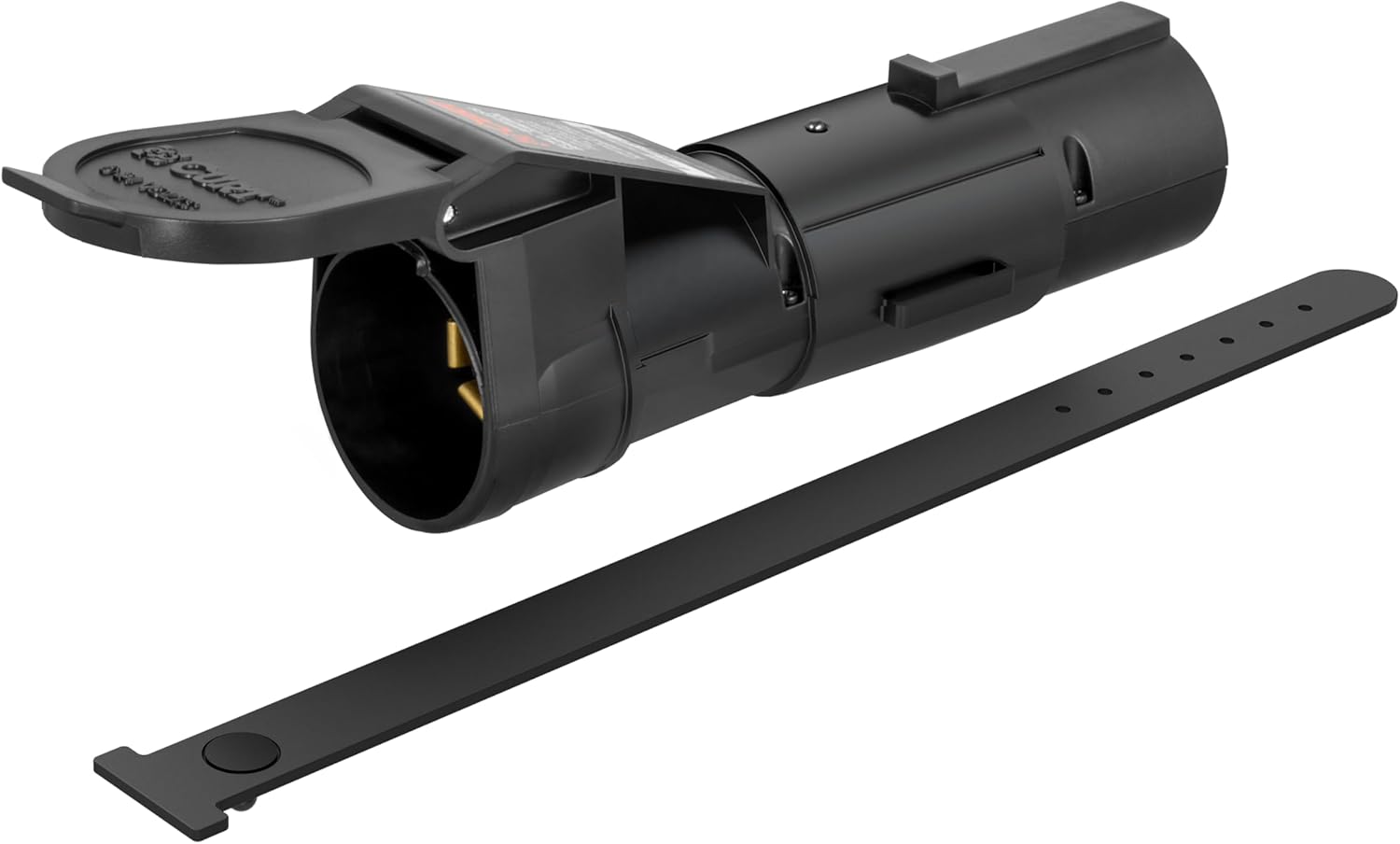
| Compatibility | Industry-standard 7-way RV blade plug |
|---|---|
| Control | Bluetooth smartphone app (iOS and Android) |
| Brake type supported | Electric trailer brakes (1–4 brakes / 1–2 axles) |
| Features | Tri-axis accelerometer, automatic calibration, manual activation |
The CURT Echo Mobile replaces an in-cab controller with a plug-and-play, Bluetooth-based unit that inserts at the vehicle 7-way and uses a smartphone app to set maximum output, sensitivity, and to manually command the trailer brakes. For a 1997–2003 Ford F-150 this is an easy option when you prefer minimal wiring and the ability to move the controller between trucks. Installation is simple: plug the Echo into the truck 7-way and use the OneControl Auto app on iOS or Android to create a towing profile. The unit’s tri-axis accelerometer provides proportional braking for smooth stops and automatic calibration reduces setup fuss. Its potted enclosure and locking tab help resist moisture and vibration, and it supports ABS, cruise control, and low-voltage systems. Important limitations include reliance on a phone for advanced control and occasional Bluetooth pairing quirks reported on certain phones; because the device protrudes from the 7-way it may need extra support to avoid strain on the connector in rough conditions. Overall it is a convenient, modern approach to brake control when you value smartphone setup and portability over a hardwired under-dash unit.
Best for: Drivers who prioritize app-based setup and diagnostics and want an easy-to-transfer controller they can configure from their phone rather than install a permanent under-dash unit.
Less Ideal for: Drivers who prefer a permanently mounted, hardwired controller or those who frequently tow in conditions where the exposed plug could be knocked or submerged.
- Plug-and-play 7-way installation lets you move the controller between vehicles without permanent wiring
- Bluetooth app provides on-the-fly adjustments, multiple towing profiles, and diagnostic feedback
- Tri-axis accelerometer gives proportional braking and automatic calibration for smoother stops
- Potted enclosure and retention strap/locking tab increase durability and vibration resistance
- Depends on a reliable Bluetooth connection and phone compatibility for full control
- Protrudes from the 7-way connector and can put strain on the socket without additional support
Verdict: Pick this if you prefer app-based setup and diagnostics and want to control or monitor trailer braking from your phone.
Tekonsha 3017 Brake Controller Wiring Adapter
Best Low-Profile Brake Controller

| Manufacturer | Tekonsha |
|---|---|
| Item model number | 3017 |
| Item Weight | 4 ounces |
| Product Dimensions | 4 x 3.5 x 1 inches |
| Date First Available | January 1, 2012 |
This Tekonsha 3017 is a simple plug-and-play wiring adapter that lets a compatible Tekonsha brake controller connect to a vehicle factory trailer wiring plug without cutting into the harness. Install is straightforward: locate the factory trailer connector in the dash area, plug the adapter in, then attach the controller end. For DIY installers looking to keep the cab tidy it preserves factory wiring and avoids splicing, so the controller can be mounted cleanly and removed later if needed. The adapter is compact and lightweight, so it does not interfere with low-profile controller mounting or add bulk behind dash panels. The main limitation is that it is a vehicle-specific harness rather than a universal controller, so fitment must match the truck wiring it was made for and it does not include the brake controller itself. If your truck or controller uses a different factory connector you will need a different harness or a hardwired install.
Best for: DIY installers who prioritize a clean, low-profile cab installation and want a removable, factory-style connection for a Tekonsha brake controller.
Less Ideal for: Buyers who need a universal harness for multiple vehicle makes or those who have heavily modified factory wiring and prefer a hardwired permanent solution.
- Plug-and-play connection preserves factory wiring and avoids splicing
- Compact, lightweight harness that does not add bulk behind dash panels
- Simple installation that most DIYers can complete without specialized tools
- Compatible with Tekonsha controllers for a clean, removable hookup
- Made for specific factory trailer connector patterns so it will not fit every truck without verifying compatibility
Verdict: Ideal for DIY installers who need a discrete controller that mounts with a low profile and keeps the cab uncluttered.
Tekonsha Prodigy P2 Proportional Trailer Brake Controller
Best Heavy-Duty Multi-Axle Controller

| Manufacturer | Tekonsha |
|---|---|
| Manufacturer Part Number | 90885 |
| Item model number | 0 |
| Compatible axles | Up to 4 axles |
The Tekonsha Prodigy P2 is a compact proportional brake controller designed to manage electric trailer brakes on up to four axles. It senses vehicle deceleration and applies trailer braking in direct proportion, which produces smoother, more predictable stops when towing heavier loads. Installation requires wiring to the vehicle brake switch and a power ground; the unit offers multiple mounting options including a 360 degree rotation so you can position the display for easy viewing. Notable features include a digital display showing output voltage, a boost mode for added initial braking force when hauling heavy trailers, continual diagnostics to detect wiring faults, and reverse operation that can be disabled. Practical benefits include consistent, controllable braking performance under sustained use and an easy-to-read display for tuning on the road. The device does require a proper wiring install and possible firewall penetration on some trucks, and the rear connector feels modestly fragile compared with heavier-duty marine-grade connectors.
Best for: Towing owners who prioritize controlled, sustained braking for heavier trailers with multiple axles and who are comfortable with a one-time hardwired installation.
Less Ideal for: Buyers who want a plug-and-play, no-wiring solution or occasional light towing without multi-axle braking needs should consider simpler or vehicle-integrated options.
- Proportional braking delivers smooth, vehicle-matched stops for multi-axle trailers
- Boost mode provides extra initial braking power for heavy loads
- Digital display shows real-time output voltage for on-the-fly adjustments
- 360 degree mounting flexibility makes it easy to position the controller for clear viewing
- Built-in diagnostics detect wiring faults and shorted magnets to improve safety
- Installation requires wiring into the truck and can be challenging in tight engine bays
Verdict: Choose this when towing heavier loads or trailers with more brakes and you need a controller capable of sustained higher output.
Choosing the Right 1997-2003 Ford F-150 Trailer Brake Controller: Key Factors to Consider
Controller Type and Braking Behavior
Choosing between proportional and time-delay controllers directly affects how your trailer brakes respond during towing. Proportional controllers sense the truck's deceleration and apply trailer brakes in proportion to that motion, which produces a more natural, smooth feel during routine braking.
Time-delay controllers apply a preset amount of braking power after the tow vehicle brakes are engaged and can be adjusted for intensity. While simpler devices are sometimes easier to install, they can feel abrupt during sudden stops and may require more frequent manual tuning when trailer loads change.
For the 1997-2003 F-150, consider the typical trailer weight and whether you want the controller to react dynamically. Heavier or variable loads tend to benefit from proportional behavior, while occasional light towing can be served acceptably by a time-delay unit.
Electrical Compatibility and Wiring
The F-150 model years 1997 through 2003 use specific factory wiring configurations and connectors that affect controller fitment and installation. Verify whether the controller requires a dedicated 12V power feed, connection to the truck brake signal, and a ground tied to the chassis. Some controllers also need a reverse-light signal for certain features.
Understanding the existing trailer brake relay and any factory tow package wiring on your F-150 will reduce installation time and risk of electrical faults. Units with clear wiring diagrams or available vehicle-specific adapters make it easier to complete a safe, reliable installation without splicing into multiple harnesses.
Poor wiring or incorrect connections can cause intermittent braking, blown fuses, or lack of trailer brake engagement, so prioritize controllers designed to integrate smoothly with the F-150 electrical setup.
Mounting Location and Cab Access
Mounting the controller within comfortable reach is important for safe on-the-road adjustments. Many owners prefer an in-cab mounting location on the dash or under the steering column for quick access to gain or manual override functions. The interior layout and available mounting points of the 1997-2003 F-150 influence where a controller can be placed without interfering with pedals, steering, or factory trim.
Consider whether the controller's physical footprint and bracketry suit the F-150's dash profile and knee bolsters. Some designs are compact and unobtrusive, while others require a larger surface for secure mounting. Ease of routing the wiring from the engine bay and under-dash areas to the chosen mounting spot should also factor into your decision.
Adjustability and Control Features
Look for controllers that offer straightforward, repeatable adjustments for gain or braking power. Manual boost or proportional sensitivity controls allow you to tailor brake application to different trailer loads and road conditions, which is especially valuable if you tow varied loads with your F-150.
Additional features such as manual override lever, digital readouts, or preset modes can speed setup and provide confidence when towing. However, overly complex menus or tiny adjustment knobs can be a liability while on the road, so balance feature richness with clarity and ease of use.
Durable controls that hold settings over time and resist vibration from the truck will provide a more reliable towing experience.
Durability and Weather Resistance
Trailer brake controllers are exposed to vibration, temperature swings, and possible moisture ingress depending on mounting and wiring routes. Select controllers with rugged housings, secure connectors, and corrosion-resistant terminals to withstand the conditions typical of using an F-150 for regular towing.
Components that suffer from poor sealing or cheap connectors can lead to intermittent operation, especially in climates with road salt or heavy humidity. Consider units with replaceable fuses, serviceable wiring pigtails, and accessible mounting hardware so that maintenance is straightforward and long-term reliability is improved.
Why Proper Brake Control Matters for 1997-2003 F-150 Owners
The 1997-2003 F-150 was built to be a workhorse, and many owners use these trucks for towing trailers regularly. Proper trailer brake control directly affects stopping distance, trailer stability, and driver confidence when towing heavier loads. A mismatched or poorly adjusted controller can increase wear on both truck and trailer braking systems and make emergency braking less predictable.
Addressing brake control proactively reduces stress on the truck's rear brakes and driveline when towing, and helps maintain safer handling when changing lanes or braking on grades. Choosing the right controller type and setting it up correctly is a relatively small investment for a major safety payoff.
- Improved stopping performance under load
- Reduced trailer sway and yaw during braking
- Extended lifespan of truck and trailer brakes
Installation Tips Specific to 1997-2003 Ford F-150
Before starting installation, locate the factory tow package connector if your truck is equipped with one. That connector often simplifies power and brake signal access. If your F-150 lacks a factory tow plug, plan routing for a fused 12V source, a solid ground, and a reliable brake signal pick-up.
When routing wiring through the firewall, use existing grommets where possible and avoid drilling new holes. Secure all wiring away from moving parts and high-heat sources. Label wires during installation so future troubleshooting is straightforward, and test trailer brake operation on a short, low-speed run before highway towing.
- Use a fuse close to the battery for the controller power lead
- Keep controller wiring away from exhaust and steering components
- Mount controller where you can reach manual override without taking eyes off the road
Matching Controller Settings to Trailer Load
Proper gain or power adjustment depends on trailer gross weight, brake type, and how your load distributes across axles. Start with conservative settings and perform incremental tests at moderate speeds on a quiet road to dial in the feel. Note how the trailer responds during stops and adjust until the trailer brakes assist without locking.
For heavier trailers or those carrying shifting loads, slightly higher initial gain or a boost feature can help maintain stability. Conversely, lighter loads require less braking force to avoid jerky stops. Keep a note of preferred settings for your typical towing configurations to speed future setup.
- Test braking at low speeds before highway runs
- Increase gain gradually when trailer lags behind truck braking
- Reduce gain if trailer brakes lock or skid during stops
Common Wiring Pitfalls and How to Avoid Them
A frequent cause of trailer brake problems is poor grounding. Make sure the controller chassis ground is attached to clean, unpainted metal on the F-150 frame or body. Also verify that the trailer connector ground is solid, since a bad trailer ground can make the controller appear faulty.
Another common issue is tapping into the wrong brake light circuit. Use the dedicated brake switch or a known brake signal point in the dash harness rather than a taillight feed to ensure consistent activation. When in doubt, consult wiring diagrams for your 1997-2003 F-150 to identify the correct conductor.
- Secure grounds to bare metal and use ring terminals
- Avoid splicing into lamp circuits for the brake signal
- Test each connection with a multimeter before reassembling trim
Maintaining Your Trailer Brake Controller and System
Regular checks of wiring, connectors, and mounting hardware prolong the life of both the controller and trailer braking components. Inspect pigtails and terminals for corrosion, and replace any brittle or cracked insulation before it causes an intermittent fault.
Periodically verify controller operation under load and confirm that settings remain stable after repeated use. Keep axle and brake maintenance on the trailer up to date, because worn trailer brakes can mask controller tuning and lead to unsafe conditions.
- Inspect controller mounting and wiring at least twice per year
- Clean connector contacts and apply dielectric grease to prevent corrosion
- Retest settings after towing heavy loads or long trips
Still looking for the perfect fit?
Select your Ford F-150 configuration to see the most relevant Trailer Brake Controllers recommendations
How We Chose the Best 1997-2003 Ford F-150 Trailer Brake Controller
We prioritized criteria that matter specifically to owners of 1997-2003 Ford F-150 trucks. First, we evaluated braking modulation and responsiveness, focusing on smooth, proportional control under varied trailer weights and common towing scenarios for this era of F-150. Second, we considered electrical compatibility and wiring complexity given the F-150 factory connectors and typical wiring harnesses used on 1997-2003 trucks. Third, installation effort was judged by whether the unit can be mounted in-cab on the dash or under the dash, the clarity of wiring diagrams, and whether simple plug-and-play adapters are commonly available for these model years. Fourth, we assessed feature relevance such as user-adjustable gain, boost settings for heavy loads, and whether the controller offers both proportional and time-delayed operation where applicable. We excluded units that require extensive vehicle modification or custom fabrication to fit the 1997-2003 F-150 dash or wiring, as well as controllers lacking clear wiring guidance for this vehicle. The selected controllers balance real-world braking performance, installation practicality, electrical compatibility, and durable construction appropriate for regular towing with the F-150.
Our full evaluation process is outlined in our review methodology.
FAQ
Do I need a trailer brake controller if my 1997-2003 F-150 has a factory tow package?
A factory tow package may include a trailer wiring connector and sometimes a proportional controller provision, but many trucks still require an aftermarket controller to actively modulate trailer brakes. It depends on whether your truck already has an integrated brake control module and the trailer weight you tow.
Can I install a brake controller myself on a 1997-2003 F-150?
Many owners can perform a do-it-yourself installation with basic tools and wiring knowledge, especially when the truck has a factory tow connector. Follow wiring diagrams, use proper fusing, and secure all connections. If you are uncomfortable with automotive electrical work, professional installation is a safer choice.
Will a proportional controller always perform better than a time-delay unit in my F-150?
Proportional controllers often deliver smoother and more natural braking response, particularly with varying loads, but a well-adjusted time-delay controller can still be effective for consistent, light towing. The best choice depends on how often you tow and whether you need dynamic modulation.
What should I check if the trailer brakes do not engage after installation?
First verify power and ground to the controller, then confirm the brake signal input and output to the trailer connector. Check fuses and ensure the trailer wiring and connector ground are sound. Testing circuits with a multimeter helps isolate whether the issue is power, signal, or trailer-side wiring.
How often should I recalibrate or adjust controller settings for different trailers?
You should recheck and adjust settings whenever you tow a trailer with a significantly different gross weight or load distribution. Perform a low-speed braking test after any change and make small adjustments until the trailer braking feels controlled and matches the truck's deceleration.
Final Verdict
For owners of 1997-2003 Ford F-150 trucks, the most important priorities are getting a controller type that matches your towing habits, ensuring clean electrical integration, and mounting it where you can adjust settings safely. Proportional controllers provide the most natural modulation for varying loads, while time-delay units can be a simpler choice for lighter, infrequent towing. Pay attention to wiring, secure grounds, and take time to test and fine-tune gain settings for each trailer. Choose the controller that balances reliable braking performance with straightforward installation for your F-150, and prioritize units that make it easy to adjust settings when tow loads change. That approach gives the best compromise between safety, convenience, and long-term durability.
Explore More:
- Check out all Ford F-150 parts & accessories
- Explore Electronics
- Browse all Accessories
