

Note: This article contains affiliate links. If you click on these links and make a purchase, I may earn a small commission at no extra cost to you. This helps support my research and content. Read my full affiliate disclosure here.
When you tow with a Ford F-150 XLT, the right trailer brake controller makes a real difference in vehicle stability and stopping distance. Whether you tow a small utility trailer or a heavier load, a properly matched controller helps modulate trailer brakes in step with the truck, reducing sway and improving confidence on the road. This guide presents seven shortlisted trailer brake controllers that fit the Ford F-150 XLT and explains the evaluation criteria used to pick them. We focus on braking performance, setup and wiring simplicity, in-cab controls, and compatibility with the F-150 XLT electrical system. Read on to find the best option for your towing needs and to understand installation and tuning basics before you start towing.
Looking for other parts? See all Ford F-150 parts & accessories.
Top Picks at a Glance
| Best Overall Trailer Brake Controller A top-performing controller with precise proportional braking and reliable electronics | Tekonsha P3 Trailer Brake Controller with Ford Plug-and-Play Harness |  |
| Best Budget Trailer Brake Controller An affordable replacement or basic controller that keeps costs low | briidea BR-122 Proportional Trailer Brake Controller with Boost Mode |  |
| Best OEM Replacement Module Direct-fit in-dash replacement modules matching factory connectors and controls | Ford Dash Trailer Brake Control Module Kit (FL3Z-19H332-AA) |  |
| Best Universal Proportional Controller Standalone proportional controllers that work across many trucks and trailer setups | Tekonsha Primus IQ Proportional Trailer Brake Controller (90160) |  |
| Best Plug‑and‑Play Kit Controllers sold with vehicle-specific wiring harnesses for quick installation | CURT Venturer NEXT Electric Trailer Brake Controller (Time-Delay, Low Profile) |  |
| Best Time‑Delay Brake Controller Simple timed controllers that apply pre-set brake power for older trailer systems | Tekonsha Brakeman IV Time-Delay Trailer Brake Controller |  |
| Best Bluetooth / App‑Enabled Controller Controllers with smartphone pairing or wireless setup for remote configuration | CURT Echo Mobile Bluetooth Trailer Brake Controller (Proportional) |  |
Tekonsha P3 Trailer Brake Controller with Ford Plug-and-Play Harness
Best Overall Trailer Brake Controller

| Manufacturer | TEKONSHA |
|---|---|
| Brand | Tekonsha |
| Item model number | CEQ90195- 3034G |
| Manufacturer Part Number | 30453 |
The Tekonsha P3 is a feature-rich proportional brake controller designed to give predictable, smooth braking while towing. It mounts on the dash and communicates with the truck to apply trailer brakes proportionally to vehicle braking, which reduces trailer push and improves towing stability. The kit includes a vehicle-specific plug-and-play Ford harness to simplify installation for F-150 fitment, and the controller offers a bright LCD with adjustable contrast plus a boost function and multiple braking profiles for tuning to different trailers. In practice the P3 stores multiple trailer settings so switching trailers is quick and the real-time boost and sensitivity adjustments can be made while driving. Some buyers report occasional harness mismatches requiring a different part number or minor wiring tweaks, so confirm the correct harness for your model year before installation. The unit is solidly built and well suited to regular towing where consistent, proportional braking is the priority.
Best for: Buyers who prioritize reliable, smooth proportional braking and want a controller that can be tuned for multiple trailers and real-world towing conditions.
Less Ideal for: Users who want an ultra-simple, minimal controller with no adjustment options or buyers who prefer a controller that is guaranteed to fit without checking harness compatibility first.
- Proportional braking provides smooth, responsive trailer brake application
- Includes a Ford plug-and-play harness for simpler installation in supported F-150s
- Bright LCD with adjustable contrast and stored profiles for multiple trailers
- Boost and pulsed braking options let you fine-tune braking feel for different loads
- Solid build quality and long track record in towing applications
- Some listings have shipped the wrong harness for certain Ford model years, requiring verification or a harness swap
Verdict: For buyers who want the most reliable, all-around trailer brake controller that delivers smooth proportional braking and consistent performance under real towing conditions.
briidea BR-122 Proportional Trailer Brake Controller with Boost Mode
Best Budget Trailer Brake Controller

| Compatible axles | 1 to 4 braked axles (2-8 brakes) |
|---|---|
| Display | LCD digital display |
| Safety features | Overcurrent and short-circuit protection, fault detection |
| Installation | Plug-and-play wiring port; mounting bracket included |
The briidea BR-122 is a budget-friendly proportional brake controller that brings automatic brake force modulation to a Ford F-150 XLT without a large outlay. It uses motion sensors to match trailer braking to your truck's deceleration and includes a boost button to add extra output when towing heavier loads. Installation is designed to be straightforward with a plug-and-play wiring port and a supplied mounting bracket so you can tuck the unit under the dash and operate it from the cab. The bright LCD keeps output and boost level visible while an emergency manual switch gives immediate trailer activation when needed. Safety features such as overcurrent and short-circuit protection are built in. Expect solid basic performance and easier stops compared with an unbraked trailer, but note that build quality and connector design are not premium and may require patience during wiring. For F-150 owners seeking a low-cost, functional upgrade, this controller restores usable, proportional braking without complex setup.
Best for: Ford F-150 XLT drivers who want a low-cost way to add proportional trailer braking for occasional to moderate towing and prioritize function and easy installation over premium components.
Less Ideal for: Drivers who tow very frequently with heavy commercial loads or who need top-tier durability and the smallest, most refined connectors should consider a higher-end unit instead.
- Proportional braking matches trailer output to truck deceleration for smoother stops
- Boost function lets you increase braking force for heavier trailers
- Plug-and-play wiring port and included bracket simplify installation under the dash
- LCD display and manual activation switch provide clear control from the cab
- Built-in overcurrent, short-circuit, and fault detection for added safety
- Connector design and wiring hardware feel low-end and can make installation fiddly
- Overall fit and finish is budget-oriented and may feel less robust than higher-end controllers
Verdict: Choose this slot if you need a low-cost, functional trailer brake controller or replacement module that restores braking control without a big investment.
Ford Dash Trailer Brake Control Module Kit (FL3Z-19H332-AA)
Best OEM Replacement Module
| Connector Type | Plug-In |
|---|---|
| Current Rating | 5 Amps |
| Operation Mode | Manual |
| Number of Terminals | 2 |
| Specification Met | OEM |
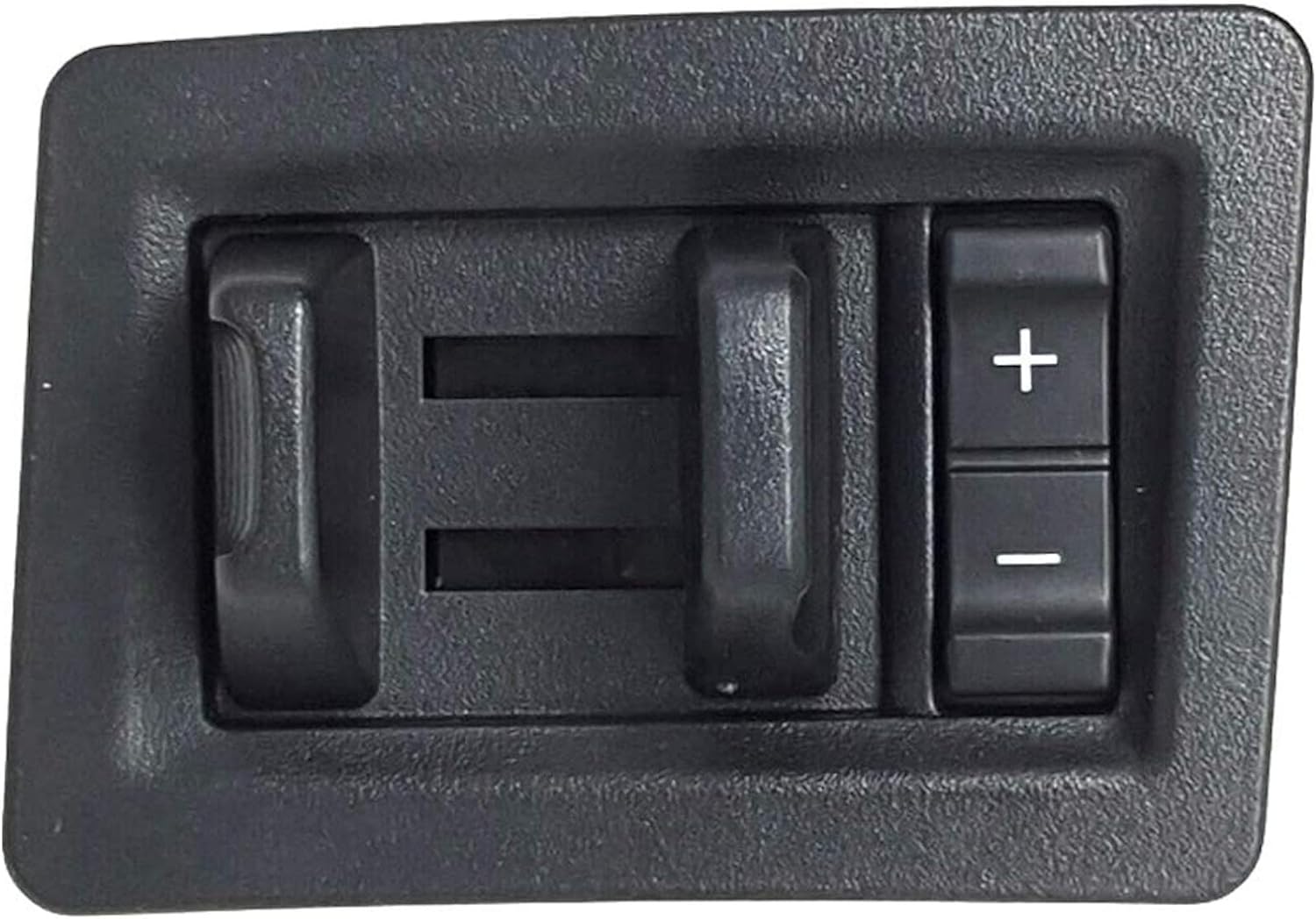
This Ford dash trailer brake control module is a direct-fit, factory-quality replacement intended to install into the dash and provide in-cab manual control and proportional braking for a tow-equipped F-150. Installation is plug-and-play when the truck already has the factory wiring and 30A fuse in place; the controller mounts in a dash location that looks and operates like factory equipment and includes the original-style connector and terminals. After physical installation you will typically enable the module through the truck computer using a tool such as FORScan or have a dealer flash the vehicle so the truck recognizes the controller. Users report solid real-world braking feel and no parasitic electrical issues when using the genuine Ford unit compared with cheaper knockoffs. Important limitations are that some trucks are not pre-wired for this module, requiring additional harness or fuse wiring, and a small number of buyers experienced intermittent failures that required warranty service or replacement. Overall it is the simplest way to add or restore integrated trailer braking without major dash modification for compatible 2015 F-150 builds.
Best for: DIY owners who want a direct-fit, factory-style in-dash brake controller to restore or add integrated trailer braking with minimal dash modification and a preference for an OEM solution.
Less Ideal for: Buyers without the truck pre-wired for a brake controller or those unwilling to use an OBD programming tool should consider a self-contained portable controller or hire a shop for wiring and activation.
- Direct-fit factory unit designed for dashboard mounting with original connector for minimal wiring changes
- Built to OEM specification with silver contact material and normal operation mode for consistent brake control
- Includes factory-style fuse arrangement so installers do not need to source odd fuse sizes
- Integrated in-dash placement provides a natural, driver-accessible control location that matches dash lighting and aesthetics
- Well-documented install process with many DIY resources and ability to enable via FORScan instead of dealer visit
- Requires enabling/configuration through the truck computer after installation which needs an OBD tool or dealer visit
- Not compatible with trucks lacking pre-wired connector or 30A fuse without adding wiring harness or fuse circuit
- Rare reports of unit failure requiring return or warranty service
Verdict: Intended for DIYers who need a direct-fit, factory-style in-dash trailer brake controller module to restore original functionality with minimal wiring or dash modification.
Tekonsha Primus IQ Proportional Trailer Brake Controller (90160)
Best Universal Proportional Controller

| Model | 90160 |
|---|---|
| Voltage | 12 Volts |
| Axles supported | 1-3 axles |
| Display | LED diagnostics |
| Mounting | Snap-in dash clip, self-leveling |
The Tekonsha Primus IQ is a compact proportional electronic brake controller that automatically measures your truck’s deceleration and sends a proportional signal to trailer brakes for smoother stops. It mounts under the dash with a snap-in clip and removable connector so you can stow it when not towing, and its LED display shows diagnostics and real-time output. Setup is straightforward: connect to the vehicle wiring (a harness sold separately for many trucks), set the power output with the knob, and use the three-step boost when you need extra stopping force for heavier loads. The unit self-levels within a 90 degree vertical range so routine reconfiguration is minimal. Practical benefits include reliable proportional braking, a manual override for immediate trailer brake application, and a compact footprint that stays out of the way. Limitations are that it requires the appropriate vehicle wiring or an adapter harness and the small display is easiest to read from above, so mounting position matters for visibility.
Best for: Truck owners who want an automatic proportional controller that senses braking needs and integrates with common hitch wiring, prioritizing predictable, hands-off trailer braking over flashy extras.
Less Ideal for: Drivers who need multi-trailer switching, smartphone configuration, or a large touchscreen interface should consider more feature-rich controllers instead.
- Proportional braking using internal inertia sensor for smooth, automatic trailer braking
- Compact snap-in design with removable connector for easy stowage when not towing
- LED display with self-diagnostic checks and real-time output readout
- Three-level boost plus manual override for extra stopping power when hauling heavier loads
- Requires a vehicle-specific wiring harness or splicing if the factory connector is not present
- Screen is small and best viewed from above, so some dash locations limit visibility
Verdict: For owners who want a universal proportional controller that senses trailer braking needs automatically and works with most hitch wiring and axle counts.
CURT Venturer NEXT Electric Trailer Brake Controller (Time-Delay, Low Profile)
Best Plug‑and‑Play Kit

| Model | Venturer NEXT |
|---|---|
| Manufacturer | CURT |
| Compatibility | 12-volt systems and electric over hydraulic brakes |
| Brake capacity | Controls up to 6 brakes (1-3 axles) |
The CURT Venturer NEXT is a slim, time-based brake controller that puts trailer braking adjustment within easy reach of the driver. It controls up to six brakes (three axles) and offers fully adjustable gain and ramp time so you can tune braking force to match light trailers or heavier loads. The low-profile housing and included mounting bracket keep the unit unobtrusive on the dash and the LED ramp indicator with adjustable brightness makes it easy to monitor activity day or night. Installation is straightforward when paired with a vehicle-specific plug-and-play wiring harness, and the controller can be mounted at any angle without leveling. Because it is time-delay based it does not rely on vehicle deceleration sensing, so tuning may take a few test tows to get ideal feel compared with proportional controllers. The Venturer NEXT is a practical, budget-friendly option if you want simple, reliable trailer brake control with a compact footprint and clear visual feedback.
Best for: Drivers who prioritize a quick, simple install with a compact controller and who want adjustable braking for common tow setups without complex proportional electronics.
Less Ideal for: Those who need the most responsive braking for heavy towing or varied trailer dynamics should consider a proportional controller instead.
- Low-profile case and slim mounting bracket minimize dash intrusion
- Fully adjustable power and ramp time for fine-tuning brake feel
- LED ramp indicator with adjustable brightness for day or night use
- Controls up to 6 brakes (1-3 axles) to support common trailer setups
- Can be mounted at any angle with no internal leveling required
- Time-delay operation is less immediate than proportional controllers for dynamic towing conditions
Verdict: Pick this when you want a controller packaged with a plug-and-play wiring harness so you can install it quickly without splicing or complex wiring.
Tekonsha Brakeman IV Time-Delay Trailer Brake Controller
Best Time‑Delay Brake Controller

| Model | 8507120 |
|---|---|
| Brand | Tekonsha |
| Compatibility | 1–4 axles; electric or electric-over-hydraulic brakes |
| Display | Digital with diagnostics |
The Tekonsha Brakeman IV is a straightforward time-delay trailer brake controller aimed at light-duty towing and electric-only brake setups. It connects to your truck and sends a timed, ramped output to trailer brakes when you apply the vehicle brakes; you can adjust overall power, the sync or aggressiveness of the ramp, and use a manual override lever to apply trailer brakes instantly. The unit features a digital display with simple diagnostics and short-circuit protection, and its plug-and-play wiring port speeds installation when paired with a vehicle-specific harness. Because it is time-based rather than proportional, the Brakeman IV can be mounted in any orientation and performs consistently regardless of vehicle motion, which makes it a reliable choice for older trailers that lack proportional actuators. The main limitations are inherent to time-delay controllers: braking is applied at a preset ramp rate rather than being matched to trailer deceleration, so it is less refined on heavy loads or trailers with mixed brake systems. The Brakeman IV is a compact, no-frills controller that covers basic towing needs with easy setup and solid diagnostics.
Best for: Buyers who tow older trailers or use electric-only brake setups and want a reliable, easy-to-install time-delay controller that requires minimal setup and straightforward controls.
Less Ideal for: Drivers who frequently tow heavy loads or want the most refined, proportional sensing for smoother trailer braking should consider a proportional controller instead.
- Simple plug-and-play port compatible with Tekonsha vehicle-specific harnesses for quick installation
- Adjustable power and sync settings plus a manual override for on-demand trailer braking
- Digital display with real-time diagnostics and short-circuit protection for safer operation
- Works with electric and electric-over-hydraulic trailer braking systems and supports 1–4 axles
- Compact design that can be mounted in any orientation within driver reach
- Time-delay operation applies braking at a fixed ramp rate so it cannot match braking precisely like proportional controllers
Verdict: Ideal for users with older trailers or electric-only brake setups who prefer straightforward time-delay braking instead of proportional sensing.
CURT Echo Mobile Bluetooth Trailer Brake Controller (Proportional)
Best Bluetooth / App‑Enabled Controller
| Compatibility | Standard 7-way RV blade plug |
|---|---|
| Control | Bluetooth smartphone app (iOS/Android) |
| Brake type | Proportional, tri-axis accelerometer |
| Brake capacity | Operates 2 to 4 trailer brakes (1 to 2 axles) |
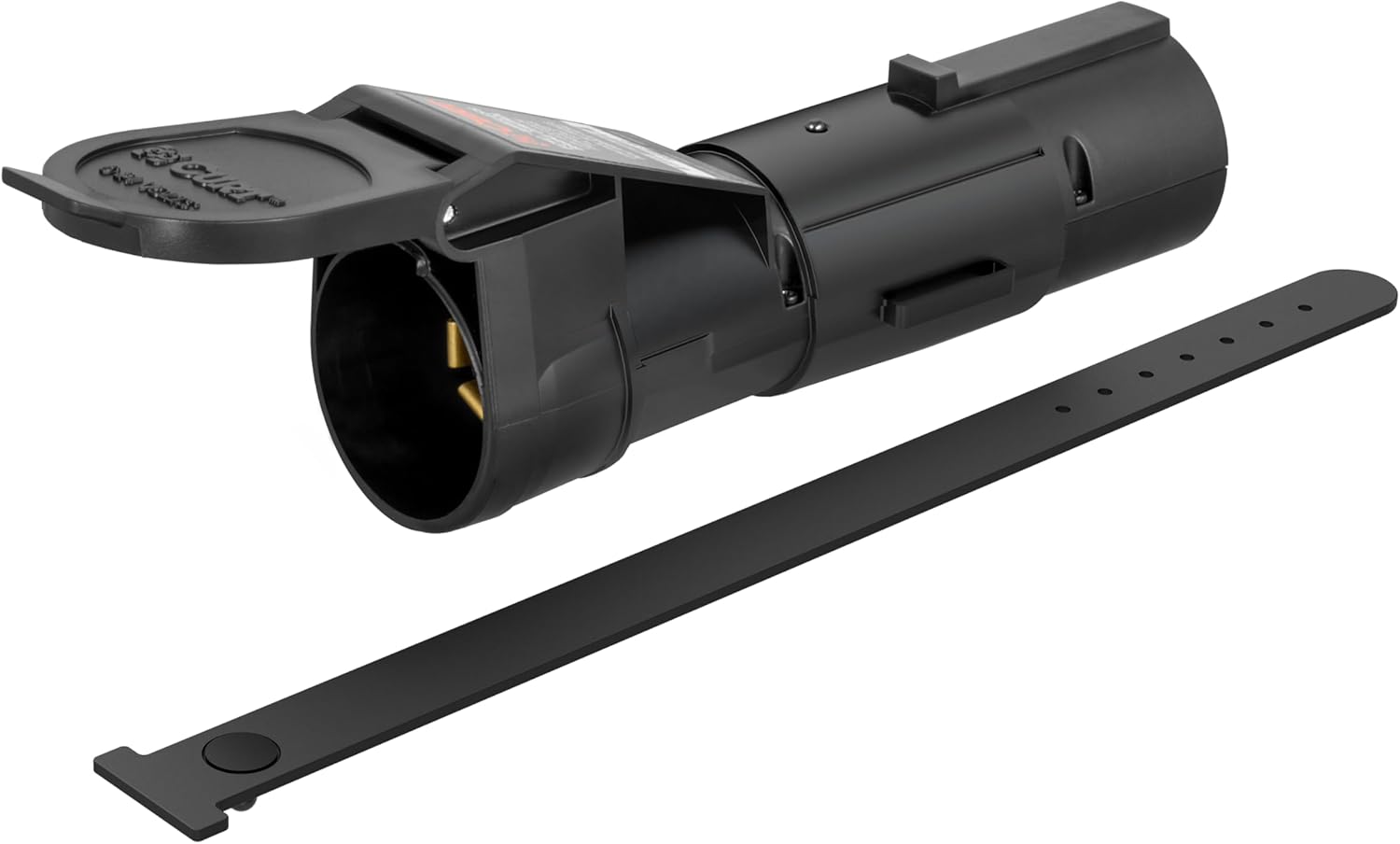
The CURT Echo mobile brake controller replaces a bulky in-cab unit with a plug-in module that connects to your phone over Bluetooth and lets you set profiles, adjust sensitivity, and manually apply the trailer brakes from the OneControl app. Installation is truly plug-and-play: insert the Echo into the vehicle 7-way blade and configure profiles for different trailers in the app. A triple-axis accelerometer provides proportional braking for smooth stops and the unit supports two to four brakes (one to two axles). Because it is portable you can move it between trucks without wiring a harness, making it convenient for fleet use or owners with more than one tow vehicle. The enclosure is potted for weather resistance and the connector has a retention strap and locking tab for a more secure fit. Limitations include occasional Bluetooth pairing quirks on some phones and the Echo protrudes from the 7-way plug so it can be vulnerable to impact or loosening if not secured carefully.
Best for: Buyers who prioritize easy wireless setup and remote tuning from a smartphone and want a controller they can move between vehicles without installing permanent wiring.
Less Ideal for: Drivers who prefer a permanently mounted under-dash controller or who need a low-profile solution tucked away from the rear connector should consider a wired, in-cab option.
- True plug-and-play design that plugs into a standard 7-way RV socket with no vehicle-specific harness required
- Smartphone app control for on-the-fly adjustments, multiple saved profiles, and manual brake activation
- Triple-axis accelerometer delivers proportional braking for smoother stops on grades
- Portable design makes it easy to transfer between vehicles or use with fleet trucks
- Potted enclosure and locking tab at the connector improve durability and connection security
- Protrudes from the 7-way connector and can be subject to loosening or impact if not physically secured
Verdict: Choose this if you want a modern controller that pairs with a smartphone or offers wireless setup and monitoring for easier fine-tuning on the road.
Choosing the Right Ford F-150 XLT Trailer Brake Controller: Key Factors to Consider
Braking Modulation and Response
How a controller modulates brake force matters because it determines how smoothly the trailer slows relative to the truck. Good modulation prevents trailer tugging or violent jerks during stops. For the F-150 XLT, look for controllers that detect deceleration dynamically and apply braking proportional to the truck's braking input.
Response speed affects short stop performance. Controllers with faster, predictable response reduce stopping distance and improve stability when towing variable loads. Consider units that let you fine-tune gain to match light to heavy trailers, so you do not have to compromise between under-braking and over-braking.
Proportional Versus Time-Delayed Control
Proportional controllers sense the truck's deceleration and apply trailer brakes in proportion, offering a natural feel similar to a vehicle with integrated trailer systems. This is often preferable for everyday towing and varied terrain because it reduces lag and abruptness.
Time-delayed controllers use preset ramping of brake output when the tow vehicle slows and can work fine for steady, predictable loads. However, they can feel less precise under quick stops or on grades. Decide which type better matches your towing habits and the typical trailer weights you haul with the F-150 XLT.
Installation and Wiring Compatibility
Ease of installation is important for owners who want a clean, reliable setup without extensive shop time. Check whether the controller supports plug-and-play connections with the F-150 XLT factory harness or requires splicing into brake light or power circuits.
Clear wiring instructions, secure connectors, and accessible mounting locations inside the cab reduce installation errors. Also consider whether the unit needs a dedicated power source or a relay, and plan cable routing so wires are protected from heat, moisture, and pinch points in the truck's interior and firewall area.
In-Cab Usability and Mounting
Controls that are easy to reach and adjust while seated enhance safety and convenience. Look for units with tactile knobs or buttons that can be operated without taking your eyes off the road, and displays or LEDs that indicate output level and fault conditions.
Mounting options that fit the F-150 XLT dash or under-dash space matter because cramped layouts make access difficult. Choose controllers with flexible bracketry and multiple mounting orientations so you can position controls for quick adjustments during long hauls.
Power Handling and Circuit Protection
Ensure the controller can handle the current draw of your trailer's electric brakes at full output. Underpowered units can overheat or fail, while proper circuit protection and cooling extend service life. For heavier trailers, confirm the controller's amperage rating and whether it supports external relays or proportional solenoids.
Also verify the controller's protection features, such as overload detection, short-circuit protection, and clear fault indication. These reduce the risk of electrical damage to your F-150 XLT wiring and help you identify problems quickly at the roadside.
Adjustment Features and Diagnostic Feedback
Adjustability matters because no two trailers brake identically. Controls that offer variable gain, boost, and manual override let you tailor braking behavior to the trailer's load and brake condition. Some units include self-test routines or audible/visual diagnostics to confirm wiring integrity and brake operation.
Being able to test output and inspect fault codes from inside the cab simplifies troubleshooting. For owners who tow varied loads, look for units that retain settings or offer easy resetting so you can switch between trailers without complex recalibration.
Trailer Brake Controller Types Explained
Trailer brake controllers fall broadly into proportional and time-based designs. Proportional controllers sense the vehicle's deceleration—often through accelerometers or inertia sensors—and vary brake output smoothly in proportion to how hard you slow down. This generally produces more natural stopping behavior, especially useful for the variable loads an F-150 XLT may tow.
Time-based controllers apply brake output based on a preset ramp every time the tow vehicle slows. They are mechanically simpler and can be adequate for steady, predictable towing conditions, but they can feel abrupt during sudden stops or when driving on hilly terrain. Understanding these differences helps you match a controller to how you drive and tow.
- Proportional: smoother, more adaptive braking; better for mixed driving
- Time-delayed: simpler, sometimes more affordable; can be less precise
- Hybrid designs: combine features to offer manual tuning and proportional sensing
Mounting Locations and Driver Reachability
Plan your mounting location before purchasing to ensure the controller will be accessible and unobtrusive. Common places on the F-150 XLT include under the dash near the steering column, on the lower dash panel, or on the console side. The goal is to allow easy manual overrides and quick gain adjustments without interfering with vehicle controls.
Consider cable length from the firewall bulkhead to the selected mount point. Some controllers are compact enough for tight spots while others need more clearance behind the panel. A clean mount reduces noise and accidental knocks that can change settings while driving.
- Select a location reachable while seated
- Avoid spots that block airbag zones or controls
- Check clearance for connectors behind the dash
Wiring Tips and Common Installation Pitfalls
Wiring a controller correctly prevents faults and ensures reliable operation. Use the truck's dedicated brake signal or an approved brake controller lead if available, and connect power through a fused ignition-switched source. Ground connections should be solid, low-resistance, and made to factory grounding points when possible.
Common mistakes include routing wires near sharp edges, neglecting to secure connectors, and not testing brake output before towing. If you need to splice into factory wiring, use quality connectors and follow torque and placement guidance specific to the F-150 XLT to avoid loose or corroded joints.
- Use a fused ignition-switched power source
- Secure and protect wiring from heat and abrasion
- Verify operation with a static and dynamic test before towing
Tuning and Setting the Controller for Different Trailers
Proper tuning requires adjusting gain or sensitivity so the trailer brakes pull smoothly with the truck. For light trailers, lower gain avoids wheel lock or choppy stops. For heavier trailers, increase gain incrementally until braking feels balanced with the F-150 XLT's deceleration.
Always perform test stops in a safe area at moderate speed after any setting changes and with the trailer loaded as it would be on the road. Make small adjustments and re-test rather than making large leaps in output. Keep a notebook of settings that worked for specific trailer loads to speed future setup.
- Start with conservative gain settings
- Perform incremental changes and controlled test stops
- Record settings for repeatable results with each trailer
Maintenance and Troubleshooting Basics
Regular checks of wiring, connectors, and mounting hardware help prevent intermittent faults. Inspect the controller's connectors for corrosion or looseness and ensure the mounting bracket remains tight. Also inspect the trailer's brake magnets, wiring, and ground connections as they affect controller performance.
If you detect poor braking performance, first verify that the controller shows proper output and that the trailer brakes function independently when applied. Common fixes include cleaning grounds, replacing corroded connectors, and ensuring the controller receives proper power and brake signal inputs from the F-150 XLT.
- Inspect wiring and connectors regularly
- Check trailer grounds and brake hardware
- Use built-in diagnostics or a multimeter to isolate faults
Legal and Safety Considerations
Weight distribution and brake performance are regulated in many jurisdictions, so ensure your controller setup complies with local towing laws and weight ratings for the Ford F-150 XLT. Properly functioning trailer brakes are a fundamental safety requirement when towing beyond small utility loads.
Keep documentation of any wiring changes and settings in case you need to demonstrate compliance or explain your setup to a tow inspector. Prioritize fail-safe installation practices and immediate remediation of electrical issues to maintain safe operation on public roads.
- Confirm controller and wiring meet local towing regulations
- Keep records of installation and wiring changes
- Address electrical faults promptly to maintain safety
Still looking for the perfect fit?
Select your Ford F-150 configuration to see the most relevant Trailer Brake Controllers recommendations
How We Chose the Best Ford F-150 XLT Trailer Brake Controller
We prioritized controllers that deliver predictable, repeatable braking behavior across common towing loads for the Ford F-150 XLT. Key evaluation criteria included braking modulation and responsiveness under varied loads, the availability and accuracy of proportional sensing or advanced electronic modulation, and the ability to fine-tune gain and output for different trailer weights. Installation practicality was a second major filter. We assessed controllers for straightforward integration with the F-150 XLT wiring harness, clear in-cab mounting options, and minimal splicing or adapter needs. Unit reliability and build quality were considered to reduce failure risk in towing conditions. Usability and safety features also influenced selections: ease of adjusting settings from the driver seat, visible status indicators, manual override capability, and fail-safe behavior under electrical faults were all part of scoring. We excluded any units that required extensive vehicle modification, lacked clear wiring documentation, or had poor user feedback on basic operation for Ford truck platforms.
Our full evaluation process is outlined in our review methodology.
FAQ
Do I need a trailer brake controller for every trailer I tow with my F-150 XLT?
It depends on trailer weight and local regulations. Light trailers without electric brakes do not require a controller, but trailers equipped with electric brakes generally need a controller to operate them safely and legally.
Can I install a brake controller myself in an F-150 XLT?
Many owners can install a controller if they are comfortable with basic wiring and following vehicle wiring diagrams. Use the factory brake signal or an approved lead, secure power and ground properly, and test output before towing. If uncertain, professional installation reduces risk.
How do I know if a proportional controller is better than a time-delayed unit for my towing?
Proportional controllers typically provide smoother braking for mixed driving and variable loads. Time-delayed units can be adequate for steady-speed towing or simpler setups. Consider your typical towing speeds, terrain, and how often you change trailer loads when choosing between them.
What wiring should I check if my controller shows no output?
Verify fused ignition-switched power to the controller, a solid ground, and a proper brake signal input. Also inspect the trailer output lead and connectors for continuity and corrosion. Using a multimeter or the controller's self-test can help isolate which circuit is at fault.
Will controller settings change with different trailer loads?
Yes. You will usually need to lower gain for light loads and increase it for heavier trailers. Keep a record of effective settings for each trailer to make quick adjustments when switching loads.
Are there specific mounting locations recommended for the F-150 XLT cab?
Common mounting locations include under the dash near the steering column, on the lower dash panel, or beside the center console. Pick a spot that is reachable while seated, does not obstruct airbags or controls, and allows secure routing of the wiring harness.
Final Verdict
Selecting the right trailer brake controller for a Ford F-150 XLT comes down to matching modulation style, power handling, and installation convenience to your typical trailers. Prioritize a controller with predictable braking behavior and the ability to fine-tune output so you can balance safety and comfort under varied loads. Focus on controllers that integrate cleanly with the F-150 XLT wiring, offer intuitive in-cab controls, and include clear diagnostics. With proper installation and careful tuning, a suitable controller will make towing safer and more manageable, letting you tow confidently with your F-150 XLT.
Explore More:
- Check out all Ford F-150 parts & accessories
- Explore Electronics
- Browse all Accessories
