

Note: This article contains affiliate links. If you click on these links and make a purchase, I may earn a small commission at no extra cost to you. This helps support my research and content. Read my full affiliate disclosure here.
If you tow with a 2009-2014 Ford F-150, the right trailer brake controller makes a big difference in stability and stopping performance. These trucks often tow a range of trailers from small utility loads to heavy boat or camper setups, so matching a controller to your trailer type, wiring, and typical tow weight is essential. This guide presents seven shortlisted trailer brake controllers vetted for use with the 2009-2014 F-150. We focus on responsiveness, compatibility with the F-150 electrical and brake systems, ease of installation, and the real-world benefits you can expect on the road. Read on to see which styles and features best suit your towing needs, followed by practical guidance on installation and setup.
Looking for other parts? See all Ford F-150 parts & accessories.
Top Picks at a Glance
| Best Overall Trailer Brake Controller Top all-around controller balancing performance, fit, and reliability | Tekonsha P3 Trailer Brake Controller with Ford Plug-and-Play Harness |  |
| Best Budget Trailer Brake Controller Low-cost, reliable option for occasional towing and light trailers | Timilge Time-Delay Digital Trailer Brake Controller |  |
| Best OEM‑Style Replacement Module Direct-fit dash module that replaces the factory controller plug-and-play | HAWK BROTHER Trailer Brake Controller Module Compatible with 2011-2014 Ford F-150 |  |
| Best Proportional Trailer Brake Controller Electro‑inertia-style unit that matches trailer braking to tow vehicle deceleration | Tekonsha Primus IQ Proportional Trailer Brake Controller (90160) |  |
| Best Time‑Delay Trailer Brake Controller Simple, affordable timed controller for basic braking needs and budgets | Gihdfer Brakeman IV Time-Delayed Trailer Brake Controller |  |
| Best Plug‑and‑Play Kit with Harness Complete kit that includes controller plus vehicle-specific wiring harness | Tekonsha Prodigy P2 Trailer Brake Controller with Wiring Harness |  |
| Best Wireless / Bluetooth Controller Portable or app‑enabled controller that connects without permanent dash wiring | CURT Echo Mobile Bluetooth Trailer Brake Controller (Portable, Proportional) |  |
Tekonsha P3 Trailer Brake Controller with Ford Plug-and-Play Harness
Best Overall Trailer Brake Controller

| Manufacturer | TEKONSHA |
|---|---|
| Item model number | CEQ90195- 3034G |
| Manufacturer Part Number | 30453 |
| Date First Available | January 1, 2012 |
The Tekonsha P3 is a feature-rich proportional brake controller designed to provide consistent, smooth trailer braking and straightforward installation on compatible Ford trucks from 2009 to 2014 when used with the correct Ford harness. It mounts in the cab, shows braking power on a bright adjustable-contrast LCD, and stores settings for multiple trailers so you can switch rigs without reprogramming. The unit includes a boost feature and pulsed braking modes that help with long campers or slippery conditions, and the factory-style plug-and-play harness simplifies wiring for vehicles with the matching connector. Users report solid build quality and easy in-cab adjustment while driving. Be aware the wrong vehicle harness can cause installation headaches and electrical quirks, so confirm harness part number before fitting; some buyers needed a different harness or minor wire changes. Overall the P3 is a balanced choice for Ford F-150 owners who want dependable proportional control and convenience without complicated setup.
Best for: Buyers who prioritize dependable, proportional braking and a mostly plug-and-play install on 2009–2014 Ford F-150 trucks and want a controller that stores trailer profiles for repeated towing setups.
Less Ideal for: People who need a universal controller for many different vehicle makes or who want a completely hardwired custom install without using a vehicle-specific harness.
- Proportional braking for smooth, responsive trailer control
- Bright LCD with adjustable contrast for easy in-cab monitoring
- Stores multiple trailer settings to switch trailers quickly
- Includes boost and pulsed braking options for varying loads and conditions
- Plug-and-play Ford harness simplifies installation when the correct harness is used
- Some listings ship the wrong Ford harness, which can require swapping harnesses or minor wiring changes
Verdict: The pick for buyers who want a dependable, well-rounded trailer brake controller that balances install ease, consistent braking performance, and solid build quality.
Timilge Time-Delay Digital Trailer Brake Controller
Best Budget Trailer Brake Controller

| Fits trailers | 1 to 4 axles |
|---|---|
| Display | LED digital voltage readout |
| Controller type | Time-delay |
| Model | BC05 |
This Timilge time-delay brake controller provides a low-cost way to add trailer braking to a 2009–2014 Ford F-150 when you tow occasionally or with light trailers. It sends a preset braking signal to 1–4 axle trailers and lets you adjust initial power and ramp rate from the unit, while the LED display shows the voltage being delivered so you can monitor performance in real time. Installation is straightforward using a vehicle-specific harness or by wiring directly to the truck plug, and the small housing makes dash or under-dash mounting easy. Practical benefits include faster, more controlled stops compared with no controller and simple tuning to reduce trailer squat or wheel lockup. Limitations are that it is a time-delay design rather than proportional, so braking is less nuanced under rapid deceleration, and some units in reviews reported reliability issues or parasitic battery drain. For infrequent, budget-conscious F-150 owners it is a usable solution, but those who tow heavier loads or want smoother proportional braking should consider higher-end controllers.
Best for: DIY F-150 owners who tow infrequently with light trailers and prioritize a low-cost, easy-to-install controller that provides basic, adjustable trailer braking.
Less Ideal for: Drivers who tow frequently, haul heavy trailers, or want the smoothest, most responsive proportional braking should look at higher-end proportional controllers.
- Affordable option for adding trailer brakes to an F-150 without heavy investment
- Adjustable initial power and ramp rate let you tune braking to trailer behavior
- LED digital display shows voltage output for quick, in-vehicle monitoring
- Fits 1 to 4 axle trailers and is compact for flexible mounting locations
- Time-delay operation is less responsive than proportional controllers during abrupt stops
- Some users report intermittent failures and possible parasitic battery drain
Verdict: For DIY owners who tow infrequently or have light trailers and need a functional, inexpensive brake controller that gets the job done.
HAWK BROTHER Trailer Brake Controller Module Compatible with 2011-2014 Ford F-150
Best OEM‑Style Replacement Module

| Manufacturer | HAWK BROTHER |
|---|---|
| Model | Trailer Brake Controller |
| Item model number | STBC22051601-A-A021-21 |
| Compatible models | 2011-2014 Ford F-150 |
This HAWK BROTHER trailer brake controller module is a direct-fit, dash-mounted replacement intended to restore factory brake control functionality on 2011–2014 Ford F-150 trucks. It installs into the original mounting location and uses the vehicle wiring harness to minimize dash modification and extra wiring. The module is described as following manufacturing standards with a high-strength body for stable operation and is supplied as a single kit that matches common Ford part numbers referenced for these years. In normal use it provides the familiar in-cab brake adjustment and integration with the truck's trailer wiring so drivers can regain proportional braking control without aftermarket pods or major panel work. Limitations include the need to verify exact fit by VIN because Ford used multiple part revisions and connectors across years and option packages, and there is no detailed specification for electrical ratings or user controls included with the listing.
Best for: Buyers who want a near-factory replacement that reinstalls into the dash with minimal wiring changes and keeps the truck controls looking and functioning like factory equipment.
Less Ideal for: If you want an aftermarket controller with advanced tuning, Bluetooth, or portable installation options, this fixed dash replacement will not provide those modern features.
- Direct-fit design for 2011–2014 Ford F-150 to reduce dashboard modification
- Mounts in original dash location for a factory-installed appearance
- Uses vehicle harness to minimize extra wiring and simplify installation
- High-strength housing aimed at stable operation and durability
- Compatibility depends on exact Ford part revision so VIN check may be required
- Product listing lacks detailed electrical specs and user control descriptions
Verdict: Choose this when you want a direct-fit, dash-mounted replacement that restores factory controls and minimizes wiring or dashboard modification.
Tekonsha Primus IQ Proportional Trailer Brake Controller (90160)
Best Proportional Trailer Brake Controller

| Model | 90160 |
|---|---|
| Voltage | 12 Volts |
| Trailer axles supported | 1-3 axles |
| Display | LED diagnostics |
The Tekonsha Primus IQ is a compact proportional brake controller designed to deliver smooth, automatically matched trailer braking based on how you slow the tow vehicle. It mounts under the dash and uses an internal inertia sensor to apply braking power proportionally, which reduces jarring stops and improves stability when towing. Setup is straightforward: mount within the self-leveling range, connect the vehicle harness or compatible wiring adapter, set the baseline power with the output knob, and use the three-level boost when you need extra stopping force with heavier loads. The LED display gives real-time diagnostics and confirms trailer connection, and the snap-in dash clip and removable connector make it easy to remove and stow. Practical limits include a 1-3 axle trailer scope and reliance on a good vehicle wiring harness for true plug-and-play; some installations need a separate harness or minor splicing. For drivers who want simpler operation than high-end digital units, the Primus IQ balances reliable proportional braking with easy installation and minimal controls.
Best for: Mechanically minded drivers and shop technicians who prioritize smooth, proportional trailer braking and want a dependable, easy-to-install controller that senses vehicle deceleration and applies trailer brakes in sync.
Less Ideal for: Users who need control for trailers with more than three axles or those who want advanced multi-trailer management and large touchscreen interfaces.
- Proportional braking via internal inertia sensor for smooth, synchronized stops
- Simple LED display with real-time diagnostics and connection status
- Three-level boost option for extra braking power when hauling heavier loads
- Compact, snap-in dash mount and removable connector for easy storage
- Widely compatible with common vehicle wiring harnesses and supported by Tekonsha accessories
- Limited to trailers with 1 to 3 axles, so not suitable for larger multi-axle trailers
Verdict: Ideal for mechanics wanting smoother, proportional braking that senses vehicle deceleration and applies trailer brakes in sync for safer stops.
Gihdfer Brakeman IV Time-Delayed Trailer Brake Controller
Best Time‑Delay Trailer Brake Controller

| Fitment | 1 to 4 axles (2-, 4-, 6-, 8-brake systems) |
|---|---|
| Display | LED output indicator |
| Control type | Time-delayed activation |
| Package contents | Controller, mounting bracket, 6 screws, instruction |
The Brakeman IV is a budget-friendly time-delayed brake controller that applies braking power to a trailer after a short, adjustable delay. It is designed for straightforward installation in trucks like the 2009–2014 Ford F-150 and supports 1 to 4 axles, so it will work with most 2-, 4-, 6- and 8-brake trailer setups. An LED display shows the current output level and lets you tweak gain so braking feels more consistent across different loads. Its compact housing and included mounting bracket simplify mounting under the dash and basic wiring is listed as plug-and-play with common adapters. The main compromises are that it uses a time-delay algorithm rather than proportional sensing, so braking response is not linked to vehicle deceleration, and some users report thin wiring and plastic screw bosses that can strip if over-tightened. For drivers who want an inexpensive, easy-to-install controller to smooth trailer stops without the complexity of proportional units, this model delivers practical performance.
Best for: Buyers who want a straightforward, easy-to-install time-delay controller for towing with a 2009–2014 Ford F-150 and prioritize simplicity and adjustable output over proportional operation.
Less Ideal for: Drivers seeking the most responsive, vehicle-linked braking feel or heavy-duty commercial towing should consider proportional or higher-spec controllers instead.
- Simple time-delayed operation that is easy to set and use
- LED display that clearly shows braking output for on-the-fly adjustment
- Supports 1 to 4 axles, covering common trailer brake configurations
- Compact design with mounting bracket and basic hardware included
- Uses time-delayed control instead of proportional sensing, so braking is less responsive to quick deceleration
- Plastic mounting screw bosses and lighter-gauge wires may require care during installation
Verdict: A straightforward choice for buyers who prefer a simple time‑delay controller that applies trailer brakes with adjustable delay and output.
Tekonsha Prodigy P2 Trailer Brake Controller with Wiring Harness
Best Plug‑and‑Play Kit with Harness

| Operation Mode | automatic |
|---|---|
| Connector Type | Plug In |
| Compatible Devices | Ford F-150 (2009-2012), F-250–F-550 (1994-2004) |
| Number of Positions | 4 |
The Tekonsha Prodigy P2 is a proportional trailer brake controller that pairs an intuitive digital display with a plug-in wiring harness intended for compatible Ford trucks. It monitors vehicle deceleration and delivers proportional braking to the trailer so stops feel smooth and matched to the tow vehicle. The unit offers a boost function for extra initial trailer braking when towing heavier loads and works in reverse with an option to disable that feature. The controller continuously runs diagnostics to spot connection or magnet faults and includes reverse battery protection. Typical use is dash-mounted with the harness routed to the factory trailer connector for a near plug-and-play install, which speeds installation and reduces wiring changes. Limitations include reliance on the correct harness for certain Ford model years and the lack of waterproofing rating for exposed installations. The Prodigy P2 is a practical choice if you want responsive, adjustable trailer braking with a simpler install when matched to the proper Ford harness.
Best for: Buyers who prioritize a faster, cleaner install on compatible Ford trucks and want a proportional controller that is easy to set up and tune for everyday towing.
Less Ideal for: People who frequently tow in very wet or off-road conditions where a weatherproofed controller is required or those using non-Ford wiring configurations without verifying harness fitment.
- Proportional braking produces smooth, vehicle-matched stops
- Included plug-in wiring harness enables faster, cleaner installation on supported Ford trucks
- Digital display shows delivered voltage for easy tuning
- Boost feature lets you add initial trailer braking for heavier trailers
- Continuous diagnostics detect wiring or magnet faults
- No IP or waterproof rating for the controller housing, so avoid exposure to moisture
Verdict: Pick this when you want a controller bundled with a vehicle-compatible harness for a faster, cleaner install with fewer wiring headaches.
CURT Echo Mobile Bluetooth Trailer Brake Controller (Portable, Proportional)
Best Wireless / Bluetooth Controller
| Compatibility | Industry-standard 7-way RV blade plug |
|---|---|
| Control | Bluetooth smartphone app (OneControl Auto) |
| Brake support | Operates 2–4 trailer brakes (1–2 axles) |
| Sensing | Tri-axis accelerometer |
| Installation | Plug-and-play between vehicle and trailer 7-way |
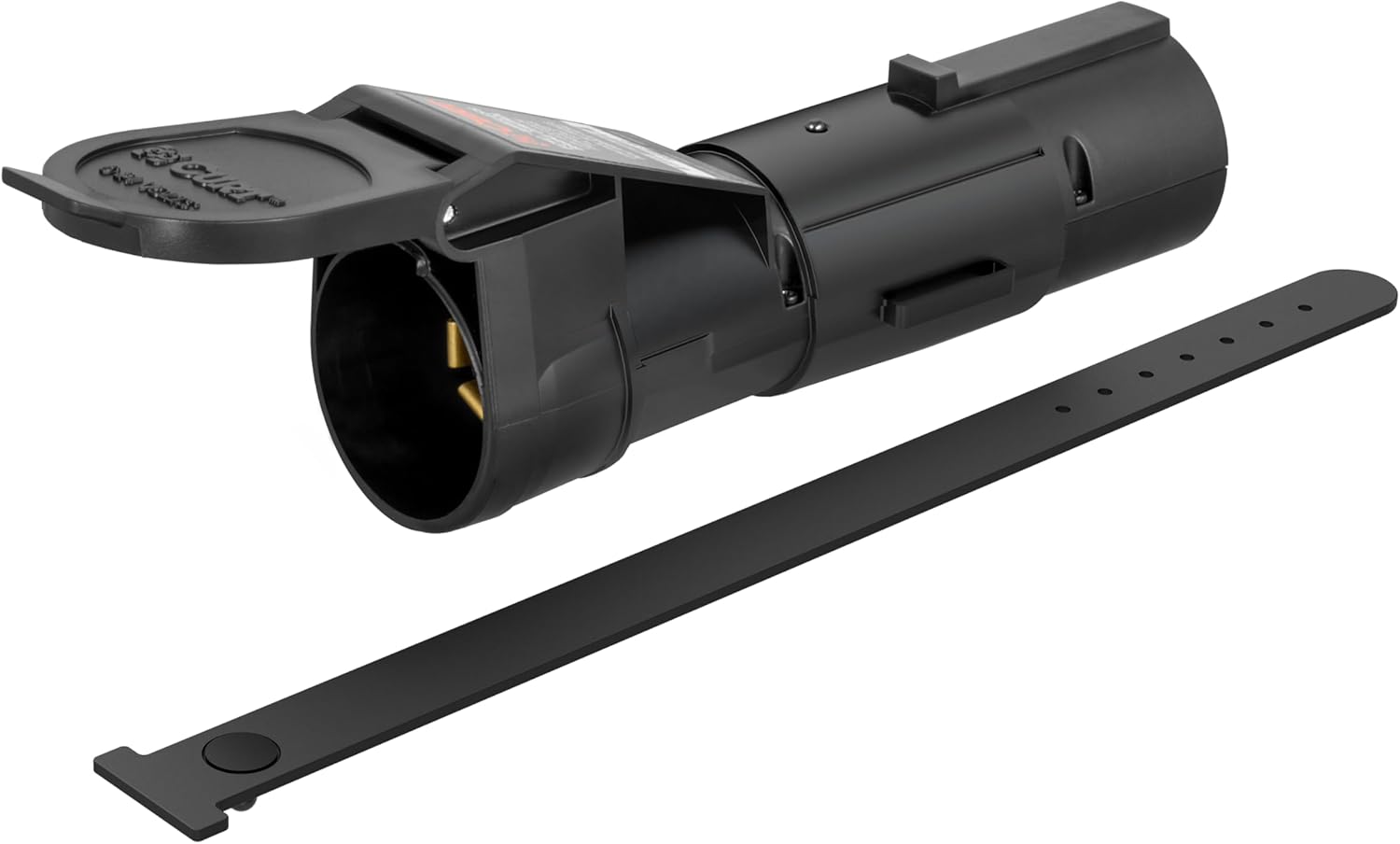
The CURT Echo Mobile replaces a bulky in-cab box with a plug-and-play Bluetooth module that sits at the vehicle 7-way and connects to your phone. For a 2009–2014 F-150 this is a quick way to add proportional trailer braking without cutting dash panels or running a permanent harness. Setup is straightforward: plug the Echo into the 7-way, give the OneControl Auto app the required permissions, create a vehicle-trailer profile, and you can adjust max output, sensitivity, and manually pulse the trailer brakes from your phone. The unit uses a tri-axis accelerometer for smooth stops and supports 2–4 brakes, cruise control, ABS and low-voltage systems. Because it is portable it is easy to move between trucks or swap to a different trailer. Limitations to note are app and Bluetooth dependency for live control and status displays, the Echo protrudes from the 7-way so it needs secure retention to avoid strain on the connector, and a small number of users report occasional connectivity or durability problems under heavy use. For owners who prioritize rapid, reversible installation and smartphone control on a 2009–2014 F-150, the Echo delivers a modern alternative to a hardwired in-cab controller.
Best for: Buyers who want a fast, noninvasive way to add proportional trailer braking to a 2009–2014 F-150 and prefer smartphone control and portability over a permanent in-cab installation.
Less Ideal for: Drivers who need a permanently installed, low-profile in-cab controller or who do not want any reliance on a phone or Bluetooth during towing.
- Truly plug-and-play for 7-way RV blade connectors so installation is fast and reversible.
- Bluetooth app lets you adjust output, sensitivity, and save multiple towing profiles from your phone.
- Portable design makes it easy to move between vehicles or trailers without rewiring.
- Tri-axis accelerometer provides proportional, responsive braking for smooth stops.
- Built potted enclosure and retention strap improve weather resistance and connector security.
- Requires a smartphone and Bluetooth for live control and full functionality.
- Protrudes from the 7-way connection and can place strain on the plug if not securely retained.
- Some users report occasional Bluetooth connectivity or long-term durability issues under heavy use.
Verdict: Great for owners who value a portable, smartphone‑connected or wireless controller that installs quickly and can move between vehicles.
Choosing the Right 2009-2014 Ford F-150 Trailer Brake Controller: Key Factors to Consider
Control Mode: Proportional Vs Time-Delayed
Control mode determines how the controller applies trailer brakes relative to vehicle braking. Proportional controllers sense vehicle deceleration and apply trailer braking force in proportion, which creates smoother, more natural stops and reduces trailer sway. This responsiveness is particularly beneficial when towing varied loads with a 2009-2014 F-150 because it reduces the chance of trailer jackknifing or abrupt braking transfers.
Time-delayed controllers apply a preset ramp of current to the trailer brakes after the vehicle brake signal is detected. They are simpler to set up and can be adequate for consistent, predictable trailer weights, but they do not react to instantaneous changes in deceleration. For F-150 owners who tow differing loads or frequently drive hilly routes, a proportional controller often provides better control and less guesswork during setup.
Compatibility With F-150 Wiring and Tow Package
Confirming electrical compatibility is critical for a clean installation and reliable operation. Many 2009-2014 F-150s either have a factory tow package with a controller port or a dedicated wiring harness location. Choosing a controller that works with common F-150 wiring harnesses or that can be wired into the vehicle without cutting factory wires simplifies installation and preserves vehicle integrity.
Also consider whether the controller requires a constant fused power connection, a brake switch signal, and a proper ground. Some controllers communicate with the truck's electrical system in different ways, so selecting one that matches the F-150's available connector types and power access points reduces installation time and potential troubleshooting.
Adjustability and Tuning Options
How finely you can tune gain, sensitivity, and braking curve affects both safety and ride comfort. Controllers with user-friendly gain knobs, digital readouts, or multiple braking profiles let you dial in performance for light trailers, heavy loads, or mixed cargo. This adjustability is especially important for F-150 owners who tow different trailers or share the truck for work and recreation.
Look for controllers that provide easy manual override for emergencies and that maintain settings between uses. Clear indicators for output level and fault conditions help you verify correct operation before and during trips.
Mounting and In-Cab Ergonomics
Where the controller mounts and how it interfaces with the driver affects usability and safety. A model that mounts within easy reach and has intuitive controls allows quick adjustments while stopped and reduces distraction while driving. The 2009-2014 F-150 cab layout offers several mounting locations near the steering column, dash, or under-dash panels, so choose a controller with flexible brackets or a compact footprint.
Consider visibility of displays or LEDs from the driver seat and whether the mounting hardware requires drilling or can use existing screws and trim points. Good ergonomics can make routine adjustments faster and lower the risk of improper settings while underway.
Durability and Environmental Resistance
Trailer brake controllers are subject to temperature swings, vibrations, and dust in a working truck environment. Components that resist moisture, tolerate cabin heat, and withstand vibration extend product life and reliability. For an F-150 that sees seasonal towing or heavy use, aim for controllers with solid-state electronics, sturdy connectors, and a reputation for lasting performance.
Consider also warranty scope and the availability of replacement parts or wiring harnesses. Controllers with robust build quality reduce the chance of intermittent faults that can mimic wiring problems in the truck.
Installation Complexity and Wiring Needs
Installation difficulty ranges from simple plug-and-play harness connections to full panel wiring requiring a fused power feed and tapped brake switch signal. Assess whether you can use an adapter harness for the F-150 or if the controller needs custom wiring. Some installations require running a dedicated power lead to the battery and routing a heavy-gauge brake output cable to the trailer connector at the rear of the truck.
Understanding the wiring complexity ahead of purchase helps you plan for tools, time, or professional installation. Easier installations reduce labor risk and the chance of wiring mistakes that could impair brake function.
Why Proportional Controllers Often Work Best
Proportional controllers detect vehicle deceleration and match trailer braking force accordingly, which produces smooth, coordinated stops. For F-150 owners towing varying loads or heavier trailers, that smoother response reduces the likelihood of trailer push or sudden transfers of force that can destabilize the tow vehicle.
While time-delayed units can be simpler and adequate for light, consistent loads, the added responsiveness of proportional systems typically improves control on grades, during passing maneuvers, and in emergency stops.
- Better modulation during variable-speed braking
- Reduced trailer surge on downhill runs
- Easier fine-tuning for mixed cargo weights
Preparing Your F-150 for Installation
Before installing a controller, verify your F-150's tow package and locate any factory brake controller connector or prewired harness. Check the owner manual or the vehicle's fuse panel for brake switch and accessory power locations.
Gather necessary tools including a multimeter, wire crimpers, heat-shrink or quality connectors, and routing supplies. If the controller requires a battery feed, plan a protected, fused connection and a secure ground near the firewall. Confirm the trailer connector at the rear is properly grounded and that the four- or seven-pin socket wiring is intact.
- Identify factory controller port if present
- Test brake switch signal with a multimeter
- Plan fused power routing and secure ground
Common Installation Pitfalls and How to Avoid Them
The most common issues come from poor grounding, improper fused power connections, and running the brake output wire with insufficient gauge. Always use the recommended wire size for the brake output and avoid sharing the power feed with high-draw accessories.
Another frequent mistake is mounting the controller where it is hard to reach or where vibration can loosen connectors. Use secure brackets and route wiring away from heat sources and moving components to minimize future faults.
- Use proper gauge brake output cable
- Install a dedicated fused power line
- Mount within reach and secure connectors
Setting Up Gain and Sensitivity for Typical Loads
Start setup with a moderate gain and test stops at low speed in a safe, open area. Adjust the gain upward until you feel consistent trailer deceleration without wheel lock on the trailer, then back off slightly for a margin of safety.
For mixed loads, consider creating a baseline setting that works for the heaviest trailer you commonly tow, then reduce gain when hauling lighter loads. Use short, incremental adjustments and retest after each change.
- Begin in a low-speed, controlled environment
- Tune for the heaviest routine trailer first
- Use manual override sparingly and only as needed
Maintaining the System Seasonally
Regular checks will keep the braking system dependable. Inspect electrical connectors for corrosion, ensure the trailer connector pins are clean, and verify the controller's power and ground connections are tight. If you store the truck through winter, run periodic functional tests before long trips in spring.
Also check the trailer brake assemblies for wear and proper adjustment. Even the best controller cannot compensate for poorly maintained trailer brakes, so coordinating maintenance between tow vehicle and trailer is important.
- Inspect and clean connectors annually
- Verify settings before long trips
- Coordinate maintenance with trailer brake service
Still looking for the perfect fit?
Select your Ford F-150 configuration to see the most relevant Trailer Brake Controllers recommendations
How We Chose the Best 2009-2014 Ford F-150 Trailer Brake Controller
We prioritized controllers that offer reliable performance with the electrical and towing characteristics common to 2009-2014 Ford F-150 trucks. Evaluation criteria included braking responsiveness, control modes (proportional versus time-delayed), ease of installation with factory wiring or common aftermarket harnesses, and the ability to adjust for different trailer weights and brake types. We also considered build quality and mounting options suitable for the F-150 cab, user-adjustable gain and sensitivity controls for fine-tuning, and safety features like manual override and clear status indicators. Another filter was compatibility with typical F-150 tow packages and the ability to integrate cleanly with factory brake controllers or brake controller wiring connectors where present. Excluded from consideration were controllers designed solely for hydraulic surge or integrated trailer-mounted systems, and any units that require major vehicle modifications beyond standard wiring harnesses. The resulting list represents units that balance dependable braking performance with practical installation and in-cab usability for F-150 owners.
Our full evaluation process is outlined in our review methodology.
FAQ
Does my 2009-2014 F-150 already have a brake controller connector?
Many 2009-2014 F-150 trucks are equipped with a factory tow package that includes a prewired connector or a designated mounting location for a brake controller. It varies by trim and options, so check your owner manual or inspect under the dash for a multi-pin connector before assuming you need custom wiring.
Can I install a controller myself, or should I get a shop to do it?
Installation difficulty depends on whether your truck has a factory harness and your comfort with vehicle wiring. If a plug-in harness exists, many owners can complete the install at home. If the job requires running fused power or hardwiring into the brake switch, professional installation is a reasonable option to ensure reliability and safety.
Which controller settings are safest for mixed trailer loads?
For mixed loads, start by tuning the controller for the heaviest trailer you expect to tow so the controller can handle peak braking demands. When towing lighter trailers, reduce the gain incrementally. Always test in a safe area after adjustments to verify balanced braking.
Will a proportional controller reduce trailer sway?
A proportional controller can help by applying braking force that matches vehicle deceleration, which reduces sudden surges from the trailer. While it is not a cure for sway caused by improper loading or inadequate hitch setup, it contributes to more predictable braking behavior that can lessen sway triggers.
What wiring issues most commonly cause controller faults?
Common causes include poor ground connections, an unfused or undersized power feed, and corroded or loose trailer connector pins. Addressing these wiring points during installation and maintenance reduces the chance of intermittent faults or complete loss of trailer braking.
Do controllers require calibration after installation?
Most controllers require initial gain and sensitivity adjustments rather than electronic calibration. After installation, you should set baseline gain, test braking behavior, and refine sensitivity or profile settings. Some modern units include self-calibration features, but manual verification is still recommended.
Final Verdict
Prioritize a controller that matches how you use your 2009-2014 F-150: proportional control for mixed or heavier towing, straightforward wiring compatibility for ease of installation, and clear adjustability for fine-tuning. Good mounting and durable connectors reduce long-term troubleshooting and keep the system reliable. Focus on responsiveness, proper wiring, and practical ergonomics when making your selection. By choosing a controller that fits the truck's wiring and your typical trailers, you improve safety and confidence on the road and make setup and maintenance far simpler.
Explore More:
- Check out all Ford F-150 parts & accessories
- Explore Electronics
- Browse all Accessories
