

Note: This article contains affiliate links. If you click on these links and make a purchase, I may earn a small commission at no extra cost to you. This helps support my research and content. Read my full affiliate disclosure here.
If you tow with a 2021-present Ford F-150, the right trailer brake controller has an outsized impact on safety and drivability. It controls how your truck and trailer share braking force, so a good controller reduces stopping distance, limits trailer jackknifing, and makes heavy loads feel more predictable. This guide walks through the top shortlisted options for the 2021-present F-150 and explains the practical tradeoffs that matter for everyday towing.We evaluated responsiveness, installation and wiring effort, adjustability for different trailer sizes, and real-world usability inside the F-150 cab. Read on to understand which controller features match your towing routine and how to plan a clean installation that keeps your truck working reliably on the road.
Looking for other parts? See all Ford F-150 parts & accessories.
Top Picks at a Glance
| Best Overall Trailer Brake Controller A top-performing controller that balances features, reliability, and install options | CURT TriFlex NEXT Proportional Inertia Trailer Brake Controller |  |
| Best Budget Trailer Brake Controller An affordable controller that provides basic, safe trailer braking without extras | briidea BR-122 Proportional Trailer Brake Controller |  |
| Best In-Dash Replacement Module Direct-fit in-dash modules designed to replace factory brake control units quickly | DriveFix In-Dash Trailer Brake Controller Module for Ford F-150 (2021-2025) and F-150 Lightning (2022-2024) |  |
| Best Plug-and-Play Harness Kit Complete kits with wiring harnesses for fast, no-splice installs and compatibility | CURT 51323 Quick Plug Trailer Brake Controller Wiring Harness |  |
| Best Proportional Electronic Controller Self-sensing proportional controllers that match trailer braking to tow vehicle motion | Kolasina 90160 Proportional Electronic Trailer Brake Controller with LED Display |  |
| Best Portable / Bluetooth Controller Portable controllers and Bluetooth-enabled units for easy transfer and smartphone control | CURT Echo 51180 Mobile Bluetooth Trailer Brake Controller (Proportional) |  |
| Best Heavy-Duty / Commercial Controller Robust controllers built for larger trailers, high-amp loads, and frequent towing | REDARC Tow-Pro Link Electric Trailer Brake Controller with USB Remote |  |
CURT TriFlex NEXT Proportional Inertia Trailer Brake Controller
Best Overall Trailer Brake Controller

| Model | TriFlex NEXT |
|---|---|
| Axes | Triple-axis accelerometer |
| Axles supported | 1-4 axles |
| Display | Full-text diagnostics with adjustable brightness |
The CURT TriFlex NEXT is a compact proportional brake controller designed for everyday towing. It senses motion on three axes to deliver smooth, responsive stops and automatically adjusts for uphill and downhill grades, which helps keep trailer braking balanced behind a Ford F-150. Setup is straightforward using the controller’s full-text display and large buttons; brightness and day-night modes make the readout usable in all light conditions. The unit supports 1 to 4 axles and offers adjustable gain and ramp time so you can dial braking to match different trailer weights and towing situations. A slim mounting bracket and versatile orientation options let you tuck it under the dash without blocking controls, and diagnostic indicators report vehicle voltage and trailer disconnect status. Important limitations include occasional reports of intermittent failures or the controller powering off if it loses trailer detection, and a few users needed to replug or replace units. For DIY installation on recent F-150s you will likely want CURT’s vehicle-specific wiring harness for a clean plug-and-play fit.
Best for: Do-it-yourself mechanics who want a feature-rich, proportional controller they can install and tune themselves for everyday towing with a Ford F-150.
Less Ideal for: Drivers who need a worry-free commercial solution with factory technician installation or those who prefer a controller bundled with every install accessory.
- Triple-axis accelerometer for proportional, grade-compensated braking
- Adjustable gain and ramp time to match light and heavy trailers
- Full-text display with diagnostics and adjustable brightness for easy setup
- Slim low-profile design and versatile mounting bracket for clean dash integration
- Some users report intermittent power or detection issues requiring reseating or replacement
- Plug-and-play wiring harness is sold separately rather than included
Verdict: The all-purpose pick for DIY mechanics who want the most reliable, feature-complete trailer brake controller for everyday towing needs.
briidea BR-122 Proportional Trailer Brake Controller
Best Budget Trailer Brake Controller

| Compatible axles | 1 to 4 braked axles (2–8 brakes) |
|---|---|
| Display | LCD digital display |
| Safety features | Over-current, short-circuit and fault detection |
| Mounting | Included bracket, installs under dash |
The briidea BR-122 is a compact proportional brake controller that senses vehicle deceleration and applies matching braking to a trailer with one to four braked axles. It mounts under the dash, shows output and boost levels on an easy-to-read LCD, and offers a manual override switch for emergency stops. The unit includes over-current, short-circuit and fault detection protections and a boost function to dial in extra braking for heavier trailers or uneven weight distribution. Installation is largely plug-and-play with a mounting bracket included, though the supplied CAT-style connector and basic hardware have drawn mixed feedback and may take patience to line up during wiring. For use on light-to-moderate towing tasks the controller delivers smooth, predictable braking and simple in-cab control; for frequent heavy commercial towing a more rugged, premium unit may be preferable. The BR-122 is best as an affordable, functional upgrade to add proportional braking to a Ford F-150 setup without complex calibration work.
Best for: A buyer who wants an inexpensive, easy-to-install proportional controller to improve towing safety for occasional light-to-moderate loads on a 2021‑present Ford F-150 without fussing over advanced features.
Less Ideal for: Not a great choice for commercial heavy towing or owners who need premium weatherproofing and industrial-grade connectors; consider a higher-end controller for constant heavy use.
- Proportional braking for smoother, vehicle-synced trailer stops
- Boost mode to increase braking force for heavier or unevenly loaded trailers
- Clear LCD display and in-cab manual override for immediate control
- Plug-and-play wiring harness and included mounting bracket simplify installation
- Connector and wiring hardware feel basic and can be fiddly during installation
- Plastic housing and fitment have a budget feel compared with higher-end controllers
Verdict: Choose this when you need a simple, low-cost trailer brake controller that reliably stops light-to-moderate loads without breaking the bank.
DriveFix In-Dash Trailer Brake Controller Module for Ford F-150 (2021-2025) and F-150 Lightning (2022-2024)
Best In-Dash Replacement Module

| Compatible vehicles | Ford F150 2021-2025; F-150 Lightning 2022-2024 |
|---|---|
| Brand | DriveFix |
| Model | ML3Z-19H332-AA |
This DriveFix in-dash trailer brake controller module is a direct-fit replacement designed to drop into the factory dash opening and restore integrated trailer brake control on compatible Ford F-150 and F-150 Lightning trucks. Installation is typically a straightforward swap-in for owners who already have the dash opening and wiring for a factory-style controller, delivering a clean, stock appearance and steering-column-level access to trailer braking. Notable features include model-specific compatibility for 2021-2025 F-150s and 2022-2024 Lightning trucks and a compact module sized for in-dash mounting. In practice it provides the basic functionality expected from a factory replacement: proportional braking control and a built-in fit that keeps the dash uncluttered. Limitations shown in user feedback include occasional pairing or sync issues on some trucks and mixed reliability reports, so expect to verify vehicle compatibility and be prepared for simple troubleshooting after installation. This unit is best when you want a neat factory look and a swap-in replacement rather than an aftermarket freestanding controller with extra tuning features.
Best for: Buyers who want a straightforward swap-in module to regain integrated trailer brake control and preserve a factory dashboard look on compatible recent F-150 or Lightning trucks.
Less Ideal for: If you need an aftermarket controller with advanced tuning, user-programmable profiles, or universal fitment across multiple vehicle types, this in-dash replacement is not the best choice.
- Direct-fit design for dash opening on specified 2021-2025 F-150 and 2022-2024 F-150 Lightning models
- Restores factory-style integrated trailer brake controls and keeps a stock dashboard appearance
- Compact in-dash module provides easy access without adding a freestanding unit
- Made by a known replacement parts brand with a factory-replacement form factor
- Some reviewers reported difficulty syncing or inconsistent operation on certain trucks
- Does not offer advanced aftermarket tuning features beyond factory control functionality
Verdict: This slot is for OEM-style in-dash replacement modules that restore factory controls and keep a stock look with straightforward swap-in installation.
CURT 51323 Quick Plug Trailer Brake Controller Wiring Harness
Best Plug-and-Play Harness Kit

| Connector Type | Quick Plug |
|---|---|
| Material Type | Polyvinyl Chloride (PVC) |
| Wire Gauge | 12-gauge |
| Included Components | Brake Ctrl Harness |
The CURT 51323 Quick Plug harness provides a true plug-and-play connection between your vehicle and a CURT trailer brake controller to simplify installation. It plugs into the factory brake controller socket on supported Ford and compatible vehicles and into the controller on the other end, so you avoid tracing and splicing wires. The harness uses 12-gauge wire for reliable power delivery, includes a slit-loom sleeve to protect the cable against crushing and abrasion, and comes with zip ties to keep routing tidy. At about two feet long it gives flexible mounting options for the controller while keeping the wiring neat and concealed. Because this is a vehicle-specific adapter, fitment must match the application list; it is not a universal harness. Also it is a harness only, so you still need a compatible CURT brake controller if you do not already have one. For anyone looking to add or move a controller on supported Ford F-150 models from 2021 onward, it removes the most time-consuming part of the job and keeps the vehicle wiring intact.
Best for: Buyers who want a fast, low-risk installation that preserves factory wiring and are installing or relocating a CURT brake controller on a supported Ford F-150.
Less Ideal for: Users who need a universal harness for multiple vehicle makes or those who need a complete brake controller bundle out of the box.
- Plug-and-play vehicle-specific connector eliminates cutting or splicing factory wiring
- 12-gauge wire construction for consistent power between vehicle, controller, and trailer brakes
- Slit-loom sleeve and included zip ties protect and tidy the wiring
- About two feet of length gives flexible mounting locations for the brake controller
- Fits specific vehicle applications only and will not work as a universal harness
- Ships as a harness only and requires a compatible CURT brake controller to function
Verdict: Pick this when you want a controller bundled with a vehicle-specific plug-and-play harness to simplify installation and avoid cutting factory wiring.
Kolasina 90160 Proportional Electronic Trailer Brake Controller with LED Display
Best Proportional Electronic Controller

| Brand | Kolasina |
|---|---|
| Model | 90160 |
| Display | LED digital screen |
| Functions | Proportional braking, manual slider, self-diagnostic |
| Warranty | 2 years |
The Kolasina 90160 is a proportional electronic trailer brake controller designed to match brake force to how your truck slows, giving smoother, more predictable stops when towing. It installs in the cab using a snap-on quick-release bracket or screw mount and can be positioned horizontally or vertically for convenient sightlines. The bright digital display reports connection status and settings in real time and a continuous self-diagnostic function flags wiring or connection problems before they affect braking. There is also a manual slider for on-the-fly brake adjustment and three-level assist tuning to tailor response for light or heavy loads. In practice this unit delivers the same proportional braking behavior expected from higher-end controllers, though some users report sensitivity that may require fine tuning during the first few drives. The 90160 is a solid choice if you want proportional braking and a clear status readout without professional installation, but expect to spend a little time dialing in sensitivity for a perfect feel with your truck and trailer combination.
Best for: Buyers who want true proportional braking with an easy-to-read display and the ability to tweak response for varied towing loads, prioritizing smoother, more predictable trailer stops.
Less Ideal for: Drivers who prefer a plug-and-play time-delayed controller with no tuning or those who do not want to spend time adjusting sensitivity on initial installation.
- Proportional braking senses vehicle deceleration for smoother, more intuitive trailer stops.
- Bright LED digital display shows real-time connection status and settings.
- Continuous self-diagnostic alerts help identify wiring or connection issues quickly.
- Snap-on quick-release bracket plus screw mount allow flexible, tool-free positioning and removal.
- Manual slider and multi-level assist let you fine tune braking for different loads.
- Some users report the unit can be overly sensitive and may require careful initial adjustment.
Verdict: This category is for proportional electronic controllers that deliver smoother, more intuitive braking by sensing vehicle deceleration rather than applying a fixed delay.
CURT Echo 51180 Mobile Bluetooth Trailer Brake Controller (Proportional)
Best Portable / Bluetooth Controller
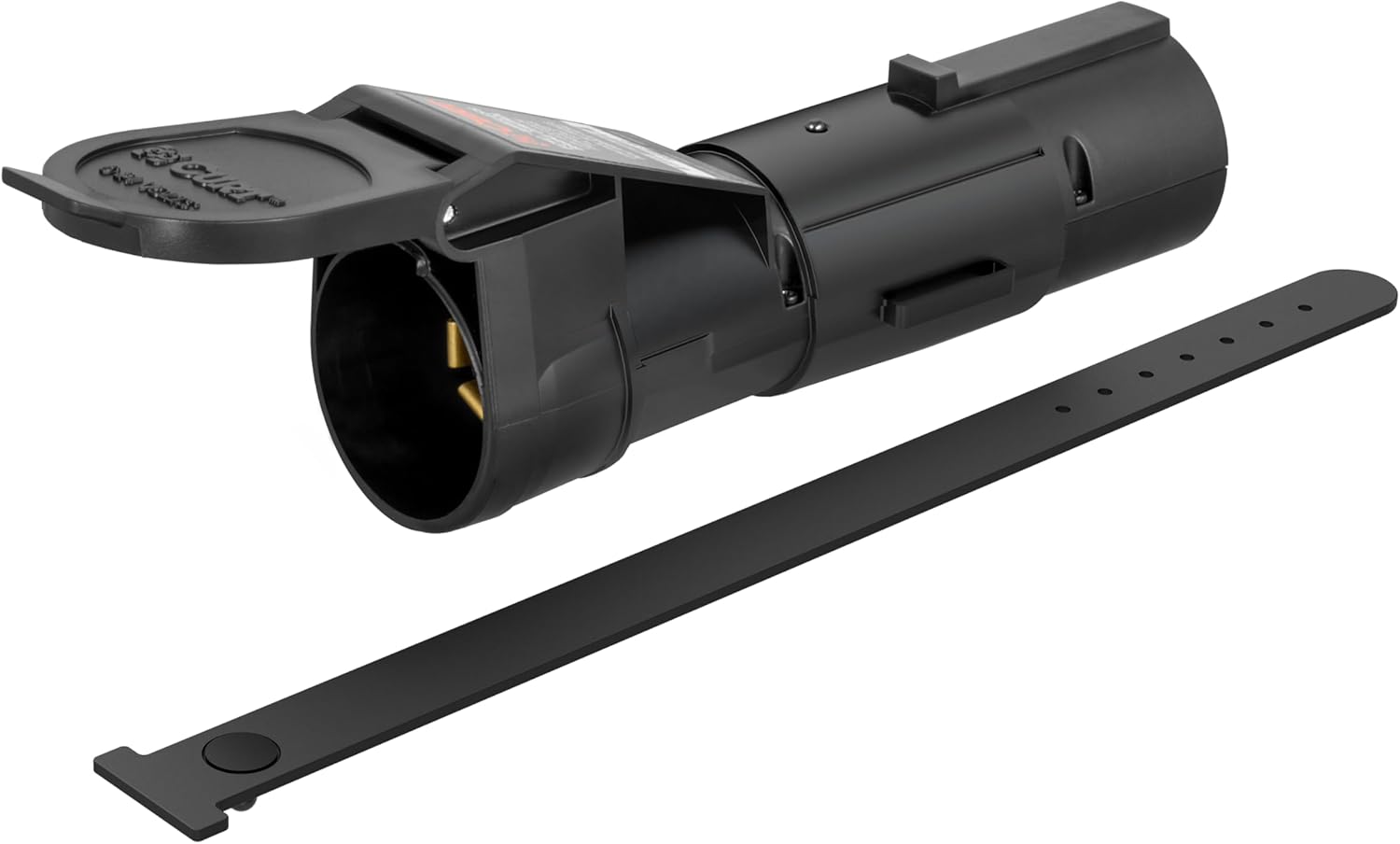
| Model | 51180 |
|---|---|
| Connection | Bluetooth to smartphone |
| Mount | 7-way RV blade plug (portable) |
| Brake control | Proportional, 1-2 axles |
The CURT Echo is a plug-and-play, portable brake controller that connects to your phone via Bluetooth and installs between the vehicle and trailer 7-way plug. It uses a triple-axis accelerometer and proportional braking to smooth stops and can control one to two axles. Setup is simple: download the OneControl Auto app on iOS or Android, plug the Echo into the F-150s 7-way, create a vehicle-trailer profile and you can adjust maximum output, sensitivity or manually fire the trailer brakes from the app. The compact, outside-the-vehicle design makes it easy to move between trucks without under-dash wiring and keeps the cab free of extra hardware. Durability features include a potted enclosure and a retention strap with locking tab for the connector. Limitations to note are occasional Bluetooth pairing quirks with some phones, the unit protrudes from the 7-way and can be vulnerable to loosening or impact on low-mounted sockets, and it relies on the phone for live control and visibility when connected. For Ford F-150 owners who tow occasionally or need one controller across multiple trucks, the Echo offers convenience and modern controls; heavy daily towing or permanently installed expectations may be better served by a hardwired in-cab controller.
Best for: Buyers who need a removable, smartphone-controlled solution for occasional towing or who use a controller across multiple Ford F-150s and prioritize easy setup and portability.
Less Ideal for: Drivers who tow frequently with heavy trailers and prefer a permanently mounted in-cab controller for a tidier, more protected installation.
- True plug-and-play portable design for easy transfer between vehicles
- Bluetooth app lets you adjust max output, sensitivity and save profiles from your phone
- Proportional braking with a triple-axis accelerometer for smoother stops
- Compatible with standard 7-way RV blade plug and works with ABS, cruise control and low-voltage systems
- Potted enclosure and locking tab help protect electronics from moisture and vibration
- Protrudes from the 7-way and can be prone to loosen or be exposed on low-mounted connectors
Verdict: Choose a portable or Bluetooth-capable controller when you need a removable unit or smartphone setup for occasional towing and multi-vehicle use.
REDARC Tow-Pro Link Electric Trailer Brake Controller with USB Remote
Best Heavy-Duty / Commercial Controller

| Model | Tow-Pro Link |
|---|---|
| Manufacturer | REDARC |
| Control options | USB remote, app, CarPlay/Android Auto |
| Brake modes | Everyday (proportional), Manual Off-Road |
| Sensor | 6-axis motion sensor |
The REDARC Tow-Pro Link is a compact, under-vehicle electric brake controller designed for quick 7-pin plug-and-play installation and everyday commercial towing use on Ford F-150 models from 2021 onward. It uses an active-calibrating 6-axis motion sensor to deliver proportional braking in normal driving and a Manual Off-Road Mode for controlled braking on steep grades or rough surfaces. The included pre-paired USB-A remote provides a simple LED display and on-the-fly gain and mode changes while the Tow-Pro app and Apple CarPlay/Android Auto integration let you monitor and adjust settings from the truck’s infotainment. SwayStop Plus offers a one-touch trailer sway intervention by applying trailer brakes when instability is detected. Installation is straightforward for F-150s with a factory 7-pin connector and the slim rugged housing is intended for under-vehicle mounting. Some users report occasional Bluetooth pairing delays and a few reports of brief brake dragging after release, so confirm wiring and test thoroughly under load before commercial runs.
Best for: Mechanics and fleet operators who need a durable, easy-to-install controller that gives proportional braking, sway intervention, and in-cab control for heavy or commercial towing on recent F-150s.
Less Ideal for: Buyers who require a controller tailored to older or heavily modified trucks without a factory 7-pin connector or those who need fully wired, hard-mounted dash controllers instead of a plug-in solution.
- Plug-and-play 7-pin installation enables fast install without cutting factory wiring
- 6-axis motion sensor with active calibration delivers stable proportional braking in varied driving conditions
- Multiple control options: USB-A remote, smartphone app, and Apple CarPlay/Android Auto integration for in-cab adjustments
- Manual Off-Road Mode and SwayStop Plus provide extra control for steep descents and trailer instability
- Slim rugged enclosure designed for under-vehicle mounting suited to heavy use
- Not compatible with Ford vehicles that have advanced AEB systems; check vehicle compatibility notes
Verdict: This pick suits mechanics who tow heavy or commercial loads and need a durable controller with higher output and commercial-grade components.
Choosing the Right 2021-Present Ford F-150 Trailer Brake Controller: Key Factors to Consider
Control Type and Responsiveness
How the controller delivers braking force to the trailer matters for stopping consistency. Proportional controllers sense tow vehicle deceleration and apply trailer brakes in a matching curve, which feels more natural and limits sudden tugging when you brake. Time-delayed or user-adjustable pulse controllers can work for light trailers but require careful tuning to avoid late or abrupt application.
Responsive modulation reduces the risk of trailer sway and makes heavy loads easier to manage at highway speeds. For the F-150 you should consider how the controller responds at different load levels and speeds. A unit that reacts predictably when you ease off the accelerator and when you hit the brakes will let you maintain control without constant manual intervention. If you tow varying trailer weights, a control type that adapts automatically or has easy gain adjustments will save setup time and reduce guesswork.
Installation and Wiring Complexity
The amount of wiring and the required access points influence both installation time and long-term reliability. Some controllers plug into the factory tow module or a dash connector on the F-150, while others require splicing into brake-light and battery feeds or mounting a separate power run. Consider whether you want a reversible, plug-and-play solution or a hardwired installation for a cleaner look and permanent reliability.
Routing power and ground, securing the control head inside the cab, and placing the brake output lead where it joins the trailer brake solenoid circuit are all part of the installation picture. Weatherproofing connections and protecting wires from chafing under the dash and in engine compartments reduces failure chances. If you are not comfortable with vehicle wiring, account for professional installation time and avoid controllers that need extensive chassis access.
Adjustability and Multi-Trailer Setup
Towing different trailers means you will often need to change controller settings. Look for controllers with simple gain controls, multiple presets, or trailer profiles that can be saved and recalled. A clear display and intuitive controls let you make adjustments on the fly without taking your eyes off the road for long.
Some units offer auto-sensing features that adjust output based on deceleration, while others rely on manual gain dials. Consider how quickly you can adapt settings between light and heavy trailers and whether the controller has distinct modes for electric or surge brakes. For drivers who frequently swap trailers, easy profile switching reduces setup time and helps keep braking consistent across loads.
Cab Ergonomics and User Interface
How the controller mounts and how easy it is to operate from the driver seat affects safe use. Controls should be reachable without extreme lean or distraction, and the manual override must be accessible for emergencies. A clear display that shows gain, output, or mode is helpful during initial setup and while towing at speed.
Tactile knobs and a large manual paddle are useful if you need to apply trailer brakes independently. Consider the mounting footprint and whether the controller blocks vents, switches, or storage areas in the F-150 cabin. Backlit displays or illuminated controls improve visibility for night driving, and a robust housing resists accidental bumps during everyday use.
Durability and Environmental Protection
Trailer brake controllers spend their life in harsh conditions: heat in the cabin, voltage spikes, and vibration from towing. Durable electronics and protections such as thermal limits, reverse polarity safeguards, and sealed connectors reduce service incidents. Robust housings and corrosion-resistant terminals help when the F-150 is used in salt-prone or wet environments.
Check for quality mounting hardware and strain-relief on wire terminations to prevent failures from repeated vibration. While some controllers are more weather tolerant than others, paying attention to connector type and ingress protection around power inputs reduces the chance of intermittent faults or fried electronics during heavy use.
Compatibility With Factory Tow Equipment
Many 2021-present F-150 configurations include factory tow packages or pre-wired harnesses. Confirm whether the controller can interface with the vehicle's tow module, brake controller harness, or if it requires additional adapters. A unit that works with the factory connector saves installation time and retains a cleaner appearance in the dash area.
Compatibility also matters for advanced features such as integrated trailer monitoring or CAN-bus communication. If your F-150 has factory wiring for a brake controller, choose a controller that supports that connection style or plan for the additional wiring and mounting hardware needed to integrate into the existing harness.
Proportional Versus Time-Delayed Controllers
Proportional controllers match the trailer brake output to how your truck decelerates, which gives smoother stops and reduces the chance of trailer sway on sudden stops. Time-delayed controllers apply a preset amount of power after a short delay and rely on gain tuning to match trailer weight.
For many F-150 owners who regularly tow heavy loads, proportional action is preferred because it requires less manual input and adapts automatically to varying braking intensity. However, time-delayed units can be simpler to install and tune for occasional towing of lighter trailers.
- Proportional: better modulation, smoother transitions, less manual adjustment
- Time-delayed: simpler, can be adequate for light trailers, often lower complexity
Mounting Options Inside the F-150 Cab
Consider fixed dash mounts, under-dash brackets, and removable control heads when planning placement. The best location balances easy reach with minimal interference with vehicle switches and vents. Some installations favor a hidden bracket near the steering column while others prefer a visible dash-mounted control for quick access.
Think about routing the output lead and power wire to avoid sharp bends and pinch points. A tidy mount not only looks better but also reduces wear on wiring and prevents accidental disconnects during daily driving.
- Under-dash mounts keep controls reachable yet out of the way
- Dash-mounted heads offer quicker access to manual override and display
Wiring Tips and Common Installation Pitfalls
Use the correct gauge wire for the power feed and secure a fused connection close to the battery. Poor grounding and undersized wiring are common causes of controller malfunction. Protect all connections with heat shrink or quality terminal boots to prevent corrosion.
Avoid routing wires near hot exhaust components or sharp metal edges. When splicing into factory harnesses, use proper connectors and follow the vehicle wiring diagrams for the 2021-present F-150 to prevent unintended faults. Test all functions after installation and perform a short road test with a safe load to confirm operation before a long trip.
- Install a dedicated fuse within a few inches of the battery
- Use ring terminals and secure grounds to a clean metal surface
Setting Gain and Calibration For Different Loads
Initial gain setup starts with a light stop at low speed. Increase gain until the trailer brakes pull smoothly without locking the trailer wheels. Perform several braking tests at road speeds typical for your towing to verify behavior across conditions.
If you tow both light and heavy trailers, adopt a profile-based approach or keep a simple checklist for re-tuning. Small adjustments during highway towing tests can make a large difference in trailer control, so approach tuning incrementally and document settings that work for each trailer.
- Start low and increase gain until the trailer tracks cleanly
- Re-check settings after changing trailer weight or tongue load
Maintaining Your Brake Controller and Trailer Brakes
Regular maintenance extends the life of both the controller and the trailer brakes. Inspect wiring and terminals periodically for corrosion or chafing. Check mounting hardware and the control head for secure fitment to prevent vibrations from loosening connections.
On the trailer side, ensure the brake magnets, drums or rotors, and wiring are in good condition. Proper maintenance reduces the chance of uneven braking and protects the controller from handling excessive current draw caused by failing trailer brakes.
- Inspect harnesses and connectors annually
- Verify trailer brake hardware before long trips
Still looking for the perfect fit?
Select your Ford F-150 configuration to see the most relevant Trailer Brake Controllers recommendations
How We Chose the Best 2021-Present Ford F-150 Trailer Brake Controller
Our selection focused on real-world towing performance and in-vehicle usability for the 2021-present Ford F-150. We prioritized controllers that deliver consistent brake modulation across common trailer weights and that allow drivers to fine-tune gain or sensitivity while towing. Responsiveness and proportional action were weighted heavily because they directly affect stopping stability and trailer sway control.Installation practicality was another core filter. We favored units with clear wiring diagrams, available mounting options that fit typical F-150 dash and bracket locations, and those that do not require extensive firewall or frame alterations. Long-term reliability factors such as robust connectors and thermal protection were considered to reduce failure risk under repeated towing loads.We also evaluated user interaction: readable displays, easy-access manual override, and simple setup procedures for multi-trailer use. Units lacking proportional control, with unclear wiring guidance, or with documented durability concerns were excluded. The final list balances braking performance, installation friendliness, and cab ergonomics to suit common towing tasks for F-150 owners.
Our full evaluation process is outlined in our review methodology.
FAQ
Does my 2021-present F-150 already have wiring for a brake controller?
Many F-150s with a factory tow package include a pre-wired connector under the dash, but configurations vary by trim and options. Check your vehicle's owner manual or inspect under the dash for a multi-pin connector labeled for a brake controller.
Can I install a proportional controller myself in the F-150?
If you have intermediate wiring skills and the right tools, a proportional controller can be DIY installed, especially if your truck has a factory connector. More complex installs that require running power to the battery or splicing into the tow module may be best handled by a professional.
How often should I re-check controller settings for different trailers?
You should verify and adjust settings each time you change trailers or significantly alter trailer load. Small changes in tongue weight or total trailer mass can affect braking balance and require recalibration.
Will a brake controller help reduce trailer sway?
A properly tuned controller can reduce sway related to braking by applying trailer brakes in a controlled manner, but it is not a cure-all. Sway mitigation also depends on load distribution, trailer maintenance, and driving technique.
What are common signs the controller wiring is faulty?
Intermittent brake application, controller error codes, or a loss of manual override function are common indicators. Inspect connections, grounds, and fuse integrity if you experience inconsistent operation.
Final Verdict
For 2021-present Ford F-150 owners, prioritize a controller that provides predictable modulation, straightforward installation with compatible wiring, and easy in-cab access for adjustments. Proportional control tends to deliver the most natural braking feel and reduces driver workload, while solid wiring practices ensure reliable operation over time.Balance the need for automatic responsiveness against installation complexity and your towing habits. Focus on durability, correct mounting, and proper gain setup to get safe, repeatable stops with every trailer you tow.
Explore More:
- Check out all Ford F-150 parts & accessories
- Explore Electronics
- Browse all Accessories
