

Note: This article contains affiliate links. If you click on these links and make a purchase, I may earn a small commission at no extra cost to you. This helps support my research and content. Read my full affiliate disclosure here.
What You’ll Need
A quick look at the tools and supplies commonly used for this job.
Tools
Parts & Supplies
- Replacement wheel speed sensor
- Replacement wheel bearing or hub assembly if tone ring is damaged
- Electrical contact cleaner
- Dielectric grease
- Shop towels
This article is part of our Brake System Maintenance & Repair Guides.
A bad wheel speed sensor can trigger the ABS light, disable traction control, and cause odd braking behavior, but the sensor itself is not always the real problem.
Before replacing parts, confirm whether the fault is coming from the sensor, its wiring, the tone ring, or the wheel bearing/hub assembly. A good diagnosis usually combines trouble codes, live wheel-speed data, and a close visual inspection.
This guide walks you through a practical DIY process to identify the failed corner, test the circuit, and decide whether you need a sensor, wiring repair, or a larger hub-related fix.
What a Wheel Speed Sensor Does
Each wheel speed sensor reports wheel rotation to the ABS module. The module compares wheel speeds to detect lockup, wheel slip, and loss of stability. That data is also used by traction control, stability control, and on some vehicles the speedometer, transmission shifting strategy, or hill-start assist.
When one sensor sends no signal, an erratic signal, or a signal that does not match the other wheels, the vehicle may disable advanced braking and stability functions as a safety measure. That is why a simple sensor issue can light up multiple warning lamps at once.
Common Symptoms of a Bad Wheel Speed Sensor
- ABS warning light is on.
- Traction control or stability control warning light is on.
- ABS engages unexpectedly at low speed, especially near a stop.
- Speedometer or cruise control acts strangely on some vehicles.
- Traction control stops working or turns off automatically.
- Transmission shifts oddly on vehicles that use wheel speed data for control logic.
These symptoms do not prove the sensor itself has failed. Corroded connectors, damaged wiring, rust buildup under the sensor, cracked tone rings, and worn wheel bearings can all create the same complaints.
Safety and Preparation
Work on a level surface, chock the wheels, and support the vehicle securely with jack stands before removing any wheel. Never rely on a jack alone. If you plan to do a road test while monitoring live data, have a second person operate the scan tool so the driver can focus on the road.
Before You Start
- Verify battery voltage is healthy, because low system voltage can create misleading ABS faults.
- Check tire sizes and pressures, since major differences can affect wheel-speed comparisons.
- Make note of any recent brake, bearing, axle, or suspension work near the affected wheel.
Start With Trouble Codes
Use a scan tool that can read the ABS module, not just generic powertrain codes. Many basic code readers cannot access chassis codes, so they may miss the information you need.
What to Look For
- A code naming a specific wheel, such as left front or right rear.
- A code for sensor circuit open, short to ground, or implausible signal.
- A code for tone ring, encoder, or wheel bearing signal issues on vehicles with integrated sensors.
- Communication or module voltage codes that may point away from the sensor.
If the code identifies one wheel, that gives you a starting point, but do not stop there. The ABS module can only tell you which signal looked wrong. It cannot always tell whether the root cause is the sensor, wiring, connector, or a damaged reluctor ring.
Use Live Data to Confirm the Problem Wheel
Live wheel-speed data is one of the fastest ways to confirm a suspect sensor. With all four wheel speeds displayed, compare them while driving slowly in a safe area or while spinning the wheels by hand with the vehicle safely lifted, depending on the system and scan tool.
What Normal Data Looks Like
All wheel speeds should rise and fall smoothly and stay close to each other in straight-line driving. Minor differences during turns are normal, but one wheel should not suddenly drop to zero, jump around, or lag far behind the others.
Patterns That Point to a Fault
- One wheel reads zero while the others show speed: likely sensor, connector, or broken wiring fault.
- One wheel cuts in and out over bumps: wiring break, loose connector, or excessive bearing play is possible.
- One wheel reads erratically at very low speed: rust under sensor, damaged tone ring, or failing hub bearing is common.
- All wheel speeds disappear or act irrational: check ABS module power, ground, communication, and battery voltage.
If the suspect wheel behaves differently every time you repeat the test, pay close attention to the harness routing. Intermittent faults often show up only when the suspension moves or the steering is turned.
Tools That Make This Job Easier


Inspect the Sensor, Harness, and Connector
Once you have a suspect corner, remove the wheel if needed and inspect everything from the sensor body to the body-side connector. This step finds a large share of wheel speed sensor faults without any electrical testing.
Look for Obvious Damage
- Harness rubbed through by the tire, strut, axle, or control arm.
- Broken retaining clips allowing the wire to flex excessively.
- Connector corrosion, moisture, bent pins, or green copper oxidation.
- Sensor body cracked, loose, or covered in metal debris.
- Sensor pushed away from the tone ring by rust or debris.
- Recent brake or suspension work that may have stretched or pinched the wire.
If you find corrosion or contamination, unplug the connector and clean it with electrical contact cleaner. Let it dry fully before reconnecting. A small amount of dielectric grease on the seal side can help prevent future moisture intrusion, but do not pack the electrical terminals heavily.
Check the Tone Ring or Encoder
Many wheel speed systems use a toothed tone ring or a magnetic encoder built into the bearing seal. If that ring is cracked, dirty, rust-swollen, or physically damaged, the sensor may report a bad signal even when the sensor itself is fine.
What to Inspect
- Missing or damaged teeth on an external tone ring.
- Heavy rust buildup lifting the sensor away from its mounting surface.
- Debris packed between the sensor and ring.
- A split tone ring on a CV axle.
- A damaged encoder built into a sealed hub bearing.
On some vehicles, rust forms under the sensor mounting flange and increases the air gap to the tone ring. That can create false ABS activation at parking lot speeds. Cleaning the mounting surface can restore proper signal strength if the sensor and ring are still in good condition.
Test for Wheel Bearing Play
A worn wheel bearing can change the sensor air gap or make the tone ring wobble enough to produce an erratic wheel-speed signal. This is easy to miss if you focus only on the electrical side.
How to Check
With the wheel off the ground, grasp the tire at the top and bottom and rock it in and out. Then spin the wheel by hand and listen for roughness or growling. Some suspension designs make small movement harder to interpret, but clear looseness or grinding should raise suspicion.
If the sensor is integrated into the hub or the encoder ring is part of the bearing assembly, the correct repair may be a hub replacement rather than a stand-alone sensor.
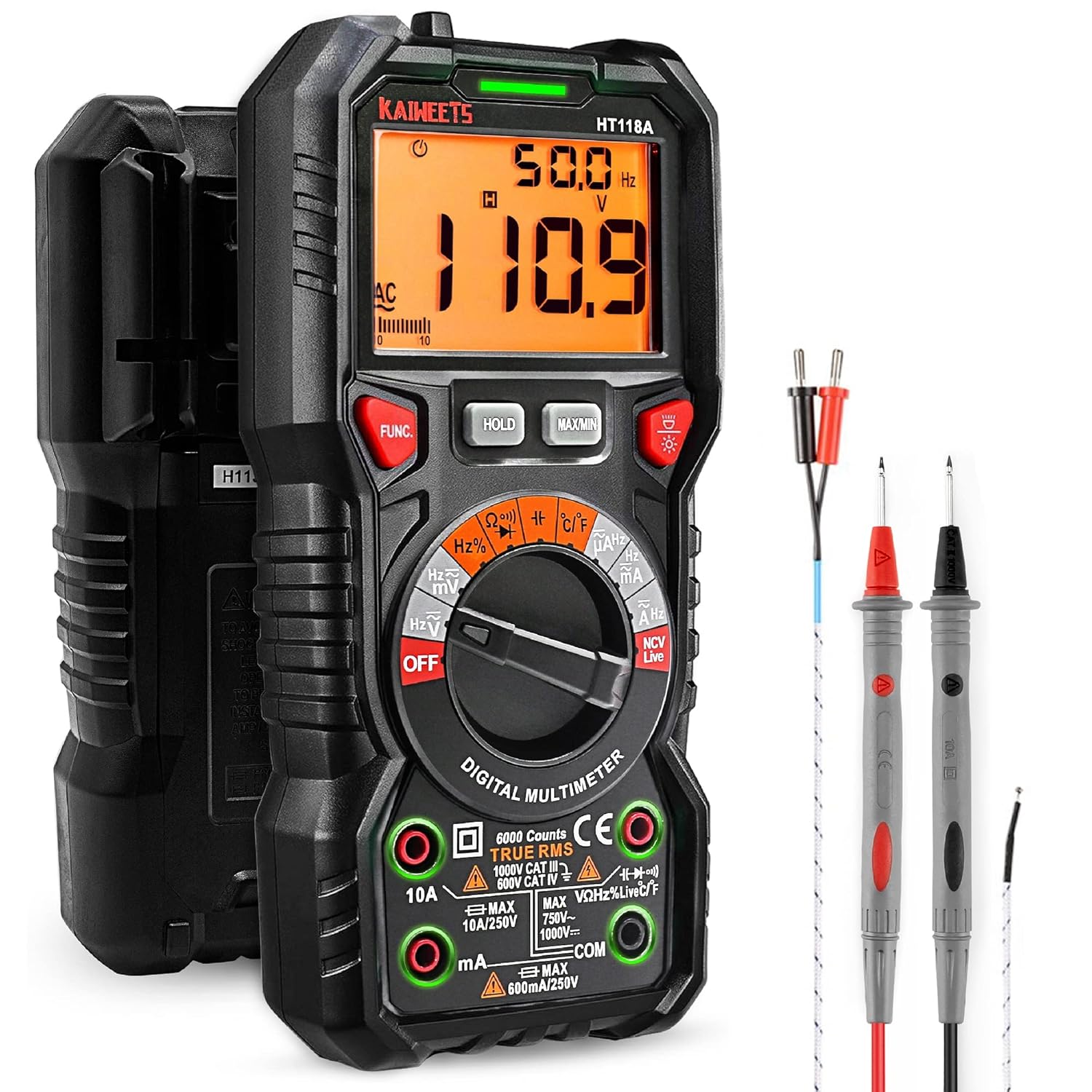
Electrical Testing With a Multimeter
Electrical tests depend on the sensor type. Older passive sensors often produce AC voltage as the wheel turns and may have a measurable internal resistance. Many newer active sensors use a powered digital signal, so a simple resistance test may not be valid. Check service information for your vehicle before relying on a resistance specification.
Passive Sensor Checks
- Unplug the sensor and compare resistance to factory spec or to the matching sensor on the opposite side.
- If resistance is open or far out of range, the sensor is likely faulty.
- Spin the wheel by hand and check for a small AC voltage signal if the service procedure allows it.
- Compare output side to side; a much weaker signal on one wheel suggests a sensor or tone ring issue.
Active Sensor Checks
- Check for proper reference voltage or supply voltage at the connector if service info provides the values.
- Verify good ground where applicable.
- Use the scan tool live data as your primary performance test, since active sensors often need a scope or scan tool more than an ohmmeter.
- Do not condemn an active sensor based only on resistance unless the manufacturer specifically gives a resistance test.
Backprobe carefully if you must test a connected circuit. Avoid piercing insulation unless there is no better option, because that can create future corrosion problems.
Recommended Tools for This Job


Check the Wiring Between the Sensor and ABS Module
If the sensor and tone ring look good but the code keeps returning, test the harness. The most common problem areas are where the wire flexes with steering and suspension travel.
Useful Wiring Checks
- Continuity from the sensor connector to the next harness junction, if accessible.
- Short to ground or short between wires where the circuit design allows testing.
- Wiggle test while monitoring continuity or live wheel-speed data.
- Connector pin tension and terminal spread that may cause intermittent contact.
A harness can pass a basic continuity check while still failing in real use if only a few strands remain inside the insulation. That is why a wiggle test is valuable. If the signal drops out when you move the harness, repair the wire instead of replacing the sensor blindly.
How to Interpret Your Findings
Likely Bad Sensor
- Specific wheel code present.
- Live data for that wheel is missing or erratic.
- Wiring and connector test good.
- Tone ring and bearing appear normal.
- Sensor resistance or output is out of spec where applicable.
Likely Wiring or Connector Problem
- Signal cuts in and out when moving harness or turning steering.
- Visible chafing, stretching, corrosion, or loose terminals.
- Sensor tests okay but ABS code returns.
- No proper power or ground reaching an active sensor.
Likely Tone Ring or Hub Issue
- Sensor has normal electrical readings but low-speed data is erratic.
- External tone ring is cracked, rusted, or missing teeth.
- Hub bearing has play or noise.
- Vehicle uses an encoder built into the bearing assembly.
If your results are mixed, compare the suspect wheel with the same position on the opposite side. Side-to-side comparison often makes a weak signal or mechanical difference much easier to spot.
After the Repair
After replacing a sensor, repairing wiring, or installing a hub, clear the ABS codes and road test the vehicle. Watch live wheel-speed data again to make sure all four wheels report consistently from low speed to moderate speed.
- Confirm the ABS and traction control lights stay off.
- Verify there is no false ABS activation during the final few feet of a stop.
- Make sure the harness is clipped back into its original routing away from moving parts.
- Recheck connector security and wheel fastener torque.
Some vehicles may store history codes until cleared, and a few may need a short drive cycle before all systems return to normal. If the same code returns immediately, the fault is still present or the original diagnosis missed another part of the circuit.
When DIY Diagnosis May Not Be Enough
If you do not have access to ABS live data, factory wiring diagrams, or a safe way to test the circuit while loaded, a professional diagnosis may save time and money. Some late-model systems use more complex active sensors and integrated encoder bearings that are easier to evaluate with an oscilloscope or factory-level scan tool.
Seek additional help if multiple wheel-speed codes appear at once, communication codes are present, or the problem remains after a verified sensor replacement. In those cases, the issue may involve module power, grounding, CAN network faults, or an internal ABS control unit problem.
Key Takeaways
- Use ABS trouble codes and live wheel-speed data together, because a warning light alone does not prove the sensor is bad.
- Inspect the harness, connector, and tone ring before replacing parts, since physical damage and corrosion are very common causes.
- Erratic low-speed ABS operation often points to rust buildup, a damaged tone ring, or a worn hub bearing rather than a dead sensor.
- Test sensor type correctly, because passive and active wheel speed sensors require different diagnostic methods.
- After any repair, clear the codes and verify all four wheel speeds track normally during a road test.
FAQ
Can I Drive with a Bad Wheel Speed Sensor?
Usually yes, but it is not ideal. The vehicle will often still drive normally, but ABS, traction control, and stability control may be disabled. Braking on slippery roads can be less predictable, so fix it as soon as practical.
Will a Bad Wheel Speed Sensor Always Turn on the ABS Light?
Most of the time it will, but not always immediately. Some faults are intermittent and may only set a warning light after a certain speed, drive cycle, or self-test condition is met.
Can a Wheel Bearing Cause a Wheel Speed Sensor Code?
Yes. A worn bearing can create excessive movement or damage the encoder ring, which can make the ABS module think the sensor signal is faulty. On some vehicles the encoder is built into the hub assembly.
How Do I Know Whether the Problem Is the Sensor or the Wiring?
Use live wheel-speed data, inspect the harness closely, and perform continuity or wiggle tests where appropriate. If the signal changes when the harness moves or the connector is corroded, wiring is more likely than the sensor itself.
Can Dirt or Rust Cause False ABS Activation at Low Speed?
Yes. Rust buildup under the sensor or debris around the tone ring can weaken or distort the signal, especially as the vehicle slows down. This commonly causes ABS pulsing right before a stop.
Do I Need a Special Scan Tool to Diagnose a Wheel Speed Sensor?
Yes, in most cases you need a scan tool that can access ABS codes and live wheel-speed data. A basic OBD-II reader that only reads engine codes may not provide enough information.
Should I Replace Wheel Speed Sensors in Pairs?
Not usually. Replace the failed sensor or the damaged hub assembly based on test results. There is generally no requirement to replace the opposite side unless it has the same confirmed problem.
Need Parts for This Repair?
The right parts and supplies vary by vehicle.
Select your make and model to find compatible parts and accessories for your car.
Exact Fit
Parts that fit your make and model
Quality You Can Trust
Top brands and OEM quality options
Fast Shipping
Get the parts you need, delivered fast