

Note: This article contains affiliate links. If you click on these links and make a purchase, I may earn a small commission at no extra cost to you. This helps support my research and content. Read my full affiliate disclosure here.
What You’ll Need
A quick look at the tools and supplies commonly used for this job.
Tools
- OBD-II scan tool with live data
- Digital multimeter
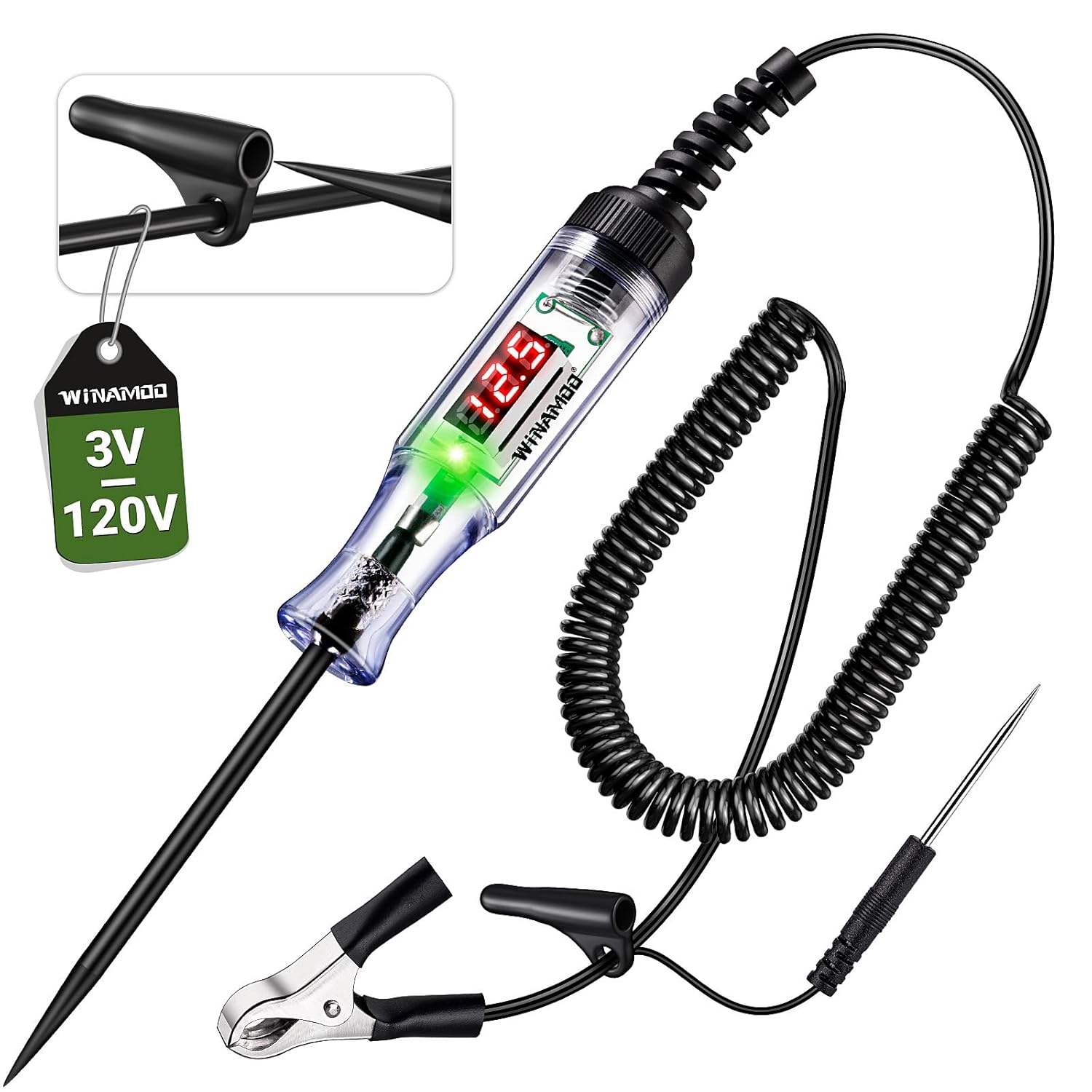
- Test light
- Flashlight
- Battery charger or maintainer
- Back-probe pins or probe kit
- Wiring diagram or service information
- Basic hand tools
Parts & Supplies
- Electrical contact cleaner
- Dielectric grease
- Heat-shrink tubing
- Wire repair pigtail or automotive wire
- Electrical tape or harness tape
- Replacement fuse if needed
This article is part of our Engine Maintenance & Repair Guides.
A sensor circuit fault does not always mean the sensor itself has failed. In many cases, the real problem is a wiring issue, poor ground, damaged connector, missing reference voltage, or a control module that is seeing a signal outside its expected range.
The best way to diagnose these faults is to work methodically: confirm the code, identify the sensor circuit type, inspect the harness, and test power, ground, and signal before replacing anything. That approach saves money, prevents repeat failures, and helps you avoid the common DIY mistake of installing a new sensor on a bad circuit.
This guide walks through a practical process you can use on many common automotive sensors, including temperature, pressure, position, oxygen, wheel speed, and airflow sensors. Exact specs vary by vehicle, so use a wiring diagram and service information whenever possible.
What a Sensor Circuit Fault Usually Means
Modern vehicles use sensors to report temperature, pressure, speed, position, airflow, and chemical content to control modules. A fault code related to a sensor circuit usually means the module detected an electrical problem or a signal that does not make sense compared with expected operating conditions.
Common code wording includes circuit high, circuit low, open circuit, short to ground, short to voltage, range/performance, and intermittent. Those terms matter because they point you toward different tests. For example, a circuit high fault may mean a broken signal wire or unplugged sensor, while a circuit low fault may suggest a short to ground or failed sensor pulling voltage down.
- Open circuit usually means broken wiring, unplugged connectors, corroded terminals, or high resistance.
- Short to ground often means rubbed-through insulation, water intrusion, or internal sensor failure.
- Short to voltage may come from harness damage contacting a power source.
- Range/performance codes can be electrical, but they can also be caused by mechanical conditions that make the reading implausible.
- Intermittent faults often point to vibration-sensitive wiring, loose pins, or heat-related failures.
Symptoms That Support a Sensor Circuit Problem
Symptoms depend on which sensor is affected and whether the signal is critical to engine, transmission, ABS, or stability control operation. Some vehicles go into a fail-safe mode when a key input is missing.
- Check engine, ABS, traction control, or transmission warning light
- Hard starting, stalling, hesitation, or rough idle
- Poor fuel economy or reduced power
- Transmission shifting issues or limp mode
- Cooling fan running constantly or temperature gauge acting oddly
- Speedometer, tachometer, or cruise control problems
- Intermittent symptoms when the engine moves, the harness is touched, or weather changes
If the vehicle has multiple unrelated sensor circuit codes at the same time, think bigger than one bad sensor. Shared problems like low system voltage, blown fuses, missing 5-volt reference, a bad engine ground, water intrusion, or harness damage can trigger several codes at once.
Safety and Preparation Before Testing
Start with a fully charged battery and stable system voltage. Low battery voltage can create false codes and misleading readings. If you will be probing circuits with the engine running, secure loose clothing and keep hands clear of belts, fans, and hot exhaust parts.
Avoid piercing insulation unless you have no better option. Back-probing at the connector is safer and reduces the chance of future corrosion. Also be careful with airbag, hybrid, and high-voltage circuits; those systems require special procedures and are not DIY-friendly for casual testing.
- Verify battery voltage is healthy before chasing sensor faults.
- Use the correct wiring diagram so you know which wire is power, ground, signal, or reference.
- Back-probe connectors instead of damaging insulation when possible.
- Do not short adjacent terminals together with oversized probes.
Identify the Sensor Type Before You Test
You cannot test every sensor the same way. First identify whether the sensor is a two-wire, three-wire, or more complex digital device. Knowing the basic design tells you what readings to expect.
Common Sensor Circuit Types
- Two-wire variable resistance sensors such as many coolant temperature sensors usually change resistance with temperature and are read by the module through a reference and return path.
- Three-wire analog sensors such as many pressure or position sensors often use a 5-volt reference, ground, and signal wire.
- Magnetic pickup sensors often create an AC signal without an external power feed.
- Hall-effect sensors typically need power, ground, and output a digital switching signal.
- Oxygen and air-fuel sensors may have separate heater circuits and signal circuits, so one code may refer to the heater rather than the sensing element.
If you skip this step, it is easy to misread a good circuit as bad. For example, checking for 5 volts at a magnetic wheel speed sensor will only confuse the diagnosis because many of those sensors generate their own signal instead.
Step One: Pull Codes and Freeze-Frame Data
Use a scan tool to read stored, pending, and history codes. Write down the exact code numbers and descriptions. Freeze-frame data is especially useful because it shows the conditions when the fault set, such as engine temperature, RPM, load, speed, and battery voltage.
Do not stop at the first code. A sensor fault may be the result of another problem. For example, a low-voltage code or module communication issue can cause multiple sensor-related complaints. Look for shared patterns, such as several sensors on the same 5-volt reference circuit.
What to Note From the Scan Tool
- Exact code wording, including circuit high, low, performance, or intermittent
- Whether the code is current, pending, or stored from a past event
- Freeze-frame battery voltage and operating conditions
- Related codes in other systems
- Whether live data already shows an obviously impossible reading
Tools That Make This Job Easier


Step Two: Check Live Data for Plausibility
Before touching the harness, look at live data with the key on and, if safe, with the engine running. Ask whether the sensor reading makes sense. A coolant sensor reading of -40°F typically suggests an open circuit on many systems. A reading pegged at maximum may suggest a short or high voltage. A throttle position that never changes, or a MAP sensor that does not react to throttle input, points toward a dead signal or supply problem.
Compare the suspect sensor to related data. For example, intake air temperature should be close to ambient on a cold engine, and throttle position should change smoothly with pedal movement. If one sensor disagrees sharply with the others, you have a strong clue.
Helpful Live-data Clues
- Flat-lined values suggest no signal or no sensor response.
- Sudden spikes or dropouts suggest wiring or connector problems.
- Values stuck at an extreme often point to opens or shorts.
- A sensor that changes when you wiggle the harness likely has a wiring fault.
Step Three: Do a Careful Visual Inspection
Visual inspection solves more sensor circuit faults than many people expect. Look at the sensor connector first, then follow the harness as far as practical. Focus on places where the harness bends, rubs against brackets, passes near exhaust parts, or collects oil and coolant.
- Unplugged or partially seated connector
- Bent, spread, backed-out, green, or burnt terminals
- Broken connector locks
- Rubbed-through insulation or crushed wiring
- Oil, coolant, or water contamination inside the connector
- Aftermarket splices, alarms, remote-start wiring, or poor previous repairs
- Damaged grounds at the engine block, body, or battery
If you find corrosion or moisture, clean and dry the connector before moving on. If terminal tension is weak, simply cleaning may not be enough. A loose female terminal can make intermittent contact even when it looks acceptable.
Step Four: Test Power, Reference Voltage, and Ground
Most sensor circuit diagnosis comes down to three basics: the sensor needs the correct supply, the correct ground, and a signal path back to the module. Use your wiring diagram to identify each terminal. Check with the connector plugged in when possible, because some faults only appear under load.
Checking Reference Voltage
Many three-wire sensors use a 5-volt reference from the control module. With the key on, measure between the reference wire and ground. If the 5-volt supply is missing, unplug other sensors that share the same reference one at a time. A shorted sensor elsewhere on the circuit can pull the whole 5-volt line down.
Checking Ground Quality
Do not just check for continuity on the ground wire with the battery disconnected. A corroded ground may show continuity but fail under load. A better test is voltage drop. With the circuit powered, measure voltage between the sensor ground terminal and a known good battery negative. Ideally, the reading should be very low. Excessive voltage drop indicates resistance in the ground path.
Checking Power Feeds and Fuses
Some sensors and many sensor heaters use battery voltage rather than a 5-volt reference. Verify the correct fuse has power on both sides. A blown fuse may indicate a shorted heater or harness, not just a failed sensor.
Step Five: Test the Signal Circuit
Once you know the sensor is getting the right supply and ground, test the signal wire. The exact method depends on the sensor design, but the goal is the same: determine whether the signal changes correctly and reaches the module.
For Analog Voltage Sensors
Back-probe the signal wire and watch voltage while the sensor condition changes. A throttle or pedal position sensor should sweep smoothly with movement. A pressure sensor should change predictably as pressure changes. Any dead spots, jumps, or fixed voltage reading suggest a bad sensor, bad connection, or signal wire issue.
For Resistance-based Sensors
If service information allows, unplug the sensor and measure resistance across its terminals. Compare the reading to the temperature or condition chart for that sensor. Infinite resistance may indicate an open sensor; near-zero resistance may indicate an internal short. Never ohm-test a powered circuit.
For Magnetic or AC-generating Sensors
Measure AC voltage while the component is moving, such as cranking the engine or spinning a wheel. No AC output may mean the sensor is failed, the air gap is wrong, the tone ring is damaged, or the wiring is open.
For Digital Switching Sensors
Some Hall-effect sensors switch between low and high voltage as the target passes. A multimeter may only show average voltage, so a graphing meter or scope is ideal, but even a basic meter can sometimes show a change during cranking or movement. If the power and ground are good but the output never switches, the sensor or target may be at fault.
Recommended Tools for This Job


Step Six: Check the Harness Between the Sensor and Module
If the sensor tests well at its connector but the module is not seeing the signal, the wiring between them may be open, shorted, or have high resistance. Disconnect the battery if the service procedure calls for it, then isolate the circuit before continuity testing.
- Check continuity from the sensor connector to the module connector on the affected wire.
- Check for short to ground on the signal wire when it should not be grounded.
- Check for short to power on the signal wire when it should not have battery or reference voltage.
- Flex the harness while monitoring resistance or continuity to catch intermittent opens.
- Inspect shared splice points if several sensors are affected.
Be careful interpreting continuity alone. A wire can pass a basic continuity test and still have enough resistance to distort a low-voltage signal. If you suspect this, perform a voltage drop test under operating conditions or compare signal voltage at the sensor versus the module side.
How to Interpret Common Test Results
No 5-Volt Reference at the Sensor
Possible causes include a shorted shared sensor, open reference wire, module fault, or incorrect probing. Unplug other sensors on the same 5-volt circuit to see whether the reference returns.
Good Reference Voltage but Poor Ground
Look for corroded ground points, broken ground wires, damaged splice packs, or connector terminal problems. A bad ground can make sensor readings unstable or falsely high.
Power and Ground Are Good, but Signal Is Fixed or Implausible
This often points to a failed sensor, but confirm the mechanical side too. A position sensor may be good while the target wheel, reluctor, or moving component is damaged.
Signal Changes Correctly at the Sensor but Not at the Module
The harness or connector between the sensor and the control module is the likely issue. Check for opens, corrosion, high resistance, or poor pin fit.
Several Sensor Codes Appear Together
Look for shared circuits first: fuses, grounds, 5-volt reference, water intrusion in a major connector, or charging system problems. Replacing multiple sensors almost never fixes a shared-circuit fault.
When the Problem Is Not the Circuit
Some sensor-related codes are caused by mechanical faults that produce out-of-range data rather than wiring failure. A MAP sensor code may be caused by a vacuum leak. A wheel speed sensor code may come from a cracked tone ring or excessive rust buildup. A cam or crank sensor code can be caused by timing issues, excessive air gap, or metal debris on the sensor tip.
If the circuit tests correctly but the code persists, inspect the physical condition the sensor is supposed to monitor. The control module only knows the signal it receives, not whether the reason behind that signal is electrical or mechanical.
Repair Decisions and Next Steps
Once you identify the fault, make the repair as close to factory quality as possible. Replace damaged terminals rather than forcing loose ones to work. Use proper automotive wire, sealed connectors when needed, and heat-shrink for durable repairs. Avoid household wire connectors or twisted-and-taped splices.
After the repair, clear codes and verify the fix with a road test or operating test under the same conditions shown in the freeze-frame data. Watch live data to confirm the sensor now behaves normally and the code does not return.
- Repair wiring damage before replacing the sensor if supply, ground, or signal path is faulty.
- Replace the sensor only after confirming the circuit and mechanical conditions are correct.
- Recheck connector fit and terminal tension before final assembly.
- Clear codes and confirm readiness rather than assuming the repair worked.
Common Mistakes to Avoid
- Replacing the sensor because the code names the sensor
- Ignoring battery voltage and charging system condition
- Testing without a wiring diagram
- Confusing heater-circuit faults with sensor-signal faults
- Using continuity alone to judge a low-voltage circuit
- Missing a shared 5-volt reference issue affecting multiple sensors
- Failing to inspect the mechanical target, tone ring, or passage the sensor depends on
Key Takeaways
- Start with codes, freeze-frame data, and live data so you know whether the fault is current and what the module actually saw.
- Test the circuit in order: visual inspection, power or reference voltage, ground quality, then sensor signal behavior.
- If several sensor codes appear together, check shared fuses, grounds, and 5-volt reference circuits before replacing any parts.
- A sensor can test good while the real problem is a damaged harness, corroded connector, or mechanical issue affecting the reading.
- Confirm the repair with a road test and live data instead of assuming a cleared code means the problem is fixed.
FAQ
Does a Sensor Circuit Code Always Mean the Sensor Is Bad?
No. Many sensor circuit codes are caused by broken wires, corroded connectors, poor grounds, missing reference voltage, blown fuses, or shared circuit problems. Always test the circuit before replacing the sensor.
What Does Circuit High Usually Mean?
Circuit high usually means the control module is seeing more voltage than expected, or a signal stuck at the top of its normal range. Common causes include an open circuit, unplugged sensor, poor ground, or a signal wire shorted to voltage.
What Does Circuit Low Usually Mean?
Circuit low usually means the module is seeing less voltage than expected. That can be caused by a short to ground, a failed sensor pulling the circuit down, low reference voltage, or excessive resistance in the circuit.
Can I Test a Sensor with Just a Multimeter?
Often yes, especially for checking power, ground, resistance, and many analog signals. However, some fast digital or waveform-based sensors are easier to diagnose with a graphing meter or oscilloscope.
Why Do Multiple Sensor Codes Show Up at Once?
Multiple sensor codes often point to a shared issue such as low battery voltage, a bad engine ground, a failed 5-volt reference circuit, water intrusion, or harness damage. It is less common for several sensors to fail at the same time.
Can a Bad Battery or Alternator Cause Sensor Circuit Faults?
Yes. Low system voltage, unstable charging voltage, or poor battery connections can confuse control modules and trigger false or secondary sensor codes. Check charging system health early in the diagnosis.
Should I Clear the Code Before I Test Anything?
Usually no. Read stored and pending codes and save freeze-frame data first. Clear codes only after you have recorded useful information or after making a repair so you can confirm whether the fault returns.
Need Parts for This Repair?
The right parts and supplies vary by vehicle.
Select your make and model to find compatible parts and accessories for your car.
Exact Fit
Parts that fit your make and model
Quality You Can Trust
Top brands and OEM quality options
Fast Shipping
Get the parts you need, delivered fast