

Note: This article contains affiliate links. If you click on these links and make a purchase, I may earn a small commission at no extra cost to you. This helps support my research and content. Read my full affiliate disclosure here.
What You’ll Need
A quick look at the tools and supplies commonly used for this job.
Tools
- Flashlight
- Floor jack
- Jack stands
- Wheel chocks
- Tire pressure gauge
- Work gloves
- Safety glasses
- Tape measure
- Straightedge or carpenter’s level
- Notepad or phone for photos and measurements
Parts & Supplies
- Penetrating oil
- Replacement coil spring set
- New strut mount or spring isolators if needed
This article is part of our Suspension and Steering Maintenance & Repair Guides.
Bad coil springs can cause a vehicle to sit unevenly, bottom out over bumps, wear tires strangely, and feel unstable in turns. Because springs support vehicle weight and control suspension travel, even one weak or broken spring can change how the entire corner of the car behaves.
The good news is that you can do several useful checks at home before paying for suspension work. By comparing ride height, inspecting the spring itself, and paying attention to noises and handling, you can usually narrow the problem down to a weak spring, a broken spring, or another suspension issue that feels similar.
This guide walks through a practical diagnostic process for DIY car owners. It focuses on what to look for, how to test safely, and how to tell whether the spring is actually the problem or whether the strut, shock, mount, tire, or alignment is causing similar symptoms.
What Coil Springs Do and How They Fail
Coil springs hold up the weight of the vehicle and let the suspension move up and down in a controlled way. On many vehicles, the spring works together with a strut in a front MacPherson strut setup. On others, the spring and shock are separate. The spring carries the load; the shock or strut controls bounce.
A coil spring can fail in a few different ways. It may break, often near the bottom coil where moisture and road salt collect. It may sag or weaken over time so the vehicle sits lower than it should. It may also rust heavily, lose its protective coating, or damage its rubber isolators, which can create noise and metal-to-metal contact.
- A broken spring often causes a sudden clunk, a sharp change in ride height, or a loose spring fragment in the perch.
- A weak spring usually causes gradual sagging, frequent bottoming out, and poor load-carrying ability.
- Corrosion and cracked spring coating are warning signs that failure may be close, even if the spring has not fully broken yet.
Common Symptoms of Bad Coil Springs
Start by noting every symptom you feel or see. One symptom alone does not prove a bad spring, but several together make the diagnosis much stronger.
Symptoms That Point Toward a Spring Problem
- One corner of the vehicle sits lower than the others.
- The vehicle leans noticeably to one side when parked on level ground.
- You hear clunking, popping, or spring-like twanging over bumps or while turning.
- The suspension bottoms out more easily than normal.
- Tires show uneven wear, especially after ride height changes.
- Steering feels less stable, especially during braking or cornering.
- The vehicle sags badly when carrying passengers or cargo.
Symptoms That Can Be Mistaken for Bad Springs
Worn struts or shocks, collapsed strut mounts, bent suspension parts, underinflated tires, bad control arm bushings, and uneven loading in the vehicle can all mimic spring problems. That is why measuring and inspecting matters more than guessing from ride feel alone.
Safety Before You Start
Suspension parts store energy, and coil springs deserve respect. You can safely inspect most springs with the vehicle on the ground and do closer visual checks with the vehicle raised, but avoid disassembling struts or removing loaded springs without the proper tools and experience.
- Park on a flat, hard surface.
- Set the parking brake and chock the wheels.
- Wear gloves and eye protection during inspection.
- Use a floor jack only at approved lift points.
- Always support the vehicle with jack stands before reaching inside the wheel well.
- Do not loosen spring hardware or compress springs unless you are trained and equipped to do so.
Initial Checks With the Vehicle on the Ground
Check for Obvious Sagging
Park the vehicle on level ground with normal tire pressures and no unusual cargo inside. Step back several feet and look at the stance from the front, rear, and both sides. If one corner is noticeably lower, that corner becomes your main suspect.
Measure Ride Height
Use a tape measure and compare side-to-side measurements at the same axle. A simple method is to measure from the center of the wheel straight up to the fender lip. This reduces errors caused by tire size or tire pressure differences. Compare left front to right front, and left rear to right rear.
A small difference can be normal depending on fuel level, parking surface, and manufacturing tolerances, but a clearly visible mismatch or a measurement gap large enough to notice consistently is a strong clue. If one side stays lower after rechecking on a truly level surface, suspect spring sag or breakage.
Check Tire Pressures and Load First
Before blaming the suspension, make sure all tires are inflated to spec and the trunk or cargo area is not heavily loaded on one side. A low tire can mimic sagging, and so can tools, parts, or equipment left in the vehicle.
Tools That Make This Job Easier


Visual Inspection of the Coil Springs
If the basic stance check suggests a problem, inspect the springs directly. Turn the steering wheel for better access to the front springs if needed, and use a flashlight to inspect both the upper and lower areas of each spring.
What to Look For
- A broken coil end or a missing section of the spring.
- A spring that is not seated correctly in its perch.
- Heavy rust, flaking metal, or coating loss on the lower coils.
- Coils that are unusually close together on one spring compared with the opposite side.
- Damage to the rubber isolator or insulator where the spring sits.
- Shiny rub marks showing the spring has shifted or is contacting nearby parts.
Broken springs commonly fail at the bottom coil and can be hard to spot without raising the vehicle. Sometimes the broken piece falls out, while other times it stays trapped in the perch. Either condition can change ride height and create noise.
Raise the Vehicle for a Closer Look if Needed
Lift the vehicle safely and remove the wheel if needed for access. With the suspension hanging, inspect the full length of the spring. You are not trying to remove anything here; you are simply looking for cracks, a snapped coil, severe corrosion, or obvious misalignment in the spring seat.
Listen for Noises That Match Spring Failure
Noise is often one of the first clues, but suspension sounds overlap. The goal is to connect the type of noise with the conditions that trigger it.
- A broken spring may clunk over small bumps because the broken end shifts in the seat.
- A twang or popping sound while turning can come from the spring binding or a damaged strut mount bearing.
- A hard bang over dips or speed bumps can point to bottoming caused by weak springs, worn struts, or both.
- A repetitive metallic tap near one wheel may mean a broken coil end is contacting nearby metal.
If noise happens mainly while steering at low speed, do not assume the spring is the only issue. Strut mounts, sway bar links, and ball joints can create similar sounds. Pair the noise with ride height and visual evidence before deciding.
Bounce, Compression, and Road-Test Clues
Use the Bounce Test Carefully
Push down firmly on the suspected corner and release. This test is better at revealing bad shocks or struts than bad springs, but it still provides context. If the vehicle bounces several times, damping is weak. If it feels very low, bottoms quickly, or rebounds strangely compared with the opposite side, that supports a spring or strut issue.
Notice Bottoming and Body Motion on a Road Test
During a short, careful drive on familiar roads, note whether the vehicle crashes into bumps, leans excessively, dives under braking, or feels unstable in sweeping turns. Weak springs often show up as reduced support and less resistance to vehicle weight transfer.
A bad spring usually affects one corner or one axle more than the rest. If the entire vehicle floats and bounces but ride height looks normal, the shocks or struts are more likely the primary fault.
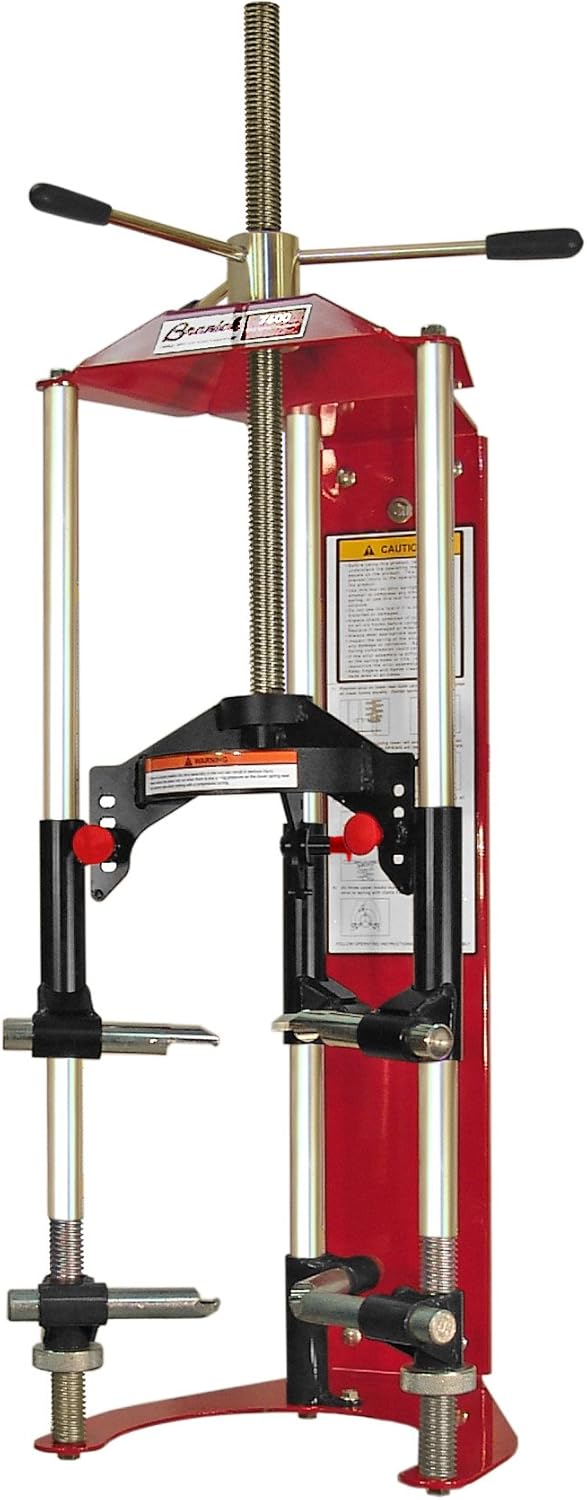
Recommended Tools for This Job


Check Tire Wear and Alignment Clues
Sagging ride height changes suspension geometry. That can push alignment angles out of spec and create tire wear patterns over time.
- One side of the vehicle wearing tires faster than the opposite side can support a ride height problem.
- Inside-edge or outside-edge wear may appear when camber changes because of sagging or bent parts.
- Cupping usually points more strongly to worn shocks or struts, though spring issues can contribute.
Tire wear alone is not enough to condemn a spring, but if you find uneven ride height plus suspicious tire wear on the same corner, your diagnosis gets much stronger.
How to Tell Bad Coil Springs From Other Suspension Problems
Bad Spring Vs. Bad Strut or Shock
A spring supports weight; a strut or shock controls motion. If the vehicle sits low on one corner, suspect the spring first. If the vehicle sits level but bounces excessively, suspect the strut or shock first. In real-world repairs, both parts may be worn together.
Bad Spring Vs. Collapsed Strut Mount
A collapsed mount can also change ride height and create noise. Inspect the top mount area for tearing, separation, or obvious sinking. If the spring looks intact but the strut mount is distorted, the mount may be the main issue.
Bad Spring Vs. Low Tire or Wheel Issue
Always confirm tire pressure before measuring ride height. A tire that is significantly low can make one corner appear to sag and can also affect handling.
Bad Spring Vs. Bent or Worn Suspension Hardware
Impact damage from potholes or curbs can bend control arms, knuckles, or rear suspension links. If ride height changed after a hard impact and the spring looks normal, inspect for bent metal and compare both sides carefully.
When the Evidence Confirms a Bad Coil Spring
You can be reasonably confident the spring is bad when you find two or more of the following at the same corner: visible spring damage, clear ride height loss, spring-seat misalignment, repeated clunking from the spring area, or a history of bottoming under normal driving.
- A visibly broken coil means the spring is failed and should be replaced.
- A spring with major rust and flaking near the end coils is at high risk and should not be ignored.
- A side-to-side ride height difference with no tire or load explanation strongly suggests a weakened spring or mount problem.
- If the spring is bad on one side, the matching spring on the same axle is usually replaced at the same time for balanced ride height and handling.
What to Do Next
If you confirm a broken or sagging coil spring, plan the repair soon. Driving with a broken spring can damage tires, struts, mounts, and nearby components, and it can also affect braking and stability. In severe cases, a broken coil end can contact the tire.
For front strut-type suspensions, many DIYers choose complete loaded strut assemblies instead of swapping springs onto old struts. That approach replaces the spring, strut, and often the mount as one unit and avoids compressing the spring separately. On vehicles with separate rear springs and shocks, spring replacement is often more straightforward, but procedures vary by model.
- Replace springs in pairs on the same axle whenever possible.
- Inspect or replace worn struts, shocks, mounts, bump stops, and isolators while you are there.
- Get a wheel alignment after suspension repairs if ride height or strut position changed.
- Do not delay repair if the spring is broken, rubbing, or causing severe sagging.
Key Takeaways
- Measure ride height side to side on level ground before assuming a spring is bad.
- A visible crack, missing coil section, or severely rusted lower coil is strong evidence of spring failure.
- If the vehicle sits low but does not bounce much, the spring is more suspect than the shock or strut alone.
- Replace coil springs in pairs on the same axle to keep ride height and handling balanced.
- Do not keep driving on a broken spring because it can damage tires, struts, and nearby suspension parts.
FAQ
Can a Bad Coil Spring Cause Uneven Tire Wear?
Yes. A weak or sagging spring can change ride height and suspension geometry, which can push alignment angles out of spec and lead to uneven tire wear.
Is It Safe to Drive with a Broken Coil Spring?
It is not a good idea. A broken spring can affect handling, braking stability, and tire clearance, and the broken end may damage other components.
Will a Bad Strut Make It Seem Like the Coil Spring Is Bad?
Yes. Worn struts can cause bottoming, bounce, and poor ride control, which overlap with spring symptoms. The key difference is that a bad spring usually causes a ride height change, while a bad strut often does not.
How Much Ride Height Difference Is Too Much?
There is no universal number for every vehicle, but a clearly visible side-to-side difference that repeats on level ground is worth investigating. Compare both sides of the same axle and rule out tire pressure or uneven cargo first.
Should Coil Springs Be Replaced One at a Time or in Pairs?
They are best replaced in pairs on the same axle. Replacing only one can leave the vehicle with uneven ride height, mismatched spring rates, and inconsistent handling.
Can Rust Alone Mean a Coil Spring Needs Replacement?
Surface rust by itself does not always mean immediate replacement, but heavy rust, flaking metal, or corrosion near the spring ends is a serious warning sign because that is where springs commonly break.
Do I Need an Alignment After Replacing Coil Springs?
Usually yes, especially if the front suspension uses struts or if ride height changed. An alignment helps protect tire wear and restores proper handling.
Need Parts for This Repair?
The right parts and supplies vary by vehicle.
Select your make and model to find compatible parts and accessories for your car.
Exact Fit
Parts that fit your make and model
Quality You Can Trust
Top brands and OEM quality options
Fast Shipping
Get the parts you need, delivered fast