

Note: This article contains affiliate links. If you click on these links and make a purchase, I may earn a small commission at no extra cost to you. This helps support my research and content. Read my full affiliate disclosure here.
What You’ll Need
A quick look at the tools and supplies commonly used for this job.
Tools
- OBD-II scan tool
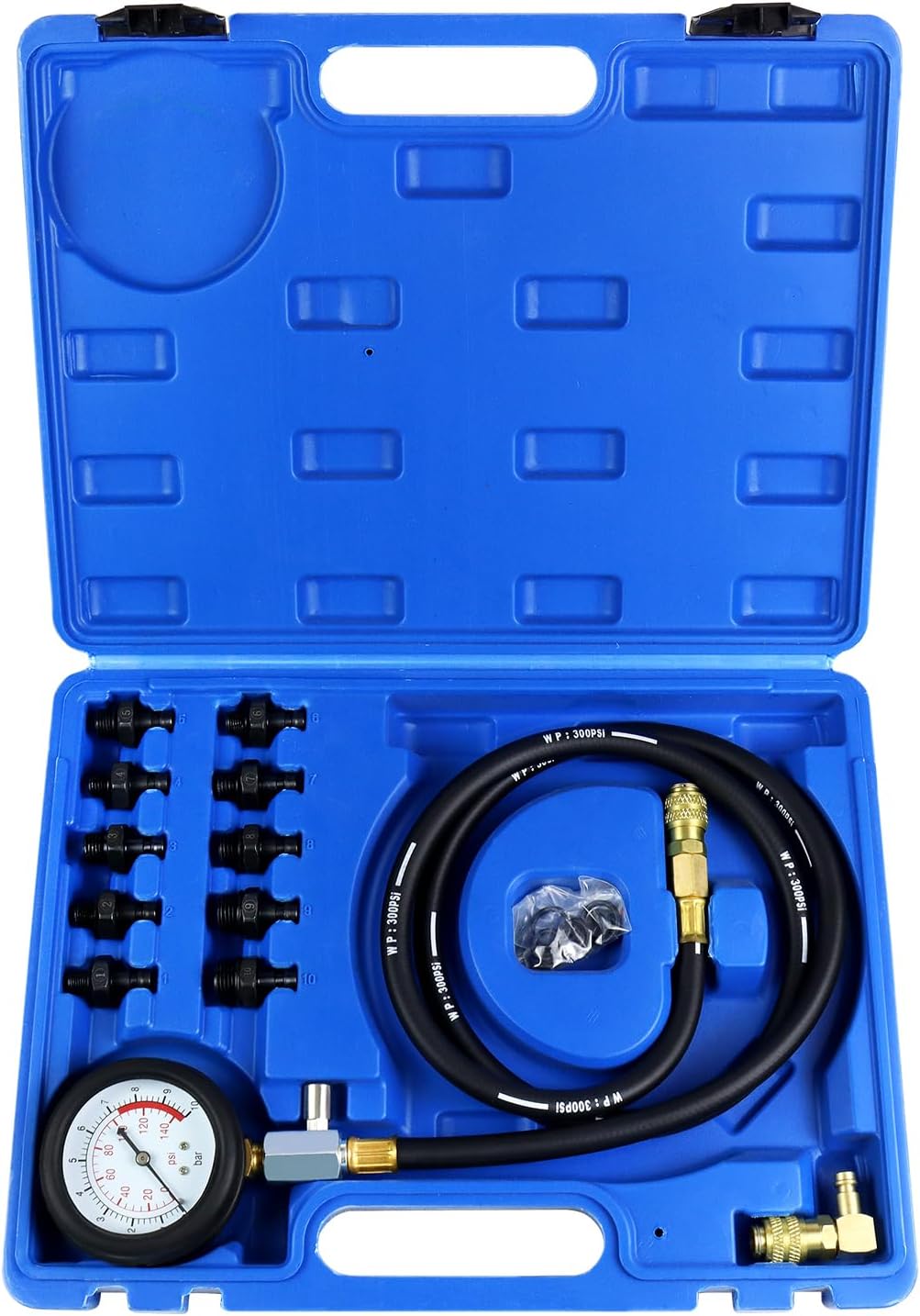
- Mechanical oil pressure test gauge kit
- Digital multimeter
- Basic socket and wrench set
- Vehicle jack and jack stands or ramps
- Flashlight or work light
- Shop towels
- Vehicle repair manual or service information
Parts & Supplies
- Correct engine oil for the vehicle
- Replacement oil filter
- Drain pan
- Oil pressure sensor or switch if needed
- Thread sealant approved for sensor fittings if required
- Replacement engine oil drain plug washer if needed
This article is part of our Engine Maintenance & Repair Guides.
Low oil pressure is one of the most serious warnings your engine can give you. If the oil pressure light stays on, the gauge reads unusually low, or you hear ticking or knocking, you need to find out quickly whether the problem is a bad reading, low oil level, restricted flow, or actual internal engine wear.
The key to diagnosing low oil pressure is to avoid guessing. Start with the simple checks you can do safely in the driveway, then confirm the problem with a mechanical oil pressure gauge before replacing parts. That helps you separate an electrical issue from a lubrication problem that could damage bearings, lifters, camshafts, or the oil pump.
This guide walks through symptoms, safety, tools, step-by-step testing, result interpretation, and what to do next if your engine truly has low oil pressure.
Why Low Oil Pressure Matters
Engine oil does more than lubricate moving parts. It also helps cool internal components, supports hydraulic lifters and variable valve timing systems, and maintains a protective film between bearings and journals. When pressure drops too low, metal parts can make contact and wear extremely fast.
A brief warning at startup on a very cold morning may not mean the engine is failing, but a warning light that stays on, especially at idle when hot, should never be ignored. Continued driving with real low oil pressure can turn a repairable issue into a full engine replacement.
- Stop driving immediately if the oil light comes on and the engine is making knocking, rattling, or loud ticking noises.
- Do not assume the problem is only the sensor until you verify actual pressure.
- If the engine recently ran low on oil, treat the situation as urgent even if the warning comes and goes.
Common Symptoms of Low Oil Pressure
Some vehicles use a simple oil warning light, while others have a gauge or message center. In either case, symptoms often appear most clearly when the engine is fully warmed up and idling.
- Oil pressure warning light on or flickering at idle
- Dashboard oil pressure gauge reading lower than normal
- Ticking lifters, timing chain noise, or valvetrain chatter
- Engine knocking, especially after the warning appears
- Variable valve timing or camshaft-related trouble codes
- Engine noise that improves slightly when RPM increases
- A warning that appears after an oil change or filter replacement
A flickering warning at hot idle can point to marginal pressure rather than a total loss. That often happens with worn bearings, thin or incorrect oil, a restricted pickup screen, or an engine that already has internal wear.
Possible Causes to Keep in Mind
Before you test, it helps to know what you are trying to separate. Low oil pressure is usually caused by one of a few categories: low oil quantity, incorrect oil viscosity, restricted oil flow, pressure loss inside the engine, or a false electrical reading.
- Low engine oil level from leaks or oil consumption
- Wrong oil viscosity, especially oil that is too thin for the engine
- Diluted oil from fuel contamination or coolant contamination
- A poor-quality, clogged, collapsed, or incorrect oil filter
- Faulty oil pressure sensor, switch, wiring, or dash gauge
- Sludge restricting the oil pickup screen or oil passages
- Worn crankshaft or camshaft bearings bleeding off pressure
- A failing or worn oil pump or pressure relief valve issue
Safety Before You Start
Let the engine cool enough that you can work around the exhaust and oil filter safely. Park on level ground, set the parking brake, and support the vehicle properly if you need underbody access. Never crawl under a car supported only by a jack.
If the engine is making heavy knocking, do not keep it running for repeated tests. You can perform a basic oil level check and electrical inspection, but a loud knock with an oil pressure warning usually means the engine is at risk of catastrophic failure.
Tools That Make This Job Easier


Step-by-Step Diagnostic Procedure
Check the Oil Level and Condition First
With the engine off and the car on level ground, check the dipstick. If the level is below the safe range, add the correct oil before doing anything else. Then inspect the oil condition. Very thin oil, a strong fuel smell, a milky appearance, or heavy sludge all point toward problems that can affect pressure.
If the engine is significantly low, look for external leaks around the oil filter, drain plug, oil pan, valve covers, cooler lines, and timing cover area. Also consider internal oil consumption if you do not see leakage.
Confirm the Correct Oil and Filter Were Used
Low oil pressure warnings sometimes appear right after an oil change. Verify the viscosity matches the manufacturer specification and confirm the filter is the correct part number. An incorrect filter, a collapsed filter element, or a poor anti-drainback valve can affect pressure and startup lubrication.
If the oil is obviously wrong, badly overdue, or contaminated, changing the oil and filter may be a valid early step. Just do not assume that alone solves the problem if the warning returns.
Scan for Trouble Codes and Data
Use an OBD-II scan tool to check for stored or pending codes. Not every vehicle will set an oil pressure-specific code, but you may find variable valve timing, cam timing, or oil pressure sensor circuit faults that help point the diagnosis. Note freeze-frame data if available, especially engine temperature and RPM when the fault occurred.
Inspect the Oil Pressure Sensor and Wiring
Locate the oil pressure sender or switch and inspect for oil leaking through the sensor body, damaged wiring insulation, loose connectors, or corrosion. Some sensors fail internally and leak oil into the connector. Others send inaccurate readings even when pressure is normal.
If the circuit is suspect, compare power, ground, and signal behavior to the service manual before replacing the sensor. On simple switch-type systems, the warning light may come on due to a bad switch rather than actual low pressure.
Install a Mechanical Oil Pressure Gauge
This is the most important test in the entire process. Remove the oil pressure sensor or use the proper adapter port, then connect a mechanical test gauge. Start the engine and observe pressure at cold idle, warm idle, and a raised engine speed such as 2,000 to 3,000 RPM. Always compare your readings to manufacturer specifications for that engine.
As a very general rule, many engines show noticeably higher pressure when cold, lower pressure when fully warm, and roughly increase pressure with RPM. A hot idle reading that is far below spec but improves only slightly with RPM often points to wear or internal leakage. A reading that is low across the board can suggest pickup restriction, pump trouble, or severe internal wear.
Compare Cold and Hot Readings
The pattern matters as much as the number. If pressure is acceptable cold but falls off sharply once the engine is hot, oil thinning due to heat can reveal excessive bearing clearance or a worn pump. If pressure is poor even during a cold start, suspect a major restriction, a bad pump, very low oil, or an engine that is already badly worn.
Listen for Engine Noise During the Test
Light top-end ticking can happen with marginal oil supply to lifters or cam components. Deep knocking from the bottom end is more serious and often points to bearing damage. If heavy noise increases as pressure remains low, shut the engine off and do not continue testing unnecessarily.
How to Interpret Your Test Results
Mechanical Gauge Shows Normal Pressure
If the mechanical gauge reading is within spec, the engine likely does not have a true oil pressure problem. Focus on the oil pressure sensor, switch, wiring, instrument cluster, or PCM data interpretation. Replacing a failed sensor is common in this situation.
Pressure Is Low Only at Hot Idle
This often indicates wear rather than a total pump failure. Common causes include worn crankshaft bearings, cam bearings where applicable, high engine mileage, thin or fuel-diluted oil, or early sludge restriction. If the engine also has a long history of infrequent oil changes, sludge and pickup screen restriction become more likely.
Pressure Is Low at All Engine Speeds
Uniformly low readings suggest a more severe issue such as a worn oil pump, stuck-open pressure relief valve, clogged pickup screen, major internal bearing wear, or very low oil supply. Do not keep driving until the cause is confirmed.
Pressure Starts Normal Then Suddenly Drops
A sudden drop can happen if the engine oil level is low and the pickup begins drawing air, if hot thin oil exposes excessive clearance, or if debris intermittently blocks the pickup screen. It can also happen when a failing sensor becomes heat-sensitive, which is why the mechanical gauge test is so valuable.
Recommended Tools for This Job


Additional Checks if Pressure Is Truly Low
Inspect for Sludge History
Remove the oil fill cap and look inside with a flashlight. Heavy deposits under the valve cover area do not prove the pickup screen is blocked, but they raise suspicion. Engines with poor maintenance history may need deeper inspection of the oil pan and pickup tube.
Consider Fuel or Coolant Contamination
Oil that smells strongly of gasoline may be diluted enough to lower pressure, especially when hot. Milky oil can indicate coolant contamination, which can damage bearings and reduce lubrication quality. Either condition requires fixing the root cause, not just changing the oil.
Evaluate Engine Wear and Mileage
A high-mileage engine with persistent hot idle pressure loss and bearing noise may simply have worn internal clearances. In that case, replacing only the sensor, pump, or oil may not restore proper pressure for long. The engine may need internal repair or replacement.
Check Service Bulletins and Known Engine Issues
Some engines have known issues with pickup tube O-rings, balance shaft modules, variable displacement oil pumps, or sensor design. If your vehicle has a pattern failure, a technical service bulletin or enthusiast forum with factory documentation can save time.
When an Oil Change Can Help and When It Cannot
An oil and filter change can help if the oil level was low, the viscosity was incorrect, the oil was degraded, or the filter is restricted. It is a reasonable step when maintenance is overdue and the engine is not already knocking.
An oil change will not fix worn crank bearings, a badly clogged pickup screen, a failed pump, or serious sludge inside the engine. Thickening the oil beyond factory recommendations may mask symptoms temporarily, but it is not a true repair and can create cold-start lubrication issues.
When to Stop Driving Immediately
- The oil warning light stays on continuously while the engine is running.
- You hear knocking, deep rattling, or rapidly increasing top-end noise.
- Mechanical gauge readings are below specification after confirming proper oil level.
- The engine recently ran very low on oil or lost oil suddenly from a leak.
- You see metal in the drained oil or oil filter.
If any of these conditions are present, towing is usually cheaper than replacing an engine. A few extra miles of driving with real low oil pressure can do major damage.
Recommended Next Steps Based on What You Find
If the mechanical gauge confirms normal pressure, replace the faulty sensor or repair the wiring issue. If pressure is slightly low and the oil is old or incorrect, change the oil and filter with the exact specified viscosity, then retest. If pressure remains low, plan for deeper mechanical inspection.
If the engine has true low pressure and noise, avoid running it further. The next diagnostic level may include removing the oil pan, inspecting the pickup tube and screen, checking for sludge, and evaluating bearing material in the pan. On some engines, access is difficult enough that professional diagnosis makes sense.
If you are deciding whether to repair or replace the engine, combine the oil pressure results with mileage, maintenance history, compression, leak-down data, and the presence of bearing knock. That gives you a better picture than oil pressure alone.
Key Takeaways
- Always verify low oil pressure with a mechanical gauge before replacing sensors or assuming the engine is damaged.
- Check oil level, oil condition, filter correctness, and sensor wiring before moving to invasive repairs.
- Low pressure only when hot often points to wear, thin oil, or contamination, while low pressure at all speeds is more serious.
- Do not continue driving if the warning stays on and the engine is knocking, rattling, or showing readings below spec.
- A fresh oil change can help some cases, but it will not repair worn bearings, a clogged pickup, or a failing oil pump.
FAQ
Can I Drive with Low Oil Pressure for a Short Distance?
It is risky. If the warning light is on steadily or the engine is noisy, shut it off and tow the vehicle. Even a short drive can damage bearings and other internal parts.
What Is the Fastest First Check for Low Oil Pressure?
Check the oil level and condition on level ground with the engine off. If the level is low, correct that first, then verify actual pressure with a mechanical gauge.
Can a Bad Oil Pressure Sensor Cause a Warning Light with No Real Engine Problem?
Yes. Faulty sensors, switches, wiring, or gauge circuits are common and can trigger false warnings. That is why a mechanical oil pressure test is the key confirmation step.
Will Using Thicker Oil Fix Low Oil Pressure?
Not reliably. Thicker oil may raise readings temporarily in a worn engine, but it does not solve the underlying cause and may hurt cold-start lubrication if it is outside factory specifications.
Why Does the Oil Pressure Light Come on Only when the Engine Is Hot?
Hot oil thins out, so worn bearings, fuel-diluted oil, or marginal pump performance show up more clearly at operating temperature, especially at idle.
Can an Oil Filter Cause Low Oil Pressure?
Yes. A wrong, clogged, collapsed, or poor-quality filter can affect oil flow and pressure. This is especially worth checking if the problem started right after an oil change.
What Engine Noises Suggest Real Low Oil Pressure Damage?
Lifter ticking can happen with marginal pressure, but deep knocking from the lower engine is more serious and often indicates bearing damage. If you hear heavy knocking, stop the engine.
Need Parts for This Repair?
The right parts and supplies vary by vehicle.
Select your make and model to find compatible parts and accessories for your car.
Exact Fit
Parts that fit your make and model
Quality You Can Trust
Top brands and OEM quality options
Fast Shipping
Get the parts you need, delivered fast