

Note: This article contains affiliate links. If you click on these links and make a purchase, I may earn a small commission at no extra cost to you. This helps support my research and content. Read my full affiliate disclosure here.
What You’ll Need
A quick look at the tools and supplies commonly used for this job.
Tools
- Flashlight
- Mechanic’s mirror
- Scan tool
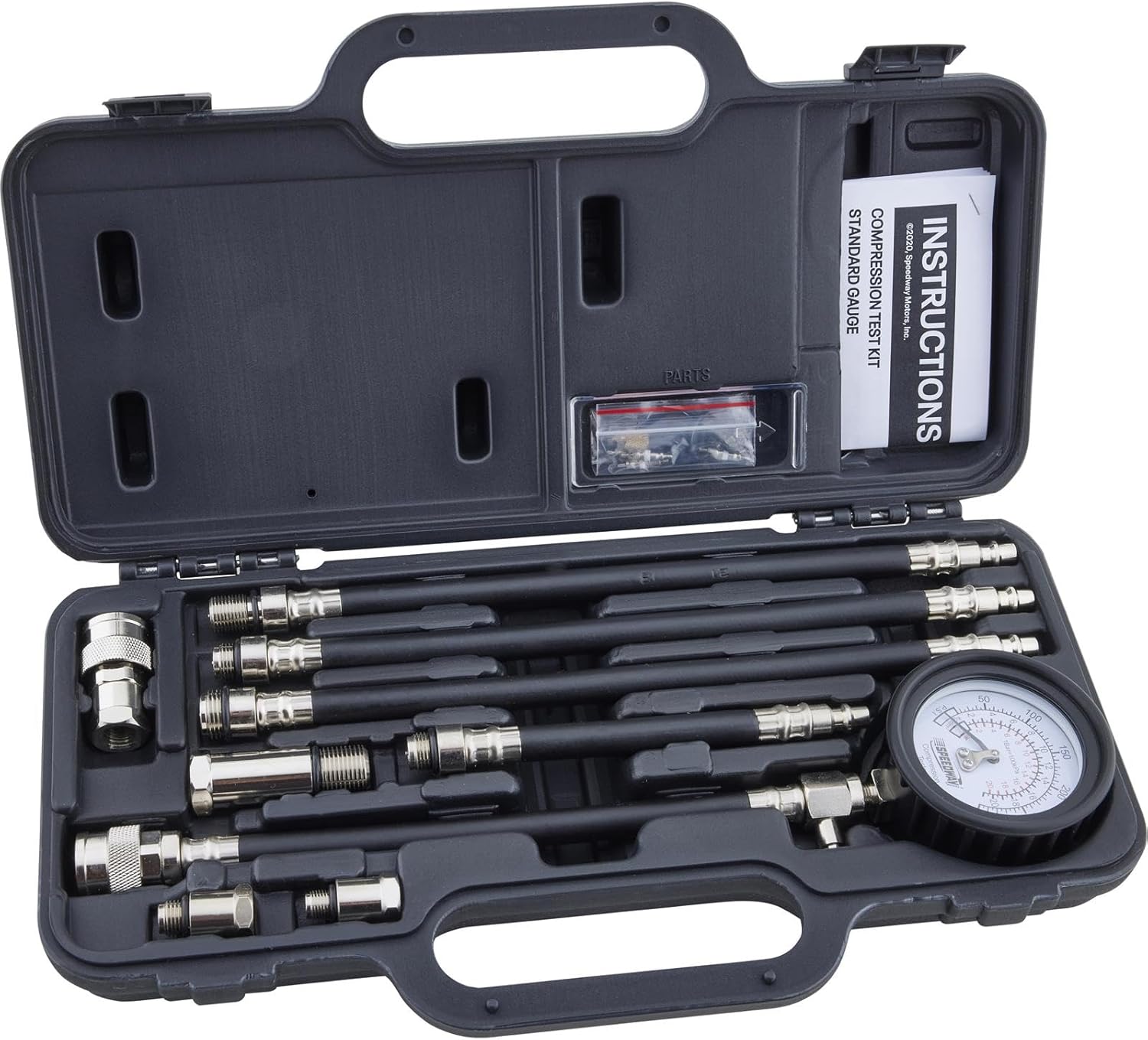
- Compression tester
- Cylinder leak-down tester
- Nitrile gloves
- Basic socket and screwdriver set
- Pliers
- Vacuum gauge or low-pressure manometer
- Shop rags
Parts & Supplies
- Valve cover gasket
- Replacement PCV valve
- PCV hose or vacuum hose
- Breather filter if equipped
- Throttle body or intake cleaner
This article is part of our Engine Maintenance & Repair Guides.
Excessive crankcase pressure usually means combustion gases are building up inside the engine faster than the crankcase ventilation system can remove them. That pressure has to go somewhere, so it often pushes oil past seals and gaskets, creates dipstick tube leaks, and leaves oily residue around the air intake or valve covers.
For a DIY diagnosis, the goal is to separate a simple PCV system restriction from true internal engine blow-by. In many cases, a stuck PCV valve, collapsed hose, clogged baffle, or frozen breather line can mimic a worn engine. A few basic checks can save you from replacing seals that will just leak again.
This guide walks through the symptoms, tools, tests, and interpretation steps that help you confirm whether the problem is poor crankcase ventilation, excessive ring blow-by, or a combination of both.
What Excessive Crankcase Pressure Looks Like
Crankcase pressure is not always obvious at first. Some engines will run normally while quietly forcing oil out of weak seals. Others show rough idle, oil consumption, blue smoke, or a whistling noise from the dipstick tube or oil cap area.
Common Symptoms
- Oil leaks that return quickly after replacing a valve cover gasket, front or rear main seal, or oil pan gasket.
- Oil pushed out of the dipstick tube, oil filler cap, breather, or PCV hose connections.
- Blue exhaust smoke, especially during acceleration, deceleration, or long idling.
- A puffing or chuffing feeling at the oil fill opening with the cap removed.
- Oil inside the intake tube, throttle body, turbo inlet, or air filter housing.
- Lean, rich, or idle-related trouble codes if a PCV hose is split or disconnected.
One symptom alone does not prove crankcase overpressure. For example, a small oil leak may just be an old gasket, and oil in the intake can be normal on some high-mileage engines. What matters is the pattern: repeated oil leaks, visible vapor pulsing from the oil fill, and evidence that the PCV system is not maintaining slight vacuum in the crankcase.
How the System Is Supposed to Work
Every running engine has some combustion gas that slips past the piston rings. That is called blow-by. The PCV system routes those gases from the crankcase back into the intake to be burned, while also keeping moisture and sludge from building up in the oil.
Under normal conditions, the engine maintains a slight vacuum in the crankcase. A PCV valve or integrated PCV diaphragm meters flow, a breather allows fresh air in, and internal passages in the valve cover or block separate oil from vapor. If any of these parts clog, split, stick, or collapse, pressure rises.
The Two Broad Causes
- Ventilation fault: The engine internals may still be okay, but the crankcase cannot vent properly because of a blocked PCV valve, restricted hose, frozen passage, sludge, or failed diaphragm.
- Excessive blow-by: The PCV system may be working, but worn piston rings, damaged cylinder walls, or piston problems are creating more gas than the system can handle.
Good diagnosis means testing both possibilities instead of assuming the engine is worn out.
Safety and Preparation
Work on a cool engine when removing hoses or covers near the exhaust manifold. Keep loose clothing and hands away from belts and fans when checking the engine running. If you will remove the oil cap with the engine idling, do it carefully and avoid splashing hot oil.
Before Testing, Verify These Basics
- Engine oil level is correct, not severely overfilled.
- Oil is not heavily diluted with fuel or coolant.
- No obvious disconnected intake hose or vacuum line is present.
- Air filter and intake path are not severely restricted.
- If the engine is turbocharged, inspect the inlet plumbing for abnormal oil accumulation.
An overfilled crankcase, severe sludge, or a blocked air intake can distort the results of your diagnosis.
Visual Inspection of the PCV and Breather System
Start with the easiest and cheapest checks. Many excessive-pressure complaints come from hoses that are cracked underneath, a PCV valve installed backward, or internal baffles clogged with sludge.
What to Inspect
- PCV valve for clogging, sticking, or incorrect part number.
- Rubber hoses for collapse, soft spots, kinks, sludge blockage, or hidden splits near bends.
- Plastic fittings and elbows for cracks that open under vacuum.
- Valve cover passages or oil separators for heavy sludge.
- Breather hose from the air intake to the valve cover for restriction or disconnection.
- Integrated PCV assemblies in valve covers for torn diaphragms or failed check valves.
If your engine uses an integrated PCV system rather than a simple replaceable valve, look up the hose routing and service points for that exact engine. Many modern engines hide the pressure regulator and baffle inside the valve cover. A failed diaphragm may cause a honking, whistling, or squealing sound, along with rough idle.
Also inspect for oil tracks around the dipstick tube, timing cover, front crank seal area, rear main area, and valve cover perimeter. Those leak paths often tell you where pressure is escaping.
Tools That Make This Job Easier


Quick Running Tests You Can Do in the Driveway
Oil Cap Behavior Test
Warm the engine and let it idle. Carefully loosen the oil fill cap. On a healthy engine, you may feel light vacuum or only minor pulsing. If the cap is strongly pushed upward, dances violently, or vapor puffs out in strong pulses, that points toward poor ventilation or heavy blow-by.
This is a useful screening test, but not a final diagnosis. Some engines naturally have more pulsing than others, especially large displacement engines or designs with less effective baffling.
Glove or Plastic Wrap Test
With the oil cap removed, stretch a thin glove finger or a small piece of plastic over the oil fill opening. If it gets pulled inward slightly, the crankcase likely has vacuum. If it inflates or pulses outward hard, pressure is present. This test helps confirm what you felt at the cap.
PCV Flow Test
Locate the PCV valve or crankcase vent line going to the intake manifold or intake tube. On a traditional PCV valve, remove it from the grommet while keeping the hose attached. At idle, you should feel vacuum at the valve inlet or hose, depending on design. A valve that does not rattle when shaken may be stuck, though the rattle test alone is not reliable on every design.
If the hose has strong vacuum but the crankcase still builds pressure, the restriction may be in the valve cover baffle or internal passage. If there is little or no vacuum at the hose, trace the line back to the intake source for blockage, collapse, or incorrect routing.
Measure Crankcase Pressure or Vacuum
The best DIY confirmation is to measure the crankcase directly with a low-pressure gauge or manometer. Do not use a standard high-range fuel or compression gauge for this. You need a tool that can read small vacuum and pressure changes accurately.
How to Connect the Gauge
- Use a rubber adapter at the dipstick tube, oil fill opening, or a suitable breather connection.
- Start the engine and let it idle fully warmed up.
- Observe the reading at idle, then again at a steady 2,000 to 2,500 rpm.
- If possible, compare your readings with service information for your engine.
Most healthy gasoline engines show slight vacuum in the crankcase at idle and cruise conditions. A reading near zero can already suggest a weak PCV system. Positive pressure, especially if it increases with rpm, is a strong sign of restriction or excessive blow-by.
On some engines, especially performance or turbocharged setups, readings vary more by design. The key is whether the system is maintaining controlled evacuation rather than building pressure that forces oil out.
Use Scan Data and Related Clues
A scan tool will not directly measure crankcase pressure, but it can help you find supporting evidence. Split PCV hoses and failed diaphragms often act like vacuum leaks, while oil ingestion can upset fuel trims.
Data and Codes Worth Checking
- Lean codes such as P0171 or P0174 from unmetered air entering through a cracked PCV hose.
- Random or cylinder-specific misfire codes if the leak is large enough to disturb idle quality.
- Fuel trims that go strongly positive at idle but improve off-idle, which can fit a vacuum-side PCV leak.
- Oil control or boost-related complaints on turbo engines if crankcase ventilation is affecting the turbo inlet.
If removing or pinching a suspect PCV hose dramatically changes idle speed or fuel trims, that is a clue that the ventilation system is not behaving normally.
When to Perform Compression and Leak-Down Tests
If the PCV system checks out but pressure remains high, move to engine condition tests. Compression and leak-down testing help determine whether ring sealing is weak enough to create excessive blow-by.
Compression Test Clues
Low compression across all cylinders can indicate general wear. One or two low cylinders can point to localized ring or piston damage. A wet compression test that improves significantly after adding a small amount of oil suggests ring sealing problems.
Leak-down Test Clues
A leak-down test is more revealing because you can listen for where air escapes. If you hear strong air movement from the oil fill opening, dipstick tube, or crankcase breather, the air is leaking past the rings into the crankcase. That strongly supports blow-by as the root cause.
High leak-down into the crankcase on multiple cylinders points to ring wear or cylinder wear. High leakage in only one cylinder may mean a broken ring land, damaged piston, or isolated cylinder issue.
Recommended Tools for This Job


How to Tell a PCV Problem From a Worn Engine
Signs the PCV System Is the Main Problem
- PCV valve, hose, or internal separator is visibly clogged, collapsed, frozen, or damaged.
- Crankcase pressure improves quickly after restoring proper PCV flow.
- Compression and leak-down numbers are acceptable.
- Engine power is still decent and oil consumption is moderate rather than severe.
- There are vacuum-leak-type codes or idle issues linked to the PCV circuit.
Signs Excessive Blow-by Is the Main Problem
- Strong pressure remains even after confirming the PCV system is clear and functional.
- There is heavy pulsing at the oil fill opening and the cap is pushed upward at idle.
- Compression is low or uneven, and leak-down shows major leakage into the crankcase.
- The engine consumes a lot of oil, smokes under load, or has poor performance.
- Oil leaks continue even after fixing obvious ventilation restrictions.
Some engines have both issues at once. A partially clogged PCV system can make a worn engine leak much worse, and a tired engine can overwhelm an otherwise functional PCV system. That is why you should repair any ventilation faults first, then retest before condemning the engine.
What to Do After You Confirm the Cause
If the Problem Is in the PCV System
- Replace the PCV valve with the correct part, not a generic guess.
- Replace soft, oily, or collapsed hoses instead of trying to clean brittle ones.
- Clean accessible passages and separators if serviceable.
- Replace the valve cover if the PCV diaphragm or internal baffle is built into it and has failed.
- After repair, verify the crankcase now shows slight vacuum rather than pressure.
If the Problem Is Internal Blow-by
There is no additive or external repair that truly fixes worn rings or piston damage. You can sometimes reduce leaks temporarily by ensuring the PCV system is working perfectly, switching to the correct viscosity oil if the current oil is wrong, and repairing the worst leaking seals. But if the engine is creating too much blow-by, the long-term solution is internal repair or engine replacement.
If the vehicle still runs acceptably, you may choose to monitor oil usage and plan repairs later. Just understand that excess crankcase pressure can quickly ruin new gaskets and contaminate the intake system.
Mistakes to Avoid During Diagnosis
- Do not assume every oil leak means the rear main seal is bad; pressure often causes the leak.
- Do not condemn the engine before checking the entire PCV path, including hidden baffles and integrated valve cover regulators.
- Do not use carb cleaner aggressively on delicate diaphragms, sensors, or coated components.
- Do not ignore an overfilled crankcase, which can create foaming and abnormal venting.
- Do not judge engine condition from the PCV valve shake test alone.
A careful sequence matters: confirm symptoms, inspect the ventilation system, measure pressure or vacuum, then test engine sealing if needed.
Key Takeaways
- Repeated oil leaks, dipstick blowout, and strong pulsing at the oil cap are classic clues of excessive crankcase pressure.
- Always inspect the full PCV and breather system before assuming worn piston rings or major engine failure.
- A low-pressure gauge or manometer is the most reliable DIY way to confirm whether the crankcase has vacuum or positive pressure.
- If crankcase pressure stays high after PCV repairs, compression and leak-down testing are the next steps.
- Replacing seals without fixing the pressure source usually leads to more leaks and wasted labor.
FAQ
Can a Bad PCV Valve Really Cause Major Oil Leaks?
Yes. If the PCV valve sticks closed or the vent path is restricted, pressure builds inside the crankcase and can force oil past valve cover gaskets, crank seals, the dipstick tube, and other weak points.
Is Some Vapor at the Oil Cap Normal?
A small amount of vapor or light pulsing can be normal, especially on higher-mileage engines. Strong pressure that pushes the cap upward, blows vapor outward hard, or sprays oil is not normal.
Will Excessive Crankcase Pressure Cause Blue Smoke From the Exhaust?
It can. Pressure can push oil into the intake through the PCV system or past seals and guides, leading to oil burning and blue smoke.
How Do I Know if My Engine Has Bad Rings or Just a Clogged PCV System?
First verify the PCV system has proper flow and the crankcase can maintain slight vacuum. If pressure remains high after PCV repairs, use compression and especially leak-down testing to check for ring leakage into the crankcase.
Can I Drive with Excessive Crankcase Pressure?
Short trips may be possible, but it is risky. The engine can lose oil rapidly, foul the intake system, damage seals, create smoke, and eventually run low on oil.
Why Does My Dipstick Pop Up While Driving?
That usually means crankcase pressure is high enough to force past the dipstick seal. Check for a blocked PCV valve, restricted breather hose, sludge in the valve cover, or excessive blow-by.
Do Turbo Engines Have Different Crankcase Pressure Issues?
Yes. Turbo engines often use more complex separators, check valves, and routed vent lines. Boost pressure, oil carryover, and failed one-way valves can complicate diagnosis, so hose routing and component condition are especially important.
Need Parts for This Repair?
The right parts and supplies vary by vehicle.
Select your make and model to find compatible parts and accessories for your car.
Exact Fit
Parts that fit your make and model
Quality You Can Trust
Top brands and OEM quality options
Fast Shipping
Get the parts you need, delivered fast