

Note: This article contains affiliate links. If you click on these links and make a purchase, I may earn a small commission at no extra cost to you. This helps support my research and content. Read my full affiliate disclosure here.
If you drive a Ford Ranger Wildtrak and want a wider stance, better wheel clearance, or a more aggressive look, properly chosen wheel spacers can deliver those benefits without permanent changes to suspension geometry. The right Ford Ranger Wildtrak wheel spacers balance safe fitment, bolt pattern compatibility, and material strength so you do not introduce vibration or premature wear.This guide rounds up the top shortlisted wheel spacers for the Wildtrak and explains the criteria we used to evaluate them, including fitment, hubcentric accuracy, and hardware quality. Read on for practical guidance on sizes, thickness, and installation considerations before you pick the best option for your truck.
Looking for other parts? See all Ford Ranger parts & accessories.
Top Picks at a Glance
| Best Overall The best all-around choice for most situations | SYKRSS 2" 6×5.5 (6×139.7) Forged Aluminum Wheel Spacers with 93.1mm Bore (M12x1.5) — 4 pcs |  |
| Best Quality Built to a higher standard if you want something more solid | JTP 35mm Hub-Centric Hot-Forged Wheel Spacers 6×139.7 (4pcs) |  |
| Best Value The sweet spot between price and what you get | FLYCLE 1.5" 6×5.5 (6×139.7) Forged Hub-Centric Wheel Spacers with 12×1.5 Studs |  |
| Best Budget The cheapest option that still gets the job done reliably | Cmd Motoring 6×139.7 Hubcentric Wheel Spacers 5mm (2pcs) |  |
| Highest Rated A top-rated pick with lots of positive feedback | KSP 1.5" Forged 6×5.5 Hub-Centric Wheel Spacers with 93.1mm Hub Bore (4pcs) |  |
| Most Popular A crowd favorite that many people choose with confidence | SCITOO 4-Piece 1.5" 6×5.5 Hub-Centric Wheel Spacers (93.1mm CB) |  |
| Best Seller A high-volume bestseller chosen again and again | dynofit 1.5" Forged Hub-Centric Wheel Spacer 6×5.5 (93.1mm) for Ford Ranger and Bronco, 4pcs |  |
1. SYKRSS 2" 6×5.5 (6×139.7) Forged Aluminum Wheel Spacers with 93.1mm Bore (M12x1.5) — 4 pcs

| Thickness | 2 inch |
|---|---|
| Bolt pattern | 6×139.7mm (6×5.5") |
| Center bore | 93.1 mm |
| Thread pitch | M12x1.5 |
| Material | Aluminum (6061) |
These SYKRSS 2-inch wheel spacers push wheels outward to create a wider track and more clearance for suspension or larger brakes while keeping factory-style lug engagement. Sold as a set of four, they are forged from 6061 aluminum and use hardened 10.9-class studs, which suggests a stronger, lighter spacer compared with basic cast units. The 93.1 mm center bore and M12x1.5 thread pitch match the listed fitment for Ford Bronco (2021–2023) and Ranger (2011–2023), so installation is straightforward when your hub and wheel match those specs. In use the spacers give a more planted look and should improve stability at higher cornering loads by widening the track. They also free up room for aftermarket brakes or suspension components. Expect professional installation torque checks and periodic re-torques; thick 2-inch spacers change wheel leverage and require attention to wheel bearing and hub loading. These are vehicle-specific spacers built for aggressive stance or clearance needs, not a universal cosmetic accessory, so confirm exact hub bore and lug pattern before buying.
Best for: Buyers who want a solid, vehicle-specific spacer to widen track and gain clearance for performance brakes or suspension on a mid-size truck and who value a forged, stronger-than-basic construction.
Less Ideal for: Drivers seeking a simple cosmetic change for multiple vehicle models or those unwilling to follow a professional installation and periodic re-torque routine should look elsewhere.
- Forged 6061 aluminum construction for a good strength-to-weight ratio.
- Hardened 10.9-class studs and CNC machining for accurate fit and thread engagement.
- 2-inch thickness provides substantial track widening and clearance for larger brakes or suspension components.
- Vehicle-specific sizing (6×5.5, 93.1 mm bore, M12x1.5) simplifies fitment for compatible trucks.
- Thick 2-inch spacers increase leverage on wheel bearings and hubs so they need proper torqueing and monitoring.
- Designed for specific bolt pattern and bore sizes so they are not a universal fit.
Verdict: If you want a durable, vehicle-specific 2-inch spacer to widen track and create real clearance for brakes or suspension on your Ranger/compatible Ford, this forged SYKRSS set delivers the needed strength and fit.
2. JTP 35mm Hub-Centric Hot-Forged Wheel Spacers 6×139.7 (4pcs)

| Bolt pattern | 6×139.7 |
|---|---|
| Center bore | 93.1mm |
| Stud/lug size | M12x1.5 |
| Material | 6061-T6 / 7075-T6 aircraft aluminum |
| Thickness | 35mm |
These JTP wheel spacers move the wheel outboard by 35mm to widen track and create a more aggressive stance while keeping the wheel centered on the hub. Manufactured with hot forging and CNC machining from 6061/7075-grade aluminum and finished with hard anodizing, they are intended for performance use where strength and corrosion resistance matter. Each kit is hub-centric with a 93.1mm bore and uses M12x1.5 studs and supplied lug hardware so installation is a bolt-on process: mount the spacer to the hub, then install the wheel to the spacer using factory nuts. Practical benefits include improved wheel clearance for larger tires, a wider footprint for improved cornering feel, and solid construction backed by TUV and SGS test claims. Limitations to note are the need to confirm exact vehicle model and fender clearance before ordering, potential for increased scrub on wheel bearings over long-term use, and that fitment excludes Bronco Raptor models. Follow the seller guidance to verify fit and measure tire-to-fender gap prior to installation.
Best for: Drivers looking to improve stance, track width, and cornering feel on a Ranger or Wildtrak who prioritize strength and a factory-quality hub-centric solution.
Less Ideal for: Buyers who want a maintenance-free modification without checking fitment or those who prefer suspension changes for handling gains rather than spacers.
- Hot-forged, CNC-machined construction for higher strength compared with cast spacers
- Hub-centric 93.1mm bore that centers the wheel for reduced vibration
- Includes M12x1.5 studs and lug hardware for straightforward bolt-on installation
- Hard anodized finish for improved corrosion resistance and reduced heat fade
- Requires seller confirmation of specific model/year and measurement of tire-to-fender gap before purchase
Verdict: Choose these 35mm hot-forged, hub-centric spacers if you want a strong, factory-style way to widen stance and improve cornering feel on a Ford Ranger or Wildtrak.
3. FLYCLE 1.5" 6×5.5 (6×139.7) Forged Hub-Centric Wheel Spacers with 12×1.5 Studs

| Thickness | 1.5 inch |
|---|---|
| Bolt pattern | 6×5.5 (6×139.7mm) |
| Center bore | 93.1mm |
| Stud thread pitch | M12x1.5 |
| Material | Forged 6061-T6 aluminum |
These FLYCLE wheel spacers push your Ranger or compatible Bronco wheels outward by 1.5 inches to improve clearance and stance while keeping the wheel centered on the hub. They are forged from 6061-T6 aluminum and CNC machined to a 93.1mm hub bore for hub-centric fitment, and the kit uses heat-treated 12.9-grade studs to reduce the risk of stud failure. Typical use is straightforward: remove the wheel, fit the spacer to the hub, torque to the recommended 70–80 lb·ft, then refit the wheel using the provided studs. In practice the spacer lets you run wider or larger tires and clears brake or suspension components that might otherwise rub. The CNC finish and forged material should resist corrosion and keep a tight fit, but adding spacers does increase track width which can slightly change steering feel and loading on wheel bearings over long term use. Fitment is specific to 6×139.7 hubs, so verify bolt pattern and that you are not installing on Bronco Sport models. For a practical owner who wants more clearance and a flatter stance, this kit delivers solid hardware and clear installation instructions.
Best for: A practical Ranger owner who wants a reliable, hardware-first solution to gain tire clearance, correct brake clearance issues, or achieve a wider stance without complex suspension changes.
Less Ideal for: Drivers seeking a reversible cosmetic change only or those unwilling to monitor changes to steering and wheel bearing load over time should consider different options.
- Forged 6061-T6 construction for strength and corrosion resistance
- CNC-machined hub-centric 93.1mm bore for tight fitment
- Includes heat-treated 12.9-grade studs for higher tensile strength
- Provides 1.5" offset to improve tire clearance and allow wider tires
- Increases track width which can alter steering feel and add long-term load to bearings
Verdict: If you need reliable, hub-centric 1.5-inch spacers to clear brakes or fit wider tires on a 6×139.7 Ranger, this forged FLYCLE kit provides strong, well-machined hardware.
4. Cmd Motoring 6×139.7 Hubcentric Wheel Spacers 5mm (2pcs)

| Bolt pattern | 6×139.7mm (6×5.5") |
|---|---|
| Hub bore | 93.1mm |
| Spacer thickness | 5mm |
| Thread pitch | M12 x1.5 |
These Cmd Motoring wheel spacers are a simple, budget-friendly way to push your wheels out 5mm to correct offset and give a wider stance. They are hubcentric with a 93.1mm bore and M12x1.5 studs, so when fitted to compatible 6×139.7 Ford Ranger and Bronco 6-lug hubs they center cleanly and reduce the chance of vibration. Made from 6061-T6 aluminum with an anodized finish, they resist corrosion while keeping weight low. Typical use is straightforward: remove the wheel, fit the spacer to the hub, then reinstall the wheel torqued to the recommended spec. The shallow 5mm thickness provides a subtle visual change and modest handling benefits without major clearance issues. Buyers should note these are not a solution for large offset corrections or major wheel fitment changes and professional installation is recommended to ensure lug torque and safety. For owners wanting an inexpensive, durable spacer to tweak stance or clear minor caliper clearance, these do the job well.
Best for: Practical owners looking to make a low-cost, conservative stance or clearance adjustment on a compatible 6‑lug Ford Ranger without major wheel or suspension changes.
Less Ideal for: Drivers seeking large offset changes, heavy off-road use requiring thicker spacers, or those who need spacers for multiple vehicle platforms.
- Hubcentric 93.1mm bore reduces likelihood of vibration when matched to hub
- Constructed from 6061-T6 aluminum with anodized finish for corrosion resistance
- Compact 5mm thickness gives a subtle stance improvement with minimal clearance impact
- Includes standard M12x1.5 thread pitch and recommended torque range for straightforward installation
- Only 5mm thickness offers limited change in offset and handling compared with thicker spacers
- Fitment limited to compatible 6×139.7 6-lug hubs so verification is required before purchase
Verdict: A cost-conscious, factory-friendly 5mm hubcentric spacer that gives the Ford Ranger a subtle stance and improved wheel centering without major modifications.
5. KSP 1.5" Forged 6×5.5 Hub-Centric Wheel Spacers with 93.1mm Hub Bore (4pcs)
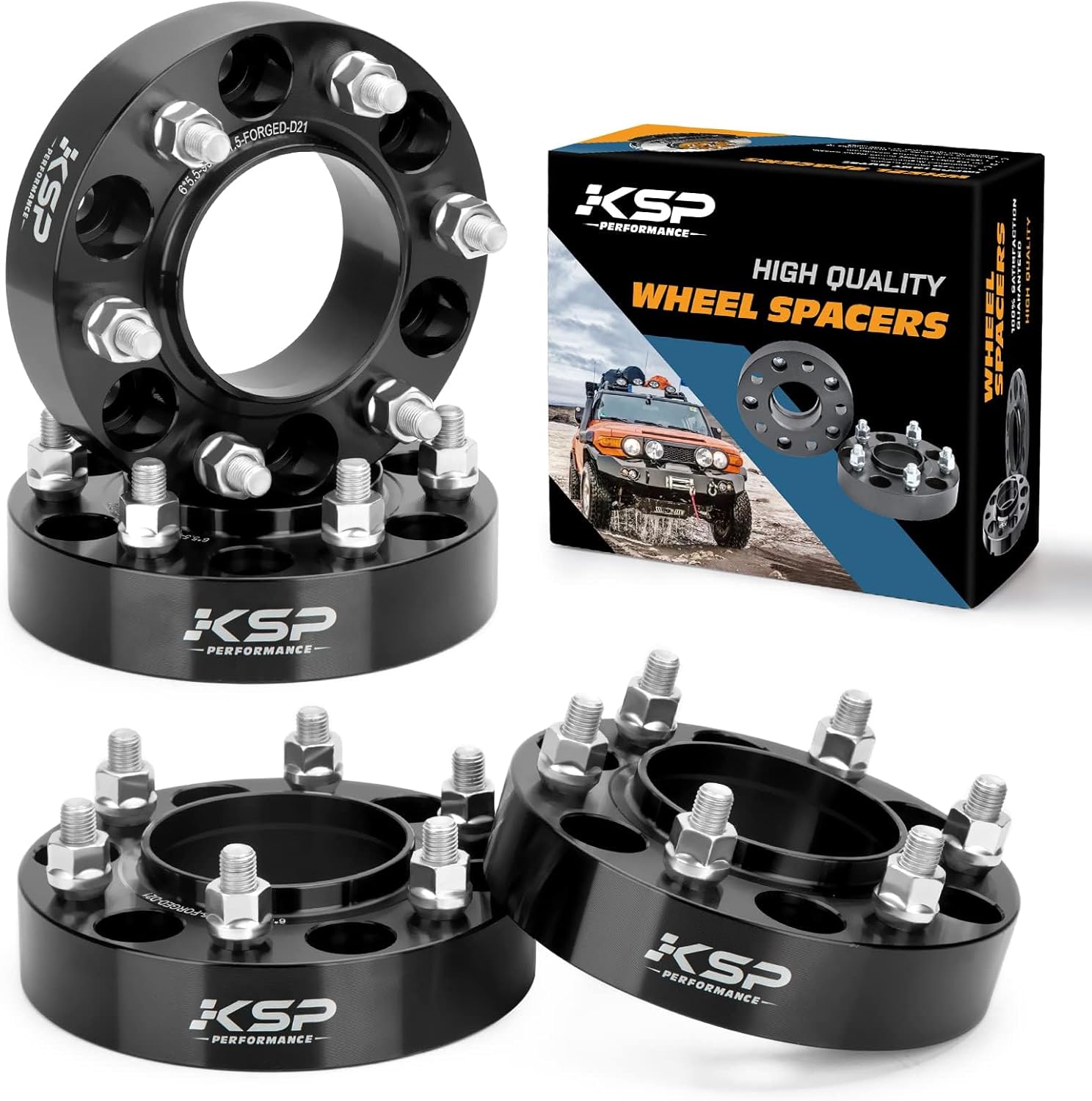
| Bolt Pattern | 6×5.5 (6×139.7mm) |
|---|---|
| Thread Pitch | M12x1.5 |
| Hub Bore | 93.1mm |
| Thickness | 1.5 inch (38.1mm) |
These KSP 1.5 inch forged wheel spacers are built to push wheels outward for better clearance and a wider stance on compatible 6-lug trucks such as the Ranger and Bronco. Made from 6061-T6 aircraft-grade aluminum and CNC-machined, they deliver precise fitment and a durable anodized finish that resists corrosion. The set is hubcentric with a 93.1mm bore and uses heat-treated SCM435 studs graded to ISO/DIN 10.9, which reduces the chance of stud failure compared with softer hardware. Typical uses include fitting larger tires without rubbing, improving track width for stability, and achieving a more aggressive wheel fitment. Installation requires standard torque to spec and the spacers come with open-ended lug nuts and thread locker for secure fastening. Limitations to note are that they only fit 6-lug applications with the specified bolt pattern and hub size, and correct installation and torque are essential to maintain wheel safety and longevity.
Best for: A buyer who prioritizes dependable, long-lasting wheel spacers for everyday driving and occasional off-road use and wants factory-quality materials and hardware for a secure fit.
Less Ideal for: Drivers who need spacers for different bolt patterns, smaller hub bores, or those looking for universal fitment across multiple vehicle types.
- Forged 6061-T6 aluminum construction provides higher strength and durability than cast spacers
- CNC machining and hub-centric 93.1mm bore improve fitment accuracy and reduce vibration risk
- Heat-treated SCM435 studs (ISO/DIN 10.9) and included thread locker enhance fastening reliability
- Black anodized finish offers corrosion resistance for longer service life
- Only compatible with vehicles using a 6×5.5 bolt pattern and 93.1mm hub bore
- Requires correct torque and installation practice to ensure safety and avoid accelerated wear
Verdict: Choose these forged, hub-centric spacers if you want a reliable, precision-fit solution to add clearance and a wider stance on a 6-lug Ranger without sacrificing hardware strength.
6. SCITOO 4-Piece 1.5" 6×5.5 Hub-Centric Wheel Spacers (93.1mm CB)

| Thickness | 1.5 inch |
|---|---|
| Vehicle Bolt Pattern | 6×5.5 |
| Wheel Bolt Pattern | 6×5.5 |
| Center Bore | 93.1mm |
| Thread Pitch | 12×1.5 |
These SCITOO wheel spacers are a 4-piece kit that moves each wheel out 1.5 inches and uses a 93.1mm center bore and 6×5.5 bolt pattern for direct fitment to the listed Ford Ranger and Bronco applications. Made from hot-forged aircraft-grade aluminum with hardened 12×1.5 studs, the kit is built to be strong while keeping weight down; knurled edges help during installation. In use the spacers increase track width for a more aggressive stance, reduce tire-to-fender gap, and can improve cornering stability when paired with appropriate wheel and tire setups. They are marketed as precision engineered and hub-centric to preserve wheel balance when installed correctly. Important limitations: spacers change scrub radius and load on wheel bearings so correct torqueing and periodic checks are necessary, and professional installation is recommended if you are not experienced. Also compatibility must be confirmed against your Ranger Wildtrak's bolt pattern and hub dimensions before purchase.
Best for: Buyers who want a reliable, bolt-on way to widen their Ford Ranger Wildtrak for improved stance and handling while prioritizing parts with proven construction and fitment details.
Less Ideal for: Drivers seeking large clearance changes or major lift/modification solutions should consider hub-centric adapters or suspension upgrades instead; novice installers uncomfortable with wheel torque and safety checks should defer to a professional installer.
- Model-specific 6×5.5 bolt pattern and 93.1mm hub-centric bore for accurate fit on listed Ford applications
- Hot-forged aircraft-grade aluminum construction offers high strength-to-weight ratio
- Includes hardened 12×1.5 studs and knurled edges to aid installation and durability
- 1.5-inch thickness produces a noticeable wider track and improved stance without wheel adapters
- Altering track width affects steering geometry and bearing loads so additional alignment or component checks may be required
Verdict: A purpose-made 1.5-inch hub-centric spacer kit that gives Ford Rangers a wider stance and solid construction for owners who want a confident, bolt-on handling and appearance upgrade.
7. dynofit 1.5" Forged Hub-Centric Wheel Spacer 6×5.5 (93.1mm) for Ford Ranger and Bronco, 4pcs

| Bolt pattern | 6×5.5 (6×139.7mm) |
|---|---|
| Thickness | 1.5" (38.1mm) |
| Hub bore | 93.1mm |
| Thread pitch | M12x1.5 |
| Quantity | 4 PCS |
These dynofit wheel spacers are forged 1.5-inch hub-centric adapters designed to move wheels outward for extra tire clearance and a wider track. They are typically installed between the hub and wheel using the included open lug nuts and M12x1.5 studs, and dynofit recommends rechecking alignment after fitting. The spacers are CNC-machined from 6061-T6 aluminum and finished with anodizing to resist corrosion, while the supplied bolts are higher hardness and SGS tested. In practice they solve rubbing against calipers or suspension components and create room for larger tires without major suspension changes, and the hub-centric bore helps maintain concentric mounting. For a risk-averse buyer the forged construction and corrosion-resistant finish offer reassurance versus cheaper cast spacers. Limitations to note are the need to verify legal fitment and that wider track changes can alter handling and require alignment; the product also recommends using adhesive and periodic checks, so expect a bit more installation care than a simple bolt-on accessory.
Best for: Buyers who prioritize a conservative, safety-minded upgrade to clear larger tires or correct rubbing and who want a sturdier forged spacer with hardware included.
Less Ideal for: Drivers who need a plug-and-play cosmetic change without additional installation steps or those who prefer non-forged lightweight options for track-focused builds.
- Forged 6061-T6 aluminum construction for better strength and fatigue resistance than typical cast spacers
- Hub-centric 93.1mm bore promotes concentric wheel mounting and reduces vibration risk
- Includes M12x1.5 studs and 24 open lug nuts so no separate fasteners are required
- Anodized finish and SGS-tested bolts improve corrosion resistance and hardware durability
- Requires alignment after installation and periodic checks, adding installation time and maintenance
Verdict: A robust, forged 1.5-inch hub-centric spacer kit that gives cautious buyers reliable clearance for larger tires while keeping concentric mounting and supplied hardware.
Choosing the Right Ford Ranger Wildtrak Wheel Spacers: Key Factors to Consider
Bolt Pattern and Fitment
Correct bolt pattern and center bore alignment are fundamental for safe fitment on a Ford Ranger Wildtrak. Make sure any spacer you consider uses the Wildtrak's wheel stud pattern so studs fully engage through the spacer and into the wheel. Mismatched bolt patterns or ambiguous sizing increase the risk of improper torque and fastener fatigue.
Also check whether the spacer is hubcentric or lugcentric. Hubcentric spacers index on the vehicle hub and wheel center bore to reduce runout. That centering matters for minimizing the chance of vibration, particularly when using wider offsets or larger wheels commonly paired with spacers.
Material and Construction
Spacer material affects longevity and structural strength. High-quality forged or machined billet aluminum is common because it offers a good strength-to-weight ratio and resists corrosion when coated properly. Avoid thin, stamped or poorly machined parts that can deform under load or when torqued to specification.
Check the machining tolerances around the hub bore and lug seats. Precise machining ensures even clamping force and consistent torque readings. Anodized or coated finishes improve corrosion resistance in wet climates and prevent galling between mating surfaces.
Thickness and Stud Engagement
Spacer thickness determines how much the wheel moves outward and directly impacts stud engagement. You need enough thread engagement to maintain clamping force; a rule of thumb is to keep at least the original stud thread engagement depth after spacer installation. Choosing a spacer that is too thick can leave insufficient threads engaged and increase the risk of lug failure.
Consider incremental thickness options and whether the spacer design retains or replaces wheel studs. Some kits add extended studs or include hub-centric adapters to preserve safe engagement. Match thickness to wheel offsets and tire dimensions so you achieve the desired stance without compromising safety.
Hardware Quality and Installation Kit
Good installation hardware matters as much as the spacer itself. Look for hardened, grade-marked studs or lug nuts and torque specs provided by the manufacturer. Included washers, replacement studs, and thread-locking recommendations reduce guesswork during installation and help ensure long-term reliability.
A complete installation kit that includes extended studs or wheel-specific lug nuts tailored for the Wildtrak simplifies fitment and reduces the chance of mismatched components. Hardware that is not rated or unspecified should be a red flag.
Vibration Risk and Hubcentric Design
Vibration after spacer installation is a common concern. Hubcentric spacers that properly center the wheel on the hub minimize runout and reduce the likelihood of vibration. Poorly matched center bores or uneven mounting surfaces can induce wobble even if the fasteners are torqued correctly.
If you already feel slight vibration with your current wheels, prioritize spacers with tight center-bore tolerances and consider professional balancing after installation to address residual imbalance.
Corrosion Resistance and Maintenance
Ford Ranger Wildtrak trucks are often used in varied weather and road conditions, so corrosion resistance is important. Spacers with anodized finishes, stainless hardware, or protective coatings will last longer and maintain clamping performance.
Periodic checks after installation help catch loosening or corrosion early. Inspect fastener torque after the first 50 to 100 miles and again periodically, and look for signs of corrosion on mating surfaces that can affect fitment over time.
Understanding Bolt Patterns And Center Bores
Confirming the correct bolt pattern and center bore is the first step before selecting a spacer. For the Wildtrak, you must verify the wheel stud layout and ensure the spacer matches that pattern so wheel studs pass cleanly through or are replaced with appropriately sized studs.
If a spacer is hubcentric it will register on the hub center bore and the wheel's center hole, which helps keep the wheel concentric to the hub. Lugcentric spacers rely on the lug nuts for centering and can be more sensitive to irregularities in stud length or wheel holes.
- Measure stud spacing and count before ordering spacers.
- Inspect the wheel center bore diameter and compare to spacer specifications.
- Choose hubcentric spacers when possible to reduce vibration risk.
Matching Spacer Thickness To Wheel Offset
Decide how much additional offset you need to achieve the look or clearance you want. Minor adjustments of 5 to 15 millimeters can correct rubbing or slightly widen stance, while larger thicknesses require careful verification of stud engagement and wheel well clearance.
Think through how added width affects wheel tuck, fender clearance during suspension travel, and steering sweep. If you run wider tires, you may need smaller spacer increments combined with a different wheel offset to maintain safe handling.
- Start with conservative thickness and reassess fitment.
- Account for suspension compression when checking for rubbing.
- Consider wheel spacer thickness guide references for safe engagement.
Installation Best Practices For The Wildtrak
Proper installation reduces the chance of problems. Clean mating surfaces on the hub and wheel to remove rust or debris. If the spacer replaces studs or bolts, follow the specified torque sequence and torque specs to the vehicle manufacturer or spacer documentation.
After initial fitting, torque fasteners to spec, lower the vehicle and then re-torque after the first short drive. If the spacer includes new studs, ensure they are the correct grade and that threads are free of damage before installation.
- Use a calibrated torque wrench and follow published torque specs.
- Replace damaged studs rather than reusing compromised hardware.
- Have wheels professionally balanced after installing spacers.
Common Fitment Pitfalls And How To Avoid Them
Rubbing is a frequent issue that occurs when spacer thickness plus wheel offset pushes the tire beyond clearances at full lock or full compression. Test full lock steering and compression travel in a safe environment before driving at speed.
Another pitfall is insufficient thread engagement. Confirm how many original stud threads remain engaged with the wheel after spacer installation, and opt for extended studs when necessary. Also watch for spacers that do not fully seat on the hub due to uneven surfaces or burrs.
- Check for contact at full steering lock and full suspension travel.
- Verify at least the minimum safe thread engagement for lug studs.
- Inspect mating surfaces for burrs and ensure full spacer seating.
Maintenance After Installation
Routine checks help maintain safety and performance. Recheck lug torque after initial road miles and periodically thereafter. Inspect for corrosion, cracking, or movement between the spacer and hub over time.
If you hear unusual noises or detect vibration, pull the vehicle off safely and inspect fasteners and spacer seating. Many issues are correctable with re-torquing, cleaning mating surfaces, or swapping to hubcentric spacers.
- Re-torque fasteners after the first 50 to 100 miles.
- Inspect hardware and spacers every few months or after off-road use.
- Address vibration promptly; do not ignore changes in ride feel.
Still looking for the perfect fit?
Select your Ford Ranger configuration to see the most relevant Wheel Spacers recommendations
How We Chose the Best Ford Ranger Wildtrak Wheel Spacers
We focused on criteria that matter specifically to Ford Ranger Wildtrak owners and street-driven trucks. Primary evaluation points included hub-to-wheel fitment accuracy, bolt pattern and stud engagement for the Wildtrak configuration, and material strength for routine hauling and light off-road use. We also prioritized spacer thickness options that maintain safe stud engagement, the quality and grade of included lug nuts or studs, and whether spacers are hubcentric to minimize vibration risk.Additional filters covered machining tolerances, corrosion-resistant finishes for all-weather use, and the availability of compatible installation hardware or kits. We excluded single-purpose spacers designed only for show cars or for heavy commercial load ratings that exceed typical Wildtrak use. Final selections weighed real-world fitment notes and documented specifications rather than marketing claims, and we favored options offering clear sizing guidance and torque recommendations relevant to Ford Ranger Wildtrak wheel studs.
Our full evaluation process is outlined in our review methodology.
FAQ
Will wheel spacers affect vehicle handling on a Ranger Wildtrak?
Spacers change track width, which can alter steering feel and cornering balance. Small, conservative spacers often produce minimal change, while large spacers can increase scrub radius and affect handling. Choose thickness that maintains safe geometry and test the truck in low-risk conditions after installation.
How do I know if a spacer is hubcentric or lugcentric?
Manufacturer specs should state whether a spacer is hubcentric or lugcentric. Hubcentric spacers have a raised center bore that matches the vehicle hub diameter, while lugcentric units rely on the lug nuts to center the wheel. If unsure, measure the center bore and compare to the hub diameter.
Do wheel spacers cause vibration on the Wildtrak?
They can if the spacer or wheel is not properly centered or if mating surfaces are uneven. Choosing hubcentric spacers with tight tolerances and ensuring wheels are balanced and fasteners torqued correctly reduces the chance of vibration.
What torque specs should I use when installing spacers?
Follow the spacer manufacturer's torque recommendations and the vehicle's lug torque specifications when applicable. If the spacer kit provides different specs for extended studs or nuts, use those. Re-torque after the initial drive to confirm proper clamping.
Can I use wheel spacers with aftermarket wheels on my Wildtrak?
Often yes, but you must confirm bolt pattern, center bore, and adequate stud engagement for the specific wheel. Some aftermarket wheels have different center bores or hole shapes that require matching spacer design or hub-centric rings.
How thick can spacers be before they become unsafe?
There is no single safe maximum; it depends on remaining thread engagement, wheel offset, and load conditions. As thickness increases, the risk to stud engagement and wheel bearing loads grows. If you need large offsets, consider extended studs and consult engineering guidance or a qualified installer.
Final Verdict
Prioritize fitment, material quality, and safe stud engagement when selecting wheel spacers for a Ford Ranger Wildtrak. Small to moderate thicknesses that preserve adequate thread engagement and use hubcentric designs will minimize vibration risk and maintain reliable clamping.Balance the desire for a wider stance or improved clearance with the mechanical tradeoffs to steering geometry and hub loading. When in doubt, choose spacers with clear specifications, proper hardware, and plan for professional balancing and follow-up torque checks to keep your Wildtrak safe and performing as intended.
Explore More:
- Check out all Ford Ranger parts & accessories
- Explore Wheel Spacers Maintenance & Repair Guides
- Explore Wheels & Tires
- Browse all Auto Parts
