

Note: This article contains affiliate links. If you click on these links and make a purchase, I may earn a small commission at no extra cost to you. This helps support my research and content. Read my full affiliate disclosure here.
If you want a wider track, improved stance, or to clear aftermarket wheels and brake components on your 2019-2023 Ford Ranger, properly chosen wheel spacers can deliver those benefits. Selecting the right spacers matters because incorrect fitment or wrong thickness can cause handling changes, wheel contact issues, or premature wear on hub and studs.This guide covers seven carefully shortlisted wheel spacers selected for fitment, material quality, and installation practicality for the 2019-2023 Ranger. We evaluate durability, fit, and the mounting details you need to make a confident choice. Read on for what mattered in our selection and the key technical points to check before you buy.
Looking for other parts? See all Ford Ranger parts & accessories.
Top Picks at a Glance
| Best Overall The best all-around choice for most situations | IRONTEK 1.5" 6×5.5 (6×139.7) Forged Wheel Spacers with M12x1.5 Threads (4pcs) |  |
| Best Quality Built to a higher standard if you want something more solid | Mishimoto Borne Off-Road 6×139.7 Wheel Spacers, 1.00 inch |  |
| Best Value The sweet spot between price and what you get | EVIL ENERGY 6×5.5 (6×139.7) 1" Hubcentric Wheel Spacers with Lip, M12x1.5 Studs |  |
| Best Budget The cheapest option that still gets the job done reliably | IRONTEK 1.25" Wheel Spacers 6×139.7mm (4-piece) |  |
| Highest Rated A top-rated pick with lots of positive feedback | KSP Performance 1.5" Forged 6×5.5 Hubcentric Wheel Spacers with 93.1mm Hub Bore (4-pack) |  |
| Most Popular A crowd favorite that many people choose with confidence | SCITOO 4pcs 1.5" 6×5.5 Wheel Spacers, 93.1mm Center Bore, 12×1.5 Studs |  |
| Best Seller A high-volume bestseller chosen again and again | dynofit 1.5" Forged Hub-Centric Wheel Spacers (6×5.5, 93.1mm) — 4pcs |  |
1. IRONTEK 1.5" 6×5.5 (6×139.7) Forged Wheel Spacers with M12x1.5 Threads (4pcs)

| Thickness | 1.5 inches (38mm) |
|---|---|
| Bolt pattern | 6×139.7mm (6×5.5") |
| Thread pitch | M12x1.5 |
| Hub bore | 93.1mm |
| Quantity | 4 pieces + 24 lug nuts |
These IRONTEK spacers push wheels out 1.5 inches to widen track, clear calipers, and create a more aggressive stance while improving lateral stability. They are forged from 6061-T6 aluminum and come hub-centric to a 93.1mm bore, which keeps the wheel centered and reduces vibration when matched to the vehicle hub. The kit includes four spacers and 24 lug nuts and uses hardened 10.9-grade bolts for durability. In everyday use they are installed between the hub and wheel to increase clearance for larger tires or aftermarket wheels and to correct minor fitment interference. Practical benefits include lighter weight than steel alternatives, corrosion-resistant coating, and a factory-style hub bore for better alignment. Important limitations are that the factory studs may need shortening or replacement with extended/shorter studs depending on wheel design, and users must torque hardware to spec and recheck after initial miles; an impact wrench is not recommended. These spacers are a solid midrange option for someone wanting a durable, OEM-minded solution for tire or wheel fitment on the Ranger or Bronco models listed.
Best for: Buyers who want a balanced, durable spacer that improves stance and handling while staying close to factory engineering and fitment for routine on-road use.
Less Ideal for: Drivers seeking extreme offsets, heavy-duty off-road use, or those unwilling to inspect/adjust wheel studs and torque hardware after installation.
- Forged 6061-T6 aluminum construction for strength with lower weight than steel
- Hub-centric 93.1mm bore reduces vibration when aligned to the hub
- Includes hardware: 4 spacers plus 24 lug nuts and hardened 10.9-grade bolts
- 1.5-inch offset increases tire clearance and improves lateral stability
- May require extended or shorter wheel studs or modification to factory studs depending on wheel design
Verdict: A well-engineered, forged 1.5-inch spacer that balances strength, hub-centric fitment, and practicality for 2019–2023 Ford Ranger owners needing modest track widening.
2. Mishimoto Borne Off-Road 6×139.7 Wheel Spacers, 1.00 inch
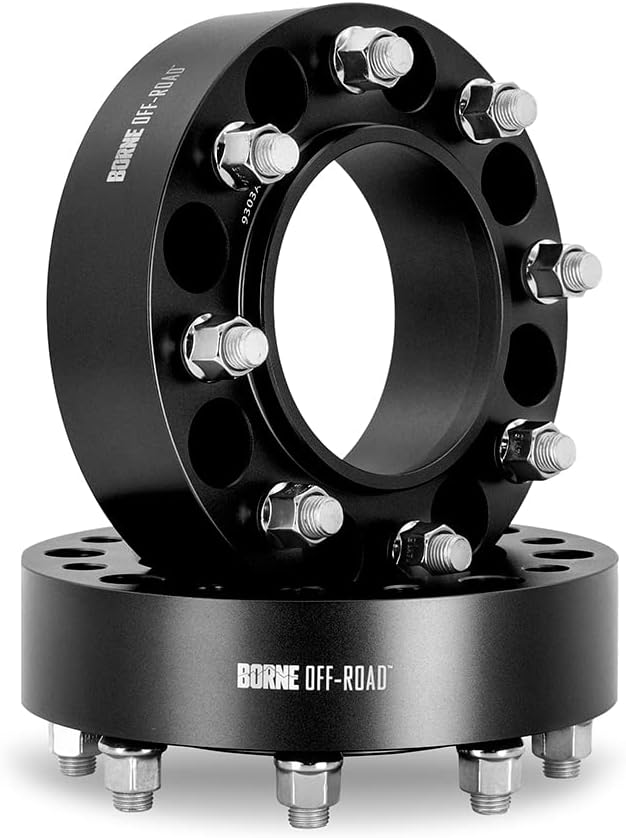
| Bolt pattern | 6×139.7 |
|---|---|
| Center bore | 93.1mm |
| Stud size | M12 x 1.5 |
| Thickness | 1.00 inch |
| Material | Forged 6061-T6 aluminum |
These Borne Off-Road wheel spacers are designed to add 1.00 inch of track width for vehicles using a 6×139.7 bolt pattern and a 93.1mm center bore, making them a straightforward way to gain brake clearance and improve wheel stance on a 2019–2023 Ford Ranger. Forged 6061-T6 aluminum keeps each spacer light yet strong while a hub-centric profile centers the wheel on the hub to reduce stress on hardware and improve ride smoothness. The kit ships with preinstalled grade-12.9 steel studs and matching lug nuts so installation requires minimal extra parts, and the black anodized finish helps resist corrosion. In practice these spacers are used to prevent tire rub when fitting wider tires, create a wider track for improved cornering feel, or make larger brakes fit without modifying wheels. Limitations include the permanent change to wheel offset and the added exposure of studs and nuts; proper torque and periodic inspection are required. These come as a two-piece kit and include the hardware needed for installation.
Best for: Drivers upgrading wheels or brakes on a Ranger who prioritize improved track width, brake clearance, and handling responsiveness and who plan to perform correct installation and maintenance.
Less Ideal for: Anyone seeking a reversible cosmetic change or who prefers solutions that do not alter wheel offset significantly; not suited for buyers unwilling to perform periodic hardware inspections.
- Forged 6061-T6 aluminum construction for strength with low weight
- Hub-centric design for precise fitment and reduced load on wheel hardware
- Includes preinstalled grade-12.9 studs and lug nuts for easier installation
- Black anodized finish provides corrosion resistance
- Kit includes the two spacers and necessary hardware
- Adds permanent offset which may affect steering geometry and clearance over time
- Exposes studs and lug nuts which require regular torque checks and inspection
Verdict: If you want a strong, hub-centric 1.00-inch spacer to create brake clearance and a wider track on a 2019–2023 Ranger, this kit provides the hardware and build quality to do it reliably.
3. EVIL ENERGY 6×5.5 (6×139.7) 1" Hubcentric Wheel Spacers with Lip, M12x1.5 Studs

| Bolt pattern | 6×139.7 mm |
|---|---|
| Thickness | 1 inch |
| Hub bore | 93.1 mm |
| Wheel studs | M12x1.5 |
| Material | 6061-T6 aluminum |
These EVIL ENERGY wheel spacers move the wheel out by one inch and are built specifically to fit the 6×139.7 bolt pattern and 93.1 mm hub bore used on the 2019–2023 Ranger. Machined from 6061-T6 billet aluminum and anodized for corrosion resistance, they include grade 10.9 geomet bolts and M12x1.5 studs for secure fastening. Typical use is to correct backspacing, clear brake or suspension components, or give a slightly wider stance without changing rims. The hubcentric lip helps center the wheel for reduced vibration and the hardened bolts aim to resist shearing under normal road loads. Installation sits between the hub and wheel; the maker recommends hand-torquing to avoid bolt damage from impact tools. Limitations to note are that these are a one-inch spacer only and require correct torque and periodic checks; installers should verify wheel and brake clearance after fitting and follow torque specs. For a practical Ranger upgrade they offer a straightforward way to fix fitment issues while keeping a near-factory driving feel.
Best for: Buyers who want a practical, durable spacer to correct backspacing or clearances on a 2019–2023 Ranger while keeping a near-factory ride and straightforward installation.
Less Ideal for: Drivers seeking large stance changes, track-only modifications, or multiple offset options should look at thicker spacers or different kits tailored to aggressive fitments.
- Vehicle-specific 6×139.7 hubcentric design centers wheels to reduce vibration on Ranger fitment
- 6061-T6 billet aluminum construction with anodized finish for strength and corrosion resistance
- Includes grade 10.9 geomet bolts and M12x1.5 studs for durable fastening
- 1-inch thickness corrects backspacing and improves clearance without major modifications
- Only available in a single 1-inch thickness so other offset needs require different parts
Verdict: A practical, factory-minded 1-inch hubcentric spacer that fixes backspacing and clearance issues on 2019–2023 Ford Ranger models with durable aluminum construction.
4. IRONTEK 1.25" Wheel Spacers 6×139.7mm (4-piece)

| Thickness | 1.25 inch (32mm) |
|---|---|
| Bolt pattern | 6×139.7mm (6×5.5") |
| Thread pitch | M12x1.5 |
| Hub bore | 93.1mm |
| Quantity | 4 pieces |
These IRONTEK 1.25" wheel spacers are a budget-friendly way to push wheels outward for a wider stance and improved clearance on 2019–2023 Ford Ranger (and 2021–2023 Bronco). Made from forged 6061-T6 aluminum, the kit includes four spacers, 24 lug nuts, and M12x1.5 hardware and is hub-centric with a 93.1mm bore to center the wheel reliably. In practical use they increase track width to help with stability and can resolve minor brake-caliper or suspension clearance issues without changing wheels. The forged construction and corrosion coating aim to keep them durable for street and light off-road use, and the included hardened 10.9-grade bolts reduce fastener failure risk. Expect to follow the safety notes: torque to manufacturer specs, avoid impact guns, and re-torque after initial miles; some installations may require extended or shorter studs depending on wheel design. These spacers are a straightforward, cost-conscious upgrade for drivers wanting a wider stance, though they are an add-on modification that may need attention to stud length and wheel fitment details.
Best for: Buyers looking for an economical way to widen the track or solve minor caliper and clearance issues on 2019–2023 Ford Ranger who prioritize cost-effectiveness and practical on-road/ light off-road performance.
Less Ideal for: Drivers wanting a bolt-on cosmetic change with zero modification or those who need heavy-duty off-road use and prefer thick spacers or wheel relocators engineered for extreme loads.
- Forged 6061-T6 aluminum construction for strength with lower weight than steel
- Hub-centric 93.1mm bore helps center the wheel and reduce vibration
- Includes hardware: four spacers plus 24 lug nuts and hardened 10.9-grade bolts
- Thin 1.25" thickness provides clearance improvements without a large offset change
- May require extended or replacement wheel studs on some wheel designs which adds installation steps
Verdict: A cost-conscious, forged-aluminum spacer kit that widens the track and fixes minor clearance issues on 2019–2023 Ford Ranger without a heavy weight penalty.
5. KSP Performance 1.5" Forged 6×5.5 Hubcentric Wheel Spacers with 93.1mm Hub Bore (4-pack)
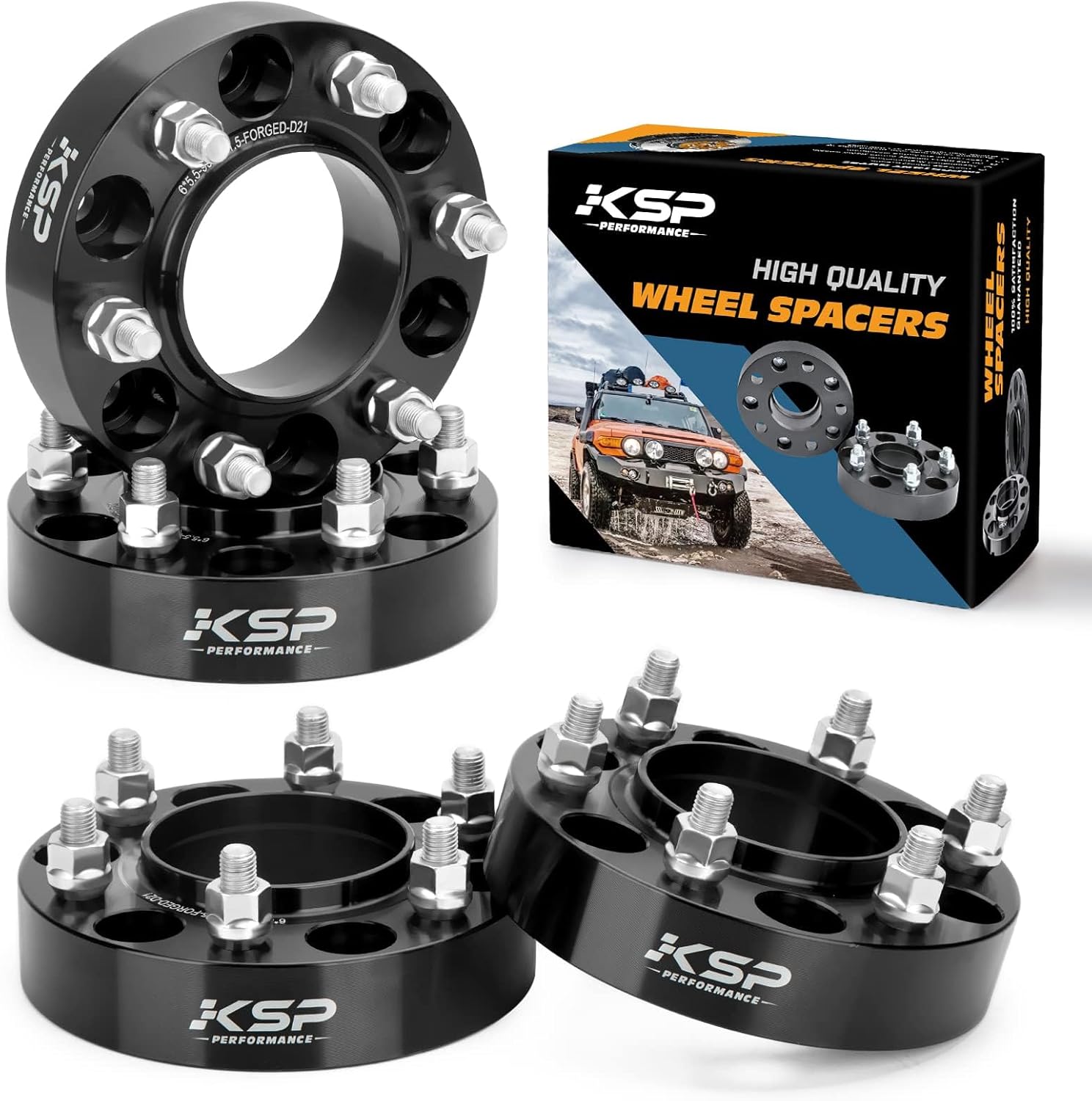
| Bolt pattern | 6×5.5 (6×139.7mm) |
|---|---|
| Thread pitch | M12x1.5 |
| Hub bore | 93.1mm |
| Thickness | 1.5 in (38.1mm) |
These KSP 1.5-inch wheel spacers are forged from 6061-T6 aluminum and CNC machined to match a 6×5.5 bolt pattern with a 93.1mm hub bore, giving a hubcentric fit for 2019+ Ford Ranger and 2021+ Bronco models. They are intended to add clearance for larger tires, push wheels outward for a wider stance, and help avoid contact with sway bars or suspension components. KSP includes heat-treated GEOMET M12x1.5 studs and supplies open-ended lug nuts and thread locker to simplify installation. The black anodized finish improves corrosion resistance and the forged construction offers higher strength than typical cast spacers, which supports long-term durability when torqued to the recommended 72–80 ft-lbs. Limitations are that these spacers are vehicle-specific and only fit 6-lug Ranger/Bronco patterns; installation requires correct torque and periodic recheck of fasteners. Buyers should also ensure wheel backspacing and alignment are appropriate after installation to avoid handling changes.
Best for: Buyers who prioritize a durable, factory-quality upgrade that increases tire clearance and track width on 2019+ Ranger and 2021+ Bronco models and who want components built to resist corrosion and fatigue.
Less Ideal for: Drivers who need a universal spacer or who plan frequent wheel swaps across multiple vehicle types should consider other options or dedicated adapters instead.
- Forged 6061-T6 aluminum construction for greater strength than cast spacers
- CNC machining and hubcentric 93.1mm bore for precise fitment on 6×5.5 hubs
- Includes heat-treated M12x1.5 studs and open-ended lug nuts for a complete install
- Black anodized finish and thread locker for improved corrosion resistance and secure fastening
- Only compatible with 6-lug 6×5.5 Ford Ranger and Bronco applications so not universal
Verdict: A forged, hubcentric 1.5-inch spacer built for reliable, long-lasting fit and clearance on 2019+ Ford Ranger and 2021+ Bronco models.
6. SCITOO 4pcs 1.5" 6×5.5 Wheel Spacers, 93.1mm Center Bore, 12×1.5 Studs

| Bolt pattern | 6×5.5 |
|---|---|
| Thickness | 1.5 inch |
| Center bore | 93.1mm |
| Thread pitch | 12×1.5 |
These SCITOO spacers push each wheel out 1.5 inches to widen track and clear larger wheels or tires on 2013–2023 Ford Ranger and 2021–2023 Bronco models that use a 6×5.5 bolt pattern with a 93.1mm center bore. They are forged from aircraft-grade aluminum with heat-treated 12×1.5 studs for strength and include knurled edges to help hold them during installation. In practice the kit gives a noticeably wider stance that can reduce fender gap and improve cornering feel; fitment is model-specific so wheel balance and hub centering are preserved when matched correctly. Installation is straightforward for a shop or experienced DIYer but requires proper torqueing and a compatibility check before purchase. Limitations are typical for aftermarket spacers: they change wheel offset and loading on hub bearings so professional installation and periodic torque checks are recommended. The kit is a practical option when you want added track width without changing suspension or wheels.
Best for: Buyers who prioritize a reliable, model-specific spacer to widen stance or fit larger tires on recent Ford Ranger models and who prefer solutions that maintain hub-centric balance.
Less Ideal for: Drivers who plan heavy towing, extreme off-road builds, or who want a suspension-based lift solution rather than a wheel offset modification should consider alternative approaches.
- Model-specific hub-centric fit for 6×5.5 bolt pattern with 93.1mm center bore
- Forged aircraft-grade aluminum construction for a high strength-to-weight ratio
- Heat-treated 12×1.5 studs and knurled edges for secure installation and durability
- Provides 1.5-inch outward wheel offset to close fender gap and improve track stability
- Adds load to wheel bearings and wheel studs which may require more frequent maintenance checks
Verdict: A strong, model-specific 1.5-inch spacer kit that gives Ford Ranger owners a safe way to widen stance and fit larger wheels while keeping hub-centric alignment.
7. dynofit 1.5" Forged Hub-Centric Wheel Spacers (6×5.5, 93.1mm) — 4pcs

| Bolt pattern | 6×5.5 (6×139.7mm) |
|---|---|
| Hub bore | 93.1mm |
| Thickness | 1.5 inches (38.1mm) |
| Thread pitch | M12x1.5 |
These dynofit wheel spacers push the wheel out 1.5 inches to increase track width, clear larger tires, and solve caliper or rubbing issues on compatible vehicles. Sold as a set of four, they are forged from 6061-T6 aluminum, CNC machined and anodized for corrosion resistance, and come with open lug nuts and M12x1.5 studs. Installation is typical for spacer kits: remove wheels, fit the hub-centric spacer to the hub, torque the supplied hardware to the recommended 72 to 80 ft-lbs and have an alignment afterward. The forged construction and SGS-tested bolts offer stronger mechanical properties than basic cast spacers, which should reassure buyers focused on durability and safety. Limitations include the need to verify local vehicle width laws and the recommendation to use adhesive and re-torque after initial fitment; these spacers also add unsprung mass at the wheel edge and require professional installation if you are not experienced with wheel work. For cautious buyers they provide a practical, stronger solution to clearance and stance issues when correctly installed and torqued.
Best for: Buyers who prioritize a conservative, safety-minded upgrade to resolve brake caliper clearance or fit larger tires while keeping a factory-like centered fit and stronger construction.
Less Ideal for: Do not choose these if you prefer bolt-on cosmetic spacers without concern for added unsprung mass or if you cannot comply with local vehicle width regulations.
- Forged 6061-T6 aluminum construction for higher strength than typical cast spacers
- Hub-centric 93.1mm bore helps center the wheel and reduce vibration
- Includes M12x1.5 studs and 24 open lug nuts for a complete fitment kit
- CNC machining and anodized finish improve corrosion resistance and durability
- Adds 1.5 inches of track width and unsprung mass which can affect handling if not matched with proper setup
Verdict: A forged, hub-centric 1.5-inch spacer set that gives cautious buyers a stronger, centered way to clear larger tires and calipers on the 2019–2023 Ford Ranger.
Choosing the Right 2019-2023 Ford Ranger Wheel Spacers: Key Factors to Consider
Bolt Pattern and Hub Fitment
Wheel spacer compatibility starts with matching the Ranger's bolt pattern and hub diameter. A spacer with the wrong stud pattern or hub bore can prevent full seating, cause uneven clamping, and increase the risk of wheel vibration.
Confirm whether the spacer is hub-centric for the Ranger's hub diameter or if it uses centering rings. Hub-centric spacers reduce runout by centering the wheel on the hub rather than relying solely on the lug nuts. If the spacer is lug-centric, expect a greater reliance on precise torque and wheel tolerance to minimize vibration.
Material Strength and Construction
Spacers must withstand cyclic loads, road shocks, and corrosion over time. Forged or CNC-machined 6061-T6 aluminum and high-strength steel are common; aluminum is lighter but requires appropriate thickness and anodizing to resist corrosion, while steel offers higher tensile strength at the cost of added weight.
Check for clear manufacturing tolerances and finish quality. Poorly machined bores or thin cross-sections concentrate stress and can accelerate failure. For the Ranger, choose materials and construction methods that match intended use, whether daily driving, mild off-road, or aggressive stance modifications.
Spacer Thickness and Wheel Offset Effects
Thickness determines how far the wheel moves outboard and directly affects track width and scrub radius. Small increments can significantly change handling characteristics and steering effort.
Use a thickness guide and calculate the resulting offset change before committing. Excessive outward movement can increase load on wheel bearings and suspension components. For the 2019-2023 Ranger, select the smallest thickness that achieves clearance or aesthetic goals while preserving adequate stud engagement and acceptable scrub radius.
Stud and Lug Engagement
Maintaining sufficient thread engagement on studs or using appropriately rated bolts is crucial for safety. Spacers add distance between hub and wheel, reducing the amount of thread that engages the nut or requiring longer wheel studs or extended bolts.
Verify the remaining thread engagement after installing the spacer for your Ranger. Recommended practice is to retain a minimum number of engaged threads as specified by fastener standards. Avoid solutions that leave only a few threads engaged or rely on tapered lug seats to make up for lost engagement.
Corrosion Protection and Coatings
Rusted interfaces can seize parts together, making future removal difficult and risking uneven seating. Spacers should have durable finishes such as Type II or III anodizing for aluminum or high-quality plating/paint for steel.
Consider the Ranger's operating environment. If you drive in salted winter conditions or frequently encounter water and mud, prioritize spacers with robust corrosion protection and replaceable hardware that resists galvanic corrosion between hub, spacer, and wheel.
Installation Hardware and Serviceability
A complete installation kit with proper extended bolts, nuts, and any required centering rings simplifies fitment and improves safety. Kits that include torque specifications and clear instructions reduce the chance of improper installation.
Also consider how serviceable the setup will be for tire rotation, brake service, or wheel changes. Spacers that require proprietary hardware or permanent modifications increase long-term maintenance complexity. For the Ranger, choose spacers that are straightforward to install and remove with common tools.
Understanding Fitment for the 2019-2023 Ranger
Even within a single model range, wheel, brake, and suspension variants influence spacer fitment. Confirm your Ranger's wheel bolt pattern and hub bore before selecting a spacer. Many aftermarket wheels and brake upgrades are the reason owners need spacers in the first place, so match the spacer to the exact wheel and caliper clearances you have on your truck.
- Verify wheel bolt pattern and stud type on your Ranger.
- Measure hub bore or use hub-centric spacers designed for the Ranger.
- Check brake caliper and rotor clearance with the desired spacer thickness.
Choosing Thickness to Balance Stance and Handling
Spacer thickness changes both appearance and vehicle dynamics. Modest widths can improve stance and clearance without dramatically altering steering feel. Larger widths move the contact patch outward and can increase steering effort and scrub radius, which may affect turn-in and tire wear over time.
- Start with the minimum thickness that provides the required clearance.
- Consider tapering thickness across the axle if you want a subtle staggered look.
- Reassess wheel alignment after installing spacers to account for track-width changes.
Hub-Centric Vs Lug-Centric: Which Is Safer for the Ranger?
Hub-centric spacers align the wheel to the hub bore and are generally better at minimizing runout and vibration. Lug-centric spacers rely on the lug nuts to center the wheel and can allow more play if wheel bores or studs are slightly out of spec.For the 2019-2023 Ranger, hub-centric designs reduce the chance of vibration issues and simplify installation because they ensure consistent centering even before final torque is applied.
- Prefer hub-centric spacers sized to the Ranger's hub bore.
- Use centering rings when necessary if the spacer or wheel bore is oversized.
Installation Prep and Tools You Will Need
Preparing the truck and having the correct tools makes installation straightforward. You will typically need a torque wrench, jack and stands, wheel chocks, and the correct length lug bolts or studs included in a proper installation kit.Inspect studs and the hub face for corrosion before installation and clean mating surfaces. Plan for a re-torque procedure after initial miles to ensure fasteners remain secure.
- Torque wrench calibrated to the spacer torque specs.
- Clean hub face, thread chaser or wire brush for studs.
- Proper jack points and safety stands for the Ranger.
Legal and Safety Considerations
Local regulations may restrict certain modifications that change track width or alter wheel fitment. Safety considerations include ensuring adequate thread engagement and using hardware rated for the stresses involved.Avoid permanent hub machining or modifications that could compromise structural integrity. If uncertain about fitment or installation, consult a qualified technician familiar with the Ranger platform.
- Check local vehicle modification regulations.
- Ensure fastener engagement meets safety standards.
- Avoid modifications that permanently alter hub or spindle geometry.
Still looking for the perfect fit?
Select your Ford Ranger configuration to see the most relevant Wheel Spacers recommendations
How We Chose the Best 2019-2023 Ford Ranger Wheel Spacers
We focused on criteria that directly affect performance and safety on the 2019-2023 Ford Ranger. Primary filters included accurate bolt pattern and hub-centric fit to minimize runout, high-strength materials and coatings for corrosion resistance, and correct stud or bolt length compatibility for common Ranger wheel and brake setups. We also prioritized spacer thickness options that match common clearance goals without excessively extending stud engagement.Additional evaluation criteria included manufacturing tolerances and finish quality, availability of proper hardware or an installation kit, and whether the spacer design offered hub-centric alignment or relied on lug-centric clamping. We considered documented torque specs and the ability to maintain proper seating under load. Exclusions: spacers without clear fitment data for the 2019-2023 Ranger, low-quality cast alloys lacking strength ratings, or products that require permanent hub modification. The result is a group of options that balance fit, durability, and installation practicality for Ranger owners.
Our full evaluation process is outlined in our review methodology.
FAQ
Will wheel spacers void my Ford Ranger warranty?
Warranty impact often depends on the specific warranty terms and whether the spacer installation is linked to a failure. Many warranties allow aftermarket parts, but issues caused directly by the spacer or its installation could be excluded. Check your warranty documentation or consult your dealer for specifics.
How do I know the correct bolt pattern for my 2019-2023 Ranger?
The bolt pattern can be confirmed by measuring the stud layout or checking the vehicle's specifications. Many owners verify pattern and hub bore by measuring directly at the hub to ensure any spacer matches the Ranger's mounting geometry.
Do I need hub-centric spacers or are lug-centric ones acceptable?
Hub-centric spacers are generally preferred because they center the wheel on the hub and reduce runout. Lug-centric spacers can work if wheel bores and studs are precise, but they increase reliance on proper torque and wheel tolerances to avoid vibration.
How much thread engagement should remain after installing a spacer?
You should maintain enough engaged threads to meet fastener strength guidelines, typically several full threads beyond the nut. The exact minimum depends on stud diameter and grade, but avoid solutions that leave only a couple of threads engaged.
Will wheel spacers increase my Ranger's track width and affect handling?
Yes, spacers move the wheel outward which increases track width and can change handling characteristics. Small increases often improve stability and stance, while large offsets can increase steering effort and alter scrub radius, so choose thickness carefully.
Can wheel spacers cause vibration on my Ranger?
They can if the spacer or wheel is not properly centered, if fasteners are not torqued correctly, or if the spacer is mismatched to the hub bore. Using hub-centric spacers and following correct torque procedures reduces the risk of vibration.
Final Verdict
When selecting wheel spacers for a 2019-2023 Ford Ranger, prioritize accurate fitment, proper thread engagement, and materials suited to your driving conditions. Small, measured thickness increases will yield most of the cosmetic and clearance benefits without dramatically changing handling or over-stressing wheel hardware.Balance the desire for improved stance with safety tradeoffs: choose hub-centric designs when possible, ensure corrosion protection, and use correct installation hardware and torque practices. With those priorities in mind, you can confidently pick spacers that deliver the look and clearance you want while maintaining safe operation.
Explore More:
- Check out all Ford Ranger parts & accessories
- Explore Wheel Spacers Maintenance & Repair Guides
- Explore Wheels & Tires
- Browse all Auto Parts
