

Note: This article contains affiliate links. If you click on these links and make a purchase, I may earn a small commission at no extra cost to you. This helps support my research and content. Read my full affiliate disclosure here.
If you want a wider track, improved tire clearance, or a more aggressive stance for your 1998-2011 Ford Ranger, choosing the right wheel spacers matters. The wrong spacer can cause fitment headaches, steering shimmy, or excessive hub stress. This guide covers the top shortlisted wheel spacers that fit the Ranger's 1998-2011 range and explains the installation, sizing, and safety considerations you should weigh.We evaluated options for fitment accuracy, material strength, and ease of installation so you can pick spacers that meet your goals for clearance, aesthetics, and safe driving. Read on for the core factors to consider, practical installation guidance, and common questions Ranger owners ask.
Looking for other parts? See all Ford Ranger parts & accessories.
Top Picks at a Glance
| Best Overall The best all-around choice for most situations | StanceMagic 1.5 in Hubcentric 5×4.5 Wheel Spacers (70.5mm Bore) — 2 Pack |  |
| Best Quality Built to a higher standard if you want something more solid | Titan Wheel Accessories 50mm Billet Aluminum Wheel Spacers, 5×114.3, 82.5mm Hub Bore (Pair) |  |
| Best Value The sweet spot between price and what you get | FLYCLE 1" 5×4.5 Hub-Centric Wheel Spacers (5×114.3mm) with 82.5mm Bore |  |
| Best Budget The cheapest option that still gets the job done reliably | PHILTOP 0.5" 5×4.5 / 5×4.75 Lug-Centric Wheel Spacers (2pc) |  |
| Highest Rated A top-rated pick with lots of positive feedback | ILONPA 2" 5×4.5 Wheel Spacers with 82.5mm Bore, 1/2"-20 Studs, Set of 4 |  |
| Most Popular A crowd favorite that many people choose with confidence | Orion Motor Tech 5×4.5 1" Wheel Spacers with 1/2-20 Studs (Set of 2) |  |
| Best Seller A high-volume bestseller chosen again and again | dynofit 2" 5×4.5 Wheel Spacers, 80.5mm Hub Bore, 1/2"-20 Thread Pitch (4 pcs) |  |
1. StanceMagic 1.5 in Hubcentric 5×4.5 Wheel Spacers (70.5mm Bore) — 2 Pack

| Thickness | 1.5 in (38mm) |
|---|---|
| Bolt pattern | 5×114.3 (5×4.5 in) |
| Centerbore | 70.5mm |
| Stud thread pitch | 1/2-20 |
| Material | T6 aerospace grade aluminum |
These StanceMagic 1.5-inch hubcentric wheel spacers are CNC-machined from T6 aluminum and sold as a two-piece set designed to push wheels outward by 3 inches (1.5 in per side). They install between the hub and wheel using supplied 1/2×20 studs and a 70.5mm lip that centers on the hub to reduce the chance of vibration. For a 1998–2011 Ford Ranger needing rear clearance or a wider stance, these spacers let you fit wider wheels or eliminate wheel-to-shock contact while also lowering perceived center of gravity. The kit uses heat-treated grade 10.9 studs for strength and an anodized finish to resist corrosion. Important practical notes: you must verify stud thread size and stud length, confirm at least 1.5 inches of fender clearance, and re-torque all hardware after 25–50 miles; professional installation is recommended if you are not experienced. These are aftermarket components intended for rear-hub fitment on listed 5-lug Rangers and do not change bolt pattern or replace factory hubs.
Best for: Owners who want a reliable, factory-centered spacer to clear brakes or fit wider wheels on their Ranger rear hubs while keeping vibration and hardware strength in mind.
Less Ideal for: Drivers seeking a bolt-pattern conversion, front-hub installation, or anyone unwilling to check stud length and perform the required re-torque and install safety steps.
- Hubcentric lip reduces chances of wheel vibration when matched to a 70.5mm hub.
- CNC-machined T6 aluminum construction with anodized finish for durability and corrosion resistance.
- Includes heat-treated grade 10.9 studs to provide stronger mounting than softer hardware.
- 1.5 in thickness widens track by 3 in total, improving clearance for wider wheels and visual stance.
- Requires at least 1.5 inches of fender clearance and potentially stud trimming on some vehicles.
- Intended for rear hub fitment on compatible 5-lug applications only and will not change bolt pattern.
Verdict: A solid hubcentric 1.5-inch spacer built for rear 5×4.5 Rangers that provides extra clearance and a wider stance while prioritizing fitment and hardware strength.
2. Titan Wheel Accessories 50mm Billet Aluminum Wheel Spacers, 5×114.3, 82.5mm Hub Bore (Pair)

| Bolt pattern | 5×114.3 |
|---|---|
| Hub bore | 82.5mm |
| Stud size | 1/2×20 |
| Thickness | 50mm |
| Material | 6061-T6 billet aluminum |
These Titan 50mm wheel spacers are machined from 6061-T6 billet aluminum and anodized black to add a wider stance and extra clearance without altering suspension geometry. They bolt directly to the hub using the included open-ended lug nuts and the vehicle's lug nuts, producing a 2-inch per-side track increase that helps fit larger tires or aftermarket wheels and gives a more aggressive look. CNC machining and the 82.5mm hub bore center the spacer for secure seating when torqued to factory specifications. Typical use is bolt-on installation during a wheel change or when upgrading tire/wheel combos; professional installation is recommended to ensure correct torque. The main benefits are durable billet construction, precise fitment for 5×114.3 hubs, and a straightforward install that avoids alignment or suspension modifications. Limitations are that these widen the track significantly which can affect fender clearance or steering feel and they require close attention to torque and periodic checks; they also do not include a torque specification beyond a suggested maximum in the images and rely on proper installation practice.
Best for: Buyers wanting a bolt-on handling and stance upgrade for a Ranger who prioritize a wider track and the ability to run larger wheels or tires without suspension changes.
Less Ideal for: Drivers seeking a maintenance-free original ride or those unwilling to check torque and clearances regularly should choose a different solution.
- CNC-machined 6061-T6 billet aluminum construction for strength and corrosion resistance
- Hub-centric 82.5mm bore for centered, stable mounting
- Adds 50mm per side to increase track width and allow larger tires or aftermarket wheels
- Includes open-ended lug nuts for mounting each spacer to the hub
- Anodized finish improves durability and appearance
- Significant track widening can change steering feel and may require fender modification for full wheel/tire combos
- Spacer installation requires careful torqueing and periodic recheck to maintain safety
Verdict: Choose these 50mm billet spacers to reliably widen the track and fit larger wheels on a Ranger with a strong, hub-centric, bolt-on solution.
3. FLYCLE 1" 5×4.5 Hub-Centric Wheel Spacers (5×114.3mm) with 82.5mm Bore

| Bolt pattern | 5×4.5 (5×114.3mm) |
|---|---|
| Thickness | 1 inch (25.4mm) |
| Center bore | 82.5mm |
| Stud thread pitch | 1/2-20 |
These FLYCLE 1-inch wheel spacers are designed to push wheels outward one inch to improve tire clearance and give a wider stance. Made from forged 6061-T6 aluminum with CNC machining and anodized finish, the spacers are hub-centric with an 82.5mm bore and use 1/2-20 studs; the kit includes four spacers, thread-locking compounds, and a manual. In practical use they let you clear larger brakes or fenders and help fit wider tires without changing the wheels themselves, which is useful when fitting mild off-road or aggressive street tires on older Rangers. The construction and heat treatment target good strength and corrosion resistance while the integrated studs simplify installation compared with separate adapters. Important limitations: these are one-inch spacers so they only provide modest clearance and require correct torque and periodic recheck for safety; they also depend on a matching hub bore and stud pattern so verify fitment for your Ranger year and configuration before buying.
Best for: Buyers looking to correct minor clearance issues or give a slightly wider stance to an older Ranger while keeping a practical, OEM-like installation approach.
Less Ideal for: Drivers who need large offsets for heavy-duty off-road tires, extensive suspension lifts, or multi-inch wheel spacing should look at thicker spacers or wheel/wheel-and-tire combinations instead.
- Forged 6061-T6 aluminum and CNC machining for strength and consistent fit
- Hub-centric 82.5mm bore reduces runout and improves wheel alignment
- Includes 1/2-20 studs and thread-locking compound for simpler installation
- Anodized finish and heat treatment enhance corrosion resistance and durability
- Only provides a 1-inch offset increase, so not suitable for large lift or wide-tire setups
- Fitment is specific to 5×4.5 (5×114.3mm) pattern and 82.5mm bore so must be matched precisely to the vehicle and wheels
Verdict: A practical, hub-centric 1-inch forged spacer for resolving minor clearance issues and giving a slightly wider stance on compatible Rangers.
4. PHILTOP 0.5" 5×4.5 / 5×4.75 Lug-Centric Wheel Spacers (2pc)

| Thickness | 0.5 inch (12.7mm) |
|---|---|
| Bolt pattern | 5×4.5 or 5×4.75 (5×114.3mm or 5×120.65mm) |
| Center bore | 78.1mm |
| Material | 6061-T6 aluminum |
| Quantity | 2 pieces |
These PHILTOP wheel spacers are a simple, budget-friendly way to push wheels outward by 0.5 inch on vehicles with a 5×4.5 or 5×4.75 bolt pattern. Made from forged 6061-T6 billet aluminum and CNC machined, the pair is anodized to resist corrosion and is sold lug-centric with a 78.1mm center bore and no hub lip. Typical uses include clearing brake calipers, correcting tire rub, and giving the truck a slightly wider track for improved cornering feel and a more aggressive stance. Installation requires measuring bolt pattern and bore carefully and using the correct torque sequence; they are intended to be fitted with existing wheel studs rather than adding studs. The practical benefit is an inexpensive fitment fix or cosmetic upgrade without changing wheels, but buyers should confirm fitment for a 1998-2011 Ford Ranger and follow installation and torque guidance to avoid vibration or wheel fit issues. These spacers are best for straightforward spacer needs rather than heavy-duty load reengineering.
Best for: Budget-minded Ranger owners looking for an affordable spacer to clear calipers or eliminate minor tire rub and to give the truck a wider stance without changing wheels.
Less Ideal for: Drivers planning heavy towing, off-road abuse, or major wheel offsets who need thicker spacers, stud conversions, or a professional suspension rework.
- Forged 6061-T6 billet aluminum construction for strength and lighter weight compared with steel
- CNC machining and anodized finish improve fit precision and corrosion resistance
- Lug-centric design with 78.1mm center bore helps centering for many hub configurations
- Half-inch thickness resolves minor clearance and tire rub issues while widening track
- Requires careful measurement and correct wheel torque; not a universal plug-and-play part
- No studs included so users who need stud conversion must source hardware separately
Verdict: An economical, CNC-machined 0.5 inch aluminum spacer that fixes minor clearance issues and gives a Ford Ranger a wider stance without replacing wheels.
5. ILONPA 2" 5×4.5 Wheel Spacers with 82.5mm Bore, 1/2"-20 Studs, Set of 4

| Thickness | 2" (50.8mm) |
|---|---|
| Center Bore | 82.5mm |
| Thread Pitch/Stud | 1/2"-20 |
| Bolt Pattern | 5×4.5 (5×114.3mm) |
These ILONPA spacers push wheels outward 2 inches to increase track width, clear larger brakes, and give a more aggressive stance. Made from forged 6061-T6 aluminum and CNC machined with anodized treatment, they are built to resist corrosion while maintaining precise fitment. The kit uses heat-treated lug nuts and 10.9-grade studs treated for rust resistance, which improves durability under repeated torque cycles. Typical installation replaces factory spacers or installs between hub and wheel; they are intended for bolt-on use with a 5×4.5 (5×114.3) pattern and 82.5mm center bore. In practical use they can improve cornering stability by widening the track and enable larger wheels and calipers without extensive modification. Limitations are that these are hub-centric rings are not included and the manufacturer recommends hand tools rather than impact wrenches for final torque, so careful installation and periodic torque checks are required for long-term reliability. Fitment must match the vehicle's hub dimensions for safe operation.
Best for: Buyers who prioritize dependability and a precise, factory-quality installation for a 1998–2011 Ford Ranger and want a durable spacer that supports larger wheels or brakes.
Less Ideal for: Those looking for a plug-and-play bolt-on that tolerates installation with impact tools or users who cannot verify hub centering without buying adapter rings.
- Forged 6061-T6 aluminum construction with anodized finish for corrosion resistance and consistent machining.
- CNC machining provides precise bolt pattern and center bore for accurate fitment.
- Includes heat-treated lug nuts and 10.9-grade studs with anti-rust treatment for improved durability.
- 2-inch thickness allows clearance for larger brake calipers and a wider track for better handling.
- Does not include hub-centric rings, so matching the spacer bore to the hub may require additional parts.
Verdict: A robust, CNC-machined 2" aluminum spacer built for reliable, factory-quality fitment when widening track or clearing bigger brakes on a 1998–2011 Ford Ranger.
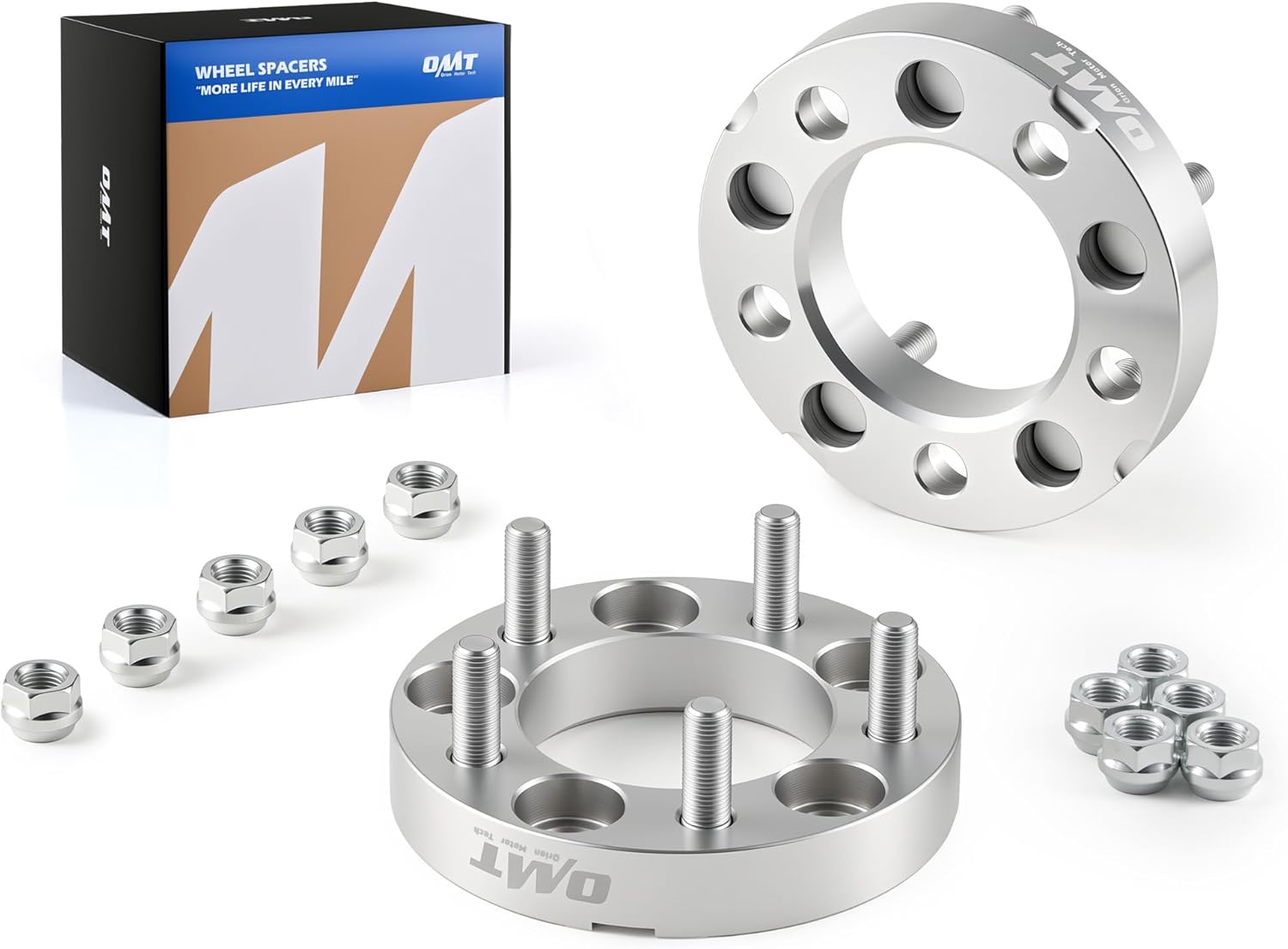
6. Orion Motor Tech 5×4.5 1" Wheel Spacers with 1/2-20 Studs (Set of 2)
| Bolt pattern | 5×4.5" |
|---|---|
| Thickness | 1 inch |
| Material Type | Aluminum |
| Stud size | 1/2-20 |
| Unit count | 2 |
These Orion Motor Tech spacers push the wheel out 1 inch using a 5×4.5 bolt pattern and include ten heat-treated 1/2-20 studs for secure mounting. Made from T6 aircraft-grade aluminum, they are lightweight yet strong and use a hub-centric design and 60 degree taper to help keep wheels aligned and reduce vibration. The rear slots make later removal easier and the zinc-coated studs improve corrosion resistance compared with plain steel hardware. Installation is straightforward for anyone comfortable removing wheels and torquing lug hardware, and the kit is sold as a pair so you upgrade one axle at a time. Limitations to note are that these spacers are vehicle-specific and only fit the listed 5×4.5 applications, and adding spacers changes scrub radius which can affect steering feedback and load on wheel bearings if not matched to the vehicle setup. For a conservative buyer who wants a proven, lightweight spacer to widen stance or fit different wheels, this is a practical option that balances durability and ease of use.
Best for: Buyers who prioritize proven hardware and peer-reviewed reliability and want a conservative, durable spacer to widen stance or accommodate aftermarket wheels on a specified vehicle.
Less Ideal for: Drivers seeking universal fitment, aggressive positive offset changes, or those unwilling to verify fitment and torque procedures with a trusted mechanic should consider alternatives.
- T6 aircraft-grade aluminum construction offers a strong but lightweight spacer
- Hub-centric machining and 60 degree taper help keep wheels centered and reduce vibration
- Included heat-treated, zinc-coated 1/2-20 studs improve fastening strength and corrosion resistance
- Rear-face slots simplify later removal and maintenance
- Changes scrub radius and wheel bearing loads so fitment should match vehicle setup and driving style
Verdict: A conservative, well-machined 1-inch aluminum spacer that gives the widened stance and proven hardware most buyers want for 5×4.5 bolt pattern Ford Ranger setups.
7. dynofit 2" 5×4.5 Wheel Spacers, 80.5mm Hub Bore, 1/2"-20 Thread Pitch (4 pcs)

| Bolt Pattern (PCD) | 5×4.5 (5×114.3mm) |
|---|---|
| Hub Bore | 80.5mm |
| Thread Pitch | 1/2"-20 |
| Thickness | 2 inch (50.8mm) |
| Construction | Forged 6061-T6 aluminum |
These dynofit 2-inch wheel spacers are forged aluminum adapters that move wheels outward to correct clearance issues, allow larger tires, and give a wider stance. They are made from forged 6061-T6 aluminum with CNC machining and come with DACROMAT-treated bolts rated Grade 10.9, which the manufacturer says balances strength and ductility. Typical use is replacing the factory hub-centric fitment with these spacers to solve brake caliper interference, reduce tire rub, or achieve a more aggressive wheel fitment. Practical benefits include lighter forged construction compared with cast alternatives and corrosion-resistant hardware. Important limitations are that installation requires careful torqueing to the recommended 75–85 ft·lbs and confirmation of vehicle fitment; spacers change wheel offset and may affect wheel bearings and steering geometry if not installed properly. They also rely on proper hub centering to avoid vibration and may require longer wheel studs or wheel-specific hardware on some setups.
Best for: Buyers who prioritize a conservative, safety-minded approach to fitment and need a tested, vehicle-specific spacer to fix rubbing or clearance issues while maintaining reliable, predictable behavior.
Less Ideal for: Drivers looking for a bolt-on aesthetic change without checking fitment or those unwilling to follow torque and installation best practices should consider alternatives or professional installation.
- Forged 6061-T6 aluminum construction for improved strength over cast spacers.
- CNC machining and anodized finish for better material hardness and corrosion resistance.
- Includes DACROMAT-treated Grade 10.9 bolts for higher hardness and rust resistance.
- 2-inch thickness provides significant clearance for larger tires and brake calipers.
- Requires correct torque and hub-centric installation to avoid vibration or premature wear.
- Changes wheel offset which can affect suspension and bearing loads if not assessed.
Verdict: A vehicle-specific, forged 2-inch spacer built for reliable clearance and stance improvements when you need a conservative, safety-focused upgrade for your Ranger.
Choosing the Right 1998-2011 Ford Ranger Wheel Spacers: Key Factors to Consider
Bolt Pattern and Hub Bore Accuracy
Matching the bolt pattern and hub bore is the foundation of spacer fitment. The Ranger in the 1998-2011 range uses a specific lug circle and requires spacers with matching bolt holes and a bore that centers on the hub. A hub-centric spacer that seats snugly on the hub bore reduces wheel runout and the risk of vibration.
If a spacer is only lug-centric, correct stud engagement and even torque are more critical to prevent misalignment. Always verify the spacer lists the Ranger 1998-2011 fitment or provides exact bolt pattern and bore measurements before buying.
Material and Manufacturing Quality
High-quality materials and precise manufacturing reduce the chance of cracking or deformation under load. Billet or forged aluminum spacers offer superior strength-to-weight ratios and better fatigue resistance than basic cast parts. Anodized or coated finishes help prevent corrosion where the spacer contacts the hub and wheel.
Look for tight tolerances on bores and bolt holes, and for quality control indicators such as CNC machining and specification sheets. Inferior materials or loose tolerances can lead to premature failure or uneven stresses on wheel bearings.
Spacer Thickness and Wheel Offset Effects
Spacer thickness directly changes effective wheel offset and track width. Small thicknesses may provide just enough clearance for brake calipers or suspension components, while larger thicknesses push wheels outward for a pronounced stance. Consider how thickness affects steering geometry, scrub radius, and fender clearance for your Ranger.
Excessive thickness can increase load on wheel bearings and hub studs, so balance visual goals with mechanical limits. Use manufacturer recommendations and the Ranger's clearance requirements to choose the smallest spacer that achieves your objective.
Hardware and Installation Kit Completeness
A complete installation kit with longer studs, grade-rated lug nuts, and washers simplifies a safe install. Some spacers ship with only the aluminum ring, requiring you to reuse existing studs or source replacements. Proper stud length ensures enough thread engagement for safe clamping force after installation.
Confirm whether the kit includes hub-centric rings and whether fasteners are the correct grade for wheel loads. Missing or underspecified hardware is a common source of installation errors and should be avoided.
Hub-Centric Versus Lug-Centric Design
Hub-centric spacers seat on the Ranger hub and center the wheel by the bore, which typically reduces runout and vibration risk. Lug-centric spacers rely on the lug nuts to center the wheel; they can work well but demand precise stud engagement and correct torque procedures.
For road-driven Rangers, hub-centric spacers are generally preferable for smoothness and less risk of vibration. If choosing lug-centric spacers, ensure even torqueing and frequent rechecks after installation.
Corrosion Protection and Serviceability
Spacers sit between the wheel and hub where moisture and road debris can cause corrosion. Anodized finishes or protective coatings preserve the mating surfaces and make future removal easier. Corrosion can lock parts together and complicate maintenance or lead to uneven clamping forces.
Consider the long-term serviceability of the spacer and whether replacement studs or seals are readily available. Routine inspection and cleaning at service intervals will help prolong spacer life and maintain safe wheel mounting.
Understanding Spacer Fitment for the Ranger
Fitment for the 1998-2011 Ford Ranger depends on three primary dimensions: the bolt pattern, the hub bore, and available wheel stud engagement. Confirming these measurements avoids surprises when installing spacers and ensures the wheel centers correctly.
Measure existing stud length and wheel offset before selecting spacer thickness. Also check brake clearance and suspension movement at full travel to prevent contact. If you plan to change wheel offsets or tire widths, account for the combined effect of the spacer plus wheel offset.
- Verify bolt pattern and hub bore before purchase
- Measure stud engagement to ensure minimum thread depth after installation
- Check fender and suspension clearance at full lock and droop
Common Spacer Thickness Choices and Their Uses
Thin spacers, typically 5 to 12 mm, are used to correct minor clearance issues such as brake caliper interference or slight offset mismatches. They offer modest changes to track width without drastically increasing loads on bearings.
Moderate thicknesses, around 15 to 25 mm, are common for achieving a flush wheel fit or minor stance changes. Anything thicker than 25 mm starts to substantially alter scrub radius and bearing loads and should be chosen with care, especially on daily-driven Rangers.
- 5-12 mm: minor clearance and fit corrections
- 15-25 mm: stance adjustment and wheel flushness
- Over 25 mm: significant track change, increases stresses
Installation Essentials for DIY Rangers
Successful installation begins with clean mating surfaces, correct hardware, and a calibrated torque wrench. Remove corrosion, apply appropriate anti-seize where recommended, and confirm the spacer seats fully against the hub before torquing the wheel.
Always torque lug nuts in the proper star pattern and to the specified torque values for the Ranger's lug nuts plus any adjustments required by longer studs or spacer recommendations. After initial driving, recheck torque values to confirm nothing has loosened.
- Clean hub and wheel contact surfaces
- Use a star pattern and correct torque specs
- Re-torque after 50 to 100 miles of driving
Maintenance and Inspection After Fitment
Inspect spacer hardware and mating surfaces periodically for corrosion, movement, or loosening. Road vibration, repeated load cycles, and exposure to moisture can change clamping conditions over time. Frequent checks are especially important during the first few hundred miles after installation.
If you notice vibration, uneven lug nut torque, or corrosion buildup, remove the wheel and spacer for a detailed inspection. Replace any damaged studs or hardware before reinstalling the wheel.
- Check lug nut torque at regular service intervals
- Look for corrosion or fretting on contact surfaces
- Replace worn studs or damaged spacers promptly
How Spacers Affect Handling and Bearing Loads
Pushing the wheel outward changes scrub radius and increases leverage on wheel bearings and hub studs. Small changes often have negligible effects, but larger spacers can noticeably alter steering feedback and increase wear on components. Balance visual goals with mechanical realities when selecting spacer thickness.
If your Ranger is heavily loaded or used for towing, consider the additional stresses spacers introduce. Appropriate maintenance and choosing conservative spacer thicknesses can mitigate many of the potential downsides.
- Small spacers: minor impact on handling
- Large spacers: increased bearing and stud loads
- Consider vehicle use when selecting thickness
Legal and Safety Considerations
Local regulations may restrict certain modifications that alter wheel fitment or track width. Even where legal, ensure spacers do not obstruct brake cooling or legally required clearances. Use correctly graded hardware and follow torque procedures to maintain safe clamping forces.
Retain documentation for any spacer that affects wheel geometry, particularly if you plan to have the vehicle inspected or sold. Conservative choices reduce the risk of liability or mechanical issues down the line.
- Check local fitment and modification laws
- Use grade-rated hardware and torque to spec
- Keep records of modifications for inspections
Still looking for the perfect fit?
Select your Ford Ranger configuration to see the most relevant Wheel Spacers recommendations
How We Chose the Best 1998-2011 Ford Ranger Wheel Spacers
We focused on factors that directly affect safety, fitment, and long-term serviceability for 1998-2011 Ford Ranger wheel spacers. Primary evaluation criteria included material and manufacturing quality, including billet or forged aluminum and corrosion-resistant finishes; hub-centric accuracy or proper lug-centric design to minimize runout; and bore and bolt pattern tolerances that match the Ranger flange and wheel specifications.We also assessed spacer thickness options and whether adapters provide proper wheel offset without compromising hub preload, plus the availability of complete installation kits with longer studs, washers, and correct torque specifications. Ease of installation and clear fitment instructions were considered to help owners performing a DIY install. Durability factors such as anodizing, coating, and fatigue-resistance design were evaluated as well.We excluded any spacer that lacked clear vehicle fitment information for the 1998-2011 Ranger or that did not provide detailed mounting hardware. We did not consider spoilers or cosmetic-only products that alter appearance without addressing load transfer and hub alignment. The result is a shortlist of spacers that meet conservative safety and fitment standards for this Ranger generation.
Our full evaluation process is outlined in our review methodology.
FAQ
Will wheel spacers cause vibration on my 1998-2011 Ranger?
Vibration can occur if spacers are not hub-centric or if there is uneven lug nut torque. Using hub-centric spacers with the correct bore and following proper torque procedures reduces the risk. If vibration appears after installation, recheck centering, torque, and runout.
How thick of a spacer can I safely use on the Ranger?
Safe thickness depends on intended use and wheel offset. Small spacers up to about 15 mm are common for clearance and stance adjustments. Thicknesses over 20 to 25 mm increase load on bearings and studs and should be chosen cautiously, especially for daily-driven or towed Rangers.
Do I need longer studs when installing spacers?
Often yes. Spacers increase the distance from hub to wheel, reducing the thread engagement on existing studs. Use studs or bolts of sufficient length that maintain the manufacturer-recommended minimum thread engagement for safe clamping.
Are hub-centric spacers necessary for smooth operation?
Hub-centric spacers help center the wheel on the hub and generally provide smoother operation with less risk of vibration. Lug-centric spacers can work if torqueing is precise, but hub-centric is usually the safer choice for everyday driving.
How should I torque lug nuts after installing spacers?
Torque lug nuts in the recommended star pattern and to the Ranger's specified torque values, adjusting if the spacer manufacturer specifies a different value for longer studs. Re-torque after initial driving to confirm nothing has loosened.
Can spacers affect wheel bearing life on the Ranger?
Yes. Thicker spacers increase the leverage on bearings and can accelerate wear if the change is large. Choosing the minimum effective spacer thickness and monitoring bearings regularly reduces this risk.
Final Verdict
When choosing wheel spacers for a 1998-2011 Ford Ranger, prioritize correct fitment, hub-centric design, and material quality. Start with the smallest spacer thickness that achieves necessary clearance or stance changes to limit additional load on bearings and studs. Ensure hardware completeness and follow proper installation and torque procedures, then inspect periodically.Balancing visual goals with mechanical limits will keep your Ranger safe and reliable. Focus on spacers that explicitly match the Ranger's specifications and provide clear installation guidance to make a confident selection.
Explore More:
- Check out all Ford Ranger parts & accessories
- Explore Wheel Spacers Maintenance & Repair Guides
- Explore Wheels & Tires
- Browse all Auto Parts
