

Note: This article contains affiliate links. If you click on these links and make a purchase, I may earn a small commission at no extra cost to you. This helps support my research and content. Read my full affiliate disclosure here.
If you drive a 2002-2008 Ram 1500 and want wider track, more tire clearance, or a specific stance, the right wheel spacers can make those changes safe and predictable. Properly matched spacers change wheel offset without altering suspension geometry, but the wrong choice can cause vibration, premature wear, or fitment problems.This guide shortlists six top options that suit the Ram 1500's bolt pattern and hub dimensions. We evaluated each candidate for fit accuracy, material strength, and installation demands so you can pick spacers that deliver the clearance and aesthetic you want while preserving safety and drivability. Read on for the evaluation criteria and practical guidance before installing spacers on your truck.
Looking for other parts? See all Ram 1500 parts & accessories.
Top Picks at a Glance
| Best Overall The best all-around choice for most situations | IRONTEK 5×139.7mm Hubcentric Wheel Spacers 50mm (2in) — 9/16-18 Studs, 77.8mm Bore |  |
| Best Quality Built to a higher standard if you want something more solid | Titan Wheel Accessories 50mm (2") Wheel Spacers — 5×5.5 (5×139.7), 108mm Hub Bore, 9/16" Studs — Set of 4 |  |
| Best Value The sweet spot between price and what you get | SYKRSS 1.5" 5×139.7 to 5×5.5 Forged Aluminum Wheel Spacers (4-Pack) |  |
| Best Budget The cheapest option that still gets the job done reliably | SCITOO 2" 5×5.5 Wheel Spacers Kit (4 pcs) for Ram 1500 |  |
| Highest Rated A top-rated pick with lots of positive feedback | Nilight 1.5" 5×5.5 Wheel Spacers with 77.8mm Hub Bore (4pc) |  |
| Most Popular A crowd favorite that many people choose with confidence | Richeer 1.5" 5×5.5 Hub-Centric Forged Wheel Spacers (4pcs) with 9/16-18 Studs |  |
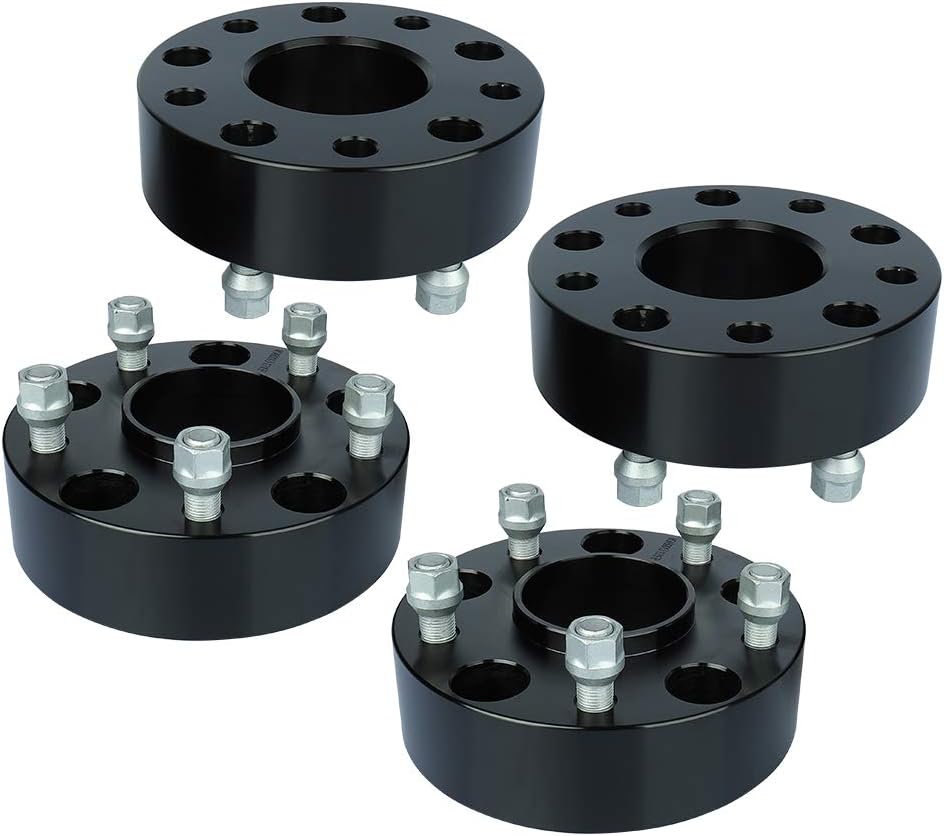
IRONTEK 5×139.7mm Hubcentric Wheel Spacers 50mm (2in) — 9/16-18 Studs, 77.8mm Bore
| Bolt pattern | 5×139.7 (5×5.5") |
|---|---|
| Thickness | 50mm (2.0 in) |
| Center bore | 77.8mm |
| Thread pitch | 9/16-18 |
These IRONTEK wheel spacers add two inches of offset to widen stance and increase tire clearance on compatible 5×139.7mm pickups. Sold as a four-piece set, they are machined from T6 billet aluminum and finished with a corrosion-resistant coating, which keeps them lightweight compared with steel and helps resist rust. Installation requires exposing factory studs or replacing them with shorter studs if they protrude; the listing warns against using an impact and recommends torquing to spec and rechecking after 25 to 50 miles. In real-world use they improve lateral stability and can clear brake calipers or allow larger tires without rubbing. Several user reports praise fitment and durability when properly torqued, though others note problems with the included lugnuts and occasional missing pieces in shipments. These spacers are a practical, cost-conscious way to widen a Ram 1500 or similar truck, but plan for professional installation or at least quality replacement hardware and follow torque and recheck guidance.
Best for: Drivers who want a balanced, practical upgrade to improve stance, handling, and tire clearance on a 2002–2008 Ram 1500 without spending on custom suspension work.
Less Ideal for: Buyers seeking a plug-and-play visual change without any mechanical work or hardware upgrades should avoid these spacers, as proper installation and checking hardware is required.
- Thick 50mm (2.0 in) offset provides noticeable increase in track width and tire clearance
- Machined from T6 billet aluminum for lower weight and corrosion resistance compared with steel
- Hubcentric 77.8mm bore centers wheels for improved balance and reduced vibration
- Includes studs with 9/16-18 thread pitch to match factory stud patterns for direct fitment
- Included lugnuts reported as soft or prone to rounding, so buyer-supplied lugnuts are advisable
- Some customers reported receiving incomplete kits or loose studs on a small number of units
Verdict: A cost-effective, machined aluminum 2-inch hubcentric spacer that widens stance and solves minor clearance issues for a Ram 1500 when installed and torqued correctly.
Titan Wheel Accessories 50mm (2") Wheel Spacers — 5×5.5 (5×139.7), 108mm Hub Bore, 9/16" Studs — Set of 4

| Bolt pattern | 5×139.7 (5×5.5) |
|---|---|
| Spacer thickness | 50mm |
| Hub bore | 108mm |
| Stud size | 9/16" |
These Titan 50mm wheel spacers are a straightforward way to push the wheels out two inches for a wider stance and extra tire clearance on compatible Dodge Ram 1500 models. CNC-machined from 6061-T6 billet aluminum and black anodized, the spacers are hubcentric for consistent seating and come with pressed-in 9/16" studs so installation only requires basic hand tools and a torque wrench. In practice they free up clearance for larger tires and aftermarket wheels without changing wheel offsets or triggering alignment changes, and most users report a noticeable improvement in stance and handling feel. Important practical notes are the need to re-torque after the first 25 miles and that the longer studs can interfere with some steel spare wheels, so plan for spare-wheel compatibility. A few reviews mention stud and corrosion concerns on older batches, so professional installation and inspection are advisable if you expect heavy off-road use.
Best for: Drivers wanting a performance-oriented look and extra tire clearance on a 2002–2008 Ram 1500 who prioritize wider track and improved stance without changing wheel offsets.
Less Ideal for: People who need to retain factory spare-wheel fitment or who prefer a heavier duty, overbuilt spacer for extreme off-road abuse should consider other options.
- Adds 50mm (2") per corner for a noticeably wider track and improved clearance
- CNC-machined 6061-T6 billet aluminum construction with black anodized finish for corrosion resistance
- Hubcentric design for consistent, flush seating and repeatable fitment
- Includes pressed-in 9/16" studs so installation uses standard lug hardware and a torque wrench
- Longer studs may prevent use of some steel spare wheels without modification
- Some customers reported stud quality and corrosion issues on certain units
Verdict: If you want a simple, factory-style way to widen the stance and clear larger tires on a 2002–2008 Ram 1500, these 50mm CNC billet spacers deliver a clean installation and visible performance-focused results.
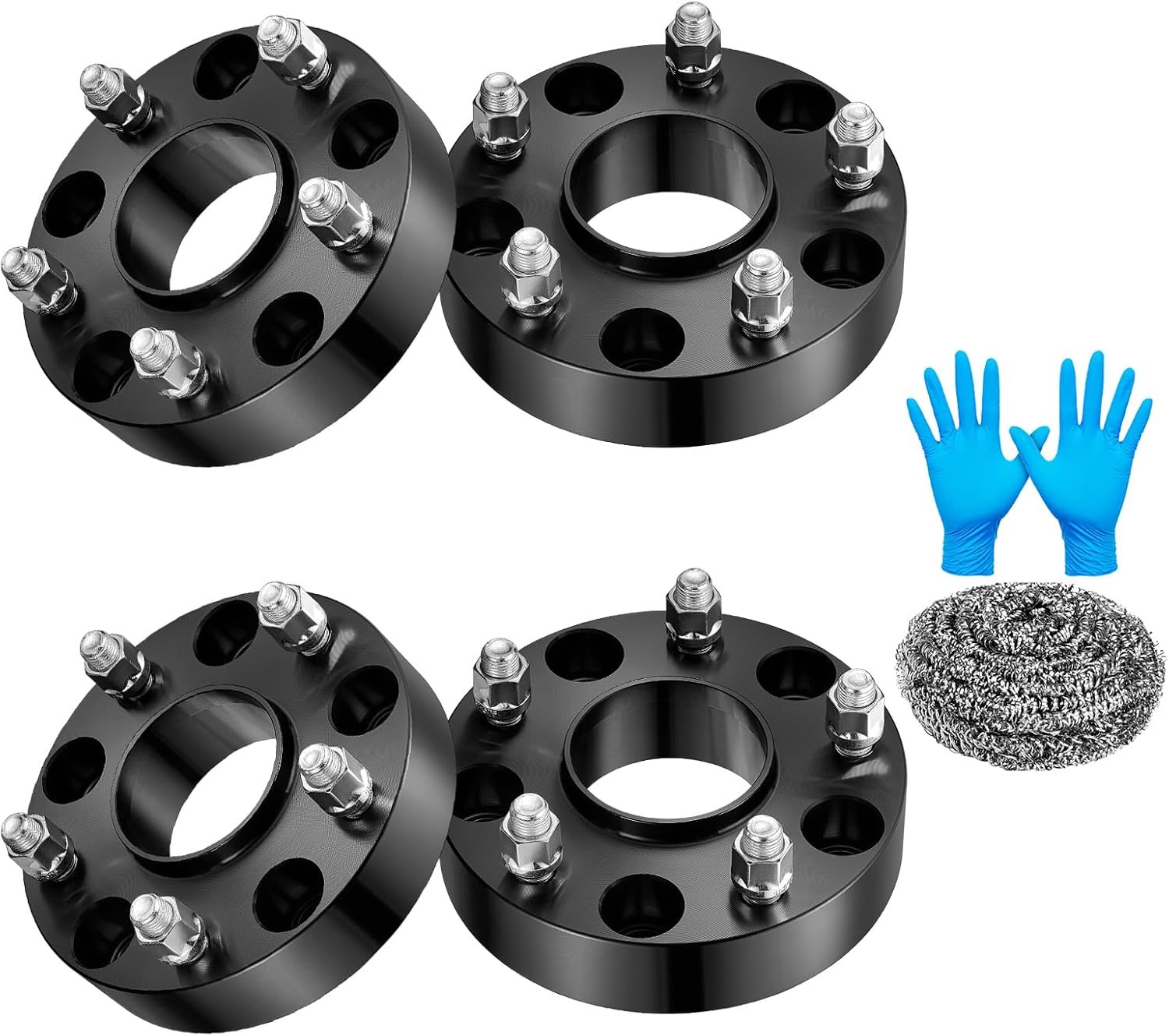
SYKRSS 1.5" 5×139.7 to 5×5.5 Forged Aluminum Wheel Spacers (4-Pack)
| Thickness | 1.5 inch |
|---|---|
| Bolt Pattern Conversion | 5×139.7 to 5×5.5 |
| Hub Bore | 77.8mm |
| Thread Pitch | 9/16-18 |
| Material Type | Aluminum |
These SYKRSS wheel spacers are designed to widen the track by 1.5 inches and fit a specific set of Dodge/Ram trucks including Ram 1500 model years in the 2002–2011 range. Constructed from forged 6061-T6 aluminum with rust-resistant studs and CNC-machined hub-centric bores, they aim to reduce body roll, improve stability off-road, and create clearance for larger brake calipers or aftermarket wheels. The kit includes studs, lugnuts, gloves, and cleaning wire balls and is intended for bolt-on installation using basic tools and a torque wrench; professional installation is recommended for safety. In practice these spacers offer a solid, vibration-free ride when matched to the correct hub and wheel combination, though minor vibrations can appear on some setups and torque checks are necessary after fitting. They are vehicle-specific, so buyers should confirm fitment for their Ram 1500 year and wheel bolt pattern before purchasing.
Best for: Buyers who want a practical, bolt-on way to improve handling and create brake or wheel clearance on a Ram 1500 while keeping a factory-quality fit and finish.
Less Ideal for: Those seeking a universal spacer for multiple vehicle types or drivers who need a completely vibration-proof setup across many aftermarket wheel combinations.
- Forged 6061-T6 aluminum construction for strength and corrosion resistance
- 77.8mm hub-centric bore and CNC machining to minimize vibration when properly fitted
- Includes studs, lugnuts and basic installation accessories for a complete kit
- 1.5-inch offset improves track width for better cornering stability and caliper clearance
- Designed for specific bolt pattern and hub size so incompatible wheels or hubs will not work
- May introduce slight vibration on some wheel and tire combinations requiring re-torque or shims
Verdict: A practical, vehicle-specific 1.5-inch forged aluminum spacer that widens a Ram 1500 track for improved stability and additional clearance while maintaining a factory-quality fit.
SCITOO 2" 5×5.5 Wheel Spacers Kit (4 pcs) for Ram 1500

| Thickness | 2 inch (50 mm) |
|---|---|
| Bolt pattern | 5×5.5 (5×139.7mm) |
| Center bore | 77.8 mm |
| Thread pitch | 14×1.5 |
These SCITOO wheel spacers are a budget-friendly way to widen the track of a Ram 1500 and close the wheel-to-fender gap. The kit includes four 2-inch, hub-centric spacers with M14x1.5 studs and a 77.8mm center bore intended for 5×5.5 bolt patterns. Made from forged aircraft-grade aluminum and fitted with hardened heat-treated studs, they are marketed to improve cornering stability and give an aggressive look. Installation is straightforward for someone comfortable with wheel work, but several customers report mismatched threading, short studs, or fitment problems that may require changing lug nuts or professional help. There are also a few safety-related complaints about stud failures, so inspect hardware carefully and torque to spec. For buyers on a tight budget who want the widened stance and are prepared to verify fitment and possibly swap lug hardware, these spacers can deliver value; those wanting guaranteed factory-level fit and longevity should consider higher-end or vehicle-specific options.
Best for: Buyers looking for an inexpensive way to widen their Ram 1500's track and improve aesthetics or cornering who are willing to verify fitment and swap lug hardware if needed.
Less Ideal for: Drivers expecting a plug-and-play, factory-identical replacement or those unwilling to inspect and possibly replace lug nuts and studs after installation.
- Thick 2-inch spacer gives a noticeable increase in track width and visual stance.
- Forged aircraft-grade aluminum construction for a high strength-to-weight ratio.
- Includes hardened, heat-treated studs intended to improve durability over cast studs.
- Multiple reviews report fitment issues with stud thread pitch and stud length requiring different lug nuts.
- Some customers reported stud failures or shearing, indicating variable quality control.
- Not guaranteed to match older Ram 1500 lug hardware without additional parts or modification.
Verdict: A low-cost way to widen a 2002–2008 Ram 1500 for a more aggressive stance if you confirm fitment and accept possible hardware changes.
Nilight 1.5" 5×5.5 Wheel Spacers with 77.8mm Hub Bore (4pc)

| Bolt pattern | 5×5.5 (5×139.7mm) |
|---|---|
| Thickness | 1.5 inch (38.1mm) |
| Center bore | 77.8mm |
| Thread size | 9/16-18 |
| Material | 6061-T6 aluminum |
These Nilight spacers move the wheel out 1.5 inches to correct clearance and widen the track for a more stable stance. Machined from 6061-T6 aluminum and anodized after CNC processing, they are hub-centric and include extended 9/16-18 studs to match the 5×5.5 bolt pattern. Installation is straightforward for a competent DIYer or shop: clean the hub, fit the spacer, use the provided thread locker and torque to spec. In use the spacers eliminate rubbing on calipers or suspension, improve cornering stability, and give a more aggressive look without dramatic handling penalties when installed correctly. Limitations are typical of aftermarket spacers: hub fit must match the listed 77.8mm bore exactly and some wheel or stud combinations may require minor stud trimming or re-torquing after a short break-in. These are not an active steering or suspension upgrade so expect only modest handling gains tied to track width and wheel offset changes.
Best for: Buyers who prioritize a durable, factory-quality-feeling spacer to fix rubbing or improve stability on the listed Ram and Dodge applications and who plan to install carefully or have a shop torque and verify fitment.
Less Ideal for: Drivers seeking major handling upgrades or wheel fitment changes beyond modest track widening should consider suspension or wheel options instead; those who cannot verify hub bore sizing should avoid buying without measuring first.
- Forged 6061-T6 aluminum construction for good strength-to-weight and corrosion resistance
- CNC-machined, hub-centric design for accurate fitment and reduced vibration risk
- 1.5 inch thickness solves caliper and rubbing issues while widening track for improved cornering stability
- Includes studs sized 9/16-18 and comes as a four-piece set for full-vehicle installation
- Fit depends on matching the 77.8mm hub bore so it will not suit hubs with different center bore dimensions
Verdict: A well-made, hub-centric 1.5-inch aluminum spacer that reliably clears calipers and tight wheel fitment for the specified Ram and Dodge models.
Richeer 1.5" 5×5.5 Hub-Centric Forged Wheel Spacers (4pcs) with 9/16-18 Studs

| Bolt pattern | 5×139.7 mm (5×5.5") |
|---|---|
| Thickness | 1.5 inches |
| Center bore | 108 mm |
| Stud grade | 12.9 tensile strength |
These Richeer wheel spacers add 1.5 inches of track width using forged 6061-T6 billet aluminum machined to a hub-centric profile and finished with anodizing for corrosion resistance. They install between the hub and wheel using the supplied Grade 12.9 studs and nuts, and are intended to improve stance, increase wheel clearance, and slightly enhance lateral stability and traction. Typical use is on light trucks like the 2002-2008 Ram 1500 for a wider look or to fit larger tires and aggressive offsets. Notable features include the high-tensile 12.9 studs rated for higher strength than common 10.9 hardware and CNC machining for close tolerances. Practical benefits seen in user reports are a beefier appearance, improved corner feel, and generally reliable service when installed carefully and routinely inspected. Important limitations: some buyers report issues with stud length and supplied nuts quality, so careful fit verification, clean mating surfaces, proper torqueing to factory specs, and periodic rechecks are necessary rather than an install-and-forget solution.
Best for: Buyers who prioritize visible stance improvement and stronger hardware but want reassurance from real-world user reports and are willing to follow careful installation and maintenance steps.
Less Ideal for: Drivers who want a completely maintenance-free modification or who are uncomfortable verifying fit, replacing hardware, and re-torquing at intervals should consider alternative wheel and offset solutions.
- Forged 6061-T6 billet aluminum construction for strength and lighter weight than steel spacers
- Hub-centric CNC machined design for tight fitment to the hub's locating ring
- Grade 12.9 studs offering higher tensile strength than typical 10.9 studs
- Anodized surface treatment to reduce environmental corrosion
- Some customers report supplied studs or nuts may be short or of lower-quality and require replacement
- Requires careful cleaning, precise installation, and periodic re-torquing rather than one-time fit-and-forget
Verdict: A strong, hub-centric 1.5-inch forged spacer that gives Ram 1500s a wider stance and uses high-tensile studs, best for buyers who will install carefully and monitor hardware over time.
Choosing the Right 2002-2008 Ram 1500 Wheel Spacers: Key Factors to Consider
Bolt Pattern and Pilot Diameter
Matching the truck's bolt pattern and pilot (hub) diameter is the foundational compatibility check. A spacer must replicate the Ram 1500's stud layout precisely so wheel studs or bolts align without force.
Hub-centric spacers that match the hub pilot reduce the risk of wheel runout and vibration by transferring centering loads to the hub. If a spacer is only lug-centric or has a loose pilot fit, the wheel can rely entirely on the lug nuts for centering which may lead to uneven preload and potential vibration. Confirming the pilot diameter and bolt circle diameter prevents fitment surprises and helps maintain the factory centering behavior.
Thickness and Offset Effects
Spacer thickness determines how far the wheel moves outward and directly alters scrub radius and track width. Small thicknesses provide modest clearance for calipers or suspension boots, while larger spacers produce a more aggressive stance but increase leverage on wheel bearings and studs.
Consider the tradeoff between aesthetics and component loads. Thicker spacers can change handling feel and accelerate wear if they push the wheel beyond safe stud engagement. Review the truck's factory stud length and choose a spacer thickness that preserves adequate thread engagement. Also think about whether you need symmetric or asymmetric spacing and whether different thicknesses front to rear affect steering feel.
Material and Manufacturing Quality
Material choice and manufacturing processes determine long-term reliability. High-quality spacers are usually billet or forged aluminum with CNC machining to tight tolerances. These materials offer good strength-to-weight ratios and resist cracking under repeated loading.
Poorly cast or thin-plate spacers can deform or fail, particularly on a heavy pickup like the Ram 1500. Anodized or coated finishes help resist corrosion, but the core concern is whether the spacer maintains dimensional stability and clamping surfaces. Check for clear material grade specifications and machining tolerances to reduce the risk of uneven stress concentration or premature fatigue.
Hub-Centric Vs Lug-Centric Design
A hub-centric spacer centers the wheel using the hub pilot, which helps prevent runout and reduces the chance of vibration. Lug-centric spacers rely on lug nuts for centering, which can be acceptable if tolerances are tight and installation is precise, but they generally increase the chance of slight misalignment.
For the Ram 1500, where larger wheel and tire combinations are common, hub-centric spacers are often preferable to maintain factory centering behavior. If a lug-centric spacer is used, verify close tolerances and consider additional measures such as balanced reinstallation and careful torqueing to minimize potential issues.
Hardware and Installation Requirements
Installation needs vary. Some spacers come with extended studs or new lug nuts; others are bolt-on and require existing hardware. Know whether the spacer needs longer studs and whether those studs are compatible with the original hub threads.
Also factor in tools and service steps such as torque specs, re-torque intervals, and whether the spacer requires thread-locking compound. Installation complexity affects whether you can do the job at home or should seek professional help. Proper hardware and clear instructions reduce the risk of improper clamp load and subsequent loosening or damage.
Durability and Maintenance
Consider how the spacer will age on a working truck exposed to dirt, road salt, and towing loads. Coatings, corrosion resistance, and structural design influence longevity. A spacer that holds up to the Ram's usage patterns will reduce the need for frequent inspection or replacement.
Maintenance includes periodic torque checks after initial installation and after driving a few hundred miles. Also check for signs of galvanic corrosion where dissimilar metals meet and inspect for any play or unusual noises. Choosing a spacer with published load ratings and clear maintenance guidance helps protect wheel bearings and suspension components over time.
Understanding Bolt Circle and Stud Fitment
The Ram 1500 from 2002 to 2008 uses a specific bolt circle and stud arrangement that determines what spacers will physically mount to the hub. Confirming the bolt circle diameter and stud pattern prevents mismatches that can make a spacer unusable or unsafe. Measure twice and compare the spacer specification to the truck's actual dimensions before purchase.
Also check stud thread pitch and length. Some spacers require extended studs or come with their own hardware. If studs are lengthened beyond safe engagement limits, it can compromise the connection. Ensuring correct stud engagement keeps clamp load within the intended range.
- Verify bolt circle diameter and stud count against spacer specs
- Check stud thread pitch and required engagement length
- Confirm pilot diameter if choosing hub-centric spacers
Common Spacer Thicknesses and Their Uses
Spacer thicknesses are typically offered in incremental sizes. Small spacers (5–10 mm) correct minor clearance issues with brake calipers or allow slight widening for fitment. Medium thicknesses (12–25 mm) are common for modest stance changes and increased track width. Larger spacers exceed 25 mm and should be chosen with caution because of added leverage on wheel bearings.
Plan the thickness around the specific clearance you need and the consequences for stud engagement. If you want a flush look for larger tires, balance aesthetics with component longevity and consider whether front and rear thicknesses should match for predictable handling.
- Small (5–10 mm) for minor clearance
- Medium (12–25 mm) for stance and track gains
- Large (over 25 mm) requires careful load consideration
Installation Checklist for a Safe Fit
A methodical installation process reduces the chance of problems. Start with clean mating surfaces on the hub and spacer. Use proper torque sequence and values for wheel nuts and any supplied hardware. Follow re-torque recommendations after initial driving and at regular service intervals.
If the spacer requires new studs or nuts, verify they are the correct grade and length. Check that the spacer is seated fully against the hub and that the wheel sits flush on the spacer face. Finally, inspect for any signs of interference with brake components or suspension parts before completing the job.
- Clean hub and spacer mating surfaces
- Use manufacturer torque specs and pattern
- Re-torque after initial miles and at intervals
Addressing Vibration and Balancing Concerns
Vibration after installing spacers is often traced to centering issues, differing pilot diameters, or poor tolerance control. Hub-centric spacers minimize these risks by transferring centering to the hub. If you experience vibration, check runout and confirm consistent seating of the spacer and wheel.
Wheel balancing remains important. Adding spacer thickness can change the effective offset and may shift dynamic balance points. After installation, have the assembly checked for balance and straightness to eliminate vibration sources unrelated to the spacer itself.
- Confirm hub-centric fit to reduce runout
- Check wheel and spacer runout if vibration occurs
- Rebalance wheels if effective offset changes
Legal and Safety Notes for Modified Track Width
Modifying track width affects handling characteristics and may be subject to local vehicle regulations. Ensure the spacer thickness does not create clearance issues with fenders or lead to tire rubbing at full suspension travel. Consider how changes affect turning radius and wheel well geometry.
From a safety standpoint, maintain adequate thread engagement and use the correct hardware grade. If you tow or carry heavy loads, be conservative with spacer thickness to avoid accelerating bearing or stud fatigue. When in doubt, consult a qualified technician who can confirm clearances and load effects.
- Confirm fender clearance at full travel
- Maintain safe lug stud engagement
- Check local rules on wheel track modifications
Still looking for the perfect fit?
Select your Ram 1500 configuration to see the most relevant Wheel Spacers recommendations
How We Chose the Best 2002-2008 Ram 1500 Wheel Spacers
We focused on criteria that matter specifically to 2002-2008 Ram 1500 owners. Primary evaluation points included bolt pattern and hub fit, material and manufacturing quality, thickness options and their impact on offset, installation complexity, and durability under load. Fitment checks ensured components matched the truck's wheel stud pattern and hub pilot dimensions to avoid centering issues.Material and manufacturing reviews emphasized forged or billet aluminum and precise CNC machining for consistent tolerances. We prioritized spacers with clear specifications for thickness and thread engagement so they preserve safe lug stud engagement when increasing track width. Installation factors included whether the spacer is hub-centric or lug-centric, the need for additional hardware, and documented torque specifications for reassembly and re-torque intervals.We excluded any options that lacked clear dimensional data, did not specify material grade, or had inconsistent user-reported fit for the 2002-2008 Ram 1500. We also filtered out spacers with questionable finish treatments or unverified load ratings. The resulting list balances fit accuracy, long-term durability, and realistic installability for typical owners.
Our full evaluation process is outlined in our review methodology.
FAQ
Do wheel spacers cause vibration on a Ram 1500?
They can if the spacer is not properly matched to the hub pilot or if tolerances are poor. Hub-centric spacers reduce the chance of vibration by centering the wheel on the hub. If vibration develops, check runout, seating, and wheel balance.
How thick can spacers be before they affect safety?
There is no single safe thickness because it depends on stud length and wheel engagement. Generally, larger than 25 mm increases leverage on bearings and should be evaluated carefully. Always ensure adequate thread engagement and consider professional assessment for heavy use.
Should I choose hub-centric or lug-centric spacers?
Hub-centric spacers are usually preferable because they center the wheel on the hub and reduce runout. Lug-centric spacers can work if tolerances are tight, but they place centering responsibility on the lug nuts which increases the chance of misalignment.
Do I need new studs or lug nuts to install spacers?
It depends on the spacer design. Some spacers include extended studs or require longer lug nuts. Verify stud engagement length and thread compatibility before installation. Using the correct grade hardware is critical for safety.
How often should I re-torque wheel nuts after installing spacers?
Re-torque after the initial 50 to 100 miles of driving and again periodically during normal maintenance. Heavy use, towing, or off-road driving may warrant more frequent checks. Follow any specific re-torque interval recommended by the spacer documentation.
Will spacers change my truck's alignment or handling?
Spacers change track width and scrub radius which can slightly alter handling characteristics. Small changes are often negligible, but larger spacers can affect steering feel and tire wear. If you make significant changes, monitor tire wear and consider an alignment check.
Final Verdict
For a 2002-2008 Ram 1500, prioritize correct bolt pattern, pilot fit, and adequate thread engagement when choosing wheel spacers. Balance the desired clearance or stance against the increased leverage on studs and bearings, and prefer hub-centric designs when possible to reduce vibration risk. Follow proper installation practices, torque specs, and re-torque intervals to preserve safety and component life.Make conservative choices for thickness if you tow or carry heavy loads and inspect the assembly regularly. With careful selection and correct installation, spacers can achieve the fit and appearance you want without compromising reliability.
Explore More:
- Check out all Ram 1500 parts & accessories
- Explore Wheel Spacers Maintenance & Repair Guides
- Explore Wheels & Tires
- Browse all Auto Parts
