

Note: This article contains affiliate links. If you click on these links and make a purchase, I may earn a small commission at no extra cost to you. This helps support my research and content. Read my full affiliate disclosure here.
Upgrading wheel offset with spacers is a common, cost-effective way to change stance, improve clearance, or accommodate aftermarket wheels on a 1994-2001 Ram 1500. Those model years share common hub and bolt-pattern characteristics, so choosing the correct spacer geometry and installation method matters more than ever to avoid vibration, ensure safe torque retention, and preserve steering feel. This guide covers our shortlisted options for Ram 1500 owners, explains the key fitment considerations, and walks through installation and maintenance concerns.Below you will find the top picks for wheel spacers that fit the 1994-2001 Ram 1500, plus practical guidance on sizing, centering, and safe installation.
Looking for other parts? See all Ram 1500 parts & accessories.
Top Picks at a Glance
| Best Overall The best all-around choice for most situations | Richeer 2" 5×139.7mm Forged 5-Lug Wheel Spacers with 1/2-20 Studs (4PCS) |  |
| Best Quality Built to a higher standard if you want something more solid | Titan Wheel Accessories 2" (50mm) Hub-Centric Wheel Spacers, 5×5.5, 77.8mm Bore, Set of 4 |  |
| Best Value The sweet spot between price and what you get | BDFHYK 5×139.7mm 2" Forged Wheel Spacers (set of 4) |  |
| Best Budget The cheapest option that still gets the job done reliably | ECCPP 2x 2" 5×5.5 (5×139.7) Wheel Spacers, Set of 2 |  |
| Highest Rated A top-rated pick with lots of positive feedback | KAX 5×5.5 1.5" Lug-Centric Wheel Spacers with 1/2"x20 Studs and 108mm Hub Bore (2 pcs) |  |
| Most Popular A crowd favorite that many people choose with confidence | FLYCLE 2" 5×139.7mm Forged Wheel Spacers with 1/2-20 Studs (108mm Bore) |  |
| Best Seller A high-volume bestseller chosen again and again | EVIL ENERGY 5×5.5 2" Wheel Spacers for Ram 1500 (5×139.7, 1/2×20 studs) Black |  |
Richeer 2" 5×139.7mm Forged 5-Lug Wheel Spacers with 1/2-20 Studs (4PCS)

| Thickness | 2 inch |
|---|---|
| Bolt pattern | 5×139.7 mm |
| Center bore | 108 mm |
| Stud size | 1/2-20 |
These Richeer 2-inch wheel spacers push wheels outward to widen track and create a more aggressive stance while improving lateral stability on a Ram 1500. They are machined from forged 6061-T6 billet aluminum, anodized for corrosion resistance, and finished with CNC precision to match the hub-centric locating ring for a snug fit. The kit includes Grade 12.9 studs rated for high tensile strength and nuts to secure the wheels. In real-world use they are straightforward to install with basic hand tools and a torque wrench, and many owners report steady performance on-road and off-road when surfaces are clean and components are torqued to spec. Important limitations are that supplied studs and nuts must be inspected for length and material quality during installation and that periodic re-torque and maintenance are recommended rather than an install-and-forget approach. Buyers should also verify fitment and hub centering before driving at highway speeds.
Best for: Drivers who want a wider stance and improved cornering stability on a 1994–2001 Ram 1500 while keeping a relatively straightforward, bolt-on installation and factory-style hub centering.
Less Ideal for: People seeking a no-maintenance modification or those who do not want to inspect or replace fasteners during installation and service should consider alternatives.
- Forged 6061-T6 billet aluminum construction for strength and reduced weight compared with cast parts
- CNC precision machining and hub-centric design for close fitment to the hub locating ring
- Includes high-tensile Grade 12.9 studs for greater tensile strength than lower-grade studs
- Anodized surface finish resists corrosion in typical driving conditions
- Some customers report the supplied nuts are soft and studs may be slightly short, so parts inspection at install is necessary
- Requires periodic re-torque and maintenance rather than being maintenance-free
Verdict: A strong, hub-centric 2-inch forged spacer that gives a Ram 1500 a wider stance and improved handling when installed and maintained correctly.
Titan Wheel Accessories 2" (50mm) Hub-Centric Wheel Spacers, 5×5.5, 77.8mm Bore, Set of 4

| Spacer thickness | 50mm (2 inches) |
|---|---|
| Bolt pattern | 5×5.5 (5×139.7) |
| Hub bore | 77.8mm |
| Stud thread pitch | 1/2×20 |
These Titan 2" (50mm) wheel spacers are designed to push the wheels outward for a wider stance and extra clearance on 1994–2001 Ram 1500 platforms that use the 5×5.5 (5×139.7) bolt pattern. CNC machined from 6061-T6 billet aluminum with a black anodized finish, they bolt to the hub with conical seat lug nuts while the pressed-in Grade 12.9 studs serve as the wheel mounting points. In practice the precision 77.8mm hub bore helps center the spacer on the hub and keeps highway speeds settled when installed correctly. The thicker offset gives room for larger tires or aftermarket brake and suspension components without requiring changes to the vehicle geometry. Installation requires careful hub cleanup, correct torqueing with a torque wrench, and professional installation is recommended if you are not experienced. These spacers are lug-centric for mounting and rely on the provided open-ended lug nuts and your factory lug nuts, so attention to stud length and wheel backspacing is important before fitting wheels.
Best for: Buyers seeking a performance-oriented look and practical clearance gains for a 1994–2001 Ram 1500 who prioritize wider track width and the ability to fit larger tires or aftermarket brake and suspension components.
Less Ideal for: Drivers who prefer a stock ride height and wheel fitment without modifying wheel offset or those unwilling to check wheel backspacing and stud compatibility before installation.
- CNC machined 6061-T6 billet aluminum construction for strength and heat resistance
- Hub-centric 77.8mm bore for accurate centering and reduced vibration
- Pressed-in Grade 12.9 steel studs and included conical lug nuts simplify mounting
- Black anodized finish resists corrosion and blends behind wheels
- Adds 2 inches (50mm) per side to increase track width and create clearance for larger tires or aftermarket brakes
- Requires verification of stud length and wheel backspacing before installation to avoid fitment issues
- Professional installation and torque wrench required for safe, correct mounting
Verdict: If you want a durable, hub-centric 2" spacer to widen stance and gain clearance on a 1994–2001 Ram 1500, this CNC billet aluminum set delivers a performance-focused solution.
BDFHYK 5×139.7mm 2" Forged Wheel Spacers (set of 4)

| Bolt pattern | 5×139.7mm |
|---|---|
| Thickness | 50.8mm / 2 inch |
| Center bore | 108mm |
| Thread pitch | 1/2×20 |
| Set quantity | 4 |
These BDFHYK wheel spacers are a straightforward way to move your Ram 1500's wheels outward for improved stance, clearance and the ability to fit wider tires or aftermarket wheels. Designed for the 5×139.7mm bolt pattern listed for 1994–2001 Ram 1500 models, the kit uses forged 6061 aluminum with CNC machining and an anodized finish to resist wear. The 2 inch thickness gives a noticeable track widening and can create room for larger brakes or different wheel offsets. Installation is a typical hub-mounted spacer job using the supplied studs, bolts and basic tools; the package also includes gloves and a cleaning wire. Users should torque to spec and follow the included fitment notes because hub bore and stud specifications matter for proper centering. These spacers are a practical, lower-cost option for improving fitment and handling feel, though they require correct matching to your truck's hub dimensions and careful installation to avoid alignment or clearance issues.
Best for: Buyers looking to optimize their 1994–2001 Ram 1500 for wider wheels or a wider track who prioritize a durable, factory-quality spacer that delivers clear fitment and handling benefits.
Less Ideal for: Drivers who want a cosmetic change only without addressing hub centering or those unwilling to follow torque and fitment procedures should consider different wheel options or professional installation instead.
- Forged 6061 aluminum construction for strength with CNC machining for accuracy.
- 2 inch thickness provides significant track widening for improved stance and clearance.
- Includes studs, bolts, gloves and cleaning wire to simplify installation.
- Anodized surface treatment improves corrosion and wear resistance.
- Non hub-centric design may require careful centering or hub-centric rings for some wheel/hub combinations.
Verdict: If you own a 1994–2001 Ram 1500 and need a strong, CNC-machined 2 inch spacer to fit wider tires or improve stance, this forged BDFHYK kit is a practical, ready-to-install choice.
ECCPP 2x 2" 5×5.5 (5×139.7) Wheel Spacers, Set of 2

| Bolt pattern | 5×5.5 (5×139.7mm) |
|---|---|
| Thickness | 50 Millimeters (2 inch) |
| Material Type | Aluminum (6061-T6) |
| Compatible Groove Diameter | 108 Millimeters |
| Fastener Thread Size | 1/2" |
These ECCPP 2-inch wheel spacers are a straightforward way to add track width and clearance to a 5×5.5 (5×139.7) truck wheel setup. Made from forged 6061-T6 aluminum with CNC machining and a painted finish, the spacers bolt to the hub and allow the wheel to sit farther out from the vehicle. Typical uses include correcting tire rubbing at full steering lock, improving stance, and slightly widening the contact patch for more stability when cornering. The kit includes lug nuts and recommends 75–85 ft-lb torque and threadlocker for secure installation. Practical benefits are solid construction, a large center bore that fits many hub profiles, and clear fitment notes for older Ram 1500 years. Limitations are that they are hub-centric only if your center bore matches the listed 108 mm and that long factory studs may require trimming or modification; buyers should double-check stud length and clearance before installing. If you want a simple, budget-friendly spacer to stop rubbing and enhance stance on a 1994–2001 Ram 1500, this set does the job when installed carefully.
Best for: Buyers on a tight budget who need a simple, durable spacer to stop rubbing, improve stance, and add a bit of stability on a 1994–2001 Ram 1500 without major modifications.
Less Ideal for: Drivers seeking a flush, precision hub-centric aftermarket upgrade with exact factory-style fitment or those unwilling to trim studs or confirm center bore fitment should consider other options.
- Solid forged 6061-T6 aluminum construction with CNC machining for good durability
- 2-inch thickness effectively increases track width and helps eliminate tire rubbing
- Includes lug nuts and recommends torque specs and threadlocker for secure installation
- Large 108 mm center bore fits many hub profiles without hub rings
- Requires verification of stud length and possibly grinding/trimming if studs protrude past spacer face
Verdict: A cost-conscious, well-machined 2-inch spacer that reliably fixes rubbing and improves stance on 1994–2001 Ram 1500s when hub fit and stud length are confirmed.
KAX 5×5.5 1.5" Lug-Centric Wheel Spacers with 1/2"x20 Studs and 108mm Hub Bore (2 pcs)

| Bolt pattern | 5×5.5" (5×139.7mm) |
|---|---|
| Thickness | 1.5" (38mm) |
| Stud size | 1/2"x20 |
| Center bore | 108mm |
These KAX 5×5.5 wheel spacers are a bolt-on solution for drivers who need a stable, factory-style way to push wheels outward by 1.5 inches. Forged from 6061-T6 aluminum and supplied with high-strength 12.9 grade nuts, they are intended for hub-centric fitment with a 108mm center bore and 1/2"x20 studs. Typical uses include fixing rubbing or clearance issues with aftermarket wheels, improving stance and track width for better lateral stability, and accommodating different wheel offsets. The kit arrives with the spacer plates and grade 12.9 split nuts and the seller recommends a 75-85 ft·lb torque spec and retorque after initial miles. Practical benefits are solid material quality and a vehicle-specific bolt pattern matched to 1994-2001 Ram 1500 among other vehicles, which reduces fitment guesswork. Limitations to note are the need for professional installation or careful torque procedure, potential stud trimming on some wheel setups, and the fact that these are bolt-on spacers rather than thicker adapters for extreme offset changes.
Best for: Buyers who prioritize a reliable, factory-aligned spacer to cure rubbing or offset issues on an older Ram 1500 and who plan to install with correct torque procedures or professional help.
Less Ideal for: Drivers seeking extreme offset changes, aggressive wheel fitments, or a DIY installer unwilling to follow torque and recheck recommendations should consider other options.
- Forged 6061-T6 aluminum construction for strength and corrosion resistance
- Comes with SGS-certified 12.9 grade nuts for high clamp reliability
- Hub-centric 108mm bore helps ensure proper centering and reduce vibration
- Designed specifically to fit 5×5.5 bolt pattern common to 1994-2001 Ram 1500
- Bolt-on design may require trimming studs or re-torquing after initial use
- Not intended for very large offset changes where thicker adapters would be needed
Verdict: A forged, vehicle-specific 1.5 inch spacer that delivers a dependable, hub-centric fix for clearance and handling on the 1994-2001 Ram 1500.
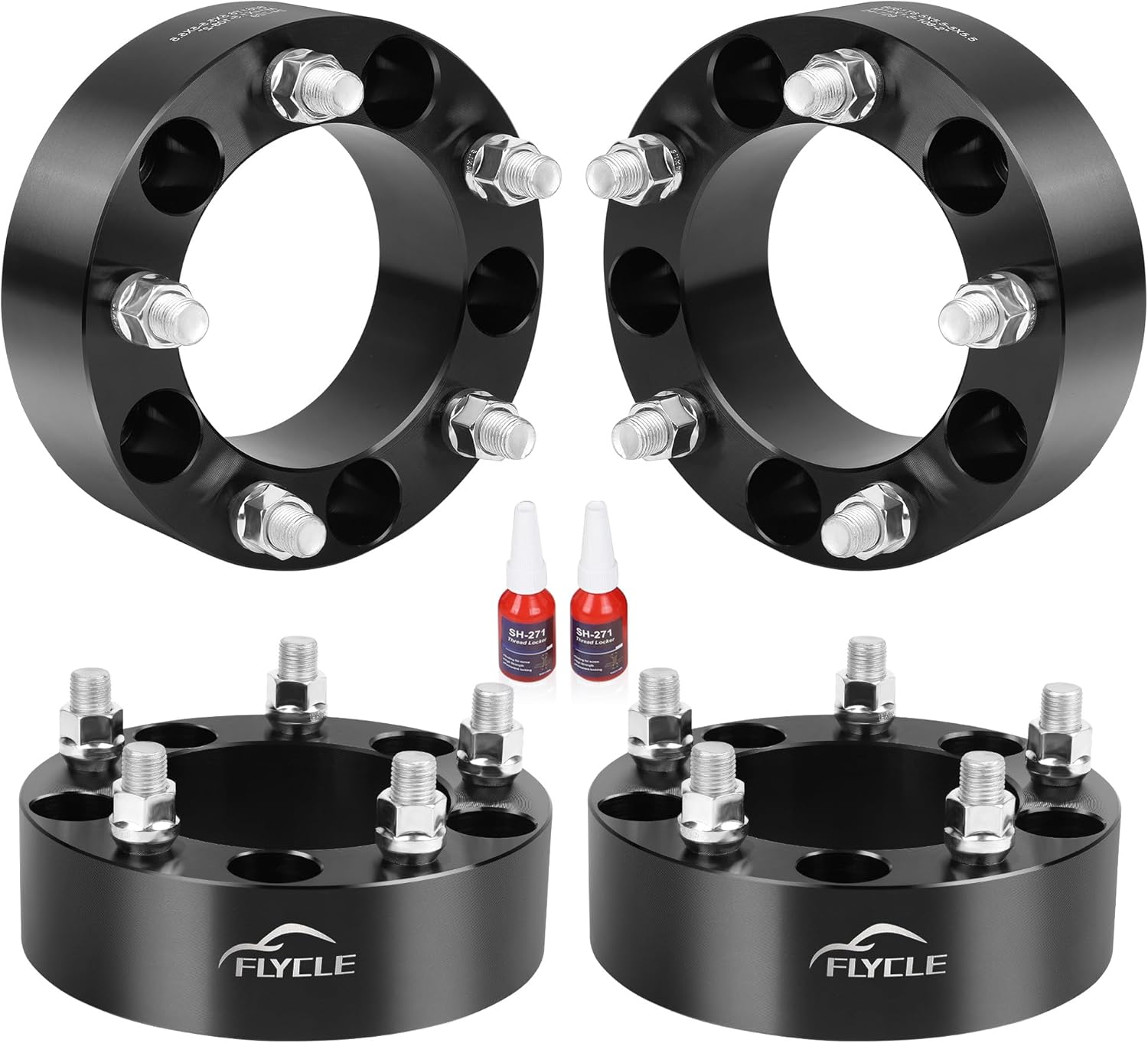
FLYCLE 2" 5×139.7mm Forged Wheel Spacers with 1/2-20 Studs (108mm Bore)
| Thickness | 2 inch (50.8mm) |
|---|---|
| Vehicle bolt pattern | 5×139.7mm (5×5.5) |
| Wheel bolt pattern | 5×139.7mm (5×5.5) |
| Center bore | 108mm |
| Thread pitch | 1/2-20 |
These FLYCLE spacers are a 2-inch, hubcentric-style solution intended to move the wheel outward for extra tire clearance, wider track, or to correct brake clearance issues on specified Ram 1500 years. They are forged from 6061-T6 aluminum and CNC machined to fit the hub, and the kit ships with hardened 12.9-grade studs and thread-locking compound for installation. In practice the spacers let you fit larger or wider tires and improve the truck's stance without changing wheels, and many buyers report straightforward bolt-on installation when following the recommended torque. However some users have reported stud failures and fitment inconsistencies, so careful installation, correct torqueing, and periodic inspection are important. These are a budget-friendly aftermarket option that can solve clearance problems and alter stance, but they require cautious mounting and routine checks for long-term confidence on a vehicle used on- or off-road.
Best for: Buyers who want an affordable way to add 2 inches of clearance or achieve a wider stance on a 1994–2001 Ram 1500 and who prioritize visual impact and fitment fixes but will take care during installation and inspection.
Less Ideal for: Drivers who prefer a no-maintenance, permanent wheel solution or who are unwilling to perform careful torqueing and routine checks should consider factory-quality wheel options instead.
- Forged 6061-T6 aluminum construction for corrosion resistance and lighter weight compared with steel
- CNC machining and hubcentric bore to improve fit and reduce vibration when matched to vehicle hub
- Includes hardened 12.9-grade studs and thread-locking compound to help secure installation
- 2-inch thickness provides substantial clearance for larger tires and improved stance
- Some reviewers report stud shearing or loose thread fit on certain vehicles, indicating quality or fitment variability
- Not universal fit beyond the listed vehicle years and bolt pattern so confirming hub bore and bolt pattern is required
Verdict: A cost-effective 2-inch forged spacer that fixes clearance and stance issues on 1994–2001 Ram 1500s when installed carefully and inspected regularly.
EVIL ENERGY 5×5.5 2" Wheel Spacers for Ram 1500 (5×139.7, 1/2×20 studs) Black

| Bolt pattern | 5×139.7 mm |
|---|---|
| Thickness | 2 in (50 mm) |
| Hub bore | 108 mm (not hub-centric) |
| Studs/bolts | 1/2" × 20 studs, 10.9-grade bolts |
| Material | 6061-T6 aluminum |
These EVIL ENERGY 2" wheel spacers move the wheels out by 50 mm to improve stance, correct backspacing, and provide added clearance for brakes or suspension components on compatible Ram 1500 models. Machined from 6061-T6 aluminum with CNC processing and anodized finish, the kit includes 1/2"×20 studs and 10.9-grade geomet bolts intended to resist breakage. Installation sits the spacer between the hub and wheel; manual tightening is recommended to avoid over-torquing the supplied hardware. In real-world use the spacers deliver the expected wider stance and users report improved looks and clearance without introducing harshness on the road. Important limitations are that the product is not hub-centric and has a large 108 mm bore, so it relies on proper bolt torque and may need hub-centric rings or additional measures to ensure absolute concentricity. Also the kit is vehicle-specific so confirm exact fitment for 1994–2001 Ram 1500 variants before purchasing.
Best for: A cautious buyer who wants a factory-quality-looking track-width increase or clearance fix for a 1994–2001 Ram 1500 and prioritizes durable, machined components over flashy styling.
Less Ideal for: People seeking a hub-centric plug-and-play spacer solution or buyers unwilling to verify fitment and perform careful torqueing during installation should consider other options.
- Made from 6061-T6 aircraft-grade aluminum for strength and lighter weight
- CNC machined and anodized finish for precision and corrosion resistance
- Includes 1/2"×20 studs and 10.9-grade bolts rated to resist breakage
- 2" thickness corrects backspacing and provides noticeable stance and clearance gains
- Not hub-centric—108 mm bore may require hub centric rings or careful installation to avoid vibration
- Manufacturer recommends manual tightening which may be slower and requires care to achieve proper torque
Verdict: If you want a durable, machined 2" spacer to safely widen the stance and correct backspacing on a 1994–2001 Ram 1500, this kit delivers with robust materials and hardware.
Choosing the Right 1994-2001 Ram 1500 Wheel Spacers: Key Factors to Consider
Bolt Pattern and Stud Pitch
Confirming the bolt pattern and stud pitch is the first step because mismatched patterns will prevent safe installation. For the 1994-2001 Ram 1500, you must verify the exact lug stud spacing and count before ordering spacers to ensure the spacer's bolt holes line up precisely. Even small misalignments can lead to uneven load transfer, accelerated stud wear, or failure under stress.
A properly matched bolt pattern ensures that load is transmitted through the intended surfaces rather than through deformed holes. When evaluating spacers, look for clear specifications and tolerance information so you can match the spacer to the truck's hub. Some spacers are designed to use the vehicle's existing studs while others include replacement studs; know which approach your chosen spacer uses.
Hub-Centric Fitment
Hub-centric spacers align the wheel using the hub bore rather than relying purely on lug pull to center the assembly. For the Ram 1500, a precise hub-centric bore reduces the risk of vibration and uneven wheel loading, particularly at highway speeds. When a spacer is hub-centric to the truck's hub diameter, it helps maintain concentricity between the hub, spacer, and wheel.
If a spacer is lug-centric, it may rely on even lug torque to center the wheel, which can be adequate for low-thickness spacers but becomes riskier with larger offsets. Prioritize spacers that specify hub-centric dimensions or include accurate hub rings for the Ram 1500 to minimize NVH and ensure consistent balancing.
Material and Machining Quality
The material and machining tolerances determine long-term reliability. Billet 6061-T6 aluminum or similarly rated machined alloys typically offer better strength-to-weight ratios and more accurate bores than lower-grade cast pieces. For a truck like the Ram 1500 that may see higher loads, choose spacers with consistent wall thicknesses and tight concentric tolerances.
Look for clearly specified hardness of studs and nuts, as substandard hardware can stretch or fail. Quality machining reduces the risk of uneven thickness or misaligned lug holes which can cause the wheel to wobble. Corrosion-resistant finishes matter for maintaining fit over years of use, especially if the vehicle sees seasonal road treatments or off-road use.
Spacer Thickness and Clearance
Spacer thickness determines how far a wheel sits from the hub and directly affects fender clearance, brake caliper clearance, and suspension geometry. On a 1994-2001 Ram 1500, small increases in offset can create rubbing at the fender or alter scrub radius. Choose a thickness that provides the desired aesthetic or clearance benefit without introducing undue stress on wheel bearings or suspension components.
Thicker spacers amplify lever forces on studs and bearings, so weigh desired stance changes against mechanical load implications. Use a thickness guide and, where possible, measure clearance with the specific wheel and tire combination to ensure safe operation.
Fastening Method and Hardware
How a spacer attaches matters for long-term reliability. Options include pass-through spacers that use the factory studs and nuts, spacers with extended studs, and bolt-on spacers that replace factory studs or use hub-mounted bolts. Each method changes the torque path and maintenance requirements.
Ensure included hardware is grade-rated and sized appropriately. If a spacer increases stud engagement length, confirm the remaining thread engagement meets manufacturer-recommended minimums. Proper locking hardware or torque-retaining features help prevent loosening under repeated loads common to truck use.
Maintenance, Warranty, and Support
Consider ease of service and the availability of replacement components. Spacers should allow straightforward re-torquing, periodic inspection, and access to hub surfaces for cleaning. Clear instructions on torque specs and recommended maintenance intervals are important for long-term safety.
A sensible warranty and accessible technical support can be valuable if fitment questions arise. For owners who use their Ram 1500 for towing or heavy loads, prioritize spacers with robust support and documented maintenance guidance to ensure continued safe operation.
Understanding Fitment for 1994-2001 Ram 1500
Fitment starts with confirming the Ram 1500's hub diameter and bolt pattern across the 1994-2001 range. Accurate measurements ensure the spacer centers correctly and that wheel bolt holes align without forcing components. When you know the exact hub bore and stud pitch you can choose hub-centric spacers or proper adapter designs that minimize vibration risk.
Also consider how spacer thickness will affect brake clearance and wheel backspacing. On these Rams, even modest increases in offset can change how the wheel sits relative to suspension components and fenders, so cross-check spacer thickness against your wheel and tire setup.
- Verify hub bore and bolt pattern before ordering.
- Match spacer hub-centric dimensions to the vehicle hub.
- Measure brake and caliper clearance for thicker spacers.
Installation Checklist and Essential Tools
A safe installation begins with basic tools and a methodical approach. You will need a calibrated torque wrench, appropriate socket size, jack and stands, anti-seize or thread locker as recommended by the spacer manufacturer, and a means to confirm hub-to-spacer seating. Clean mating surfaces thoroughly before fitting to ensure concentric contact.
Follow a star-pattern torque sequence and re-check torque after the first 50 to 100 miles. If a spacer uses extended studs, ensure adequate thread engagement and inspect the studs after initial use. Document recommended torque specs for both the spacer hardware and wheel nuts.
- Calibrated torque wrench and correct sockets
- Jack, stands, and wheel chocks
- Cleaning supplies and inspection light
- Manufacturer-recommended thread products
Common Installation Mistakes and How to Avoid Them
Common errors include installing spacers without cleaning corrosion from the hub, failing to confirm hub-centric seating, over- or under-torquing fasteners, and neglecting re-torque after initial miles. Each of these mistakes can lead to vibration, accelerated hardware wear, or, in extreme cases, wheel separation.
Avoid these problems by following a step-by-step routine: clean and inspect the hub face, dry-fit the spacer and wheel to confirm alignment, torque to the specified value using the correct sequence, and schedule a re-torque check. If you detect vibration after installation, stop driving and inspect fitment and balance.
- Do not rely solely on old, corroded hub surfaces.
- Always verify hub-centric seating where applicable.
- Re-torque after first use and during periodic maintenance.
Torque Specifications and Thread Engagement Best Practices
Maintaining correct torque and thread engagement is critical. Spacers change the effective length of stud engagement, so ensure that the wheel nut still achieves the recommended number of engaged threads. If the spacer manufacturer provides torque specs for spacer studs or bolts, follow those in addition to the vehicle's wheel torque values.
Use a torque wrench and the star-pattern tightening method to distribute clamp load evenly. Record both spacer and wheel torque values during installation so you can reference them during follow-up checks.
- Confirm minimum thread engagement after spacer installation.
- Use star-pattern torque sequence and calibrated tools.
- Keep a log of torque values and re-check after initial miles.
Balancing, NVH, and When to Seek Professional Help
Wheel spacers can change the wheel assembly's balance and influence noise, vibration, and harshness. After installing spacers, rebalancing the wheel and tire assembly can eliminate residual vibration. If you still notice steering shimmy, consistent vibration at certain speeds, or unusual noise, inspect for poor centering, bent studs, or insufficient thread engagement.
Professional inspection is recommended if vibration persists after rebalancing and torque checks. A shop can verify concentricity, measure runout, and confirm hub and spindle condition to rule out preexisting issues that spacers can amplify.
- Rebalance wheels after spacer installation.
- Inspect for runout and bent hardware if vibration occurs.
- Seek professional help for persistent NVH after verification steps.
Practical Considerations for Stance and Clearance
If your goal is an aggressive stance, plan the spacer thickness with the wheel offset and tire width in mind. Small increases in thickness can produce noticeable changes in appearance and track width but also shift load to wheel bearings. Balance aesthetics with mechanical limits for long-term reliability.
Confirm fender and suspension clearance under full droop and compression. For trucks used for towing or heavy loads, prioritize minimal spacer thickness necessary to achieve the desired look or clearance to reduce additional bearing stress.
- Pair spacer thickness with wheel offset for predictable results.
- Check clearance at full suspension travel.
- For heavy-use trucks, favor conservative thickness choices.
Still looking for the perfect fit?
Select your Ram 1500 configuration to see the most relevant Wheel Spacers recommendations
How We Chose the Best 1994-2001 Ram 1500 Wheel Spacers
We focused on criteria that directly affect fitment, durability, and on-vehicle safety for 1994-2001 Ram 1500 owners. Our editorial filters prioritized spacer designs that match the Ram 1500's bolt pattern and hub dimensions, use proper materials and machining tolerances, and offer secure mounting options. We examined construction quality including billet aluminum versus cast alloys, hub-centric bore tolerances, and the presence of extended studs or separate installation hardware.We evaluated corrosion resistance and coating quality because these trucks are often used in varied environments, and we considered thickness options that maintain proper brake caliper and suspension clearance while achieving the intended wheel offset. Fastening integrity was a key factor: spacer designs that preserve correct torque specs, use hardened studs and nuts, or include installation kits scored higher. Noise, vibration, and harshness concerns were assessed through fitment and centering criteria rather than ride testing.Excluded from the shortlist were spacers that lacked clear bolt-pattern documentation, did not offer hub-centric options for the Ram 1500, or used poor-quality hardware. The final selections reflect spacers that balance safe mechanical engagement with the practical needs of owners seeking stance or clearance changes.
Our full evaluation process is outlined in our review methodology.
FAQ
Are hub-centric spacers necessary for the 1994-2001 Ram 1500?
Hub-centric spacers are recommended because they center the wheel using the hub bore rather than relying solely on lug torque. For the 1994-2001 Ram 1500, proper hub centering reduces the likelihood of vibration, especially with thicker spacers or larger aftermarket wheels.
How do I know what spacer thickness I need?
Determine the desired change in offset by comparing your wheel's current backspacing to the target position. Measure clearance to brake components and fenders with the desired tire size. Start with the minimum thickness required to achieve the needed clearance or stance and avoid excessive thickness that increases bearing loads.
Do wheel spacers cause vibration on these Rams?
Spacers can cause vibration if they are not hub-centric, poorly machined, or improperly torqued. When spacers are accurately machined, properly centered, and rebalanced after installation, vibration is uncommon. Persistent vibration should prompt inspection of seating, balance, and hardware condition.
Can I reuse factory wheel studs with spacers?
You can reuse factory studs with pass-through spacers if there is still adequate thread engagement after installation. However, many installers prefer spacers with extended studs or supplied hardware to ensure proper thread engagement and strength. Inspect threads and replace any studs that show wear or damage.
How often should I re-check spacer and wheel torque?
Re-check torque after the first 50 to 100 miles of driving and again periodically, such as during routine maintenance intervals. Trucks frequently used for towing or heavy loads may require more frequent checks because of increased cyclic stresses.
Will using spacers affect my truck's alignment?
Wheel spacers change the track width and can slightly alter scrub radius, which may affect steering feel. In most cases, alignment geometry such as toe and camber remains unchanged, but if you notice handling changes, have an alignment check to confirm suspension settings are within spec.
Final Verdict
When selecting wheel spacers for a 1994-2001 Ram 1500, prioritize precise fitment, hub-centric seating, and high-quality hardware. Choose the thinnest spacer that achieves your clearance or aesthetic goal to limit added stress on bearings and studs. Maintain disciplined installation practices including correct torque, re-torque checks, and rebalancing to minimize NVH and ensure long-term reliability.Focus on conservative, well-documented spacer options and follow the maintenance guidance provided to keep your Ram 1500 safe and performing as intended. With careful selection and installation you can achieve the desired stance or clearance without compromising vehicle safety.
Explore More:
- Check out all Ram 1500 parts & accessories
- Explore Wheel Spacers Maintenance & Repair Guides
- Explore Wheels & Tires
- Browse all Auto Parts
