

Note: This article contains affiliate links. If you click on these links and make a purchase, I may earn a small commission at no extra cost to you. This helps support my research and content. Read my full affiliate disclosure here.
If you own a Ford F-250 7.3L diesel, the turbocharger is central to the truck s drivability, tow capacity, and fuel efficiency. A worn or mismatched turbo can cause sluggish response, higher exhaust temperatures, and smoke under load. This guide shortlists the top turbochargers suited to the 7.3L diesel and explains the core tradeoffs you should weigh when replacing or upgrading this vital component.We evaluated candidate units for correct fitment, thermal performance, durability, and installation practicality to assemble seven top picks. Read on to understand the evaluation criteria and practical considerations that matter for your F-250 7.3L diesel before you commit to a replacement or upgrade.
Looking for other parts? See all Ford F-250 parts & accessories.
Top Picks at a Glance
| Best Overall The best all-around choice for most situations | Bode-man Turbocharger Replacement for 7.3L Powerstroke (1999–2003 Super Duty/Excursion) |  |
| Best Quality Built to a higher standard if you want something more solid | VIVAUTOPARTS GTP38R Ball-Bearing Billet Turbocharger with 4" Inlet for 7.3L Power Stroke |  |
| Best Value The sweet spot between price and what you get | A-Premium GTP38 Complete Turbocharger Assembly with Wastegate Actuator |  |
| Best Budget The cheapest option that still gets the job done reliably | TOM Turbocharger for Ford 7.3L Super Duty (1999–2003) |  |
| Highest Rated A top-rated pick with lots of positive feedback | maXpeedingrods GTP38 Turbocharger for Ford 7.3L Powerstroke | 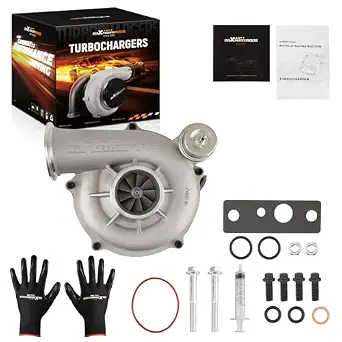 |
| Most Popular A crowd favorite that many people choose with confidence | Stigan Turbocharger for Ford 7.3L PowerStroke (1999–2003) |  |
1. Bode-man Turbocharger Replacement for 7.3L Powerstroke (1999–2003 Super Duty/Excursion)

| Brand | Bode-man |
|---|---|
| Manufacturer Part Number | DBT667A226 |
| Fitment | 1999–2003 Ford 7.3L Powerstroke Super Duty and Excursion |
| Replaces | Multiple OEM reference numbers listed |
This Bode-man turbocharger is a heavy-duty, direct bolt-on replacement for 7.3L Powerstroke Super Duty and Excursion trucks from 1999 to 2003. It is precision-balanced and built with reinforced bearings and robust housings to handle the higher heat and loads common in towing and heavy-duty use. Installation is intended to be straightforward since the unit follows factory fit and mounting points, making it suitable for mechanics replacing a worn or failed factory turbo. In use it aims to restore factory boost, improve throttle response, and return towing power lost to a degraded turbo. Practical benefits include broad interchange coverage with many OE reference numbers and a design focused on durability under sustained load. Limitations are typical of aftermarket replacements: long-term durability depends on installation quality and supporting systems like exhaust, oil supply, and engine condition, and this unit does not include vehicle-specific installation hardware or explicit warranty details in the product listing.
Best for: Buyers who want a practical, factory-style replacement to restore boost and towing performance on a 1999–2003 7.3L diesel with a focus on durability and straightforward installation.
Less Ideal for: People seeking a performance-upgrade or modified turbo for increased power and efficiency rather than a factory-replacement unit should look at purpose-built performance models.
- Direct bolt-on design for 1999–2003 7.3L Powerstroke applications to simplify installation
- Precision-balanced rotating assembly to reduce vibration and promote smooth operation
- Reinforced bearings and heavy-duty housings built for towing and sustained high-load use
- Wide interchange coverage with many factory part numbers for easier cross-fit confirmation
- Listing does not specify included installation hardware or warranty details
- Long-term reliability depends on proper oil supply and the condition of the host engine
Verdict: A durable, factory-style replacement turbocharger for 7.3L Powerstroke trucks that restores boost and towing capability with minimal modification.
2. VIVAUTOPARTS GTP38R Ball-Bearing Billet Turbocharger with 4" Inlet for 7.3L Power Stroke

| Engine fitment | 7.3L Power Stroke (1999.5–2003) |
|---|---|
| Compressor wheel | Billet, 65.9 × 88 mm |
| Turbine wheel | 67.7 × 76.5 mm |
| Bearing type | Ball bearing |
| Max recommended boost | 40 psi |
This GTP38R turbocharger swaps in a ball-bearing cartridge and a large billet compressor wheel to deliver faster spool and substantially higher airflow than the stock unit on 1999.5–2003 7.3L Power Stroke F-250/F-350 trucks. It is typically used by owners upgrading for performance gains or towing who need stronger boost response and the ability to run elevated boost levels. Notable features include a 4-inch compressor inlet for reduced inlet restriction, a 65.9mm billet compressor and a low-drag ball-bearing center section for quicker spool and improved durability under boost. In practical terms the kit reduces exhaust backpressure and lowers exhaust gas temperatures while supporting large power increases when combined with proper fueling and tuning. Important limitations are that achieving the advertised power requires complementary fueling, tuning, and possibly supporting hardware, and the unit is aimed at modified trucks rather than a direct plug-and-play like-for-like factory replacement for everyday stock use.
Best for: Buyers who want a performance-focused upgrade for their 7.3L Power Stroke to achieve quicker spool and higher sustained boost for towing or high-power builds.
Less Ideal for: Drivers seeking a simple, factory-equivalent replacement for daily stock use or those unwilling to install supporting upgrades and tuning should consider a different option.
- Ball-bearing center section for faster spool and lower internal drag
- Billet 88mm compressor wheel provides substantially higher airflow than stock
- 4-inch compressor inlet reduces inlet restriction for improved response
- Large 1.00 A/R turbine housing lowers exhaust backpressure and EGTs
- Requires proper fueling and tuning to safely realize power gains
Verdict: A performance-oriented ball-bearing turbo that gives 7.3L Power Stroke owners quicker spool and much higher airflow when paired with proper fueling and tune.
3. A-Premium GTP38 Complete Turbocharger Assembly with Wastegate Actuator

| Turbo Model | GTP38 |
|---|---|
| Wastegate Actuator Included | Yes |
| Gasket Included | Yes |
| Material | Alloy |
This GTP38 turbocharger from A-Premium is built as a full replacement unit for 7.3L Powerstroke-equipped Ford F-series trucks and the Excursion from the late 1990s to early 2000s. It arrives ready to install with a wastegate actuator and turbo gaskets, which reduces parts hunting and speeds up a routine turbo swap. The housings are cast in alloy to help shed heat and the unit matches common reference numbers used on factory turbos for fitment. Expect the part to restore boost and drivability for a tired turbocharger and to be a practical option for a budget-conscious repair. Important limitations are that the exhaust manifold is not included and it will not fit early 1999 engines that use a four-bolt compressor housing, so confirm the exact year and housing pattern before ordering. The manufacturer offers a one-year unlimited-mileage guarantee, but long-term durability compared with higher-end remanufactured or OEM turbos may vary.
Best for: Buyers who want a ready-to-install, cost-conscious replacement turbo to get a 7.3L Powerstroke back to normal operation without sourcing multiple parts.
Less Ideal for: Those seeking a factory-refurbished unit or long-term performance upgrade should consider higher-end remanufactured turbos or OEM replacements instead.
- Complete assembly includes wastegate actuator and gaskets for faster installation
- Alloy compressor and turbine housings designed to dissipate heat
- Matches commonly used reference/OEM part numbers for straightforward fitment to 7.3L Powerstroke engines
- Does not include the exhaust manifold, which may require separate purchase or reuse of the factory manifold
Verdict: A practical, all-in-one replacement turbocharger that simplifies a 7.3L Powerstroke swap by including the actuator and gaskets for quicker installation.
4. TOM Turbocharger for Ford 7.3L Super Duty (1999–2003)

| Fitment | 1999–2003 Ford F250/F350/F450/F550 and 2000–2003 Excursion 7.3L V8 |
|---|---|
| Manufacturer | TOM |
| Model | Turbo Turbocharger |
| Item model number | N02-694 |
This TOM turbocharger is a vehicle-specific replacement for 7.3L Ford Super Duty trucks and the Excursion, intended to restore turbo boost and engine response after a failed unit. It ships as a complete turbo and actuator assembly engineered to match factory fitment so installation is straightforward for experienced DIYers or a professional shop. The listing emphasizes heavy-duty construction and factory-style machining aimed at durability under diesel duty cycles, and the unit carries multiple part numbers to match common 7.3L configurations. Practical benefits include simplified swapping without custom modification and the ability to get a truck back on the road with near-stock performance. Limitations to consider are that the part is an aftermarket replacement rather than a factory part and long-term reliability can vary between manufacturers, so expect to follow best practices during installation such as checking oil feed/return lines and using correct gaskets. This is best suited when you need an affordable, direct-fit turbo to replace a failed original rather than an upgraded performance unit.
Best for: Buyers who need an affordable, straightforward replacement turbo to get a 7.3L Super Duty or Excursion back to stock-like performance without modifying the engine or spending on dealer parts.
Less Ideal for: Owners seeking a performance upgrade or a guaranteed factory-original rebuild should consider higher-end remanufactured or performance turbo options.
- Direct-fit design for 1999–2003 Ford 7.3L Super Duty and Excursion to simplify installation
- Includes actuator and is offered under multiple common part numbers for easier parts matching
- Built with materials and machining intended for heavy-duty diesel use
- Sold as a complete turbocharger assembly so no core exchange or extensive machining is required
- Aftermarket unit so long-term durability may not exactly match factory replacements
Verdict: A budget-focused, direct-fit replacement turbo that lets 7.3L Super Duty owners restore factory-style boost with minimal installation hassle.
5. maXpeedingrods GTP38 Turbocharger for Ford 7.3L Powerstroke

| Application | Ford 7.3L Excursion 2000-2003; F-250/350/450/550 1999-2003 (late 1999 only) |
|---|---|
| Turbo Model | GTP38 |
| Cooling Type | Oil cooling |
| Turbo Type | Twin-Scroll |
| Horsepower | Up to 275 HP |
This maXpeedingrods GTP38 turbocharger is built as a direct factory-style replacement for late-1999 through 2003 Ford 7.3L Powerstroke trucks and is intended to return worn or failed turbochargers to proper boost levels. It installs in place of the original unit on compatible late-1999 and 2000–2003 Excursion and Super Duty models and uses an oil-cooled, twin-scroll design with a forged aluminum compressor wheel and a ductile iron turbine housing for heat resistance. In practice it provides up to the listed 275 horsepower capability and improves responsiveness compared with a tired original turbo. The construction choices aim for longevity under diesel conditions, though buyers should follow proper oiling and break-in procedures. Note the listing excludes early-1999 7.3L engines with four-bolt compressor housings, so confirm your model before buying. Installation is straightforward for shops familiar with Powerstroke turbo work but plan for gaskets and hardware replacement during the swap.
Best for: Buyers who prioritize restoring factory-level reliability and boost on late-1999–2003 7.3L Powerstroke trucks and want a ready-to-install replacement that mirrors the original unit.
Less Ideal for: If you drive an early-1999 7.3L Powerstroke with the four-bolt compressor housing or need a performance-upgraded turbo beyond factory capability, this unit is not the right choice.
- Direct factory-style replacement for late-1999–2003 7.3L Powerstroke applications
- Oil-cooled twin-scroll design for improved spool and thermal management
- Forged aluminum compressor wheel for better airflow and boost response
- Ductile iron turbine housing rated for high exhaust temperatures
- Does not fit early-1999 7.3L models with four-bolt compressor housings
Verdict: A practical, factory-style GTP38 replacement that reliably restores boost and factory performance to late-1999–2003 7.3L Powerstroke trucks.
6. Stigan Turbocharger for Ford 7.3L PowerStroke (1999–2003)

| Fits | Late 1999–2003 Ford F-Series 7.3L PowerStroke |
|---|---|
| Manufacturer | Stigan |
| Item model number | 847-1013 |
| Manufacturer Part Number | 847-1013 |
This Stigan turbocharger is built as an exact-fit replacement for late 1999 through 2003 Ford F-250 and F-350 trucks equipped with the 7.3L PowerStroke. It replaces the factory unit and restores the turbo's role in supplying compressed intake air to maintain power, fuel efficiency, and proper engine operation. The unit is advertised as manufactured to ISO/TS quality standards, inspected before shipping, and engineered to meet or exceed factory specifications, which helps simplify installation and minimize clearance or flange issues. Practical benefits include factory-style fitment for straightforward swap-in replacement and a construction aimed at durability for heavy-duty duty cycles. Limitations to note are that fitment is specific to trucks with PowerStroke badges on the doors (early 1999 variants are excluded), and buyers should confirm OE numbers before ordering. Also this is a like-for-like replacement rather than a performance turbo, so it will not increase power beyond stock levels.
Best for: Buyers looking for a tested, factory-quality replacement to restore factory performance and reliability on late 1999–2003 7.3L PowerStroke trucks who prioritize predictable fitment and documented build quality.
Less Ideal for: Shoppers seeking a performance upgrade, a universal turbo for other engines, or parts for early 1999 PowerStroke trucks should look elsewhere.
- Exact-fit replacement for 1999–2003 7.3L PowerStroke trucks simplifies installation
- Manufactured to ISO/TS quality standards with factory-style fit and finish
- Inspected and tested before shipping to reduce immediate defects or issues
- Not compatible with early 1999 PowerStroke trucks that have badges on the fenders
- Designed as a stock replacement rather than an upgraded performance turbo
Verdict: Choose this Stigan turbocharger when you need a reliable, factory-fit replacement to restore stock boost and engine operation on late 1999–2003 7.3L PowerStroke trucks.
Choosing the Right Ford F-250 7.3L Diesel Turbocharger: Key Factors to Consider
Mechanical Fitment and Flange Compatibility
Correct mechanical fitment is the first priority when selecting a turbocharger for the F-250 7.3L diesel. Flange pattern, turbine housing orientation, and oil feed and return thread sizes must match the truck s existing plumbing or require only straightforward adapters. Choosing a unit with identical flange geometry avoids exhaust manifold or downpipe modification, which keeps installation time and cost lower and reduces the risk of leaks.
Fitment also affects sensor placement and heat shielding. If boost or EGT sensor ports are in different locations, you may need extensions or relocations that complicate installation. Ensuring the replacement turbocharger lines up with existing heat shields preserves thermal protection for wiring and nearby components.
Thermal Durability and Exhaust Temperature Handling
Diesel engines often run higher exhaust gas temperatures during towing or heavy load cycles, so thermal durability is a key consideration. Look for turbine housings and internal components rated for sustained high temperatures and materials that resist warping and cracking. Thermal performance also ties into coating and balancing treatments that reduce heat soak and prolong bearing life.
A turbo designed for better thermal handling will maintain consistent boost and help avoid premature oil coking in the bearing housing. That lowers the risk of failure signs such as reduced spool or increased smoke under load.
Bearing Type and Spool Characteristics
Bearing design directly impacts how the turbo spools and how long it lasts. Journal bearings have a long track record in diesel applications and can be very durable when properly oil-fed. Ball-bearing or hybrid bearings often provide quicker spool and better transient response but may be more sensitive to oil contamination and require stricter oil-change discipline.
Consider the typical driving and towing scenarios for your F-250 7.3L diesel. If you frequently tow heavy loads or run long highway stretches, a robust journal-bearing unit optimized for sustained loads may be preferable. If you want crisper throttle response in everyday driving, a unit with reduced rotating assembly inertia can improve perceived responsiveness.
Compressor and Turbine Sizing Relative to Engine Duty
Matching compressor and turbine sizing to the 7.3L diesel s airflow and torque profile helps avoid lag or excessive backpressure. Undersized compressors can choke at high load, limiting power and increasing EGTs. Conversely, oversized units can cause poor low-end response and make the truck feel sluggish until higher RPMs.
Select a turbo that balances low-end torque delivery for towing with enough flow capacity to handle sustained high-load operation. Manufacturers often provide compressor maps; using those maps against expected boost targets and duty cycles helps determine the proper size.
Serviceability and Parts Availability
Serviceability affects lifecycle cost and downtime for the F-250 7.3L diesel. Choose units with readily available rebuild cartridges, seals, and replacement housings. Turbocharger rebuild kits and cartridge replacements reduce long-term ownership cost versus fully integrated non-serviceable assemblies.
Also factor in how straightforward common repairs are for independent shops. Simpler split-housing designs or widely used bolt patterns make routine maintenance and rebuilds quicker and less expensive.
Warranty, Documentation, and Support
Warranty coverage and clear installation documentation are practical protections when fitting a turbo to the F-250 7.3L diesel. A strong warranty helps offset potential early failures and signals manufacturer confidence. Look for clear guidelines on break-in procedures, oiling requirements, and torque specs to avoid installation errors.
Availability of technical support and installation instructions reduces the chance of improper setups that lead to turbocharger failure signs. Factor warranty terms and the clarity of service documentation into your purchasing decision.
Common Turbocharger Symptoms on a 7.3L Diesel
Certain symptoms commonly indicate a turbocharger developing issues on the 7.3L diesel. Watch for loss of boost under load, increased black or blue smoke, abnormal whines or grinding noises, and sudden drops in fuel economy. These signs often appear progressively and can be aggravated by towing or sustained high-load operation.
Some symptoms stem from related systems, so it is important to confirm the turbo itself is the cause before replacement. Inspect oil lines, intercooler piping, and wastegate or boost-control linkages as part of the diagnostic process.
- Loss of boost while towing or under acceleration
- Increased dark exhaust smoke under load
- Unusual turbine noises or metallic sounds
- Excessive oil consumption or oil in intake piping
- High exhaust gas temperatures under sustained load
Prep Steps Before Buying a Replacement
Before ordering a replacement or upgrade, confirm the root cause of the failure and collect key fitment details from your truck. Note the turbine housing flange type, oil feed and return thread sizes, and whether any aftermarket modifications exist that affect clearance or sensor placement.
Also measure boost targets and record typical duty cycles such as towing weight and common operating RPM ranges. That information helps ensure you pick a turbo with appropriate sizing and thermal capacity for your typical use.
- Verify flange and oil-feed thread specifications
- Inspect intercooler and charge piping for leaks
- Record towing/haul loads and typical cruising RPM
- Check for prior engine or exhaust modifications
Installation Considerations and Typical Labor
Installation complexity for the 7.3L diesel turbocharger varies with whether the replacement is a direct-fit assembly or requires adapter plates and new oil lines. Direct-fit units that match factory flanges and oil connections minimize labor and reduce the need for custom plumbing.
Common installation steps include removing related heat shielding, disconnecting oil lines with care to avoid air ingestion into the oiling system, and following manufacturer break-in recommendations. Expect shops to purge air from the turbo oiling circuit before first start, and torque critical fasteners to factory specs.
- Direct-fit units reduce labor and alignment issues
- Oil-feed priming and bleed procedures are critical
- Heat shielding and sensor placement may need attention
- Some installs require supportive tools for turbine wheel axial clearance checks
When to Consider a Turbocharger Upgrade
Upgrading the turbocharger on a 7.3L diesel can make sense if you need more consistent high-end flow for heavy towing or if you want reduced spool time for daily drivability. An upgrade should match the truck s power expectations and be paired with compatible fueling and exhaust support to avoid pushing exhaust gas temperatures beyond safe limits.
Plan upgrades holistically. A larger turbo without appropriate fuel or thermal management can lead to higher EGTs, which shortens component life. If you pursue an upgrade, ensure the compressor map and turbine sizing suit the 7.3L diesel s torque curve and intended duty cycle.
- Assess whether towing or power demands justify increased flow
- Pair upgrades with fuel and EGT management where needed
- Confirm upgrade does not require excessive hardware changes
- Expect some tradeoffs in low-end torque with larger spools
Maintaining Turbo Health on the 7.3L Diesel
Routine maintenance is the best defense against premature turbocharger failure signs. Regular oil and filter changes with the correct oil spec, prompt attention to oil leaks, and ensuring clean intake air reduce bearing contamination and oil coking risks. Allow the turbo to cool after heavy loads by idling briefly before shutdown to protect the bearing housing.
Also inspect intercooler and charge piping for leaks or loose clamps. Small leaks or loose connections can reduce boost and load the turbo, shortening its service life.
- Follow recommended oil-change intervals and oil grade
- Check oil-feed and return lines for blockages or leaks
- Allow cooldown periods after heavy towing
- Periodically inspect intake piping and intercooler for oil or leaks
Still looking for the perfect fit?
Select your Ford F-250 configuration to see the most relevant Turbochargers recommendations
How We Chose the Best Ford F-250 7.3L Diesel Turbocharger
We prioritized fitment and durability specific to the Ford F-250 7.3L diesel platform. Core evaluation criteria included OEM-compatible flange and oil-feed interfaces, thermal tolerance under heavy towing, and turbine/charger sizing appropriate for the 7.3L diesel s factory airflow. We also considered bearing type and materials because journal versus ball-bearing designs influence spool behavior and long-term wear in diesel applications.Additional filters focused on warranty coverage and parts availability for routine service items such as seals and cartridges. We checked reported installation complexity and whether common service procedures require specialized tools or modifications. Units were excluded if they required extensive engine modifications, had incompatible oil feed or return provisions, or lacked documented compatibility with 7.3L diesel oiling and cooling practices.In short, we selected units that balance correct mechanical fitment, high-temperature durability, realistic spool characteristics for diesel torque curves, and clear serviceability for owners and independent shops.
Our full evaluation process is outlined in our review methodology.
FAQ
What are the most common turbocharger failure signs on the 7.3L diesel?
Common signs include loss of boost under load, increased smoke, unusual turbine noises, and oil in the intake piping. These symptoms often appear gradually and can be worsened by towing or sustained high-load operation.
Can I replace the turbocharger myself on a Ford F-250 7.3L diesel?
Many technicians and experienced DIYers can perform a direct-fit replacement if the unit matches factory flanges and oil connections. However, priming the oiling circuit, correct torqueing, and verifying clearances are critical to avoid immediate failures.
How does bearing type affect turbo performance on this engine?
Journal bearings are typically durable for heavy diesel duty and resist sustained loads, while ball or hybrid bearings can improve spool and transient response. The tradeoff is that non-journal designs can be more sensitive to oil contamination and require disciplined maintenance.
Will a larger turbo solve low-end power issues for towing?
Not necessarily. Larger turbos can improve high-end flow but often reduce low-end torque and increase spool time. For towing, choose a turbo sized to preserve low-end response while providing the required sustained flow for heavy loads.
What should I budget for turbocharger install cost?
Labor varies by shop and whether the unit is a direct-fit. Direct-fit replacements reduce labor time, while units requiring adapter work or oil-line changes increase install time. Also factor in recommended consumables like gaskets, new oil lines, and a proper break-in procedure.
Are rebuild kits a good option for the 7.3L diesel turbo?
Rebuild kits or cartridge replacements can be a cost-effective option if the housing is in good condition. They allow you to refresh wear items without replacing the entire assembly, but confirm parts compatibility and that the housing has no cracks or warpage before rebuilding.
Final Verdict
When choosing a turbocharger for the Ford F-250 7.3L diesel, prioritize correct mechanical fitment, thermal durability, and a bearing design matched to your towing and driving patterns. Balance compressor and turbine sizing so you retain low-end torque for towing while providing enough flow for sustained high-load operation.Ultimately, select a unit with clear serviceability and solid documentation, and follow proper installation and oiling procedures. That approach minimizes risk and helps ensure reliable performance for the specific demands of the 7.3L diesel.
Explore More:
- Check out all Ford F-250 parts & accessories
- Explore Turbochargers Maintenance & Repair Guides
- Explore Engine
- Browse all Auto Parts
