

Note: This article contains affiliate links. If you click on these links and make a purchase, I may earn a small commission at no extra cost to you. This helps support my research and content. Read my full affiliate disclosure here.
If you drive a 2011-2016 Ford F-250, the right engine air filter keeps intake air cleaner and helps the engine run smoothly under load. Dirty or incorrect filters can reduce throttle response, increase fuel use, and accelerate wear on fuel system components. This guide focuses on the top air filter options that fit the 2011-2016 F-250 and explains the practical tradeoffs between filtration, airflow, and longevity.Below are our seven shortlisted air filters, chosen for their balance of fitment reliability and performance for the F-250. Read on to see how we evaluated filtration efficiency, construction quality, and long-term maintenance needs before the product list.
Looking for other parts? See all Ford F-250 parts & accessories.
Top Picks at a Glance
| Best Overall The best all-around choice for most situations | Motorcraft FA-1902 Engine Air Filter |  |
| Best Quality Built to a higher standard if you want something more solid | K&N Performance High-Flow Lifetime Engine Air Filter (33-5010) |  |
| Best Value The sweet spot between price and what you get | EPChunMi Engine Air Filter replacement for 2011-2016 Ford Super Duty 6.7L |  |
| Best Budget The cheapest option that still gets the job done reliably | POWERWORKS FA-1902 High Capacity Engine Air Filter (replacement for BC3Z-9601-A) |  |
| Highest Rated A top-rated pick with lots of positive feedback | Doc's Diesel Engine Air Filter DPA6109 for 6.7L Powerstroke (2011–2016) |  |
| Most Popular A crowd favorite that many people choose with confidence | Motorcraft FA-1883 Engine Air Filter |  |
1. Motorcraft FA-1902 Engine Air Filter

| Model Number | FA-1902 |
|---|---|
| Brand Name | Motorcraft |
| Item Type Name | Engine Air Filter |
| Product Grade | Performance Part |
| Fit Type | Vehicle Specific Fit |
The Motorcraft FA-1902 is a direct-fit engine air filter intended to screen out dust, sand, carbon and other abrasive particles before they reach the engine. It installs in the factory airbox and is used during routine maintenance to maintain airflow while protecting internal components. Motorcraft highlights a large media area for higher dirt-holding capacity and consistent pleat spacing for reliable filtration efficiency. The rectangular, vehicle-specific design and factory-quality construction make it straightforward to replace during scheduled service intervals. Practical benefits include strong particle capture, easy installation, and a pressure-relief design that helps maintain airflow in cold or clogged conditions. Limitations are minimal for owners seeking a balanced, factory-style replacement: it is a single-use disposable filter so it requires regular replacement and it does not offer washable or high-performance racing media.
Best for: Buyers who want a balanced, factory-quality replacement that protects engine longevity while keeping installation simple and maintenance predictable.
Less Ideal for: Drivers looking for reusable washable filters or extreme high-flow performance upgrades should consider other aftermarket options.
- Vehicle-specific fit for straightforward installation in the factory airbox
- Large filter media area for increased dirt-holding capacity
- Consistent pleat spacing and perforated center tube support reliable filtration
- Pressure-relief features help preserve airflow in extreme cold or if the filter clogs
- Disposable design requires periodic replacement rather than being washable or reusable
- Marketed as a performance-grade filter but not a specialized high-flow racing element
Verdict: Choose the Motorcraft FA-1902 for a reliable, factory-quality replacement that balances protection and ease of maintenance for everyday driving.
2. K&N Performance High-Flow Lifetime Engine Air Filter (33-5010)

| Fit Type | Vehicle Specific Fit |
|---|---|
| Model Number | 33-5010 |
| Manufacturer | K&N Engineering |
| Included Components | FORD F250/F350/F450/F550 V8-6.7L DSL, 2011-2016 |
This K&N high-flow lifetime air filter replaces the factory paper element in 2011–2016 Ford F-250 family diesels and is engineered to boost airflow and responsiveness. It uses multilayer cotton gauze media treated to trap contaminants while allowing up to 50% more airflow than some stock filters, which can translate to crisper throttle response and slightly improved horsepower on turbo diesel setups. The filter is washable and reusable, intended to be cleaned roughly every 75,000 miles under normal highway use, so it reduces recurring replacement costs and landfill waste. Installation is straightforward because it drops into the factory air box without modification. Important trade-offs are that real-world gains depend on the rest of the intake and tuning, and washable filters require periodic cleaning and proper re-oiling to maintain filtration performance. For drivers focused on long-term economy and incremental performance, this is a practical, durable upgrade for the specified Ford trucks.
Best for: Buyers who prioritize incremental performance and long-term value on their 2011–2016 Ford F-250 diesel and want an easy, durable upgrade rather than a disposable replacement.
Less Ideal for: If you prefer a maintenance-free disposable filter or expect large horsepower gains without other intake or tuning modifications, this is not the best choice.
- Higher airflow design that can improve throttle response and marginal horsepower
- Washable and reusable construction reduces replacement frequency and waste
- Pre-treated, drop-in fit for the factory air box simplifies installation
- Performance gains depend on supporting intake and tuning and may be modest on stock vehicles
Verdict: A durable, washable drop-in filter that gives F-250 diesel owners an easy way to gain airflow and long-term cost savings while keeping factory-style fitment.
3. EPChunMi Engine Air Filter replacement for 2011-2016 Ford Super Duty 6.7L
| Fit Type | Vehicle Specific Fit |
|---|---|
| Included Components | 1 x Engine Air Filter |
| Manufacturer | EPChunMi |
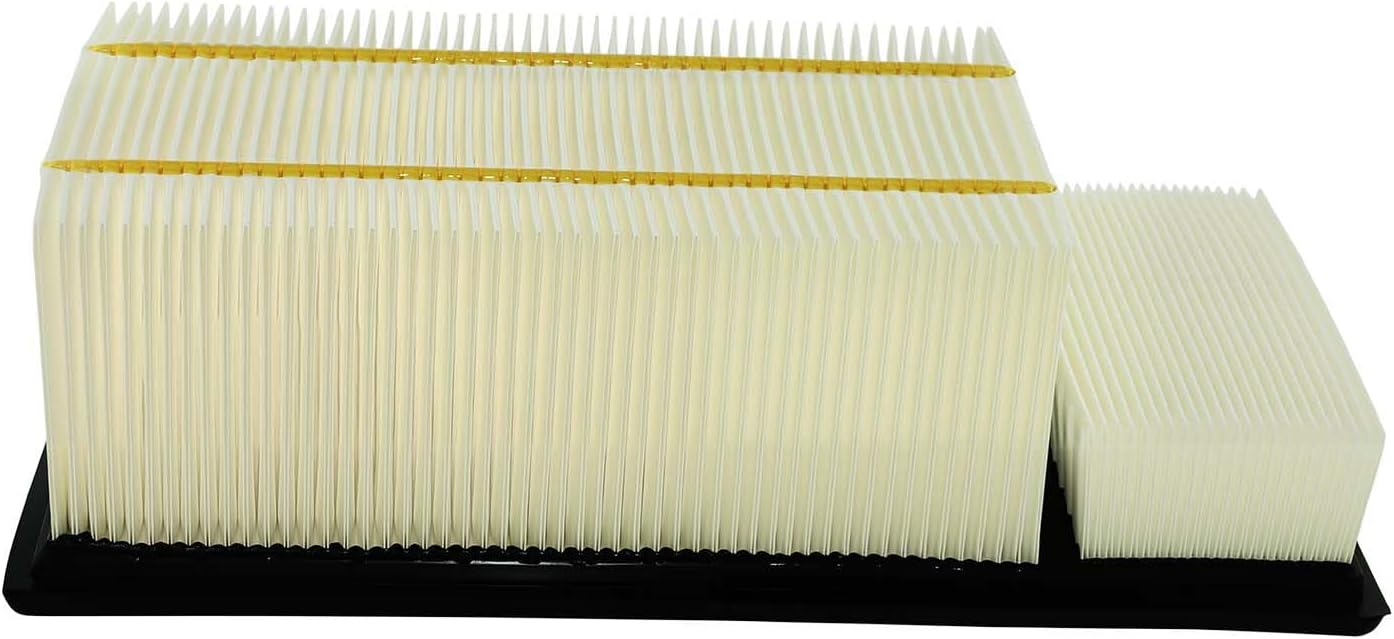
This EPChunMi engine air filter is a direct-fit replacement for the 6.7L Ford Super Duty lineup from 2011 to 2016 and installs in minutes without special tools. It uses upgraded filter media and denser folding to expand filtration area and sealing compared with basic aftermarket elements, which the listing claims delivers up to 99.9% filtration efficiency to keep dirt out of the turbocharged diesel intake. In practice that means cleaner airflow, reduced engine wear, and more consistent performance between service intervals. The unit is sold as a single high-quality filter built to match factory fit and footprint so it snaps into the stock housing. Limitations: the performance claims come from the seller and independent lab numbers are not provided, and longevity depends on driving environment so heavy off-road use will still require more frequent changes. For routine maintenance of a Super Duty diesel this is a practical, budget-friendly replacement that aims to replicate factory fit and filtration without modifying the intake system.
Best for: Buyers who prioritize reliable, easy-to-install maintenance parts and want a cost-effective replacement that matches factory fit for routine service on their Super Duty diesel.
Less Ideal for: If you demand verified performance data from independent testing or run extreme off-road or heavy-sanding conditions requiring specialized heavy-duty filters, consider a tested performance or heavy-duty option instead.
- Vehicle-specific fit for 2011–2016 Ford 6.7L Super Duty trucks simplifies installation
- Upgraded filter media and increased pleats expand filtration area
- Claims high filtration efficiency to reduce engine wear and protect the intake
- Direct replacement of common factory part numbers for easy cross-reference
- Independent lab verification of the 99.9% efficiency claim is not provided
Verdict: A straightforward, factory-fit replacement that gives budget-focused Super Duty owners an easy way to restore filtration and protect the 6.7L diesel without modification.
4. POWERWORKS FA-1902 High Capacity Engine Air Filter (replacement for BC3Z-9601-A)

| Fitment | 2011–2016 Ford F-250/F-350/F-450/F-550 6.7L |
|---|---|
| Replacement Part Numbers | BC3Z-9601-A, FA-1902, AF27882, 49902, CA10888 |
| Unit Count | 1.0 Count |
| Product Grade | Replacement Part |
This POWERWORKS FA-1902 is a vehicle-specific replacement air filter for 2011–2016 Ford Super Duty 6.7L models. It installs the same way as the factory part and is intended for routine maintenance to keep intake air clean and reduce engine wear. The listing emphasizes easy installation and lists multiple equivalent part numbers, so it fits the factory airbox without modifications. For budget-minded owners it offers a straightforward way to refresh intake performance and filtration at a lower cost than many brand-name options. Expect the same basic function as a factory unit, though build and media quality may vary compared with premium filters and longevity between services could differ. This is a single filter sold as an aftermarket replacement, so keep to a regular replacement interval and inspect for fit and seal after installation to ensure ideal protection and airflow.
Best for: Buyers prioritizing a low-cost, direct-fit replacement to keep a 2011–2016 Ford Super Duty with the 6.7L diesel maintained on a budget and back on the road quickly.
Less Ideal for: Owners seeking premium filtration media, extended service intervals, or reusable high-performance filters should consider higher-end or washable options instead.
- Vehicle-specific fit for 2011–2016 Ford 6.7L Super Duty trucks so it installs without modifications
- Lists multiple OEM-equivalent part numbers for confident fitment
- Simple, factory-style design that restores filtration and intake airflow
- Sold as a single unit for straightforward replacement during routine maintenance
- Aftermarket construction may not match longevity or filtration media quality of higher-end branded filters
Verdict: A cost-conscious, direct-fit replacement that restores factory-style filtration for 2011–2016 Ford 6.7L Super Duty trucks.
5. Doc's Diesel Engine Air Filter DPA6109 for 6.7L Powerstroke (2011–2016)

| Fitment | Ford 6.7L Powerstroke 2011-2016 |
|---|---|
| Tested efficiency | 99.25% dust capture |
| Interchange | Replaces Motorcraft FA1902, Wix 49902, Baldwin PA4433, Purolator TA36109 |
This Doc's Diesel DPA6109 engine air filter is a direct-fit replacement for Ford 6.7L Powerstroke F-250 through F-550 trucks from 2011 to 2016. It uses deep-pleated filter media and a heavy-duty silicone gasket to trap fine dust and keep a tight seal in dusty or off-road conditions. Doc's cites third-party test results showing 99.25% efficiency and high dust-holding capacity, which translates to longer service intervals when driving in cleaner conditions and reliable protection when you push the truck in harsher environments. Installation is the same as factory parts and the filter cross-references common OEM part numbers, so it fits into typical maintenance routines without modifications. The main limitations are that it is an aftermarket unit rather than a factory-branded part and service life still depends on driving conditions, so plan inspections more frequently if you run in heavy dust or towing scenarios. For owners who value consistent filtration and a robust seal, this filter is a practical, no-frills replacement option.
Best for: Drivers who prioritize dependable, heavy-duty filtration for regular highway and off-road use and want a straightforward replacement that protects the 6.7L Powerstroke engine without modification.
Less Ideal for: Those seeking an exact factory-branded part for warranty or dealer service preferences should consider a manufacturer-branded filter instead.
- High filtration efficiency with third-party test showing 99.25% particle capture
- Deep-pleated media for increased dust-holding capacity
- Heavy-duty silicone gasket for a tight seal in rough or dusty conditions
- Direct replacement that cross-references common OEM part numbers for easy fitment
- Aftermarket part rather than factory-branded component
Verdict: Choose this filter if you want a rugged, high-efficiency replacement that reliably protects a 6.7L Powerstroke in everyday and dusty driving conditions.
6. Motorcraft FA-1883 Engine Air Filter
| Model | FA-1883 |
|---|---|
| OEM Part Number | 7C3Z-9601-A |
| Automotive Fit Type | Vehicle Specific Fit |
| Position | Front |
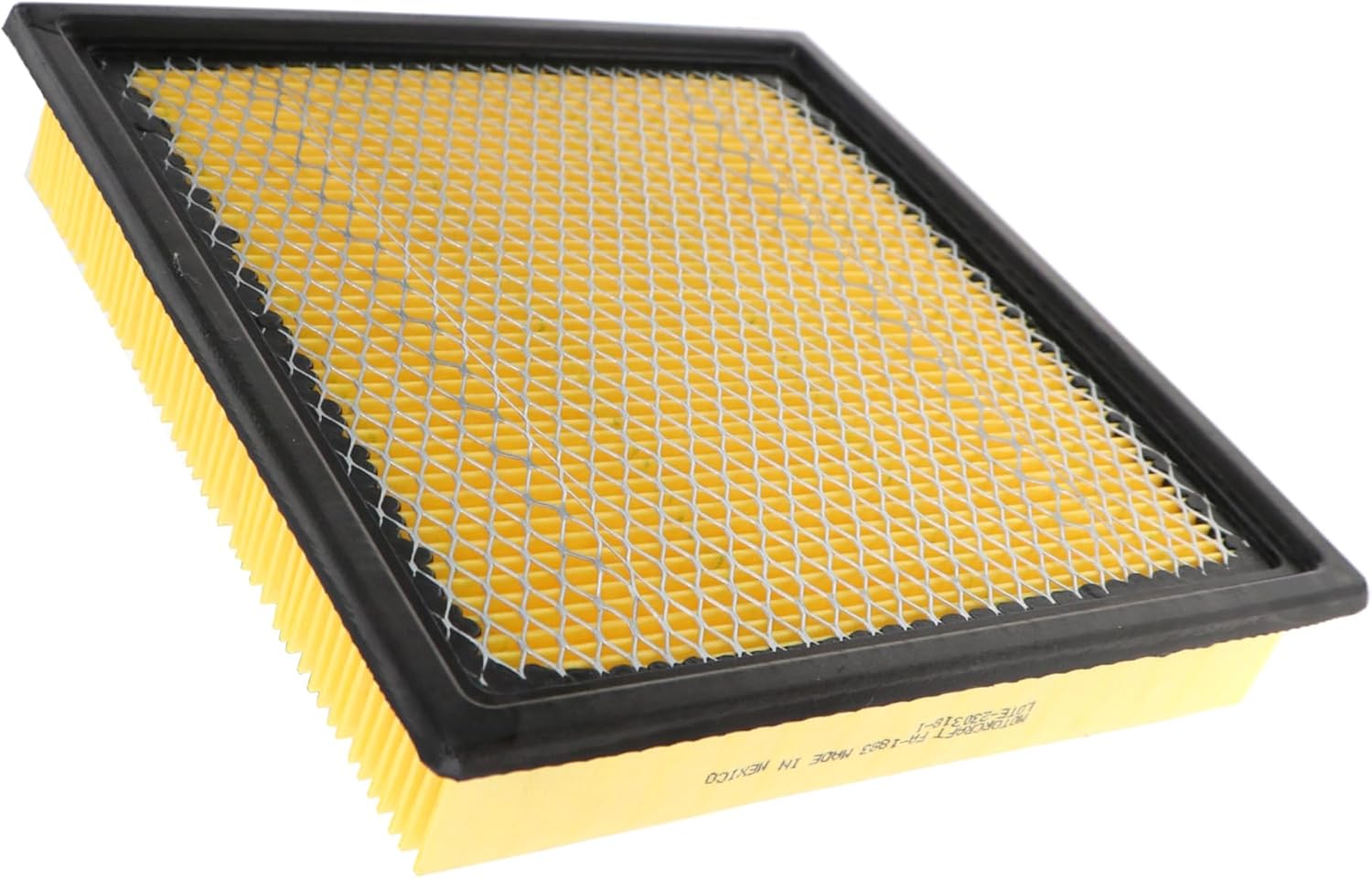
The Motorcraft FA-1883 is a vehicle-specific engine air filter made to match factory fit and filtration for many Ford and Lincoln trucks and SUVs. It installs the same way as the factory part and is typically used during routine maintenance to protect the engine from dust, pollen, and road contaminants. Notable features include multi-fiber high-density filter media with a surfactant coating to boost initial efficiency, a phenolic resin to keep pleats stable in heat and moisture, and a polyurethane sealing gasket intended to maintain a tight, leak-free fit across temperature cycles. In practice this means consistent airflow with strong contaminant capture and reduced risk of distortion or bypass under demanding conditions. The filter is tested to meet Ford, SAE, and ISO standards, which supports predictable performance and long service life. The main limitations are that it is a direct-fit, vehicle-specific replacement so buyers must confirm exact application, and it does not provide performance upgrades over factory filtration.
Best for: Buyers who prioritize reliable, factory-quality replacement parts and want the reassurance of components engineered and tested to meet Ford standards for their routine maintenance.
Less Ideal for: Shoppers looking for high-flow or performance-oriented air filters or those who need a universal or multi-vehicle option should consider alternatives.
- Factory-designed fit for direct replacement on specified Ford and Lincoln models
- High-density multi-fiber media with surfactant coating for strong initial filtration
- Phenolic resin-treated pleats resist heat and moisture deformation
- Polyurethane seal provides a tight, leak-resistant fit across temperature extremes
- Vehicle-specific fitment limits use to the listed Ford and Lincoln applications
Verdict: Choose this Motorcraft filter if you want a factory-quality, vehicle-specific replacement that matches Ford's tested fit and filtration standards.
Choosing the Right 2011-2016 Ford F-250 Air Filter: Key Factors to Consider
Filtration Efficiency
Filtration efficiency determines how well an air filter removes dust, pollen, and particulate matter before it reaches the engine. For the 2011-2016 Ford F-250, higher efficiency reduces abrasive wear on cylinder walls and fuel system components, which matters if you tow or operate on dirt roads.
However, very dense media can increase intake restriction if not engineered for balanced airflow. Look for filters that specify particle capture ratings or laboratory test data. In practice, choose an option that offers proven micron-level capture while keeping airflow appropriate for the F-250's V8 or diesel application.
Airflow and Engine Response
Airflow characteristics affect throttle response, turbo spool (if applicable), and overall engine efficiency. Filters designed with pleat geometry and low-resistance media can deliver better transient response without sacrificing protection. For heavy-load driving, sustained airflow at higher RPMs is important to prevent power loss.
Consider the vehicle's typical use case. If you often tow or carry heavy loads, prioritize filters that maintain consistent flow under pressure. For routine highway driving, a balanced filter that slightly favors filtration over maximal airflow is usually acceptable.
Fitment and Seal Integrity
Correct dimensions and a secure seal are essential to prevent unfiltered air bypass. The 2011-2016 Ford F-250 uses a specific housing shape, and even small gaps can let abrasive dust enter the engine. Filters with rigid, well-molded frames and precise tolerances reduce the risk of movement or collapse during service.
Inspecting the sealing surface and how the filter seats in the housing can prevent installation errors. Choose filters that explicitly list fitment for the F-250 year range and provide good user-fit feedback to avoid leaks.
Durability and Media Construction
Durability covers both the physical frame and the filter media's resistance to moisture, oil, and mechanical stress. The F-250 often encounters tough conditions, including towing, worksite dust, and variable weather, so a filter that maintains shape and filtration over time reduces the frequency of replacements.
Look for robust frames, reinforced pleats, and media treated to resist moisture. Durable construction also reduces the likelihood of fibers breaking down and entering the intake. For long-term ownership, durability translates to lower maintenance hassle.
Serviceability and Maintenance Interval
Decide whether you prefer disposable filters or serviceable options that can be cleaned and reused. Disposable filters simplify maintenance but require more frequent replacement depending on driving conditions. Reusable filters can lower long-term consumable cost but need proper cleaning and re-oiling procedures.
Maintenance intervals for the F-250 depend on driving conditions. Frequent dusty driving and towing shorten intervals, while mostly highway use extends them. Consider filters with clear cleaning instructions and accessible replacement schedules to match your maintenance habits.
Compatibility With Engine and Tuning
Some filters interact differently with factory sensors and intake systems, and if your F-250 has aftermarket tuning or a cold-air intake, that can change the ideal filter choice. For stock engines, prioritize filters designed to maintain stock airflow profiles and not disrupt sensor readings.
If you plan to add performance mods or tuning later, choose a filter that will support increased airflow without introducing excessive restriction. Confirm that filter design does not require housing modification to retain factory emissions and sensor function.
Understanding Engine Vs Cabin Filters for the F-250
The 2011-2016 Ford F-250 uses separate filters for engine intake and cabin ventilation, and each serves a different purpose. The engine air filter protects mechanical components and the combustion process, while the cabin filter focuses on passenger air quality.
Owners sometimes conflate the two when planning maintenance. Replacing the engine air filter improves engine protection and fuel efficiency potential, whereas the cabin filter improves interior air quality and HVAC performance. Both are important but should be addressed on their own schedules.
- Engine filters protect the engine from particulates and debris.
- Cabin filters remove pollen, dust, and odors for passenger comfort.
- Service intervals and replacement methods differ between the two.
When To Replace the Engine Air Filter
Replacement frequency depends on driving conditions. Highway driving on paved roads typically allows longer intervals, while frequent driving on gravel, dirt, or in construction zones requires more frequent changes. Visual inspection is a good first step: a dark, clogged filter indicates it is time to replace.
For the 2011-2016 F-250, check the engine air filter during regular oil changes or at least every 12,000 to 20,000 miles under normal conditions. Increase inspection frequency if you tow often or drive in dusty conditions.
- Inspect at every oil change.
- Replace earlier if the filter appears dark, compressed, or clogged.
- Adjust intervals when frequently towing or driving off-road.
Installing and Seating the Air Filter Correctly
Proper installation ensures the filter seals fully in the housing and avoids intake leaks. When replacing the 2011-2016 F-250 air filter, clean the housing of debris, check the sealing surface for damage, and ensure the filter is oriented correctly before closing the lid.
If the filter uses a foam gasket or molded rubber edge, press gently around the perimeter to seat it evenly. Tighten housing clamps or screws to the specified torque where applicable and avoid overtightening plastic fasteners.
- Clean housing before installing a new filter.
- Check for torn gaskets or damaged frames.
- Ensure the filter is seated flat and the lid is secured evenly.
How Filter Choice Affects Fuel Economy
Airflow restriction can influence how efficiently the engine breathes, which in turn affects fuel economy. A filter that offers balanced airflow while still trapping harmful particles helps maintain factory fuel economy figures. Excessive restriction increases engine load and fuel consumption under acceleration and towing.
Selecting a filter aimed at preserving stock airflow characteristics is a pragmatic approach for owners who prioritize fuel economy over marginal performance gains.
- Low-restriction filters can help maintain or slightly improve economy.
- Excessive filtration density without airflow design tradeoffs may reduce MPG.
- Match filter choice to driving priorities like towing versus highway cruising.
Sizing and Fitment Notes for the 2011-2016 F-250
Not all filters are dimensionally identical even when marketed for the same model range. Confirm the listed dimensions against your truck's existing filter and the manufacturer fitment notes. Pay attention to depth and the sealing flange thickness to avoid compression or poor sealing.
If you are unsure about fit, measure the factory filter before ordering and verify that the replacement lists explicit fitment for the 2011-2016 Ford F-250 to avoid returns or installation issues.
- Measure length, width, and depth of the current filter.
- Check sealing flange thickness and shape.
- Verify explicit fitment for 2011-2016 F-250 in product details.
Still looking for the perfect fit?
Select your Ford F-250 configuration to see the most relevant Air Filters recommendations
How We Chose the Best 2011-2016 Ford F-250 Air Filter
We prioritized criteria that matter for heavy-duty use and daily driving of the 2011-2016 Ford F-250. Key evaluation points included filtration efficiency measured by micron capture or MERV-equivalent performance, airflow characteristics that affect throttle response and engine load, and build quality of the filter media and frame to resist collapse and maintain a consistent seal in the factory housing. Fitment and dimensional accuracy were critical filters in our process to avoid gaps or interference with the intake system.We also assessed longevity and serviceability, including whether the filter is disposable or serviceable, and how that impacts maintenance intervals. Resistance to moisture and oil contamination was checked conceptually since the F-250 often sees towing and heavy payload use. Noise and restriction characteristics under load were considered to reflect real-world driving.Exclusions: We excluded filters that did not have documented fitment for the 2011-2016 Ford F-250 or that used unconventional mounting methods requiring housing modification. We also excluded filters that lacked clear filtration performance data or that used very soft frames likely to deform. The final list reflects a balance of durability, airflow, filtration, and fitment reliability for this truck.
Our full evaluation process is outlined in our review methodology.
FAQ
How often should I change the engine air filter on a 2011-2016 F-250?
It depends on driving conditions. Under normal highway driving, inspect every 12,000 to 20,000 miles and replace as needed. For frequent off-road or dusty conditions, check more often and replace sooner.
Can I use a reusable wash-and-reuse filter in my F-250?
Reusable filters are an option, but they require correct cleaning and re-oiling procedures. They can reduce long-term consumable cost if maintained properly, but improper servicing can harm filtration performance or cause intake contamination.
Will a high-flow air filter improve towing performance?
A well-designed low-restriction filter can help maintain airflow under load and may improve throttle response during towing. The effect is usually modest; prioritize filters that balance increased flow with reliable particle capture.
Does the engine air filter affect fuel economy for the F-250?
Yes, restriction from a clogged or overly restrictive filter can reduce fuel efficiency. A clean, correctly sized filter that maintains adequate airflow helps preserve factory fuel economy, especially during highway driving.
How can I tell if the air filter is installed correctly?
Inspect the seal around the filter for uniform contact with the housing and ensure the lid or clamps hold the filter flat without gaps. Look for any misalignment, torn gaskets, or visible bypass paths.
Are OEM and aftermarket filters different for the F-250?
OEM and aftermarket filters vary in media, frame materials, and construction. The important factors are filtration efficiency, fitment accuracy, and durability rather than simply OEM or aftermarket labeling.
Final Verdict
When choosing an air filter for your 2011-2016 Ford F-250, prioritize a combination of reliable filtration, accurate fitment, and durable construction. Balance the need for particle capture with airflow requirements based on whether you tow or primarily drive on highways. Consider maintenance preferences when deciding between disposable and serviceable filters.Ultimately, pick a filter that fits the factory housing precisely, provides documented filtration performance, and matches your typical driving conditions to minimize engine wear and maintain consistent performance and fuel economy.
Explore More:
- Check out all Ford F-250 parts & accessories
- Explore Air Filters Maintenance & Repair Guides
- Explore Engine
- Browse all Auto Parts
