

Note: This article contains affiliate links. If you click on these links and make a purchase, I may earn a small commission at no extra cost to you. This helps support my research and content. Read my full affiliate disclosure here.
Towing with a 2019-2023 Ford Ranger changes how your truck handles acceleration, braking, and cornering. A properly matched trailer brake controller gives you smoother stops, reduced trailer sway, and more predictable braking response when hauling a load. Whether you tow a small utility trailer or a heavier camper, the right controller affects safety and confidence on the road.This guide presents five top-rated trailer brake controllers shortlisted for the 2019-2023 Ranger. We evaluate each option for braking responsiveness, installation demands, and user controls so you can pick a unit that fits your towing frequency and technical comfort. Read on for practical setup and towing advice tailored to this Ranger range.
Looking for other parts? See all Ford Ranger parts & accessories.
Top Picks at a Glance
| Best Overall Trailer Brake Controller A top-performing, well-rounded controller with strong reliability and features | Tekonsha Brake-EVN Proportional Trailer Brake Controller (8508220) |  |
| Best Budget Trailer Brake Controller An affordable controller that covers basic proportional or time‑delay functions | Timilge Proportional Trailer Brake Controller (BC06) |  |
| Best Plug-and-Play Kit Brake Controller Complete kit with vehicle‑specific harness and mounting parts for easy install | CURT Venturer NEXT Time-Delay Electric Trailer Brake Controller |  |
| Best Portable Bluetooth Brake Controller Wireless, plug‑in controller that pairs with a smartphone and travels between vehicles | CURT Echo 51180 Mobile Bluetooth Trailer Brake Controller |  |
| Best Low-Profile Dash Brake Controller Slim, dash‑friendly units with compact control knobs or hidden modules | CURT Discovery NEXT Electric Trailer Brake Controller (Low Profile, Fully Adjustable) |  |
1. Tekonsha Brake-EVN Proportional Trailer Brake Controller (8508220)
Best Overall Trailer Brake Controller

| Model | 8508220 |
|---|---|
| Axle compatibility | 1-4 axles |
| Warranty | Five-year limited warranty |
The Tekonsha Brake-EVN is a proportional electric brake controller designed to give consistent, smooth trailer braking by sensing your vehicle deceleration and applying trailer brakes accordingly. It installs with Tekonsha plug-and-play wiring harnesses for many vehicle platforms and sits within easy reach of the driver; the unit offers arrow buttons to set output, a boost feature with three additional power levels for heavier loads, and a manual override lever for immediate braking. The bright digital LED display reports settings and diagnostics while a power-save mode reduces battery draw when not in use. For a Ford Ranger from 2019 to 2023 the Brake-EVN provides a reliable factory-style braking feel and straightforward installation when using a vehicle-specific harness. Limitations include the need to buy the vehicle-specific harness separately and that advanced smartphone configuration or wireless features are not provided on this model.
Best for: Ford Ranger owners from 2019 to 2023 who do their own installations and want a dependable, feature-rich controller that closely matches factory braking behavior.
Less Ideal for: Buyers seeking built-in wireless or app-based configuration or those unwilling to purchase a separate vehicle harness should consider other options.
- Proportional braking with internal inertia sensor for smooth, intuitive trailer response
- LED display shows settings and real-time diagnostics for quick checks while driving
- Boost feature offers three extra power levels for heavier trailers
- Compact, driver-accessible design with manual override for emergency stops
- Vehicle-specific plug-and-play wiring harness is sold separately
- No smartphone configuration or wireless connectivity options
Verdict: For DIYers who want the most dependable, feature-complete trailer brake controller that balances smooth proportional braking, easy install options, and proven durability.
2. Timilge Proportional Trailer Brake Controller (BC06)
Best Budget Trailer Brake Controller

| Fits trailers | 1 to 4 axles |
|---|---|
| Display | LED digital voltage readout |
| Controls | Boost mode and adjustable output |
| Wiring | 4-wire connection (power/stop/ground/trailer) |
The Timilge BC06 is a proportional trailer brake controller that automatically senses vehicle deceleration and delivers matching braking power to trailers with one to four axles. It mounts in-cab and shows output on a clear LED digital screen so you can monitor voltage in real time and tweak settings if braking feels too soft or too aggressive. Installation is simplified by wiring ports compatible with vehicle-specific harnesses for quick plug-in connection and the unit requires no leveling. The controller includes boost mode and smooth-stop behavior to help prevent trailer sway and reduce wear on brake components during frequent stops. As a budget-oriented unit, it lacks advanced diagnostics, smartphone integration, or higher-end materials, but it provides the core proportional control most drivers need for occasional to moderate towing. For use with a 2019–2023 Ford Ranger, it offers a straightforward, low-cost way to add factory-quality proportional braking without extra complexity.
Best for: Buyers who want an inexpensive, no-frills proportional controller that delivers reliable, vehicle-synced braking for occasional towing and simple installation on their Ranger.
Less Ideal for: Drivers who tow very heavy loads frequently or who want integrated diagnostics, app control, or premium build materials should consider higher-end models.
- Proportional braking that automatically matches trailer braking to vehicle deceleration
- LED digital display for real-time voltage monitoring and easy adjustment
- Fits 1 to 4 axle trailers, covering most light- and medium-duty towing setups
- Vehicle-specific wiring ports allow quicker plug-in installation and removal
- No advanced connectivity or diagnostic features found on higher-end controllers
Verdict: If you need a low-cost, reliable way to control trailer brakes for occasional towing without premium bells and whistles, this pick gives solid performance for the price.
3. CURT Venturer NEXT Time-Delay Electric Trailer Brake Controller
Best Plug-and-Play Kit Brake Controller

| Model | Venturer NEXT |
|---|---|
| Vehicle system | 12-volt |
| Brakes controlled | 2-6 (1-3 axles) |
| Display | LED ramp indicator with adjustable brightness |
The CURT Venturer NEXT is a low-profile, time-based brake controller designed to deliver straightforward control of electric trailer brakes from inside the vehicle. It manages 2 to 6 brakes (1 to 3 axles) and offers fully adjustable power and ramp time so you can match braking feel to different trailer loads. LED indicators show ramp-up progress and adjustable brightness makes the display usable day or night. The unit mounts in tight spaces thanks to its slim housing and included clearance bracket, and it installs quickly when paired with a CURT plug-and-play wiring harness (sold separately) to avoid cutting into factory wiring. Because it is time-delay based with no internal moving parts, the Venturer NEXT is simple to set up and reliable in everyday towing, though it lacks vehicle-sensing proportional braking found on more advanced controllers. For routine towing of light to medium loads where ease of installation and clear manual control matter, this controller performs well.
Best for: Buyers who prioritize an easy-to-install, cab-mounted brake controller that is simple to tune for a range of light- to mid-duty towing tasks and who plan to use a matching plug-and-play harness for near-factory wiring.
Less Ideal for: Drivers who tow heavy trailers frequently or want proportional braking that mimics vehicle braking behavior should consider a proportional controller instead.
- Compact low-profile design saves dash space and improves clearance for installation
- Fully adjustable power and ramp time to tune braking for different trailer loads
- Clear LED ramp and brightness control for easy monitoring day or night
- Controls up to 6 brakes (3 axles) making it suitable for most small to mid-size trailers
- Time-delay operation does not provide the instant, proportional braking response of inertia-based controllers
Verdict: Choose this when you want a controller that includes the matching wiring harness and hardware for a near- factory, no‑cut installation.
4. CURT Echo 51180 Mobile Bluetooth Trailer Brake Controller
Best Portable Bluetooth Brake Controller
| Model | 51180 |
|---|---|
| Connection | 7-way RV blade plug |
| Control | Bluetooth smartphone app |
| Brake support | 2–4 trailer brakes (1–2 axles) |
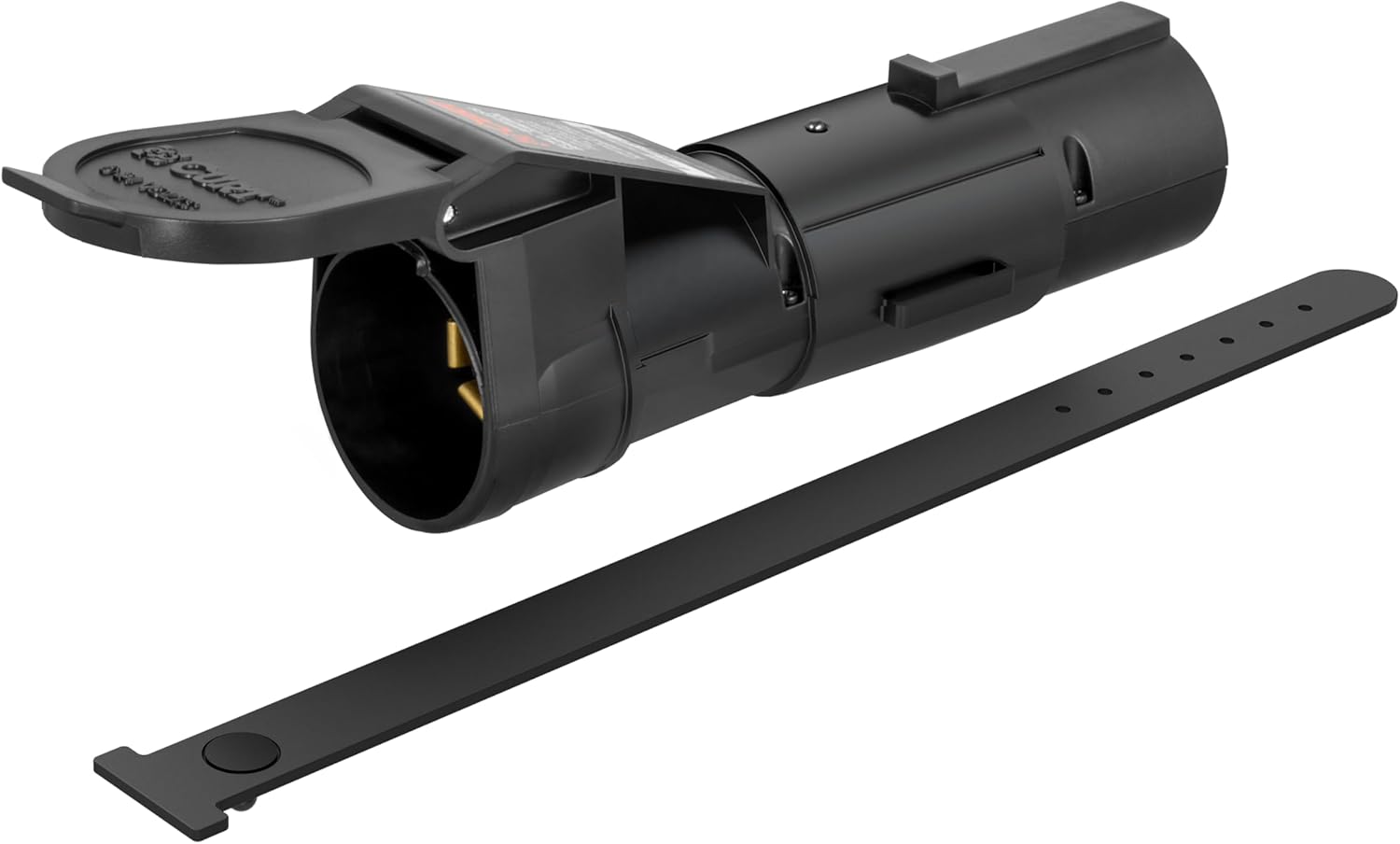
The CURT Echo 51180 is a mobile Bluetooth-enabled trailer brake controller designed to plug directly into a vehicle 7-way connector and let you control and monitor trailer braking from your phone. For Ford Ranger owners it provides a zero-tool installation: plug the unit into the factory 7-way and use the OneControl Auto app on iOS or Android to set maximum output, sensitivity, create towing profiles and manually apply the trailer brakes. The Echo uses a tri-axis accelerometer for smooth, hill-friendly braking and supports two to four trailer brakes (one to two axles). Its potted enclosure and retention strap on the connector help protect electronics from moisture and vibration while keeping the connection secure when towing. Because it is portable and uses the vehicle 7-way, the Echo is ideal for drivers who need a transferable controller across multiple trucks or trailers. Limitations include reliance on a smartphone for full control and the need for a compatible 7-way socket; it is not a hardwired under-dash solution for a permanently mounted look.
Best for: Drivers who tow occasionally with a Ford Ranger and want a quick, no-tools controller that moves between vehicles and trailers while offering app-based setup and real-time control.
Less Ideal for: Owners who want a permanently mounted under-dash controller or prefer physical controls inside the cab should consider a hardwired unit instead.
- Plug-and-play 7-way design for zero-tool, transferable installation
- Bluetooth app control lets you adjust output, sensitivity, and save profiles from your phone
- Tri-axis accelerometer and proportional control deliver responsive, smooth stops
- Potted enclosure and locking retention strap protect internal electronics and secure the connection
- Compatible with ABS, cruise control and low-voltage systems for broad vehicle compatibility
- Requires a smartphone and the app for full configuration and manual control
Verdict: Pick this if you want a zero‑tool, transferable controller that plugs into a 7‑way and uses Bluetooth or an app for configuration and on‑the‑fly adjustments.
5. CURT Discovery NEXT Electric Trailer Brake Controller (Low Profile, Fully Adjustable)
Best Low-Profile Dash Brake Controller

| Display Type | LCD |
|---|---|
| Operates | 2-8 trailer brakes (1-4 axles) |
| Material Type | Plastic |
The CURT Discovery NEXT is a slim, user-friendly electric trailer brake controller designed to sit unobtrusively in the dash while giving precise control over trailer braking. It provides fully adjustable power and ramp time with gain and load settings so you can fine-tune braking behavior for different trailer setups. The easy-to-read LCD shows full-text diagnostics and adjustable brightness, which helps when tuning or troubleshooting from the driver seat. Its unique low-profile bracket improves dash clearance and keeps the unit from protruding into the cabin, making it a good fit for tighter dashboards. The controller supports 2 to 8 trailer brakes (1 to 4 axles) and claims compatibility with a wide range of brake systems including PWM and electric over hydraulic. One limitation is that it uses a time-delay control strategy rather than proportional sensing, so braking response can feel different compared with proportional controllers in some towing situations. Install is simplified by a plug-and-play approach on supported wiring harnesses but may still require wiring adaptation on some trucks.
Best for: Buyers who prioritize a discreet, OEM-style dash installation and want a fully adjustable controller they can tune for different trailers while keeping the unit low-profile and out of sight.
Less Ideal for: Drivers who need the most natural, sensor-based proportional braking feel or who prefer a controller that automatically matches vehicle deceleration without manual tuning.
- Low-profile bracket and slim case minimize dashboard protrusion for a factory-integrated look
- Fully adjustable power, ramp time, gain, and load settings let you calibrate braking to trailer weight and feel
- LCD with full-text diagnostics and adjustable brightness simplifies setup and troubleshooting
- Supports 2–8 trailer brakes (1–4 axles) for a wide range of small to medium trailers
- Time-delay control rather than proportional sensing can produce less natural brake modulation in some towing conditions
- May require wiring adaptation on vehicles without a compatible plug-and-play harness
Verdict: Ideal for owners who want a minimal, OEM‑looking installation—low‑profile controllers that tuck into the dash without blocking sightlines or cabin space.
Choosing the Right 2019-2023 Ford Ranger Trailer Brake Controller: Key Factors to Consider
Braking Modulation and Response
How smoothly a controller modulates the trailer brakes affects stopping distances and vehicle stability. A unit that applies braking force progressively reduces jolt and helps the Ranger and trailer slow together, which is especially important during sudden stops or on slippery roads.
Response time matters too. Faster-response controllers can apply brakes more quickly when you hit the pedal, but overly aggressive response can lock trailer wheels if not tuned. For the Ranger, consider a controller that lets you adjust sensitivity and gain so you can match its modulation to the trailer weight and road conditions.
Installation and Wiring Compatibility
Installation complexity is a practical concern for many owners. Some controllers use a simple in-cab mounting and plug into factory towing connectors if the Ranger is pre-wired. Others require splicing into the truck's wiring harness or installing a dedicated brake output and ground. Ease of installation affects total cost and time.
Check whether the unit requires a separate power feed, a fused connection, or a trailer brake output that may be located behind the dash. Also consider routing of the wiring to the trailer connector and secure mounting to avoid vibration-related failures in everyday use.
Control Type and Adjustability
Controllers come in different control styles: manual-only, time-delayed, or proportional systems that sense vehicle deceleration. The control interface and available adjustments influence how precisely you can tune braking performance for different trailers.
For frequent towing or variable loads, choose a controller with intuitive gain adjustment and clear feedback. For occasional towing, a simpler controller with basic gain and manual override may be sufficient. Consider how easy it is to access and change settings from the driver position while maintaining safe operation.
Compatibility With Trailer Brake Types
Trailers use electric or hydraulic-actuated electric-over-hydraulic brakes, and controllers vary in how they drive those systems. Confirm that the controller supports the brake type on your trailer without additional modules.
Also verify that the controller can handle the total amperage required by your trailer's brakes. Undersized controllers can overheat or fail, while correctly rated units maintain consistent performance under repeated braking events.
Durability and Environmental Protection
Towing exposes electrical components to vibration, temperature swings, and moisture. Durable housings, sealed connectors, and corrosion-resistant terminals extend service life and reduce maintenance needs.
Consider controllers with robust mounting brackets and protected internal circuitry. For Rangers used in humid or salty environments, prioritize units with better environmental sealing to avoid intermittent failures and expensive troubleshooting.
User Feedback and Diagnostics
Built-in diagnostics and clear status indicators simplify troubleshooting and setup. LED or display readouts that show gain level, voltage, or fault codes help you identify wiring issues or brake faults quickly.
Features like audible alerts for a disconnected trailer or load-sensing feedback can prevent unsafe situations before they escalate. For owners who often hitch different trailers, diagnostic feedback speeds setup and improves confidence that the system is functioning correctly.
Proportional Vs Time-Delayed Controllers
Proportional controllers sense the Ranger's braking force and apply trailer brakes in proportion to that deceleration. That typically yields a more natural towing feel and reduces tugging between truck and trailer during gradual stops. Proportional units tend to be preferred for heavier trailers and frequent towing because they better match braking dynamics.
Time-delayed controllers apply pre-set braking power after a short interval following brake application. They are simpler to wire and tune but can feel abrupt during varying stop intensities. For light, occasional towing a time-delayed unit can be adequate and easier to install.
- Proportional: better modulation, more natural braking
- Time-delayed: simpler setup, consistent output
- Manual override: useful for controlling trailer braking independently
Mounting and In-Cab Placement
Placement of the controller within the cab affects usability and safety. Mount a unit where you can reach the manual override and adjust gain without taking your eyes off the road for long. Many compact controllers mount under the dash or to the steering column area for quick access.
Also plan wiring routes to minimize exposure to heat and moving parts. Secure mounting reduces vibration that can loosen terminals or connectors over time.
- Accessible location improves on-the-fly adjustments
- Avoid blocking airbag deployment zones or controls
- Use supplied mounting hardware and vibration-damping pads when available
Electrical Considerations and Fuse Protection
A proper power feed and fuse protect the controller and vehicle wiring. Many controllers need a fused ignition-switched power source and a dedicated fused output to the trailer brakes. Using the correct gauge wire and high-quality connectors reduces voltage drop during heavy braking events.
Ground integrity is equally important. Poor grounds cause erratic behavior and reduced braking power. Inspect grounding points on the Ranger and secure any ground wires to clean, unpainted metal surfaces.
- Use correct wire gauge to handle maximum brake current
- Install fuses per manufacturer recommendations
- Test voltage at the trailer connector with a loaded trailer to confirm performance
Adjusting Gain for Different Trailer Loads
Proper gain adjustment ensures the trailer brakes engage neither too softly nor too aggressively. Start with a conservative setting and perform incremental tests at low speed in a safe area, increasing gain until the trailer tracks smoothly behind the Ranger without wheel lockup or a feeling of being pushed.
If you tow trailers with widely varying weights, note preferred settings for each trailer and consider a controller with memory presets or easy-read indicators to simplify switching between setups.
- Always test adjustments at low speeds in a safe area
- Reduce gain in slippery conditions to avoid trailer wheel lock
- Document settings for each trailer to speed future setup
Common Wiring Points on the 2019-2023 Ranger
The Ranger often has factory-prep towing wiring or a dedicated connector near the rear bumper for trailer lights and brakes. If factory connectors are not present, you may need to run a fused power feed from the fuse box and a brake signal wire from the brake light or ABS module area. Route wires away from exhaust components and moving suspension parts.
If you are unsure about locating the correct brake signal or safe ground, consult the Ranger's service manual or consider a professional installation to avoid electrical faults and ensure reliable controller behavior.
- Locate factory tow connector before adding aftermarket wiring
- Run power with a properly sized fuse near the battery
- Securely fasten wires with clamps to prevent chafing
Still looking for the perfect fit?
Select your Ford Ranger configuration to see the most relevant Trailer Brake Controllers recommendations
How We Chose the Best 2019-2023 Ford Ranger Trailer Brake Controller
We focused on evaluation criteria that matter for owners of 2019-2023 Ford Ranger trucks and the typical towing tasks they perform. Primary criteria included braking performance, measured by how consistently a controller modulates trailer brakes under varying loads and speeds; installation complexity, covering vehicle wiring, connector compatibility, and required mounting locations; user controls and adjustability, assessing how easy it is to tune gain, sensitivity, and manual braking from the cab; and reliability and build quality, emphasizing durable components and corrosion-resistant connectors for long-term service.Secondary criteria included compatibility with common trailer wiring setups and brake types, electrical protection features such as overload sensing, and diagnostics or indicators that help troubleshoot trailer brake issues. We excluded units that require extensive chassis modifications or controllers incompatible with the Ranger electrical system across the 2019-2023 model years. Our shortlist favors units that balance real-world performance with straightforward installation and intuitive in-cab operation.
Our full evaluation process is outlined in our review methodology.
FAQ
Do I need a trailer brake controller for towing with a 2019-2023 Ford Ranger?
It depends on the trailer weight and local regulations. Many jurisdictions require active trailer brakes above a certain gross trailer weight. Even when not required, a controller improves stopping stability and reduces wear on the truck brakes for medium to heavy loads.
Can I install a brake controller myself on a 2019-2023 Ranger?
Many owners can install a controller if the Ranger has factory tow wiring and a compatible connector. If the vehicle lacks a factory brake output, installation requires routing power and brake signal wires, which can be more complex. Assess your comfort with wiring and consult the service manual or a professional if unsure.
Will a proportional controller work better than a time-delayed unit for my Ranger?
Proportional controllers generally provide smoother, more natural braking and are preferred for heavier trailers or frequent towing. Time-delayed units are simpler and can be acceptable for light, occasional towing. The best choice depends on trailer weight, towing frequency, and your preference for adjustability.
How do I know if my controller is wired correctly?
Correct wiring produces consistent brake activation at the trailer when you apply the truck brakes and allows the controller to draw power from a fused source. Use a test drive at low speed to check for appropriate trailer braking and verify voltage at the trailer connector under load. Intermittent or weak braking often indicates a poor connection, incorrect ground, or undersized wiring.
Should I be concerned about waterproofing the controller on my Ranger?
Controllers mounted inside the cab are generally protected from water, but external connectors and any underbody wiring should be weatherproof. Use sealed connectors and protective conduit for any wiring exposed to the elements to prevent corrosion and intermittent failures.
Final Verdict
When choosing a trailer brake controller for your 2019-2023 Ford Ranger, prioritize braking modulation, installation compatibility, and control ergonomics. A proportional controller provides the most natural braking feel for heavier or frequent towing, while time-delayed units offer simpler installation for lighter use. Ensure the controller you choose matches your trailer's brake type and amperage requirements, and pay attention to correct wiring, fuse protection, and secure mounting.Balancing ease of installation with the level of adjustability you need will guide a confident choice. Focus on reliable modulation, proper electrical connections, and accessible in-cab controls to get safer, more consistent towing performance from your Ranger.
Explore More:
- Check out all Ford Ranger parts & accessories
- Explore Electronics
- Browse all Accessories
