

Note: This article contains affiliate links. If you click on these links and make a purchase, I may earn a small commission at no extra cost to you. This helps support my research and content. Read my full affiliate disclosure here.
If you drive a 1998-2011 Ford Ranger and want better in-cab sound, the right door speakers make one of the most noticeable upgrades you can do. New speakers can restore clarity, add bass impact, and make modern audio sources sound much better without changing the factory head unit.This guide covers the top 7 door speaker options selected for fit and performance in the 1998-2011 Ranger. We focus on sound quality, installation ease, and electrical compatibility so you can choose a setup that matches your listening priorities. Read on for quick buying context and the evaluation criteria used to shortlist these aftermarket choices.
Looking for other parts? See all Ford Ranger parts & accessories.
Top Picks at a Glance
| Best Overall Door Speakers Top all-around pick balancing sound, fit, and DIY install | NVX NSP68 6×8" N-Series Coaxial Speaker Pair (with Metra Harnesses) |  |
| Best Budget Door Speakers Cheap, reliable replacements that restore sound without breaking the bank | Harmony Audio HA R68 5×7/6×8 Coaxial Car Door Speakers (pair) |  |
| Best Plug-and-Play Door Speakers Direct-fit units with factory harnesses for no-splice, bolt-in installs | Harmony Audio HA-R68 Rhythm 6×8/5×7 225W Speaker Package with Factory Harness |  |
| Best Complete Door Speaker Kit Packages that include front/rear pairs, harnesses, and mounting hardware | Harmony Audio Rhythm Series 4-Channel Amp and 5×7/6×8 Speaker Kit |  |
| Best 6×8 Door Speakers Optimized 6×8 drivers for common truck door openings and tone | Rockford Fosgate P1683 Punch 6×8 3-Way Coaxial Car Speakers (Pair) |  |
| Best High‑RMS Door Speakers Sturdy drivers rated for higher continuous power and louder output | Rockford Fosgate T1682 Power 6×8 2-Way Coaxial Speakers (Pair) |  |
| Best Universal/Adapter‑Ready Door Speakers Universal-fit speakers that work with adapters, brackets, or spacers | Pyle PL6183BK 3-Way 6×8 Triaxial Car Speakers (Pair) |  |
1. NVX NSP68 6×8" N-Series Coaxial Speaker Pair (with Metra Harnesses)
Best Overall Door Speakers

| Speaker Size | 8 inches |
|---|---|
| Woofer Diameter | 6.5 inches |
| Speaker Maximum Output Power | 40 watts |
| Input Voltage | 12 volts |
| Connectivity Technology | wired |
The NVX NSP68 kit replaces factory door speakers with a balanced, road-ready 6×8" coaxial setup intended for straightforward DIY swaps. Each kit pairs a polypropylene-cone woofer and 3/4" silk dome tweeter to deliver clear highs and a controlled midrange while the nitrile rubber surround helps keep bass tight for door-mounted speakers. NVX includes Metra harnesses and vehicle-specific adapters on applicable fits so installation is mostly plug-and-play with no cutting required on most Rangers. The stamped-steel basket and high-temp voice coil suggest a durable build that stands up to everyday driving. Power handling is presented for typical car use and the silk tweeter improves vocal and instrument clarity without harshness. Limitations are typical for coaxials in a door: you should not expect deep sub-bass or the output of component systems and final sound will depend on door cavity treatments and head unit power. For a single-step upgrade that balances sound quality, reliability, and simple installation, the NSP68 is well suited to most Ranger door replacements.
Best for: Buyers looking for a balanced, no-fuss door speaker upgrade for a Ranger who prioritize clear full-range sound, straightforward installation, and dependable construction.
Less Ideal for: Enthusiasts seeking very deep bass or a high-power component system with separate crossovers should consider adding a subwoofer or component speakers instead.
- Direct-fit replacement with included Metra harnesses and adapters for plug-and-play installation on applicable Ford Ranger doors
- Silk dome 3/4" tweeters provide smooth, detailed highs and better vocal clarity
- Polypropylene cone and NBR rubber surround produce controlled mids and reliable durability
- Stamped-steel basket and high-temperature voice coil improve long-term reliability in a vehicle environment
- As a 2-way coaxial in a door location it cannot reproduce deep, subwoofer-level bass
Verdict: The Best Overall slot is for a balanced speaker that delivers clear full-range sound, straightforward installation, and dependable build quality for most DIY door upgrades.
2. Harmony Audio HA R68 5×7/6×8 Coaxial Car Door Speakers (pair)
Best Budget Door Speakers

| Peak power | 225 watts |
|---|---|
| RMS power | 75 watts |
| Sensitivity | 90dB |
| Frequency response | 45Hz-20kHz |
The Harmony Audio HA R68 speakers are a straightforward, budget-focused door speaker pair intended to replace factory units without cutting or splicing. They use a 6-inch dynamic driver and a small coaxial tweeter to broaden the high end, and the set is sold with a power cable and factory-style harness for direct door installation. With a 225W peak (75W RMS) handling and 90 dB sensitivity, these speakers deliver noticeably louder, clearer sound than many stock speakers while keeping distortion low at moderate volumes. The 45 Hz to 20 kHz frequency response favors midrange and treble clarity rather than deep bass, so they improve vocal and instrument detail but will not replace a subwoofer for heavy low-end. Their wired connectivity and plug-and-play mounting make them ideal for a quick DIY swap in compatible doors, though serious audiophiles may want higher-end components for finer imaging or more power handling. Overall they are a practical, low-cost way to lift factory sound with minimal installation effort.
Best for: Buyers looking for a cheap, no-frills upgrade to factory door speakers who want an easy DIY swap that improves clarity and volume without modifying wiring.
Less Ideal for: Audiophiles seeking deep bass, very high power handling, or component-level imaging should consider higher-end separates or adding a dedicated subwoofer instead.
- Plug-and-play factory-style connector for easy direct door installation
- Decent sensitivity (90 dB) and 75W RMS handling for louder, cleaner sound than many stock speakers
- Coaxial design with a tweeter adds improved high-frequency detail
- Includes speaker pair and power cable so no extra parts are required
- Frequency response prioritizes mids and highs so bass extension is limited
Verdict: Choose the Best Budget pick when you want an inexpensive, no-frills speaker that improves factory sound and keeps costs low for a quick DIY swap.
3. Harmony Audio HA-R68 Rhythm 6×8/5×7 225W Speaker Package with Factory Harness
Best Plug-and-Play Door Speakers

| Speaker Maximum Output Power | 225 watts |
|---|---|
| Power Handling (RMS) | 75W |
| Frequency Response | 45Hz-20kHz |
| Sensitivity | 90dB |
| Tweeter Size | 0.5 inches |
These Harmony Audio Rhythm speakers are a plug-and-play replacement designed for direct door installation using the included factory-style harness pairs. The 2-way coaxial design with a 6×8/5×7 woofer and a 1/2 inch tweeter delivers a fuller midrange and clearer highs than many stock speakers, and the listed 225W peak (75W RMS) headroom handles louder listening without immediate clipping. The package includes harness adapters that match factory connectors, which makes the swap straightforward for DIYers and avoids cutting factory wiring. Mounting depth and cutout information are provided for a proper fit in common truck door openings, and the speakers offer a modest 90dB sensitivity and a claimed frequency response down to 45Hz for better bass extension than thin factory cones. Limitations include a lack of water resistance and no wireless features, so they are best used in protected door locations and with an aftermarket head unit or amp if you want stronger low-end control. Expect a noticeable upgrade in clarity and volume with minimal installation hassle when used as intended.
Best for: DIY truck owners who want a straightforward, no-splice door speaker upgrade that restores clearer full-range sound with factory-style connectors and minimal tools.
Less Ideal for: People looking for weatherproof or marine-rated speakers or those who need top-tier audiophile fidelity and high-power RMS performance without adding an external amplifier.
- Includes vehicle-specific factory-style harness pairs for no-splice installation
- Coaxial 2-way design with 1/2" tweeter improves clarity and vocal detail
- 225W peak (75W RMS) power handling supports higher volume levels
- Mounting cutout and depth specs provided to simplify fitment
- Not water resistant so exposed locations may be vulnerable
- Sensitivity and RMS power are modest compared with higher-end aftermarket speakers
Verdict: This slot is for speakers that include vehicle-specific harnesses or exact-fit connectors so DIYers can install them without cutting or splicing factory wiring.
4. Harmony Audio Rhythm Series 4-Channel Amp and 5×7/6×8 Speaker Kit
Best Complete Door Speaker Kit

| Output Power | 225 watts peak / 75 watts RMS |
|---|---|
| Number of Channels | 4 |
| Sensitivity | 90dB |
| Wiring Power Gauge | 8 Gauge |
| External Fuse | 40A |
This Harmony Audio Rhythm Series package combines 5×7/6×8 speakers, a 4-channel A400.4 amplifier, and the necessary wiring to replace factory door speakers across both sides of the vehicle. It is designed for a full door-to-door swap: the speakers offer 75W RMS (225W peak) with a quoted sensitivity around 90dB and a wide frequency response that reaches up to 30kHz, while the compact amp supplies four channels of power and uses an 8-gauge power wiring recommendation and a 40A external fuse. In practice this kit simplifies installation for someone doing a complete speaker refresh because mounting depths and cutout dimensions are provided and the amp's compact footprint fits behind seats or under the dash. The sound will be noticeably louder and cleaner than many factory units, but this is a budget-focused bundle so expect modestly refined midrange and limited low-bass extension compared with higher-end component systems. Installers should confirm speaker fit and consider adding sound damping for best results.
Best for: Buyers who want a single-box solution to replace all door speakers and add powered output without sourcing separate amps, harnesses, or adapters.
Less Ideal for: Audiophiles seeking deep bass or highly detailed midrange who plan to build a premium component system should look at higher-end separates instead.
- Complete package includes matching speakers and a 4-channel amp for an all-in-one door replacement
- Speakers specified at 75W RMS and 90dB sensitivity for clearer, louder sound than typical factory speakers
- Amp is compact and four-channel so it can power all doors without a separate head unit upgrade
- Provided mounting depths and cutout dimensions simplify fitting into stock door openings
- Sound tuning and low-bass performance are limited compared with higher-end component systems
Verdict: Pick a complete kit when you want all necessary speakers, harnesses, and mounting parts in one box for a full door-to-door replacement job.
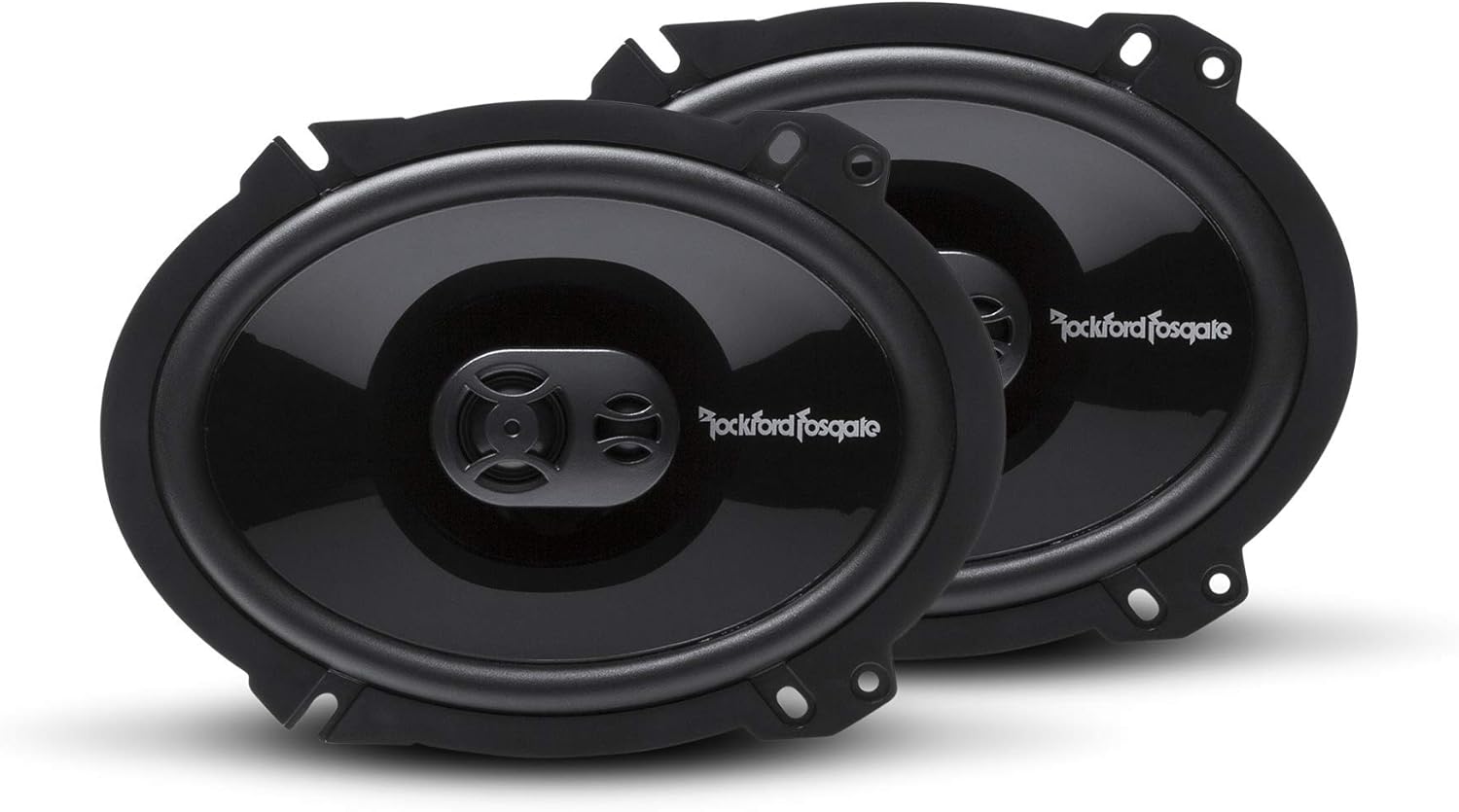
5. Rockford Fosgate P1683 Punch 6×8 3-Way Coaxial Car Speakers (Pair)
Best 6X8 Door Speakers
| Speaker Type | Coaxial |
|---|---|
| Speaker Maximum Output Power | 130 Watts |
| Speaker Size | 8 Inches |
| Woofer Diameter | 6 Inches |
| Impedance | 4 Ohms |
The Rockford Fosgate P1683 Punch is a 3-way coaxial 6×8 speaker pair built as a factory-style replacement for common vehicle door openings. It combines a 6-inch woofer with an injected mineral-filled polypropylene cone and a PEI dome tweeter with a built-in crossover to deliver stronger midbass than smaller speakers and clearer highs from the dome tweeter. Power handling is listed at 65 Watts RMS and 130 Watts max, so these work well with factory head units and modest aftermarket amplifiers. The FlexFit basket with slotted mounting lets you nudge the speaker into OEM holes for easier installation in vehicle doors. Expect fuller low-mid response compared with 4×6 or 5×7 speakers, improved clarity for vocals and instruments, and a durable rubber surround for longer life. Limitations include a 65 Hz frequency response floor, so deep bass remains limited without a subwoofer, and they are wired coaxial speakers so advanced component-level tuning is not possible.
Best for: Buyers looking to upgrade door speakers on older trucks to get punchier midbass and clearer highs without changing speaker locations or adding component crossovers.
Less Ideal for: Anyone seeking deep bass from door speakers alone or owners who want separate component tweeters and crossovers for advanced tuning.
- 6×8 woofer and 3-way design give stronger midbass and fuller sound than smaller door speakers
- Built-in PEI dome tweeter with crossover provides clear highs without separate components
- FlexFit slotted basket simplifies alignment with OEM door mounting holes
- Durable mineral-filled polypropylene cone and rubber surround for reliable daily use
- Frequency response starts at 65 Hz so deep bass requires a subwoofer
- 130 Watts max suggests limited headroom for very high-power aftermarket systems
Verdict: This slot highlights 6×8 speakers sized and tuned to fit common door openings, offering fuller midbass and better low-end than smaller drivers.
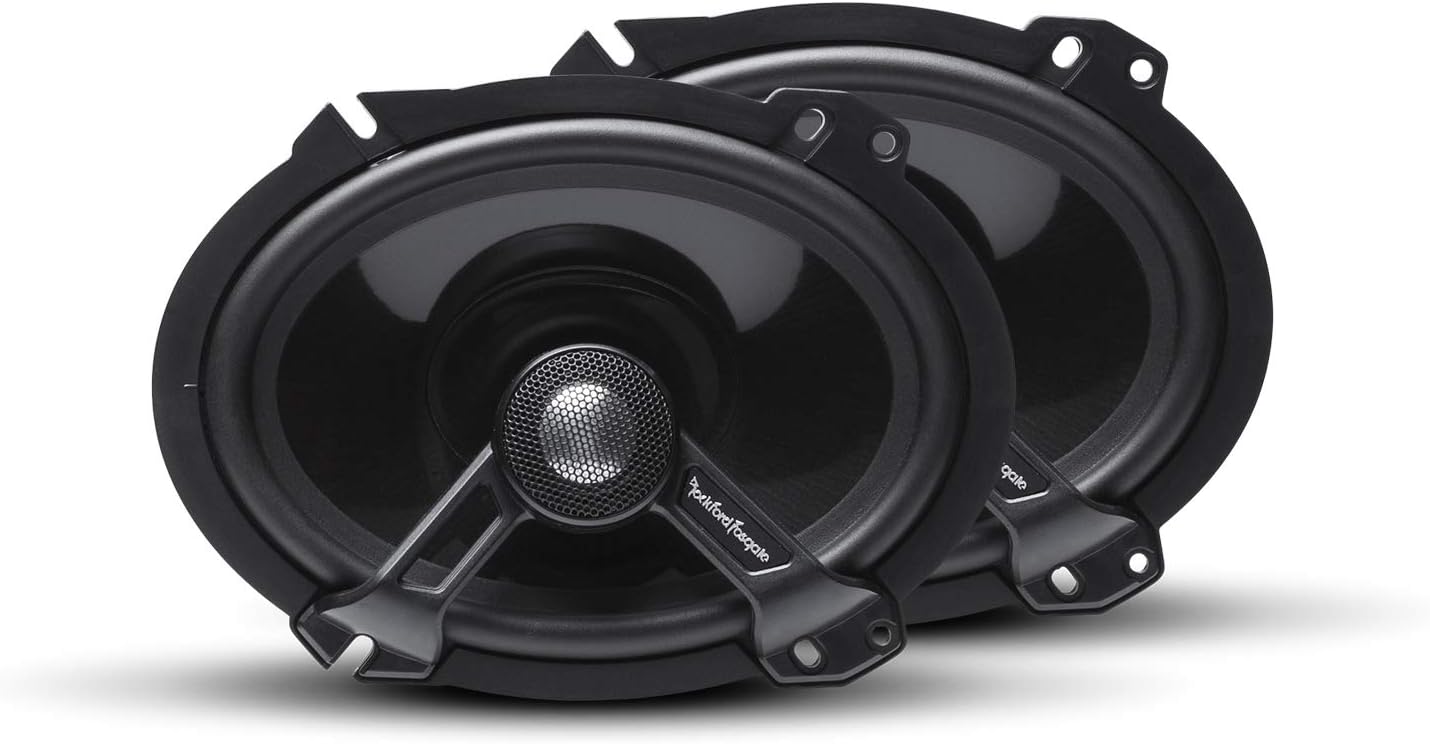
6. Rockford Fosgate T1682 Power 6×8 2-Way Coaxial Speakers (Pair)
Best High‑RMS Door Speakers
| Speaker Type | Coaxial |
|---|---|
| Speaker Maximum Output Power | 160 Watts |
| Woofer Diameter | 6 Inches |
| Speaker Size | 8 Inches |
| Number of Audio Channels | 2.0 |
The Rockford Fosgate T1682 Power 6×8 coaxial speakers are built as a robust, higher-power replacement for factory door speakers and are suited to louder, amp-driven systems. They handle 80 watts RMS (160 watts peak) at 4 ohms and use a 6-inch woofer with an integrated tweeter and concealed crossover to deliver fuller midbass and clearer highs than typical OEM units. Installation is simplified by included adapter plates, mounting hardware, and speed clips so they can drop into many standard 6×8 openings. The carbon-fiber, polypropylene and butyl rubber construction points to a focus on durability and tighter bass response. Because they are designed for higher RMS, they stay cleaner at elevated volumes when paired with appropriate amplification, but expect to need an amp to reach their full potential compared with direct head-unit driving. These speakers are not waterproof and have a tabletop-mount listing for packaging details, so use in exposed locations or with extensive moisture risk may require extra protection. For enthusiasts who want louder, distortion-resistant door speakers, the T1682 is a practical, performance-oriented upgrade.
Best for: Enthusiasts upgrading factory door speakers who plan to add or already run an amplifier and want speakers that stay clean at higher listening levels.
Less Ideal for: Casual listeners who will only use a stock head unit or those needing moisture-resistant speakers for convertible or highly exposed doors.
- Rated 80 watts RMS and 160 watts maximum for handling higher amplifier power
- Integrated concealed crossover and tweeter for clearer highs and simplified wiring
- Includes adapter plates and hardware for easier installation into common 6×8 openings
- Durable enclosure materials like carbon fiber and polypropylene for tighter bass response
- Not rated waterproof so may need protection in damp or exposed door environments
- Designed to perform best with added amplifier power rather than direct head-unit drive
Verdict: Choose a High‑RMS speaker when you plan to run more amplifier power or want speakers that hold up to louder listening without distortion.
7. Pyle PL6183BK 3-Way 6×8 Triaxial Car Speakers (Pair)
Best Universal/Adapter‑Ready Door Speakers

| Power Handling | 200 W RMS / 400 W Max |
|---|---|
| Impedance | 4 Ohm |
| Sensitivity | 91 dB |
| Mounting Depth | 2.36'' |
| Included Components | Grills, wiring, mounting hardware |
The Pyle PL6183BK is a 6×8 three-way triaxial speaker pair intended as a universal door or panel replacement. Each speaker combines a neodymium midrange, piezo tweeter and a high-temperature voice coil to deliver clearer highs and stronger midrange compared with basic two-way coaxials. With claimed 200 W RMS (400 W peak) power handling and a 4 ohm load, these speakers can run louder with an aftermarket head unit or modest amplifier. Pyle includes grills, wiring and mounting hardware so you can use adapter plates or brackets for door mounting where factory-fit holes do not match. The butyl rubber surround and poly injection cone help resist fatigue and keep bass tight for music playback while driving. Expect competent volume and presence for daily driving, but the piezo tweeters and midrange design will not match the detail or low-end punch of higher-end component systems. Also note these are wired speakers that rely on proper mounting and sealing to reach their best performance in a Ranger door application.
Best for: Buyers who need a budget-friendly universal 6×8 door speaker solution for a Ranger and value easy installation using adapter plates or brackets to fit nonstandard mounting holes.
Less Ideal for: Audiophiles seeking deep bass extension or the finest high-frequency detail should look at component systems or higher-end coaxials instead.
- Universal 6×8 form factor fits many door locations with adapter plates or brackets included hardware
- Three-way triaxial design adds a dedicated midrange and piezo tweeter for clearer highs and vocals
- Included grills, wiring, and mounting hardware simplify installation in non‑factory locations
- Butyl rubber surround and high-temperature voice coil improve durability for vehicle use
- Piezo tweeters provide bright highs but lack the smoothness and imaging of higher-quality dome tweeters
Verdict: This label fits universal coaxial speakers that require adapter plates or brackets for door mounting, giving flexibility when direct-fit options aren’t available.
Choosing the Right 1998-2011 Ford Ranger Door Speakers: Key Factors to Consider
Physical Fit and Mounting
Measuring the door opening and speaker depth matters because the Ranger's door cavities limit what will fit without modification. Some speakers share common 6.5-inch mounting patterns, but depth and mounting tab positions vary. Choose speakers with a shallow mount design or ones compatible with widely available adapters to avoid trimming speaker baskets or door panels.
Mounting hardware quality affects long-term performance. Poorly seated speakers can vibrate, causing distortion and rattles that mask sound improvements. Also consider whether the speaker uses factory-style screw locations or requires aftermarket brackets. If you prefer a reversible installation, favor options that use existing screw points and wiring harnesses.
Power Handling and Sensitivity
Power handling ratings help match speakers to the audio system. RMS power ratings indicate continuous handling capability and are more useful than peak numbers. If you plan to keep the stock head unit, look for speakers with higher sensitivity so they play louder with limited amplifier power. For amplified systems, ensure speakers' RMS ratings align with your amplifier's output to avoid overpowering the drivers.
Sensitivity and impedance also affect perceived loudness and tonal balance. Speakers with higher sensitivity require less power for the same output but may sacrifice some low-end control. Match impedance to the vehicle wiring and any amplifier channels to maintain stable performance.
Driver Type and Sound Character
Coaxial speakers integrate tweeters into the main driver and are the most straightforward upgrade for door locations, delivering a fuller frequency range from a single opening. Component speakers separate the tweeter from the woofer and can offer improved imaging and clearer high frequencies, but they may require extra mounting for tweeters and a more complex crossover setup.
Consider your listening priorities: if you want simple, wideband improvement with minimal modification, coaxial designs are generally the best choice. If you seek more precise staging and can accommodate additional mounting for tweeters, component sets offer higher potential fidelity.
Frequency Response and Tonal Balance
A speaker's frequency response provides a general idea of its ability to reproduce lows, mids, and highs. Door speakers that extend lower will deliver better perceived bass, especially in an unmodified cabin. Midrange clarity is crucial because vocals and most instruments sit in this band; poor midrange translation leads to a thin or muddy sound.
When selecting speakers for the Ranger, consider how they handle both rock and spoken-word content. A slightly warmer mid-bass balance can help compensate for the small door loading, while crisp high frequencies improve detail without sounding harsh. Look for published responses or trusted measurements where available.
Durability and Moisture Resistance
Door speakers are exposed to moisture, temperature swings, and dust over time. Materials like treated cones, rubber surrounds, and corrosion-resistant terminals extend service life. Moisture-resistant tweeters or sealed crossover assemblies reduce the chance of failure from condensation inside doors.
Consider the Ranger's likely usage, including open windows and occasional exposure to road spray. Choosing speakers built with durable materials lowers the risk of performance degradation and keeps replacement cycles less frequent.
Installation Complexity and Wiring
Installation complexity affects cost and time. Plug-and-play harnesses and speakers that match factory mounting patterns significantly reduce installation difficulty. If wiring adapters are required, ensure they are commonly available for the Ranger's model years. Some upgrades need new crossovers mounted inside doors or kick panels, which adds labor and potential waterproofing needs.
If you are doing the work yourself, prioritize options with clear instructions and minimal trimming. If professional installation is planned, factor in amplifier integration, crossover placement, and potential door panel modifications into the overall decision.
Understanding Door Speaker Sizes and Depth in the Ranger
The 1998-2011 Ford Ranger typically accepts common aftermarket speaker sizes in its doors, but depth and mounting flange location can differ by year and cab configuration. Before buying, measure the available depth from the mounting surface to any obstacle behind the door panel to avoid interference with window mechanisms or inner door structures.
Shallow-mount options expand your choices when the door cavity is tight. If your chosen speaker is deeper than stock, you may need spacer rings or relocation brackets. Also confirm the mounting hole pattern and screw spacing; many aftermarket brands list these dimensions to simplify compatibility checks.
- Measure depth and mounting hole locations before ordering
- Use spacer rings for deeper speakers to prevent contact with window mechanisms
- Verify whether tweeters in component sets require additional mounting points
Matching Speakers to the Factory Head Unit
If you plan to keep the factory head unit, sensitivity and impedance become more important than maximum power handling. Higher-sensitivity speakers produce more volume from limited amplifier output. Look for speakers with sensitivity ratings that work well with low-power sources.
If you intend to add an amplifier later, choose speakers with robust RMS ratings and stable impedance to accommodate increased power without distortion. Also consider whether a passive crossover is included or if you will need to add an external crossover for component systems.
- Higher sensitivity helps when keeping the stock radio
- Ensure RMS power aligns with any future amplifier plans
- Check if crossovers are included or required for component setups
Tweeter Placement Options for Better Imaging
Tweeter placement affects clarity and stereo imaging. Coaxial speakers deliver acceptable imaging for casual listeners, but separating tweeters can improve soundstage and high-frequency clarity. For the Ranger, common tweeter locations include the door sail panel, A-pillar top, or dash corners depending on cab variant and available mounting points.
When planning tweeter placement, avoid locations that expose the driver to direct water or where wiring would be pinched. Aim for symmetric placement on both sides for balanced stereo performance.
- Coaxial builds reduce installation steps
- Component tweeters offer better imaging if properly mounted
- Place tweeters away from moisture-prone locations
Upgrading Wiring and Using Adapters
Stock wiring can handle typical aftermarket speakers, but verify connector types to avoid cutting factory harnesses. Wiring adapters that preserve factory plugs simplify reversion and reduce error risk. If you must splice wires, use marine-grade heat-shrink connectors or solder with proper insulation to prevent corrosion.
Upgrading speaker wire between the speaker and head unit or amplifier improves conductivity, especially for longer runs or when adding an external amp. Use correct gauge wire for the power and speaker runs to maintain performance and safety.
- Use plug-and-play adapters when available
- Protect splices from moisture with proper insulation
- Upgrade wire gauge when adding an amplifier
Sound Tuning After Installation
After installing new door speakers, take time to adjust the head unit tone controls and balance settings. A brief tuning session helps identify any frequency ranges that need correction and can reveal door rattles or panel resonances that were masked by the old speakers.
If an equalizer or DSP is available, use it to tame peaks or shore up bass response rather than relying solely on higher volume. Small acoustic treatments inside doors or around speaker openings can reduce vibrations and clean up the soundstage.
- Adjust tone controls and balance after installation
- Use EQ sparingly to correct room-related peaks
- Add foam baffles or damping to reduce rattles
Still looking for the perfect fit?
Select your Ford Ranger configuration to see the most relevant Door Speakers recommendations
How We Chose the Best 1998-2011 Ford Ranger Door Speakers
We focused on practical, Ranger-specific criteria to assemble a shortlist of seven door speakers that balance sound, fitment, and installation simplicity. Evaluation prioritized speakers that physically fit the Ranger's door openings or could be installed with common, non-destructive mounting adapters. We assessed nominal and RMS power handling and sensitivity to ensure compatibility with stock head units and common aftermarket amplifiers. Frequency response and driver design were considered to determine clarity and bass performance across music genres. Build quality and moisture resistance were included because door speakers face humidity and road splash. Ease of installation and the availability of standard-size adapters or harnesses were weighted to reduce installation time and avoid cutting factory wiring.We excluded any speakers that require extensive door modification, proprietary connectors not commonly available, or models with poor published durability. Units that depend on uncommon crossover architectures or that assume an aftermarket amplifier as a necessity were deprioritized. The result is a practical list that favors reliable fitment, realistic power compatibility, and measurable improvements in everyday listening for the 1998-2011 Ford Ranger.
Our full evaluation process is outlined in our review methodology.
FAQ
Will new door speakers fit without modifying the Ranger door panels?
Often they will, provided you choose speakers with compatible mounting patterns and shallow depth. Measure the mounting depth and hole locations before purchasing. If adapters or spacer rings are needed, they are commonly available for the Ranger's doors.
Can I run higher-power speakers on the factory radio?
You can install speakers with higher RMS ratings, but the factory radio may not provide enough power to drive them to their potential. Choosing higher-sensitivity speakers will help achieve better volume and clarity without an amplifier.
Are component door speakers worth the extra effort?
Component speakers can improve imaging and high-frequency clarity, but they require additional mounting for tweeters and possibly external crossovers. If you want a straightforward upgrade with fewer modifications, coaxial speakers are usually more practical.
How should I protect new door speakers from moisture?
Pick speakers with moisture-resistant cones and seals, and ensure the door's vapor barrier is intact after installation. Using rubber gaskets and keeping crossovers inside protected panels reduces exposure to condensation and road spray.
Will upgrading speakers improve bass in the Ranger?
Upgraded door speakers can provide stronger mid-bass and improved clarity, but door-mounted speakers have limited low-frequency output. For deeper bass you may need a dedicated subwoofer or enclosure in addition to better door speakers.
Do I need new wiring when installing aftermarket door speakers?
Not always. Many aftermarket speakers work with factory wiring if you use a plug-and-play adapter. When adding an amplifier or running long wire runs, upgrading to thicker gauge speaker wire is recommended for reliable performance.
Final Verdict
When upgrading 1998-2011 Ford Ranger door speakers, prioritize options that fit the door geometry, match your power source, and withstand moisture exposure. Decide whether you want the simplicity of coaxial speakers or the performance potential of component sets, and match sensitivity and RMS ratings to your head unit or amplifier.Balance sound goals against installation complexity. For most owners, a well-matched coaxial speaker that fits without modification provides the best combination of audible improvement and installation ease. If you require better imaging or are installing an amplifier, consider component options and plan tweeter placement and crossover mounting accordingly.
Explore More:
- Check out all Ford Ranger parts & accessories
- Explore Electronics
- Browse all Accessories
