

Looking for the perfect fit?
Select your Ford Ranger configuration to see the most relevant Trailer Brake Controllers recommendations
Note: This article contains affiliate links. If you click on these links and make a purchase, I may earn a small commission at no extra cost to you. This helps support my research and content. Read my full affiliate disclosure here.
If you tow with a Ford Ranger, choosing the right trailer brake controller affects stopping power, towing stability, and confidence behind the wheel. The right controller helps the trailer slow in harmony with your truck, reducing nose dive and improving overall control during braking. This guide shortlists the top options for the Ford Ranger and explains the factors that matter most, including braking type and ease of installation. Read on to see the top picks and learn the evaluation criteria used to narrow the field.
Looking for other parts? See all Ford Ranger parts & accessories.
Top Picks at a Glance
| Best Overall The best all-around choice for most situations | CURT Spectrum Integrated Electric Trailer Brake Controller (Model 51170) |  |
| Best Quality Built to a higher standard if you want something more solid | REDARC Tow-Pro Elite Electric Trailer Brake Controller |  |
| Best Value The sweet spot between price and what you get | Tekonsha Brakeman IV Time-Delay Trailer Brake Controller |  |
| Best Budget The cheapest option that still gets the job done reliably | Gihdfer Brakeman IV Time-Delayed Digital Trailer Brake Controller |  |
| Highest Rated A top-rated pick with lots of positive feedback | LAJBZ Proportional Trailer Brake Controller with Digital Display |  |
| Most Popular A crowd favorite that many people choose with confidence | Tekonsha Pro Series 80500 POD Time-Delay Trailer Brake Controller |  |
| Best Seller A high-volume bestseller chosen again and again | CURT TriFlex NEXT Proportional Electric Trailer Brake Controller |  |
CURT Spectrum Integrated Electric Trailer Brake Controller (Model 51170)

| Brand | CURT |
|---|---|
| Model | Spectrum 51170 |
| Control Interface | Rotary knob with push-button and multicolor LEDs |
| Brake Sensing | Triple-axis accelerometer |
| Compatibility | Low-voltage, PWM, ABS, cruise control |
The CURT Spectrum (51170) is a proportional electric trailer brake controller that separates the main module from a simple rotary knob interface for a near-factory dash appearance on a Ford Ranger. The hidden main module mounts behind the dash while the slim rotary knob with push-button and multicolor LEDs sits where you choose, letting you manually override, adjust power, and monitor trailer activity without an obtrusive box. A triple-axis accelerometer measures deceleration and grade to apply brake power smoothly across different towing conditions, and the unit supports low-voltage, PWM, ABS and cruise control systems. Installation is simplified when you use a vehicle-specific quick plug harness and the controller includes mounting hardware and automated calibration. Practical benefits include factory-style integration, easy in-drive adjustment, and reduced trailer lurching during stops. Reported limitations include occasional LED behavior that can remain lit and potentially drain a vehicle battery if not addressed, and the controller is more expensive than basic standalone units.
Best for: Balanced owners who want a near-factory brake controller on their Ford Ranger and value smooth, automated proportional braking along with a clean dash appearance.
Less Ideal for: Buyers who prioritize the lowest possible cost or who prefer a very simple plug-and-play box unit without dash integration should consider alternatives.
- Factory-style dash integration with a separate hidden module for a clean interior look.
- Proportional braking via a triple-axis accelerometer for smoother, more responsive stops.
- Simple rotary knob with push-button and LED indicators for easy in-cab control and manual override.
- Supports compatibility with low-voltage, PWM, ABS and cruise control systems for modern vehicle electronics.
- Uses vehicle-specific quick plug harnesses to simplify installation and setup.
- Some users report LEDs staying lit after shutdown which can be distracting and risk battery drain.
- Higher cost compared with basic non-integrated brake controllers.
Verdict: If you want factory-style integration and consistently smooth proportional braking on your Ford Ranger, the CURT Spectrum delivers—just watch for LED quirks and a higher price.
REDARC Tow-Pro Elite Electric Trailer Brake Controller
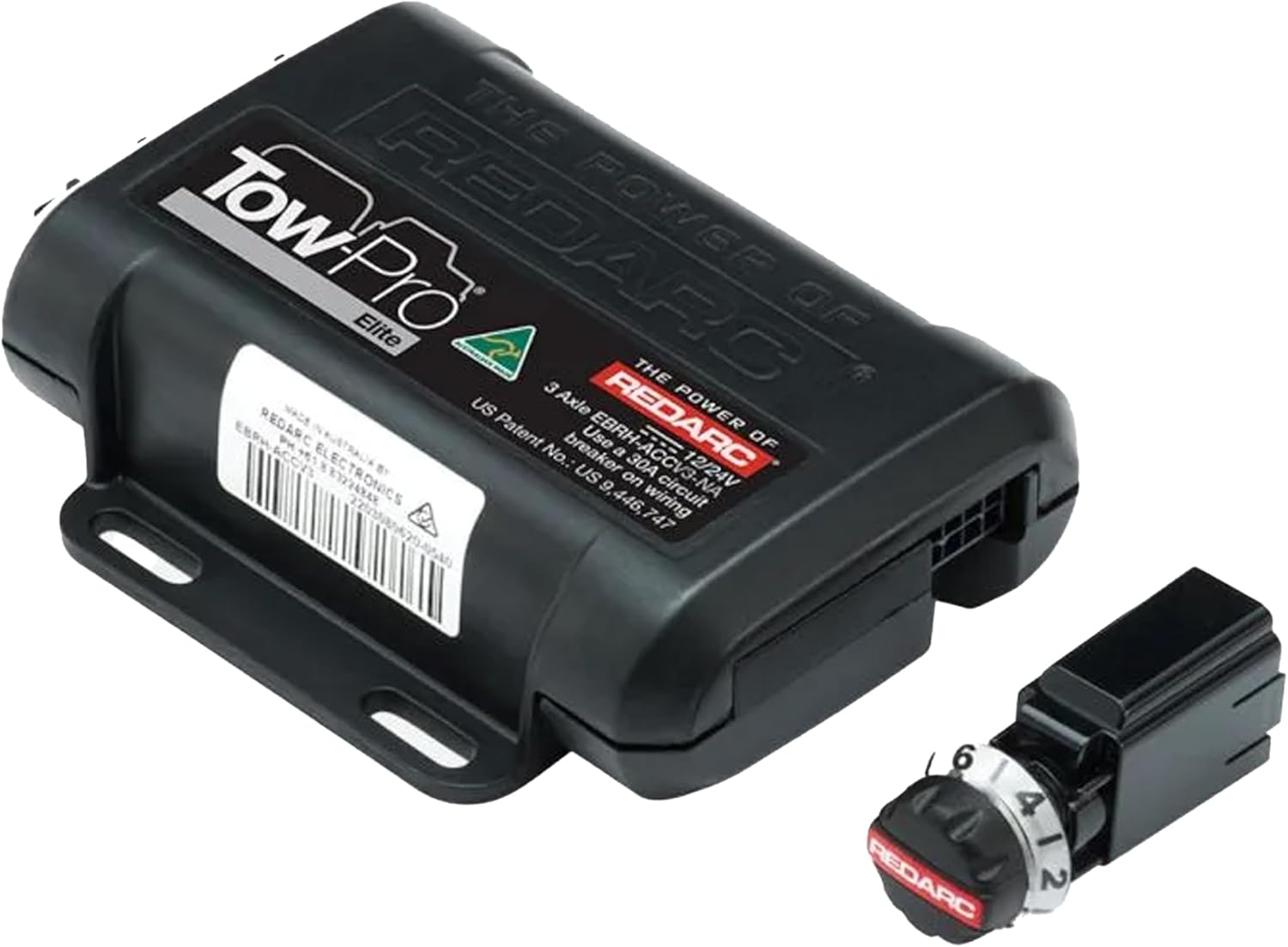
| Supports axles | 1–3 axles |
|---|---|
| Voltage compatibility | 12V/24V |
| Mount type | Remote head with main module |
The REDARC Tow-Pro Elite is a remote-head electric brake controller designed to deliver smooth, proportional braking on-road and a manual user-controlled mode for technical or off-road towing. For Ford Ranger owners, it installs discreetly with a small dash knob while the main module tucks under the dash, and it supports typical 1–3 axle trailer brake setups. Notable features include active calibration that adapts braking to the vehicle and trailer and an LED indicator for clear status feedback. The plug-and-play harness options and included mounting kit elements make integration into a Ranger straightforward when the vehicle has the proper trailer connector, and the compact knob produces a near-factory look. Practical benefits are improved stopping stability and easy switching between precision off-road braking and proportional highway control. Limitations to consider are that a Ranger without a factory brake controller connector may require additional wiring or an OEM-style harness for a factory finish, and the small push-knob control can be harder to adjust quickly compared with larger lever-style controllers.
Best for: Performance-oriented Ford Ranger owners who prioritize precise, responsive trailer braking and want a discreet, factory-style installation that performs well on both highway and technical trails.
Less Ideal for: Buyers who prefer a simple bolt-in lever-style controller or who want a solution that requires no additional wiring on Rangers without a factory brake controller connector.
- Dual braking modes: proportional for smooth highway stops and manual for precise off-road control
- Remote head design with compact dash knob creates a clean, factory-like installation
- Active calibration and sway control improve towing stability across different loads
- Includes universal harness and mounting options to simplify installation
- May require vehicle-specific wiring harness or splicing if the Ranger lacks a factory plug
- Small push-knob can be harder to manipulate quickly compared with larger controllers
Verdict: A premium, performance-focused brake controller that gives Ford Ranger drivers precise proportional braking and a neat dash-mounted control, but may need an OEM harness for a truly factory install.
Tekonsha Brakeman IV Time-Delay Trailer Brake Controller

| Compatible trailers | 1–4 axles |
|---|---|
| Controller type | Time-delay (digital) |
| Vehicle fitment note | Requires Ford-specific wiring harness sold separately |
The Tekonsha Brakeman IV is a straightforward time-based brake controller designed for basic towing on a Ford Ranger. It senses when you apply the truck brakes and ramps output to the trailer over a fixed interval, with front-panel buttons to set power, adjust sync aggressiveness, and trigger manual override when needed. Installation is simplified by a Plug & Play port when you use a vehicle-specific Tekonsha wiring harness, and the unit can be mounted above or below the dash within reach. Notable features include a digital indicator for connection status and diagnostics plus short-circuit and internal circuit protection. In everyday use it gives predictable, consistent trailer braking for light loads and occasional towing trips, and the manual lever is helpful for sudden stops. The Brakeman IV is not proportional, so it does not vary braking with tow vehicle deceleration, which can make braking less smooth with heavier trailers. It also requires the correct Ford Ranger wiring harness sold separately for true plug-and-play installation.
Best for: A practical optimizer who wants reliable, budget-friendly trailer braking for routine light towing with a Ford Ranger and values easy installation and simple controls.
Less Ideal for: Drivers who tow heavy payloads frequently or require the smoothest, proportional braking performance should consider a proportional controller instead.
- Simple time-delay operation gives consistent, repeatable brake output for light-duty towing
- Plug & Play port enables fast installation when paired with the correct vehicle harness
- Digital display and diagnostic lights help confirm connection and spot wiring faults
- Manual override lever provides immediate trailer braking control in emergencies
- Time-based controller does not match braking force to vehicle deceleration like proportional units
- Requires a vehicle-specific Tekonsha wiring harness sold separately for full plug-and-play
Verdict: A budget-friendly, easy-to-install time-delay controller that delivers reliable braking for light-duty Ford Ranger towing but lacks proportional braking for heavier loads.
Gihdfer Brakeman IV Time-Delayed Digital Trailer Brake Controller

| Compatibility | 1 to 4 axle trailers (2-,4-,6-,8-brake systems) |
|---|---|
| Display | LED brake force indicator |
| Control type | Time-delayed activation |
| Package contents | Brake controller, mounting bracket, 6 screws, instruction |
The Brakeman IV is a straightforward time-delayed trailer brake controller aimed at budget buyers who need basic, reliable control for towing. It mounts under the dash and uses a time-delay algorithm to apply trailer brakes after the vehicle brake pedal is pressed, with an LED readout that shows current braking force and a gain adjustment for tuning. Typical use is on trucks towing small-to-medium trailers where simplicity and low cost matter more than advanced proportional sensing. Installation is intentionally simple and the unit ships with a mounting bracket and screws so you can get it wired and on the dash quickly. Practical benefits include smoother, less jerky stops compared with no controller and easy visual feedback of output level. Important limitations are the time-delayed operation rather than true proportional braking, plastic screw bosses that can strip if over-tightened, and lighter gauge wiring which may not be as robust as premium units for heavy frequent towing.
Best for: Budget-conscious Ranger owners who want a low-cost, no-frills brake controller to add trailer braking capability for occasional towing and straightforward setups.
Less Ideal for: Drivers who tow heavy loads frequently, need proportional braking feel for smooth highway towing, or want a long-term heavy-duty controller for high-mileage use should consider a higher-end proportional unit.
- Time-delayed braking smooths trailer stops compared with no controller
- LED display provides clear, real-time indication of braking output
- Compact, simple design that installs quickly with included bracket and hardware
- Adjustable gain lets you tune braking force to the trailer
- Uses time-delayed activation instead of proportional sensing for brake input
- Plastic mounting screw bosses can strip if over-tightened
- Wiring appears lighter gauge than on premium controllers
Verdict: An inexpensive, easy-to-install digital brake controller that gives Ford Ranger owners basic, effective trailer braking without the complexity or cost of proportional systems.
LAJBZ Proportional Trailer Brake Controller with Digital Display

| Compatibility | Compatible with Tekonsha 2-plug vehicle-specific harnesses |
|---|---|
| Braking type | Proportional with inertia sensor |
| Boost levels | Three selectable boost settings |
| Mounting range | 180 degree mounting range |
This LAJBZ proportional brake controller delivers proportional braking based on vehicle deceleration, making stops smoother and reducing trailer jolt when towing a Ford Ranger. The large digital display shows connection status and settings at a glance while continuous self-diagnostics alert you to wiring or electrical issues. A sliding manual override gives on-demand braking control and three selectable boost levels let you tune braking response to different trailer weights. Installation is simplified by a plug-and-play port compatible with Tekonsha 2-plug vehicle harnesses, plus both a snap-in clip and traditional bracket for flexible mounting within a 180 degree range. Practical benefits include improved trailer stability, easier setup for multiple trailer loads, and reduced risk of flatspotting tires. Limitations are short factory wiring that may require an extension to position the controller where you want it and that some users may need to fine-tune boost settings to match their Ranger and trailer combination.
Best for: Reliability-focused Ford Ranger owners who prioritize predictable, proportional trailer braking and want a controller that reports diagnostics and stays adjustable for varied towing loads.
Less Ideal for: Buyers seeking a no-adjustment, fully automatic system with longer preinstalled wiring or those who prefer a different user interface than a sliding manual lever.
- Proportional braking for smoother, vehicle-synced trailer stops
- Easy-to-read digital display with continuous self-diagnostic alerts
- Sliding manual override for immediate, variable brake application
- Three boost levels to tune braking for different trailer loads
- Plug-and-play port compatible with Tekonsha 2-plug harnesses for faster installation
- Factory wiring is short and may require purchasing an extension for preferred mounting
- May require trial-and-error adjustment of boost settings to match specific trailer characteristics
Verdict: A budget-friendly proportional controller that gives Ford Ranger owners clear diagnostics and tunable braking but may need a wiring extension and some setup to match specific trailers.
Tekonsha Pro Series 80500 POD Time-Delay Trailer Brake Controller
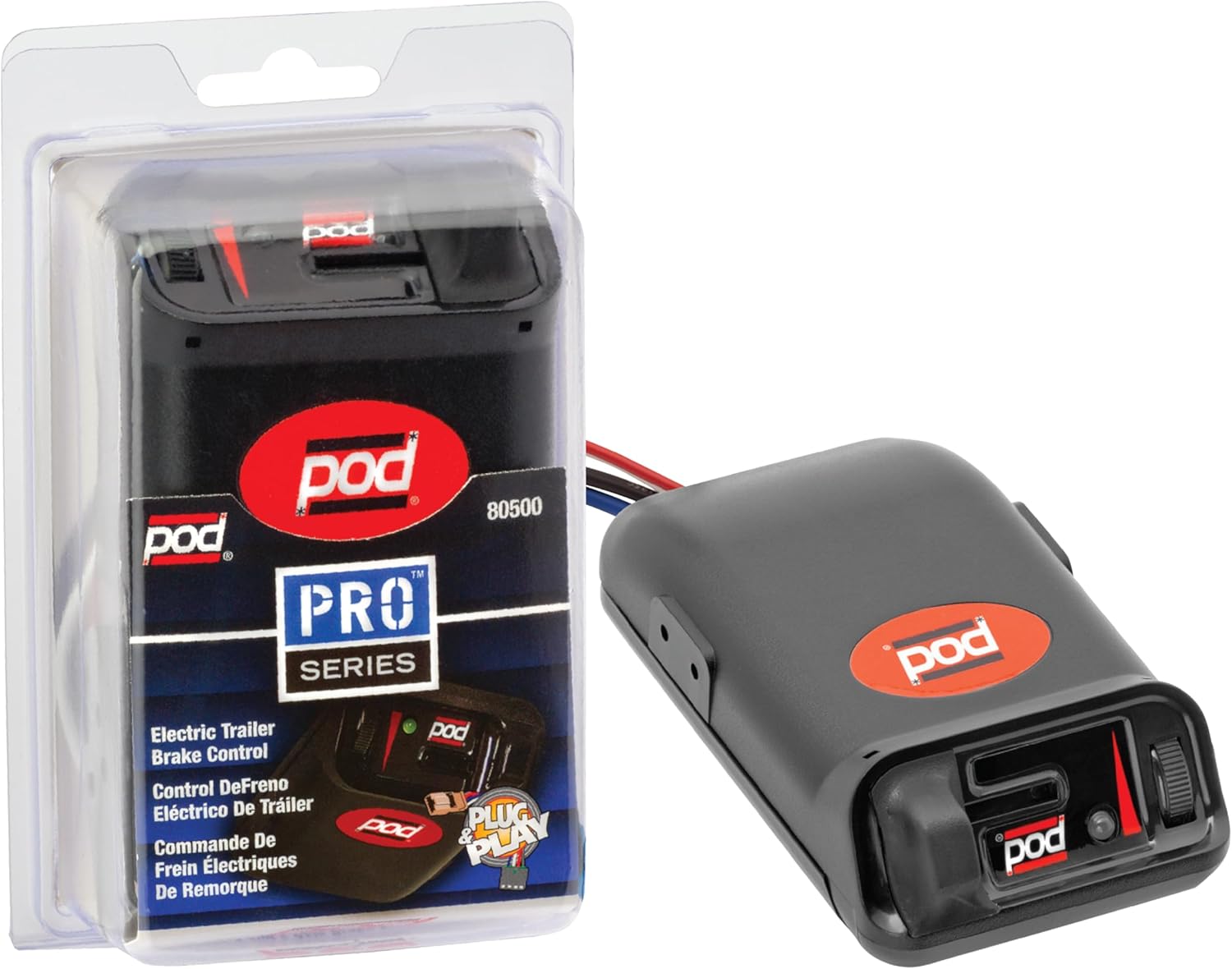
| Vehicle application | Ford Ranger (vehicles with 2 and 4 brakes, 1-2 axles) |
|---|---|
| Control type | Time-delayed digital |
| Voltage | 12 Volts |
| Axles supported | 1-2 axles (2 and 4 brakes) |
The Tekonsha Pro Series 80500 POD is a time-delayed trailer brake controller designed for straightforward towing tasks. It links your Ford Ranger to a trailer's electric brakes and ramps braking power over a set interval when you apply the vehicle brakes, while a manual lever lets you apply trailer brakes independently. The POD is aimed at convenience: a bright two-digit LED readout shows power output and diagnostics, the smoked lens reduces glare for daytime visibility, and the unit can be mounted in any orientation so installation location is flexible. Many owners pair it with a vehicle-specific Tekonsha plug-and-play wiring harness for a quick fit to Ford wiring. The unit includes short-circuit and loss-of-ground protection and comes with mounting hardware. Limitations are its time-delay control method rather than proportional braking, which gives fixed-rate braking that is less smooth on varied terrain or heavy loads, and some reports note occasional quality-control issues like missing screws or dead units. For light-duty, occasional towing the POD is an easy, no-frills controller that simplifies setup and use.
Best for: Convenience-driven buyers who want a quick, fuss-free brake controller for occasional light towing and value simple installation and easy in-cab control.
Less Ideal for: Drivers who tow heavy loads regularly or need smooth, proportional braking on steep or winding roads should choose a proportional controller instead.
- Simple time-delay control that is easy to understand and adjust while driving.
- Bright, two-digit LED display provides clear power output and diagnostic feedback.
- Can be mounted in any orientation, offering flexible placement on the Ranger dash.
- Plug-and-play compatibility with Tekonsha vehicle harnesses shortens installation time when a Ford-specific harness is used.
- Time-delay operation is not proportional so braking feel is less refined on hills or with heavier trailers.
- Some buyers have reported occasional quality-control problems such as missing hardware or defective units.
Verdict: A convenient, easy-to-install time-delay brake controller that suits light, occasional towing on a Ford Ranger but not heavy-duty or precision braking needs.
CURT TriFlex NEXT Proportional Electric Trailer Brake Controller

| Model | TriFlex NEXT |
|---|---|
| Controls | Adjustable gain and ramp time |
| Brake capacity | 2-8 trailer brakes (1-4 axles) |
| Protection | Reverse polarity and short-circuit protection |
The CURT TriFlex NEXT is a compact proportional brake controller designed to give smooth, responsive trailer braking by using a triple-axis motion-sensing accelerometer and automatic leveling. It mounts with a low-profile bracket that can be positioned at any angle to keep the dash area tidy and offers a clear full-text display with day and night brightness settings for easy monitoring. The unit supports 2 to 8 trailer brakes (1 to 4 axles) and provides adjustable gain and ramp-time controls so you can tune how aggressively the trailer brakes apply. Built-in protections include reverse polarity and short-circuit safeguards, and the controller reports tow vehicle voltage and trailer disconnect status. Typical use is plug-and-play installation with an optional vehicle-specific harness for a Ford Ranger, which simplifies wiring and reduces installation time. Some users report occasional power or detection quirks that require reseating the connector, so expect to verify connections during installation. The TriFlex NEXT is a modern, feature-rich option for drivers who want a compact, tunable proportional controller but it may require attention to wiring and occasional troubleshooting on some vehicles.
Best for: Risk-averse mainstream Ford Ranger drivers who want a factory-quality, tunable proportional controller with simple monitoring and a compact dash footprint.
Less Ideal for: Drivers who prioritize absolute fuss-free reliability above all else and prefer models with long track records of zero reported detection issues may want to consider alternative controllers with broader owner histories.
- Triple-axis accelerometer delivers smooth, proportional braking and adjusts for uphill and downhill driving
- Low-profile, flexible mounting bracket allows installation at any angle for neat dash placement
- Clear full-text display with day/night brightness and diagnostic readouts for easy monitoring
- Adjustable gain and ramp settings let you fine-tune braking to match different trailer loads
- Built-in reverse polarity and short-circuit protection improve electrical safety
- A minority of users report intermittent power or detection issues that can require unplugging and reseating
- Some vehicles may need a vehicle-specific harness for truly plug-and-play installation
Verdict: A compact, feature-rich proportional controller that fits neatly in a Ford Ranger and offers tunable braking, but check wiring and connections during installation.
Choosing the Right Ford Ranger Trailer Brake Controller: Key Factors to Consider
Braking Type and Modulation
Whether a controller is time-delay, proportional, or electric affects how braking force is applied to trailer brakes. Proportional controllers sense the truck's deceleration and apply power to the trailer brakes in proportion to that movement, producing smoother, more natural stops that reduce trailer sway and abrupt tugging.
Time-delay or basic electric controllers apply braking based on a preset ramp or user-adjustable gain and can work well for consistent loads but may require more tuning on varying payloads. Consider how frequently you tow, the variability of trailer weight, and how smooth you need the transition between truck and trailer braking when choosing the type.
Installation Complexity and Wiring
Installation ranges from plug-in modules with factory harnesses to hardwired units that require splicing and mounting. Simpler plug-and-play options reduce time and lower the chance of wiring errors, while hardwired installs can offer cleaner integration but demand more skill and tools.
Understand the Ranger's available mounting locations and wiring access points before choosing a controller. Factor in whether you are comfortable routing wires through the cabin, tapping into brake light circuits, or using a portable unit that clamps to the brake pedal for temporary use.
Adjustment Controls and User Interface
Controllers offer different ways to adjust braking force, from simple knobs and manual levers to digital displays with adaptive settings. Good user controls let you fine-tune gain, sensitivity, and boost for different trailers and loads, which improves braking balance and reduces wear on both truck and trailer brakes.
Look for clear feedback on unit status, such as light indicators or readouts that show current output or error codes. Intuitive controls reduce time spent retuning and make it easier to adapt braking behavior during a trip.
Durability and Environmental Resistance
A brake controller is exposed to vibrations, temperature swings, and occasional moisture from road conditions. Durable construction, vibration-resistant mounting hardware, and weather-resistant connectors extend service life and maintain consistent performance.
Materials and build quality matter for long-term reliability. Consider units with sealed electronics, robust housings, and connectors designed for automotive use to minimize failures and corrosion over years of towing.
Compatibility With Ford Ranger Systems
Ensure the controller can interface correctly with the Ranger's brake system and electrical layout. Some controllers require a dedicated brake output or signal from the truck, while others derive input from vehicle motion or brake light circuits. Mismatched expectations can lead to poor modulation or the need for extra adapters.
Check available mounting points and dash space for a control head. Compatibility with existing wiring harnesses and the ability to integrate without excessive splicing reduces installation time and preserves vehicle integrity.
Safety Features and Diagnostics
Features like manual override, built-in fault detection, and clear status indicators help you manage braking safely and troubleshoot issues quickly. A manual override lets you apply trailer brakes independently of the truck if needed for emergency control or to correct trailer sway.
Diagnostic indicators that warn of wiring faults or loss of connection reduce the risk of towing with impaired braking. Prioritize controllers that make it easy to identify problems before they affect stopping performance.
Why Upgrading Your Ford Ranger Trailer Brake Controller Matters
If you tow regularly with a Ford Ranger, the trailer brake controller is one of the highest-impact upgrades for safety and control. A responsive controller helps the truck and trailer decelerate together, reducing nose-dives, shortening stopping distance, and lowering stress on both the Ranger's brakes and the trailer's components. Improving brake coordination also reduces trailer sway risk in many real-world towing situations.
Beyond safety, an appropriately matched controller makes towing less fatiguing. Drivers spend less time compensating for lagging trailer brakes and more time focused on the road. That matters whether you run short local hauls or routinely tow heavier loads.
- Smoother, more predictable braking for truck and trailer
- Reduced wear on the Ranger's brake system
- Lower likelihood of trailer sway and load shift during stops
- Improved confidence and control in traffic and emergency maneuvers
Typical Towing Scenarios for Ranger Owners and How a Controller Helps
Different towing tasks create different demands. A weekend utility trailer loaded with landscaping gear behaves very differently from a fully loaded enclosed trailer on a highway trip. For short, low-speed runs, a basic controller that provides consistent braking is often sufficient. For frequent highway towing, heavier payloads, or towing in hilly terrain, a controller that responds quickly and proportionally to braking inputs makes a noticeable difference in stability and stopping performance.
Think about the loads and driving conditions you encounter most. Controllers do not change the Ranger's towing capacity but they change how that capacity feels and how safely you can use it. A unit that matches your common scenarios will make everyday towing less stressful and reduce the chance of incidents on busy roads or steep grades.
- Light, local towing: prioritize simplicity and reliability
- Frequent highway towing: prioritize smooth proportional response
- Hilly or mountainous routes: prioritize consistent performance under repeated braking
Pre-tow Checklist for Ford Ranger Owners
Before you hitch up, run through a focused checklist to minimize last-minute problems. This checklist emphasizes operational checks and legal basics that apply regardless of which trailer brake controller you choose.
Performing these quick checks before every trip helps catch common issues that lead to poor braking performance or roadside delays.
- Confirm that the trailer lights and turn signals function correctly
- Verify that the trailer coupler and safety chains are properly attached
- Check trailer brake actuator or electric brake magnets for visible damage
- Ensure trailer load is balanced and secured to avoid shifting during stops
- Test the controller connection in the cab by verifying it powers up and responds to a brief manual input
Maintenance and Long-term Care to Keep a Ranger's Braking Setup Reliable
Routine maintenance extends component life and keeps braking behavior consistent. Simple, periodic inspections catch corrosion, loose connectors, and worn hardware long before they affect performance. Prioritize items that are exposed to road grime and moisture because those are the most common failure points.
When cleaning or servicing electrical connections, use products and techniques intended for vehicle electronics. Avoid spray cleaners that can drive contaminants into connectors; instead, inspect, dry, and apply a light, vehicle-grade dielectric protectant to exposed terminals where appropriate.
- Inspect trailer-side electrical connectors for corrosion and bent pins at regular intervals
- Check mounting hardware for the controller bracket in the cab to prevent rattles and movement
- Periodically test the controller response during calm driving before heavier trips
- Replace worn trailer brake shoes, pads, or magnet assemblies per the trailer manufacturer's guidance
When to Seek Professional Help or Dealer Service
Some tasks are best left to experienced technicians. If you encounter intermittent connectivity, persistent error lights, uncertain braking behavior under load, or symptoms you cannot diagnose with simple checks, a trained installer or Ford service department can help isolate the cause and recommend fixes that preserve safe towing.
Ask a technician for a clear scope of work and a written list of components tested and replaced. Professional diagnostic tools and road-testing equipment identify subtle problems that are easy to miss during a driveway test. Getting factory-level advice is especially valuable if your Ranger is newer or has dealer-installed factory wiring options.
- Consider professional diagnostics for intermittent or inconsistent braking response
- Use dealer service if your Ranger has integrated towing packages that may require module-level calibration
- Request that installers verify the controller's mounting, wiring interface, and cab ergonomics for regular use
Planning Your Purchase and Next Steps
Decide based on how often and how far you tow, the typical trailer weight, and how much time you want to spend on setup and maintenance. If your priority is a predictable towing experience and lower long-term wear on both the Ranger and trailer, invest in a solution designed for frequent towing. If you tow rarely and on short trips, a simpler, dependable unit may be a more practical choice.
As you compare options, make a realistic plan for installation and initial testing. Schedule a short, low-speed test run after installation to confirm the system behaves as expected with the Ranger and the trailer you tow most often.
- Match the controller choice to your towing frequency and typical trailer weight
- Plan a staged test: light load, short drive, then heavier load if performance is good
- Keep a basic roadside toolkit and spare electrical terminals for quick repairs
How We Chose the Best Ford Ranger Trailer Brake Controller
We focused on controllers that provide reliable, repeatable braking for mid-size pickup towing. Key evaluation criteria included braking modulation and responsiveness under load, compatibility with Ford Ranger electrical and mounting points, installation complexity and required wiring, durability and resistance to road vibration and moisture, and user controls for tuning gain and sensitivity. We also considered safety features such as manual override and built-in diagnostics that help with troubleshooting. Models requiring excessive vehicle modifications or specialized harnesses were excluded to favor solutions practical for typical Ranger owners. Our selection emphasizes models that balance performance, straightforward installation, and durable construction for regular towing use.
Our full evaluation process is outlined in our review methodology.
FAQ
Do I need a trailer brake controller for towing with a Ford Ranger?
It often depends on the trailer weight and local regulations. Heavier trailers with electric brakes usually require a controller to manage braking force. Using a controller improves brake coordination between truck and trailer and can enhance safety during stops.
What is the difference between proportional and time-delay controllers?
Proportional controllers apply braking based on sensed deceleration, giving smoother, more responsive braking that tracks the tow vehicle. Time-delay controllers apply braking power based on a preset ramp or gain. Time-delay units can be simpler to use but may need more adjustment for changing loads.
Can I install a controller myself in a Ford Ranger?
Many owners can install a controller if they are comfortable with basic wiring and dashboard mounting. Options range from simple plug-in harnesses to hardwired installs. If you are unsure about wiring or vehicle access, professional installation reduces the risk of errors.
How should I adjust the controller for different trailers?
Start with a conservative gain or sensitivity setting and perform a few low-speed brake tests with the trailer loaded. Increase braking gradually until the trailer brakes engage smoothly without locking. Recheck settings whenever trailer weight or cargo distribution changes.
What maintenance does a trailer brake controller need?
Controllers require minimal maintenance but benefit from occasional checks of mounting hardware, connectors, and wiring for corrosion or looseness. Verify operation with a diagnostic test or brief braking checks before long trips. Keep the control head clean and avoid exposing it to direct moisture where possible.
Final Verdict
Choosing the right controller for a Ford Ranger means balancing braking smoothness, installation practicality, and durability. Prioritize a braking type that matches how you tow, easy-to-use adjustment controls, and a unit that integrates cleanly with the Ranger's wiring and mounting points.Remember that tradeoffs exist between plug-and-play convenience and cleaner hardwired installs, and between simple controls and advanced proportional modulation. Focus on the factors that most affect your towing scenarios to find a controller that provides safer, more predictable stops.
Explore More:
- Check out all Ford Ranger parts & accessories
- Explore Electronics
- Browse all Accessories
