

Note: This article contains affiliate links. If you click on these links and make a purchase, I may earn a small commission at no extra cost to you. This helps support my research and content. Read my full affiliate disclosure here.
If you drive a Ford Ranger 4WD, choosing the right tires affects safety, carrying capacity, and ride comfort more than any single aftermarket change. The wrong tire can reduce traction in mud or snow, shorten service life, or impose load limits that limit how much you can haul. The selections below represent the top seven tires for the Ranger 4WD, shortlisted for their real-world balance of grip, durability, and load capability.This guide explains why each tire type matters for a four-wheel-drive Ranger, highlights the performance and durability factors we evaluated, and helps you match a tire to the way you drive and work. Use the buying guidance that follows to choose the best fit for your needs before you compare specific models and sizes.
Looking for other parts? See all Ford Ranger parts & accessories.
Top Picks at a Glance
| Best Overall The best all-around choice for most situations | Cooper Discoverer AT3 4S All-Season 235/70R16 106T Tire |  |
| Best Quality Built to a higher standard if you want something more solid | Goodyear Wrangler TrailRunner AT All-Terrain Tire 235/75R15 |  |
| Best Value The sweet spot between price and what you get | TRAVELSTAR Ecopath AT All-Terrain 235/75R15 109S Tire |  |
| Best Budget The cheapest option that still gets the job done reliably | GT Radial Savero HT2 235/70R16 All-Season Highway Tire |  |
| Highest Rated A top-rated pick with lots of positive feedback | Hankook Dynapro AT2 RF11 All-Terrain Radial Tire, 235/70R16 109T |  |
| Most Popular A crowd favorite that many people choose with confidence | Hankook Dynapro AT2 RF11 All-Terrain Radial Tire — 255/65R17 |  |
| Best Seller A high-volume bestseller chosen again and again | Accelera MT-01 Mud Terrain Light Truck Tire 235/75R15 Load Range C |  |
1. Cooper Discoverer AT3 4S All-Season 235/70R16 106T Tire

| Rim Size | 16 inches |
|---|---|
| Load Index | 106 |
| Speed Rating | T |
| Maximum Pressure | 44 psi |
| Seasons | Year Round |
The Cooper Discoverer AT3 4S is an all-season all-terrain tire built to give Ford Ranger 4WD drivers a balanced mix of highway comfort and light off-road performance. It uses an adaptive silica-based compound and a tread design with snow-trapping grooves, zigzag sipes, and aqua channels to improve traction in wet, snowy, and loose-surface conditions. Typical use is daily driving on pavement with occasional dirt, gravel, or muddy trails; the tread geometry helps control noise while providing confident grip when conditions change. Notable features include a 65,000-mile treadwear warranty, a 106 load index for carrying moderate loads, and a standard load radial construction rated to 44 psi. The AT3 4S leans toward predictable handling and shorter stopping distances on snow compared with generic all-terrain tires, but it is not a heavy-duty mud tire and extreme rock crawling will expose its limits. If you want a versatile, year-round tire for a Ford Ranger 4WD that balances comfort, wet and winter traction, and light off-road ability, the Discoverer AT3 4S is a strong candidate.
Best for: Ford Ranger 4WD drivers who want a single tire that performs well on pavement year-round while still handling weekend dirt and gravel roads with confidence.
Less Ideal for: Drivers who spend most of their time rock crawling, deep mud, or require maximum off-road traction and reinforced sidewalls should consider more aggressive mud-terrain options.
- Adaptive silica-based compound and tread design improve wet and winter traction
- Designed for both highway comfort and light off-road durability
- Long 65,000-mile treadwear warranty
- Aqua Vac channels and sipes reduce hydroplaning risk
- Not intended for heavy mud-terrain use or aggressive off-road rock crawling
Verdict: A balanced all-season all-terrain tire that gives Ford Ranger 4WD owners dependable wet and winter grip plus comfortable on-road manners for everyday driving and light off-road use.
2. Goodyear Wrangler TrailRunner AT All-Terrain Tire 235/75R15

| Rim Size | 15 Inches |
|---|---|
| Load Index | 105 |
| Speed Rating | S |
| Tread Depth | 12 32nds |
| Construction Type | RADIAL |
The Goodyear Wrangler TrailRunner AT is built as a versatile all-terrain tire that bridges aggressive off-road capability and comfortable highway manners. You would typically use it on a light truck or 4WD pickup that spends time on both gravel trails and pavement; the large interlocking tread blocks provide bite off-road while a symmetrical tread pattern and 12/32nds tread depth aim to preserve ride quality and mileage. Key features include a 4-ply construction, a 105 load index supporting heavy loads, and a maximum inflation of 51 psi for stable handling under load. In practice the tire delivers confident traction on loose surfaces and predictable steering on wet pavement, though the aggressive blocks will likely produce more road noise than a touring tire. It is a universal-fit 15-inch rim tire sold individually and intended as a replacement tire; buyers seeking a true mud-terrain or a premium highway touring experience may want a different specialized tread. Overall this is a solid, performance-oriented all-terrain option for mixed on/off-road use on mid-size trucks and SUVs.
Best for: Drivers who want a single tire that performs capably on both trails and highways and prioritize dependable traction when using a 4WD mid-size truck for mixed duty.
Less Ideal for: Drivers who spend almost all miles on highways and want the quietest, most fuel-efficient touring tire or those who need extreme mud-terrain performance.
- Balanced all-terrain tread that handles both off-road surfaces and highway driving
- Large interlocking tread blocks for improved off-road durability and traction
- 4-ply radial construction and 105 load index provide load-carrying stability
- Year-round design suitable for varied seasonal conditions
- More road noise and slightly lower refinement on pavement compared with highway touring tires
Verdict: Choose the TrailRunner AT when you need a performance-oriented all-terrain tire that reliably handles both off-road trails and everyday highway driving.
3. TRAVELSTAR Ecopath AT All-Terrain 235/75R15 109S Tire
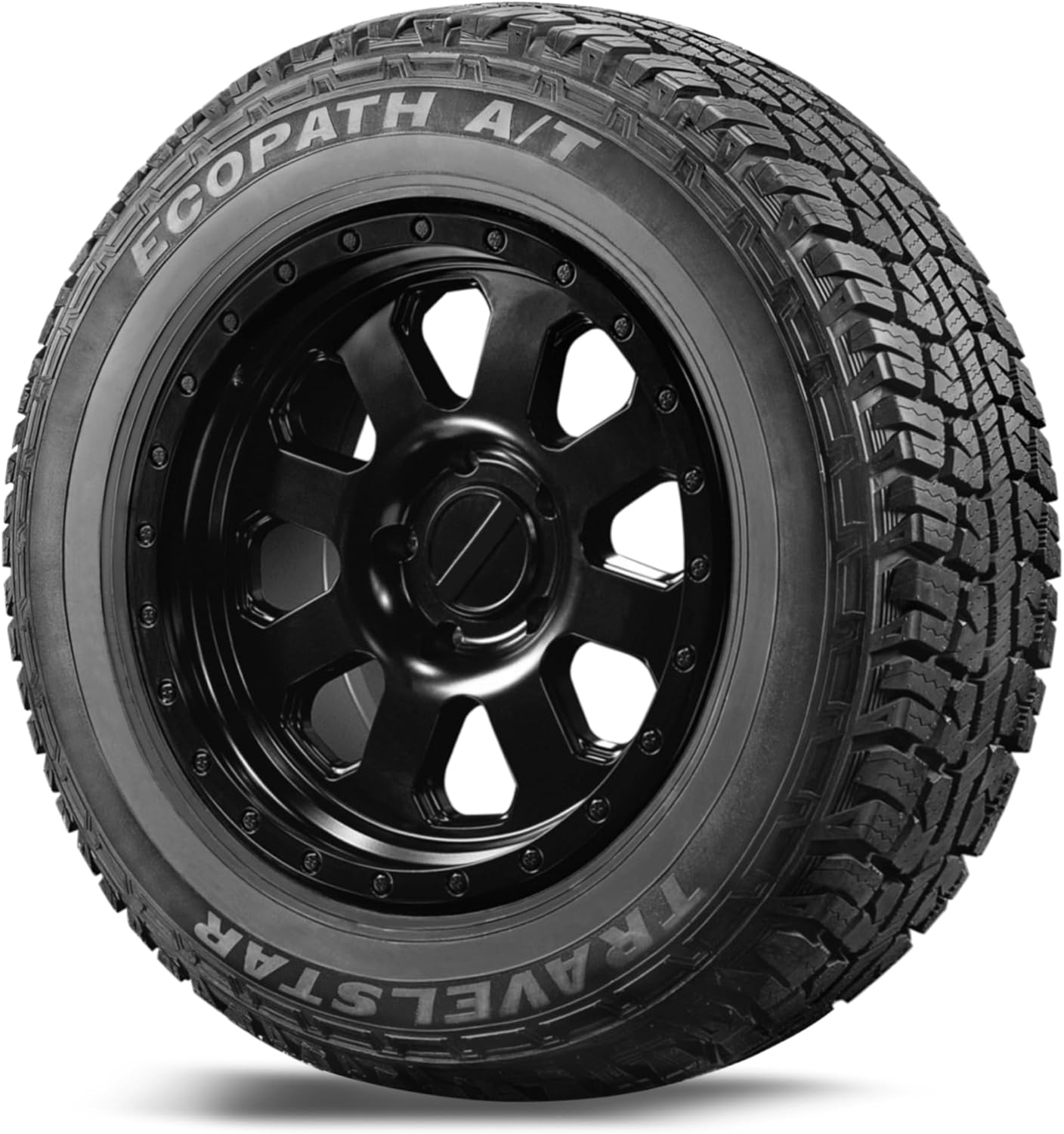
| Rim Size | 15 Inches |
|---|---|
| Load Index | 109 |
| Speed Rating | S |
| Tread Type | All-Terrain |
| Maximum Pressure | 50 Pound per Square Inch |
The TRAVELSTAR Ecopath AT is an all-terrain radial intended for light trucks and SUVs that need a balance of on-road comfort and off-road capability. In everyday use it provides deeper tread (12.6/32nds) and an aggressive pattern that helps when gravel or dirt roads replace pavement, while the 109 load index and XL rating support heavier loads. The tire is constructed for year-round use with a maximum pressure of 50 psi and a stated focus on durability and tread life. Expect confident grip in mixed conditions and responsive handling for highway driving, though the more aggressive AT tread will be slightly louder and less fuel efficient than a highway tire. The package notes a 50,000 mile limited treadwear warranty and a three-year road hazard warranty, which is useful for owners who put miles on their truck. Installation on a Ford Ranger 4WD should be straightforward where the 235/75R15 size is correct; buyers should match load and speed ratings to their vehicle requirements and alignment settings to avoid uneven wear.
Best for: A practical Ford Ranger 4WD owner who wants a single tire that handles daily highway driving and occasional off-road or work duty while maximizing durability and load capacity.
Less Ideal for: Drivers who prioritize the quietest possible ride or the best fuel economy on long highway trips should consider a highway-terrain tire instead.
- True all-terrain tread with 12.6/32nds depth for improved off-pavement traction
- 109 load index and XL rating support heavier loads and towing on light trucks
- Year-round design and radial construction for predictable handling on pavement
- 50,000 mile limited treadwear coverage plus a three-year road hazard warranty
- Aggressive AT tread likely produces more road noise and slightly higher rolling resistance than highway tires
Verdict: For Ford Ranger 4WD owners needing a durable, load-capable tire that balances on-road manners with off-road grip, this 235/75R15 Ecopath AT is a practical choice.
4. GT Radial Savero HT2 235/70R16 All-Season Highway Tire
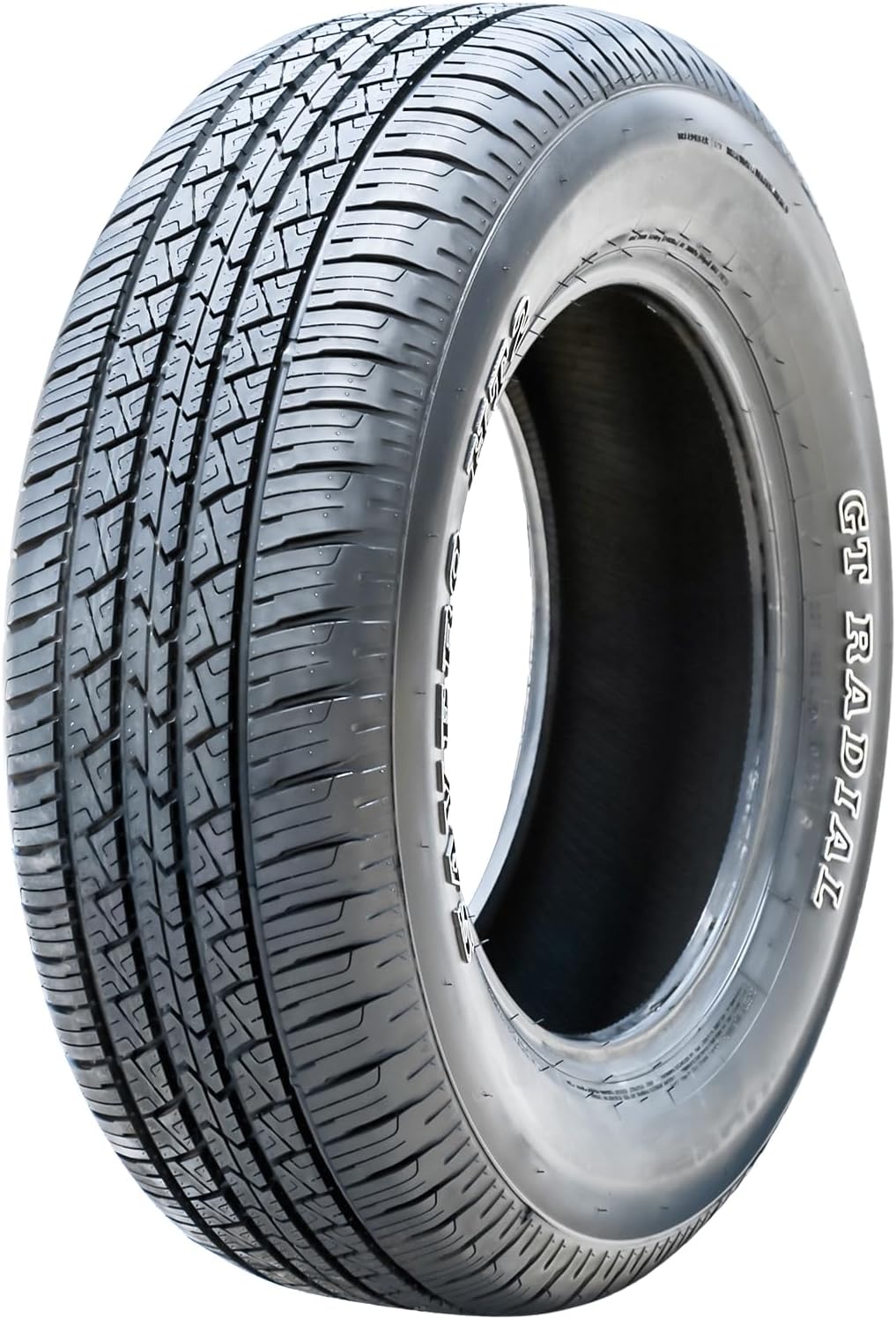
| Size | 235/70R16 |
|---|---|
| Load Index | 104 |
| Speed Rating | T |
| Construction Type | Radial |
| Seasons | Year Round |
The GT Radial Savero HT2 is a highway-focused, all-season tire intended for light trucks and SUVs. It delivers a symmetrical tread pattern and radial construction aimed at steady highway traction, lower rolling resistance, and predictable handling in dry and wet conditions. Typical use is daily driving and regional hauling on paved roads where comfort, long wear, and a quiet ride are priorities rather than off-road grip. Notable features include a 104 load rating (roughly 1,984 pounds per tire), a 4-ply construction, and a 50,000-mile tread warranty that together support moderate payloads and extended mileage. Practical benefits are long tread life, consistent highway traction, and a factory-style fit for many 16-inch wheel applications. Limitations are its highway bias—it is not optimized for aggressive off-road conditions or deep mud—and the T speed rating which is tuned for everyday speeds rather than high-performance driving.
Best for: Buyers looking for an affordable, long-wearing highway tire for daily driving and light-duty hauling who prioritize mileage and comfort over off-road performance.
Less Ideal for: Drivers who need aggressive off-road traction, rock-crawling capability, or a higher speed-rated tire for spirited driving should consider purpose-built alternatives.
- Long 50,000-mile tread warranty for extended service life
- 104 load index supports typical light truck and SUV payloads
- Symmetrical tread and radial construction for stable highway handling
- All-season tread design provides usable wet and dry traction year round
- Not designed for serious off-road or mud-terrain use
Verdict: A cost-conscious choice for Ford Ranger drivers who want dependable, long-lasting highway performance and a factory-style fit for 16-inch wheels.
5. Hankook Dynapro AT2 RF11 All-Terrain Radial Tire, 235/70R16 109T

| Rim Size | 16 Inches |
|---|---|
| Load Index | 109.0 |
| Speed Rating | T |
| Load Capacity | 2271 Pounds |
| Tread Depth | 12.5 32nds |
The Hankook Dynapro AT2 RF11 is an all-terrain radial built to deliver dependable traction on pavement and moderate off-road surfaces. For everyday use on a Ford Ranger 4WD it provides a quiet, symmetrical tread pattern that balances comfort and mud-and-gravel grip, while the XL load rating and 109 load index support heavier loads or light towing. The tire runs to a T speed rating and a 50 psi max inflation, so it fits drivers who want a durable, year-round tire rather than a high-speed performance option. Notable features include a deep tread (12.5/32nds) for longer wear life and a reinforced construction aimed at resisting punctures on rough roads. Trade-offs are typical for this class: it is heavier than passenger tires and the all-terrain compound will not match a dedicated mud-terrain tire off-road or a highway tire for maximum fuel efficiency. Fitment and service should be checked for the Ranger wheel size and offset before purchase.
Best for: Drivers who prioritize a reliable, durable tire that handles daily driving and occasional off-road use while supporting heavier payloads on a Ranger 4WD.
Less Ideal for: Drivers who need extreme off-road mud performance or the lowest rolling resistance for maximum fuel economy should consider more specialized tires.
- True all-terrain tread that balances on-road comfort with off-road traction
- XL load range and 109 load index suitable for heavier loads and light towing
- Deep tread depth for extended wear life
- Year-round design for use in multiple seasons
- Tire weight and all-terrain compound may reduce fuel economy compared with touring tires
Verdict: Pick this Hankook Dynapro AT2 when you want a dependable, year-round all-terrain tire for a Ford Ranger 4WD that supports heavier loads without sacrificing everyday drivability.
6. Hankook Dynapro AT2 RF11 All-Terrain Radial Tire — 255/65R17

| Size | 255/65R17 |
|---|---|
| Load Capacity | 2337 Pounds |
| Maximum Pressure | 51 Pound per Square Inch |
| Tread Depth | 11.9 Inches |
| Construction Type | Radial |
The Hankook Dynapro AT2 RF11 is an all-terrain radial tire intended for light trucks and SUVs that need a balance of on-road comfort and off-road capability. It is typically used as a replacement tire for vehicles running 255/65R17 wheels and features a symmetrical tread pattern with an 11.9-inch tread depth and an outlined white letter sidewall. The construction and UTQG rating indicate durability and long wear for mixed driving, while a 51 psi maximum pressure and a 2337-pound load capacity support everyday hauling and towing on a midsize 4WD truck. Practical benefits include predictable handling in wet and dry conditions, a rugged look from the OWL finish, and a load capacity suitable for light-duty use. Limitations are that it is a universal-fit light truck tire rather than a model tuned specifically for extreme off-road use or for heavy commercial loads, and buyers should confirm exact fitment for their Ranger 4WD wheel and offset before purchase.
Best for: Buyers who want a dependable, well-reviewed all-terrain tire for a 4WD midsize truck and prioritize proven performance and longevity over maximum off-road specialization.
Less Ideal for: Drivers who need a tire tuned for aggressive rock crawling, deep mud, or commercial heavy-load duty should look at specialized off-road or heavy-duty tires instead.
- All-terrain tread balances on-road comfort with light off-road capability
- High load capacity suitable for everyday towing and hauling on midsize trucks
- Durable radial construction with a strong UTQG wear rating
- Outlined white letter sidewall offers a rugged aesthetic
- Not designed for extreme mud-terrain conditions or heavy commercial loads
Verdict: A solid, long-wearing all-terrain tire that gives Ford Ranger 4WD drivers reliable on-road manners and light off-road capability backed by strong customer feedback.
7. Accelera MT-01 Mud Terrain Light Truck Tire 235/75R15 Load Range C

| Rim Size | 15 Inches |
|---|---|
| Load Index | 104.0 |
| Speed Rating | Q |
| Tread Type | Directional |
| Ply | 6-Ply |
The Accelera MT-01 is a mud-terrain tire built for light trucks and SUVs in 235/75R15 sizing, offering deep 12.7 mm tread and an open scalloped design to bite into mud and shed rocks. It is typically used by drivers who spend significant time off-road but still need a tire that functions on pavement; the directional tread and wide voids help evacuate water and debris while the six-ply construction supports heavier loads and resist punctures. In daily use you can expect confident grip in loose surfaces and reduced stone retention compared with highway-terrain tires, though it will be noticeably louder and show faster wear on long highway runs. The 104 load index and 80 psi max pressure mean it can carry typical light-truck loads without needing an upgraded load rating. For someone who wants capable mud traction and a beefy construction at this size, the MT-01 delivers real-world off-road performance with the expected compromise of on-road comfort and tread life.
Best for: Drivers who prioritize secure off-road traction and rugged construction for occasional to regular trail use but still need a tire that functions acceptably on road.
Less Ideal for: Commuters who drive mostly highway miles looking for low road noise, long tread life, or the soft ride of a highway or touring tire.
- Aggressive mud-terrain tread with large voids for strong off-road traction and self-cleaning
- 6-ply construction and 104 load index for better durability and light-truck load support
- Directional pattern and scalloped tread features that help evacuate water and reduce stone retention
- Mud-terrain design is louder and typically wears faster on highway pavement than all-terrain tires
Verdict: Choose the Accelera MT-01 if you need robust mud-terrain traction and a durable 6-ply tire for a Ford Ranger 4WD that will handle off-road work better than highway-focused options.
Choosing the Right Ford Ranger 4WD Tires: Key Factors to Consider
Tire Size and Fitment
Correct tire size is the foundation of safe performance. Using the manufacturer-recommended diameter, width, and aspect ratio maintains speedometer accuracy, braking distances, and proper suspension geometry. Deviating from recommended sizes can alter ground clearance and steering feel, and may require recalibration or hardware changes.
Fitment also dictates available load ratings and compatible wheel widths. When selecting tires, confirm the Ranger 4WD wheel diameter and offset, and choose sizes that leave wheel well clearance for full steering lock and suspension travel. Proper fitment prevents rubbing during heavy loads or suspension compression and reduces the risk of premature wear on tires and suspension components.
Load Rating and Ply Construction
Load rating tells you how much weight each tire can carry at a given inflation pressure. For a truck like the Ranger, under-rated tires risk overheating, accelerated wear, and potential failure when hauling or towing. Always match or exceed the vehicle manufacturer's recommended load range for the specific model configuration.
Ply construction and sidewall strength affect how the tire handles heavy loads and side impacts. Stronger sidewalls can improve stability under load and resist damage when driving off-road. Keep in mind that higher-load tires may trade some ride compliance for increased stiffness, so balance load needs with comfort expectations.
Tread Pattern and Off-Road Capability
Tread design influences traction across surfaces. Aggressive, open shoulder treads shed mud and improve off-road bite, while tighter, asymmetric patterns typically deliver better dry and wet highway manners. For a Ford Ranger 4WD owner who sees both pavement and trails, selecting a pattern that balances on-road quietness with off-road self-cleaning capability is key.
Consider the primary terrain you use most. If you frequently encounter mud or loose rock, deeper voids and reinforced shoulder blocks help. For mostly highway use with occasional dirt access, an all-terrain tread that minimizes noise and rolling resistance will be more comfortable and efficient.
Wet and Winter Traction
Weather-specific traction matters for safety. Tires designed with siping and specialized rubber compounds maintain grip on wet roads and reduce hydroplaning risk. For winter conditions, look for compounds and tread features tested for cold-weather flexibility and snow traction.
If you live in a region with significant winter weather, choose tires with demonstrable wet and cold performance or opt for a winter-rated set during colder months. Keep in mind that all-season tires can provide acceptable year-round service in mild winters, but true winter tires offer noticeably improved braking and control in snow and ice.
Tread Life and Warranty
Treadwear expectations determine long-term cost and replacement frequency. Mileage warranties and published wear ratings give a baseline for expected service life, but actual life depends on driving style, load, and alignment. Longer warranties can offset higher initial cost if the tire suits your driving conditions.
Look for manufacturer mileage warranties, uniformity guarantees, and policies on workmanship. Regular rotation, correct inflation, and alignment maintenance will help you achieve the promised tread life and avoid uneven wear patterns.
Noise, Comfort, and On-Road Behavior
Tire noise and ride comfort affect daily driving satisfaction. Aggressive off-road tires can produce more cabin noise and a firmer ride, while highway-oriented designs usually prioritize quietness and absorb road irregularities better. Consider how much of your driving is highway miles versus trail miles when choosing tradeoffs.
On-road behavior also includes steering responsiveness and braking performance. Tires that feel vague or produce uneven feedback can reduce driving confidence. Seek designs that deliver predictable handling characteristics for the Ranger 4WD's suspension setup.
Choosing Between All-Terrain and Highway-Terrain Designs
All-terrain and highway-terrain tires represent two common approaches for Ranger 4WD owners. All-terrain types prioritize versatility, providing deeper tread voids and reinforced shoulders for light off-road use. Highway-terrain options focus on lower rolling resistance, quieter operation, and improved fuel efficiency for drivers who spend most miles on pavement.
Decide based on your driving split. If you frequently navigate unpaved roads, mud, or gravel, an all-terrain tire reduces the chance of getting stuck and improves sidewall protection. For mostly commuting and cargo hauling on paved roads, a highway-oriented tire will typically offer longer tread life and a smoother ride.
- All-terrain: better off-road traction, more noise, stronger sidewalls
- Highway-terrain: quieter, better fuel economy, longer on-road wear
Understanding Tire Load Index and Inflation Needs
The tire load index and recommended inflation pressures are connected. Heavier loads require higher inflation to maintain the tire's load-carrying capacity and to prevent excessive flexing. Check your vehicle placard for cold inflation recommendations and adjust pressures when towing or carrying heavy loads.
Proper inflation extends tread life and improves fuel economy. Underinflation increases rolling resistance and heat buildup, while overinflation reduces the contact patch and can accelerate center wear.
- Check placard values and adjust for load and trailer tongue weight
- Inflate to cold pressure before driving for accurate readings
Tire Tread Wear Indicators and When To Replace
Most modern tires include tread wear indicators molded into the grooves that show when depth approaches the legal or safe minimum. For a Ranger 4WD, replace tires before severe tread loss compromises traction under load or in wet conditions. Visual inspection for uneven wear, cuts, or sidewall damage should be performed regularly.
Apart from tread depth, age-related degradation can matter. Rubber compounds harden over years even without deep wear, so factor tire age into replacement timing, particularly if you carry heavy loads or regularly travel at highway speeds.
- Replace when tread depth is near the manufacturer or legal minimum
- Inspect for sidewall damage and cupping that indicate suspension or balance issues
Balancing, Alignment, and Installation Best Practices
Correct installation affects tire life and vehicle behavior. Proper wheel balancing prevents vibration at speed and reduces uneven tread wear. Alignment ensures contact patches remain even across the tire, preserving steering precision and brake performance. After installing new tires, have a mechanic verify balance and alignment.
Retorque wheel fasteners after the first 50 to 100 miles of driving. Also ensure the tire pressure monitoring system, if equipped, is functioning correctly following installation.
- Balance wheels to eliminate vibration and reduce premature wear
- Perform alignment to avoid toe or camber-related feathering
How Terrain and Climate Should Guide Your Choice
Match the tire compound and tread geometry to the conditions you encounter most. In wet or variable climates, prioritize all-season compound flexibility and effective water evacuation channels. In snowy or icy regions, choose winter-rated tires during the cold months to preserve braking distances and steering control.
If you use the Ranger for mixed duties, consider seasonal swaps: a dedicated winter tire for months with snow and an all-terrain or highway tire for the rest of the year. This approach maximizes safety and extends overall tire life.
- Wet climates: focus on siping and circumferential grooves
- Cold climates: prioritize rubber compounds designed for low temperatures
Maintenance Routines That Extend Tire Life
Regular maintenance keeps tires performing and reduces total ownership cost. Rotate tires at the intervals recommended in your owner's manual to even out wear patterns. Monitor pressures monthly and after large temperature swings to maintain the correct contact patch and loading behavior.
Address suspension issues, wheel bearing play, or damaged components promptly, as those problems can accelerate irregular wear. Keep records of rotations and alignments to help diagnose excessive wear.
- Rotate tires every 5,000 to 8,000 miles or as recommended
- Check pressure monthly and inspect tread and sidewalls regularly
Still looking for the perfect fit?
Select your Ford Ranger configuration to see the most relevant Tires recommendations
How We Chose the Best Ford Ranger 4WD Tires
We focused on attributes that matter to Ford Ranger 4WD owners and applied a consistent editorial filter across candidate tires. Our evaluation prioritized traction in mixed conditions, load capacity, tread life, and ride quality. We examined manufacturer-stated load and speed ratings, tread compound and pattern descriptions, and durability indicators such as warranty and mileage estimates. Noise and ride comfort were weighed for everyday driving and for longer highway tours. Off-road capability and self-cleaning tread features were considered for users who take their Ranger on trails.Excluded items included specialty tires not sized for common Ranger fitments and tires rated below the minimum load or speed specifications recommended for the model configuration. We also excluded tires intended exclusively for high-performance cars rather than light trucks. The shortlist reflects tires that balance load rating with on- and off-road traction, predictable wet and winter grip, and reasonable wear life for truck duty. Practical buyer concerns such as compatibility with TPMS, availability in standard Ranger sizes, and common replacement intervals were factored into the final selection.
Our full evaluation process is outlined in our review methodology.
FAQ
How often should I replace tires on my Ford Ranger 4WD?
It often depends on mileage, driving conditions, and maintenance. Many truck tires last 40,000 to 70,000 miles, but heavy loads, off-road use, or poor maintenance can shorten life. Replace tires earlier if tread depth nears the safe minimum or if you see signs of sidewall damage or uneven wear.
Can I use all-season tires year-round on a Ranger 4WD?
All-season tires usually provide acceptable year-round performance in mild climates. However, in areas with heavy snow or ice, winter-rated tires offer better braking and control in cold conditions. Consider seasonal tires if winters are severe.
What tire load rating do I need for towing with a Ranger 4WD?
Load needs vary by payload and trailer weight. Match or exceed the vehicle manufacturer's recommended load range and consult the placard for cold inflation guidance. Use higher load-rated tires when you frequently carry heavy loads or tow.
Does tire balancing and alignment affect fuel economy?
Yes, poor balance and alignment can increase rolling resistance and cause irregular wear that raises fuel consumption. Proper balancing and alignment help maintain even contact and minimize wasted energy.
How do I read the tire size and what does it mean for fitment?
The tire size code includes width, aspect ratio, and wheel diameter. It affects clearance, speedometer reading, and rolling circumference. Use sizes recommended for the Ranger 4WD or consult a tire professional before changing wheel diameter or overall tire height.
Are cheaper tires a safe option for the Ranger 4WD?
Cheaper tires can be safe if they meet the required load and speed ratings, but they may offer shorter tread life, poorer wet or off-road traction, and fewer warranty protections. Evaluate construction and ratings rather than price alone.
Final Verdict
Prioritize tires that match the Ranger 4WD's load requirements and the driving conditions you face most often. Load rating, tread design, and compound will determine safety and longevity more than any single feature. If you split time between highways and trails, choose a versatile tread that balances comfort and off-road capability; if you tow frequently or carry heavy payloads, favor higher load ratings and stronger sidewalls.Make maintenance part of the decision: correct inflation, regular rotation, and timely alignment preserve performance and extend service life. With these tradeoffs in mind, you can pick a tire that gives the best combination of traction, durability, and ride quality for your Ford Ranger 4WD.
Explore More:
- Check out all Ford Ranger parts & accessories
- Explore Tires Maintenance & Repair Guides
- Explore Wheels & Tires
- Browse all Auto Parts
