

Note: This article contains affiliate links. If you click on these links and make a purchase, I may earn a small commission at no extra cost to you. This helps support my research and content. Read my full affiliate disclosure here.
If your Ford Ranger feels loose at the wheel or you notice uneven tire wear, replacing the tie rod end can restore steering precision and vehicle stability. Choosing the right replacement matters because a properly fitting tie rod end affects alignment, handling, and long-term component life.This guide presents seven shortlisted tie rod ends sized and specified for the Ford Ranger. We evaluated each option for fitment accuracy, build durability, and serviceability so you can pick a part that addresses steering play and lasts under real driving conditions. Read on to compare the top picks and the criteria we used.
Looking for other parts? See all Ford Ranger parts & accessories.
Top Picks at a Glance
| Best overall The best all-around choice for most situations | Detroit Axle Front 6‑Piece Suspension Kit (Ball Joints & Outer Tie Rod Ends) for Ford Ranger |  |
| Best quality Built to a higher standard if you want something more solid | DEEKE Front-End 10pc Suspension Kit for Ford Ranger (Front) |  |
| Best Value The sweet spot between price and what you get | MOOG DS1161 Inner Steering Tie Rod End for Ford Ranger |  |
| Best budget The cheapest option that still gets the job done reliably | YMAUGP Front Outer Tie Rod Ends (pair) – Fits 1998–2011 Ford Ranger & compatible models |  |
| Highest Rated A top-rated pick with lots of positive feedback | MOOG ES3342R Steering Tie Rod End for Ford Ranger |  |
| Most popular A crowd favorite that many people choose with confidence | Detroit Axle Front Outer Tie Rod Ends, 2‑Piece Set |  |
| Best Seller A high-volume bestseller chosen again and again | MOOG ES3461 Outer Steering Tie Rod End |  |
1. Detroit Axle Front 6‑Piece Suspension Kit (Ball Joints & Outer Tie Rod Ends) for Ford Ranger

| Fitment note | Models with coil spring suspension only |
|---|---|
| Kit contents | 2 upper ball joints, 2 lower ball joints, 2 outer tie rod ends |
| Compatible vehicle | Ford Ranger (specified model years) |
This Detroit Axle kit supplies two front upper ball joints, two front lower ball joints, and two outer tie rod ends to restore steering and front-end stability on Ford Ranger trucks with coil spring suspension. It is typically used as a batch replacement when multiple steering and suspension wear items are due or when performing a front-end rebuild. The components are built from premium alloy and designed as direct-fit replacements for the specified model years, which simplifies installation and reduces the need for part modification. Buyers will appreciate that the kit addresses several common failure points at once, improving alignment retention and reducing play in the steering. The parts are aimed at owners who want a practical, value-oriented repair rather than an expensive factory-level overhaul. Limitations include occasional shorter service life compared with higher-end factory replacements and the kit does not include some steering parts that certain jobs might require, so verify what you need before starting the job.
Best for: A balanced, practical buyer who wants a single kit to renew key front suspension and steering joints on a Ford Ranger without paying OEM-level prices, and prefers straightforward, value-focused repairs.
Less Ideal for: Owners seeking long-term, factory-quality longevity under heavy towing or off-road use should consider higher-end factory replacements or incremental OEM parts instead.
- Includes both upper and lower ball joints plus outer tie rod ends to handle multiple front-end repairs in one purchase
- Direct-fit design for easy installation on compatible Ford Ranger coil-spring models
- Premium alloy construction claimed to resist wear and corrosion
- Designed to restore steering precision and reduce play when worn components are replaced
- Durability can be mixed compared with higher-cost factory-quality parts in heavy-use conditions
- Does not include other steering components some repairs may need, so extra parts may be required
Verdict: A cost-effective, all-in-one front suspension kit that restores steering feel on coil-spring Ford Rangers but may not match OEM longevity under severe use.
2. DEEKE Front-End 10pc Suspension Kit for Ford Ranger (Front)

| Fit Type | Vehicle Specific Fit |
|---|---|
| Auto Part Position | Front |
| Material | Alloy Steel |
| Unit Count | 10.0 Count |
This DEEKE 10-piece front suspension kit is built to replace the front upper control arms, lower ball joints, inner and outer tie rod ends, and sway bar end links on Ford Ranger trucks. It is typically used when repairing worn steering and suspension components or when refreshing the front end for tighter handling. Notable features include steel construction with a powder-coated finish, urethane bushings on the control arms for firmer steering feel, greasable ball joints with supplied zerk fittings, and clearly marked left and right arms to simplify installation. In practice the kit delivers a solid, OEM-style fit and noticeably tighter steering response compared with worn factory parts, and the included components remove the need to source parts separately. Limitations are that the ball joints arrive ungreased and require initial greasing before installation, and bushings run a bit stiffer than stock which may transmit more road harshness until break-in. The kit is a strong value for Ranger drivers chasing improved steering precision and a full front-end refresh in one purchase.
Best for: Performance-oriented buyers who prioritize firmer steering response and a full front-end refresh for a Ford Ranger and want parts that improve handling without sourcing individual components.
Less Ideal for: Drivers seeking the softest ride or a direct comfort-focused replacement should consider options with softer bushings or aftermarket parts tuned for ride comfort rather than sharper steering feel.
- Comprehensive 10-piece kit replaces upper control arms, ball joints, inner and outer tie rod ends, and sway bar links for a full front-end overhaul.
- Steel construction with powder-coat finish offers corrosion resistance and a sturdy feel.
- Greasable ball joints with supplied zerk fittings allow regular maintenance and extended service life.
- Control arms are clearly labeled left and right to simplify installation and reduce install time.
- Control arm bushings use stiffer urethane that can increase road harshness until they break in.
- Ball joints ship ungreased so you must grease them before driving.
- Torque specs and detailed installation guidance are not included in the package.
Verdict: A complete front-end kit that tightens steering and replaces all critical front suspension steering pieces for Ford Ranger drivers focused on performance.
3. MOOG DS1161 Inner Steering Tie Rod End for Ford Ranger

| Brand | MOOG |
|---|---|
| Material | Metal |
| Model | DS1161 |
| Exterior | Machined |
The MOOG DS1161 is an inner steering tie rod end made to replace a worn factory unit on Ford Ranger trucks. It connects the steering rack to the front wheel and is typically used when steering play, uneven tire wear, or front-end alignment issues indicate a failing tie rod. MOOG builds the part with problem-solving features such as a preload Belleville washer to absorb impact, a gusher-style metal-to-metal bearing for grease flow and reduced friction, heat-treated ball studs for improved fatigue strength, and greaseable sockets so you can refresh lubrication over time. Those features translate to firmer, more consistent steering feel, longer service life under normal road abuse, and easier installation and alignment adjustment thanks to wrench flats. Limitations are that it is a single inner tie rod replacement so replacing or inspecting the matching outer tie rod and performing a professional alignment is recommended after installation, and durability still depends on driving conditions and maintenance practices.
Best for: Practical optimizers who want a durable, serviceable factory-quality replacement that upgrades steering feel without overspending; ideal for owners focused on sensible repairs and long-term value for their Ford Ranger.
Less Ideal for: Drivers seeking a complete steering overhaul or heavy off-road reinforcement should consider upgraded steering kits that include both inner and outer components and heavy-duty hardware.
- Designed to restore like-new steering feel with pressed-in cover plate to reduce looseness
- Gusher bearing design allows grease circulation for lower friction and extended life
- Heat-treated ball stud and preload washer improve strength and impact resistance
- Greaseable socket and wrench flats simplify maintenance and alignment adjustments
- Part addresses the inner tie rod only so additional steering components and alignment are normally required after replacement
- Performance and lifespan will vary with road conditions and installation quality
Verdict: A practical, serviceable inner tie rod that restores steering feel on Ford Rangers while delivering good long-term value when paired with proper alignment and inspection of surrounding steering parts.
4. YMAUGP Front Outer Tie Rod Ends (pair) – Fits 1998–2011 Ford Ranger & compatible models

| Fits models | 1998–2011 Ford Ranger (listed fitment) |
|---|---|
| Part number | ES3461 |
| Package | 2x front outer tie rod ends |
| Manufacturer | YMAUGP |
These YMAUGP front outer tie rod ends replace the worn outer ends on the steering rack to restore correct steering geometry and reduce play. Sold as a two-piece set for driver and passenger sides, they are intended for routine suspension repair on 1998–2011 Ford Ranger models and compatible trucks. The parts are described as precision-machined with high-strength steel construction, grease protection, and rubber boots to keep contaminants out. In use they should reestablish proper toe settings and improve steering feel after alignment, and the pair format makes it convenient to replace both sides at once. Expect typical DIY installation or professional fitting since no instructions are included. The product emphasizes durability testing and a five-year warranty, but documentation and fitment guidance are limited so buyers should confirm the OEM part number before ordering. If you need a low-cost, direct replacement to return steering tightness and safety, this set covers the basics without premium packaging or bundled hardware.
Best for: Budget-conscious Ranger owners who prioritize a low-cost, serviceable factory-replacement for worn steering components and are comfortable arranging alignment and installation.
Less Ideal for: Drivers seeking a premium performance or heavy-duty upgrade for off-road use or those who want detailed installation support should consider higher-end alternatives or professional-fit kits.
- Sold as a driver and passenger side pair so both outer ends can be replaced together
- Precision-machined components aimed to match factory fit and reduce play
- High-strength steel body with grease protection and rubber boots for basic durability
- No installation instructions included and professional installation is recommended
- Fitment guidance is generic; buyer must verify OEM part number to ensure correct match
Verdict: A cost-focused, factory-replacement pair of front outer tie rod ends that restores steering function for Ford Ranger owners who want an affordable repair option.
5. MOOG ES3342R Steering Tie Rod End for Ford Ranger
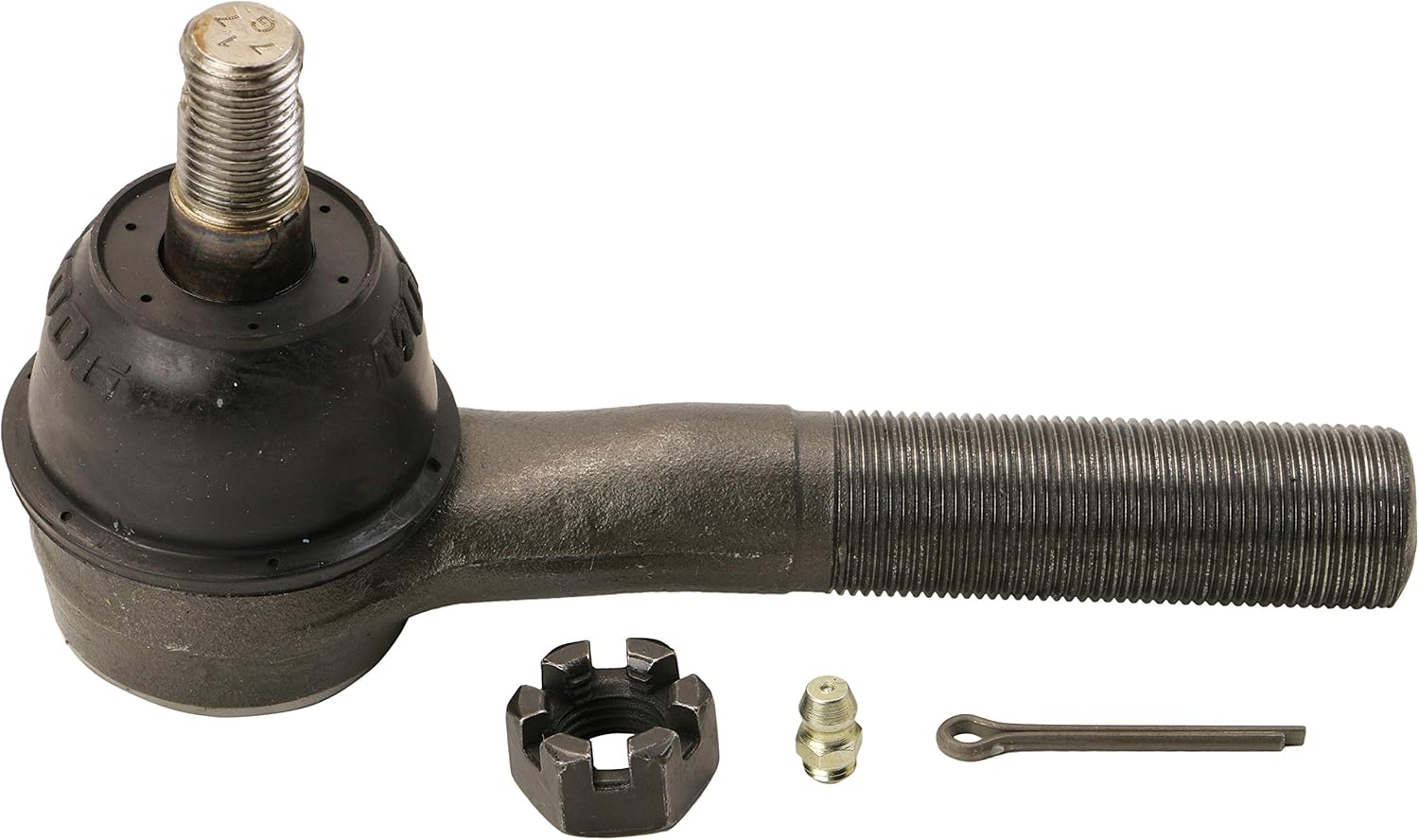
| Manufacturer Part Number | ES3342R |
|---|---|
| Brand | MOOG |
| Item model number | ES3342R |
| Exterior | Painted |
The MOOG ES3342R is an outer tie rod end built to replace a worn steering connection on Ford Ranger models and restore like-new steering feel. It connects the steering knuckle to the steering gear and is used when worn tie rods cause alignment issues, uneven tire wear, steering looseness, or clunking. MOOG highlights heat-treated ball studs for fatigue resistance, a pressed-in cover plate to keep debris out and reduce looseness, and a greasable socket and gusher bearing design to promote lubrication and longevity. Those features make installation straightforward and help the part hold alignment and resist premature wear in daily driving and rough-road conditions. The part is focused on durability and serviceability rather than exotic upgrades, so expect a direct factory-style replacement that technicians can install and grease as needed. It does not change steering geometry or provide performance tuning, so buyers seeking sport steering characteristics or aftermarket adjustments should look elsewhere.
Best for: Reliability-focused buyers who prioritize long-term steering durability and straightforward, factory-quality replacements for routine maintenance on a Ford Ranger.
Less Ideal for: Drivers seeking performance steering upgrades, adjustable tie rod ends, or changes to steering geometry should consider aftermarket performance parts instead.
- Heat-treated ball stud for improved fatigue strength and longer service life
- Pressed-in cover plate that seals the bearing area to keep out dirt and reduce looseness
- Greasable socket and gusher bearing design support maintenance and reduce internal friction
- Precision tolerance fit for straightforward installation and alignment
- Provides factory-style replacement performance but does not offer upgraded handling characteristics
- Not a performance or adjustable aftermarket unit for custom steering setups
Verdict: A dependable, serviceable factory-style outer tie rod end that restores steering precision on the Ford Ranger without performance frills.
6. Detroit Axle Front Outer Tie Rod Ends, 2‑Piece Set

| Brand | Detroit Axle |
|---|---|
| Part Quantity | 2 |
| Exterior | Alloy Steel |
| Manufacturer Part Number | ES3461 x2 |
This Detroit Axle kit supplies two front outer tie rod ends intended as direct-fit replacements for compatible Ford Ranger years. Installed on the vehicle's steering knuckles, these replace worn rod ends to restore steering precision and eliminate play or vibration. The parts are alloy steel and include grease fittings for easier periodic lubrication, which helps serviceability and extends joint life compared with sealed-only units. Detroit Axle states the components undergo impact and fatigue testing and the listing covers typical suspension replacement use during routine steering repairs or after wheel-end damage. Practical benefits include OEM-style fit, straightforward bolt-on installation, and improved ability to service the joint with a grease gun. Important limitations are that the kit provides only the two outer tie rod ends so inner tie rod condition and alignment are separate concerns, and buyers should expect to need a professional alignment after installation. Some users note the mounting hardware details differ from factory fasteners so verify the correct nut or washer before final assembly.
Best for: Buyers who prioritize convenience and a quick, serviceable steering repair for their Ford Ranger and want parts that install like factory replacements with minimal fuss.
Less Ideal for: Drivers seeking a complete steering overhaul or heavy-duty upgrade should consider full steering kits or heavy‑duty aftermarket options instead.
- Direct-fit replacement for compatible Ford Ranger steering assemblies
- Alloy steel construction with grease zerts for easier servicing
- Sold as a matched pair so both sides can be renewed at once
- Manufacturer testing for impact and fatigue to support durability claims
- Does not include inner tie rods or alignment hardware
- May require different nut or washer than original on some knuckles
Verdict: A convenient, serviceable pair of front outer tie rod ends for Ford Ranger owners who want a straightforward factory-style replacement.
7. MOOG ES3461 Outer Steering Tie Rod End

| Brand Name | MOOG |
|---|---|
| Part Number | ES3461 |
| Bearing Type | Ball Bearing |
| Compatible Lubricant | Grease |
| Included Components | TIE ROD END |
The MOOG ES3461 is an outer steering tie rod end intended as a direct replacement for specified Ford Ranger and similar vehicles. It connects the steering knuckle to the steering gear and restores proper steering geometry when an original unit is worn. Notable design features include a pressed-in cover plate to keep out debris, a greasable socket for periodic lubrication, heat-treated ball studs for improved fatigue strength, and a gusher-style bearing to promote grease flow and reduce friction. In practice the part installs with factory-like fit and tolerances, which makes alignment adjustments minor if you count turns when swapping the old unit for the new one. The greasable design and corrosion-resistant treatments extend service life in harsh conditions, but the grease fitting can be fragile during installation and may require careful handling. This unit is aimed at straightforward steering repairs where reliability and long life are priorities rather than performance upgrades.
Best for: Risk-averse mainstream buyers who prioritize reliable, factory-quality steering replacements and want parts that simplify installation and extend service life.
Less Ideal for: Buyers seeking high-performance or modified steering components for racing or off-road builds should consider specialty performance parts instead.
- Direct-fit replacement with precision tolerances for straightforward installation
- Greaseable socket allows fresh lubricant to flush contaminants and extend service life
- Heat-treated ball stud and gusher bearing improve strength and reduce friction
- Pressed-in cover plate helps seal out debris and minimize looseness over time
- Grease fitting can be fragile and may snap if not installed carefully
Verdict: A dependable, factory-quality outer tie rod end built for easy installation and long service life on supported Ford Ranger models.
Looking for the perfect fit?
Select your Ford Ranger configuration to see the most relevant Tie Rod Ends recommendations
Choosing the Right Ford Ranger Tie Rod End: Key Factors to Consider
Fitment and Vehicle-Specific Geometry
Correct fitment is essential because a tie rod end must match the Ford Ranger's steering arm and linkage geometry to maintain proper toe settings and steering response. An exact-fit part reduces the need for aftermarket modifications and simplifies alignment. When parts deviate from factory dimensions, you risk unpredictable steering feel and accelerated tire wear.
Check mounting thread size, taper type, and reach to ensure the replacement seats correctly in the steering knuckle or center link. Proper fitment also makes installation safer and faster, and it helps technicians achieve the specified alignment specifications without using excessive shims or adapters.
Durability and Materials
Tie rod ends operate under lateral and axial loads and must resist wear from repeated steering motions and road impacts. Components with hardened ball studs, robust housings, and corrosion-resistant coatings typically last longer in real-world conditions. Material quality influences how the joint holds up to moisture, salt, and road debris.
Pay attention to the construction of the ball stud and socket, the quality of the seals, and whether the housing uses treated steel or protective plating. These details affect how quickly the joint develops play and how often you will need to inspect or replace the part.
Seal Design and Contamination Protection
A reliable seal keeps grease in and contaminants out, which directly impacts longevity and performance. Boots and seals that are robust and properly retained reduce the likelihood of premature wear from dirt and water ingress. Poor sealing leads to moisture-driven corrosion and accelerated joint failure.
Evaluate whether the design includes replaceable grease fittings or factory-filled, serviceable boots. Even if a part is rated for extended life, a compromised seal will shortcut that expectation, so prioritize products with proven sealing solutions.
Serviceability and Maintenance
Consider how the tie rod end will be serviced over its lifetime. Greaseable joints allow periodic lubrication to extend service life, while non-serviceable units are often replaced as assemblies. Ease of access to the grease fitting, if present, and the ability to replace boots or fasteners without extensive disassembly matter during routine maintenance.
Serviceability also influences repair time and cost. A design that accepts standard replacement practices and does not require specialized tools speeds up installation and reduces the chance of installation errors that can affect steering geometry.
Alignment Compatibility and Adjustment Range
Tie rod ends tie directly into the vehicle steering geometry, so compatibility with alignment procedures is critical. The part should allow sufficient length and thread engagement for correct toe adjustment without introducing binding or limiting turn radius. Some replacement ends are designed to match the factory adjustment range to simplify alignment.
Ensuring the replacement does not alter the center-to-center length of the steering link helps keep toe settings within the adjustability range of the rack or center link. Parts that prevent proper alignment can cause uneven tire wear and handling issues.
Signs of Wear and Expected Lifespan
Understand the common wear signs so you can plan inspections and replacements before failure. Typical indicators include increased play at the steering wheel, vibration under load, or uneven tire wear. Choosing a part with known longevity characteristics and clear wear indicators helps you anticipate maintenance needs.
Consider the expected service life under your driving conditions and how aggressively you drive or operate on rough roads. Parts rated for heavier duty use or with reinforced designs are often a better match for vehicles exposed to tougher environments, reducing the frequency of replacements.
How We Chose the Best Ford Ranger Tie Rod End
We selected parts that meet fitment and durability expectations for the Ford Ranger, focusing on components designed to match factory steering geometry and mounting points. Our editorial filters emphasized accurate fitment to the vehicle, high-quality materials in load-bearing components, and protective features such as greaseable fittings or corrosion-resistant coatings.We prioritized mechanical reliability by considering ball-stud construction, seal design, and expected service life under typical driving conditions. Serviceability factors like the availability of replaceable boots and compatibility with standard alignment procedures were also weighed. Performance-related criteria included minimizing steering play, consistent articulation, and predictable feel during turns.We excluded parts that lacked clear vehicle-specific fitment information, had unverified material specifications, or did not offer basic protective features against contaminants. The final list balances compatibility, durability, and installation practicality to reflect what matters most for Ford Ranger owners.
Our full evaluation process is outlined in our review methodology.
FAQ
How can I tell if my Ford Ranger tie rod end is failing?
Common symptoms include play or looseness in the steering wheel, uneven or rapid tire wear, and a clunking or knocking noise when turning. You may also notice the vehicle pulling to one side or reduced steering responsiveness. If you see torn boots or visible grease loss at the joint, that often indicates the part needs attention.
Can I drive with a worn tie rod end?
Driving with a worn tie rod end is risky because increased play can reduce steering control and lead to unpredictable handling. Short trips may be possible, but continued driving increases the chance of sudden failure and further suspension damage. It is usually best to address steering component issues promptly.
Do tie rod ends need regular maintenance?
Some tie rod ends include grease fittings and benefit from periodic lubrication, which can extend service life. Others are sealed and intended to be replaced as a unit when worn. Regular inspections during routine service can catch wear early, and lubrication schedules should follow manufacturer or installer recommendations when greaseable joints are used.
Will replacing a tie rod end require an alignment?
Replacing a tie rod end typically affects toe settings, so a wheel alignment is often needed afterwards to restore correct steering geometry. The amount of adjustment required depends on how the replacement alters the steering link length. An alignment ensures even tire wear and optimal handling.
Is the outer tie rod end different from the inner unit?
Outer and inner tie rod ends serve similar roles but sit in different positions within the steering linkage and may have different thread sizes or taper types. The outer unit connects directly to the steering knuckle and tends to be more exposed to road debris, so its durability and sealing are especially important. Confirm which position the replacement is intended for when sourcing parts.
What should I inspect after installing a new tie rod end?
After installation, check that the jam nuts or locking hardware are torqued to specification, that there is full thread engagement, and that boots are seated with no pinching. Verify there is no binding through the steering range and have the vehicle aligned to correct toe settings. A short test drive to confirm steering feel and absence of unusual noises is also recommended.
Conclusion
Choosing the right Ford Ranger tie rod end means balancing precise fitment, durable construction, and effective sealing. Prioritize parts that match the vehicle geometry, offer robust materials and protection against contamination, and allow proper alignment adjustments.Be realistic about tradeoffs between serviceable versus sealed designs and select a solution aligned with your driving conditions and maintenance preferences. Regular inspections and prompt replacement of worn components will keep steering predictable and tires wearing evenly.
Explore More:
- Check out all Ford Ranger parts & accessories
- Explore Tie Rod Ends Maintenance & Repair Guides
- Explore Suspension & Steering
- Browse all Auto Parts
