

Note: This article contains affiliate links. If you click on these links and make a purchase, I may earn a small commission at no extra cost to you. This helps support my research and content. Read my full affiliate disclosure here.
If your 1999-2004 Jeep Grand Cherokee has started to feel loose in turns or produces knocking from the suspension, worn sway bar links are a common culprit. For owners of the WJ-generation Grand Cherokee, choosing the right sway bar link matters for steering precision, ride comfort, and noise control. This guide shortlists seven top-rated sway bar links selected for direct fitment to the 1999-2004 Grand Cherokee and evaluates why each option earned consideration.You will get practical notes on fitment, materials, and long-term durability, plus the maintenance and installation issues to expect. Read on to see which features to prioritize and how to diagnose sway bar end link symptoms before you replace parts.
Looking for other parts? See all Jeep Grand Cherokee parts & accessories.
Top Picks at a Glance
| Best Overall The best all-around choice for most situations | Metrix Premium Chassis Parts 4‑Piece Front & Rear Stabilizer Bar Link Kit for 1999–2004 Jeep Grand Cherokee |  |
| Best Quality Built to a higher standard if you want something more solid | MOOG K3201 Stabilizer Bar Link for Jeep Grand Cherokee |  |
| Best Value The sweet spot between price and what you get | Detroit Axle 4pc Sway Bar End Link Kit for 1999-2004 Jeep Grand Cherokee |  |
| Best Budget The cheapest option that still gets the job done reliably | KFVF Stabilizer Link Kit (Front & Rear) for 1999–2004 Jeep Grand Cherokee |  |
| Highest Rated A top-rated pick with lots of positive feedback | Metrix Premium Chassis Parts Front Stabilizer Sway Bar End Link Kit (2 pc) |  |
| Most Popular A crowd favorite that many people choose with confidence | Detroit Axle Rear Sway Bar End Links Kit for 1999–2004 Jeep Grand Cherokee (2pc) |  |
| Best Seller A high-volume bestseller chosen again and again | TRQ Front Sway Bar Stabilizer Link Set for 1999–2004 Jeep Grand Cherokee |  |
Metrix Premium Chassis Parts 4‑Piece Front & Rear Stabilizer Bar Link Kit for 1999–2004 Jeep Grand Cherokee

| Compatible vehicle | 1999–2004 Jeep Grand Cherokee |
|---|---|
| Kit contents | 2 front links (K3201), 2 rear links (K3202) |
| Certifications | IATF 16949, ISO 9001 |
| Corrosion protection | Cataphoresis plating |
| Warranty | 3 years / 36,000 miles |
This Metrix Premium 4-piece kit replaces both front and rear stabilizer bar links on a 1999–2004 Jeep Grand Cherokee to restore handling and reduce body lean. The kit includes two front links (K3201) and two rear links (K3202) with high-grade steel components, cataphoresis corrosion plating, and greaseable fittings on select pieces for easier maintenance. Installation is typical of sway-bar link replacement: lift the vehicle, remove the wheel, unbolt the old links and fit the new ones; the kit ships with the necessary hardware for a complete swap. The aluminum and steel construction aims to balance strength and corrosion resistance while meeting IATF 16949 and ISO 9001 manufacturing standards. Practical benefits are improved steering stability and a quieter ride compared with worn links, plus longer service life from the coating and greasable design. Limitations to note are mixed user feedback on longevity and fitment in rare chassis variants, so check fitment carefully before purchase and consider alignment after installation.
Best for: Buyers who want a reliable, factory-style replacement that restores handling and reduces body roll while prioritizing corrosion protection and straightforward installation.
Less Ideal for: If you prefer premium heavy‑duty or performance aftermarket links for aggressive offroad use, this factory-style kit may not meet those demands.
- Complete 4-piece kit covers both front and rear links for a single repair job
- Greaseable fittings on some components allow periodic lubrication to extend service life
- Cataphoresis plating improves corrosion resistance for harsh road conditions
- Includes necessary hardware for straightforward installation
- Some customers report mixed longevity and inconsistent fit on uncommon chassis variants
Verdict: A complete, factory-quality replacement kit that restores Grand Cherokee handling and resists corrosion while keeping installation simple.
MOOG K3201 Stabilizer Bar Link for Jeep Grand Cherokee

| Model Number | K3201 |
|---|---|
| Compatible Vehicles | 1999-2004 Jeep Grand Cherokee |
| Material Type | Rubber |
| Unit Count | 1.0 Count |
The MOOG K3201 is a direct-fit stabilizer bar link intended to restore steering feel and reduce clunking on 1999–2004 Jeep Grand Cherokee (WJ) chassis. It replaces the factory link with a ready-to-install unit that comes with pressed-in bushings and a black finish. Typical use is a front suspension refresh or targeted repair when you hear knocking over bumps or notice sloppy cornering. In real-world use the part fits like the original, firms up body roll, and removes play that causes steering wander. MOOG emphasizes improved designs over factory originals so you get quieter, more dependable operation and easier installation for DIYers and shops. Limitations include that it is a single link (unit count 1) so you will likely need a matched link for the opposite side, and some users report occasional small length differences versus older originals that may require attention during install. Overall this is a practical replacement for Grand Cherokees that need restored handling without upgrading to heavy-duty aftermarket links.
Best for: Buyers restoring original steering feel on a 1999–2004 Grand Cherokee who prioritize a like-for-like replacement that installs quickly and quiets clunks while improving cornering stability.
Less Ideal for: Drivers seeking heavy-duty or performance-adjustable sway bar links for off-road or lifted applications should consider purpose-built aftermarket options instead.
- Vehicle-specific fit for 1999–2004 Jeep Grand Cherokee simplifies installation
- Pressed-in bushings reduce prep time and make install cleaner
- Designed to improve steering feel and reduce clunking compared with worn originals
- Black finish and factory-style geometry give an OEM-like replacement appearance
- Sold as a single link so you may need to buy a matching unit for the other side
Verdict: Choose the MOOG K3201 when you want a direct-fit, factory-style stabilizer link that quickly restores steering precision on 1999–2004 Grand Cherokees.
Detroit Axle 4pc Sway Bar End Link Kit for 1999-2004 Jeep Grand Cherokee

| Set Name | 4pc Sway Bar End Link Kit |
|---|---|
| Fitment | 1999-2004 Jeep Grand Cherokee |
| Auto Part Position | Front, Rear |
| Exterior Finish | Zinc |
| Material Type | Metal |
This Detroit Axle 4-piece sway bar end link kit replaces both front and rear links on 1999–2004 Jeep Grand Cherokee and is intended as a direct-fit factory-quality replacement. Installation is straightforward for a competent DIYer or technician because the links match vehicle-specific fitment and come in a complete kit so you can address both axles at once. The links are metal with a zinc finish and Detroit Axle advertises premium alloy construction and reinforced structure to resist wear and corrosion, which should restore steering stability and eliminate clunks over bumps. Real-world feedback shows consistent fit and quieter ride after installation, though there are occasional reports of shipping damage or individual part failures, so inspect components before fitting. The kit carries a long warranty claim in the listing and represents a lower-cost alternative to dealer parts while aiming to maintain factory-style function. If you need an all-four-link solution that restores handling without modifying the suspension geometry, this kit is a practical, value-focused choice.
Best for: Buyers who prioritize a practical, cost-effective factory-style replacement to restore handling and quiet a Grand Cherokee without altering suspension setup.
Less Ideal for: Drivers seeking heavy-duty performance upgrades or aftermarket adjustable links for tuning handling should consider performance-oriented alternatives.
- Vehicle-specific direct-fit design for 1999–2004 Jeep Grand Cherokee simplifies installation
- Includes both front and rear links so all four end links are replaced at once
- Zinc finish and premium alloy construction resist corrosion and wear
- Restores steering stability and reduces clunking and noise over bumps
- A few customers reported damaged or defective individual parts on arrival, requiring inspection or replacement
Verdict: A practical, vehicle-specific four-piece replacement kit that restores ride quality and steering stability on 1999–2004 Grand Cherokees at a much lower cost than dealer parts.
KFVF Stabilizer Link Kit (Front & Rear) for 1999–2004 Jeep Grand Cherokee
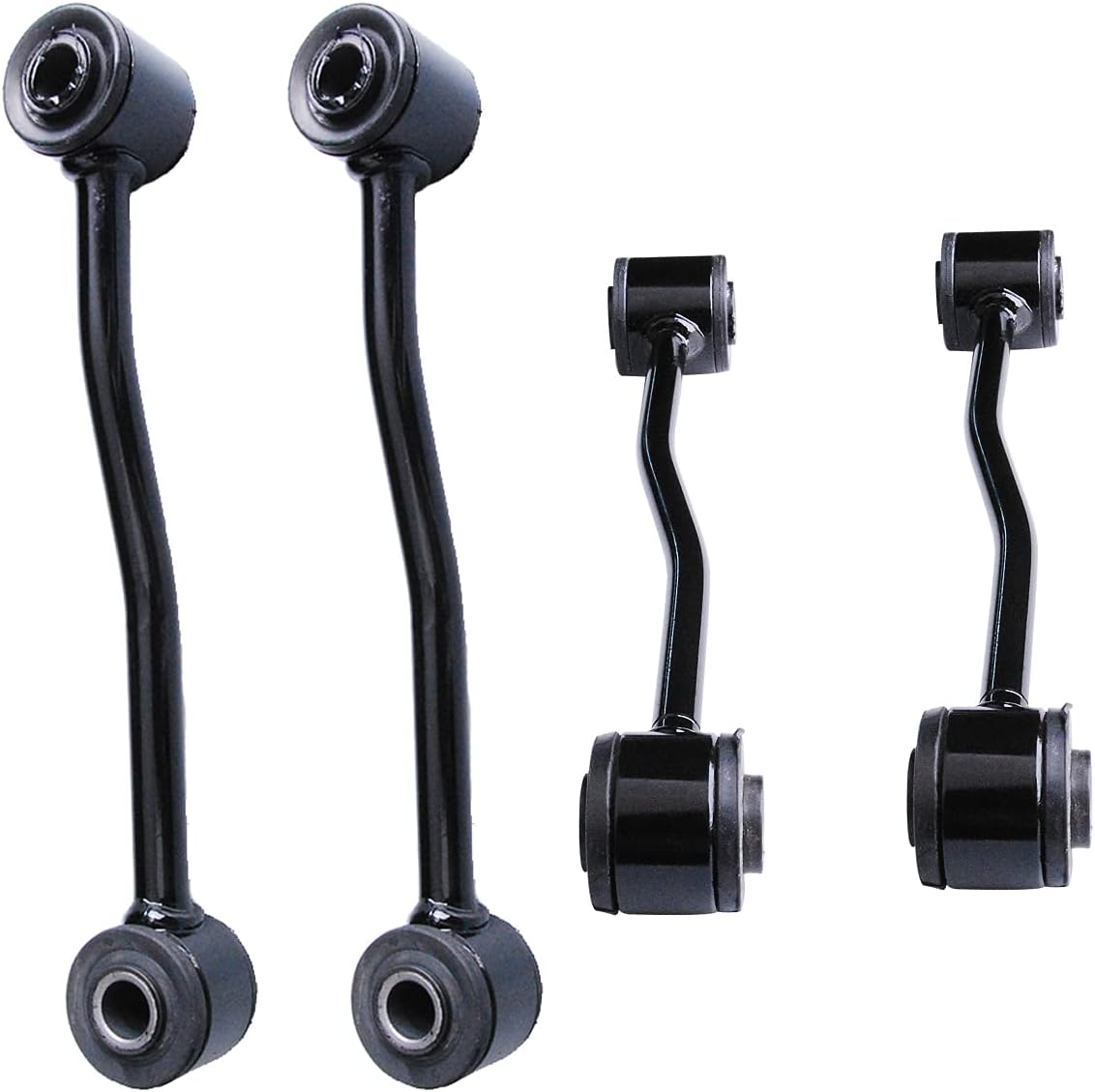
| Brand Name | KFVF |
|---|---|
| Model Number | K3201 K3202 |
| Included Components | Front and rear stabilizer links (4 pieces) |
| Automotive Fit Type | Vehicle Specific Fit |
This KFVF stabilizer link kit supplies two front and two rear sway bar links engineered as a direct vehicle-specific replacement for 1999–2004 Jeep Grand Cherokee. Intended for routine suspension refreshes, the kit installs in the factory locations and restores proper sway bar connection to reduce body roll and steering wander. The product ships as a black-finished set with rubber boots and precision tolerances intended to simplify installation using common hand tools. Practical benefits include a thicker-looking design compared with some factory pieces and reported easy fitment on compatible Grand Cherokees, which makes it a sensible repair when worn links cause clunks or handling degradation. Limitations are typical of budget aftermarket links: long-term durability is not proven beyond owner reports and the one-year warranty is shorter than some premium alternatives. Also verify fitment carefully before purchase since fit is vehicle-specific and rear link designs can vary between models.
Best for: Buyers looking for an affordable, direct-replacement set to restore handling and eliminate clunks on a 1999–2004 Jeep Grand Cherokee who prioritize value and straightforward installation.
Less Ideal for: Drivers who want long-term performance upgrades or heavy-duty off-road use should consider higher-end or reinforced aftermarket links instead.
- Vehicle-specific fit for 1999–2004 Jeep Grand Cherokee covering front and rear links
- Includes a complete 4-piece set so both axles can be serviced at once
- Precision tolerances and rubber boots designed to ease installation with basic tools
- Black exterior finish resists visible corrosion and looks factory-compatible
- Limited one-year warranty and uncertain long-term durability compared with premium brands
- Rear link style may not match nonstandard or modified suspensions so fit must be confirmed
Verdict: A wallet-friendly, vehicle-specific 4-piece sway bar link kit that restores handling on 1999–2004 Jeep Grand Cherokee with easy installation.
Metrix Premium Chassis Parts Front Stabilizer Sway Bar End Link Kit (2 pc)

| Compatible vehicle | 1999-2004 Jeep Grand Cherokee |
|---|---|
| Quantity | 2x front stabilizer bar links |
| Pre-greased | Yes |
| Certifications | IATF 16949, ISO 9001 |
This Metrix Premium Chassis Parts kit replaces the front stabilizer bar end links to restore proper sway-bar connection and reduce body roll and clunks during cornering. It installs as a direct fit for the specified 1999–2004 Jeep Grand Cherokee application and comes pre-greased for smoother articulation and easier initial installation. Notable features include a greasable joint for routine maintenance, corrosion-resistant coating, and machined aluminum construction where applicable to resist rust and lower unsprung mass. In practice the kit eliminates suspension rattle and tightens handling when the original links are worn, and many users report easy bolt-on installation with factory-like fit. Limitations to be aware of are occasional reports of rubber bushing wear over time and rare quality-control defects on shipped units, so inspect seals and joints before installation. For a reliability-focused replacement on the Grand Cherokee this kit offers durable materials and serviceable joints, but check condition on arrival and follow proper torque and alignment steps during install.
Best for: Buyers who prioritize long-term stability and want a durable, serviceable replacement to eliminate front-end rattles and reduce body roll on a 1999–2004 Jeep Grand Cherokee.
Less Ideal for: Drivers looking for an upgraded performance link for track use or heavy-duty off-road modifications should consider purpose-built performance or heavy-duty options instead.
- Pre-greased joints for smoother movement and simpler initial installation.
- Corrosion-resistant coating and machined exterior help longevity in wet or salted conditions.
- Designed as a direct-fit front link for the 1999–2004 Jeep Grand Cherokee to restore factory handling.
- Greasable design lets you service the joint to extend life instead of replacing the entire link.
- Some users report premature cracking of rubber bushings after months of use.
- Isolated reports of defective or leaking joints on arrival, so parts should be inspected before install.
Verdict: A serviceable, corrosion-resistant direct-fit sway bar link kit built to restore factory stability and reduce front suspension noise on 1999–2004 Jeep Grand Cherokee.
Detroit Axle Rear Sway Bar End Links Kit for 1999–2004 Jeep Grand Cherokee (2pc)

| Auto Part Position | Rear |
|---|---|
| Automotive Fit Type | Vehicle Specific Fit |
| Exterior Finish | Zinc |
| Material | Metal |
| Kit Includes | 2x Rear Sway Bar End Links |
These Detroit Axle rear sway bar end links are a straightforward factory-style replacement for 1999–2004 Jeep Grand Cherokee rear stabilizer links. The kit includes two links with zinc finish metal construction and vehicle-specific fit so installation is usually a direct swap using the factory mounting points. In typical use they restore the connection between the sway bar and suspension, removing clunks and restoring handling precision. Reviewers report easy installation and consistent fit on multiple model years, and the parts undergo durability testing and come with a 10-year warranty. Limitations to expect are lighter-duty construction compared with premium heavy-duty links and occasional reports of torn dust boots over time, so long-term durability can vary by driving conditions. Some users chose to grease joints after installation for quieter operation. For buyers prioritizing fit and value for standard street use these links are a practical repair option, but drivers seeking a heavy-duty or performance upgrade may prefer stiffer aftermarket alternatives.
Best for: Buyers who want a reliable, vehicle-specific replacement that restores steering feel and stops rear clunking with minimal fuss and focus on documented user experience and proven fit.
Less Ideal for: Drivers who regularly tow, frequently drive off-road hard, or want a performance-stiff link should consider heavy-duty aftermarket options instead.
- Vehicle-specific fit for 1999–2004 Grand Cherokee simplifies installation
- Zinc-coated metal construction resists corrosion
- Includes two rear links so both sides are replaced at once
- Backed by manufacturer testing and a 10-year warranty
- Not built as heavy-duty or performance-oriented links; may wear sooner under severe use
- Some users report dust boot deterioration requiring maintenance or replacement
Verdict: A budget-conscious, vehicle-specific replacement that reliably restores rear sway bar function and eliminates clunks on 1999–2004 Jeep Grand Cherokees.
TRQ Front Sway Bar Stabilizer Link Set for 1999–2004 Jeep Grand Cherokee

| Fitment | 1999-2004 Jeep Grand Cherokee front driver & passenger |
|---|---|
| Quantity | 2 piece kit |
| Exterior | Machined |
| Manufacturer | TRQ |
This TRQ two-piece front sway bar link set replaces both driver and passenger links on 1999–2004 Jeep Grand Cherokees and is intended as a direct-fit replacement for worn or failed originals. Installation is straightforward for a competent DIYer or mechanic because the links arrive preassembled and match factory attachment points, and TRQ supplies step-by-step videos to help with the job. In use the links restore lateral control and reduce body roll and clunking that occur with failing bushings or ball joints. Build quality is generally good for an aftermarket option and reviewers report easier install and noticeably improved steering feel compared with tired stock links. Downsides to consider are some reports of variable quality control and occasional thinner steel compared with factory parts, so long-term durability may vary by batch. For buyers who prioritize a budget-friendly, easy-to-install replacement that returns proper handling, these deliver solid short-term performance but may not match the longevity of higher-end or factory replacements.
Best for: Jeep Grand Cherokee owners who want an affordable, ready-to-install front sway bar link set that restores handling and is supported by DIY installation resources.
Less Ideal for: Buyers seeking longest-possible durability or factory-equivalent materials should consider higher-end or OEM replacement links instead.
- Direct-fit two-piece kit replaces both front driver and passenger links
- Preassembled components simplify installation and reduce labor time
- Includes access to TRQ step-by-step installation videos
- Restores steering response and reduces front-end clunking
- Some reviewers report inconsistent quality control between batches
- Steel appears thinner than some factory links which could affect long-term durability
Verdict: A budget-friendly, direct-fit front sway bar link kit that makes it easy to restore handling on 1999–2004 Jeep Grand Cherokees while keeping installation simple.
Choosing the Right 1999-2004 Jeep Grand Cherokee Sway Bar Link: Key Factors to Consider
Fitment and Compatibility
Correct fitment is the single most important factor for the 1999-2004 Jeep Grand Cherokee. Sway bar links must match the factory pivot locations and thread sizes used on the WJ chassis to avoid clearance issues or improper geometry. Using a link with different linkage length or misaligned mounting points can cause binding, uneven loading, and premature wear.
Confirming compatibility for both front sway bar link and rear sway bar link positions matters because the front and rear may use different lengths and hardware. If you are replacing only one link, verify the opposite side condition to avoid uneven handling characteristics.
Bushing and Joint Design
The type of bushing or joint determines noise, compliance, and service life. Rubber bushings are quieter initially but deteriorate faster under heat and oil exposure. Polyurethane options last longer and preserve handling at the cost of transmitting more vibration into the chassis.
Ball-joint style stabilizer links with sealed bearings or grease fittings provide more positive articulation and tend to resist the sway bar link noisy clunk that develops when bushings collapse. For vehicles used in wet or salty climates, sealed metal joints reduce corrosion-related seizure.
Material and Corrosion Resistance
Materials affect structural strength and resistance to environmental damage. Steel links with durable coatings or stainless-steel hardware resist rust on older Grand Cherokees, especially if the vehicle sees winter roads. Zinc plating and powder coats extend life, but welded joints and thin metal may still corrode at stress points.
Consider links with replaceable hardware or heavier-gauge components if your Jeep has high mileage or has seen off-road exposure. Corrosion can compromise threads and ball-stud integrity, making future removal difficult and increasing replacement cost.
Durability and Load Capacity
Sway bar links transfer lateral forces from the anti-roll bar into the suspension. For the WJ Grand Cherokee, links need to withstand repeated flexing, impacts, and the additional stresses of towing or light off-road use. Construction quality, thicker link bars, and reinforced end fittings reduce the risk of bending or cracking under load.
Longevity is particularly important because failed links often show symptoms gradually. Choosing a link rated for higher fatigue life reduces the chance of returning to service repeatedly.
Noise Control and Ride Comfort
A common reason owners replace sway bar links is eliminating clunks, rattles, or metallic noises during cornering or over bumps. Links that use well-sealed ball joints, higher-quality bushings, or integrated damping features tend to minimize these symptoms. However, stiffer components can transmit more harshness to the cabin.
Balance the desire for crisp handling with acceptable ride comfort; for daily-driven Grand Cherokees, prioritizing noise-free operation usually improves perceived quality more than pursuing the stiffest possible link.
Installation and Maintenance
Ease of installation matters for owners who plan a DIY replacement. Links provided as a complete kit with new nuts, washers, or sleeves reduce labor time and confusion. Greaseable link designs allow periodic maintenance, extending service life when included grease fittings are used.
Also consider torque specs and access at mounting points. Some replacement links require specific torque values or alignment resets after installation. Verify that replacement procedures are compatible with your tools and mechanical ability before buying.
How to Spot Worn Sway Bar Link Symptoms on Your WJ
Worn sway bar links often announce themselves with sounds and handling changes before a visual inspection confirms the issue. A loose or failing link typically causes a rhythmic clunk or clunking during cornering and over larger bumps, especially when the suspension unloads and reloads.
Other common signs include increased body roll in corners, a vague or disconnected steering feel, and uneven tire wear if the suspension geometry shifts under load. Check for visible movement in the link by prying the connection; any play in the ball joint or torn bushing indicates replacement.
- Listen for metallic clunks when driving over uneven surfaces.
- Look for torn rubber, separated bushings, or excessive play at link ends.
- Compare front and rear symptoms since both locations can fail independently.
Front Versus Rear Links: What Differs on the Grand Cherokee
The front sway bar link on the Grand Cherokee connects the front anti-roll bar to the lower control arm or strut and typically sees more steering-related input. The rear link attaches the rear stabilizer bar to the rear axle or control arm and mainly influences body roll.
Because the front links endure steering forces and more vertical travel, they may wear sooner than rear links. When replacing links, match the correct front sway bar link or rear sway bar link geometry to avoid handling imbalance.
- Front links affect steering response and often see higher articulation.
- Rear links influence body roll and may have different mounting hardware or length.
DIY Replacement Basics for a 1999-2004 Grand Cherokee
Many owners can complete a sway bar link replacement with basic tools and a jack. Start by supporting the vehicle safely, remove the wheel for access, and inspect the sway bar and mounting points. Loosen the lower mounting nut while supporting the control arm to prevent sudden movement.
Follow manufacturer guidance for recommended torque and use new hardware when provided in a sway bar link kit. If a link is seized, penetrating lubricant and heat can help, but be cautious not to damage threads. After installation, torque fasteners to the correct specifications and verify there is no binding throughout suspension travel.
- Use jack stands and chock wheels before working under the vehicle.
- Replace links in pairs when one side shows significant wear.
- Keep the suspension unloaded at ride height when tightening links if specified.
Maintenance Tips to Extend Link Life
Periodic visual inspections catch collar rust, torn boots, and loose fasteners before failure. Greaseable links should be lubricated per interval recommendations to keep ball joints moving freely. When driving in corrosive conditions, rinse undercarriage areas to reduce salt buildup.
If you install polyurethane bushings, expect slightly more transmitted vibration; check mounting torque after initial driving to ensure hardware has seated. Documenting the installation date and mileage helps plan future inspections and prevents surprise failures.
- Inspect links every oil change or at least twice a year.
- Lubricate grease fittings when present and wipe away excess to avoid contamination.
- Rinse the undercarriage after winter driving to remove salts.
Common Installation Challenges on the WJ Chassis
The WJ layout can present limited access at certain mounting points, especially where the link meets the control arm or sway bar bracket. Corroded nuts and studs are common on older Grand Cherokees and may require impact tools or careful heating to release.
Replacement links that include longer studs or replacement nuts simplify installation. Be prepared with penetrating oil, the correct metric sockets, and a breaker bar for stubborn fasteners. Always assess thread and mounting surface condition and replace damaged hardware to maintain a secure connection.
- Bring penetrating oil and a variety of sockets to handle seized fasteners.
- Consider complete hardware kits to avoid reusing corroded nuts or washers.
- Verify access angles with the wheel removed before starting work.
When to Replace Links Versus Inspecting Other Suspension Parts
If you hear clunks or notice looseness, start with a sway bar link inspection because they are common and inexpensive to replace. However, similar symptoms can originate from worn control arm bushings, strut mounts, or sway bar bushings, so inspect adjacent components during the service.
If links appear in good condition but symptoms persist, rule out collapsed bushings or damaged mounting brackets. Replacing links without addressing worn associated parts can mask the underlying problem and lead to repeated failures.
- Always inspect control arm and sway bar bushings when replacing links.
- Address any rusted or bent brackets to ensure the new link will operate correctly.
- Replace both sides when one side shows severe wear to keep handling balanced.
Still looking for the perfect fit?
Select your Jeep Grand Cherokee configuration to see the most relevant Sway Bar Links recommendations
How We Chose the Best 1999-2004 Jeep Grand Cherokee Sway Bar Link
We focused on criteria that matter to owners of the 1999-2004 Jeep Grand Cherokee and the WJ chassis. Primary filters included correct fitment to factory attachment points and hardware, service life of bushings and ball joints, and resistance to corrosion for vehicles exposed to road salt.We also evaluated materials and construction, prioritizing options with greaseable ball joints or sealed metal bearings, robust mounting hardware, and reinforced end fittings that match OE geometry. Durability under load and vibration resistance were considered because sway bar links transfer lateral forces and are subject to cyclic stress.Ease of installation and availability of complete kits were weighed next, since many owners perform the replacement themselves. Finally, attention was paid to noise-control features and warranty coverage as indicators of expected lifespan.Items we excluded: parts that require suspension modification, links without clear vehicle fitment data for 1999-2004 WJ, and components that omit essential mounting hardware. The result is a focused set of links chosen for correct fit, longevity, and quiet operation on the Grand Cherokee.
Our full evaluation process is outlined in our review methodology.
FAQ
How long do sway bar links typically last on a 1999-2004 Grand Cherokee?
Service life varies widely based on conditions, but links often last between 30,000 and 70,000 miles. Corrosive environments, heavy use, or off-road driving can shorten that lifespan, while greaseable or sealed designs usually last longer.
Can I drive with a broken sway bar link on my Grand Cherokee?
You can usually drive short distances with a broken link, but handling will be degraded and body roll will increase. Replace the link promptly to avoid additional wear to related suspension parts and to maintain safe cornering stability.
Are sway bar link replacements difficult for a home mechanic?
Many owners with basic tools can replace links at home. The job typically requires a jack, jack stands, sockets, and sometimes penetrating oil for stuck fasteners. More challenging situations include seized hardware or limited access on the WJ chassis.
Should I replace front and rear links at the same time?
It often makes sense to replace both links on the same axle if one shows significant wear to maintain balanced handling. Replacing only one side can leave unequal response and may result in repeat service sooner on the older side.
Do greaseable sway bar links need regular lubrication?
Yes, greaseable links benefit from periodic lubrication to prevent premature wear of the ball stud and socket. Follow the grease interval recommended by the link manufacturer or lubricate during routine service to extend part life.
What torque specs should I use when installing sway bar links on the WJ?
Torque values vary by fastener and link design, so follow the service manual or the torque specs supplied with the replacement link. Typical practice is to torque to factory-specified values and recheck after a short break-in drive.
Final Verdict
When maintaining a 1999-2004 Jeep Grand Cherokee, prioritize correct fitment to the WJ chassis, durable joint design, and corrosion resistance. Use links with sealed or serviceable joints if you drive in wet or salty conditions, and consider complete kits that include new hardware to simplify installation.Balance durability against cabin comfort by choosing a bushing and joint style that meets your driving habits. Inspect associated suspension parts during replacement and follow proper torque steps to ensure a long-lasting, quiet repair that restores handling confidence.
Explore More:
- Check out all Jeep Grand Cherokee parts & accessories
- Explore Sway Bar Links Maintenance & Repair Guides
- Explore Suspension & Steering
- Browse all Auto Parts
