

Note: This article contains affiliate links. If you click on these links and make a purchase, I may earn a small commission at no extra cost to you. This helps support my research and content. Read my full affiliate disclosure here.
When a tie rod end starts to fail on a 1999-2004 Jeep Grand Cherokee (WJ), steering can become loose, noisy, or vague. Choosing the correct tie rod end matters because the wrong part can cause premature wear, steering wander, and alignment trouble. This guide presents six shortlisted, vehicle-specific tie rod ends chosen for direct fitment and long-term durability for the WJ chassis.You will find short explanations of why each option made the list, plus practical evaluation criteria like material and joint design, fitment reliability, and installation impact. Read on for the details you need to replace the worn steering tie rod end with confidence and get the Grand Cherokee back to precise handling.
Looking for other parts? See all Jeep Grand Cherokee parts & accessories.
Top Picks at a Glance
| Best Overall The best all-around choice for most situations | Detroit Axle Front Inner and Outer Tie Rod Ends Kit for 1999–2004 Jeep Grand Cherokee (4‑pc) |  |
| Best Quality Built to a higher standard if you want something more solid | Metrix Premium Chassis Parts 4-Piece Front Tie Rod End Kit (Fits 1999-2004 Jeep Grand Cherokee) |  |
| Best Value The sweet spot between price and what you get | Metrix Premium Chassis Parts Front Left & Right Tie Rod End Kit (1999–2004 Jeep Grand Cherokee) |  |
| Best Budget The cheapest option that still gets the job done reliably | MOOG ES3472 Outer Steering Tie Rod End for 1999–2004 Jeep Grand Cherokee |  |
| Highest Rated A top-rated pick with lots of positive feedback | Detroit Axle Front Outer Tie Rods Kit for 1999–2004 Jeep Grand Cherokee (pair) |  |
| Most Popular A crowd favorite that many people choose with confidence | Detroit Axle Front End 15‑Piece Suspension Kit for 1999–2004 Jeep Grand Cherokee |  |
Detroit Axle Front Inner and Outer Tie Rod Ends Kit for 1999–2004 Jeep Grand Cherokee (4‑pc)

| Vehicle fitment | 1999–2004 Jeep Grand Cherokee |
|---|---|
| Kit contents | 4x front inner and outer tie rod ends |
| Manufacturer | Detroit Axle |
| Manufacturer part number | 80301-4C |
This Detroit Axle kit supplies both inner and outer front tie rod ends for the 1999–2004 Jeep Grand Cherokee so you can replace the entire front steering linkage on one axle in a single job. Installers will appreciate that the parts are designed to match factory fit and function, making it straightforward to swap out worn components, restore steering responsiveness, and eliminate play. The kit is built to industry-tested standards and includes grease fittings for serviceability, which helps extend life when maintained. Real-world notes: removing rusted original ball joints or tie rod studs can require a puller or replacement tools, but the new assemblies thread in and torque down like factory pieces. Quality control appears consistent overall though occasional machining or tapped hole issues have been reported and may require minor corrective work. This kit is a practical, cost-effective way to renew front-end steering on the specified Grand Cherokee models, but plan for a professional alignment after installation and have a ball-joint removal tool handy if components are corroded.
Best for: A buyer seeking an affordable, factory-fit replacement to restore steering feel and remove play on a 1999–2004 Grand Cherokee, and who values straightforward installation and serviceable components.
Less Ideal for: Drivers who want a lifetime maintenance-free upgrade or a performance steering part with enhanced geometry should consider alternative specialty products.
- Complete front kit includes both inner and outer tie rod ends so one purchase handles a full-axle repair
- Factory-style fit for straightforward installation and easier alignment afterward
- Grease fittings provided for periodic service to help extend component life
- Built and tested to automotive quality standards for durability and consistent performance
- Occasional quality-control issues reported such as an improperly tapped grease hole that may need minor rework
Verdict: A budget-friendly, factory-fit four-piece tie rod kit that restores steering control and serviceability on 1999–2004 Jeep Grand Cherokee models.
Metrix Premium Chassis Parts 4-Piece Front Tie Rod End Kit (Fits 1999-2004 Jeep Grand Cherokee)

| Position | Front Outer |
|---|---|
| Model | 99908MT |
| Manufacturer | METRIX PREMIUM CHASSIS PARTS |
| OEM Part Number | ES3472, ES3473, ES3474, ES3475 |
This Metrix four-piece front tie rod end kit replaces both inner and outer tie rod ends for 1999–2004 Jeep Grand Cherokee and is intended for owners doing a full front-end steering refresh. The kit includes the left and right outer pieces plus inner components and hardware, with greasable fittings on some items to simplify roadside maintenance. Built from high-grade steel with cataphoresis corrosion protection and factory-style machined finish, the parts are designed to fit like factory replacements and make alignment straightforward after installation. Real-world benefits include tighter steering feel, removal of play that causes vibration or uneven tire wear, and longer life when regularly greased. Installation is typical for suspension work: lift, remove the wheel, swap the tie rods, then perform a front-end alignment. Expect to need common tools such as a tie rod puller and anti-seize or thread locker. Some users reported surface rust over time on exposed areas, so cosmetic corrosion may appear in harsh climates despite the coating. The kit is aimed at DIYers and professional techs who want a complete, beefed-up steering refresh that restores steering precision.
Best for: Drivers who want to restore or improve steering precision on a 1999–2004 Jeep Grand Cherokee by replacing all front tie rod components at once and who prioritize a matched, serviceable steering rebuild.
Less Ideal for: If you only need a single replacement part or prefer a lifetime-corrosion-proof aftermarket option, this full matched kit may be more than necessary.
- Complete four-piece kit replaces inner and outer front tie rod ends for a matched steering setup
- Some components feature grease fittings for easier maintenance and extended service life
- High-grade steel construction with cataphoresis plating improves corrosion resistance
- Designed to match factory fitment so installation and wheel alignment are straightforward
- Some buyers report cosmetic rusting on exposed surfaces after months in harsh conditions
- Includes a standard nut rather than the castle nut and cotter pin commonly found on older factory parts
Verdict: A complete, serviceable front tie rod kit that restores tight, predictable steering on 1999–2004 Jeep Grand Cherokee when you want a matched replacement for both inner and outer ends.
Metrix Premium Chassis Parts Front Left & Right Tie Rod End Kit (1999–2004 Jeep Grand Cherokee)

| Fitment | 1999-2004 Jeep Grand Cherokee |
|---|---|
| Position | Front |
| Material | Steel |
| Includes | Left and right tie rod ends, grease fittings, cotter pins |
| Manufacturer Warranty | 3 Year / 36,000 miles Limited Warranty |
This Metrix kit replaces both front outer tie rod ends for a 1999–2004 Jeep Grand Cherokee and is designed as a direct-fit, serviceable steering component. The pair includes a right and left tie rod end with grease fittings and cotter pin hardware, so installers can lubricate the ball joints during service to extend life. Built from steel with a machined finish and a corrosion-resistant coating, the parts aim to match factory geometry for straightforward alignment after installation. Practical benefits include easier maintenance thanks to the greasable design and a longer thread sleeve noted by users that can simplify adjustment during alignment. Expect typical use as a one-time suspension service item paired with a wheel alignment and, if other front components are aged, replacement in matched pairs to preserve handling. Limitations: the kit supplies basic hardware only and one reviewer reported a supplied nut that was undersized for certain applications, so keep original fasteners available and verify torque hardware fit before final assembly.
Best for: Buyers who want a practical, serviceable replacement that restores factory steering feel and lets them maintain the parts over time with periodic greasing.
Less Ideal for: If you want a lifetime-sealed, maintenance-free tie rod end or are building a performance steering setup, consider sealed or heavy-duty alternatives tailored to those goals.
- Direct-fit front left and right replacement designed for 1999–2004 Jeep Grand Cherokee steering knuckles
- Greasable ball joints allow on-vehicle lubrication to extend service life
- Machined steel construction with corrosion-resistant coating for durability
- Includes cotter pins and grease fittings so installers can complete basic assembly and maintenance
- Includes only minimal hardware and one reviewer reported a supplied nut may not fit every vehicle collar size
Verdict: A practical, serviceable OEM-style tie rod kit that restores steering geometry on 1999–2004 Jeep Grand Cherokee and lets owners extend life through routine greasing.
MOOG ES3472 Outer Steering Tie Rod End for 1999–2004 Jeep Grand Cherokee

| Compatible vehicles | 1999-2004 Jeep Grand Cherokee |
|---|---|
| Bearing Type | Ball Bearing |
| Material Type | Rubber |
| Compatible Lubricant | Grease |
| Part Number | ES3472 |
The MOOG ES3472 is an outer tie rod end made to replace the worn steering linkage on 1999–2004 Jeep Grand Cherokees. It connects the steering knuckle to the steering gear and is intended to restore like-new steering response and alignment. Notable design elements include a heat-treated ball stud for improved fatigue strength, a pressed-in cover plate to keep out debris, and a greasable socket so you can refresh lubricant to reduce corrosion and wear. The gusher bearing design and Belleville preload washer help keep the bearing tight as it wears, which contributes to longer service life and steadier steering feel over bumps. Installation is straightforward with precision tolerances and it ships with a castle nut, cotter pin, and grease fitting requiring basic hand tools and a post-install alignment. Limitations: it is a single outer tie rod end so expect to replace matching components as needed and periodic greasing is required to get the maximum lifespan.
Best for: Buyers looking for a reliable, budget-conscious replacement part that restores steering stiffness and reduces front-end play on a 1999–2004 Jeep Grand Cherokee.
Less Ideal for: If you want a completely maintenance-free, sealed tie rod end or are replacing multiple suspension components at once, consider options that are non-greasable or replacement kits covering additional parts.
- Direct-fit for 1999–2004 Jeep Grand Cherokee for simple replacement
- Heat-treated ball stud and reinforced bearing design for improved durability
- Greasable socket and pressed-in cover plate to reduce corrosion and extend life
- Includes necessary hardware such as castle nut and cotter pin for installation
- Requires periodic greasing to maintain performance and prevent wear
Verdict: A tough, direct-fit outer tie rod end that tightens steering and offers long-term value for budget-minded Jeep Grand Cherokee owners.
Detroit Axle Front Outer Tie Rods Kit for 1999–2004 Jeep Grand Cherokee (pair)

| Fitment | 1999–2004 Jeep Grand Cherokee |
|---|---|
| Kit contents | 2x Front Outer Tie Rod Ends |
| Manufacturer | Detroit Axle |
| Manufacturer Part Number | ES3473_ES3472 |
This Detroit Axle kit supplies two front outer tie rod ends that replace worn factory units on 1999–2004 Jeep Grand Cherokees. Installation is the same as a standard outer tie rod swap: remove the old unit, transfer or replace the jam nut, torque the castle nut and secure with the cotter pin, then grease through the fitting. Notable features include a factory-style ball joint and a greaseable zerk port so you can periodically lubricate the joint to extend life and reduce wear. Buyers report consistent fitment and straightforward installation with common hand and impact tools. The parts are aftermarket but built to match factory fit and function and are backed by the brand support described in the listing. Limitations to consider are the omission of new jam nuts in the package and occasional mixed quality reports from some buyers, so inspect threads and fittings on arrival and reuse OEM jam nuts if needed. After installation plan for a wheel alignment to correct toe settings.
Best for: Buyers prioritizing a reliable, serviceable steering repair who want a direct-fit aftermarket replacement that can be greased for longer life and restored steering feel.
Less Ideal for: If you need a complete steering overhaul that includes new jam nuts or prefer parts with factory-sourced certification, consider options that supply every hardware piece or come from a dealer.
- Direct-fit replacement for 1999–2004 Jeep Grand Cherokee steering outer tie rods
- Greaseable zerk fitting allows routine lubrication to extend joint life
- Packaged as a pair so both sides can be serviced at once
- Many buyers report solid fit and straightforward installation
- Does not include replacement jam nuts in the kit
- Some isolated quality control complaints reported by buyers
Verdict: Choose this kit when you want a direct-fit, greaseable replacement to restore steering and extend tie rod life on a 1999–2004 Jeep Grand Cherokee.
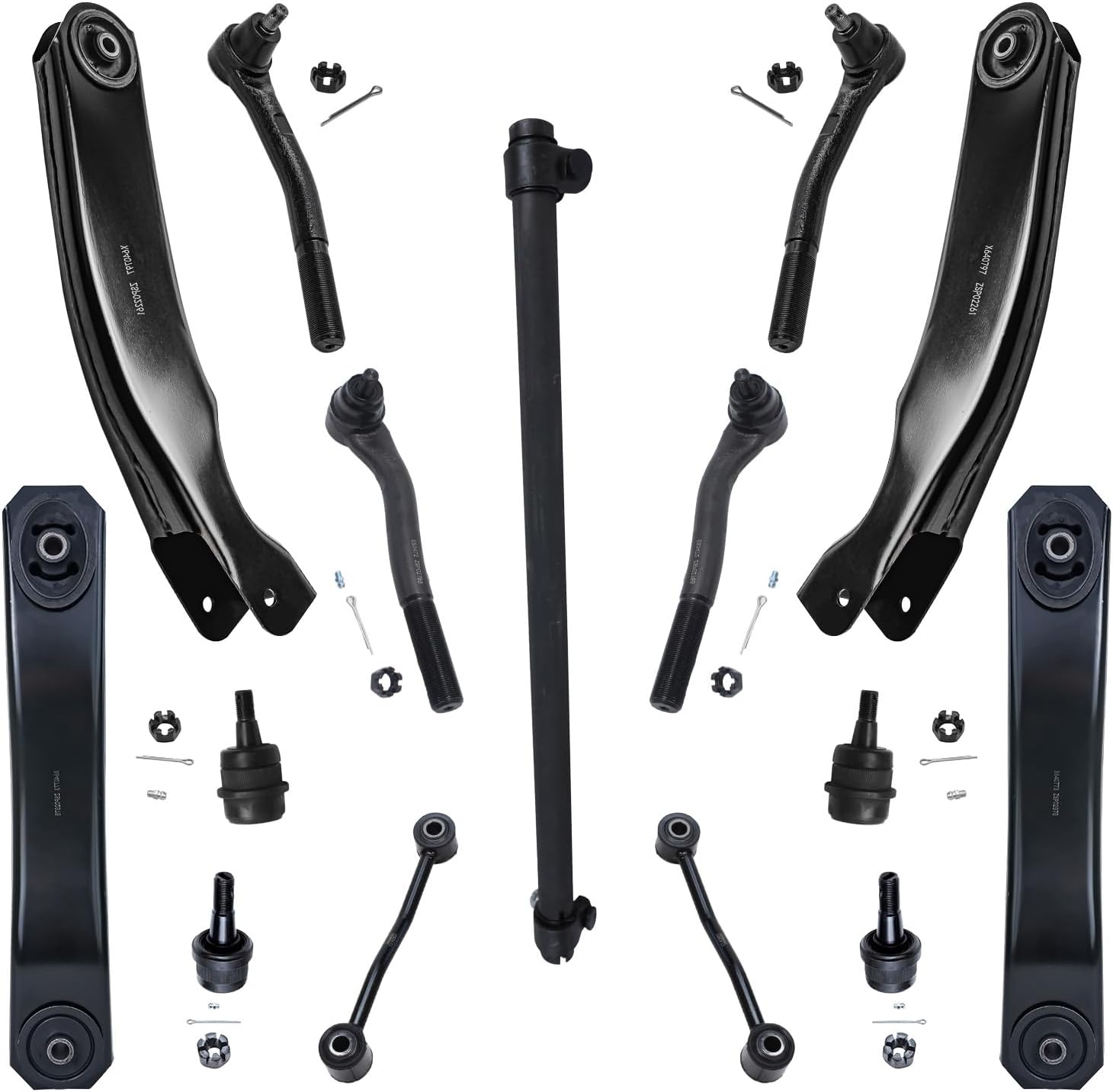
Detroit Axle Front End 15‑Piece Suspension Kit for 1999–2004 Jeep Grand Cherokee
| Fitment | 1999–2004 Jeep Grand Cherokee |
|---|---|
| Kit contents | Upper & lower control arms, upper & lower ball joints, sway bar end links, 4 outer tie rod ends, adjusting sleeve |
| Manufacturer part number | 80301-15 |
| Item weight | 42.5 pounds |
This Detroit Axle 15-piece front end suspension kit supplies the major steering and front suspension parts needed to rebuild the front end on a 1999–2004 Jeep Grand Cherokee. The kit includes upper and lower control arms, upper and lower ball joints, sway bar end links, four outer tie rod ends and an adjusting sleeve so you can refresh steering geometry and restore worn components in one purchase. Fit is intended as a direct replacement for the specified model years and many buyers report straightforward installation and a noticeable improvement in ride and steering feel. Parts are described as premium alloy with corrosion resistance and reinforced structure for repeated impact loads. However, quality control appears mixed in customer reports: most installs go smoothly but there are isolated complaints of incorrect or damaged hardware and tolerance issues that can require extra inspection or replacement of some fasteners during assembly. For buyers who prioritize complete front-end refreshes and are comfortable checking hardware at install, this kit is a convenient, value-oriented option.
Best for: Buyers who want a one-purchase front-end rebuild for a 1999–2004 Grand Cherokee and who will inspect and torque hardware during installation to ensure safe assembly.
Less Ideal for: Drivers who prefer factory-brand parts or who want plug-and-play certainty without the possibility of replacing or re‑sourcing any damaged fasteners.
- Comprehensive kit that includes control arms, ball joints, sway bar links and all outer tie rod ends for a full front-end refresh.
- Designed as direct-fit replacements for 1999–2004 Jeep Grand Cherokee to simplify installation and alignment work.
- Premium alloy construction and reinforced structure aimed at corrosion resistance and durability.
- Includes tie rod adjusting sleeve so steering linkage can be correctly set without sourcing extra parts.
- Some customers report parts with poor tolerances or missing/damaged hardware requiring replacement or modification.
- Occasional reports of fasteners breaking during installation, indicating variable hardware quality.
Verdict: If you need a complete front-end steering and suspension refresh for a 1999–2004 Jeep Grand Cherokee, this kit bundles the essential parts for a convenient, value-focused rebuild.
Choosing the Right 1999-2004 Jeep Grand Cherokee Tie Rod End: Key Factors to Consider
Fitment and Thread/Stud Specification
Correct fitment is the single most important factor for a 1999-2004 Jeep Grand Cherokee tie rod end. The WJ chassis uses specific thread sizes, stud taper angles, and overall lengths that determine whether a part installs cleanly without modifications. Using a direct-fit component ensures the steering linkage geometry remains unchanged and reduces the chance of binding or rapid wear.
When a replacement matches the factory thread pitch and stud taper, installation is straightforward and the steering system retains proper centering. Mismatched threads or incorrect stud tapers can cause improper seating at the knuckle and unsafe steering behavior. Confirming exact fitment also helps preserve factory alignment settings and reduces the amount of toe adjustment needed after installation.
Ball Joint Design and Sealing
The ball joint inside the tie rod end transfers steering input while allowing suspension movement. For the WJ Grand Cherokee, a robust ball joint with a tight tolerance fit improves steering feel and reduces slop. Equally important is the sealing method: boots or seals that resist tearing keep contaminants out and grease in, which dramatically extends service life.
Poorly sealed joints let water and grit enter, accelerating wear and increasing the chance of looseness or noise. Look for boots made of durable elastomer, secure clamps or molded lips that resist displacement, and designs that permit periodic greasing when applicable. A better-sealed joint lowers maintenance frequency and keeps steering crisp longer.
Material, Coating, and Corrosion Resistance
Exposure to road salt, water, and debris makes corrosion resistance a key buying consideration for older Jeep Grand Cherokees. Strong steel alloys combined with effective surface coatings resist pitting and threads galling, which preserves both the structural integrity and the ability to adjust the tie rod during alignment.
Galvanized or plated finishes, plus protective coatings on threads and bodies, reduce the likelihood of seized components during service. Durable finishes also help retain attractive appearance and make future removal easier. For WJ owners who drive in harsh climates, prioritizing corrosion-resistant materials increases the usable life of the replacement part.
Length, Adjustment Range, and Alignment Impact
Tie rod ends affect toe settings directly, so the overall length and available adjustment range matter when restoring alignment after replacement. A correct-length part allows you to realign the front wheels without exceeding the adjustment range on the inner tie rods or the steering rack.
If a replacement shortens or lengthens the tie rod assembly beyond adjustment limits, you may struggle to achieve correct toe, which can cause uneven tire wear and handling issues. Choose components that match factory dimensions or provide clearly documented adjustment ranges compatible with the WJ so alignment shops or DIYers can return the vehicle to spec without additional parts.
Greaseability and Serviceability
Some tie rod ends include grease fittings that allow periodic lubrication, while others are sealed-for-life. For a 1999-2004 Grand Cherokee, the ability to add grease can be an advantage because it lets you extend joint life with routine maintenance, especially if you drive on dusty or salted roads.
Greaseable designs should have a durable zerk fitting located where a grease gun can access it without disassembly. Sealed designs eliminate maintenance but rely entirely on the factory grease charge and boot durability. Consider your maintenance habits and driving environment when choosing between greaseable and sealed options.
Hardware Quality and Included Accessories
Replacement tie rod ends often ship with nuts, cotter pins, and sometimes washers. For a safe and reliable installation on the WJ, accept only hardware that meets or exceeds factory specifications. Castellated nuts and proper cotter pins help secure the joint under vibration and heavy load.
Quality hardware reduces the chance of fastener failure and simplifies installation. If a supplier omits critical components or provides lower-grade fasteners, budget additional parts or choose a kit that includes correct-grade nuts, washers, and pins to match factory practice.
When To Replace Tie Rod Ends on a WJ Grand Cherokee
Tie rod ends show wear gradually at first, then more noticeably as the ball-and-socket develops play. For a 1999-2004 Jeep Grand Cherokee, common triggers for replacement include vibrating or wandering steering, uneven tire wear, and a clunking noise when turning. Regular inspections during suspension service will reveal looseness before failure.
A physical check involves grabbing the wheel at 3 and 9 o'clock and rocking it to feel for play in the steering linkage. Mechanics also test the tie rod by lifting the corner and checking for vertical or lateral movement at the joint. Replacing worn tie rod ends proactively prevents sudden steering degradation and maintains safe handling.
- Look for visible boot damage, grease leakage, or rust at the joint
- Listen for clunks or knocking during steering input at low speeds
- Monitor tire wear patterns for accelerated inner or outer edge wear
- Perform a hands-on check for play with the vehicle lifted and wheels off the ground
Preparing for a Tie Rod End Replacement
Preparation makes the job smoother and reduces downtime. For the WJ Grand Cherokee, gather the correct replacement parts that match thread pitch and stud taper, plus replacement castellated nuts and cotter pins if not included. A torque wrench, tie rod separator or pickle fork, and wheel alignment tools are essential for a proper job.
Before removal, mark the current tie rod length or count turns while unthreading so you can approximate toe settings when reinstalling. If you plan to drive the vehicle after the repair, schedule a professional alignment immediately because toe will likely be off after replacement.
- Confirm part fitment for 1999-2004 Jeep Grand Cherokee (WJ) before ordering
- Have replacement hardware and alignment specs available
- Use an assistant or stands to safely support the vehicle during work
Common Installation Pitfalls and How To Avoid Them
Incorrect seating of the stud in the steering knuckle is a frequent mistake. Ensure the taper seats fully and torque the nut to factory specification, then secure with a cotter pin where applicable. Under-torquing can allow movement; over-torquing can damage threads or crush the taper.
Another common issue is failing to restore original toe settings. Use the pre-measured length or turn-count as a baseline, but always finish with a proper wheel alignment. Finally, do not reuse damaged hardware; replacing old nuts and pins avoids failures from fatigued fasteners.
- Torque fasteners to specification and always use new cotter pins
- Check stud seating visually and by feel before final torque
- Avoid hammering the joint excessively which can damage threads or ball seats
How Tie Rod End Choice Affects Alignment and Tire Wear
Tie rod ends set the steering axis lateral position and directly influence toe. A part that restores factory length and allows fine adjustment helps maintain correct toe settings. If the replacement part reduces the available adjustment range, you may end up with persistent toe misalignment and accelerated tire wear.
Consider that even a correctly installed tie rod end can mask existing alignment issues. After replacement, a full toe and thrust angle check ensures tires track straight and wear evenly, protecting both handling and tire life.
- Match part length to preserve adjustment range
- Always perform a four-wheel alignment after replacement
- Document pre-replacement toe to simplify re-alignment
DIY Versus Professional Replacement: Which To Choose
Many mechanically inclined WJ owners can replace outer tie rod ends with basic tools, a torque wrench, and alignment follow-up. DIY is cost-effective if you have the tools and a safe workspace. Factor in the need for a proper alignment, which often requires shop equipment.
Professional replacement is sensible if you lack tools, experience, or a reliable alignment partner. Shops will also spot related wear items during service, such as inner tie rod play or steering rack issues, which can save time and avoid rework.
- DIY if comfortable with suspension work and you can get a post-repair alignment
- Choose a shop if you need fault diagnosis or lack alignment access
- Ask for torque specs and checklists to verify proper installation
Environmental and Usage Considerations for WJ Owners
Driving conditions play a major role in tie rod life. WJ Grand Cherokees used in snowy, salted roads or off-road will face accelerated wear from moisture, salt, and abrasive debris. Picking parts with superior sealing and corrosion protection pays off in these environments.
If you frequently tow or carry heavy loads, steering components endure higher loads; choose a part rated for higher duty if available, and inspect more frequently. Regular underbody cleaning during winter months reduces salt buildup and prolongs component life.
- Prioritize sealed or corrosion-resistant parts in corrosive climates
- Increase inspection frequency for heavy-use or off-road vehicles
- Clean undercarriage periodically to remove salt and grime
Still looking for the perfect fit?
Select your Jeep Grand Cherokee configuration to see the most relevant Tie Rod Ends recommendations
How We Chose the Best 1999-2004 Jeep Grand Cherokee Tie Rod End
We prioritized tie rod ends that deliver reliable fit and proven durability specific to the 1999-2004 Jeep Grand Cherokee WJ chassis. Selection centered on concrete, vehicle-relevant criteria: correct ball-stud taper and thread specification for direct fitment; robust joint sealing and dust protection to resist road grime and corrosion common in older SUVs; material and coating quality to limit corrosion and extend service life; and compatibility with typical power steering and unibody mounting used on this generation. We also considered ease of installation, including available grease fittings and factory-style castellated nuts, because many owners will replace these parts themselves.Excluded items included universal or generic tie rod ends that require extensive modification, parts lacking clear fitment data for the WJ, and components with insufficient protection against road contamination. Final picks reflect a balance of mechanical durability, correct fit for the Grand Cherokee, and features that simplify installation and alignment checks. We emphasized parts that minimize the need for supplemental adapters or machining and that support returning the vehicle to proper steering geometry quickly.
Our full evaluation process is outlined in our review methodology.
FAQ
What are the common symptoms of a bad tie rod end on a WJ Grand Cherokee?
Common symptoms often include vague or loose steering, vibration at speed, uneven tire wear, and clunking noises when turning. A physical check for play in the joint usually confirms wear.
Can I replace just the outer tie rod end myself on a 1999-2004 Grand Cherokee?
Many owners can replace the outer tie rod end with basic tools and a torque wrench. However, you should have the vehicle aligned afterward because toe settings change with replacement.
How long do tie rod ends typically last on a Jeep Grand Cherokee WJ?
Lifespan depends on driving conditions and sealing quality; tie rod ends often last several years under normal driving but can wear faster in salty or off-road conditions. Regular inspections will detect progressive wear before failure.
Will replacing tie rod ends fix steering pull or wandering?
Replacing worn tie rod ends often corrects steering looseness and wandering if those symptoms are caused by joint play. If steering pull persists, additional diagnosis for alignment, tire condition, or other steering components may be required.
Do replacement tie rod ends require greasing after installation?
Some replacement parts are greaseable and benefit from periodic lubrication, while sealed units do not. Greaseable joints can be serviced to extend life, but sealed types eliminate maintenance needs.
How soon should I get an alignment after replacing tie rod ends?
You should get a professional alignment immediately after replacing tie rod ends, or at minimum before driving extensively. Even small toe deviations cause rapid tire wear and unstable handling over time.
Final Verdict
When replacing tie rod ends on a 1999-2004 Jeep Grand Cherokee (WJ), prioritize correct fitment, durable joint seals, and corrosion-resistant materials. Those factors most directly affect steering precision, alignment range, and long-term reliability.Balance ease of installation and serviceability against sealed durability depending on your maintenance habits and driving conditions. After installation, always verify toe and alignment to protect tires and restore handling confidence.
Explore More:
- Check out all Jeep Grand Cherokee parts & accessories
- Explore Tie Rod Ends Maintenance & Repair Guides
- Explore Suspension & Steering
- Browse all Auto Parts
