

Note: This article contains affiliate links. If you click on these links and make a purchase, I may earn a small commission at no extra cost to you. This helps support my research and content. Read my full affiliate disclosure here.
If you own a Honda Civic EK and want clearer steering response, reduced body roll, or a lower stance, the right suspension kit makes a noticeable difference. This guide looks at the top shortlisted suspension kits chosen for the EK chassis, focusing on how each option affects ride quality, alignment range, and long-term durability for everyday and spirited driving.You will find a practical summary of the best-fit suspension kits for the Civic EK, plus the evaluation criteria we used to narrow the list and guidance on common install and setup considerations. Use the sections below to decide which suspension direction—comfort, sport, or track-oriented—matches your goals.
Looking for other parts? See all Honda Civic parts & accessories.
Top Picks at a Glance
| Best Overall The best all-around choice for most situations | MOSTPLUS Full Lowering Coilover Kit for 1996–2000 Honda Civic |  |
| Best Quality Built to a higher standard if you want something more solid | K-Tuned K1 Street Adjustable Coilovers for 1992–2000 Honda Civic/Integra (EG/DC/EK) |  |
| Best Value The sweet spot between price and what you get | POSENG Rear Lower Control Arm, Subframe Brace & Tie Bar Kit for Honda Civic EK (1996–2000) |  |
| Best Budget The cheapest option that still gets the job done reliably | SCITOO 10-piece Front Suspension Kit for 1996–2000 Honda Civic |  |
| Highest Rated A top-rated pick with lots of positive feedback | KUIPERAUTO Rear Lower Control Arm Suspension Kit with Subframe Brace for 1996–2000 Honda Civic EK |  |
| Most Popular A crowd favorite that many people choose with confidence | Detroit Axle Front 12pc Suspension Kit for 1996–2000 Honda Civic |  |
| Best Seller A high-volume bestseller chosen again and again | TRQ Front Steering and Suspension 12-Piece Kit for Honda Civic |  |
1. MOSTPLUS Full Lowering Coilover Kit for 1996–2000 Honda Civic

| Compatible models | Honda Civic 1996–2000 EK; Del Sol 1993–1997; Acura Integra (requires spacer) |
|---|---|
| Spring rate (front) | 8 kg/mm |
| Spring rate (rear) | 6 kg/mm |
| Adjustable height | Yes |
| Top mount | Pillowball with 45° camber adjustment |
This MOSTPLUS coilover kit is a full set of front and rear lowering struts and springs designed specifically for 1996–2000 Honda Civic EK chassis. It lowers the car about 5–10 cm and uses 8 kg/mm front and 6 kg/mm rear springs with twin-tube dampers and dust covers to protect the shock rods. The kit includes pillowball top mounts with 45° camber adjustability and height and tension adjustment for corner balancing and alignment tuning. Installation hardware and simple spanner wrenches are supplied, though professional installation is recommended. In practice the setup will firm up body control and steering response compared with stock suspension and gives a more aggressive stance, while the twin-tube design aims to retain a reasonable daily ride. Notable limitations are that damping is non-adjustable so you cannot tune rebound or compression independently, and the lowered ride height may reduce ground clearance and change ride comfort on rough roads. Fitment is vehicle-specific so confirm compatibility with EK Civic variants before ordering.
Best for: Buyers who want a balanced Civic suspension upgrade that lowers the car, tightens handling, and allows camber and height adjustment without needing fully track-focused adjustable dampers.
Less Ideal for: Drivers seeking a fully tunable, track-optimized coilover with adjustable compression/rebound or those who need to maintain stock ride height and maximum ground clearance.
- Vehicle-specific fit for 1996–2000 Civic EK chassis for simpler installation and alignment
- Adjustable ride height and camber top mounts let you dial stance and alignment for handling or appearance
- Pillowball tops and stiffer spring rates improve steering response and reduce body roll
- Twin-tube dampers with dust covers protect the piston rod and aim to preserve comfort for daily driving
- Damping is non-adjustable so you cannot fine-tune rebound or compression to personal preference
Verdict: A practical, vehicle-specific lowering coilover that tightens handling and offers height and camber adjustment for Civic EK owners who want a balanced street upgrade.
2. K-Tuned K1 Street Adjustable Coilovers for 1992–2000 Honda Civic/Integra (EG/DC/EK)

| Compatible chassis | EG/DC/EK (1992–2000 Honda Civic/Integra) |
|---|---|
| Damping adjustment | 12-way |
| Material Type | Steel |
| Fit Type | Vehicle Specific Fit |
The K-Tuned K1 Street coilovers replace the factory suspension with a full adjustable kit tuned for EG/DC/EK Honda Civic and Integra chassis from 1992–2000. Intended for daily-driven cars that still see spirited road use, the kit provides 12-way damping so you can tailor rebound and compression to prioritize comfort or sharper handling. Adjustable aluminum perches let you set preload and ride height while matched spring rates aim to improve cornering and responsiveness. Construction uses heat-treated steel pistons and high-tensile springs with powder coating, electroplating, and anodizing to resist corrosion. In real-world use this translates to a lower, firmer stance with clearer turn-in and reduced body roll compared with stock suspension, while retaining enough compliance for street driving. Installation is a hands-on job and the kit is vehicle-specific, so alignment and setup matter to get the promised handling gains. Buyers seeking track-only performance or extreme competition setups may want purpose-built coilovers, but this kit suits owners wanting a tunable, durable upgrade for everyday performance driving.
Best for: Drivers who want a street-oriented performance upgrade that improves handling and allows detailed damping and height tuning while keeping the car usable for daily driving.
Less Ideal for: Drivers seeking a dedicated track-only or competition suspension who need extreme adjustability and race-specific valving should consider more race-focused coilovers.
- 12-way damping adjustment for fine control over ride firmness and responsiveness
- Adjustable aluminum perches allow ride height and preload tuning
- Durable components including heat-treated steel pistons and high-tensile springs for longevity
- Corrosion-resistant finishes (powder coat, electroplate, anodize) preserve appearance and durability
- Vehicle-specific fit means this kit only fits the listed EG/DC/EK 1992–2000 chassis and cannot be used on other models
Verdict: Choose the K-Tuned K1 Street coilovers if you want a durable, tunable suspension that tightens handling and lowers stance on 1992–2000 Civic/Integra chassis while remaining street-friendly.
3. POSENG Rear Lower Control Arm, Subframe Brace & Tie Bar Kit for Honda Civic EK (1996–2000)

| Fit Type | Vehicle Specific Fit |
|---|---|
| Auto Part Position | Lower |
| Auto Part Orientation | Rear |
| Material Type | Aluminum |
This POSENG kit combines two rear lower control arms with a subframe brace and tie bar to strengthen the Civic EK rear underbody and address common camber and flex issues. It is made from T6061 aluminum with anodized surfaces and includes stainless and zinc-plated hardware. Typical use is as a direct factory-style replacement and a budget performance upgrade for street or light track use; installation is intended for someone familiar with suspension work since instructions are not included. In practice the kit firms the rear end, improves steering stability, and can reduce unwanted flex during cornering. Fitment reports are mostly positive for EK hatchback and coupe variants, but some buyers noted missing brackets, mismatched bolt threads, or shorter hardware which may require buying replacement bolts or rethreading. The kit is lightweight and corrosion resistant, though buyers wanting precision-machined, race-grade components or guaranteed bolt compatibility may prefer higher-end aftermarket arms and hardware.
Best for: Buyers who want an affordable, factory-style rear reinforcement that firms handling and corrects rear camber without chasing an expensive race setup; suitable for DIYers comfortable sourcing or swapping hardware.
Less Ideal for: Owners seeking a precision, motorsport-grade arm set with guaranteed bolt fitment or a plug-and-play kit with detailed instructions should consider higher-end branded suspension components or dealer-sourced replacements.
- Vehicle-specific fit for 1996–2000 Honda Civic EK models makes swap straightforward for compatible cars.
- T6061 aluminum construction with anodizing offers good strength-to-weight and corrosion resistance.
- Includes multiple components (arms, subframe brace, tie bar) for a comprehensive rear reinforcement in one kit.
- Lightweight design helps avoid adding much unsprung mass compared with steel replacements.
- Some customers received missing brackets or hardware requiring additional parts.
- Several reports of bolt thread pitch or length not matching factory fasteners, possibly necessitating rethreading or new bolts.
- No installation instructions included, so installation requires mechanical experience or aftermarket guidance.
Verdict: A cost-effective, vehicle-specific kit that noticeably stiffens the EK rear end and improves handling for practical street and occasional track use.
4. SCITOO 10-piece Front Suspension Kit for 1996–2000 Honda Civic

| Fitment | 1996-2000 Honda Civic |
|---|---|
| Pieces included | 10 suspension parts |
| Position | Front |
| Fit Type | Vehicle Specific Fit |
This SCITOO front suspension kit bundles the main wear items you would replace when refreshing the front end on a 1996–2000 Honda Civic. The set includes upper control arms with ball joints, lower ball joints, inner and outer tie rod ends, and sway bar end links so you can address steering play, uneven tire wear, and sloppy handling in one job. In practice this kit is used during a front-end overhaul or when multiple suspension parts show wear; installing the whole kit saves time compared with sourcing parts separately and helps restore more precise steering and steadier cornering. The components look like standard replacement parts and are intended for a vehicle-specific fit to the Civic EK chassis. Expect to need a wheel alignment after installation and basic mechanical skills or a shop for safe assembly. The kit covers common failure points but does not include bushings, struts, or other suspension pieces you might also need for a full rebuild.
Best for: Buyers wanting an affordable, single-purchase solution to replace the common worn front suspension parts on a 1996–2000 Civic and who prefer restoring handling with one coordinated kit.
Less Ideal for: Owners pursuing a full suspension rebuild that requires struts, shocks, bushings, or upgraded performance components should look for more complete or premium options.
- Comprehensive 10-piece set replaces multiple front-end wear items at once
- Vehicle-specific fit for 1996–2000 Honda Civic reduces fitment guesswork
- Includes both upper control arms with ball joints and tie rod ends to restore steering feel
- Saves time compared with buying individual parts separately
- Does not include struts, control arm bushings, or other components needed for a complete front suspension overhaul
Verdict: A practical, budget-friendly way to replace the main front suspension wear items on a 1996–2000 Honda Civic in one kit.
5. KUIPERAUTO Rear Lower Control Arm Suspension Kit with Subframe Brace for 1996–2000 Honda Civic EK

| Fit Type | Vehicle Specific Fit |
|---|---|
| Auto Part Position | Rear Lower |
| Material Type | Aluminum |
| Manufacturer Part Number | K104GI512 |
This KUIPERAUTO kit replaces the rear lower control arms and adds a subframe brace and tie bar to stiffen the rear suspension on 1996–2000 Honda Civic EK models. Typical installation swaps the factory rear lower arms and bolts in the included brace and tie bar to reduce body roll and improve rear-end responsiveness. The parts are machined from T6061 aluminum with rubber bushings, so buyers can expect lighter, corrosion-resistant components and reduced suspension deflection compared with worn stock arms. Practical benefits include a firmer, more predictable feel over corners, improved road grip, and an aftermarket aesthetic in a colored finish. Fitment is vehicle specific but a few customers reported length or fit issues on certain model years and the kit may arrive without step-by-step instructions, so minor measurement checks and basic mechanical experience are recommended before installation. Some users also noted squeaks until bushings settle. For a reliability-focused Civic EK owner this kit offers a durable upgrade path when installed and inspected carefully.
Best for: Owners seeking a factory-replacement-quality rear suspension upgrade for a Civic EK who prioritize improved handling and long-term durability and are comfortable verifying fitment before installation.
Less Ideal for: Buyers who need a plug-and-play, guaranteed fit without any pre-install measurement or those who prefer a fully assembled, instruction-led kit for novice installers.
- Vehicle-specific fit for 1996–2000 Honda Civic EK series
- T6061 aluminum construction offers corrosion resistance and reduced weight versus steel
- Includes subframe brace and tie bar to stiffen the rear suspension and improve handling
- Supplied rubber bushings for quieter operation and vibration isolation
- Some buyers reported fitment and length mismatch on certain model years
- No printed installation instructions included, which may challenge first-time installers
- Occasional squeaking reported until bushings break in
Verdict: A durable, vehicle-specific rear control arm kit that stiffens the rear end and improves handling for Civic EK owners who prioritize reliability and performance when they verify correct fitment.
6. Detroit Axle Front 12pc Suspension Kit for 1996–2000 Honda Civic

| Fitment | 1996-2000 Honda Civic (selected trims) |
|---|---|
| Kit contents | Upper control arms w/ ball joints, lower ball joints, inner & outer tie rod ends, sway bar links, tie rod boots |
| Position | Front |
| Material Type | Metal |
This Detroit Axle 12-piece front suspension kit supplies the common wear items needed when refreshing the front end on an EK‑generation Honda Civic. The kit groups two upper control arms with integrated ball joints, two lower ball joints, inner and outer tie rod ends, two sway bar links, and tie rod boots so you get a broad front-end refresh in one purchase. Parts are described as premium alloy with reinforced structure and corrosion resistance, and the control arms are designed for direct-fit installation so alignment and reassembly are straightforward for a DIYer or a shop. In practice this kit simplifies repairs after years of road wear and restores tighter steering feel and more predictable handling. Limitations are that it is a bundled aftermarket replacement rather than an uprated performance set, so drivers seeking sportier geometry or adjustable components will need a dedicated performance kit. Also the bundle approach means if you only need a single part you will be buying extra components you may not use.
Best for: Buyers who want a one-stop, factory-style refresh for the front suspension on an EK Civic and prefer proven parts with many customer reviews and straightforward installation.
Less Ideal for: Drivers seeking track-focused upgrades, adjustable geometry, or who only need a single replacement part rather than a full kit.
- Comprehensive kit covers most front suspension wear items so multiple parts are replaced at once.
- Designed as vehicle-specific direct-fit parts to simplify installation and reduce fitment issues.
- Control arms use premium alloy construction with corrosion resistance for longer service life.
- Includes tie rod boots and clamps to protect steering joints after installation.
- Not designed as a performance or adjustable suspension kit for handling upgrades.
Verdict: A convenient, vehicle-specific front suspension bundle that refreshes worn EK Civic steering and suspension parts with factory-style replacements.
7. TRQ Front Steering and Suspension 12-Piece Kit for Honda Civic
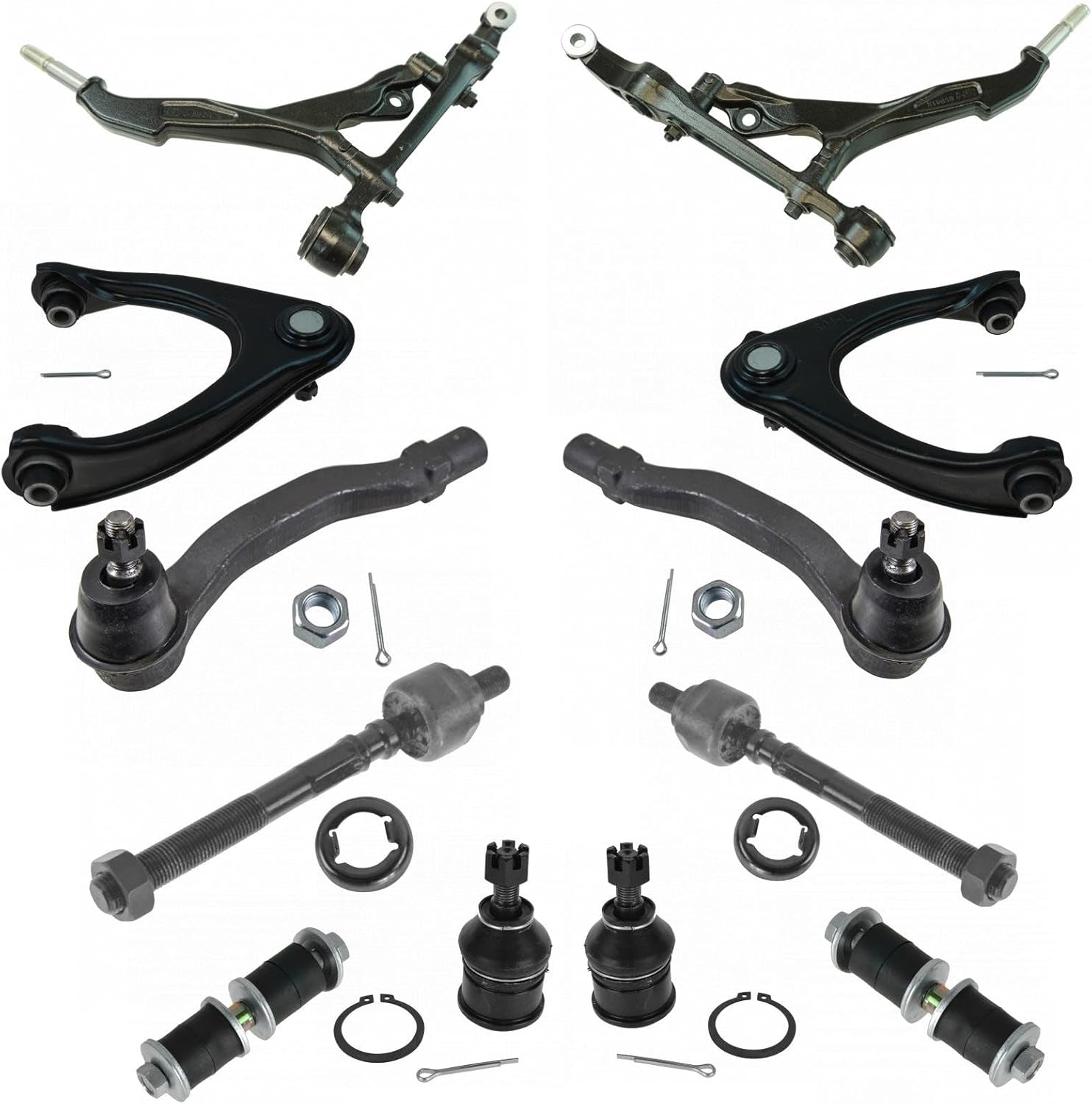
| Included Components | 12 Piece Steering & Suspension Kit |
|---|---|
| Fit Type | Vehicle Specific Fit |
| Auto Part Position | Front |
| Material Type | Cast Iron |
This TRQ front steering and suspension kit bundles the common wear items you would replace during a front-end overhaul: inner and outer tie rods, lower and upper control arms with ball joints, lower ball joints, and sway bar links. It is supplied as a matched 12-piece set so you can refresh steering and suspension geometry in one job, and TRQ pre-greases components and applies an anti-corrosion coating to extend surface life. In practice the kit simplifies DIY or shop installs by providing direct-fit, pre-assembled pieces that reduce modification and alignment guesswork. Buyers report improved steering feel and handling after installation. Limitations to note are mixed feedback on long-term durability under heavy impacts and occasional missing fasteners for some ball joints, which could require sourcing bolts during installation. Confirm fitment for your specific EK Civic before buying and plan for a professional alignment after replacing these components.
Best for: A buyer who wants a straightforward, factory-replacement style front-end refresh for an EK Civic and values ease of installation and matched parts over heavy-duty reinforcement.
Less Ideal for: Drivers who regularly subject their Civic to aggressive off-road use, track abuse, or frequent curb impacts should consider stronger, reinforced suspension components instead.
- Complete 12-piece kit covers most front steering and suspension wear parts so you can do one coordinated repair
- Pre-greased components reduce initial maintenance and make installation smoother
- Anti-corrosion coating helps parts resist surface rust for longer service life
- Vehicle-specific direct-fit design aims to fit without modifications
- Some buyers reported missing mounting bolts for certain ball joints requiring additional hardware purchases
- A few reviews indicate lower control arms may bend under severe impact compared with heavier-duty aftermarket replacements
Verdict: Buy this kit if you want a matched, direct-fit front-end refresh for a Honda Civic EK that simplifies installation and restores steering feel.
Choosing the Right Honda Civic EK Suspension Kit: Key Factors to Consider
Fitment and Chassis Compatibility
Precise fitment to the Civic EK is the foundation of any successful suspension upgrade. The EK has specific mounting points, strut towers, and knuckle geometries that influence whether a kit will bolt in without modification. A correctly specified kit maintains proper suspension travel, steering geometry, and clearance for brake components.
Poorly matched fitment can cause rubbing, unpredictable steering behavior, or premature wear of bushings and joints. When evaluating kits, confirm they list EK compatibility and include the correct top mounts, camber plates, or hardware for your model year. Pay attention to whether the kit accommodates original subframe positions and stabilizer bar links to avoid unintended handling changes.
Ride Height and Adjustment Range
Decide how much ride height change you want before choosing a kit. Lowering brings a lower center of gravity and improved steering response but reduces suspension travel and can increase the risk of bottoming on poor roads. Some kits offer modest lowering for improved looks and handling while preserving daily comfort; others provide wide adjustment ranges for track use.
Look for kits with clearly stated height ranges and incremental adjustments so you can dial in stance and corner balance. If you plan to stay street-driven, prioritize a kit that offers moderate lowering with enough travel to avoid frequent contact with speed bumps and driveway lips.
Damping Quality and Adjustability
Damping controls how the car reacts to bumps, weight transfer, and cornering forces. A kit with well-tuned damping will reduce body roll, control pitch under braking, and keep the tires in contact with the road. Adjustable damping lets you tune firmness for comfort or sharper handling depending on driving conditions.
When a kit provides multiple damping settings, testability and documented damping increments become important. Rebuildable or serviceable dampers add long-term value, since worn valves or seals can be refreshed without replacing the complete assembly.
Spring Rates and Durability
Spring rate determines how stiffly the suspension resists compression. Higher rates reduce body motions and improve turn-in but can transmit more road harshness into the cabin. For the Civic EK, choose spring rates that match wheel and tire sizes plus intended load. Heavier wheels or frequent passenger/cargo loads may require stiffer springs to avoid excessive squat or roll.
Material finish and treatment affect longevity. Powder-coated or shot-peened springs resist corrosion and sag better over time. Check whether the kit includes matched spring/damper tuning rather than generic springs paired with untuned dampers.
Alignment Range and Cornering Geometry
A useful kit gives enough alignment adjustability to correct camber and toe after lowering. The Civic EK's front and rear geometry changes with lowered ride height, which can increase negative camber or toe-out if left uncorrected. Look for included camber plates, adjustable top mounts, or rear camber adjustment solutions that let you dial in neutral steering and even tire wear.
Without sufficient alignment range, you may need additional aftermarket alignment components. Make sure the kit either provides the necessary hardware or that you budget for alignment arms, shims, or control links to regain optimal geometry.
Installation Complexity and Support
Consider how much mechanical work you or your installer will face. Some kits are direct bolt-in with clear instructions and all necessary hardware, while others require strut disassembly, spring compression, or subframe drops. The complexity affects labor time and the tools required.
Availability of customer support, clear instructions, and replacement parts will matter if you plan to keep the car long term. Kits with rebuildable components or documented torque specs make future maintenance and rebuilds easier, reducing the total cost of ownership.
Street Comfort Versus Track Focused Setup
Owners must decide whether they want a daily-friendly setup or a track-capable package. Street-oriented kits emphasize progressive spring rates and moderate damping to filter road imperfections while still reducing body roll. Track-focused kits use firmer springs and more assertive damping to prioritize lap times and cornering precision.
Think about how often you drive rough roads, commute, or carry passengers. A compromise setup is possible: adjustable damping lets you soften the car for daily use and then firm it up for occasional track days.
- Street setups improve comfort and retain better ride quality.
- Track setups reduce body roll and improve turn-in at the cost of ride harshness.
- Adjustable damping is a versatile middle ground.
Brakes, Wheels, and Tire Considerations
Changing suspension affects wheel fitment and braking performance. Lower ride height can change wheel well clearance and may require different offsets to avoid rubbing. Confirm that your wheel and tire choices still clear suspension components and brake calipers after any height changes.
Heavier wheels or wider tires increase unsprung mass, which can demand different spring rates or damping to maintain responsive handling. Coordinate suspension choices with your intended wheel and tire setup to preserve balance.
- Verify wheel clearance after lowering.
- Match spring rates to wheel and tire mass.
- Ensure brake caliper and rotor clearance with new suspension geometry.
Corrosion Resistance and Long-Term Maintenance
The Civic EK is often used in regions with wet seasons or road salt. Corrosion-resistant finishes on springs, dampers, and mounting hardware extend service life and reduce the chance of seized components during maintenance. Choose kits with protective coatings and stainless or plated fasteners where possible.
Plan for periodic inspections of mounts, bushings, and seals. Rebuildable struts allow you to refresh damping internals without replacing the entire assembly, which can be cost-effective over many years.
- Look for powder coating, zinc plating, or corrosion-resistant materials.
- Inspect mounts and seals annually in corrosive climates.
- Consider rebuildable dampers to reduce long-term replacement needs.
Impact on Alignment and Tire Wear
Lowering changes the suspension geometry and can accelerate uneven tire wear if not aligned correctly. After installation, a full alignment with cornering balance checks will help ensure even contact patches and predictable steering feel. Pay attention to camber and toe settings, and recheck after a short break-in period.
Some owners accept slightly negative camber for improved cornering grip, but too much can lead to inner-edge tire wear on the Civic EK. Use alignment adjustments to find a balance between handling and tire longevity.
- Always perform a full alignment after installation.
- Recheck alignment after the first few hundred miles.
- Avoid excessive negative camber unless you accept higher inner-edge wear.
Tools, Garage Space, and Installation Tips
Installing a suspension kit requires basic mechanical skills and several specialty tools, including a spring compressor, torque wrench, and jack stands. If you lack those tools, professional installation is recommended to avoid safety risks during spring or strut work.
Prepare your workspace with adequate lighting and safe jacking points. Label and store bolts and small parts in order so reassembly is straightforward. When working on the Civic EK, take care with the strut tower area and any ABS or brake lines near the mounts to prevent damage.
- Use a rated spring compressor and follow torque specifications.
- Keep replacement hardware and clear instructions on hand.
- Have an alignment scheduled immediately after reassembly.
Still looking for the perfect fit?
Select your Honda Civic configuration to see the most relevant Suspension Kits recommendations
How We Chose the Best Honda Civic EK Suspension Kit
We prioritized suspension kits that specifically fit the Honda Civic EK chassis and that address the most common owner goals: improved handling, consistent ride quality, reliable fitment, and long service life. Our selection criteria emphasized technical fitment accuracy for EK mounting points, available adjustment range for camber and ride height, and component quality such as treated springs, sealed dampers, and corrosion-resistant hardware. Ride characteristics were considered through manufacturer damping specifications and intended use cases, from street comfort to aggressive cornering. Ease of installation and access to replacement parts or rebuildable damper designs were also factored in.We excluded options that required extensive chassis modification or that lacked clear EK-specific fitment documentation. Kits intended solely for competition use with extreme ride heights or custom fabrication needs were not considered. Final choices reflect a balance of performance, everyday usability, and realistic installation for owners of the Civic EK.
Our full evaluation process is outlined in our review methodology.
FAQ
How much will lowering my Civic EK affect ride comfort?
Lowering typically increases spring rates and reduces suspension travel, which can make the ride firmer. The degree of comfort change depends on the amount of drop and whether the kit has adjustable damping. Moderate lowers with tuned dampers can retain acceptable comfort for daily driving.
Can I install a suspension kit at home on the Civic EK?
Many DIY-capable owners can install bolt-in kits if they have the right tools, including a proper spring compressor and torque wrench. However, strut work carries safety risks and an alignment is essential afterward. If you lack experience or tools, professional installation is recommended.
Will a suspension kit change my wheel alignment needs?
Yes. Lowering or changing spring rates alters camber and toe characteristics, so a full alignment is required after installation. Some kits include camber plates or adjustable links to help restore proper alignment range without additional parts.
Are adjustable dampers worth the extra cost for street driving?
Adjustable dampers add flexibility by letting you tailor firmness for different conditions. For owners who use the Civic EK for both daily driving and occasional spirited runs or track days, adjustability provides tangible benefits. If you only drive casually, a well-matched non-adjustable kit may suffice.
How often should I inspect suspension components after installing a new kit?
Inspect visible mounts, bushings, and fasteners after the first 100 to 300 miles to ensure nothing has settled or loosened. Thereafter, check components annually or sooner if you frequently drive on rough roads or in corrosive conditions.
Do suspension upgrades affect my vehicle's warranty or inspections?
Local warranty and inspection implications vary. Suspension upgrades that alter ride height or change safety-related components may be subject to regulatory or warranty considerations. Check local regulations and any warranty terms before modifying suspension components.
Final Verdict
When choosing a suspension kit for a Honda Civic EK, prioritize precise EK fitment, a sensible height range, and damping that matches how you drive. Decide whether your priority is daily comfort, a balance of comfort and handling, or track performance, and select spring rates and adjustability that reflect that goal. Budget for a professional alignment and periodic inspections to preserve handling and tire life.Ultimately, the best choice is the kit that aligns fitment, ride characteristics, and long-term serviceability with your intended use. Focus on verified EK compatibility, adjustability, and corrosion resistance to make a confident selection.
Explore More:
- Check out all Honda Civic parts & accessories
- Explore Suspension Kits Maintenance & Repair Guides
- Explore Suspension & Steering
- Browse all Auto Parts
