

Note: This article contains affiliate links. If you click on these links and make a purchase, I may earn a small commission at no extra cost to you. This helps support my research and content. Read my full affiliate disclosure here.
If you drive a Ford Explorer, worn or leaking rear brake calipers can reduce stopping power, create uneven pad wear, and cause brake fluid loss. Choosing the right rear brake calipers matters because the wrong unit can cause squeal, dragging, or premature failure, while the correct one restores consistent pedal feel and safe stopping distances.This guide shortlists seven top rear brake calipers for the Explorer and explains the practical differences that matter to owners. We evaluate fitment accuracy, piston and seal quality, and long-term durability so you can pick the option that best matches your use and maintenance plans.
Looking for other parts? See all Ford Explorer parts & accessories.
Top Picks at a Glance
| Best Overall The best all-around choice for most situations | TadaMark Rear Disc Brake Caliper Assembly with Bracket (Pair) |  |
| Best Quality Built to a higher standard if you want something more solid | TRQ Rear Driver and Passenger Brake Caliper Set |  |
| Best Value The sweet spot between price and what you get | maXpeedingrods Rear Left & Right Disc Brake Caliper Assembly (Pair) |  |
| Best Budget The cheapest option that still gets the job done reliably | FEXON Rear Disc Brake Caliper Assembly (pair) for Ford Explorer |  |
| Highest Rated A top-rated pick with lots of positive feedback | Detroit Axle Rear Brake Calipers with Brackets (pair) |  |
| Most Popular A crowd favorite that many people choose with confidence | Detroit Axle Rear Brake Kit with Calipers, Rotors and Ceramic Pads for 2006–2010 Ford Explorer |  |
| Best Seller A high-volume bestseller chosen again and again | Detroit Axle Rear Right Brake Caliper with Bracket |  |
1. TadaMark Rear Disc Brake Caliper Assembly with Bracket (Pair)

| Position | Rear Left + Rear Right |
|---|---|
| Piston Count | 1 |
| Inlet Port Thread | M10X1-6H |
| Bleeder Port Thread | M10X1 |
| Caliper Material | Cast Iron |
This TadaMark rear caliper pair is a direct-fit replacement designed for 2013–2019 Ford Explorer, Flex, Police Interceptor and related Lincoln vehicles that use the heavy duty brake configuration. Each caliper is cast iron with a zinc-plated finish, includes the mounting bracket, and uses a single piston design with standard M10 bleeder and inlet threads for straightforward hydraulic connections. In practical use the set is intended for full rear-axle replacement and is shipped as left and right units to simplify installation. The manufacturer notes stable brake force and good heat resistance, which should help limit fade during heavier use. Because these are replacement calipers without pads, plan to reuse compatible pads or install new pads and bleed the system when fitting. Expect routine installation steps such as lubricating guide pins and fully bleeding the brakes; a professional install is recommended if you are not comfortable with brake work. Fitment must be verified against your vehicle configuration before purchase.
Best for: Buyers who want a reliable, factory-style rear caliper replacement for a 2013–2019 Explorer or compatible Lincoln/Ford models and prioritize a direct-fit part that restores braking performance without modification.
Less Ideal for: Drivers looking for performance upgrades, multi-vehicle compatibility, or a preassembled unit with pads and hardware included should consider other options.
- Direct-fit design that matches original mounting points and includes mounting brackets
- Cast iron construction with zinc-plated finish for durability and corrosion resistance
- Sold as a left and right pair for full rear-axle replacement
- Standard M10 inlet and bleeder threads simplify hydraulic connections
- Calipers are supplied without brake pads so pads must be purchased or reused separately
Verdict: A straightforward, factory-style rear caliper pair for 2013–2019 Explorers and compatible Lincoln/Ford models when you need a direct replacement that fits without modification.
2. TRQ Rear Driver and Passenger Brake Caliper Set

| Model | TRQ CLA32371 2 Piece Brake Caliper Set |
|---|---|
| Exterior | Machined |
| Zinc Coated | Yes |
| EPDM Seals | Yes |
| Includes | Hardware and abutment kit |
This TRQ rear caliper pair replaces both driver and passenger side units and is engineered as a direct-fit replacement for the listed Ford Explorer and Lincoln MKS applications. The calipers come fully assembled with hardware and an abutment kit, so they address most rear-brake rebuilds in a single purchase and reduce time in the shop. Zinc coating and EPDM seals improve corrosion resistance and thermal durability compared with basic cast units, which helps maintain piston movement and seal life under spirited driving. Because these are 100 percent new components there is no core charge and no need to return old units. Expect a factory-quality fit and straightforward installation when you follow the included videos and guides, though they are standard replacement calipers rather than a performance-upgrade design with larger pistons or upgraded cooling features. For drivers looking to restore braking performance to factory levels or complete a reliable DIY rear caliper swap, this set is a practical choice; those seeking track-focused or heavy-duty stopping power should look at performance-specific calipers instead.
Best for: Drivers who want a reliable, factory-quality rear caliper replacement to restore proper braking performance and complete a DIY or shop repair with minimal fuss.
Less Ideal for: Drivers who prioritize upgraded stopping power, larger pistons, or specialty cooling features for track use or heavy towing should consider dedicated performance calipers instead.
- Direct replacement fit with pre-assembled components and included hardware for faster installation
- Zinc coating reduces corrosion for longer service life in wet or salted-road conditions
- EPDM seals offer improved resistance to heat-related deterioration
- Comes as 100% new components so no core return or rebuilding is required
- Not designed as a high-performance or track-focused caliper, so braking capacity is factory-equivalent rather than upgraded
Verdict: Choose this set when you need a straightforward, corrosion-resistant direct-replacement rear caliper pair to restore factory braking performance on the specified vehicles.
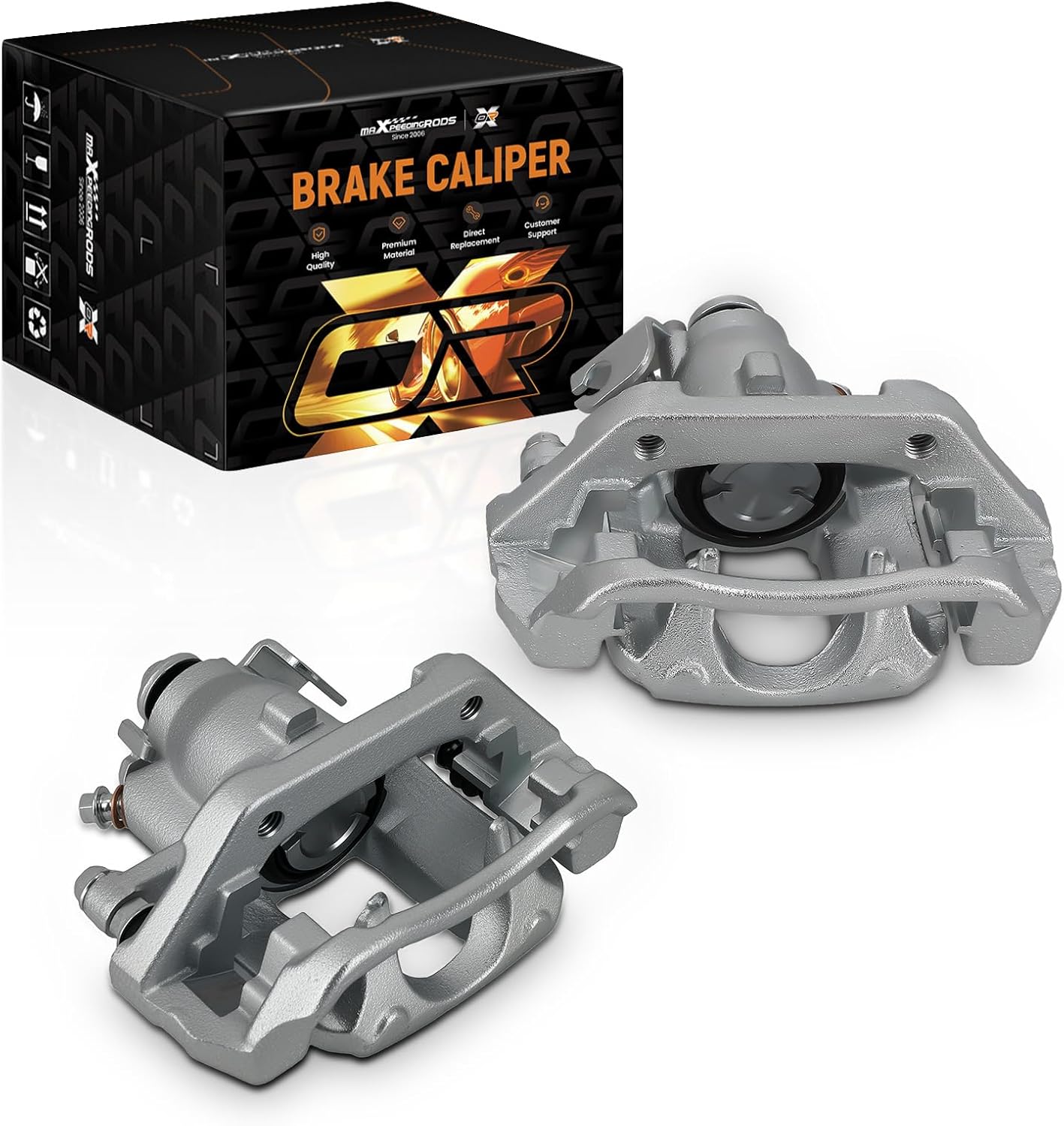
3. maXpeedingrods Rear Left & Right Disc Brake Caliper Assembly (Pair)
| Manufacturer | maXpeedingrods |
|---|---|
| Model | Brake Caliper |
| Manufacturer Part Number | QY88CB |
| Compatible Vehicles | Ford Explorer 2011-2019; Ford Taurus 2013-2019; Ford Flex 2010-2014; Lincoln MKT 2010-2014 |
These maXpeedingrods rear brake calipers replace both left and right assemblies and are intended for rear-wheel service on compatible Ford SUVs and sedans. Installation is the typical brake-job flow: remove the old calipers, transfer or fit pads and hardware as needed, torque mounting bolts and bleed the brake lines. The calipers come as a polished pair and list common factory part numbers, which helps match fitment for 2011 to 2019 Explorers (excluding heavy-duty brake models). Practical benefits include having both sides at once for balanced braking feel and fewer downtime visits. The product images show cast construction and mounting points consistent with factory replacements. Limitations are that pads, brackets, and hoses are not included so additional parts or transfers may be required, and buyers should verify the exclusion for heavy-duty brake models before ordering. For a practical DIYer or technician who wants a direct rear caliper replacement, these provide a straightforward, like-for-like option.
Best for: Buyers who prioritize a practical, like-for-like rear caliper replacement for routine brake repairs and want both sides replaced at once to restore balanced braking.
Less Ideal for: People looking for a complete brake kit with pads and hardware or owners of vehicles with heavy-duty rear brake setups should look at alternative options.
- Sold as a matched left and right rear caliper pair for balanced replacement
- Lists multiple factory part numbers to simplify fitment verification
- Polished finish and cast construction that matches common factory replacement appearance
- Includes model coverage for Ford Explorer 2011–2019 (excluding heavy-duty brake models)
- Does not include brake pads, mounting hardware, or brake hoses
- Not compatible with heavy-duty brake models on the specified vehicle range
Verdict: A cost-conscious, matched pair replacement that lets practical buyers renew rear braking on compatible Explorers with a straightforward swap.
4. FEXON Rear Disc Brake Caliper Assembly (pair) for Ford Explorer

| Manufacturer | KingzAuto |
|---|---|
| Brand | FEXON |
| Model | Explorer |
| Manufacturer Part Number | 18-4754 |
These FEXON rear caliper assemblies are a budget-focused, direct-replacement option for late-model Ford Explorer and related vehicles. They come as a pair and omit brake pads, so installation requires either reusing existing pads or buying pads separately. Built with attention to cooling and standard quality controls, the calipers aim to restore stable braking response and leverage factory mounting points for straightforward bolt-on fitment. In real-world use they provide predictable pedal feel and effective stopping force on everyday street driving, making them suitable for routine maintenance or repairing a seized or leaky original caliper. The main compromise is that you must source pads and perform a full brake service during installation, and cheaper aftermarket parts can vary in long-term corrosion resistance compared with higher-end replacements. If you are replacing a damaged rear caliper on a budget, these offer functional performance and compatibility without extra frills.
Best for: Buyers who need an affordable, direct-replacement rear caliper to restore braking function on a budget and are comfortable sourcing pads and doing a brake service during installation.
Less Ideal for: Drivers wanting a complete drop-in kit with new pads and higher-end corrosion resistance should consider upgraded or premium caliper assemblies instead.
- Sold as a matched pair for both rear wheels which simplifies replacing both sides at once
- Direct-fit design intended for specific Ford Explorer and related models for straightforward installation
- Built with an improved cooling approach to help maintain braking performance under normal driving
- Reasonably lightweight packaging and compact size for easier handling during installation
- Calipers are supplied without brake pads so pads must be purchased separately
- Aftermarket construction may offer less long-term corrosion protection than premium replacements
Verdict: A cost-conscious, direct-fit pair of rear calipers that restores braking function for Ford Explorer owners who will supply pads and perform a brake service.
5. Detroit Axle Rear Brake Calipers with Brackets (pair)

| Position | Rear Left and Right |
|---|---|
| Piston Size | 1.78 inch (45.26mm) |
| Piston Material | Steel |
| Brake Caliper Bracket Included | Yes |
These Detroit Axle rear calipers come as a left/right pair with mounting brackets and 1.78 inch steel pistons intended to replace worn or damaged rear calipers on compatible Ford vehicles. In practical use they restore clamping force and allow you to reuse existing rotors and pads when those components are still within spec. The included brackets simplify installation for most DIY mechanics and shops, and the steel single-piston design is straightforward to bleed and maintain. Detroit Axle states the parts undergo impact, wear, and fatigue testing and backs them with a 10-year warranty, which adds confidence for long-term service. Expect factory-style fit and centerline piston sizing that matches factory replacement requirements, but note these are single-piston steel units so they will not provide upgraded performance for heavy-duty towing or sport driving compared with multi-piston performance calipers. Overall they are a practical, reliability-focused replacement to get an aging rear brake system back to proper operation without modification.
Best for: A buyer who prioritizes dependable, long-lasting factory-style replacement parts to restore rear braking on a driven vehicle and prefers a straightforward installation and long warranty coverage.
Less Ideal for: Drivers seeking performance upgrades, multi-piston calipers, or brake components tuned for heavy towing or track use should look elsewhere.
- Sold as a matched left/right pair with brackets for straightforward installation
- Steel piston construction and fatigue testing aimed at long-term durability
- Factory-style piston size that matches replacement fitment for listed vehicles
- 10-year warranty provides long-term support and peace of mind
- Single 1.78 inch piston design is basic and not intended for higher-performance braking upgrades
Verdict: A reliable, factory-style pair of rear calipers with brackets and a long warranty that restores braking function without modifications.
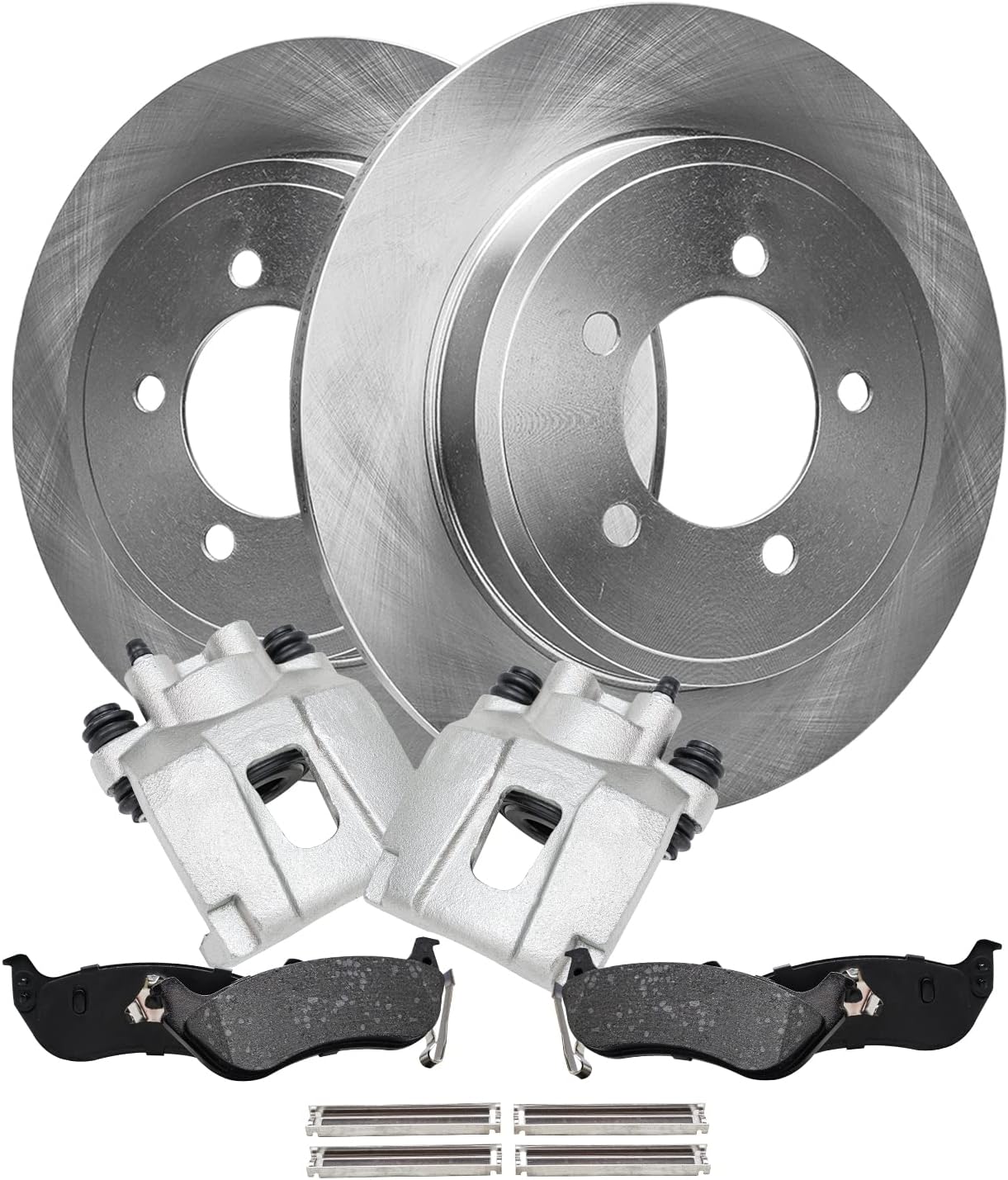
6. Detroit Axle Rear Brake Kit with Calipers, Rotors and Ceramic Pads for 2006–2010 Ford Explorer
| Fitment | 2006-2010 Ford Explorer; 2007-2010 Explorer Sport Trac; 2006-2010 Mercury Mountaineer |
|---|---|
| Kit contents | 2 Rear Rotors, 2 Rear Ceramic Brake Pads (hardware), 2 Rear Disc Brake Calipers |
| Caliper piston size | 1.89 inch / 47.9 mm |
| Piston material | Phenolic |
| Manufacturer | Detroit Axle |
This Detroit Axle kit supplies both rear rotors, ceramic pads and a pair of rear disc brake calipers built as direct-fit replacements for 2006–2010 Ford Explorer and compatible models. It is intended for a full rear-axle refresh: rotors for a consistent braking surface, ceramic pads for quieter, lower-dust operation, and factory-style calipers with phenolic pistons and zinc plating to resist corrosion. Installation is straightforward for someone with basic brake-service experience because the calipers are designed as direct-fit units and the kit includes pad hardware. The caliper pistons are tested for leak-free performance and the zinc finish helps longevity in wet or salted-road climates. Expect improved stopping feel compared with worn components, but note this is an aftermarket replacement rather than a dealer remanufacture so finish and long-term wear can vary by vehicle and driving style. This kit is best when you need a complete rear brake rebuild and want a single-purchase solution that minimizes parts-matching during installation.
Best for: Buyers who want a single purchase to replace the entire rear brake assembly on a mid-2000s Explorer and prefer a kit that simplifies installation and parts matching while leaning on broad user feedback for confidence.
Less Ideal for: Shoppers seeking dealer-only or factory-new OEM calipers with guaranteed factory provenance should consider dealer-sourced parts instead.
- Complete rear axle kit includes rotors, ceramic pads, and both left and right calipers for one-stop replacement.
- Direct-fit calipers designed for bolt-on installation to simplify DIY or shop replacement.
- Zinc-plated calipers and phenolic pistons reduce corrosion risk and help resist brake fluid contamination.
- Ceramic pads offer quieter operation and lower brake dust compared with semi-metallic pads.
- Calipers are aftermarket remanufacture-style units so cosmetic finish and long-term durability may vary compared with factory-new parts.
Verdict: A convenient, all-in-one rear brake replacement kit that simplifies a full rear-axle brake refresh for mid-2000s Ford Explorer owners who value ease of installation and proven user satisfaction.
7. Detroit Axle Rear Right Brake Caliper with Bracket

| Position | Rear Right |
|---|---|
| Brake Caliper Bracket Included | Yes |
| Manufacturer | Detroit Axle |
| Manufacturer Part Number | 5165-H |
This Detroit Axle rear right brake caliper is intended as a direct replacement for compatible Ford Explorer rear vented-rotor applications and similar Ford/Lincoln models. It ships with the caliper bracket included and is zinc plated to resist corrosion, which helps keep sliding and mounting surfaces functioning in wet or salted conditions. Detroit Axle reports pressure and leak testing and factory-quality build to match fit and braking feel expected from a stock replacement. Installation follows standard brake caliper procedures and is a common shop job when swapping a seized or damaged caliper. The package does not include pads or hardware beyond the bracket, so plan to transfer or replace pads, pins, and hoses as needed. Buyers who prefer a like-for-like, tested replacement will appreciate the corrosion protection and stated testing, while those wanting upgraded performance features such as stainless pistons or performance coatings will need a different part.
Best for: Buyers who want a dependable, factory-style replacement caliper to restore braking function with minimal fuss and long-term corrosion protection.
Less Ideal for: Drivers seeking a performance upgrade, lightweight racing component, or a kit that includes pads and full hardware should look elsewhere.
- Includes bracket for easier bolt-on replacement
- Zinc plating helps resist rust and corrosion on exposed surfaces
- Built and tested to match factory-quality fit and leak-free performance
- Does not include brake pads or additional hardware
- Not a performance-oriented caliper upgrade
Verdict: A reliable, factory-style rear right caliper with bracket and corrosion protection for buyers who want a risk-minimizing replacement.
Choosing the Right Ford Explorer Rear Brake Calipers: Key Factors to Consider
Fitment and Mounting Compatibility
Correct fitment ensures the caliper aligns with the rear rotor, slides freely on its pins, and allows the parking brake mechanism to operate if applicable. Mismatched mounting points or wrong piston diameter can cause poor pad-to-rotor contact, uneven wear, or brake drag. When replacing rear calipers on the Explorer, verify the exact year and configuration so the bleeder screw and hydraulic line orientation match the existing assembly.
Mounting compatibility also affects installation time and safety. A caliper that requires machining or adapter brackets increases labor and introduces failure points. Choose calipers specified for the Explorer rear setup to avoid these issues.
Piston and Seal Quality
The piston material and the seal design determine how well the caliper resists corrosion and maintains hydraulic pressure. Stainless or chromed pistons are less prone to pitting and will preserve a smooth seal surface longer than untreated steel. High-quality rubber compounds for seals and dust boots reduce the chance of fluid leaks and contamination from road debris.
Seals that compress properly also influence pedal feel. A well-sealed caliper maintains even pressure across the pads, preventing pulsation and ensuring predictable braking behavior under daily driving and towing conditions.
Corrosion Protection and Finish
Rear calipers are exposed to moisture, road salt, and debris that accelerate rust. A protective finish such as a durable coating or plating extends service life and reduces the likelihood of seized slide pins or sticky pistons. Corrosion can impair caliper movement and make future removal difficult, increasing labor for brakes service.
Consider calipers with covers over vulnerable areas and robust coatings where the hydraulic interface and mounting brackets contact the vehicle. Improved corrosion protection reduces maintenance needs and supports consistent braking performance.
Hardware and Included Accessories
Some calipers are sold as complete kits with guide pins, bolts, new bleeder screws, and parking brake components. Having the necessary hardware included reduces the chance of reusing worn parts that compromise function. Missing or low-quality hardware can lead to installation issues or premature failure.
Check whether the caliper package includes rubber caps, dust boots, and any retaining clips required for the Explorer rear brake assembly. When hardware is not provided, factor in the time and cost to source correct components.
Hydraulic Performance and Brake Feel
How a caliper transmits hydraulic pressure affects pedal firmness and modulation. A caliper that seals well and returns smoothly will yield a consistent pedal and balanced braking. Conversely, a caliper that allows internal bypass or has sticking pistons can create a soft pedal, dragging, or uneven pad contact.
For the Explorer, consider how the caliper behaves under load, towing, and repeated stops. Reliable hydraulic performance reduces fade and maintains braking confidence during everyday use and heavier-duty situations.
Serviceability and Long-Term Maintenance
Serviceability covers how easy it is to bleed, inspect, and, if necessary, rebuild or replace components later. Calipers with accessible bleeder screws and standard hardware simplify routine maintenance and brake fluid changes. Availability of overhaul kits or remanufacturing options can be valuable if you prefer repair over replacement.
Assess whether the caliper design allows future rebuilds or requires complete replacement. Choosing a caliper that supports maintenance can reduce lifetime ownership costs and downtime.
Common Rear Caliper Symptoms and What They Mean
Understanding symptom patterns helps diagnose whether the caliper is the likely cause of braking issues. Symptoms often start subtly and progress, so early recognition can prevent rotor and pad damage.
Typical signs include a pulsating pedal, uneven pad wear, fluid leaks around the caliper, or a dragging wheel after a stop. Each symptom points to different failures such as warped rotors, leaking seals, or sticking pistons.
- Pulsation or vibration usually indicates uneven rotor contact or a caliper that is not releasing fully.
- Visible brake fluid on the caliper or wheel hub area signals seal failure and demands prompt attention to avoid loss of pressure.
- A hot or smoking wheel after driving suggests the caliper is dragging and creating excessive heat.
- Uneven pad thickness points to a caliper slide or piston not retracting properly.
Remanufactured Versus New Rear Calipers
Remanufactured rear calipers can offer a balance between cost and sustainability when cores are rebuilt to original specifications. Quality remanufacturing restores seals, pistons, and surfaces to functional condition but outcomes vary based on the reman shop standards.
New calipers eliminate concerns about prior wear but vary in finish and component quality. When choosing between remanufactured and new units for your Explorer, prioritize documented refurbishing processes or clear warranty coverage rather than assuming equivalence.
- Reman units can include overhauled pistons and new seals if professionally rebuilt.
- New units avoid core availability issues and may include updated protective coatings.
Installation Tips for Rear Calipers on the Explorer
Proper installation reduces the chance of leaks and ensures the parking brake and hydraulic systems function correctly. Before installing, compare the old caliper to the replacement to confirm bleeder screw position, hose fitment, and return spring orientation.
Bleed the system following manufacturer-recommended procedures and confirm the pedal feels firm before driving. Use new hardware where specified and torque mounting bolts to the recommended values to avoid thread or bracket damage.
- Always bench-bleed new calipers when possible to remove trapped air.
- Lubricate guide pins with high-temperature brake grease to maintain smooth movement.
- Inspect the brake hose for cracks and replace if it shows any sign of deterioration during caliper replacement.
When to Rebuild a Caliper Versus Replace It
Deciding to rebuild or replace depends on the severity of wear and the availability of quality rebuild kits. Simple seal failures or corroded dust boots are often serviceable with an overhaul kit that includes seals, boots, and piston refurbishing supplies.
However, deep piston pitting, severely scored bores, or damaged mounting bosses usually justify full replacement. For the Explorer, consider labor time and the condition of surrounding components when making this decision.
- Rebuild if bores are smooth and pistons are salvageable; replace if structural damage is present.
- Factor in the availability of a reputable brake caliper rebuild kit and your comfort with hydraulic work.
Maintaining Caliper Health to Extend Service Life
Regular inspection and basic maintenance keep rear calipers functioning longer. Check for boot tears, guide pin corrosion, and fluid leaks during routine brake service. Keeping the brake fluid fresh and free of moisture helps protect seals and internal surfaces.
Periodic lubrication of the sliding components and replacing worn hardware prevent binding and uneven pad wear. Addressing minor leaks early often avoids the need for full caliper replacement.
- Schedule brake fluid changes per service intervals to reduce internal corrosion risks.
- Inspect boots and guide pins annually or during pad replacement.
Still looking for the perfect fit?
Select your Ford Explorer configuration to see the most relevant Brake Calipers recommendations
How We Chose the Best Ford Explorer Rear Brake Calipers
We selected rear brake calipers based on criteria that reflect real-world use on the Ford Explorer. Fitment accuracy was a primary filter: each caliper had to match mounting points, piston size, and bleeder orientation expected for the Explorer rear assembly. Seal and piston materials were next; units with high-quality seals and corrosion-resistant piston finishes score higher because they reduce leak and sticking risk.Build quality and corrosion protection were evaluated to reflect exposure to road salt and moisture. We considered the presence and quality of dust boots, bleeder screw access, and hardware inclusion since missing parts increase installation time or introduce compatibility risks. Hydraulic sealing performance and pressure response were judged to predict pedal feel and even pad wear.We also looked for options offering clear installation guidance or compatibility notes to support proper brake caliper replacement. Units that required extensive modification or lacked critical mounting hardware were excluded. We did not include products without verifiable fitment information or calipers that are clearly underspecified for Explorer rear applications.
Our full evaluation process is outlined in our review methodology.
FAQ
How can I tell if a rear caliper is sticking on my Explorer?
A sticking rear caliper often causes one wheel to run hotter than the others, resulting in a smoky or burning smell after short drives. You may also notice uneven pad wear, reduced fuel economy, or a dragging feel when braking. Visual inspection can reveal seized guide pins or compressed dust boots.
Can I replace a rear brake caliper with basic tools at home?
Many owners can replace a rear caliper with common tools, a torque wrench, and a bleeding method. Bench-bleeding and ensuring correct hose connection are important. If you are uncomfortable with brake hydraulics or lack a proper bleeding setup, professional installation is safer.
Are remanufactured rear calipers reliable for the Explorer?
Remanufactured calipers can be reliable when rebuilt to strict standards and inspected thoroughly. Reliability depends on the quality of the reman process, including new seals and proper pistons. Check for clear refurbishing documentation and corrosion protection.
Will a bad rear caliper affect front braking performance?
A failing rear caliper primarily affects the rear braking balance and pedal feel but can indirectly change overall braking behavior. Uneven rear braking may shift more demand to the front brakes, potentially increasing front pad wear and altering stopping distances under certain conditions.
How often should rear calipers be inspected on an Explorer?
Inspect rear calipers during every pad or rotor service, which typically occurs every 20,000 to 40,000 miles depending on use. Also check them if you notice symptoms like fluid leaks, dragging wheels, or uneven pad wear.
Final Verdict
When replacing rear brake calipers on a Ford Explorer, prioritize correct fitment, seal and piston quality, and corrosion protection. Those factors most directly influence braking feel, long-term reliability, and ease of installation. Balance serviceability and hardware inclusion against expected lifespan: easy-to-service designs and complete kits can reduce future maintenance hassles.Choose a caliper that matches the Explorer rear mounting and hydraulic layout, and be realistic about tradeoffs between rebuildability and outright replacement. With careful selection and proper installation, you can restore consistent braking performance and minimize repeat maintenance.
Explore More:
- Check out all Ford Explorer parts & accessories
- Explore Brake Calipers Maintenance & Repair Guides
- Explore Brake System
- Browse all Auto Parts
