

Note: This article contains affiliate links. If you click on these links and make a purchase, I may earn a small commission at no extra cost to you. This helps support my research and content. Read my full affiliate disclosure here.
If you own a 2006-2010 Ford Explorer, worn or leaking brake calipers can reduce stopping power, cause uneven pad wear, and lead to brake fluid loss. Replacing faulty calipers is one of the most effective repairs to restore pedal feel and reliable braking performance. This guide presents seven shortlisted brake calipers chosen for fitment to the Explorer model years 2006 through 2010, covering front and rear applications where relevant.Below we summarize practical differences to help you pick calipers based on durability, ease of installation, and corrosion resistance. The picks were evaluated for fitment, sealing quality, and materials to match typical Explorer use cases. Read on for factors to consider, installation notes, and answers to common owner questions before you select a replacement.
Looking for other parts? See all Ford Explorer parts & accessories.
Top Picks at a Glance


1. Torchbeam Front Brake Caliper Set (front left + front right) for 2006–2010 Explorer/Sport Trac and 2006–2010 Mountaineer

| Position | Front |
|---|---|
| Piston material | Phenolic |
| Number of pistons | 2 |
| Exhaust port size | M10x1.0 |
| Piston OD-IN | 1.99 |
These Torchbeam front calipers are a direct replacement-style assembly sold as a matched left and right pair for the 2006–2010 Ford Explorer family and the 2006–2010 Mercury Mountaineer. Each assembly includes the caliper and bracket and uses a phenolic piston and two-piston design, which keeps the calipers light and corrosion-resistant while providing consistent clamping force for typical daily driving and towing loads that these SUVs commonly see. Installation is conventional and the listing notes that basic hardware is included, so shops or competent DIYers can swap both sides without sourcing extra pieces. Practical benefits include factory-style fitment for the specified vehicles and a polished exterior for a cleaner look behind wheels. Limitations are that these calipers come without pads or rotors so you must transfer or purchase braking surfaces separately, and buyers who demand track-level performance or exotic materials will want higher-end options.
Best for: Buyers who want a reliable, factory-style replacement for front calipers on 2006–2010 Explorer-family SUVs and prefer a balanced mix of durability, ease of install, and everyday braking performance.
Less Ideal for: Drivers seeking track-focused braking upgrades, ceramic or multi-piece performance setups, or a one-box solution that includes pads and rotors should look elsewhere.
- Matched left and right pair for consistent braking feel across the front axle
- Phenolic pistons resist corrosion and reduce heat transfer to the brake fluid
- Includes caliper brackets and basic installation hardware for simpler replacement
- Polished exterior improves appearance behind wheels and matches factory aesthetics
- Sold without brake pads or rotors so additional parts are required for a complete brake job
Verdict: A practical, factory-style front caliper pair that gives Explorer and Mountaineer owners a straightforward, durable replacement for everyday driving needs.
2. PHILTOP Front Brake Caliper Kit — Front Position, Machined Finish

| Position | Front |
|---|---|
| Manufacturer Part Number | 4431DBC385CUS |
| OEM Part Number | 18B4994, 18B4995, 6L2Z2001A |
| Exterior | Machined |
| Certification | IATF16949 |
This PHILTOP front brake caliper replaces the factory front caliper assembly on 2006–2010 Ford Explorer platforms and equivalent Sport Trac and Mountaineer models. It ships as a complete caliper assembly with bracket, phenolic piston, mounting hardware, and refined zinc-plated ductile iron construction for corrosion resistance. In use it restores clamping force and pedal feel to vehicles with worn or seized front calipers and is intended as a direct-fit replacement where compatibility matches the listed OEM part numbers. Notable features include factory-style fitment, an included bracket and hardware to simplify installation, and IATF16949 manufacturing certification suggesting consistent production quality. The main limitations are that pads are not included and buyers should confirm vehicle fitment against the listed replacement numbers before purchase; professional installation or proper brake bleeding is recommended to ensure safe braking performance.
Best for: A buyer restoring braking performance on a 2006–2010 Explorer or the listed equivalent models who prioritizes a direct-fit, factory-style replacement and consistent build quality.
Less Ideal for: If you want an upgrade for high-performance or track use or need a full hardware and pad kit, choose a performance caliper or a matched pad/caliper kit instead.
- Complete caliper assembly including bracket and mounting hardware for easier installation
- Ductile iron construction with refined zinc plating to resist corrosion
- Phenolic piston included to reduce heat transfer to the brake fluid
- Made to match multiple OEM replacement numbers for direct-fit compatibility
- IATF16949 production certification indicating consistent manufacturing standards
- Does not include brake pads so pads must be purchased separately
Verdict: A direct-fit, factory-style front caliper assembly that restores reliable braking on 2006–2010 Ford Explorer platforms without needing major modifications.
3. KAX Front Left Brake Caliper Assembly for 2006–2010 Ford Explorer / Sport Trac / Mercury Mountaineer

| Position | Front Left |
|---|---|
| Model | 18B4995 |
| Manufacturer Part Number | 2150DBC495TUS |
| OEM Part Number | 6L2Z2B292A, 6L2Z2B121A, 6L2Z2001A |
This KAX front left caliper assembly replaces the factory unit and is intended to restore braking function on compatible 2006–2010 Explorer, Explorer Sport Trac, and Mountaineer vehicles. It ships as a complete caliper with a phenolic piston and installation hardware, so it covers the main parts needed for a direct swap. The caliper is machined and pressure tested during quality inspection, which helps reduce the chance of leaks and premature failure. In use it performs like a standard factory-style replacement: solid clamp-down feel, predictable pedal response after proper bedding, and it requires bleeding the brake system after installation. Expect to have the unit installed by a competent DIYer or a technician since alignment, torque specs, and bleeding are necessary for safe operation. The caliper comes with a three-year warranty from the manufacturer, but note that pads and rotors are not included so those may need inspection or replacement at the same time for best results.
Best for: Buyers who want a practical, OEM-style replacement caliper to restore reliable braking on a 2006–2010 Explorer family vehicle without overpaying for performance upgrades.
Less Ideal for: Drivers seeking performance upgrades, specialty materials, or a multi-piece rebuild kit should look at higher-end or performance-focused calipers instead.
- Direct-fit design for specified 2006–2010 Ford Explorer, Explorer Sport Trac, and Mercury Mountaineer applications
- Includes phenolic piston and installation hardware for a more complete replacement
- Machined finish and 100% pressure testing reduce risk of leaks out of the box
- Backed by a three-year manufacturer warranty
- Does not include brake pads or rotors so additional parts may be required for a full brake service
Verdict: A cost-conscious, factory-style replacement caliper that fits 2006–2010 Explorer family vehicles and restores dependable braking with minimal fuss.
4. Detroit Axle Front Right Brake Caliper with Bracket

| Position | Front Right |
|---|---|
| Piston Size | 1.99 inch (50.62mm) |
| Piston Material | Phenolic |
| Piston Quantity | 2 |
| Brake Caliper Bracket Included | Yes |
This Detroit Axle front right brake caliper replaces the factory unit on 2006–2010 Ford Explorer, Explorer Sport Trac, and Mercury Mountaineer applications and ships with the mounting bracket installed. It uses dual 1.99 inch phenolic pistons intended to reduce heat transfer and corrosion while providing consistent clamping force. Typical use is a direct replacement during a front brake job where the original caliper is leaking, seized, or damaged; the included bracket simplifies installation compared with buying separate components. The caliper is described as undergoing impact and fatigue testing and comes with a 10-year warranty, which adds confidence for long-term ownership. Expect solid aftermarket value and straightforward fitment for the listed vehicles, but note this unit is sold without brake pads and requires proper bleeding and bedding during installation. For DIYers and budget-focused repair shops it offers a cost-effective alternative to dealer parts, though professional installation is recommended if you are not comfortable with brake system work.
Best for: Buyers looking for an affordable, ready-to-install front right caliper that simplifies a brake rebuild on the listed Explorer and Mountaineer models and who prioritize value over premium performance upgrades.
Less Ideal for: Drivers seeking high-performance or track-focused braking upgrades or those who want a complete pad-and-caliper kit in a single purchase should consider other options.
- Includes caliper bracket for easier direct replacement and fewer separate parts to buy
- Dual 1.99 inch phenolic pistons designed to resist heat transfer and corrosion
- Marketed as tested for impact and fatigue and backed by a 10-year warranty
- Made to fit specified 2006–2010 Ford Explorer, Explorer Sport Trac, and 2006–2010 Mercury Mountaineer applications
- Sold without brake pads, so pads must be purchased separately
- Phenolic pistons may behave differently than metal pistons under extreme conditions compared with some higher-end performance calipers
Verdict: A budget-friendly, vehicle-specific replacement caliper that comes with the bracket and durable phenolic pistons, making it a practical choice for economical front brake repairs on 2006–2010 Explorers and Mountaineers.
5. Detroit Axle Front Brake Caliper Kit with Brackets for 2006–2010 Ford Explorer / 2006–2010 Mercury Mountaineer

| Fitment | 2006-2010 Ford Explorer; 2006-2010 Mercury Mountaineer |
|---|---|
| Kit Contents | Front left and right calipers with brackets |
| Piston Size | 1.99 inch (50.62 mm) |
| Piston Material | Phenolic |
This Detroit Axle kit supplies both left and right front calipers with brackets as a direct-fit replacement for 2006–2010 Ford Explorer and 2006–2010 Mercury Mountaineer vehicles. Each caliper uses dual 1.99 inch phenolic pistons and arrives zinc plated to resist corrosion. In use the kit replaces worn or leaking factory calipers to restore firm pedal feel and consistent braking; brackets are included so installation is straightforward for a home mechanic or shop doing a front-end brake job. The manufacturer reports pressure testing for leak-free performance and claims factory-spec fitment to simplify alignment with existing brake lines and pads. Buyers should note the kit ships without brake pads or rotors and that phenolic pistons can feel slightly different in heat soak compared with metal pistons, so pairing with quality pads and fresh fluid is recommended. For routine street driving and typical towing loads within the Explorer family, these calipers are a practical, serviceable replacement that prioritizes reliability and corrosion resistance.
Best for: Buyers who want a dependable, straightforward replacement to restore factory-like braking on a 2006–2010 Explorer or 2006–2010 Mountaineer and prefer parts designed for easy installation and long-term corrosion resistance.
Less Ideal for: Drivers seeking a full brake system refresh in one purchase or high-performance calipers for track use should consider alternatives that include pads and rotors or are tuned for extreme heat resistance.
- Direct-fit replacement with included brackets for simpler installation
- Dual 1.99 in phenolic pistons for stable braking and reduced heat transfer
- Zinc plating to resist corrosion and visible deterioration
- Pressure-tested design aimed at leak-free performance
- Does not include brake pads or rotors so additional parts are required
- Phenolic pistons may behave differently under extreme sustained heat compared with metal pistons
Verdict: A reliable, direct-fit front caliper kit that restores proper braking on 2006–2010 Explorer/Mountaineer vehicles while prioritizing corrosion resistance and ease of installation.
6. Detroit Axle Rear Brake Kit with Rotors, Ceramic Pads, and Rear Calipers
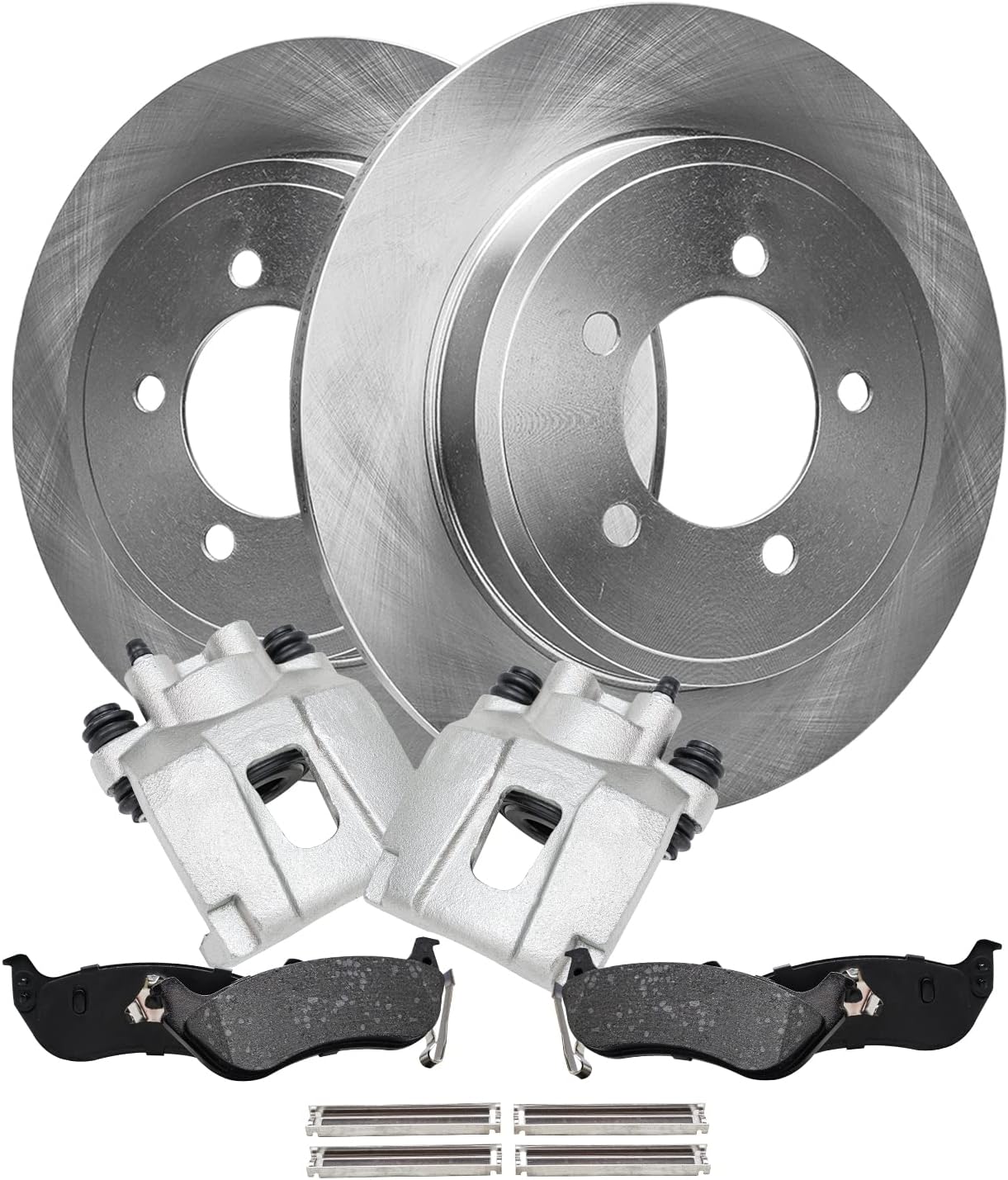
| Fitment | 2006-2010 Ford Explorer, 2007-2010 Explorer Sport Trac, 2006-2010 Mercury Mountaineer |
|---|---|
| Caliper piston size | 1.89 inch / 47.9 mm |
| Caliper piston material | Phenolic |
| Pads | Rear ceramic brake pads (hardware included) |
This Detroit Axle rear brake kit supplies both rear disc rotors, a pair of ceramic pads with hardware, and a left and right remanufactured-style caliper sized for the 2006–2010 Ford Explorer lineup. It is intended as a direct-fit replacement to restore rear stopping performance after worn components; installation typically involves swapping the rotors and pads and bolting in the two calipers, with no bracket included so mount points must match the vehicle. Notable features include phenolic pistons designed to resist corrosion, zinc plating on caliper surfaces to reduce visible rust, and calipers pressure-tested to limit leaks. The ceramic pads and tested rotors aim to reduce dust and provide stable braking under everyday driving and towing loads, while the kit format makes it convenient to replace the entire rear brake assembly at once. Expect the benefits of a matched kit and easier serviceability, but professional installation or solid DIY experience is recommended because caliper replacement and bleeding are required and the kit does not include mounting brackets.
Best for: Buyers who prioritize restoring reliable rear braking with a matched kit and want the reassurance of pressure-tested calipers and corrosion-resistant components.
Less Ideal for: People looking for a bare rotor or pad-only replacement or those who need custom or performance-oriented calipers for track use should consider other options.
- Complete rear kit replaces rotors, pads, and both calipers for a coordinated service
- Phenolic pistons and zinc plating help resist corrosion and reduce visible rust
- Calipers are pressure-tested for leak-free performance
- Includes ceramic pads with hardware to reduce dust and improve stopping feel
- Does not include caliper brackets so fitment must match vehicle mounting points
Verdict: Choose this kit if you want a matched, pressure-tested rear brake package to reliably restore stopping performance on a 2006–2010 Ford Explorer.
7. Detroit Axle Front Brake Caliper Kit (2-piece) for 2006–2010 Ford Explorer / Sport Trac / Mercury Mountaineer

| Position | Front Left & Right |
|---|---|
| Piston Size | 1.99 inch (50.62mm) |
| Piston Material | Phenolic |
| Piston Quantity | 2 |
| Brake Caliper Bracket Included | Yes |
This Detroit Axle kit supplies both left and right front calipers with mounting brackets to replace worn or leaking factory units on 2006–2010 Explorer and compatible models. Each caliper uses two phenolic pistons sized at 1.99 inches, a configuration that helps resist corrosion and reduce heat transfer compared with some metal pistons. The kit arrives ready with brackets so you can swap both sides without sourcing additional hardware. In real-world use the calipers are suited to daily driving and light towing duties typical for these SUVs and should restore proper pad contact and braking feel when paired with good rotors and pads. The product notes testing for impact and fatigue and includes a long-term manufacturer warranty for peace of mind, which appeals to cautious buyers. Expect a direct mechanical replacement rather than performance gains, and plan to bleed the brake system and check piston seals during installation to avoid minor setup work after fitment.
Best for: Buyers who want a reliable, factory-style front caliper replacement that minimizes risk and reduces the chance of follow-up problems during everyday driving and routine towing.
Less Ideal for: Drivers seeking performance upgrades, race use, or changes to braking feel should consider performance-oriented calipers or a full brake system upgrade instead.
- Includes both left and right front calipers plus mounting brackets for straightforward replacement
- Phenolic pistons reduce heat transfer and resist corrosion compared with some metal pistons
- Built and tested for impact and fatigue with a long manufacturer warranty for added confidence
- Designed as a direct replacement so it restores factory performance but does not improve braking power or pedal feel
Verdict: A dependable, tested front caliper pair with brackets and phenolic pistons that’s ideal for restoring factory braking reliability on 2006–2010 Explorers and related models.
Choosing the Right 2006-2010 Ford Explorer Brake Calipers: Key Factors to Consider
Correct Fitment and Mounting
Calipers must match the 2006-2010 Ford Explorer's specific mounting bolt pattern, piston diameter, and brake line fitting orientation. A caliper with incorrect fitment can lead to alignment issues, uneven pad wear, or inability to secure the unit to the knuckle, so verify exact year and front or rear placement before buying.
Fitment also affects parking brake integration on rear calipers for Explorers equipped with integrated parking-brake mechanisms. If your rear calipers are the type that include a mechanical parking brake lever or cable connection, ensure the replacement provides that same interface. Proper fitment reduces installation time and avoids last-minute trips for adapters or extra hardware.
Piston Material and Seal Quality
Piston composition and the quality of seals determine long-term resistance to corrosion and leaks. Stainless or nickel-plated pistons resist pitting and are less likely to seize in climates with moisture or road salt, while high-quality seals maintain hydraulic integrity and prevent fluid loss under repeated heat cycles.
Inspect whether replacement calipers specify upgraded piston finishes or improved seal compounds. Better materials can reduce the chance of caliper sticking symptoms, such as uneven pad wear or the vehicle pulling to one side during braking, which are common issues on older Explorers.
Corrosion Protection and Finish
The exterior finish and protective coatings impact how well calipers hold up against rust. Zinc plating, powder coating, or other anti-corrosion treatments extend service life in wet or salted conditions. For the 2006-2010 Ford Explorer, which may see a range of climates, selecting calipers with robust corrosion protection helps prevent seized guide pins and compromised caliper slides.
A well-protected caliper also simplifies future maintenance. If the finish fails, rust can jam moving parts and increase the risk of uneven braking or difficult pad changes.
Hardware Completeness and Included Components
Replacement calipers that come with mounting bolts, guide pins, rubber boots, and bleeder screws reduce installation complexity and the chance of missing parts. On the Explorer, reusing old or worn hardware increases the risk of leaks or unstable mounting. Ensure the kit includes any pad-retaining clips or brake hose washers required for a proper seal.
Missing or low-quality hardware often leads to additional labor and parts purchases, so prioritize calipers that ship ready to install for the specific front or rear location you need.
Sealing Against Leaks and Fluid Compatibility
Because calipers are a hydraulic component, their seals and fluid interfaces must be compatible with DOT brake fluids used on the Explorer. The seal design should tolerate heat cycling without shrinking or cracking. Good sealing limits the chance of brake fluid leakage that can degrade braking performance and create safety hazards.
Also consider how easy the caliper is to bleed and whether bleeder screw placement is accessible on the 2006-2010 Explorer. Good access speeds up bleeding and ensures air can be purged efficiently after installation.
Serviceability and Long-Term Maintenance
Think about how easy the caliper will be to service over time. Calipers with replaceable guide pins, accessible bleeder screws, and straightforward piston access simplify periodic maintenance and rebuilds using a brake caliper rebuild kit. For Explorers used in active service or towing, serviceability reduces downtime and maintenance costs.
If corrosion is a long-term concern, choose calipers designed to allow future pad changes and pin servicing without removing the entire assembly. This improves ownership experience on older vehicles.
Front Versus Rear Caliper Considerations
Front and rear calipers serve similar hydraulic functions but have different service demands on the Explorer. Front brake calipers generally handle higher braking forces and heat, so piston material and cooling characteristics matter more for front applications. Rear calipers often integrate parking brake mechanisms that require correct mechanical interfaces.
When selecting front calipers, pay attention to piston size and heat resistance. For rear calipers, confirm whether the replacement includes the parking brake lever or provisions for the cable attachment. Choosing the right side ensures correct operation of anti-lock and parking brake systems.
- Front calipers often see higher thermal loads and more pad wear.
- Rear calipers may include mechanical parking brake components.
- Some replacements are sold specifically as front or rear kits; match accordingly.
Signs You Need Caliper Service or Replacement
Several symptoms indicate caliper trouble on a 2006-2010 Ford Explorer. Common signs include a soft or spongy pedal, visible brake fluid leaks near the caliper, unusual dragging noise, or uneven pad wear. Another telltale symptom is the vehicle pulling to one side under braking, which often points to a sticking or seized caliper.
Early detection prevents rotor damage and uneven wear. If you notice any of these issues, inspect the calipers, brake hoses, and pads to determine whether a rebuild or full replacement is appropriate.
- Brake fluid residue or wetness around the caliper body
- Vehicle pulls during braking or one wheel runs hotter
- Uneven pad wear or persistent grinding noises
Installation Tips for Explorer Owners
Prepare by comparing the new caliper against the removed unit to confirm mounting orientation, piston count, and bleeder screw position. Replace any corroded mounting bolts and install new copper washers on brake hose fittings to ensure a clean seal. Keep a catch pan under the caliper to collect drained fluid and avoid contamination.
After mounting the caliper, bleed the system starting with the caliper farthest from the master cylinder and follow proper bleed sequence. Torque all mounting hardware to Ford's specifications and verify parking brake adjustment on rear calipers if applicable. Finally, bed the brakes with a few gentle stops before normal driving.
- Compare new and old calipers side-by-side before installation
- Always use new brake hose washers and torque bolts to spec
- Bleed brakes fully and perform a safety-focused bedding procedure
Remanufactured Versus New Units
Remanufactured brake calipers can offer a balance of value and recycled components. Quality remanufacturing includes new seals, boots, and often machined or replaced pistons, which can restore hydraulic integrity. For the Explorer, ensure remanufactured units specify updated seals and corrosion-resistant finishes to avoid common failure modes.
New calipers may come with more modern finishes or upgraded piston coatings, reducing the likelihood of sticking. Whether you choose remanufactured or new, verify the included hardware list and any warranty terms; also confirm the unit is intended for front or rear installation on the 2006-2010 Explorer.
- Reman units should include new seals and boots
- New units may feature improved coatings and finishes
- Confirm mounting hardware and parking brake provisions
When to Rebuild Instead of Replace
A brake caliper rebuild kit can be a cost-effective solution if the caliper body is structurally sound and the piston bore is not scored. Kits typically include seals, boots, and sometimes new pistons. For Explorers with only minor seal deterioration or fluid leaks, a rebuild restores function without the need for a full unit swap.
However, if the caliper housing is heavily corroded, the piston is pitted, or the mounting surfaces are damaged, a full replacement is the safer choice. Consider availability of rebuild parts and whether you have the tools and space to perform a reliable rebuild.
- Rebuild kits are suitable when the bore and housing are in good condition
- Replace if the caliper body is heavily corroded or piston is damaged
- Rebuilding requires cleanliness and proper installation to avoid leaks
Bleeding and Brake Fluid Recommendations
After installing calipers on a 2006-2010 Ford Explorer, use the correct DOT-rated brake fluid specified for your vehicle and follow a thorough bleeding sequence to remove air. Air in the system leads to a spongy pedal and reduced stopping power, so multiple passes or a pressure bleed can be helpful when replacing calipers.
Inspect the master cylinder reservoir before and after bleeding to ensure fluid levels remain adequate and that no contamination enters the system. Dispose of old fluid properly and verify pedal firmness on a safe test drive before normal operation.
- Use the vehicle-recommended DOT brake fluid
- Bleed from the caliper farthest from the master cylinder first
- Check fluid level frequently during bleeding
Still looking for the perfect fit?
Select your Ford Explorer configuration to see the most relevant Brake Calipers recommendations
How We Chose the Best 2006-2010 Ford Explorer Brake Calipers
We evaluated candidate brake calipers for the 2006-2010 Ford Explorer using a set of vehicle-specific, function-focused criteria. First, fitment accuracy was mandatory: each caliper had to match the Explorer mounting points, piston size, and brake line connections for the specified years. Second, sealing and piston materials were assessed to gauge resistance to leaks and corrosion in variable driving conditions. Third, hardware and mounting completeness were considered so installations require minimal additional parts. Fourth, abrasion and finish treatments were reviewed to reduce the risk of rust and frozen slides on vehicles exposed to road salt.We also considered ease of installation and how straightforward the unit is to bleed and bed in with existing pads and rotors. Units lacking necessary mounting hardware or with ambiguous fitment details were excluded. We did not include calipers that require vehicle-specific machining or irreversible modification. The final selection balances reliability, corrosion protection, and installation readiness for typical 2006-2010 Ford Explorer owners.
Our full evaluation process is outlined in our review methodology.
FAQ
How long do brake calipers typically last on a 2006-2010 Ford Explorer?
Caliper life varies with driving conditions and maintenance. In moderate climates, well-made calipers can last many years, but exposure to salt and moisture often shortens service life. Regular inspections help catch seal or slide issues early.
What are common brake caliper symptoms to watch for on my Explorer?
Common symptoms include fluid leaks near the caliper, a soft or sinking brake pedal, the vehicle pulling to one side when braking, uneven pad wear, and dragging noises. These often indicate sticking pistons, torn seals, or seized guide pins.
Can I rebuild a corroded caliper on the Explorer using a rebuild kit?
You can rebuild a caliper if the piston bore and housing are free of deep pitting and the mounting surfaces are intact. Rebuild kits replace seals and boots, but heavy corrosion or scored bores usually require a full replacement.
Should I replace front and rear calipers at the same time?
It depends on condition. Front calipers typically experience more heat and wear, so you may only need to replace one axle at a time. However, replacing both calipers on an axle helps ensure balanced braking performance.
Are remanufactured calipers reliable for the Explorer?
Quality remanufactured calipers that include new seals, boots, and hardware can be reliable. Verify that reman units specify corrosion protection and complete hardware to reduce the chance of early failure.
How difficult is it to replace a brake caliper on a 2006-2010 Explorer?
Difficulty is moderate for a competent DIYer with basic tools. Key steps include supporting the vehicle, removing the wheel, disconnecting the brake hose with care, mounting the new caliper, and properly bleeding the system. If you are unsure, professional installation avoids safety risks.
Final Verdict
When selecting brake calipers for a 2006-2010 Ford Explorer, prioritize correct fitment, seal quality, and corrosion protection. Decide between remanufactured units and new calipers based on the condition of the original housing and your willingness to perform future maintenance. Ensure the replacement includes necessary hardware or plan to source bolts and washers to avoid installation delays.Focus on long-term serviceability and sealing performance to prevent common issues like sticking pistons and leaks. With attention to these tradeoffs, you can choose a caliper that restores consistent stopping power and reduces the need for repeated repairs.
Explore More:
- Check out all Ford Explorer parts & accessories
- Explore Brake Calipers Maintenance & Repair Guides
- Explore Brake System
- Browse all Auto Parts
