

Note: This article contains affiliate links. If you click on these links and make a purchase, I may earn a small commission at no extra cost to you. This helps support my research and content. Read my full affiliate disclosure here.
If you own a 1995-2001 Ford Explorer, worn or leaking calipers can undermine stopping power, uneven pad wear, and pedal feel. Choosing the right brake calipers makes a noticeable difference in everyday safety and long-term maintenance costs. This guide presents the top shortlisted calipers suited to the 1995-2001 Explorer, with attention to fitment, corrosion protection, piston size, and serviceability.Below you will find the top picks and a clear explanation of the evaluation criteria to help you choose the best option for front or rear brake service on this generation of Explorer.
Looking for other parts? See all Ford Explorer parts & accessories.
Top Picks at a Glance
| Best Overall The best all-around choice for most situations | DRIVESTAR Rear Brake Caliper Pair (184604/184605) for Ford Explorer/Mountaineer/Ranger |  |
| Best Quality Built to a higher standard if you want something more solid | A-Premium Rear Disc Brake Caliper Assembly (driver and passenger) |  |
| Best Value The sweet spot between price and what you get | cciyu Rear Left & Right Brake Caliper Assembly (184605/184604) |  |
| Best Budget The cheapest option that still gets the job done reliably | cciyu Rear Right Disc Brake Caliper (Replace 184604) |  |
| Highest Rated A top-rated pick with lots of positive feedback | Funire Rear Disc Brake Caliper Assembly (Replaces 18-4604 / 18-4605) |  |
| Most Popular A crowd favorite that many people choose with confidence | TRQ Front and Rear Brake Caliper Set with Zinc-Coated Brackets |  |
| Best Seller A high-volume bestseller chosen again and again | TRQ Rear Brake Caliper Set, Zinc Coated (Rear, 2-Piece) |  |
1. DRIVESTAR Rear Brake Caliper Pair (184604/184605) for Ford Explorer/Mountaineer/Ranger

| Position | Rear |
|---|---|
| Manufacturer | DRIVESTAR |
| Model | Ford Mercury Brake Caliper |
| Manufacturer Part Number | 184604+184605 |
| Compatible Years | Explorer 1995-2002; Ranger 1998-2002; Mountaineer 1997-2001 |
These DRIVESTAR rear brake calipers replace the left and right rear units on compatible Ford Explorer, Ranger, and Mercury Mountaineer models. Supplied as a pair, the calipers are cast iron units intended as factory-quality replacements rather than rebuilt parts. In use they provide a solid mounting for pistons and hardware, which helps keep pad contact consistent and reduces vibration or noise during braking. Installation is typical for rear calipers and will require basic brake service steps such as bleeding and torqueing guide pins to spec. The cast-iron construction improves durability and resistance to warping under heat, but it is heavier than some aftermarket alloy options. These calipers do not include pads, hoses, or hardware, so plan to reuse or replace those items when swapping calipers. DRIVESTAR backs the parts with a 36-month warranty and lists multiple OEM part numbers for straightforward fit reference. For a straightforward, durable replacement that restores rear braking performance on the specified vehicles, these calipers are a practical choice.
Best for: Buyers looking for a reliable, long-lasting rear caliper replacement to restore braking feel on a mid-1990s to early-2000s Ford or Mercury vehicle and who prioritize durability and straightforward fitment.
Less Ideal for: Owners who want a lightweight performance upgrade or an all-in-one kit with new pads and hardware should consider other options or complete brake rebuild kits.
- Sold as a matched left and right pair for complete rear replacement
- Cast iron construction for strength and resistance to deformation under heat
- Listed OEM part numbers make fitment checks easier
- Factory-quality replacement design rather than rebuilt units
- Does not include brake pads or additional hardware, so extra parts may be needed
- Heavier cast-iron construction compared with lighter alloy aftermarket options
Verdict: A durable, cast-iron matched rear caliper pair that restores factory-style braking on compatible 1995–2002 Ford and 1997–2001 Mercury vehicles.
2. A-Premium Rear Disc Brake Caliper Assembly (driver and passenger)

| Fitment | Rear left and right for specified models (1995–2001 Explorer, 1997–2001 Mountaineer) |
|---|---|
| Piston count | 1 Pistons |
| Piston size | 1.89 inches OD |
| Inlet port | 3/8 x 24 |
| Bleeder port | 3/8 x 24 |
This A-Premium caliper is a direct-replacement rear disc brake caliper assembly designed for Ford Explorer and Mercury Mountaineer models from the mid 1990s through 2001. It installs in place of the factory unit and includes the metal piston and installation hardware so you can replace the left and right rear calipers without sourcing extra parts. The caliper uses a single 1.89-inch piston and standard 3/8 x 24 inlet and bleeder ports, and it arrives with an antirust coating intended to help resist corrosion in wet or salted-road environments. For a performance-minded buyer this caliper restores braking function and pedal feel when paired with quality pads and properly bled lines, and the included hardware keeps installation straightforward. Limitations to note are that it is a basic replacement caliper rather than a performance-upgraded unit, so drivers seeking lighter weight, multi-piston designs, or track-focused braking improvements will need an aftermarket performance caliper instead.
Best for: Drivers looking for a reliable, factory-style rear caliper to restore braking performance on 1995–2001 Explorers and Mountaineers who prioritize straightforward replacement and dependable daily driving behavior.
Less Ideal for: Drivers seeking upgraded braking for track days, aggressive driving, or lighter multi-piston calipers should consider purpose-built performance options instead.
- Direct-fit assembly that includes piston and installation hardware for straightforward rear caliper replacement
- Antirust coating to improve durability in corrosive environments
- Standard inlet and bleeder port sizes for compatibility with common brake lines and bleeding tools
- Single-piston design keeps the unit simple and relatively easy to service
- Not a multi-piston or lightweight performance caliper so it will not provide a significant performance upgrade for track use
Verdict: A practical, ready-to-install rear caliper assembly that restores factory braking behavior on 1995–2001 Explorers and Mountaineers with minimal fuss.
3. cciyu Rear Left & Right Brake Caliper Assembly (184605/184604)

| Position | Rear |
|---|---|
| OEM Part Number | 184605,184604 |
| Piston Size | 1.89 inch |
| Bleeder Port Size | 3/8-24UNF-2B |
| Inlet Port Size | 3/8-24UNF-2B |
These cciyu rear brake calipers are a two-piece replacement set intended to restore braking function on compatible Ford Explorer and related vehicles. The kit includes both driver and passenger rear calipers (184605 and 184604) with a single 1.89 inch iron piston in each unit and standard 3/8-24UNF inlet and bleeder ports. Built painted and matched to work as a set, they are designed for straightforward installation and to meet or exceed factory specifications for braking power and quiet operation. For a practical buyer replacing worn or seized rear calipers, this set offers direct-fit components, predictable braking feel, and reduced noise compared with aging originals. Expect a basic bolt-on swap with routine bleeding of the system and no bracket included. These are functional replacements rather than performance upgrades, so buyers wanting upgraded piston materials, multi-piston designs, or braking upgrades should look elsewhere.
Best for: Buyers seeking a reliable, cost-conscious factory-quality replacement to restore rear braking on late 1990s to early 2000s Explorers and similarly specified vehicles who prioritize straightforward fitment and quiet operation.
Less Ideal for: Drivers looking for performance upgrades, multi-piston calipers, or calipers with non-iron piston materials should consider higher-spec aftermarket options.
- Includes both left and right rear calipers for a matched replacement pair
- Built to meet or exceed factory braking specifications for consistent stopping power
- Standard inlet and bleeder port sizes make hose and bleed-tool compatibility straightforward
- Painted finish and matched components reduce noise and provide a ready-to-install appearance
- Brackets are not included so reuse of existing hardware or additional parts may be required
Verdict: A practical, factory-style pair of rear calipers that restore reliable, quiet braking for compatible 1995–2001 Ford Explorer applications.
4. cciyu Rear Right Disc Brake Caliper (Replace 184604)

| Position | Rear Right |
|---|---|
| OEM Part Number | 184604,18-4604 |
| Piston Count | 1 Piston |
| Piston Material | Iron |
| Inlet/Bleeder Port | 3/8-24UNF-2B |
This cciyu rear right brake caliper is a budget-focused replacement built to match the factory mounting and hydraulic ports for late 1990s and early 2000s Ford Explorer/Ranger/Mountaineer models. It installs in the rear passenger position and uses a single iron piston with standard 3/8-24UNF inlet and bleeder ports for straightforward brake-line and bleeding compatibility. The caliper arrives painted and includes mounting hardware seals and clips but not the mounting bracket, so you will reuse the existing bracket or source one separately. In real-world use it provides consistent, quiet stopping power thanks to thickened seals and precision-machined piston surfaces that aim to resist leaks. The cast iron construction favors durability but adds mass compared with phenolic piston options. For budget repairs the unit covers common OE part numbers and keeps installation familiar to a DIYer or independent shop, though pairing it with fresh pads and rotors is recommended for best performance.
Best for: Buyers looking for an affordable, factory-style rear caliper to repair an Explorer-era brake system who prioritize reliable braking and straightforward installation over premium lightweight materials.
Less Ideal for: Those who want a lightweight or performance-oriented caliper with phenolic pistons or who need a complete bracket-and-caliper kit should consider other options.
- Direct-replacement fit for specified 1995–2002 Explorer/Ranger/Mountaineer applications
- Coated cast iron housing and sealed piston design aimed at long-term durability and leak resistance
- Includes mounting hardware seals and clips to simplify installation
- Built to meet or exceed factory braking performance and engineered for quiet operation
- Bracket is not included so the existing bracket must be reused or purchased separately
Verdict: A cost-conscious, factory-style rear right caliper replacement that restores reliable, quiet braking for 1995–2002 Explorer/Ranger/Mountaineer vehicles without breaking the budget.
5. Funire Rear Disc Brake Caliper Assembly (Replaces 18-4604 / 18-4605)
| Replaces | 18-4604, 18-4605 |
|---|---|
| Position | Rear left & right |
| Piston Material | Iron |
| Inlet/Bleeder Port | 3/8-24" |
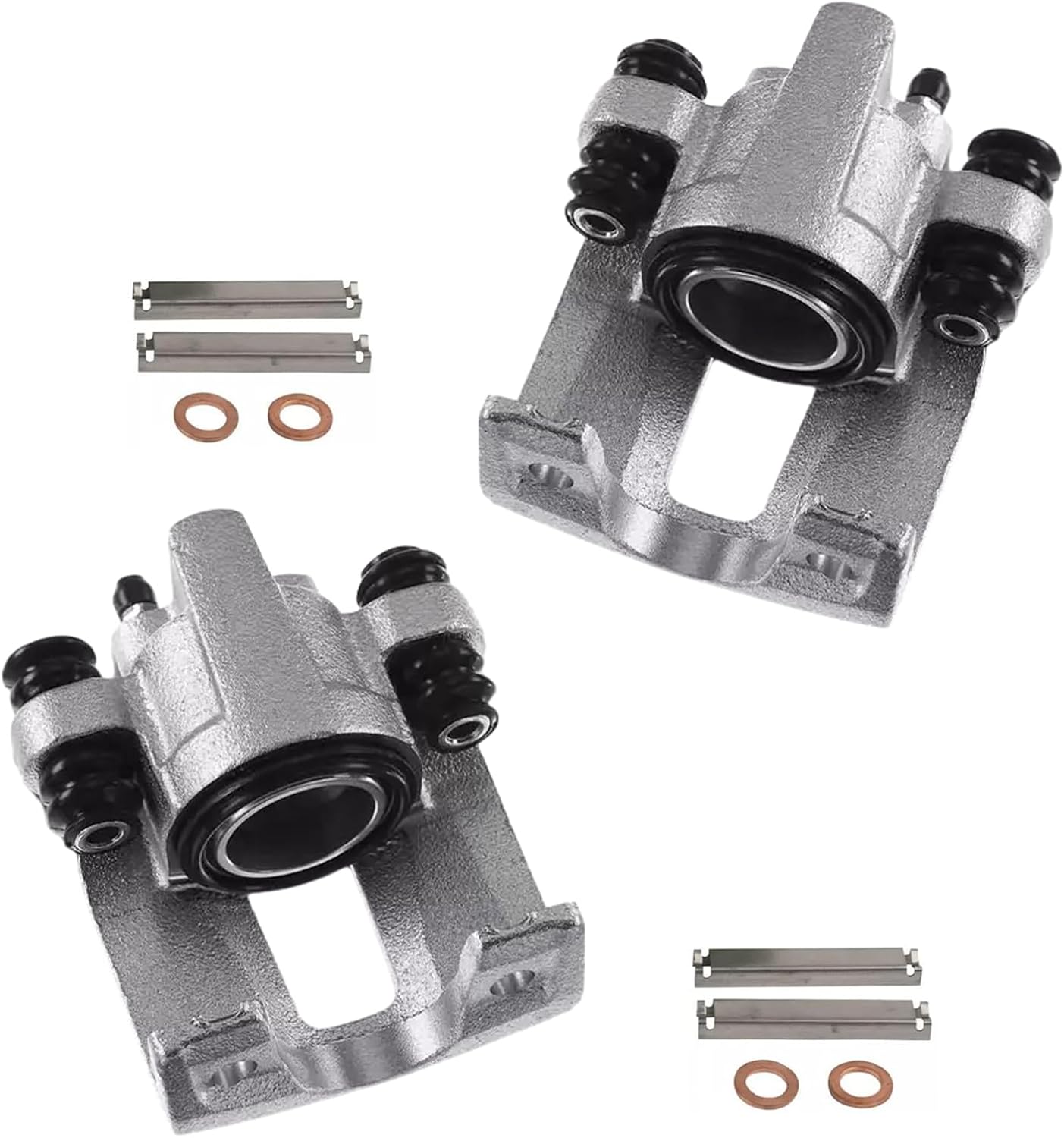
These Funire rear disc brake calipers are built as direct replacements for the factory rear calipers on specified Ford Explorer, Ranger, and Mercury Mountaineer model years. They install in the rear left and right positions and use an iron piston design with dual pistons for consistent clamping force. Typical use is straightforward: remove the old caliper, transfer any reusable hardware, then mount the new caliper and bleed the brake lines using the 3/8-24" bleeder and inlet fittings. Notable features include a galvanised anti-rust exterior coating and a claimed aluminum-alloy body with enhanced cooling for extended service life and corrosion resistance. For drivers prioritizing reliability, the dual-piston layout and factory-style inlet and bleeder sizes make these calipers a practical replacement that restores proper rear braking feel. Limitations to note are that pads and brackets are not included so additional parts may be needed, and final fitment depends on matching the listed vehicle years and OEM part numbers before purchase.
Best for: Buyers who want a dependable, factory-style rear caliper replacement to restore original braking performance on the covered Explorer and related models and who value corrosion resistance and straightforward installation.
Less Ideal for: People looking for a complete brake hardware refresh or a performance upgrade that includes pads, brackets, or larger pistons should consider a full caliper kit or alternative performance parts.
- Direct replacement for OEM part numbers 18-4604 and 18-4605
- Dual piston iron pistons provide even clamping force for rear braking
- Galvanised anti-rust coating and cooling-focused body for improved corrosion resistance
- Standard 3/8-24" inlet and bleeder ports match factory brake line fittings
- Sold without brake pads or mounting hardware which may require additional purchases
- Fitment limited to the specified Ford and Mercury model years so verification is required
Verdict: A dependable, factory-style rear caliper replacement for covered Explorers and Mountaineers that focuses on corrosion resistance and reliable braking performance.
6. TRQ Front and Rear Brake Caliper Set with Zinc-Coated Brackets
| Manufacturer | TRQ |
|---|---|
| Model | TRQ CLA84531 Brake Caliper Set |
| Exterior | Machined |
| Zinc Coated | Long lasting rust prevention |
| Hardware and Abutment Kit Included | Yes |
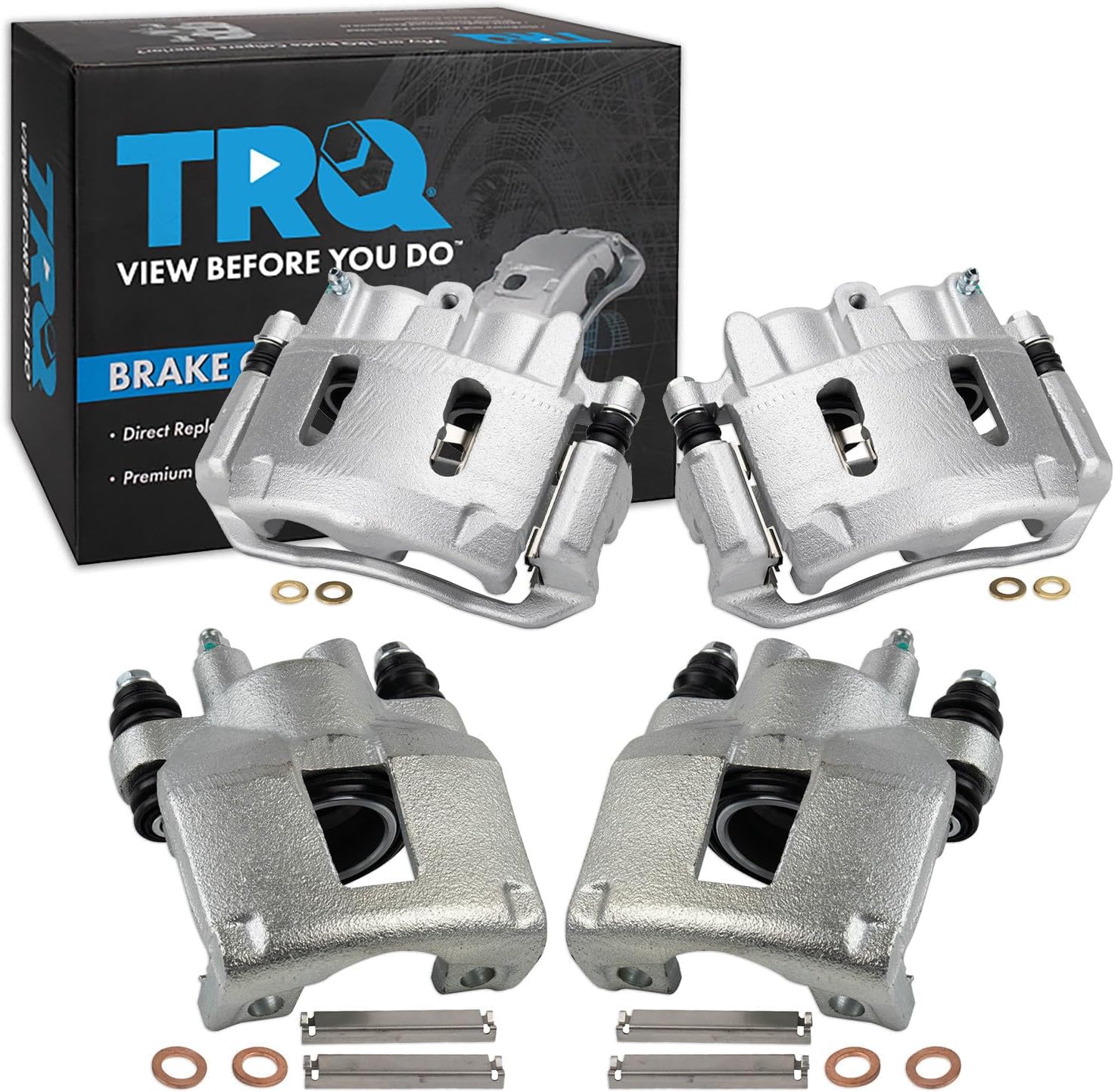
This TRQ caliper kit supplies two front and two rear brake calipers as a direct replacement for compatible 1995-2001 Ford Explorer applications. The calipers come pre-assembled and include hardware and abutment kit so you can finish a full caliper swap without sourcing extra parts. Zinc coating and EPDM seals are intended to reduce corrosion and resist thermal deterioration, which helps the calipers last longer in wet or salty conditions. Because these are 100% new components with no core charge, installation is straightforward for a DIYer comfortable with brake work, and TRQ provides installation videos to guide the process. The kit does not include pads, so plan to reuse serviceable pads or replace them separately when installing. Expect a factory-replacement fit but allow time for bleeding and bed-in when completing the job on a driveway or garage bay.
Best for: Buyers who prioritize proven fitment and peer-verified performance and want a ready-to-install replacement kit that minimizes parts sourcing and installation uncertainty.
Less Ideal for: Drivers seeking a full brake refresh in one purchase or those uncomfortable performing brake bleeding and bedding should consider a kit that includes pads and professional installation instead.
- Complete set covers both front and rear calipers so a full-vehicle repair needs just this kit and brake pads
- Zinc coated finish and EPDM seals improve corrosion resistance and thermal durability
- Pre-assembled units with included hardware and abutment kit speed up installation
- All new components with no core charge simplify purchase and return to service
- Does not include brake pads, so pads must be purchased or inspected separately
Verdict: A full, direct-fit caliper kit built for corrosion resistance and straightforward DIY installation, ideal if you want a complete new-caliper replacement backed by user trust and installation resources.
7. TRQ Rear Brake Caliper Set, Zinc Coated (Rear, 2-Piece)

| Position | Rear |
|---|---|
| Exterior | Machined |
| EPDM Seals | Yes |
| Hardware Included | Yes |
| No Core Charge | 100% new components |
These TRQ rear calipers are a direct-replacement two-piece set intended to restore rear braking on compatible Ford Explorer family vehicles from the late 1990s and early 2000s. They arrive pre-assembled with mounting hardware and an abutment kit, which simplifies DIY installation and reduces time in the garage. Zinc coating and EPDM seals aim to resist corrosion and thermal deterioration, helping the calipers last longer in wet or salted-road environments. The set contains 100% new components so there is no core charge or need to exchange old units. Practical benefits include even heat distribution during braking and step-by-step installation videos from the manufacturer that assist less experienced installers. Limitations to consider are that the listing is for calipers without pads so you will need to supply brake pads and inspect rotors and brake lines for wear during replacement. Also, fitment must be confirmed to the specific Explorer/Sport Trac/Ranger/Mountaineer applications listed before purchase to ensure a correct match.
Best for: Buyers who prioritize a low-risk, factory-style replacement and want parts that are straightforward to install with included hardware and clear installation resources.
Less Ideal for: People looking for a complete brake service kit with pads and rotors included or those needing upgraded performance calipers for heavy towing or track use.
- Direct-fit, pre-assembled rear caliper pair reduces installation time
- Zinc coating and EPDM seals improve corrosion and thermal resistance
- Includes hardware and abutment kit for a more complete repair
- All-new components with no core charge
- Ships without brake pads so pads must be purchased separately
Verdict: A practical, corrosion-resistant direct-replacement rear caliper set designed to get a late 1990s to early 2000s Ford Explorer-family vehicle back to factory-style braking with minimal fuss.
Choosing the Right 1995-2001 Ford Explorer Brake Calipers: Key Factors to Consider
Fitment and Mounting Compatibility
Correct fitment is the primary concern when replacing calipers on a 1995-2001 Ford Explorer. Calipers must match the vehicle's mounting bracket spacing, bolt thread sizes, and overall envelope so they clear the rotor and suspension components. Incorrect fitment can cause rubbing, uneven pad wear, or unsafe installation.
When evaluating options, confirm that the caliper is intended for the Explorer year range and for the specific axle location. Some calipers are built for front or rear axles with different parking brake mechanisms or hose routing. Ensuring compatibility avoids extra modification and preserves original brake geometry, rotor-to-pad alignment, and proper brake line orientation.
Piston Diameter and Brake Performance
Piston diameter affects hydraulic leverage and pedal feel. Calipers with the correct piston bore for the Explorer deliver predictable braking force and maintain OEM balance between front and rear braking. Oversized pistons can increase bite but may upset balance, while undersized pistons can reduce stopping power and require heavier pedal effort.
Check manufacturer specifications for piston size and whether the caliper uses single or dual piston designs on the front axle. Matching hydraulic characteristics helps retain proper proportioning and reduces the likelihood of premature pad wear or ABS modulation issues.
Corrosion Protection and Materials
Vehicles from the 1995-2001 era often face salt and moisture that lead to caliper corrosion. Choose calipers with durable coatings or stainless components to resist pitting and seize-up. Corrosion can freeze pistons or guide pins, causing caliper sticking symptoms and uneven braking.
Pay attention to whether the caliper body is cast iron with a protective finish, powder coating, or features stainless hardware. Better corrosion resistance lowers the chance of future rebuilds and helps maintain consistent brake operation over time.
Brake Line and Parking Brake Compatibility
The Explorer's rear calipers may integrate a parking brake mechanism or a separate cable-actuated assembly. Ensuring the replacement caliper accepts the factory brake hose fitting and parking brake connection saves effort during installation. Using a caliper without the correct parking brake interface may require retaining original components or fabricating adapters.
Also verify the inlet port orientation and banjo bolt fit so hose routing matches the factory path. Proper hose alignment prevents kinking, reduces stress on fittings, and maintains safe hydraulic integrity.
Serviceability and Availability of Rebuild Kits
Even well-made calipers may need maintenance, so ease of service matters. Calipers that accept common brake caliper rebuild kit components—such as piston seals, dust boots, and guide pin kits—are easier and cheaper to maintain over the long term. Remanufactured brake calipers are often a cost-effective option when they meet quality and corrosion standards.
Consider whether the caliper uses standard-size pistons and seals, how easily the bleeder valve and guide pins can be accessed, and whether replacement hardware is available locally. Serviceable designs reduce downtime and make future repairs simpler for DIYers and shops alike.
Quality Control and Manufacturing Consistency
Manufacturing tolerances affect piston seal fit and overall leak resistance. Choose calipers from vendors that document inspection protocols and provide clear fitment references. Poor quality control can lead to mismatched bolt holes, warped interfaces, or pistons that bind, all of which manifest as brake caliper symptoms such as fluid loss, dragging, or noise.
Look for evidence of consistent machining, pressure testing, and clear warranty or return policies in the product documentation. Reliable manufacturing reduces the chance of installation rework and supports long-term brake system reliability.
Front Versus Rear Caliper Differences on the Explorer
Front and rear calipers serve different roles on the 1995-2001 Explorer. Front calipers typically handle a larger share of braking load and may have larger pistons or dual-piston configurations. Rear calipers often accommodate parking brake linkages or internal hardware that the front units do not.
When servicing the Explorer, confirm whether the replacement is specifically designated for the front or rear axle. Swapping a front caliper for a rear unit, or vice versa, can compromise brake balance and parking brake function.
- Front calipers usually manage higher thermal and mechanical stress.
- Rear calipers may include parking brake attachments or different hose inlet positions.
- Using axle-specific calipers preserves brake proportioning and ABS calibration.
Recognizing Brake Caliper Symptoms Early
Early detection of caliper problems prevents costly rotor and pad damage. Common symptoms on the Explorer include a soft or sinking pedal, uneven pad wear, pulling to one side under braking, or visible fluid leakage near the wheel hub. Caliper sticking symptoms often start as a persistent drag or hot rotor after light driving.
If you notice these signs, inspect the caliper boots, guide pins, and piston movement. Addressing minor issues early can avoid full caliper replacement in some cases.
- Soft pedal may indicate internal seal failure or a fluid leak.
- Vehicle pulling suggests a seized piston or stuck guide pin.
- Uneven pad wear often points to slide pin or piston issues.
When to Choose Remanufactured Versus New Calipers
Remanufactured brake calipers can offer good value for the 1995-2001 Explorer if the reman program includes machining, new seals, and corrosion-resistant finishes. Confirm that the remanufactured unit has been pressure-tested and that wear surfaces were reworked to tolerances that match factory specifications.
New calipers may provide the longest service life and modern corrosion protection, but high-quality remanufactured units with documented rebuild processes are a capable alternative. Factor in warranty terms and the seller's stated refurbishment steps when deciding.
- Reman units should include new pistons seals, boots, and hardware.
- New calipers may feature improved coatings for rust resistance.
- Verify testing and fitment documentation for reman products.
Basic Steps for How to Replace a Brake Caliper on the Explorer
Replacing a caliper on the 1995-2001 Explorer follows familiar brake service steps but requires attention to fitment and parking brake linkage on rear units. Start by safely supporting the vehicle, removing the wheel, and inspecting rotor and pad condition. Before disconnecting the brake hose, be ready with a container for brake fluid and consider replacing copper crush washers or banjo bolts as needed.
After removing the old caliper, compare mounting points and hose inlets to ensure the replacement matches. Refit the caliper, torque mounting bolts to specifications, and bleed the brake system thoroughly to remove air. Check parking brake operation on the rear caliper if applicable and verify there are no leaks.
- Always support the vehicle on rated jack stands and follow safety procedures.
- Replace hardware like slide pin boots and bleeder valves if damaged.
- Bleed the system after installation to restore firm pedal feel.
Maintaining Calipers to Prevent Sticking
Routine inspection and lubrication of guide pins and sliding surfaces can prevent caliper binding on Explorers exposed to road salt or heavy use. Clean and repack the guide pin boots when replacing pads, and use high-temperature brake grease on the pins to maintain free movement.
Address any minor leaks promptly and inspect rubber boots for cracks. Rebuilding a caliper with a brake caliper rebuild kit can be a cost-effective way to restore function if corrosion has not extensively damaged the bore or piston.
- Inspect caliper boots at every pad change.
- Use compatible high-temperature grease on guide pins only.
- Consider rebuild kits if pistons move but seals are failing.
Rotor and Pad Considerations When Changing Calipers
Installing new or remanufactured calipers is a good time to inspect rotors and pads. Excessive rotor wear, runout, or deep scoring can limit the effectiveness of a new caliper and accelerate pad wear. Match rotor thickness and the pad profile to the caliper design to ensure even contact.
If rotors are near the minimum thickness or show signs of heat damage, plan to resurface or replace them during caliper service to ensure consistent braking performance and to avoid premature caliper strain.
- Verify rotor thickness against factory minimums before reuse.
- Check pad backing plate clearance with the new caliper piston.
- Replace hardware like anti-rattle clips if worn or missing.
Still looking for the perfect fit?
Select your Ford Explorer configuration to see the most relevant Brake Calipers recommendations
How We Chose the Best 1995-2001 Ford Explorer Brake Calipers
We focused on attributes that matter specifically to 1995-2001 Ford Explorer brake calipers and filtered candidates accordingly. Selection prioritized exact fitment to the Explorer's brake mounting points and bolt pattern, correct piston bore size for the factory brake system, and compatibility with original hardware locations. Corrosion resistance was a major criterion because older Explorers commonly face rusted caliper bodies and seized components. We also evaluated ease of installation, including whether the caliper accepts OE-style brake line fittings and parking brake connections where applicable.Serviceability was another key filter: we favored calipers designed for straightforward pad replacement, those that accept common rebuild kits, and units with replaceable guide pins or boots. We considered remanufacturing quality and manufacturing tolerances that affect piston seal life and leakage risk. Exclusions included units without clear fitment documentation for the 1995-2001 Explorer, calipers lacking corrosion protection details, and any options that required significant modification to factory brake hardware. The final list balances reliability, long-term maintenance, and straightforward installation for owners and independent shops working on this vehicle.
Our full evaluation process is outlined in our review methodology.
FAQ
How do I tell if a caliper is sticking on my 1995-2001 Explorer?
Common signs include the vehicle pulling to one side while driving, a hot or discolored rotor after short trips, and accelerated pad wear on one wheel. You may also notice reduced fuel economy or a constant brake drag feel. Inspect the guide pins and piston movement to confirm sticking.
Can I replace a single caliper or should I do both sides at once?
You can replace a single faulty caliper, but pairing it with the opposite side is recommended when the other unit shows wear or age. Matching condition and corrosion protection helps maintain balanced braking and reduces the chance of uneven pad wear.
Are remanufactured brake calipers reliable for the Explorer?
Quality remanufactured brake calipers are often reliable if they include proper machining, new seals, and corrosion treatments. Confirm that the reman unit is pressure-tested and documented for the 1995-2001 Explorer to ensure acceptable performance.
Will different piston sizes affect ABS or brake balance?
Yes, piston size influences hydraulic leverage and can affect braking balance and ABS modulation. Use calipers specified for the Explorer's system to preserve factory proportioning and ABS behavior.
Can I rebuild a seized caliper with a rebuild kit?
If the piston moves and the caliper bore is not severely corroded, a brake caliper rebuild kit can restore seals and boots and often resolve sticking. Severe pitting or warped components usually require full replacement.
What maintenance prevents caliper corrosion on older Explorers?
Regular cleaning of the caliper area, inspection of boots, and periodic lubrication of guide pins with high-temperature grease help. Applying corrosion-resistant coatings or using calipers with better finishes reduces exposure-related damage over time.
Final Verdict
For the 1995-2001 Ford Explorer, prioritize calipers that match factory mounting and piston specifications, offer reliable corrosion protection, and are easy to service. Balance the choice between remanufactured and new units by checking documented refurbishment steps, test procedures, and availability of rebuild kits. Pay attention to axle-specific features like parking brake interfaces and hose inlet orientation.Ultimately, choose calipers that preserve brake balance and simplify future maintenance. That approach delivers the most reliable stopping performance and minimizes the chance of recurring caliper-related issues on your Explorer.
Explore More:
- Check out all Ford Explorer parts & accessories
- Explore Brake Calipers Maintenance & Repair Guides
- Explore Brake System
- Browse all Auto Parts
