

Note: This article contains affiliate links. If you click on these links and make a purchase, I may earn a small commission at no extra cost to you. This helps support my research and content. Read my full affiliate disclosure here.
If you own a Chevrolet S-10 with the V8 engine, the radiator is one of the most important parts that keeps the truck running reliably under load. A properly sized, well-built radiator prevents overheating, extends engine life, and reduces the chances of roadside breakdowns. In this guide we shortlisted the top radiators suited to the S-10 V8 and evaluated them for cooling performance, construction quality, and fitment.Below you will find the top picks for this specific vehicle configuration, followed by practical buying guidance, installation considerations, and signs that indicate the radiator may need replacement.
Top Picks at a Glance
| Best Overall The best all-around choice for most situations | Smileracing 3-Row AA5052 Aluminum Racing Core Radiator with Fan Shroud and Dual 12" Slim Fans |  |
| Best Quality Built to a higher standard if you want something more solid | ECMRAD 3-Row Aluminum Radiator with Fan Shroud and Relay Kit |  |
| Best Value The sweet spot between price and what you get | HEVIKE 3-Row Aluminum Racing Radiator with 1.375" Inlet/Outlet |  |
| Best Budget The cheapest option that still gets the job done reliably | cerbordy Full Aluminum 3-Row Racing Radiator for Chevy S-10 Blazer V8 Conversion |  |
| Highest Rated A top-rated pick with lots of positive feedback | BLACKHORSE-RACING Full T-6061 Aluminum 3-Row Racing Radiator |  |
| Most Popular A crowd favorite that many people choose with confidence | LUXERAD 3-Row Full Aluminum Radiator with Fan for Chevy Corvette/S10 V8 Conversion |  |
1. Smileracing 3-Row AA5052 Aluminum Racing Core Radiator with Fan Shroud and Dual 12" Slim Fans
| Vehicle compatibility | 1982-2002 Chevy S10/S-10 Blazer V8 conversion; 1984-1990 Chevrolet Corvette |
|---|---|
| Core | 3-row AA5052 aluminum |
| Inlet/Outlet | 1.38" / 1.38" |
| Included fans | 2 x 12" slim push fans |
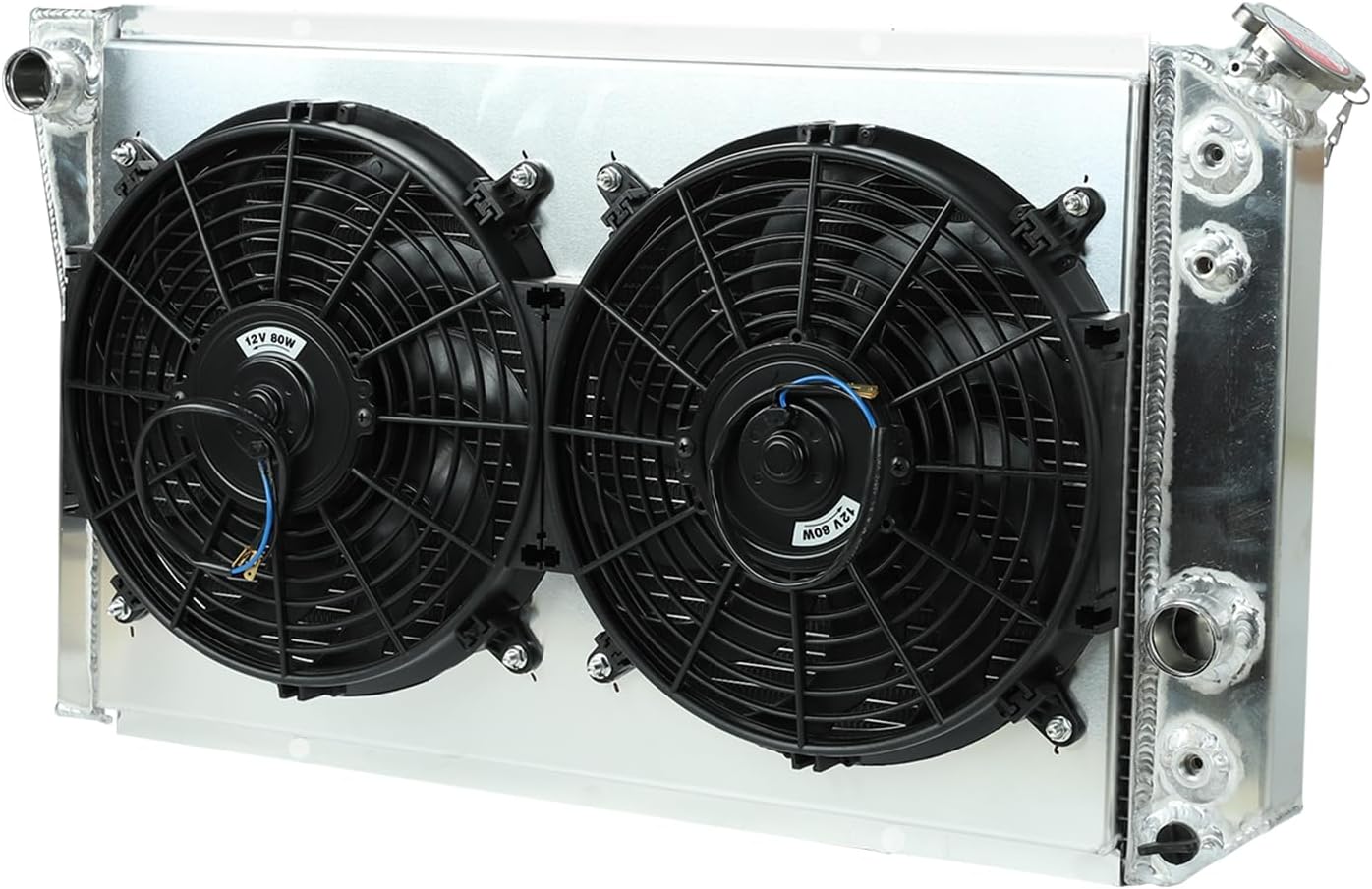
This Smileracing kit replaces the factory unit with a lightweight 3-row AA5052 aluminum racing core and includes a full shroud plus two 12" slim push fans for improved cooling in high-heat V8 conversions. It is intended as a direct bolt-on replacement for 1982–2002 Chevy S10/S-10 Blazer V8 conversions and 1984–1990 Corvettes, offering a larger coolant capacity and TIG-welded construction for durability. In use it lowers operating temperature by the advertised margin through the denser 3-row core and forced airflow from the dual slim fans, which helps during towing, spirited driving, or stop-and-go traffic. The package is most useful for owners upgrading from a smaller or older radiator who need better heat rejection without major modification. Limitations include the slim fans which are good for tight clearances but may move less air than larger electric fans, and fitment requires confirming inlet/outlet size and clearance against your specific setup.
Best for: Buyers doing a V8 conversion or replacing an aging radiator who want a durable, higher-capacity aluminum core and an all-in-one kit that minimizes fabrication work.
Less Ideal for: Drivers seeking maximum cooling with large aftermarket electric fans or those unwilling to verify inlet/outlet sizing and clearance before purchase.
- Full AA5052 aluminum 3-row core increases coolant capacity and corrosion resistance compared with many stock units
- Includes full fan shroud for better airflow direction and two 12" slim push fans for active cooling in tight spaces
- TIG-welded construction and polished finish for durability and a clean engine-bay appearance
- Direct bolt-on fitment for the listed S-10 V8 conversion and Corvette model years simplifies installation
- Slim 12" fans may provide less peak airflow than larger single fans under extreme cooling demand
Verdict: A complete, bolt-on aluminum 3-row radiator kit that gives S-10 V8 conversion projects noticeably better cooling while keeping installation straightforward.
2. ECMRAD 3-Row Aluminum Radiator with Fan Shroud and Relay Kit

| Core Rows | 3 Rows |
|---|---|
| Core Size | 23.5 inch x 15.75 inch |
| Inlet/Outlet | 1.375 inch |
| Transmission Oil Cooler | Built-in |
| Fan Max CFM | 1730 cfm |
This ECMRAD 3-row aluminum radiator is built for V8 swap cooling demands on Chevrolet S10 and Blazer conversions. It replaces the factory plastic unit with a full 3-row aluminum core and TIG-welded end tanks to improve heat transfer and durability. The kit includes a formed aluminum shroud, two 12-inch electric fans (about 1730 CFM max each), and a thermostat relay wiring kit so you get a mostly complete cooling package at installation. A built-in transmission oil cooler is included, which helps keep ATF temps in check during towing or spirited driving. Expect noticeably lower coolant temps under load compared with stock radiators and better resistance to boil-over in high-heat situations. Installation uses pin mounts so it fits V8 swap mounting setups but may require some trimming or bracket work depending on your swap details. The fans are plastic-blade, 12.7 amp units that provide strong airflow but are not brushless premium fans, and conduit or relay wiring attention is recommended to ensure reliable operation.
Best for: Buyers doing a Chevrolet S10 or Blazer V8 conversion who prioritize improved thermal capacity and a mostly complete plug-and-play cooling kit for performance driving and towing scenarios.
Less Ideal for: Drivers seeking a direct-fit OE-style replacement for stock 4-cylinder models or those who want a no-modification installation for multiple vehicle platforms.
- Full aluminum 3-row core and TIG-welded end tanks for better heat transfer and durability
- Includes formed shroud and dual 12-inch high-flow electric fans for effective push/pull cooling
- Built-in transmission oil cooler provides integrated ATF cooling without extra plumbing
- Kit includes thermostat relay wiring to simplify fan control setup
- Pin-mount design may require bracket or modification during some V8 swap installations
- Fans are standard plastic-blade units and draw relatively high current compared with premium options
Verdict: For S10 V8 swap projects that need stronger cooling capacity and an included fan/shroud/relay package, this aluminum 3-row radiator delivers a practical, performance-focused upgrade.
3. HEVIKE 3-Row Aluminum Racing Radiator with 1.375" Inlet/Outlet

| Core Rows | 3 |
|---|---|
| Core Dimensions | 602 x 378 x 44mm |
| Inlet / Outlet | 1.375" / 1.375" |
| Exterior | Polished |
This HEVIKE 3-row aluminum racing radiator is built to replace the stock unit on S-10 V8 conversion and similar high-heat applications where extra cooling capacity is required. It uses a triple-core tube-and-fin design and a larger coolant volume to boost heat transfer, which the manufacturer estimates cuts operating temperatures by roughly 35 to 45 percent versus typical stock radiators. Installation is straightforward for a manual-transmission swap with the specified 1.375 inch inlet and outlet fittings, and the polished aluminum finish gives a clean, race-ready look under the hood. The lightweight aluminum construction helps reduce front-end mass while improving cooling reserve for spirited driving or towing. Limitations are that fitment is sold specifically for certain Chevy S-10/Blazer V8 conversions and 1984-1990 Corvette manual-transmission applications, so you must confirm your transmission and hose sizes before ordering, and mounting hardware or trim may require adaptation on some installations.
Best for: Buyers upgrading an S-10 or similar V8 conversion who want a factory-style, higher-capacity radiator that reduces operating temperatures for spirited driving or towing while keeping weight low.
Less Ideal for: Drivers with automatic-transmission swaps, non-listed vehicle applications, or those unwilling to verify hose and mount compatibility should consider other options or professional fitment help.
- Three-row aluminum core increases coolant capacity and heat dissipation compared with typical single- or two-row radiators
- Tube-and-fin construction provides a larger surface area for faster cooling under sustained load
- Polished aluminum exterior offers corrosion-resistant finish and a tidy appearance
- 1.375" inlet and outlet match common hose sizes for V8 conversion plumbing
- Fitment limited to specified vehicle conversions and manual-transmission applications which may require verification
Verdict: A lightweight, three-row aluminum radiator that meaningfully increases cooling capacity for S-10 V8 conversion builds where manual-transmission fitment and hose sizing match.
4. cerbordy Full Aluminum 3-Row Racing Radiator for Chevy S-10 Blazer V8 Conversion

| Core size | 602 x 378 x 44 mm |
|---|---|
| Inlet/Outlet | 1.375" / 1.375" |
| Construction | Full AA5052 aluminum |
| Rows | 3-row core |
This full AA5052 aluminum 3-row radiator is built as a bolt-in, higher-capacity replacement for Chevy S-10 Blazers converted to V8s and similar small-block setups. The tube-and-fin core and three-row layout increase coolant volume and surface area, which the maker says yields roughly 35 to 45 percent better cooling versus stock units — a real benefit for hotter-running V8 swaps or spirited driving. It uses 1.375 inch inlet and outlet fittings and is offered as a direct bolt-on front-position unit for the specified fitments. The radiator is lightweight compared with cast-iron or heavy OEM units and omits installation instructions, so plan for professional or experienced DIY installation. There is no fan, hoses, or mounting hardware included, so you may need to reuse factory pieces or buy compatible components. For budget-minded owners this model offers strong cooling gains per dollar, but expect to handle some additional fitment and accessory sourcing during installation.
Best for: Owners doing a V8 swap on an S-10 who need a budget-friendly, higher-capacity radiator to control engine temps during heavier loads or spirited driving and who are comfortable sourcing or reusing mounting parts.
Less Ideal for: Buyers who want a fully complete plug-and-play kit with fans, hoses, and fittings included or those who need compatibility beyond the specified S-10 V8 conversions.
- Full AA5052 aluminum construction for improved heat transfer and corrosion resistance
- 3-row tube-and-fin core increases coolant capacity and surface area for better cooling
- Direct bolt-on design for the listed Chevy S-10 V8 conversions and compatible Corvette small-block fitments
- Lightweight racing-style unit that reduces front-end mass compared with heavier replacements
- No installation instructions, hardware, fan, or hoses included so additional parts or professional installation may be required
- Fitment is limited to the listed vehicle conversions and manual-transmission applications only
Verdict: A cost-conscious, high-capacity aluminum radiator that gives S-10 V8 swaps significantly better cooling without a big price premium.
5. BLACKHORSE-RACING Full T-6061 Aluminum 3-Row Racing Radiator
| Compatibility | 1982-2002 Chevy S10/S-10 Blazer V8 Conversion; 1984-1990 Chevrolet Corvette |
|---|---|
| Material | T-6061 Aluminum |
| Core Rows | 3-Row |
| Inlet/Outlet | 1.375" / 1.375" |
| Mounting Type | Chassis Mount |
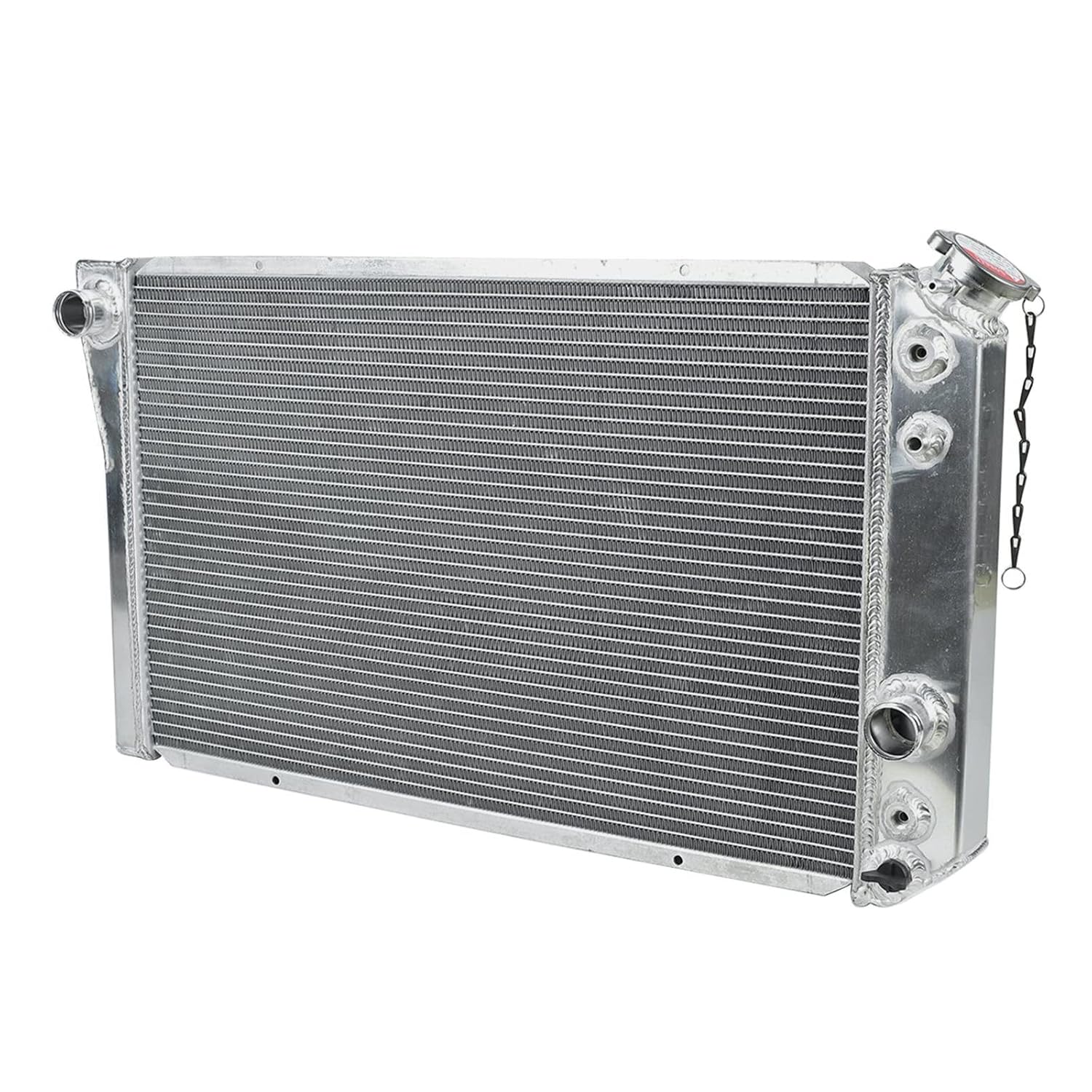
This BLACKHORSE-RACING 3-row aluminum radiator is built for higher cooling capacity and race-style duty on V8-converted Chevy S-10 platforms. It replaces the stock unit with a full T-6061 aluminum, tube-and-fin core intended to increase cooling surface area and accommodate more coolant, which the manufacturer says improves cooling by roughly 35 to 45 percent. Typical use is as a direct bolt-on chassis mount for manual-transmission S-10 V8 conversions where extra heat rejection matters under load, towing, or spirited driving. Notable features include a three-row core for increased capacity, 1.375-inch inlet and outlet, and a relatively compact core size for fitment in tighter engine bays. The radiator is lightweight compared with cast-iron or heavy multi-material units, and its construction should resist corrosion better than mixed-metal assemblies. Important limitations: installation may require professional fitting for hose and bracket alignment, there are no instructions included, and the advertised performance gains reflect optimal conditions so real-world improvement will vary with cooling system condition and support components like fan and shroud.
Best for: Buyers who prioritize a more robust, higher-capacity cooling solution for a V8-converted S-10 and want a direct-replacement radiator built for sustained heavy use and heat management.
Less Ideal for: Drivers looking for a drop-in, no-adjustment replacement for vehicles with automatic transmissions or those who prefer complete installation guidance and kit-style upgrades.
- Full T-6061 aluminum 3-row core offers higher heat transfer and greater coolant capacity than typical stock radiators
- Direct bolt-on chassis-mount design intended for S-10 V8 conversions reduces modification work
- Lightweight construction helps reduce front-end mass compared with heavier replacements
- Tube-and-fin design increases surface area for more efficient cooling under sustained load
- No installation instructions included which may complicate DIY fitting and hose alignment
- Performance gains depend on the rest of the cooling system and may require upgraded fan, shroud, or hoses to realize full benefit
Verdict: Choose this aluminum 3-row radiator when you need a higher-capacity, direct-fit cooling upgrade for a V8-converted Chevy S-10 to improve heat management during heavy-duty use.
6. LUXERAD 3-Row Full Aluminum Radiator with Fan for Chevy Corvette/S10 V8 Conversion

| Rows | 3 |
|---|---|
| Inlet/Outlet | 1.38 inch |
| Overall Size | 29.75" *15.38" |
| Trans cooler | Included |
This full-aluminum 3-row radiator replaces the factory cooling unit when converting an S10 or fitting a Corvette 5.7L application. It pairs a dense three-row core with an included high-flow electric fan and an integrated transmission cooler, so it handles higher heat loads from V8 swaps and towing. The TIG-welded all-aluminum construction improves heat transfer and resists corrosion compared with mixed-metal cores, and the 35 to 45 percent claimed boost in cooling efficiency can reduce operating temperatures under sustained load. Installation is typical for aftermarket radiators but may require bracket or hose adaptation on conversion kits; inlet and outlet are 1.38 inches and a trans cooler line is included. The fan provides strong airflow for low-speed cooling but adds wiring and mounting steps. This unit comes with a one-year warranty and targets users upgrading cooling capacity rather than those wanting a plug-and-play factory replica.
Best for: Buyers performing a V8 conversion or upgrading cooling on an S10 who prioritize better heat management and durable construction backed by user feedback.
Less Ideal for: Drivers seeking an exact factory-replacement radiator with no modification or those unwilling to handle basic wiring and mounting work should consider other options.
- All-aluminum, TIG-welded construction for improved heat transfer and corrosion resistance
- Three-row core increases cooling capacity for V8 swaps and heavy use
- Included electric fan and integrated transmission cooler simplify creating a complete cooling package
- May require custom mounting or hose adapters on some conversion installations
Verdict: Choose this aluminum 3-row radiator when you need a durable, higher-capacity cooling solution for an S10 V8 conversion to keep temperatures under control.
Choosing the Right Chevrolet S-10 V8 Radiator: Key Factors to Consider
Cooling Capacity and Core Design
Cooling capacity determines how effectively the radiator removes heat from the engine coolant. For a V8-equipped S-10, higher thermal loads demand a core with greater surface area, such as multi-row cores or cores with increased thickness. Tube-and-fin density, core height, and number of rows all influence heat transfer and pressure drop across the radiator.
A larger or denser core improves cooling but can add weight and may require more fan power. Consider whether your driving involves towing or frequent high-load conditions, as those scenarios benefit from an upgraded core. Also review whether the radiator's fin design resists clogging from debris and allows for straightforward cleaning to maintain heat exchange efficiency over time.
Fitment and Mounting Compatibility
Correct fitment is critical to avoid modification during installation and to ensure hoses, fan shroud, and transmission cooler lines align properly. For the Chevrolet S-10 V8, confirm that the radiator matches factory mounting points, inlet and outlet locations, and overall height and width so it mates with the OEM fan and shroud or common aftermarket fans.
A radiator that requires custom brackets, trimmed frames, or relocated hoses increases installation time and cost. Pay attention to whether the radiator supports the stock electric or mechanical fan arrangement, and verify clearance around the alternator and other engine accessories. Proper fitment also reduces vibration and stress on hoses which helps prevent leaks.
Material and Construction Quality
Materials affect longevity, repairability, and heat transfer. Common constructions include full-aluminum cores with molded tanks, or copper/brass cores with stamped tanks. Full-aluminum radiators are typically lighter and offer good thermal conductivity, while copper/brass designs may be easier to repair but can be heavier and more susceptible to corrosion if not properly coated.
Look for quality welds, reinforced mounting ears, and corrosion-resistant finishes. Check for consistent tube spacing and well-formed end tanks that reduce the chance of stress cracks. A well-built radiator will resist vibration and thermal cycling better, reducing the likelihood of premature failure or weld separation.
Transmission Cooler Integration
Many S-10 V8 owners run automatic transmissions that rely on the radiator as a transmission fluid cooler. Radiators with integrated transmission cooler ports eliminate the need for separate coolers and plumbing, simplifying installation and reducing leak points. Confirm port locations and whether the radiator uses threaded fittings or quick-connects that match your existing lines.
If you do a lot of towing or hauling, an upgraded radiator with an effective transmission cooler section can help keep transmission temperatures in a safe range. Conversely, if you plan to add a dedicated external transmission cooler, ensure the radiator still supports necessary coolant flow and clearance for any added components.
Ease of Installation and Serviceability
Installation complexity affects how quickly you can return the truck to service and whether the job is a DIY task or needs a shop. Radiators that retain the stock hose positions, support OEM fan shrouds, and include clear bleed ports are easier to install and to bleed properly after coolant replacement. Consider whether the radiator comes with new mounting hardware, drain petcocks, or necessary fittings to avoid sourcing small parts separately.
Serviceability also includes accessibility for future maintenance. Radiators that allow straightforward access to the drain, petcock, and fan shroud make coolant changes and flushes less messy and faster, which helps maintain the cooling system over the vehicle lifetime.
Warranty and Corrosion Protection
A radiator warranty gives insight into expected longevity and manufacturer confidence. Look for radiators that include corrosion-resistant coatings, protective finishes, or internal treatments that help prevent galvanic corrosion when paired with different metals in the cooling system. Longer or more comprehensive warranties can be especially valuable for vehicles used year-round or in corrosive environments.
Keep in mind that warranty terms often require proper installation and using the correct coolant type. Verify what is covered, the claim process, and whether the warranty is prorated or full replacement to understand long-term ownership value.
Signs Your S-10 V8 Radiator Needs Replacement
Recognizing early symptoms can prevent engine damage. Frequent engine overheating, visible coolant leaks beneath the truck, or a sweet odor in the engine bay are common indicators that the radiator or its seals may be failing.
Other signs include milky oil that indicates coolant contamination, consistent low coolant level despite no visible external leaks, and white exhaust smoke that can signal internal head gasket or core breaches. Also watch for overheating under load or during towing, which suggests the radiator is no longer dissipating heat effectively.
A pressure test and visual inspection can help pinpoint whether the core, end tanks, or fittings are the source of the issue, and whether a repair or full replacement is the best course of action.
- Visible coolant pooling or wet spots at radiator base
- Overheating only during heavy loads or idle
- Rust or corrosion on the core or tanks
- Damaged or collapsed fins that restrict airflow
When To Choose an Upgraded Core Vs Stock-Style Replacement
If you use the S-10 for light hauling and daily driving, a stock-style replacement that matches OEM dimensions and flow characteristics typically provides reliable service without added complexity. These units prioritize direct fitment and straightforward installation.
However, if you tow regularly, do off-road work, or have power upgrades that increase thermal load, an upgraded multi-row or thicker core can offer measurable improvements in peak temperature control. Keep in mind that upgraded cores may require more fan power and could slightly alter under-hood clearance.
- Stock-style: best for daily driving and simple swaps
- Upgraded core: best for towing, performance, or hotter climates
- Consider fan capacity and mounting when upgrading core size
Preparing for Radiator Installation on the S-10 V8
Before you start, gather the correct coolant type, new hose clamps, and any replacement hoses if they show wear. Drain the system fully and capture coolant in a safe container for proper disposal or recycling. Disconnect the battery before removing heavy components around the radiator to avoid shorts.
Inspect the fan, shroud, and mounting points for damage. If the replacement radiator does not include a petcock or fittings, have those on hand. After installing the radiator, use a proper bleeding procedure to eliminate air pockets and verify the thermostat opens at its specified temperature.
- Always replace worn hoses and clamps during radiator service
- Verify fan clearance and shroud alignment before final mounting
- Follow a systematic bleeding process to prevent airlocks
Basic Cooling System Maintenance For Longevity
Regular maintenance extends radiator service life and protects the engine. Periodic coolant changes and a coolant flush remove sediment and additives that can promote corrosion or clog channels inside the core. Check coolant concentration with a tester and top off with the manufacturer-recommended mix to prevent boil-over and freezing.
Also inspect hoses, clamps, and the thermostat during routine intervals. Keep the exterior of the core free from debris, leaves, and insect buildup that reduce airflow. A simple visual check for bent fins and a gentle cleaning with low-pressure water can restore much of the radiator's airflow capacity.
- Flush coolant every 2 to 4 years depending on coolant type
- Use the correct antifreeze concentration for your climate
- Inspect hoses and clamps at every oil change
DIY Vs Professional Installation Considerations
Many mechanically inclined S-10 owners can handle a radiator swap with basic tools if the replacement matches OEM fitment. Tasks include draining coolant, removing fan shroud, disconnecting hoses and transmission lines, and lifting the radiator out. Time and a helper to steady the radiator make the job safer and faster.
Consider a professional installation if the radiator requires modification, if transmission cooler lines need flaring or adapters, or if you lack a proper bleeding procedure. Professionals can also pressure-test the system and verify fan operation and thermostat function under load.
- DIY is feasible for direct-fit replacements with standard tools
- Hire a shop for custom installations or when transmission lines are involved
- Always pressure-test the cooling system after installation
Still looking for the perfect fit?
Select your Chevrolet S-10 configuration to see the most relevant Radiators recommendations
How We Chose the Best Chevrolet S-10 V8 Radiator
We focused on practical, vehicle-specific criteria to identify radiators that work well on the Chevrolet S-10 V8. Our evaluation prioritized cooling capacity and thermal efficiency because V8 engines generate more heat and require higher flow and core surface area to maintain safe operating temperatures. Fitment and direct-compatibility were another key filter; we favored designs that match factory mounting points, hose positions, and transmission-cooler provisions to minimize modification during installation. Durability and materials mattered as well, with attention to full-aluminum or high-quality brass/bronze cores, robust end tanks, and corrosion-resistant finishes that stand up to road salt and extended service life.We also assessed ease of installation, including whether the radiator supports stock fan shrouds and thermostat housings and whether it requires special tools or additional adapters. Cooling system integration was reviewed by considering built-in or optional transmission cooler lines and bleed ports for straightforward coolant bleeding. We excluded unit types that require significant chassis modification, custom-fit radiators intended for motorsport builds, or components lacking sufficient dimensional data to confirm fitment. Final selections balance thermal performance, correct fitment for the V8 S-10, long-term durability, and straightforward installation.
Our full evaluation process is outlined in our review methodology.
FAQ
How long should a radiator last in a Chevrolet S-10 V8?
Radiator life varies with material and environment but often ranges from several years to over a decade. Regular coolant maintenance and protection from corrosion extend service life; frequent overheating or external damage can shorten it.
Can I repair small leaks in the radiator or should I replace it?
Small external leaks or damaged hose fittings can sometimes be repaired, but repairs are often temporary. If the core is leaking or there is internal corrosion, full replacement is usually the more reliable long-term solution.
Do I need a radiator with an integrated transmission cooler for the S-10 V8?
If your truck uses the radiator for transmission cooling, an integrated cooler simplifies plumbing and often provides adequate cooling for normal use. For heavy towing or severe duty, a dedicated external transmission cooler may be beneficial.
What coolant type should I use after installing a new radiator?
Use the coolant type and concentration recommended for your Chevrolet S-10 V8. Mixing incompatible coolant chemistries can reduce corrosion protection. If unsure, match the vehicle manufacturer specifications and maintain the proper antifreeze/water ratio.
Will an upgraded radiator require changes to the fan or shroud?
Sometimes. Thicker or larger cores can reduce available clearance and may require a higher-capacity fan or a different shroud to maintain adequate airflow. Verify fan compatibility before final installation.
How do I know if my radiator is the cause of overheating?
Check for external leaks, clogged fins, or restricted flow. Monitor temperature rise under similar driving conditions; if the engine overheats despite a functioning thermostat and fan, the radiator may be undersized or clogged and require inspection or replacement.
Final Verdict
For the Chevrolet S-10 V8, prioritize radiators that combine sufficient core capacity with correct fitment to keep engine temperatures under control during towing or high-load driving. Factor in material and construction quality to ensure long-term durability, and confirm transmission cooler integration if your truck relies on the radiator for transmission cooling.Balance cooling performance, ease of installation, and warranty coverage when deciding between a stock-style replacement and an upgraded core. With the right radiator chosen for your S-10 V8 and proper maintenance, you can avoid overheating issues and keep the truck dependable for years.
