

Note: This article contains affiliate links. If you click on these links and make a purchase, I may earn a small commission at no extra cost to you. This helps support my research and content. Read my full affiliate disclosure here.
If you own a 2007-2014 Chevrolet Tahoe, the radiator is one of the most important components for keeping the engine cool and dependable. A failing radiator can cause overheating, coolant loss, and expensive follow-on damage, so choosing the right replacement matters more than a quick fix.This guide shortlists the top radiator options compatible with the 2007-2014 Tahoe and explains how we evaluated cooling capacity, fitment, materials, and installation considerations. Use it to narrow choices by your priorities, whether long-term durability, straightforward installation, or restoring proper cooling performance.
Looking for other parts? See all Chevrolet Tahoe parts & accessories.
Top Picks at a Glance
| Best Overall The best all-around choice for most situations | Autoexact 2370 Aluminum Engine Radiator with TOC & EOC |  |
| Best Quality Built to a higher standard if you want something more solid | TRQ Radiator 34-Inch Core, 1-Row Aluminum Core (RDA82612) |  |
| Best Value The sweet spot between price and what you get | Alpaspare 2370 Direct-Fit Cooling Radiator with TOC & EOC |  |
| Best Budget The cheapest option that still gets the job done reliably | KAX CU2370 Replacement Radiator for Chevrolet 2005–2014 V8 Trucks and SUVs |  |
| Highest Rated A top-rated pick with lots of positive feedback | Zynrako 34" Engine Coolant Radiator with Oil Cooler – Compatible with 1999–2014 Chevy/GMC/Cadillac/Hummer 4.3L–8.1L |  |
| Most Popular A crowd favorite that many people choose with confidence | DWVO 34-Inch Complete Radiator, Model CU2423 |  |
| Best Seller A high-volume bestseller chosen again and again | A-Premium 34" Engine Coolant Radiator with Transmission Oil Cooler (Automatic) |  |
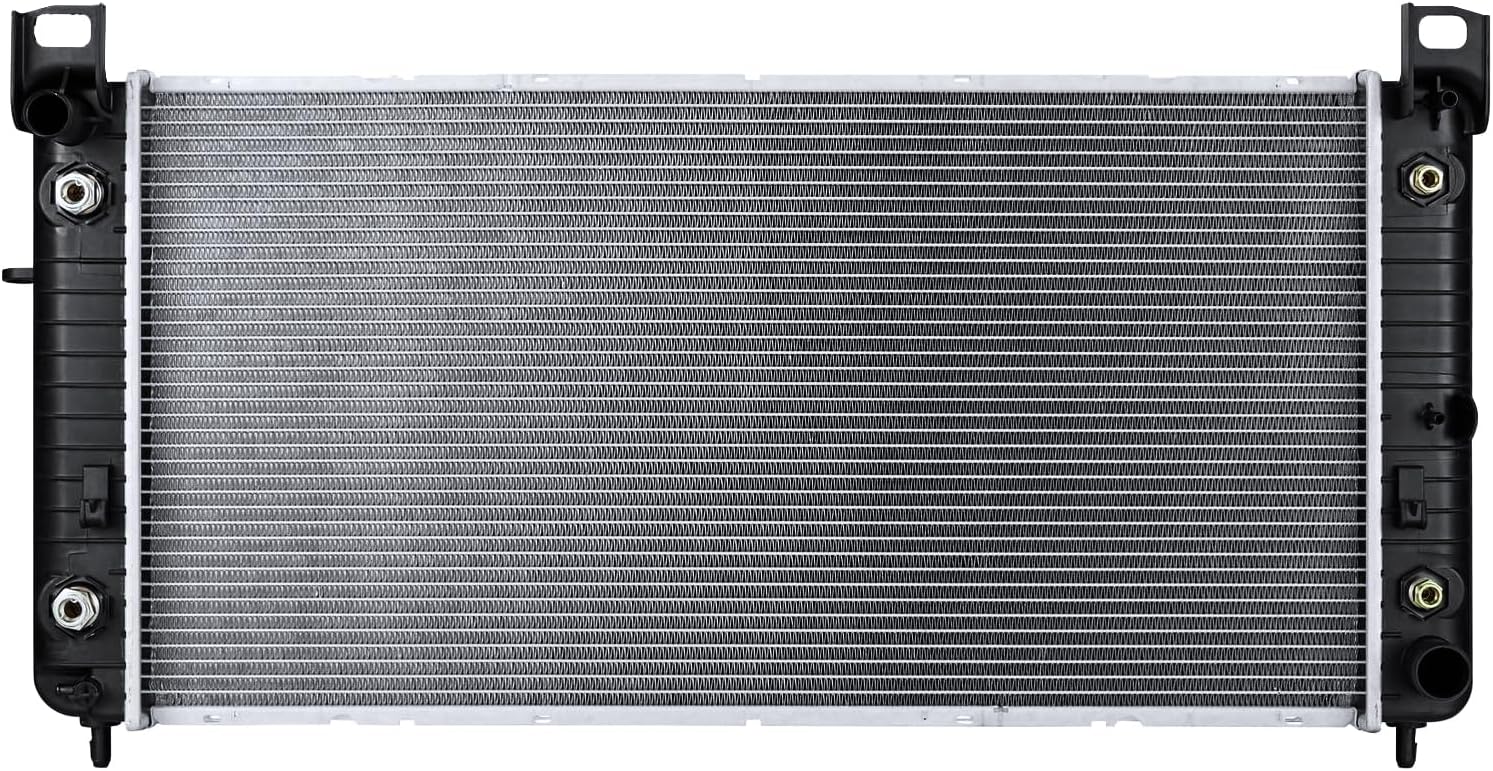
1. Autoexact 2370 Aluminum Engine Radiator with TOC & EOC
| Position | Front |
|---|---|
| Material | Aluminum |
| Model | 0472 Radiator for Chevy Gmc Cadillac |
| ABPA Partslink Number | GM3010274 |
| OEM Part Number | 10387446, 15124631, 15124632, 15143107, 15189400, 15189401, 15189402, 15189403, 15190561, 15192412, 15192413 |
This Autoexact all-aluminum radiator is a direct replacement designed to restore or improve engine cooling on compatible Chevy and GMC trucks and SUVs from the 2000s and early 2010s. It uses multi-louvered fins, flat-flow B-type tubes, and optimized airflow channels to move heat away from the engine more quickly than older or damaged units. The unit includes deep extrusion header tanks, precision welds, and premium seals and is pressure- and leak-tested, which means fewer worries about immediate failures after installation. It is intended for a bolt-in fit to the factory hoses, fan shroud, and cooler lines so most installations require no modification. The radiator is lightweight and corrosion-resistant, which helps longevity, but buyers should note the listed warranty is one year and professional installation is recommended to ensure proper connections and avoid fitment mistakes. This is a solid midrange replacement for owners who want improved cooling and a near-factory installation experience without moving to a high-end performance core.
Best for: Someone replacing a failing radiator on a mid-2000s to early-2010s full-size Chevy or GMC SUV who wants a durable, bolt-in unit that improves cooling without custom work.
Less Ideal for: Drivers seeking a race-level or heavy-duty high-capacity performance radiator for severe towing or motorsport use should consider purpose-built performance cores instead.
- All-aluminum construction with multi-louvered fins for improved heat dissipation
- Designed for direct replacement to fit factory hoses, fan shroud, and cooler lines
- Leak-tested assembly with deep extrusion header tanks and precision welding
- Corrosion-resistant finish for longer service life under road conditions
- Warranty limited to one year which is shorter than some premium alternatives
Verdict: A practical, corrosion-resistant aluminum replacement that restores reliable cooling and bolt-in fitment for 2007–2014 Tahoe-era GM SUVs.
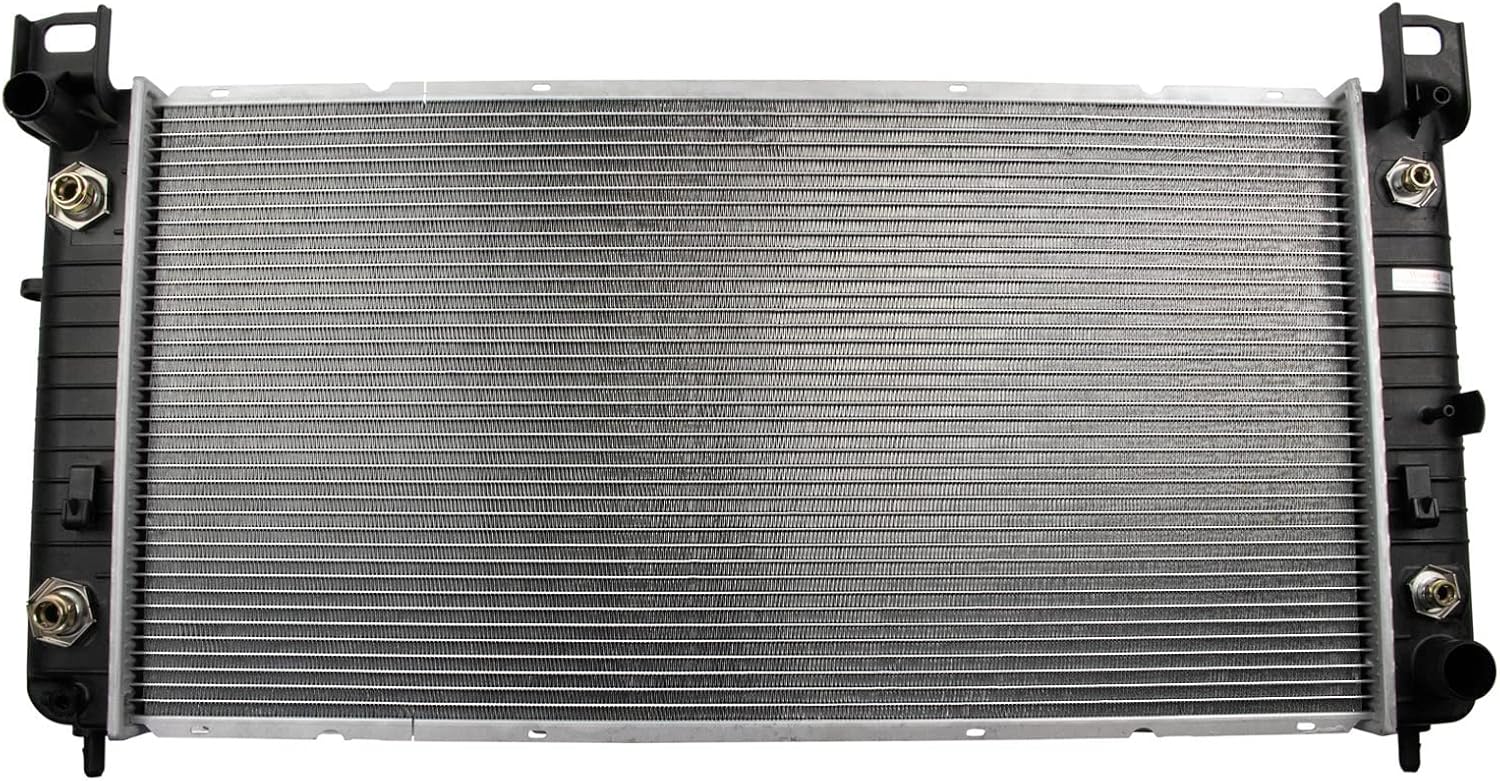
2. TRQ Radiator 34-Inch Core, 1-Row Aluminum Core (RDA82612)
| Core Row Quantity | 1 |
|---|---|
| Core Thickness | 1 in |
| Core Material | Aluminum |
| Core Width | 34 in |
| Transmission Oil Cooler Included | Yes |
This TRQ radiator is a direct-fit replacement built around a single-row, 34-inch aluminum core and is intended for full-size Chevrolet and GMC trucks and SUVs from the 2000s and early 2010s that use that core size. It houses internal engine and transmission oil coolers and includes plated cooler plates to handle towing and heavier-duty driving where transmission and engine temperatures rise. Typical use is a factory-quality swap when the original radiator is leaking, clogged, or underperforming; preassembled fittings and matched inlet/outlet locations simplify installation for DIYers and professional shops alike. The aluminum core and cross-flow design promote efficient heat transfer, while plastic tanks keep weight and cost down. Important limitations are the single-row core, which offers less cooling surface than multi-row performance radiators, and the plastic tanks that are more vulnerable to high-heat or long-term heavy-duty abuse compared with all-metal tanks. Buyers should confirm the 34-inch core fitment for their specific Tahoe year and engine before purchasing.
Best for: Buyers who need a reliable, factory-style replacement radiator for a Tahoe in the 2007–2014 era and prioritize a straightforward, direct-fit swap that restores cooling and towing capability.
Less Ideal for: Drivers seeking maximum cooling for extreme performance or heavy-duty continuous towing should consider multi-row or all-aluminum performance radiators instead.
- Direct-fit replacement for vehicles that use a 34-inch core, simplifying installation.
- Aluminum core with cross-flow design for efficient heat dissipation.
- Integrated engine and transmission oil coolers included for towing and heavy-load use.
- Preassembled components reduce installation time and help ensure proper alignment.
- Single-row core provides less cooling capacity than multi-row or high-performance radiators.
Verdict: Choose this TRQ 34-inch radiator when you want a direct-fit, integrated cooler replacement that restores factory cooling and towing performance for a 2007–2014 Tahoe.
3. Alpaspare 2370 Direct-Fit Cooling Radiator with TOC & EOC

| Core Material | Aluminum |
|---|---|
| Core Thickness | 1 IN |
| Inlet Diameter | 1.312 IN |
| Outlet Diameter | 1.562 IN |
| Trans Oil Cooler Included | Yes |
This Alpaspare 2370 radiator is a direct 1:1 replacement designed to drop into compatible Chevrolet, GMC, Cadillac and Hummer applications without modification. It uses an aluminum core with integrated transmission and engine oil coolers, bottom-right outlet placement, and plastic end tanks so it handles standard driving, towing, and heavier loads while resisting corrosion. Typical use is a full radiator swap when the original unit leaks, is clogged, or when upgrading to a fresh cooling assembly; the built-in oil coolers remove the need to transfer separate coolers. The manufacturer states the unit is pressure and leak tested to meet factory-spec performance, and its cross-flow core supports effective heat dissipation for highway and towing duty. Expect straightforward installation for DIY mechanics or shops because mounting points and hose locations match the factory layout. The radiator does use plastic tanks rather than full-metal construction, so if you want an all-aluminum tank for extreme longevity or race use you should consider a different design.
Best for: Buyers who want a cost-effective, factory-style replacement that installs cleanly and restores cooling capacity for daily driving, highway miles, and occasional towing.
Less Ideal for: People seeking a heavy-duty or track-focused all-metal radiator for extreme continuous high-temperature use should look at performance-specific units instead.
- Direct-fit design aligns with factory mounting points and hose connections for simple installation
- Aluminum core provides good corrosion resistance and efficient heat dissipation
- Integrated transmission and engine oil coolers eliminate the need for separate coolers
- Pressure and leak tested to meet factory-spec performance for reliable operation
- Plastic end tanks instead of full-metal construction may be less durable under extreme conditions
Verdict: A practical, direct-fit aluminum radiator that restores factory cooling performance with integrated oil coolers and straightforward installation.
4. KAX CU2370 Replacement Radiator for Chevrolet 2005–2014 V8 Trucks and SUVs

| Brand | KAX |
|---|---|
| Model | Cooling Radiators |
| Manufacturer Part Number | 6161CFK120SUS |
| Lift Type | manual |
This KAX CU2370 is a direct-replacement aluminum radiator built to restore cooling capacity on compatible Chevy and GMC trucks and SUVs. It pairs an aluminum core with molded plastic end tanks and is packaged with foam corner protection to reduce shipping damage. The unit is intended for bolt-in installation where inlet, outlet, and mounting points match the factory locations, so most owners can swap it in without modifying hoses or brackets. The aluminum core offers good thermal conductivity and corrosion resistance compared with older units, and the seller reports leak testing before shipment. On the downside the listing does not include detailed installation hardware or hoses, so plan to reuse factory brackets and fasteners or source replacements if needed. For buyers focused on value this radiator gives a cost-effective way to replace a worn or leaking factory radiator, but professional installation may be wise if you need to confirm fitment or transfer fittings from the old unit.
Best for: Buyers looking for an affordable, straightforward replacement radiator to restore cooling performance on mid-2000s to early-2010s full-size Chevrolet/GMC trucks and SUVs who prioritize cost and a bolt-in fit.
Less Ideal for: If you want a performance-upgrade radiator with larger capacity, integrated transmission cooler, or a plug-and-play kit with new hoses and fittings, look at higher-end or application-specific options instead.
- Aluminum core for improved heat transfer and corrosion resistance
- Packaged with foam corner protection to reduce risk of transit damage
- Built to match factory inlet/outlet and mounting locations for bolt-in replacement
- Leak-tested before shipment to reduce likelihood of early failures
- Does not list included installation hardware or hoses, which may need to be reused or purchased separately
Verdict: A budget-friendly, leak-tested aluminum replacement radiator that restores factory-style cooling for compatible 2005–2014 Chevy/GMC trucks and SUVs.
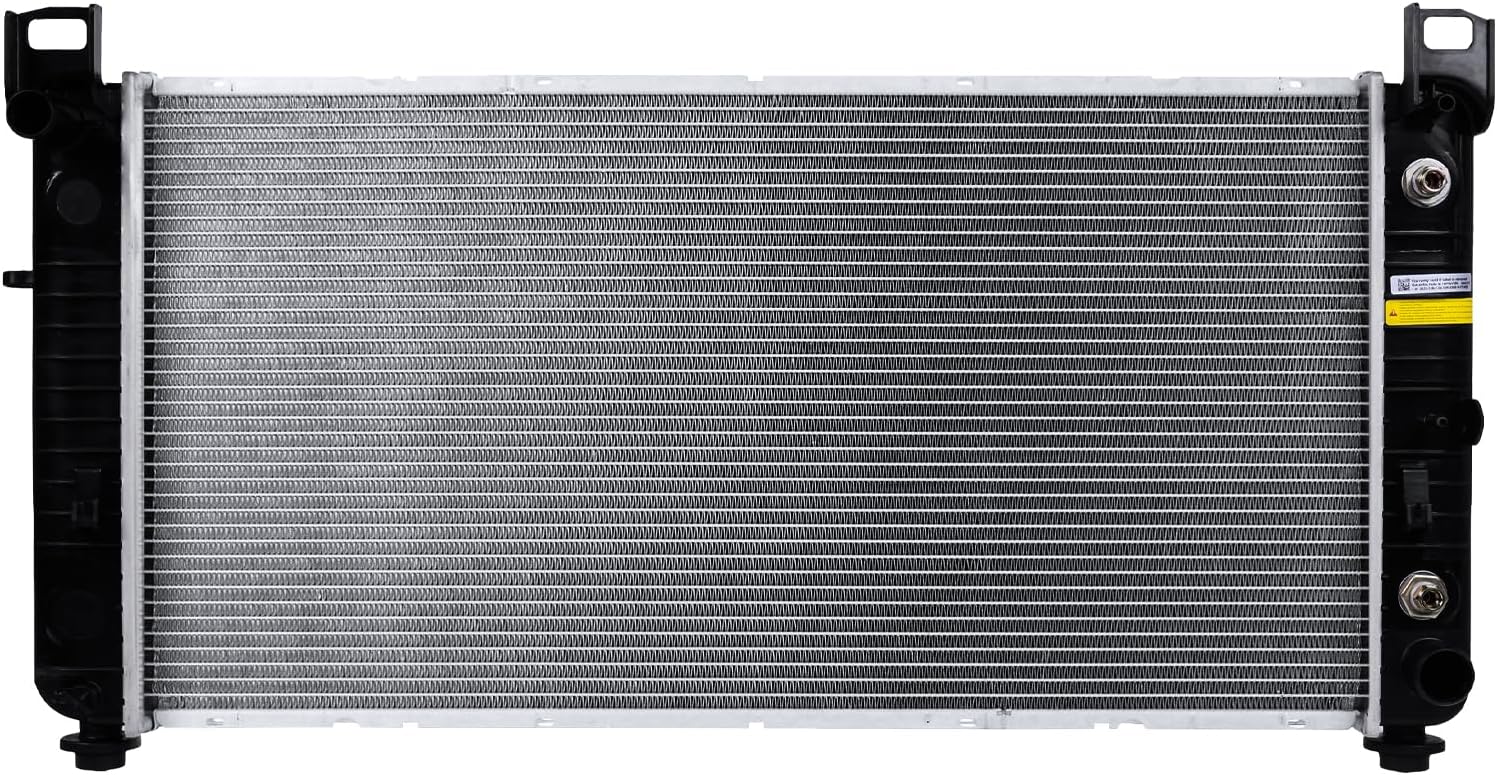
5. Zynrako 34" Engine Coolant Radiator with Oil Cooler – Compatible with 1999–2014 Chevy/GMC/Cadillac/Hummer 4.3L–8.1L
| Brand | Zynrako |
|---|---|
| Model | Aluminum Radiators |
| Manufacturer Part Number | ALQ-11645-0770-4 |
| OEM Part Number | 15124630, 15124632, 15124633, 15189401, GM3010519 |
This Zynrako radiator is a direct replacement aluminum assembly built for heavy‑duty GM trucks and SUVs in the 1999–2014 range and includes an integrated oil cooler. It is intended as a like‑for‑like factory replacement: thermal expansion cuts, folded fin edges, and a deep extrusion header are engineering features meant to reduce leaks and extend service life compared with generic cores. Typical installation replaces a worn or leaking core and restores engine cooling and oil cooling capacity; multi‑fit attachments aim to simplify fitment across model variations. The reinforced B‑type tubes and strengthened tube‑to‑header joints address vibration and thermal stress, so drivers seeking long‑term reliability will appreciate the focus on durability. Limitations to consider are that fitment must be confirmed for specific model years and engine options before purchase and professional installation is recommended for vehicles with integrated oil cooler lines to avoid leaks. The unit comes with a one‑year warranty and company support for fitment questions.
Best for: Drivers who prioritize long‑term cooling reliability for older GM trucks and SUVs and want a reinforced, factory‑style replacement that addresses vibration and thermal stress.
Less Ideal for: People looking for a universal or custom radiator solution outside the specified GM vehicle coverage or DIYers seeking a plug‑and‑play upgrade without professional installation for oil cooler connections.
- Aluminum construction with reinforced tube‑to‑header joints reduces leak risk from vibration and thermal cycling
- Integrated oil cooler included so oil cooling is restored when replacing the radiator assembly
- Thermal expansion cuts and folded fin edges improve core durability and heat dissipation
- Designed as a direct replacement for multiple GM part numbers to simplify fitment for covered years
- Requires verification of exact year/engine fitment and proper connection of oil cooler lines during installation
Verdict: Choose this reinforced aluminum radiator with integrated oil cooler when you need a durable, factory‑style replacement to restore reliable cooling on supported GM trucks and SUVs.
6. DWVO 34-Inch Complete Radiator, Model CU2423

| Model | CU2423 |
|---|---|
| Manufacturer | DWVO |
| Manufacturer Part Number | MADWVlr4f7 |
| Compatible Engines | 4.3L, 4.8L, 5.3L, 6.0L, 6.2L |
This DWVO 34-inch complete radiator is offered as a direct replacement for 2007-2014 Chevrolet Tahoe family vehicles and similar GM trucks and SUVs. It combines a high-density multi-louvered aluminum core with TIG-welded inlet/outlet tanks and an integrated aluminum transmission oil cooler to restore cooling capacity and transmission cooling in one unit. Typical use is to swap out a leaking, clogged, or damaged factory radiator during a repair or restoration; the radiator ships with foam protection and a user manual but does not include a radiator cap. In practice the dense fins and full-core design should improve heat dissipation compared with clogged originals, and the treated coating and machined exterior aim to resist corrosion and rough road conditions. Installation is intended to be straightforward for a shop or experienced DIYer, though professional installation is recommended. Buyers should expect factory-style fit and function but verify included fittings and confirm the missing radiator cap before finishing the job.
Best for: A buyer who prefers parts with demonstrated customer acceptance and wants a factory-style direct replacement that restores cooling and transmission cooling without heavy modification.
Less Ideal for: Those seeking a performance-upgrade radiator with significantly larger capacity or custom cooling solutions should look at performance-specific aftermarket cores instead.
- High-density multi-louvered aluminum core for improved cooling efficiency
- TIG-welded inlet and outlet tanks for stronger joints and leak resistance
- Integrated aluminum transmission oil cooler simplifies replacement
- Treated coating and machined exterior designed to resist corrosion and damage
- Does not include a radiator cap, which must be sourced separately
Verdict: A practical, factory-style replacement radiator that restores cooling and transmission cooling for 2007–2014 Chevrolet Tahoe family vehicles with broad customer approval.
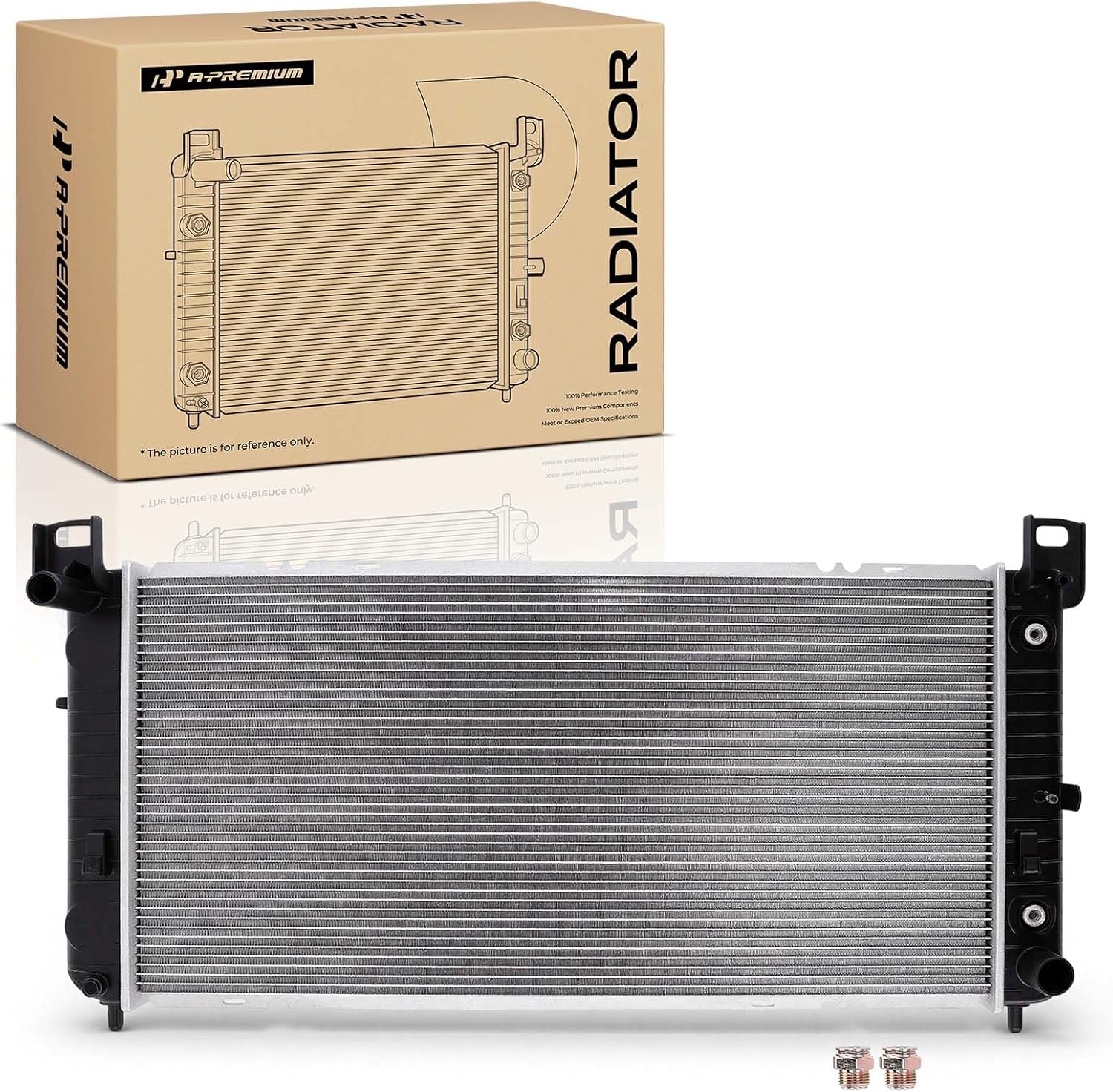
7. A-Premium 34" Engine Coolant Radiator with Transmission Oil Cooler (Automatic)
| Core Height | 34 inch |
|---|---|
| Core Thickness | 1.25 inch |
| Core Width | 17.25 inch |
| Inlet Diameter | 1.31 inch |
| Outlet Diameter | 1.56 inch |
This A-Premium radiator replaces the factory cooling unit on many Chevrolet Tahoe-era V8 trucks and SUVs that use automatic transmissions. It installs in place of the original radiator and provides coolant circulation plus two brass transmission oil cooler ports for integrated transmission cooling. The 34-inch core and multi-row construction aim to restore cooling performance for everyday driving, towing light loads, and moderate highway duty. Buyers will appreciate the factory-style inlet and outlet locations that simplify fitment when the vehicle requires a radiator without an integrated engine oil cooler. Important limitations are that this unit is built for automatic transmission models only and lacks the four-port or engine oil cooler configurations some vehicles require, so verify your vehicle's oil cooler layout before ordering. Expect a direct replacement-level fit and typical aftermarket material and finish rather than OEM-grade hardware refinements.
Best for: Buyers who prioritize a like-for-like replacement that restores cooling and transmission oil cooling without modifying hoses or mounts, and who want a straightforward install with predictable performance.
Less Ideal for: Owners who need the version with an engine oil cooler or a four-port transmission cooler, or who prefer an upgraded high-performance or heavy-duty cooling solution for frequent heavy towing.
- Made to match factory mounting and hose locations for straightforward replacement
- Includes two brass transmission oil cooler ports for integrated transmission cooling
- 34-inch core intended to restore cooling capacity for towing and sustained highway use
- Wide vehicle fitment across Chevy, GMC and Cadillac V8 trucks and SUVs of the target years
- Not compatible with vehicles that require a four-port transmission cooler or an integrated engine oil cooler
Verdict: A practical, factory-form replacement radiator for automatic-transmission Tahoes and similar GM SUVs that restores cooling and includes transmission oil cooler ports for a straightforward swap.
Choosing the Right 2007-2014 Chevrolet Tahoe Radiator: Key Factors to Consider
Cooling Capacity and Core Design
Cooling capacity determines how effectively the radiator transfers heat away from the engine and is critical for a large SUV like the Tahoe. Core design elements such as number of rows, core thickness, and fin density influence airflow resistance and heat rejection. A thicker multi-row core will typically offer better cooling under towing or hot-weather conditions, but it can add weight and sometimes require slightly different mounting clearances.
Flow path and tube configuration also matter. Crossflow and downflow cores behave differently in various engine bays; for the Tahoe, ensure the core design matches the vehicle s coolant flow routing. Higher-capacity cores can reduce operating temperatures and decrease the workload on the water pump and fans, but buyers should balance peak cooling with fitment constraints under the hood.
Materials and Build Quality
Radiator materials affect longevity and thermal performance. All-aluminum cores with aluminum tanks provide excellent heat transfer and resistance to corrosion when properly treated. Many replacement radiators pair an aluminum core with plastic tanks to reduce cost; plastic tanks can be durable but are more vulnerable to thermal cycling and impact damage.
Look for robust joints such as brazed connections or high-quality crimping. Reinforced tanks and corrosion-resistant coatings extend service life, which matters for Tahoes operated in salted-road or high-humidity environments. Material choice also influences repairability; aluminum cores are harder to patch in the field compared with configurations that allow tank replacement.
Fitment Accuracy and Mounting
Correct fitment is essential for a straightforward swap on the 2007-2014 Tahoe. Mounting tab positions, inlet and outlet locations, and transmission cooler integration must match the vehicle s factory layout to avoid routing compromises or the need for aftermarket adapters. Even small deviations can complicate installation or stress hoses and brackets.
Verify that the replacement supports the Tahoe s specific radiator fan shroud setup and any factory-mounted sensors or fittings. A radiator that claims universal compatibility may still require modifications; for reliability and ease, prioritize units that list explicit compatibility with the Tahoe s model years and engine variants.
Transmission Cooler Integration
Many Tahoes use a transmission cooler integrated into the radiator or require provisions for an external cooler. Proper transmission fluid cooling preserves gearbox life, especially when towing or towing-heavy loads. A replacement radiator should match the OEM cooler hose routing and port sizes so the transmission lines connect without adapters that could leak or restrict flow.
If you tow frequently, choose a radiator with an efficient integrated cooler or plan to pair the radiator with a dedicated external cooler. Inadequate transmission cooling can produce higher fluid temperatures, accelerating wear and leading to costly transmission repairs, so this factor affects both performance and long-term ownership costs.
Durability and Corrosion Resistance
Durability considerations include resistance to corrosion from coolant additives, road salt, and environmental exposure. Radiators treated with corrosion inhibitors or protective coatings will usually last longer in harsh conditions. Reinforced tanks and robust brazing decrease the odds of leaks from vibration and thermal cycling common in everyday Tahoe use.
Assess expected lifespan relative to local climate and driving habits. Vehicles driven in harsh winters or used for towing need radiators built to withstand repeated temperature swings and increased mechanical stress. Warranty terms and documented manufacturing quality controls can provide additional confidence in a radiator s expected durability.
Serviceability and Installation Considerations
Consider how easy the radiator will be to install and service. Features like preinstalled fittings, cleanly finished hose connections, and factory-style mounting points reduce installation time. Accessibility of drain plugs, bleed ports, and sensor locations also matters for routine maintenance such as coolant changes and bleeding trapped air.
Some radiators require removal of additional components for access or special tools for transmission line flaring. If you plan to DIY the replacement, prefer a radiator that mirrors the original radiator s fittings and layout to avoid extra parts or shop time.
Common Radiator Symptoms: Identifying a Failing Unit
Recognizing early signs of radiator failure helps avoid engine overheating and collateral damage. Watch for coolant puddles beneath the vehicle, consistent low coolant levels without visible external leaks, and visible wetness or white residue around tank seams and hose connections.
Temperature gauge behavior is telling. A steady rise into the red zone, frequent trips to warning temperatures under load or idling, or the cabin heater sputtering can point to reduced coolant flow or heat rejection. Steam from the engine bay, persistent sweet-smelling odors, and overheating after short drives are additional indicators that the radiator or its associated components need attention.
Keep in mind that radiator issues sometimes mimic other cooling-system problems, so inspect hoses, caps, and the water pump when diagnosing. A pressure test and visual inspection reveal common leak points such as corroded cores or cracked tanks.
- Coolant pooling or stains under the radiator
- Consistent temperature gauge spikes or overheating
- Visible corrosion, wet tanks, or white residue
- Loss of heater function or steam from the engine bay
Preparing for Radiator Replacement on a Tahoe
Before replacing the radiator, gather the correct replacement and verify fitment for the 2007-2014 Tahoe s engine and transmission configuration. Drain coolant fully and dispose of it according to local regulations. Allow the engine to cool and relieve system pressure before loosening hoses or fittings.
Label hose locations and take photos of routing to simplify reassembly. Plan for new hose clamps and a replacement radiator cap if the existing one is old. Inspect adjacent components such as the fan shroud, electric fans, and accessory brackets; replacing the radiator can be a convenient time to address related wear items.
Bleeding the cooling system properly after installation is crucial to avoid trapped air pockets that produce hot spots and false overheating symptoms. Follow a step-by-step fill and bleed procedure tailored to the Tahoe s cooling layout to ensure reliable operation.
- Confirm radiator matches year-range and engine/transmission routing
- Use new clamps and check the radiator cap
- Inspect fan, shroud, and adjacent components while access is available
- Follow a proper bleed sequence to remove air from the system
When to Repair Versus Replace a Radiator
Small leaks in external tanks, minor fin damage, or surface corrosion might be repairable as a temporary measure, but repairs are often short-lived on high-stress vehicles like the Tahoe. Patching a cracked plastic tank or soldering a corroded aluminum core can buy time, yet underlying material fatigue or hidden core damage can produce repeat failures.
Replacement is preferable when leaks occur at multiple locations, when the core has significant corrosion or blockage, or when the radiator does not accept OEM hoses and fittings cleanly. For vehicles used for towing or heavy loads, prioritizing a full replacement with robust materials is usually the best long-term decision.
- Temporary repairs may be acceptable for short-term use
- Replace if multiple leak points, major corrosion, or poor fitment exist
- Prioritize replacement for tow-heavy or high-mileage Tahoes
Cooling System Maintenance Tips for Tahoe Owners
Regular maintenance reduces the chance of premature radiator failure. Routinely check coolant levels and color, and replace coolant on the schedule recommended for the vehicle. Contaminated or degraded coolant accelerates internal corrosion and can clog passages in the radiator.
Inspect hoses and clamps for cracks, swelling, or looseness and replace them before they fail. Keep the radiator core clear of debris, and ensure the fans and shroud operate correctly. For heavy towing, consider more frequent inspections of the cooling system and transmission cooler circuit.
- Follow scheduled coolant changes and use the correct coolant type
- Inspect hoses, clamps, and fan operation regularly
- Keep the core free of leaves, dirt, and road debris
- Check transmission cooler connections if applicable
Costs and Practical Considerations for Installation
Installation complexity varies by whether the replacement matches the Tahoe s original mounting and cooler integration. If the radiator requires no modification, many experienced do-it-yourselfers can perform the swap with common hand tools in a few hours. Additional time may be needed to remove accessory components or to properly bleed the system.
Factor in the cost of coolant, new clamps, hose inspection, and potential transmission line fittings. If you have limited workspace or lack the necessary tools, professional installation can ensure correct fitment and reduce the risk of leaks or air entrapment after the job.
- DIY install time can be a few hours if fitment is direct
- Account for new coolant, clamps, and any needed fittings
- Professional installation can reduce rework risk for complex cases
Still looking for the perfect fit?
Select your Chevrolet Tahoe configuration to see the most relevant Radiators recommendations
How We Chose the Best 2007-2014 Chevrolet Tahoe Radiator
To assemble this list we focused on attributes that directly affect cooling reliability and fitment for the 2007-2014 Chevrolet Tahoe. Key evaluation criteria included cooling efficiency as measured by core design and flow capacity, build materials such as aluminum versus plastic tanks, and the quality of tank-to-core joints for leak resistance. We also considered radiator core thickness and fin density because these influence heat rejection under towing and heavy-load conditions common to Tahoe owners.Fitment and mounting accuracy were essential filters. We prioritized radiators engineered for the Tahoe s specified engine and cooling-system layout to avoid coolant routing issues and radiator-interference with surrounding components. Serviceability and installation factors were examined, including whether stock hoses, brackets, and transmission cooler passages are accommodated. Finally, we flagged units with documented durability features like reinforced tanks or improved brazing.Excluded from the shortlist were radiators lacking clear vehicle-specific fitment data, units without adequate material or core spec disclosure, and products that would require extensive vehicle modification. The result is a focused set of options balanced for real-world Tahoe use cases.
Our full evaluation process is outlined in our review methodology.
FAQ
How do I know if my Tahoe radiator is leaking or the leak is elsewhere?
Check for wetness or coolant residue directly on the radiator core, tank seams, and hose connections. Pressure-testing the cooling system helps isolate leaks to the radiator versus hoses, the water pump, or heater core. Consistent coolant loss with visible pooling beneath the front of the vehicle often indicates a radiator-related issue.
Can I replace the radiator myself on a 2007-2014 Tahoe?
Yes, many mechanically inclined owners can replace the radiator if the replacement matches Tahoe fitment. Expect to drain and capture coolant safely, detach hoses and transmission cooler lines if present, and perform a proper bleed afterward. Allow extra time if fan shrouds or accessories need removal.
Does replacing the radiator fix overheating immediately?
A correct, properly installed radiator can eliminate overheating caused by poor heat rejection or leaks, but overheating may have multiple causes. Ensure the thermostat, water pump, fans, and coolant condition are also checked, because a new radiator cannot compensate for failures elsewhere in the cooling system.
Should I use an OEM-style radiator or an aftermarket unit for my Tahoe?
The choice depends on priorities. OEM-style units typically mirror factory fitment and connections, which simplifies installation. Aftermarket radiators can offer enhanced cooling or different materials but require careful fitment verification. Consider material, core design, and documented fitment rather than brand labels when deciding.
How often should I flush the coolant in a Tahoe after installing a new radiator?
Follow the vehicle manufacturer's recommended interval for coolant service, and perform a flush whenever contaminants are suspected. After a radiator replacement, fill with fresh, compatible coolant and monitor levels; flushing again is generally not necessary right away unless contamination occurred during installation.
Will a larger-capacity radiator solve transmission overheating when towing?
A larger-capacity radiator with an efficient integrated transmission cooler can help lower transmission fluid temperatures during heavy towing. However, ensure the radiator s transmission cooler is compatible with your Tahoe s transmission line fittings and capacity needs. In some cases, adding a dedicated external transmission cooler is a better solution.
Final Verdict
When selecting a radiator for a 2007-2014 Chevrolet Tahoe, prioritize correct fitment, adequate cooling capacity, and durable construction. Think about your typical use—towing, long highway drives, or cold-weather commuting—and choose a core design and materials that match those demands.Tradeoffs exist between peak cooling, weight, and ease of installation. Focus on units that replicate factory mounting and transmission cooler integration while offering materials and manufacturing quality suited to your driving conditions. With the right balance, you can restore reliable engine temperatures and avoid downstream damage from overheating.
Explore More:
- Check out all Chevrolet Tahoe parts & accessories
- Explore Radiators Maintenance & Repair Guides
- Explore Cooling System
- Browse all Auto Parts
