

Note: This article contains affiliate links. If you click on these links and make a purchase, I may earn a small commission at no extra cost to you. This helps support my research and content. Read my full affiliate disclosure here.
If your 2000-2006 Chevrolet Tahoe is running hot, leaking coolant, or showing intermittent temperature spikes, replacing the radiator is often the most effective fix. A correctly chosen radiator restores steady engine temperature, reduces the risk of overheating, and helps prevent downstream damage to the head gasket or engine. This guide shortlists the top radiator options built for the 2000-2006 Tahoe and evaluates them on fitment, cooling efficiency, durability, and installation practicality.Below you will find our recommended radiators, plus clear guidance on what to check, how options differ, and practical steps to get a reliable installation. Use the criteria summarized here to match the radiator to your Tahoe's needs and usage patterns.
Looking for other parts? See all Chevrolet Tahoe parts & accessories.
Top Picks at a Glance
| Best Overall The best all-around choice for most situations | Readair 34-inch Engine Coolant Radiator with Transmission Oil Cooler |  |
| Best Quality Built to a higher standard if you want something more solid | Alpaspare 2370 Direct-Fit Aluminum Radiator with TOC & EOC |  |
| Best Value The sweet spot between price and what you get | Auto Dynasty 28" Cooling Radiator, 1-Row – Fits 1999–2007 Silverado/Sierra/Tahoe (4.3/4.8/5.3L) |  |
| Best Budget The cheapest option that still gets the job done reliably | ASAPE Aluminum Radiator for 2000–2006 Chevrolet Tahoe 5.3L (Core Replacement) |  |
| Highest Rated A top-rated pick with lots of positive feedback | Zynrako 34" Engine Coolant Radiator with Oil Cooler — Compatible with Chevy Tahoe 2000–2006 |  |
| Most Popular A crowd favorite that many people choose with confidence | DWVO 34-Inch Core Complete Radiator (CU2423) |  |
| Best Seller A high-volume bestseller chosen again and again | A-Premium 34" Engine Coolant Radiator with Transmission Oil Cooler, Compatible with Select Chevrolet/GMC/Cadillac/Hummer Models |  |
1. Readair 34-inch Engine Coolant Radiator with Transmission Oil Cooler

| Brand | Readair |
|---|---|
| Model | Engine Coolant Radiator with Transmission Oil Cooler Compatible with Chevrolet Silverado 1500 GMC Sierra 1500 4.3L |
| Manufacturer Part Number | RRadiator24232423 |
| OEM Part Number | 2946, 15841572 |
| Item Weight | 16.17 pounds |
This Readair radiator replaces the factory cooling assembly and adds an integrated transmission oil cooler for vehicles in the specified fitment list. It is used as a direct replacement during a cooling system overhaul or after a failure and follows the same installation workflow as a factory unit: drain coolant, remove the old core, swap mounting brackets and hoses, and refill and bleed the system. Notable features include a polished finish, factory-style inlet/outlet locations, and compatibility with many Silverado, Tahoe, Yukon, Suburban and Escalade applications listed by the manufacturer. In practice this radiator should restore normal engine and transmission operating temperatures and provide a like‑for‑like cooling path for towing or daily driving. Limitations to be aware of are the need to confirm exact year/engine fit before purchase because the product covers many model and engine combinations, and some buyers may prefer OEM-brand cores for peace of mind on long‑term durability and corrosion resistance.
Best for: Buyers who want a complete, factory‑style radiator replacement that also includes a transmission oil cooler and who value straightforward fitment for common early‑2000s GM trucks and SUVs.
Less Ideal for: If you prioritize an OEM-branded core, extended warranty coverage, or need a custom high‑capacity cooling solution for heavy continuous towing, consider alternative radiator options.
- Integrated transmission oil cooler saves the cost and labor of installing a separate unit
- Factory-style mounting and hose locations simplify direct replacement
- Polished exterior finish resists surface corrosion and presents well under the hood
- Wide documented vehicle fitment across Chevrolet and GMC full‑size trucks and SUVs
- Fitment covers many engine and year combinations so buyers must verify exact compatibility before installing
Verdict: A practical full‑replacement radiator that brings a factory‑style cooling assembly and built‑in transmission cooler to early‑2000s Chevrolet and GMC trucks and SUVs.
2. Alpaspare 2370 Direct-Fit Aluminum Radiator with TOC & EOC

| Core Material | Aluminum |
|---|---|
| Core Thickness | 1 IN |
| Core Height | 34.125(IN) |
| Core Width | 17.25(IN) |
This Alpaspare 2370 radiator replaces the factory unit with a drop-in aluminum core and integrated transmission and oil coolers, designed for heavy-duty duty cycles like towing and repeated highway runs. Installation is straightforward because the radiator aligns with original mounting points and hose locations, so a DIY mechanic or shop can swap it in without modifications. The aluminum core and plastic tanks aim to improve corrosion resistance and thermal transfer versus older, worn radiators, while the included transmission oil cooler and engine oil cooler simplify system integration on compatible vehicles. Practical benefits include robust cooling capacity under load and the convenience of a direct-fit that preserves existing hardware. Limitations are that tank material is plastic rather than full-metal and fitting depends on exact vehicle configuration and RPO codes, so verifying inlet/outlet locations and diameters before purchase is important.
Best for: Buyers who prioritize improved cooling under load and a straightforward, bolt-in replacement for 2000–2006 Chevy Tahoe use this when they need reliable temperature control for towing, long trips, or higher-performance driving.
Less Ideal for: Owners seeking an all-metal racing-spec radiator or custom-fit solutions for heavily modified engines should consider purpose-built performance cores instead.
- Direct 1:1 fit to factory mounting points and hose connections for targeted Chevy/GMC models
- Aluminum core for improved heat dissipation and corrosion resistance
- Integrated transmission and engine oil coolers included
- Built and pressure-tested to meet factory-style performance expectations
- Plastic tanks instead of full-metal construction may be less durable over very long term
- Fitment requires confirming exact vehicle configuration and RPO codes before purchase
Verdict: Choose this direct-fit aluminum radiator if you want a bolt-in upgrade that improves cooling performance for towing and heavy-duty driving on a 2000–2006 Chevy Tahoe.
3. Auto Dynasty 28" Cooling Radiator, 1-Row – Fits 1999–2007 Silverado/Sierra/Tahoe (4.3/4.8/5.3L)

| Core Rows | 1-Row |
|---|---|
| Core Width | 28.25" |
| Transmission Oil Cooler | Yes |
| Engine Oil Cooler | No |
This Auto Dynasty 28" radiator is a direct-replacement 1-row aluminum unit intended for 4.3L, 4.8L and 5.3L Chevrolet and GMC trucks and SUVs from around 1999–2007 that use a 28" wide core and do not have an engine oil cooler. It installs as a bolt-on replacement for the factory radiator and includes a transmission oil cooler port. The single-row core and T-6061 aluminum construction make it lightweight and help restore or modestly improve cooling capacity compared with a worn stock radiator, while reinforced PVC tanks aim to resist leaks. Typical use is to swap out a leaking or clogged factory radiator during routine cooling-system repairs; professional installation is recommended and instructions are not included. Expect straightforward fitment when the vehicle matches the listed fitment but note this is an aftermarket part and missing factory oil cooler provision limits compatibility with some models. The 1-row design balances cooling and simplicity but will not match multi-row radiators for high-load towing or severe-duty performance.
Best for: Buyers who prioritize a practical, factory-style replacement to restore cooling performance on a daily-driven Tahoe or similar Chevy/GMC truck without needing upgraded heavy-duty cooling.
Less Ideal for: Drivers who routinely tow heavy loads, run the vehicle under sustained high heat, or want maximum cooling reserve should consider multi-row or performance radiators instead.
- Direct bolt-on replacement for 28" core applications so installation is simpler for matched vehicles
- Aluminum core construction for lighter weight and improved heat transfer over aged stock units
- Includes transmission oil cooler (TOC) port for automatic transmission models
- Reinforced PVC tanks designed to resist cracking and improve long-term leak resistance
- Single-row core offers less cooling headroom than 2-row or 3-row radiators under heavy towing or extreme conditions
Verdict: A lightweight, direct-fit aluminum radiator that restores factory-style cooling for 28" core Tahoe and Chevy/GMC applications where a practical, easy replacement is the priority.
4. ASAPE Aluminum Radiator for 2000–2006 Chevrolet Tahoe 5.3L (Core Replacement)

| Applicable models | Select 1999–2007 GM trucks and SUVs with 4.3L/4.8L/5.3L engines |
|---|---|
| OE number | 2334 CU2334; 15124632; 15189401 (listed equivalents) |
| Core width | 28 inches (requires matching vehicle core) |
| Material | Aluminum core with brass transmission oil cooler ports |
This ASAPE aluminum radiator replaces the factory core for many GM full-size trucks and SUVs and is intended for routine cooling system repairs on vehicles that use a 28-inch wide core and do not have an engine oil cooler. It uses a multi-layer, high-density heat sink core and aluminum construction to improve heat dissipation compared with older or damaged cores, and includes integrated brass transmission oil cooler ports where applicable. Installation is typical of a core swap—drain coolant, remove the old radiator, transfer any sensors or fittings, and bolt the new unit in place—and should suit DIY mechanics or independent shops. The practical benefits are solid: lighter aluminum construction, increased radiating area for better cooling under load, and broad fitment across popular Tahoe and Silverado model years. Limitations are that it is meant only for vehicles with the specified core width and without an engine oil cooler, so buyers must confirm exact model fitment before purchase; some trimming or transferring of fittings may be needed during installation.
Best for: Buyers who need an affordable direct-replacement radiator for routine cooling repairs on older GM full-size trucks and SUVs and who prioritize cost-effectiveness and straightforward fitment checks.
Less Ideal for: Drivers who have nonstandard cooling configurations, such as factory engine oil coolers or modified cooling setups, or those looking for a performance-oriented or heavy-duty aftermarket radiator.
- Aluminum core and fins for improved heat dissipation and corrosion resistance.
- High-density multi-layer core design increases radiating area for better cooling under load.
- Built to match many factory fitments across 1999–2007 GM trucks and SUVs, simplifying replacement.
- Includes brass transmission oil cooler ports to support vehicles with transmission cooling routed through the radiator.
- Requires verification of core width and absence of an engine oil cooler before purchasing.
- May require transferring sensors, brackets, or hoses from the old radiator during installation.
Verdict: A budget-friendly aluminum core replacement that restores cooling capacity for compatible 2000–2006 Tahoe and similar GM trucks when you confirm the 28-inch core and no engine oil cooler.
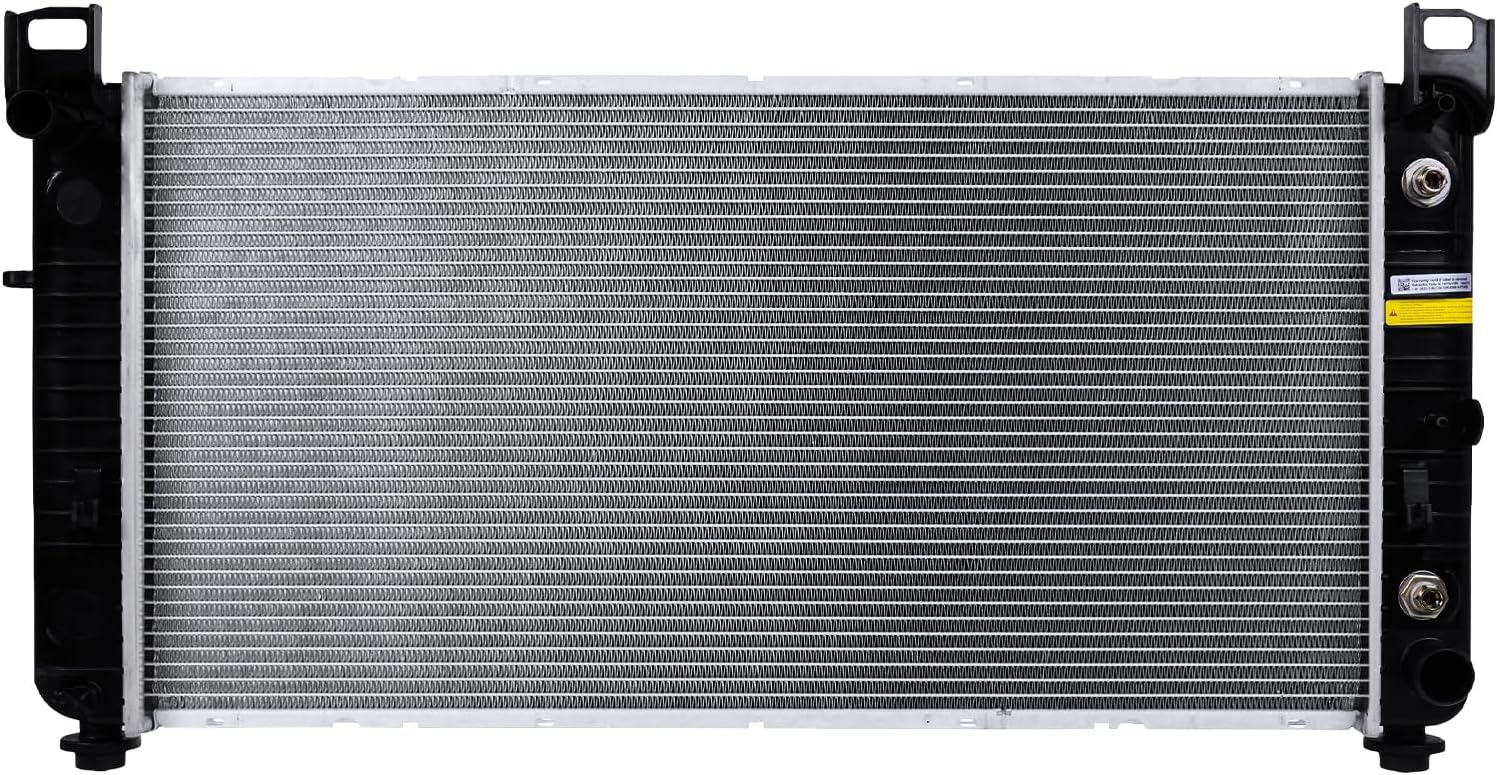
5. Zynrako 34" Engine Coolant Radiator with Oil Cooler — Compatible with Chevy Tahoe 2000–2006
| Brand | Zynrako |
|---|---|
| Model | Aluminum Radiators |
| Manufacturer Part Number | ALQ-11645-0770-4 |
| OEM Part Number | 15124630, 15124632, 15124633, 15189401, GM3010519 |
| Vehicle Fitment Years | 1999-2014 (various GM full-size trucks and SUVs) |
This Zynrako 34-inch aluminum radiator is built as a direct replacement for the factory unit and includes an integrated oil cooler for applications that require it. It is typically used to replace a leaking, corroded, or clogged radiator to restore cooling performance and protect the engine from overheating. The radiator uses a deep extrusion header, B-type reinforced tubes, and folded fin edges to improve joint strength and heat transfer while the thermal expansion cuts help manage core stress during temperature cycles. Those construction choices aim to reduce the common failure modes of older radiators such as leaks from vibration or tube separation. Installation follows factory mounting points and the listing provides a long OEM cross-reference list to confirm fit. Limitations to note are that this is a model-specific replacement so correct year and engine match must be verified and the unit carries a one-year warranty which is shorter than some extended aftermarket coverage options.
Best for: Buyers who prioritize a dependable, factory-style radiator replacement to restore original cooling reliability on older GM full-size SUVs and trucks.
Less Ideal for: People seeking the longest possible aftermarket warranty or a custom high-performance radiator for track use should consider other options.
- Direct replacement design with extensive OEM part number cross-references for straightforward fitment checks
- Aluminum construction with reinforced headers and tube design to resist leaks and thermal stress
- Integrated oil cooler included for applications that need transmission or engine oil cooling
- Features aimed at improved heat dissipation such as folded fin edges and thermal expansion cuts
- Warranty coverage limited to one year, shorter than some competitors
Verdict: Choose this radiator when you need a factory-style, beefed-up aluminum replacement that focuses on long-term leak resistance and restored cooling reliability for older Chevrolets.
6. DWVO 34-Inch Core Complete Radiator (CU2423)

| Model | CU2423 |
|---|---|
| Manufacturer | DWVO |
| Compatible engines | 4.3L, 4.8L, 5.3L, 6.0L, 6.2L |
| Core length | 34 Inch |
This DWVO complete radiator is a direct-replacement style unit built around a 34-inch aluminum core intended to restore cooling performance for compatible Chevrolet and GM vehicles from the same platform. It installs in place of the factory radiator and includes an aluminum transmission oil cooler and molded inlet/outlet tanks for a factory-like connection. The high-density multi-louvered fins and TIG-welded joints aim to improve heat rejection and long-term durability, while the treated coating and foam corner supports reduce risk of shipping damage. Installation is typical for a radiator swap and a professional install is recommended because the radiator ships without a cap and requires proper coolant and pressure testing. Buyers should expect improved cooling compared with a corroded original but be aware this is an aftermarket unit so final fit and finish depend on careful comparison to the vehicle and proper installation.
Best for: Buyers who prioritize a like-for-like replacement that restores cooling performance and prefers a unit with documented fitment and broad owner feedback.
Less Ideal for: Do-it-yourselfers who want a plug-and-play kit that includes every small part and accessory may prefer a more complete aftermarket package or buying parts separately.
- Designed to match factory replacement part numbers for direct fitment
- Aluminum core with multi-louvered fins for improved cooling efficiency
- Includes integrated transmission oil cooler for automatic-transmission vehicles
- TIG-welded construction and protective coating aimed at long-term durability
- Radiator ships without a radiator cap and may require additional parts for a complete install
Verdict: Choose this radiator if you want a factory-style replacement core and transmission cooler that restores cooling for the 2000–2006 Tahoe platform with wide user validation.
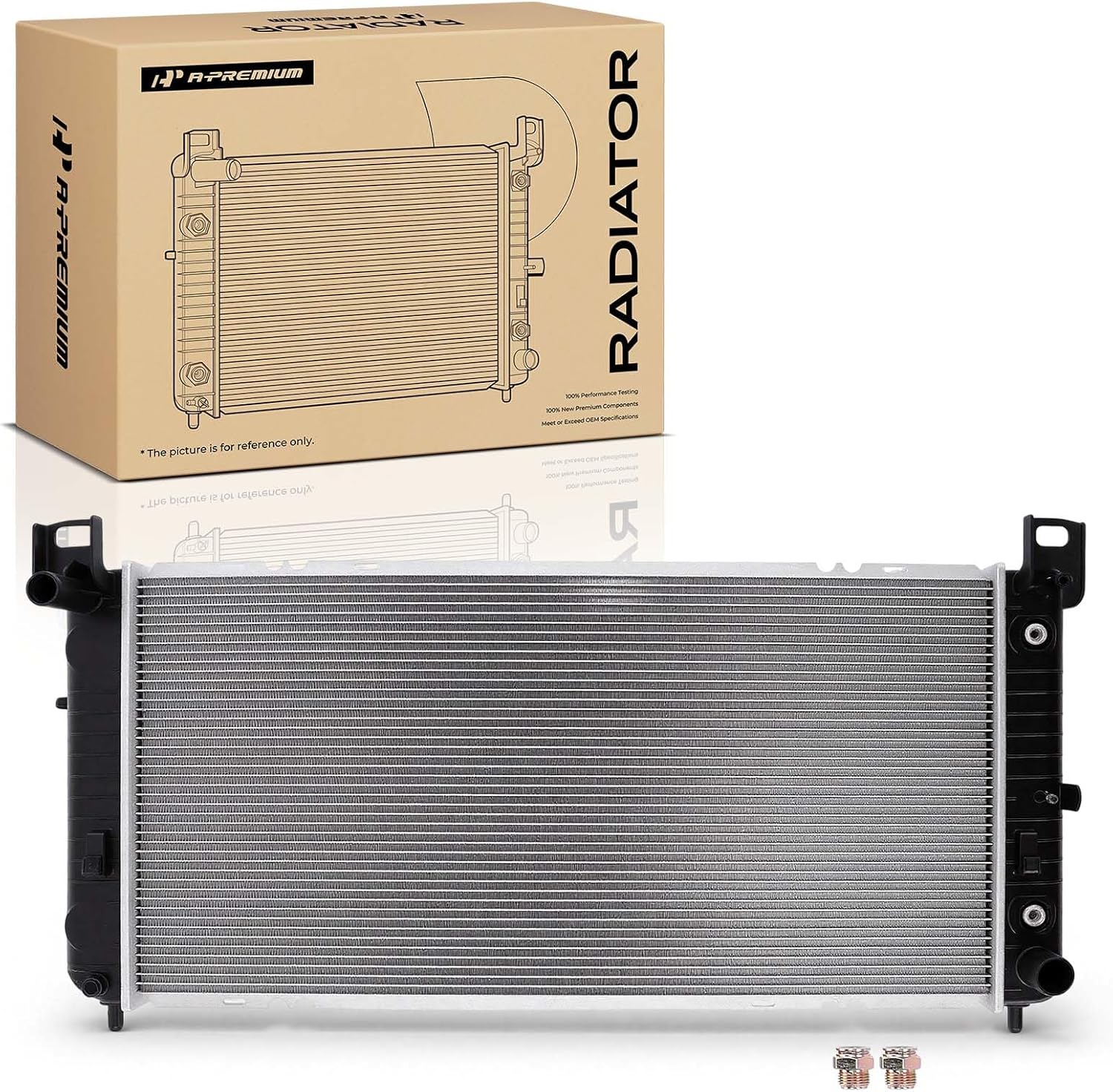
7. A-Premium 34" Engine Coolant Radiator with Transmission Oil Cooler, Compatible with Select Chevrolet/GMC/Cadillac/Hummer Models
| Core Height | 34 inch |
|---|---|
| Core Thickness | 1.25 inch |
| Inlet Diameter | 1.31 inch |
| Outlet Diameter | 1.56 inch |
| Transmission Oil Cooler | With (2 brass ports) |
This A-Premium 34" radiator is a direct-style replacement intended for automatic-transmission models and integrates two brass transmission oil cooler ports. It is typically used by owners replacing a leaking or clogged factory radiator on compatible Tahoe and related vehicles. The unit offers a full-width 34-inch core and a 1.25-inch thickness for cooling capacity, and the included transmission cooler ports remove the need for a separate aftermarket cooler in many installations. Installation is straightforward for anyone comfortable with basic radiator-to-hose and transmission-line connections, and the radiator ships with mounting and inlet/outlet locations matching the listed reference numbers. Important limitations: this part does not include an engine oil cooler or the 4-port transmission oil cooler configuration, so confirm your vehicle has the two-port automatic transmission setup before buying. Buyers should also compare inlet/outlet diameters to their lines during verification to avoid unexpected adaptors.
Best for: Buyers who want a straightforward factory-style radiator replacement for automatic models and prioritize a unit that includes transmission cooler ports to simplify installation.
Less Ideal for: Owners whose vehicles use a 4-port transmission oil cooler setup or require an integrated engine oil cooler should look for a different radiator that matches those configurations.
- Designed for automatic-transmission models and includes two brass transmission oil cooler ports
- Full-width 34-inch core with 1.25-inch thickness for substantial cooling area
- Multiple vehicle fitment across Chevrolet, GMC, Cadillac and Hummer trucks and SUVs
- Replacement part numbers listed to help verify compatibility with factory mounting and connections
- Does not include an engine oil cooler or the 4-port transmission oil cooler configuration
Verdict: A practical factory-style replacement radiator for automatic models that includes two transmission oil cooler ports for simpler fitment on compatible Tahoes and related trucks and SUVs.
Choosing the Right 2000-2006 Chevrolet Tahoe Radiator: Key Factors to Consider
Fitment and Mounting Compatibility
Accurate fitment is the first requirement for a radiator on a 2000-2006 Chevrolet Tahoe. The radiator must match the factory inlet and outlet locations, tab and bracket placement, and overall dimensions so it aligns with the fan shroud, condenser, and core support. Mismatched fittings or offset mounts can cause stress on hoses and create vibration points that accelerate leaks.
When evaluating fitment, check whether the radiator integrates the transmission cooler lines if your Tahoe is equipped with an automatic transmission. Some radiators route transmission cooling through dedicated ports; others require line adapters. Proper mounting reduces the chance of rubbing or chafing and ensures even airflow through the core, which directly affects cooling performance.
Core Construction and Cooling Capacity
Core material, thickness, and the number of cooling tubes determine how effectively the radiator moves heat away from the coolant. Aluminum cores with multi-row tube designs typically provide higher thermal transfer and lower weight compared with older copper-brass designs, though construction quality varies. A thicker core or additional rows increase cooling capacity but also add depth that must still clear the fan and shroud.
Consider the typical loads your Tahoe sees. Towing, frequent highway driving, or operating in hot climates increases demand on the cooling system and favors radiators with higher cooling capacity. Look for published core dimensions, tube count, and fin density to assess expected thermal performance.
Durability and Corrosion Resistance
Long service life depends on corrosion resistance and robust joints. Radiators for the 2000-2006 Tahoe should use materials and coatings that resist electrochemical corrosion, especially if the vehicle has seen mixed coolant types or extended service intervals. Weld quality, brazing, and seam reinforcement impact how well a radiator holds up to pressure cycles and road vibration.
Inspect whether replacement radiators use proper anodization or protective finishes, and whether tanks are one-piece molded or bolted assemblies. Reinforced mounting points and pressure-tested seams reduce the probability of early failure and leakage under normal Tahoe driving conditions.
Transmission Cooler Integration
Many Tahoe models with automatic transmissions rely on an integrated transmission cooler in the radiator. Proper transmission-fluid cooling is vital to transmission longevity, especially if the vehicle tows or frequently carries heavy loads. Ensure the replacement radiator includes compatible transmission cooler ports and that line fittings match the vehicle plumbing without needing custom adapters.
If your radiator does not include a built-in transmission cooler, plan for a separate cooler or verify that an external cooler can be installed and routed safely. Mismatched or undersized transmission cooling can cause higher transmission temperatures and accelerate wear.
Leak Resistance and Pressure Ratings
A radiator must hold system pressure without deforming or developing leaks. Check the specified maximum operating pressure and whether the unit has been pressure-tested by the manufacturer. Higher pressure tolerance helps the system resist boiling at higher temperatures and reduces the chance of gasket or seam blowouts.
Leak resistance also depends on the quality of hose connections and the finish around crimped or welded joints. Radiators that include factory-style hose fittings and properly seated necks reduce the risk of coolant loss at common failure points.
Ease Of Installation And Serviceability
Ease of installation matters to save time and reduce the risk of installation-related problems. Radiators that match OE mounting points, use standard hose diameters, and maintain factory inlet/outlet orientation simplify replacement. Clear access to bleed points and a radiator neck sized for standard caps make routine coolant changes and pressure testing easier.
Serviceability also includes whether the radiator allows for retention of the factory fan shroud and condenser, how transmission lines connect, and whether the design permits simple reassembly of components that share mounting locations. Reduced need for trimming or adapter hoses lowers the chance of leaks and speeds up the repair.
Signs Your Tahoe Needs a Radiator Replacement
Recognizing early symptoms can prevent a breakdown. Common indicators include persistent engine overheating, visible coolant pooling beneath the vehicle, and a sweet smell of coolant in the engine bay. Intermittent temperature spikes during low-speed driving or while idling often point to a cooling capacity loss or blockage in the core.
Other signs include discolored or oily coolant, which can indicate internal contamination, and steam coming from the radiator area. If you notice a drop in coolant levels without external puddles, the radiator may have small internal leaks or hairline cracks that only show under pressure.
- Frequent temperature gauge spikes while stopped or in traffic
- Visible coolant leaks or dried coolant residue on core or hoses
- Low coolant level after a short period without visible external leaks
- Steam or overheating under load, such as towing or climbing hills
Matching Radiator Capacity to Your Driving Needs
Not all replacement radiators are designed for the same duty cycle. A Tahoe used for daily commuting in moderate climates may perform well with a direct-fit radiator that mirrors factory cooling capacity. However, if you tow trailers, haul heavy loads, or operate the vehicle in hot regions, choose a radiator with increased core volume or higher fin density to provide extra heat rejection.
Consider whether you will retain the factory fan setup or upgrade to a higher-flow electric fan. The radiator and fan must work together; a high-capacity core without adequate airflow can still result in overheating in stop-and-go conditions.
- Commuting and light use: direct-fit cores with OE cooling capacity
- Heavy towing or hot climates: larger cores, more rows, higher fin density
- Fan compatibility: verify shroud clearance and fan performance
Transmission Cooler Considerations for Automatic Tahoes
If your Tahoe has an automatic transmission, maintaining proper transmission fluid temperature is as important as engine cooling. Radiators that incorporate transmission coolers are convenient because they maintain factory routing and avoid additional plumbing. Verify that transmission cooler ports align with existing lines and that fittings are secure to prevent cross-contamination of fluids.
If you plan heavy towing or notice elevated transmission temperatures, consider radiators with more effective integrated coolers or plan for an auxiliary external cooler. Proper line routing and secure clamps reduce the risk of fluid leaks and keep transmission temperatures within recommended ranges.
- Confirm presence and compatibility of transmission cooler ports
- Check line fittings for secure, leak-free connections
- Consider auxiliary coolers for heavy towing use
Cooling System Maintenance Tips After Replacement
Replacing the radiator is an opportunity to refresh the entire cooling system. Flush the coolant passages to remove rust or scale before installing the new radiator. Old deposits can quickly foul a new core and reduce its effectiveness. Use the recommended coolant type and a fresh thermostat to ensure accurate temperature control.
After installation, perform a proper bleed to remove trapped air pockets which can cause hot spots and incorrect gauge readings. Inspect hoses and clamps and replace any soft or cracked hoses. Retorque hose clamps after the first heat cycle to prevent seepage from newly seated connections.
- Perform a coolant flush before installing a new radiator
- Use the manufacturer-recommended coolant and a new thermostat if needed
- Bleed the system properly and recheck hose clamp torque after heat cycles
Common Installation Pitfalls to Avoid
Avoid assuming all direct-fit radiators are identical; small differences in neck height or bracket thickness can cause binding. Never force a radiator into position. Test-fit the unit before reconnecting hoses and fans. Verify that the fan shroud clears the core and that the condenser, if present, retains proper clearance for airflow.
Do not reuse damaged hose clamps or old, hardened hoses. Also avoid overtightening transmission line fittings or hose clamps, which can cause deformation and leaks. Finally, take steps to prevent air locks after filling the system by following a proper bleed procedure and running the engine through several heat cycles while monitoring temperature.
- Test-fit new radiator before final installation
- Replace soft or cracked hoses and use new clamps when possible
- Follow a proper bleeding procedure to eliminate air pockets
Still looking for the perfect fit?
Select your Chevrolet Tahoe configuration to see the most relevant Radiators recommendations
How We Chose the Best 2000-2006 Chevrolet Tahoe Radiator
We selected radiators based on hands-on fitment requirements, thermal performance characteristics, and long-term durability indicators that matter for the 2000-2006 Chevrolet Tahoe. Key evaluation criteria included core construction and material, core thickness and tube count, inlet/outlet positioning and hose compatibility, and cooling capacity under typical Tahoe loads such as towing or sustained highway driving. We also weighed corrosion resistance, quality of welds or brazing, and the presence of reinforced mounting points to reduce vibration-related failures.Practical installation considerations were part of the evaluation: radiator depth, fan shroud compatibility, transmission cooler integration (where applicable), and the clarity of installation guidance. We prioritized radiators that match factory hose fittings and mounting locations to minimize modification. Exclusions: items that required significant custom fabrication, radiators designed for different model years or body configurations, and units lacking clear technical specifications were omitted. The final list balances reliable cooling performance with straightforward fitment and proven build quality for the Tahoe.
Our full evaluation process is outlined in our review methodology.
FAQ
How long does a replacement radiator typically last in a Tahoe?
A replacement radiator can last many years if installed correctly and if the cooling system is maintained. Lifespan depends on material quality, corrosion resistance, and coolant maintenance. Regular coolant changes and avoiding mixed coolant types extend service life.
Can I install a radiator myself on a 2000-2006 Tahoe?
Many owners can perform a radiator replacement with basic mechanical skills and tools, but it requires draining coolant, disconnecting hoses and transmission lines where present, and properly bleeding the system. If you are unsure about transmission line fittings or fan shroud clearance, consult a professional.
What are the risks of using a radiator that does not include a transmission cooler?
Using a radiator without an integrated transmission cooler on an automatic Tahoe risks inadequate transmission cooling unless an external cooler is added. Insufficient transmission cooling can lead to higher fluid temperatures and accelerated wear, especially under towing or heavy-load conditions.
How can I tell if my radiator is leaking or the leak is elsewhere?
Look for wet spots or dried coolant residue on the radiator core, seams, or hose connections. Pressure testing the cooling system helps isolate leaks. If you see oil mixed with coolant, that may indicate a more serious issue, but simple external leaks are often visible as localized coolant traces.
Do I need to change the thermostat when replacing the radiator?
It is recommended to inspect or replace the thermostat during a radiator service. A new thermostat helps ensure accurate temperature control and simplifies diagnosing any persistent temperature issues after installation.
Will upgrading to a larger core affect fan operation?
A larger or thicker core may require verification of fan shroud clearance and might change airflow requirements. Ensure the fan or fan shroud clears the new core and consider higher-flow fans if the original fan cannot provide adequate airflow in low-speed conditions.
Final Verdict
When choosing a radiator for a 2000-2006 Chevrolet Tahoe, prioritize accurate fitment, sufficient cooling capacity for your typical loads, and durable construction that resists corrosion and pressure cycling. If you tow or operate in hot climates, opt for a unit with greater heat rejection or plan for auxiliary transmission cooling. Balance cooling performance with straightforward installation to avoid complications.Focus on matching inlet/outlet positions, verifying transmission cooler compatibility if applicable, and maintaining the cooling system with a flush and proper coolant. With those priorities in mind you can select a radiator that restores reliable temperature control and reduces the risk of overheating-related engine or transmission damage.
Explore More:
- Check out all Chevrolet Tahoe parts & accessories
- Explore Radiators Maintenance & Repair Guides
- Explore Cooling System
- Browse all Auto Parts
