

Note: This article contains affiliate links. If you click on these links and make a purchase, I may earn a small commission at no extra cost to you. This helps support my research and content. Read my full affiliate disclosure here.
If you own a 1995-2000 Chevrolet Tahoe, the radiator is a key component that keeps the engine at safe operating temperatures and prevents overheating-related damage. Replacing a tired or leaking radiator restores consistent cooling, reduces the chance of breakdowns, and supports longevity for other cooling-system parts. This guide covers seven shortlisted radiators selected for fitment, cooling performance, and build quality specific to the 1995-2000 Tahoe.Below we summarize the picks and explain the evaluation criteria you should consider, including thermal capacity, materials and construction, and ease of installation. Use the quick overview to narrow choices and then consult the product details for specific fitment and mounting notes.
Looking for other parts? See all Chevrolet Tahoe parts & accessories.
Top Picks at a Glance
| Best Overall The best all-around choice for most situations | Spectra Premium CU1693 Complete Radiator with EOC and TOC |  |
| Best Quality Built to a higher standard if you want something more solid | TRQ Radiator 34-Inch Core with Engine & Transmission Oil Coolers |  |
| Best Value The sweet spot between price and what you get | YITAMOTOR 34" Radiator for 1994–2000 Chevrolet Tahoe / GMC Yukon / Cadillac Escalade 5.0–5.7L V8 |  |
| Best Budget The cheapest option that still gets the job done reliably | KAX CU1693 Replacement Radiator for 1994–2000 GM 5.7L Engines |  |
| Highest Rated A top-rated pick with lots of positive feedback | Zynrako 34" Engine Coolant Radiator with Oil Cooler |  |
| Most Popular A crowd favorite that many people choose with confidence | DWVO 34" Complete Radiator for Chevy/GMC 5.0L and 5.7L V8 (with Trans & Engine Oil Cooler) |  |
| Best Seller A high-volume bestseller chosen again and again | Zynrako 34" Engine Coolant Radiator with Oil Cooler Compatible with 1999–2006 Chevrolet Tahoe and Similar GM Trucks |  |
1. Spectra Premium CU1693 Complete Radiator with EOC and TOC

| Manufacturer | Spectra Premium |
|---|---|
| Item model number | CU1693 |
| Inlet size | 1-1/4 In. |
| Outlet size | 1-9/16 In. |
| Includes | EOC and TOC options |
The Spectra Premium CU1693 is a complete replacement radiator designed to restore factory cooling for compatible GM vehicles. It comes with transmission and engine oil cooler ports where applicable so you can reinstall without modifying lines, and Spectra says the unit is built to meet or exceed original cooling efficiency. Typical use is a direct swap when the original radiator is leaking, clogged, or damaged; installers will appreciate the claimed perfect-fit design and inclusion of both TOC and EOC options for transmission-equipped vehicles. The construction aims for long service life and sodium-free cores to resist corrosion. Practical benefits include straightforward installation for a like-for-like replacement and full cooling for both engine and transmission when required. Limitations include that fit and performance depend on correct application matching and that the listing does not show hardware or hoses, so expect to reuse or separately source small mounting pieces during installation.
Best for: Buyers who want a reliable, like-for-like replacement radiator that restores factory cooling and supports transmission cooling when needed, and who value durability and straightforward installation.
Less Ideal for: If you need a radiator with upgraded cooling capacity for heavy-duty towing or performance modifications, consider purpose-built high-capacity aftermarket cores instead.
- Complete radiator assembly with transmission and engine oil cooler provisions for direct replacement
- Manufactured to match or exceed factory cooling efficiency
- Sodium-free core chemistry to reduce corrosion risk
- Designed for a perfect-fit installation to minimize modifications
- Does not include installation hardware or replacement hoses in the product contents
- Fit and compatibility require correct vehicle application verification
Verdict: A dependable, vehicle-specific replacement radiator that restores factory cooling and includes transmission cooler ports for an easy direct-swap solution.
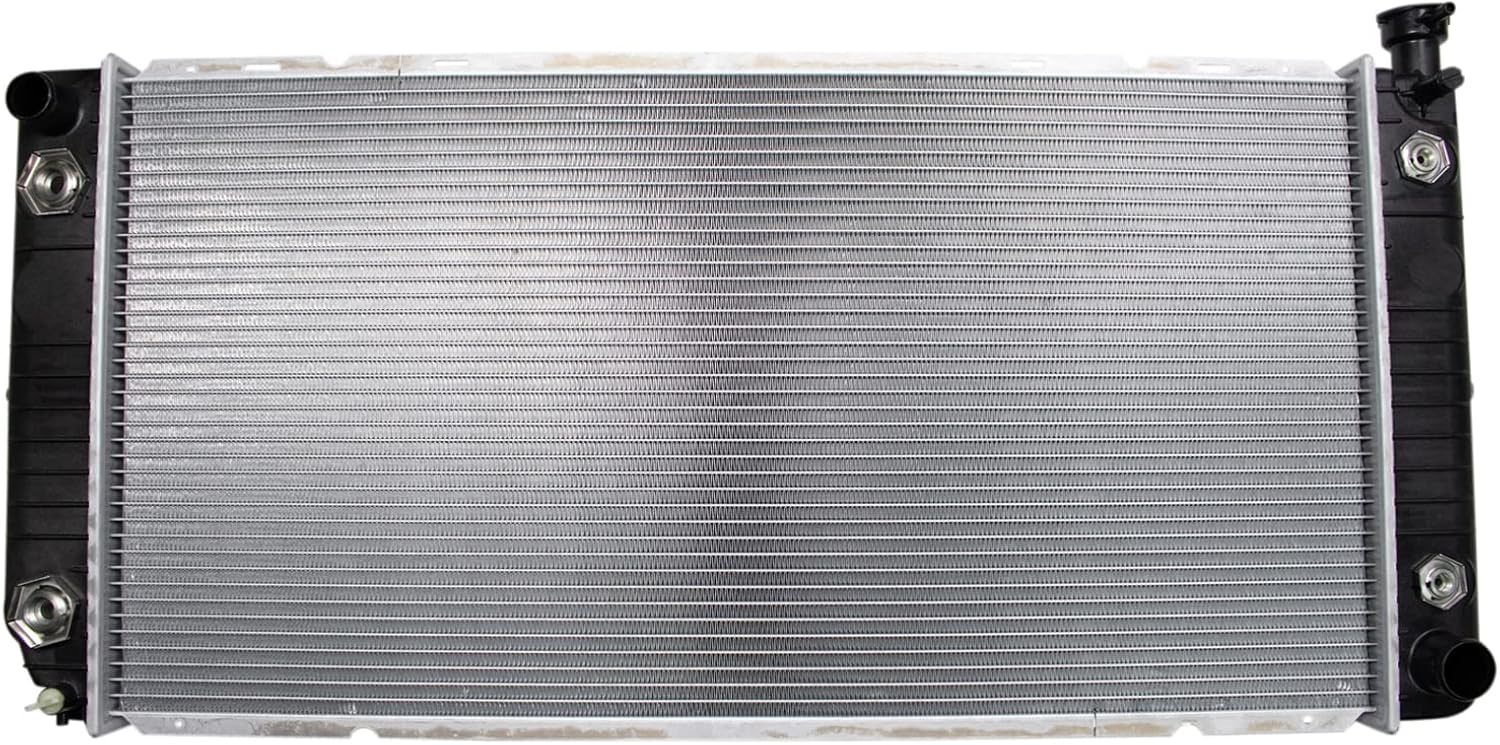
2. TRQ Radiator 34-Inch Core with Engine & Transmission Oil Coolers
| Core Thickness | 1.25 in |
|---|---|
| Core Width | 34 in |
| Core Material | Aluminum |
| Inlet Diameter | 1.31 in |
| Outlet Diameter | 1.56 in |
This TRQ radiator is a direct-fit replacement built around a 1.25-inch, 34-inch aluminum core and includes both engine and transmission oil coolers, so it handles heat management for towing or spirited driving. It is typically used as a factory-replacement cooling assembly for 1995–2000 Chevrolet Tahoe V8 5.7L applications and other compatible GM trucks and SUVs. Notable features include a plated internal oil cooler for the engine, a plated transmission cooler, plastic end tanks, and top-left inlet with bottom-right outlet locations that match factory plumbing. The aluminum core and multi-plate coolers improve heat dissipation compared with older or damaged radiators, which helps stabilize temperatures under load. Installation is simplified by preassembled mounting and direct-fit design, though the radiator cap is not included and tanks are plastic rather than metal, which may limit long-term durability under extreme abuse. For buyers focused on higher sustained cooling capacity without major modifications, this radiator is a practical upgrade that balances improved cooling with straightforward installation.
Best for: Drivers who push their Tahoe hard while towing or carrying heavy loads and want a direct-fit cooling upgrade that improves sustained engine and transmission temperature control without custom plumbing.
Less Ideal for: Those seeking a heavy-duty all-metal racing radiator or a custom high-capacity cooling system for extreme track use should consider purpose-built performance radiators instead.
- Integrated engine and transmission oil coolers reduce overall underhood plumbing and improve heat management
- Aluminum 1.25-inch core with 34-inch width offers better heat dissipation than many older cores
- Direct-fit, preassembled design simplifies installation and aligns with factory mounting points
- Multiple inlet and outlet placements match factory locations for straightforward plumbing hookup
- Plastic end tanks instead of metal may be less durable under extreme heat cycling
- Radiator cap not included, requiring reuse of the original or separate purchase
Verdict: A straightforward, direct-fit aluminum radiator with built-in oil coolers that gives 1995–2000 Tahoe owners noticeably better sustained cooling for towing and performance driving.
3. YITAMOTOR 34" Radiator for 1994–2000 Chevrolet Tahoe / GMC Yukon / Cadillac Escalade 5.0–5.7L V8

| Core Size | 34" x 17.2" |
|---|---|
| Compatibility | 1994–2000 Chevrolet Tahoe, GMC Yukon, Cadillac Escalade 5.0/5.7L V8 |
| Tanks | PA66 glass fiber reinforced |
| Leak Test | 100% pressure leak tested |
This YITAMOTOR radiator replaces the factory unit on 1994–2000 Chevrolet Tahoe and similar GMT400 V8 trucks and SUVs, delivering better heat rejection through a high-density aluminum core and an integrated aluminum oil cooler. It is meant to be a drop-in style replacement with PA66 plastic tanks that are glass fiber reinforced to resist cracking and comes fully pressure leak-tested. In typical use it provides cooler operating temperatures during towing or heavy street driving and the aluminum construction should help with long-term corrosion resistance compared with older cores. Installation is straightforward for a backyard mechanic when following the included instructions, though the radiator cap is not supplied so plan to reuse or buy a correct cap. The unit is packaged securely for transit, but buyers should note the product targets specific VIN engine codes and years so confirm fitment before ordering. Overall it is a practical, higher-efficiency replacement for owners who want a durable factory-style radiator without modifications.
Best for: Buyers looking to restore cooling performance on a mid-90s Tahoe/Yukon/Escalade with a direct-fit, durable replacement that balances cost and long-term reliability.
Less Ideal for: If you want a performance-upgrade radiator with larger core dimensions or a custom-fit solution for heavily modified engines, this stock-style replacement is not the best choice.
- High-density aluminum core for improved cooling efficiency
- Integrated aluminum oil cooler for better heat management under load
- Reinforced PA66 tanks designed to resist cracking and come leak-tested
- Packaged with foam and cardboard to reduce transit damage
- Radiator cap not included so a compatible cap must be sourced separately
Verdict: A robust, direct-fit aluminum replacement that restores reliable cooling for mid-90s Tahoe/Yukon/Escalade owners who prioritize durability and value.
4. KAX CU1693 Replacement Radiator for 1994–2000 GM 5.7L Engines

| Model | CU1693 |
|---|---|
| Item model number | CU1693 |
| Manufacturer | KAX |
| Lift Type | manual |
This KAX CU1693 radiator replaces the factory unit on many 1994–2000 GM 5.7L trucks and SUVs and is built with an aluminum core and plastic tanks. It is intended as a like-for-like swap: inlet/outlet locations and mounting points follow the original specifications so installation is straightforward for a DIYer or shop. The aluminum core offers good heat transfer and the unit ships with corner foam packaging to reduce shipping damage; the listing also notes leak testing was performed. Expect a cost-effective replacement that restores cooling capacity without performance upgrades. Limitations are typical of value-priced replacements: the plastic tanks are less durable than all-aluminum aftermarket cores and long-term corrosion resistance depends on coolant maintenance. Fitment must be confirmed for your exact year and model before purchase.
Best for: Buyers replacing a failed radiator who prioritize a low-cost, direct-fit replacement that installs like the original and restores reliable cooling for everyday driving.
Less Ideal for: People looking for a heavy-duty or performance upgrade for towing, racing, or long-term high-heat use should consider heavy-duty all-aluminum or high-capacity radiators instead.
- Direct-fit design that matches factory mounting and hose locations for easier installation
- Aluminum core improves heat transfer compared with older brass cores
- Listed as leak-tested and packaged with corner foam to reduce shipping damage
- Covers a wide range of 1994–2000 GM 5.7L truck and SUV applications
- Plastic end tanks instead of full-aluminum construction may be less durable over many years
Verdict: A budget-friendly, direct-fit replacement that gets a 1994–2000 GM 5.7L cooling system back to factory-style operation without extra features.
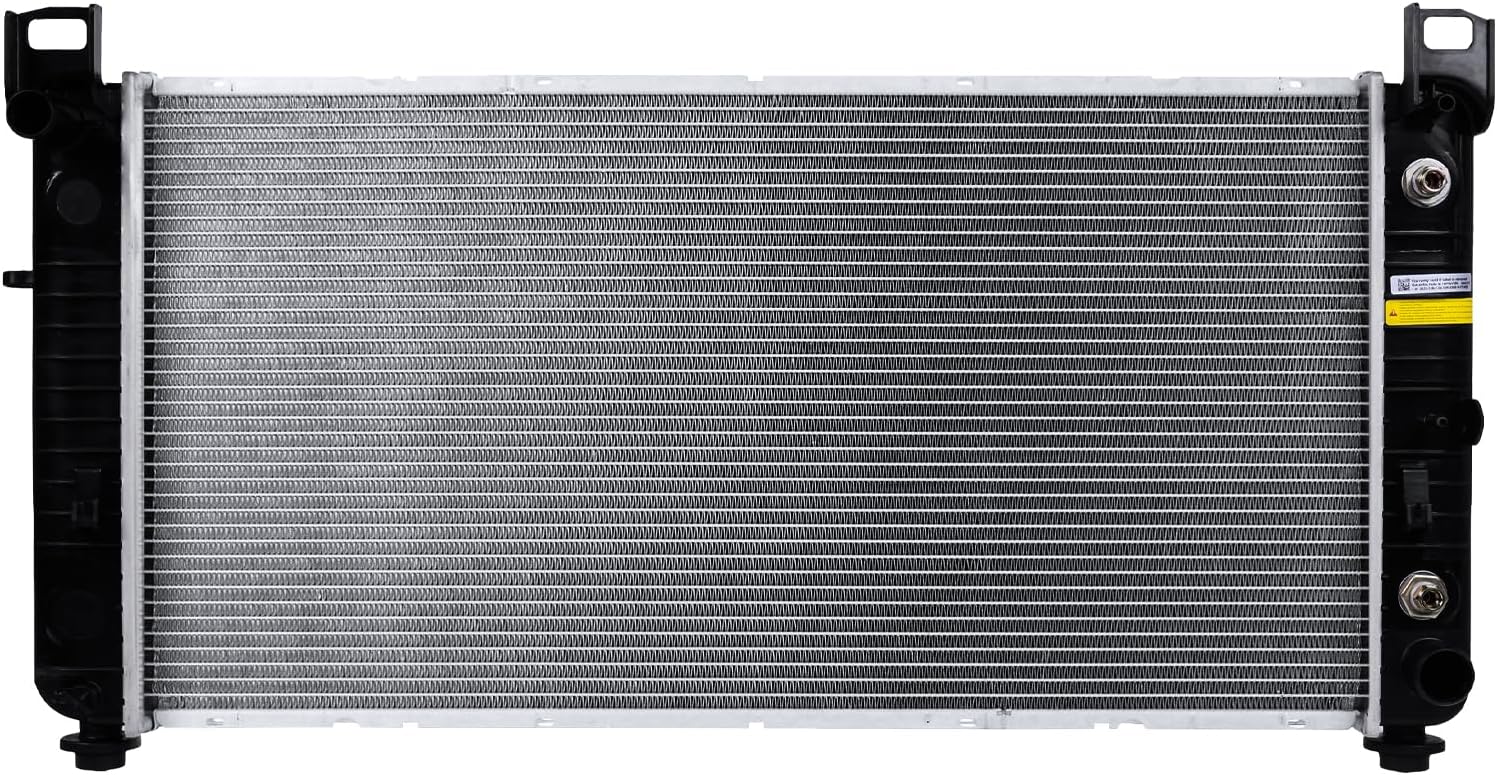
5. Zynrako 34" Engine Coolant Radiator with Oil Cooler
| Brand | Zynrako |
|---|---|
| Model | Aluminum Radiators |
| Manufacturer Part Number | ALQ-11645-0770-4 |
| OEM Part Number | 15124630, 15124632, 15124633, 15189401, GM3010519 |
This Zynrako 34-inch aluminum radiator is built as a factory-style replacement for GM full-size trucks and SUVs and includes an integrated oil cooler. It is intended to replace original radiators on compatible Chevy and GMC V8 models and is used the same way as the factory unit: bolt-in cooling for the engine and transmission oil. Notable engineering features include deep extrusion header joints, B-type reinforced tubes, folded fin edges, and thermal expansion cuts that aim to reduce leak risk and improve longevity. In practice those design choices should yield a robust assembly that tolerates vibration and thermal cycling better than basic aftermarket cores. The integrated oil cooler simplifies installation compared with separate coolers but adds complexity if you only need a plain radiator. Fitment depends on precise vehicle year and model—confirming compatibility before purchase is important—and the unit carries a one-year warranty for after-sales support.
Best for: Buyers who prioritize a durable, factory-style replacement that addresses vibration and thermal wear and want an integrated oil cooler for a straightforward swap on compatible GM full-size trucks and SUVs.
Less Ideal for: Drivers who only need a basic radiator without an oil cooler or who prefer extended warranty coverage and lifetime-backed parts.
- Aluminum construction with reinforced tube-to-header joints for improved durability
- Integrated oil cooler eliminates need for a separate assembly on vehicles that require it
- Thermal expansion cuts and folded fin edges designed to reduce leaks and improve heat dissipation
- Direct-replacement fit for many GM part numbers listed, simplifying swap for compatible vehicles
- One-year warranty is shorter than some aftermarket radiators that offer multi-year coverage
Verdict: Choose this radiator if you want a reinforced, factory-style aluminum replacement with an integrated oil cooler that targets long-term reliability on compatible GM full-size vehicles.
6. DWVO 34" Complete Radiator for Chevy/GMC 5.0L and 5.7L V8 (with Trans & Engine Oil Cooler)

| Vehicle fit | Chevy/GMC 5.0L and 5.7L V8 (specific VIN digits M, K, R) |
|---|---|
| Core material | Aluminum multi-louvered core |
| Tanks | PA66 GF30 inlet/outlet tanks |
| Construction | TIG-welded joints |
| Includes | Integrated transmission and engine oil cooler |
This DWVO 34" complete radiator is designed as a direct-fit replacement for select Chevy and GMC 5.0L and 5.7L V8 vehicles and includes an integrated transmission and engine oil cooler. It installs like a factory-style unit and is typically used to restore cooling performance on older Tahoes and similar trucks and SUVs whose 8th VIN digit matches the listed options. Key construction highlights are a high-density multi-louvered aluminum core, TIG-welded joints, and PA66 GF30 inlet and outlet tanks, all intended to resist leaks and improve heat transfer. The radiator ships with corner foam for protection and a user manual; a radiator cap is not included. In practice this model should offer reliable cooling under towing and daily-driving loads, with durable materials aimed at longer service life. Limitations are that fitment is specific to certain VIN codes and a professional install is recommended because the unit is complete and includes integrated coolers that must be connected correctly.
Best for: Buyers who prioritize proven, well-matched replacements and want a radiator that restores factory-level cooling performance on late-1990s Chevy/GMC 5.0L or 5.7L V8 vehicles.
Less Ideal for: Do-it-yourselfers seeking a universal or multi-vehicle radiator or shoppers who need a radiator that covers a broad range of engines without checking VIN specifics.
- Direct factory-style fit for specified Chevy/GMC 5.0L and 5.7L V8 applications
- High-density multi-louvered aluminum core for improved cooling efficiency
- Integrated transmission and engine oil cooler reduces the need to reuse old coolers
- TIG-welded construction and reinforced inlet/outlet tanks for leak resistance
- Radiator cap is not included so a separate cap may be required for installation
- Fitment is limited to engines with specific VIN digit codes so confirm compatibility before buying
Verdict: A solid factory-style replacement that restores reliable cooling and includes integrated oil coolers for late-1990s Chevy/GMC 5.0L and 5.7L V8s when VIN-compatible.
7. Zynrako 34" Engine Coolant Radiator with Oil Cooler Compatible with 1999–2006 Chevrolet Tahoe and Similar GM Trucks

| Core length | 34 Inch |
|---|---|
| Compatible engines | 5.3L, 6.0L, 6.2L V8 |
| OEM part numbers | GM3010274, 10387446, 15124631, 15124632, 15143107 |
| Manufacturer | Zynrako |
| Warranty | 1 year |
This Zynrako 34" radiator is a direct-style replacement built for Chevy/GMC V8 trucks and SUVs from the late 1990s to mid 2000s, including Tahoe fitments listed for 2000–2004. It installs in the same mounting points as the factory unit and includes an integrated oil cooler, so it handles engine cooling and automatic transmission/cooler duties in one assembly. Construction highlights such as a deep extrusion header, folded fin edges, and thermal expansion relief cuts are intended to reduce leak risk and improve heat transfer compared with basic cores. For everyday driving and towing within the rated vehicles this radiator should restore cooling performance and durability at a lower cost than dealer parts. Expect straightforward bolt-in installation for mechanically competent owners or a standard shop install. Limitations to note are that this is an aftermarket replacement rather than a dealer-branded part and the warranty term is one year, so long-term durability beyond that relies on installation quality and maintenance.
Best for: Buyers who want a reliable, ready-to-install replacement radiator that restores cooling and includes an oil cooler without paying dealer prices, and who prefer a conservative choice with engineered reinforcements for reduced leak risk.
Less Ideal for: Owners seeking a factory-branded radiator with extended dealer warranty coverage or those planning heavy-duty, high-hour commercial use who need longer-term warranty protection.
- Direct-replacement fit for many 1999–2006 Chevrolet/GMC full-size trucks and SUVs listed in the fitment
- Integrated oil cooler consolidates engine and transmission cooling into a single assembly
- Aluminum core with reinforced headers and folded fin edges for improved heat dissipation and leak resistance
- Thermal expansion cuts to reduce stress from temperature cycles and extend service life
- One-year warranty offers limited long-term coverage compared with some OEM or extended-warranty options
- Aftermarket unit may differ slightly in finish or minor details from factory-brand parts
Verdict: A cost-conscious, engineered aftermarket replacement that restores cooling and adds an integrated oil cooler for late 1990s to early 2000s Chevy Tahoe and similar GM trucks.
Choosing the Right 1995-2000 Chevrolet Tahoe Radiator: Key Factors to Consider
Fitment and Mounting Compatibility
Correct fitment is the most important factor when selecting a radiator for the 1995-2000 Chevrolet Tahoe. That means core height, width, and thickness must match the space between the grille and the engine bay and the inlet and outlet locations should align with the factory hoses. Mounting tabs and bracket points should line up with the factory supports to avoid stress on hoses and connections.
Poor fitment can cause misalignment that stresses hoses, leads to leaks at connections, or requires aftermarket bracket modifications. When fitment information is ambiguous, expect additional work during installation or the need for adapter fittings. Confirm whether the radiator is designed for automatic transmission coolers if your Tahoe has an automatic, because missing transmission cooler ports will require separate add-on coolers or plumbing changes.
Core Design and Cooling Performance
Core design determines how efficiently the radiator transfers heat away from coolant. Look at the tube-and-fin arrangement, the number of rows in the core, and fin density. A multi-row core with denser fins typically offers better heat rejection, which matters for towing, heavy loads, or hot climates often experienced by Tahoe owners.
However, higher density cores can be more prone to clogging from debris and may restrict airflow slightly. Balance cooling needs against susceptibility to clogging based on where and how you drive. Also check whether the radiator supports the vehicle s factory fan setup and whether it improves airflow around the core for more effective heat transfer.
Material and Construction Quality
Materials and the way the radiator is built affect durability and resistance to corrosion. Aluminum cores paired with stamped or molded tanks are common; brazed-aluminum cores with welded or properly crimped tanks tend to resist leaks better than cheaper press-fit designs. Look for corrosion-resistant finishes and quality brazing at joints.
Also consider tank construction and hose connection reinforcement. Plastic tanks can save weight and cost but may crack over many heat cycles; metal tanks are heavier but can be more serviceable. For a 1995-2000 Tahoe that may endure towing or heavy use, prioritize construction that reduces the risk of long-term coolant loss.
Transmission Cooler Integration
Many Tahoes in the 1995-2000 range have automatic transmissions that route transmission fluid through the radiator for cooling. If your vehicle uses that factory arrangement, ensure the replacement radiator includes correctly placed transmission cooler ports and internal or external fittings that match your transmission cooler lines.
Installing a radiator without these ports will require routing transmission lines to a separate cooler, which adds complexity and potential leak points. Confirm port orientation and thread types where specified, and verify that the cooler passages provide adequate cooling capacity for your towing or load conditions.
Durability and Serviceability
Durability covers resistance to impact, corrosion, and fatigue over years of thermal cycling. Serviceability refers to how easy it is to inspect, repair, or replace related components. Radiators with replaceable cores or accessible fittings make future repairs simpler. Check whether the radiator design makes routine maintenance, like coolant flushing and hose replacement, straightforward.
Consider environmental exposure where you drive the Tahoe. If you frequently encounter road salt, water crossings, or rough terrain, favor radiators with protective coatings and robust mounting to resist damage from debris. Durable fittings and reinforced inlet/outlet areas also reduce the chance of failure when moving hoses during maintenance.
Cooling System Integration and Accessories
A radiator does not operate alone; it is part of a broader cooling system. Confirm compatibility with your stock fan shroud, electric or mechanical fans, thermostat housing, and overflow tank connections. Some replacement radiators come with built-in transmission coolers or require specific hose adapters to match factory plumbing.
Also consider whether the radiator requires new hoses, clamps, or a different cap pressure rating. Ensuring the radiator integrates cleanly with other cooling-system components reduces installation time and cuts the chance of early leaks or performance issues. For owners planning a coolant flush or other maintenance while replacing the radiator, look for designs that facilitate full system bleeding and easy access to the drain petcock.
Symptoms That Indicate Radiator Failure
Recognizing early signs of radiator problems helps you address issues before they cause engine damage. Common signs include frequent overheating, visible coolant leaks under the vehicle, and a low or fluctuating coolant level on the overflow reservoir.
Other indicators include discolored coolant, steam from the engine bay during warm-up or under load, and a sweet smell of coolant around the vehicle. Reduced heater performance in cold weather can also signal restricted coolant flow through the core. Track these symptoms alongside pressure tests and visual inspections to pinpoint whether the radiator is the likely culprit.
- Engine temperature creeping into the red zone under normal conditions
- Puddles of coolant or damp areas near the front of the vehicle
- Coolant that looks rusty or contains debris
- Steam or white exhaust-like vapor from the engine bay
- Poor cabin heat in winter despite normal thermostat operation
Preparing for Radiator Replacement
Before starting a radiator replacement, gather the right tools and parts and allow the engine to fully cool. Drain the cooling system properly into a suitable container and dispose of or recycle used coolant per local regulations. Note exact hose orientations and connection points before removal to avoid reassembly mistakes.
Inspect related parts while the system is drained. Replace worn upper and lower hoses, clamps, the radiator cap, and any aging hose connectors. If your Tahoe uses a transmission cooler integrated in the radiator, plan to route and secure transmission lines during installation and check for matching fittings.
- Cool the engine and relieve pressure before opening the radiator cap
- Have replacement hoses, clamps, and the correct coolant type ready
- Prepare a catch container and shop rags for spills
- Label hose connections or take photos to aid reassembly
Coolant and Maintenance Best Practices
Using the correct coolant type and maintaining a regular service schedule helps extend radiator life. Follow the coolant concentration recommended for your vehicle and avoid mixing incompatible coolant chemistries, which can accelerate corrosion or create sludge.
Periodically inspect the radiator fins for bent or clogged areas and use compressed air or a gentle brush to remove debris. Perform a coolant flush at recommended intervals or when contamination is suspected to maintain thermal efficiency and reduce the risk of internal corrosion.
- Use the coolant specification recommended for the 1995-2000 Tahoe
- Flush the cooling system if coolant appears rusty or contains particles
- Check the radiator cap pressure rating during replacement
- Keep the front grille and airflow path free of debris
When to Consider Upgrading the Radiator
Upgrading to a higher-capacity core is worth considering if you tow heavy loads, frequently drive in hot climates, or use the Tahoe for prolonged idling. A radiator with improved heat rejection can lower operating temperatures and reduce the thermal load on the engine and transmission.
However, upgrades can require attention to fan operation, shroud clearance, and transmission cooler compatibility. Evaluate whether a higher-capacity unit will fit without modification and whether additional fans or shroud adjustments are needed to fully realize the cooling gains.
- Frequent towing or heavy loads
- Persistent high operating temperatures in hot climates
- Repeated overheating events despite a healthy thermostat and water pump
- Planned engine modifications that increase heat output
DIY Vs Professional Installation Considerations
A competent DIYer can replace a radiator with basic mechanical skills, but be realistic about the time and workspace required. Tight engine bays, the need to detach fans or transmission lines, and properly bleeding the cooling system can complicate what seems like a straightforward job.
Professional installation reduces the risk of improper hose routing, missed fittings, or air pockets in the cooling system. If you lack tools for pressure testing or have an integrated transmission cooler to manage, consider professional help to ensure correct installation and leak-free operation.
- DIY if you have the right tools and familiarity with coolant systems
- Seek professional installation for integrated transmission cooler work
- Pressure-test the system after installation to confirm no leaks
- Always follow proper coolant disposal rules
Still looking for the perfect fit?
Select your Chevrolet Tahoe configuration to see the most relevant Radiators recommendations
How We Chose the Best 1995-2000 Chevrolet Tahoe Radiator
We concentrated on criteria that matter for the 1995-2000 Chevrolet Tahoe and picked radiators that meet practical fitment and performance expectations for this vehicle. First, we prioritized accurate fitment for the Tahoe s specified year range, checking core dimensions, inlet/outlet locations, and mounting point alignment. Second, we evaluated cooling efficiency through core design and tube count, since heavy-duty use and towing can demand higher heat rejection. Third, material and construction quality were considered, favoring robust cores, corrosion-resistant tanks, and secure brazing to reduce leakage risk over time. Fourth, we considered ease of installation, including whether the unit works with existing fans, shrouds, and transmission cooler lines when applicable. Finally, durability and serviceability were assessed based on build choices that affect long-term performance and repair options.We excluded units lacking clear fitment data for the 1995-2000 Tahoe, radiators without visible quality control details, and options intended for other vehicle platforms. Our filters focused on core specs, tank materials, factory-matching mounting points, and radiator-to-transmission cooler integration where required for automatic-equipped Tahoes. The result is a list balanced for daily driving, towing demands, and reasonable longevity.
Our full evaluation process is outlined in our review methodology.
FAQ
How can I tell if the radiator is leaking or another component is the source?
Look for the leak location and pattern. Coolant pooling under the front generally indicates radiator or hose leaks. Inspect hose clamps, heater hoses, and the water pump area. A pressure test helps isolate leaks by pressurizing the system and revealing the exact source.
Do I need a radiator with transmission cooler ports for my 1995-2000 Tahoe?
If your Tahoe has an automatic transmission that used the factory radiator for transmission cooling, choose a replacement with matching transmission cooler ports. Otherwise you will need an external cooler and additional plumbing to safely cool transmission fluid.
Can I flush the coolant instead of replacing the radiator?
A coolant flush can restore flow and remove contamination if the radiator is internally dirty but not leaking. Flushing is a good first step, but if the core is corroded, leaking, or severely plugged, replacement is the more reliable solution.
What are common radiator failure causes in older Tahoes?
Age-related corrosion, thermal cycling fatigue, impact damage from road debris, and internal clogging from neglected coolant can all cause radiator failure. Plastic tank cracking and weakened brazes are also common in older units.
How long does a radiator replacement typically take?
A straightforward replacement for someone experienced can take a few hours, including draining and refilling the system. Jobs that require fan removal, transmission line work, or shroud adjustments can extend the time and may be better handled by a professional.
Will upgrading the radiator require other cooling system changes?
Possibly. A higher-capacity radiator may need improved airflow from upgraded fans or a modified shroud. If the new unit has different hose positions or thickness, you may need different hoses or adapters to maintain proper connections.
Final Verdict
When replacing a radiator on a 1995-2000 Chevrolet Tahoe, prioritize accurate fitment and sufficient cooling capacity for how you use the vehicle. Verify mounting points, inlet and outlet locations, and whether transmission cooler ports are required for automatic-equipped Tahoes. Balance core design and material choices against expected driving conditions, including towing and exposure to road salt.Ultimately, select a radiator that provides reliable heat rejection, durable construction, and straightforward integration with the existing cooling system. If you are unsure about fitment or integrated transmission cooler work, seek professional installation to ensure leak-free operation and proper system bleeding.
Explore More:
- Check out all Chevrolet Tahoe parts & accessories
- Explore Radiators Maintenance & Repair Guides
- Explore Cooling System
- Browse all Auto Parts
