

Note: This article contains affiliate links. If you click on these links and make a purchase, I may earn a small commission at no extra cost to you. This helps support my research and content. Read my full affiliate disclosure here.
If your Ford Ranger shows loose steering, unusual noises, or fluid leaks, choosing the right rack and pinion matters for safety and driving comfort. The right unit restores steering feel, stops leaks, and can reduce steering effort or noise depending on whether the vehicle uses power assist. This guide covers the top shortlisted rack and pinions for the Ford Ranger, selected for fitment, leak resistance, and steering performance. Below we explain the criteria used and what to expect when replacing your steering component before presenting the top options.
Looking for other parts? See all Ford Ranger parts & accessories.
Top Picks at a Glance


1. KAC Power Steering Rack and Pinion Assembly (fits Ford Ranger/Explorer/B-series)
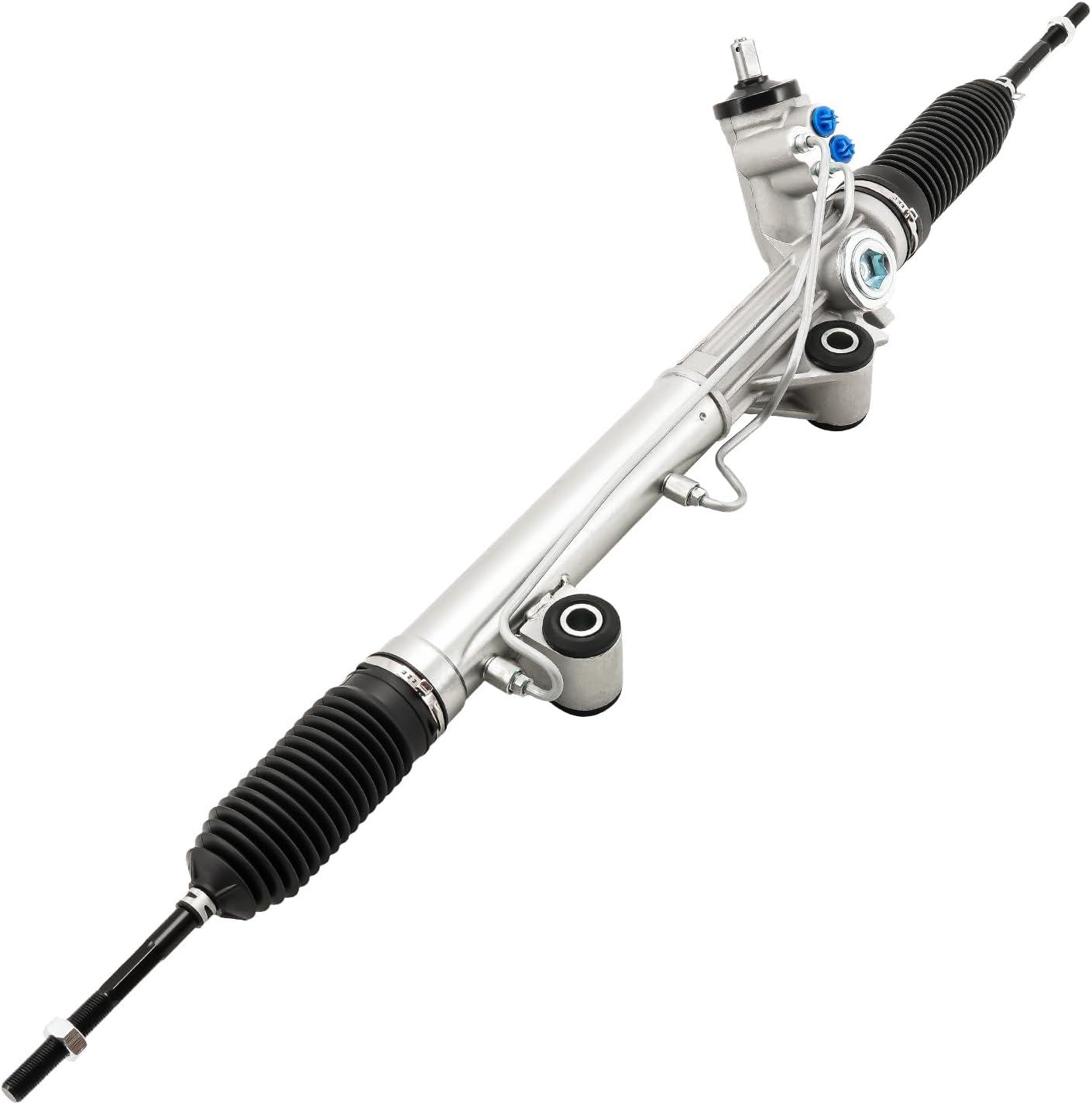
| Brand | KAC |
|---|---|
| Material | Aluminum |
| Bearing Type | Ball Bearing |
| Compatible Lubricant | Oil |
This KAC steering rack and pinion is a direct replacement assembly built to restore power steering function on compatible Ford Ranger and Explorer models. It arrives as a complete unit including inner tie rods and is machined from aluminum and chrome-plated alloy steel to resist corrosion and wear. Installation is typical for a rack swap: remove the old unit, transfer any brackets or coupling hardware if needed, bolt the new rack in place and reconnect the pressure and return lines. Notable features include factory-style pressure and return port threads, corrosion-resistant seals and a full dust-boot design intended to prevent contamination and leaks. For real-world use this translates to a straightforward repair that returns steering feel and alignment range to factory-spec and reduces the chance of early fluid leaks. Important limitations are that correct fitment must be confirmed for year/engine/trim and a professional alignment is required after installation; buyers should also expect standard installation complexity for steering components and plan for power-steering fluid handling and bleeding.
Best for: A balanced all-round buyer who wants a durable, factory-replacement steering rack that restores steering performance without overpaying, suitable for routine repair or restoration projects.
Less Ideal for: Drivers who need a plug-and-play drop-in with no mechanical work or owners looking for a lifetime performance upgrade beyond stock feel should consider alternative solutions or professional installation services.
- Complete unit includes inner tie rods so you can replace the rack without sourcing extra steering links.
- Machined exterior and chrome-plated alloy steel construction improve corrosion and wear resistance.
- Corrosion-resistant oil and lip seals plus full dust boots reduce risk of leaks and contamination.
- Built with factory-style port threads to match steering lines and speed up installation.
- Requires vehicle-specific fitment confirmation and may need minor bracket or hose transfers during install.
- Installation involves steering removal and fluid bleeding which is time-consuming and may need a shop for many owners.
Verdict: A durable, complete replacement rack and pinion that restores factory steering function on compatible Ford Ranger and Explorer models while keeping repair complexity and cost moderate.
2. Detroit Axle Front End Rack & Pinion Replacement Kit with Control Arms and Tie Rods

| Brand | Detroit Axle |
|---|---|
| Manufacturer Part Number | 9CKS49023 |
| Kit contents | Rack & pinion, 2 upper control arms w/ ball joints, 2 lower ball joints, 2 outer tie rods, 2 sway bar end links |
| Weight | 45 pounds |
This Detroit Axle kit supplies a complete front-end refresh built around a replacement power steering rack and pinion designed for Ford Ranger fitment. It arrives as a multi-piece kit that includes the rack and pinion assembly plus upper control arms, lower ball joints, outer tie rods, and sway bar end links so you can replace the steering and several suspension wear items at once. The rack is pressure tested and fitted with new seals and steering oil to reduce early leaks, and control arms and ball joints are supplied preassembled for faster installation. For a performance-oriented buyer the practical benefit is improved steering precision and restored front-end geometry without sourcing parts individually, which helps return crisp handling and reduce play. Limitations to note are that the kit is for torsion bar suspension two-piece designs and may require sourcing specific cam bolts or small hardware during installation; some buyers report missing fasteners or mixed component changes between batches. Professional alignment after installation is recommended to realize handling gains.
Best for: Drivers who prioritize steering feel and handling performance and want a single kit to restore a Ford Ranger's front-end precision and reduce steering play.
Less Ideal for: Buyers seeking an exact OEM-identical remanufactured rack with every factory fastener included or those without access to alignment services should consider other options.
- Complete kit replaces rack and common front suspension wear parts in one purchase
- Rack and seals are hydraulically pressure tested and prefilled to reduce early leaks
- Control arms and ball joints arrive preassembled for faster installation
- Designed to restore steering response and reduce play for improved handling
- Intended for 2-piece torsion bar front suspensions only, limiting fitment
- Some buyers report missing small hardware or inconsistent component variants between production batches
- May still require cam bolts or other model-specific fasteners not included
Verdict: A performance-minded, all-in-one front-end kit that restores steering precision on compatible Ford Rangers but may need a few model-specific fasteners and a professional alignment.
3. PartsFlow Complete Power Steering Rack & Pinion for 1998–2001 Ford Ranger / Explorer / Mercury Mountaineer

| Brand | PartsFlow |
|---|---|
| Manufacturer | PartsFlow |
| Manufacturer Part Number | DAI-ZCC |
| Compatible Models | 1998-2001 Ford Ranger, Ford Explorer, Mercury Mountaineer |
This complete power steering rack and pinion from PartsFlow is a direct replacement assembly for 1998–2001 Ford Ranger, Ford Explorer, and Mercury Mountaineer models and arrives ready to install with no core return required. It functions as a full steering assembly to restore steering precision and remove play that develops in worn racks, and typical use is direct replacement during a steer-repair or restoration job. Notable features include vehicle-specific fitment for the listed years and a complete unit design that eliminates the need to transfer small parts from the old rack. In practice that means faster installation and a lower chance of stray leaks or misassembled components. Trade-offs are typical for aftermarket complete racks: you should verify alignment and steering geometry after install and budget for professional installation if you do not have experience with steering work. Several customer reports note straightforward fitment and immediate improvement in steering feel when installed.
Best for: Practical owners who want a cost-effective, ready-to-install steering rack to restore steering feel on late 1990s to 2001 Ford Ranger and related models without rebuilding the old unit themselves.
Less Ideal for: Buyers seeking an exact factory-sourced remanufactured part or those wanting to reuse components from their original rack should consider alternatives.
- Complete assembly arrives ready to install, avoiding transfer of small parts from the old rack
- Vehicle-specific fitment for 1998–2001 Ford Ranger, Ford Explorer, and Mercury Mountaineer
- Designed to restore steering precision and reduce play for improved driving feel
- Multiple customer reports of easy installation and reliable fit
- May require professional installation and alignment to ensure correct steering geometry
- As an aftermarket replacement, long-term durability may vary compared with factory-original parts
Verdict: A practical, ready-to-install aftermarket rack and pinion that restores steering feel for 1998–2001 Ford Ranger and similar models at a value-oriented price.
4. Detroit Axle Power Steering Rack and Pinion Assembly (remanufactured)

| Brand | Detroit Axle |
|---|---|
| Manufacturer Part Number | 251A |
| Special Features | Power Steering Rack and Pinion, includes inner tie rods and boots |
| Date First Available | October 4, 2012 |
This Detroit Axle unit is a remanufactured complete power steering rack and pinion sold as a direct replacement for Ford Ranger and similar early 2000s trucks. It arrives as a ready-to-install assembly that includes inner tie rods and boots, and Detroit Axle says new oil and lip seals are installed and the unit is hydraulically pressure tested. For a budget-focused Ranger owner this offers a straightforward way to restore steering function without the cost of a new factory part. Installation typically requires swapping the old rack, matching lines and hardware, and replacing any worn tie-rod ends or hoses while you have the job open. Reported benefits include correct fitment for listed Ranger years and an included core-return program to activate the lifetime warranty. Expect variability in build condition because this is a remanufactured item and a few users report leaks or stiffness on some units, so check seals and steering feel after install and be prepared to exchange if necessary.
Best for: Budget-conscious Ranger owners who prioritize lower upfront cost and a complete, install-ready replacement over buying a new factory part.
Less Ideal for: Buyers seeking guaranteed factory-new quality or those unwilling to handle potential core exchanges and inspection after installation should consider a new factory-quality unit instead.
- Complete, ready-to-install rack and pinion assembly including inner tie rods and boots
- Remanufactured with new seals and hydraulic pressure testing for basic quality control
- Fits listed early 2000s Ford Ranger models and related vehicles for direct replacement
- Lifetime warranty available after returning the core unit
- As a remanufactured unit some examples have reported leaks or stiffness out of the box
- Quality and fitment can vary more than a new factory-quality part
Verdict: A cost-focused, remanufactured complete rack and pinion that gives Ford Ranger owners a lower-cost path to restore steering function.
5. Detroit Axle 9‑Piece Front Rack and Pinion Kit for Ford Ranger Explorer Mercury Mountaineer

| Fitment years | 1998-2001 |
|---|---|
| Included parts | Rack, upper/lower ball joints, outer tie rods, sway bar end links |
| Testing | Hydraulically pressure tested |
| Seals | New oil and lip seals |
| Warranty | Lifetime with core return |
This Detroit Axle 9‑piece front rack and pinion kit supplies a complete steering replacement package for late 1990s Ford Ranger and Explorer platforms and related Mazda and Mercury models. The kit includes a fully assembled power steering rack with new oil and lip seals plus upper and lower ball joints, outer tie rod ends, and sway bar end links so you can replace the entire front steering linkage in one job. The rack is hydraulically pressure tested and comes with a lifetime warranty when you return the core, which adds confidence for long term reliability. In practice this reduces installation trips and parts sourcing because the common wear items are bundled and the rebuilt rack is pretested for internal leaks and bypass behavior. Expect this to restore steering feel and alignment stability on vehicles with worn components, though installation requires core return to activate the warranty and professional alignment after fitting. This is a pragmatic solution for owners who want a factory‑style complete replacement rather than piecemeal repairs.
Best for: Reliability-focused owners who prefer buying a single, factory-style replacement to restore steering integrity and avoid repeated repairs.
Less Ideal for: Buyers looking for a low-cost temporary fix or those who want to replace only one individual steering component at a time should consider alternatives.
- Complete kit bundles rack, ball joints, tie rods, and sway bar end links for one-time front-end replacement
- Hydraulically pressure tested rack with new oil and lip seals reduces risk of internal leaks
- Lifetime warranty available when core unit is returned, increasing long-term protection
- Preassembled power steering rack simplifies installation compared with sourcing multiple components
- Warranty activation requires returning the old core unit which adds an extra step
- May require professional installation and alignment to ensure proper steering geometry
Verdict: A all-in-one, pressure-tested steering rack kit aimed at restoring reliable, factory-style steering on late 1990s Ford Ranger and Explorer family vehicles.
6. KAC Hydraulic Power Steering Rack and Pinion Assembly with Inner Tie Rods

| Position | Front |
|---|---|
| Manufacturer | KAC |
| Model | Steering Rack and Pinion Assembly w/Inner Tie Rods |
| Pressure Port Thread Size | M16 x 1.5 |
| Return Port Thread Size | M16 x 1.5 |
This KAC hydraulic rack and pinion is a full steering assembly designed to replace failing front racks on compatible Ford Ranger and related vehicles. It arrives as a ready-to-install unit with inner tie rods pre-attached, so installation is typically faster than rebuilding a remanufactured core. CNC-machined gears and claimed precision meshing aim to reduce backlash and steering noise, which should tighten steering feel and improve cornering confidence. The rack includes standard pressure and return ports and is packaged with protective material for shipping. Practical benefits are straightforward: quicker swap-out, fewer parts to source, and an assembly that can restore steering responsiveness. Limitations to consider are fitment accuracy—some buyers reported alignment or fit issues—and the unit is hydraulic so it depends on proper fluid maintenance; it does not address electric steering conversions. Expect professional alignment after installation and verify fit using your vehicle details before ordering.
Best for: Buyers who prioritize convenience and a quick, direct replacement over rebuilding components, and who want a mostly turn-key swap to get their Ranger back on the road with minimal parts sourcing.
Less Ideal for: Owners looking to convert to electric power steering, those who prefer remanufactured cores for potential cost savings, or shoppers who need a guaranteed exact match without any possibility of minor fitment adjustments.
- Complete plug-and-play assembly with inner tie rods pre-installed for faster replacement
- CNC-machined gears designed to minimize backlash and steering noise
- Front-position unit compatible with specified Ford Ranger and related models
- Ships with upgraded protective packaging to reduce risk of transit damage
- Some customers reported fitment or steering throw differences on certain vehicles requiring adjustments
- Hydraulic design requires correct fluid maintenance and does not suit electric steering systems
Verdict: A convenient, ready-to-install hydraulic rack and pinion that restores steering responsiveness quickly for compatible Rangers, but verify fitment and expect a professional alignment after installation.
7. Detroit Axle Rack and Pinion Kit for 1998–2001 Ford Explorer / Ranger / Mazda B-Series / Mercury Mountaineer

| Manufacturer | Detroit Axle |
|---|---|
| Manufacturer Part Number | 7KS1900749 |
| Fits Models | 1998-2001 Ford Explorer, 1998-2000 Ranger (torsion bar), 1999/2001 Mazda B2500, 1998-2000 Mazda B3000/B4000, 1998-2001 Mercury Mountaineer |
| Includes | Complete rack and pinion assembly, 2 outer tie rods, 4 ball joints |
This Detroit Axle kit supplies a full replacement power steering rack plus front outer tie rods and four upper and lower ball joints to restore steering function on the specified 1998–2001 Ranger/Explorer/Mazda B-series/Mountaineer models. It arrives preassembled with new oil and lip seals and is hydraulically pressure tested to reduce the chance of internal bypass. Typical use is a direct swap for a failed or leaking rack when you want a single-purchase fix that includes commonly replaced front-end components. The practical benefit is fewer back-and-forth trips to the parts store since the kit contains multiple items needed during a steering overhaul. Some customers report fitment inconsistencies for control-arm-mounted parts and at least one broken hose-related complaint, so expect to verify compatibility with your vehicle and inspect included hoses before installation. Activation of the advertised lifetime warranty requires returning your core unit, which adds a step after installation.
Best for: Practical, risk-averse buyers who want a single replacement assembly that addresses a failed steering rack and related front-end parts without sourcing items separately.
Less Ideal for: Buyers who prefer exact OEM-matched components or who have heavily modified suspension setups that may require different control-arm compatible parts.
- Complete kit includes rack, outer tie rods and four ball joints to cover most front-end steering needs
- Hydraulically pressure tested and fitted with new oil and lip seals to reduce early failure risk
- Fits the specified 1998–2001 Ranger/Explorer/Mazda B-series/Mountaineer applications where torsion bar suspension is used
- Lifetime warranty available when core return is completed
- Some buyers reported fitment problems with non-factory control arms and mismatched components
- At least one review cited a failed hose, indicating occasional quality-control issues
Verdict: A convenient, full steering kit for 1998–2001 Rangers and related models that replaces the rack and common front-end parts in one purchase.
Choosing the Right Ford Ranger Rack and Pinion: Key Factors to Consider
Fitment and Steering Geometry
Correct fitment ensures the replacement aligns with factory mounting points and tie rod ends. If the rack offsets or mounting holes differ, steering alignment can be compromised, leading to uneven tire wear and poor handling.
Steering geometry affects toe, camber under load, and overall steering ratio. Choosing a rack that matches the Ranger's original specifications keeps steering feel predictable and minimizes the need for major suspension changes after installation.
Seal Design and Leak Resistance
Seals and boot quality determine whether the unit will resist fluid leaks and keep contaminants out. A rack with robust seals reduces the chance of power fluid loss or dirt ingress, both of which accelerate wear and can cause steering stiffness or jerky motion.
Leak resistance matters because even small losses of hydraulic fluid change assist levels and can mask other steering issues. Good sealing also reduces maintenance and the risk of roadside failures.
Internal Mechanism Durability
The materials and machining of the rack teeth and pinion gear affect how long the unit stays precise under load. Harder, well-finished gear surfaces resist pitting and uneven wear, which helps maintain tight steering feel and limits play.
Durability is particularly important for trucks that see heavy use, towing, or rough roads. A more durable internal mechanism postpones the need for another replacement and contributes to consistent steering performance over time.
Power Assist Compatibility and Feel
If the Ranger uses hydraulic or electric power assist, the replacement rack must be compatible with the assist system and produce the expected steering effort. Differences in assist calibration can make steering feel heavier or lighter than before.
Matching assist type also affects installation complexity and the need for additional components like power lines or electrical connectors. Ensuring compatibility preserves steering feel and avoids extra work during installation.
Ease of Installation and Preassembly
Some replacement racks arrive pre-filled and with tie rod ends attached, which simplifies installation and reduces the amount of shop time or bleeding required. Others need bench bleeding or additional fittings before they function correctly.
Easier installation reduces labor time and the chance of installation errors. Consider whether you will install the rack yourself or use a shop, and choose a unit whose assembly state matches your plan.
Serviceability and Warranty
Availability of replacement seals, boots, or rebuild kits affects long-term ownership costs. A rack that can be serviced or rebuilt extends usable life and can be more economical if wear occurs.
Warranty coverage signals the maker's confidence in the component and provides protection against premature failures. Check the scope and duration of coverage when assessing overall value.
How We Chose the Best Ford Ranger Rack and Pinion
To assemble this list we evaluated rack and pinion units specifically for the Ford Ranger using criteria that reflect real-world needs. We prioritized exact OEM-equivalent fitment and steering geometry to ensure the replacement aligns with factory mounting points and tie rod lengths. Leak resistance and seal design were key because fluid intrusion or loss is a common failure mode that affects steering responsiveness. Durability of internal rack teeth and materials was considered to estimate service life under typical driving conditions. We also assessed the quality of the return action and smoothness of operation to reduce steering play and noise. Ease of installation and whether the unit arrives pre-filled or requires bleeding influenced the selection for DIY and shop installs. Units that required extensive modification, offered unclear fitment, or lacked adequate sealing were excluded. We did not include generic universal racks or items that did not list specific Ford Ranger compatibility.
Our full evaluation process is outlined in our review methodology.
FAQ
What are common steering rack symptoms I should watch for on a Ford Ranger?
Common symptoms include increased steering play, clunking or grinding noises when turning, uneven steering effort, and visible fluid leaks near the rack. You may also notice wandering or difficulty keeping the truck tracking straight. These signs often indicate seal failure, internal wear, or damaged mounts.
Can I replace the steering rack myself or should a shop handle it?
Whether you can do it yourself depends on mechanical experience and tools. Replacing the rack involves disconnecting tie rods, mounts, and possibly power steering lines, plus proper bleeding and alignment afterwards. Many DIYers handle the swap if they have a lift and alignment tools, but a professional shop can ensure correct bleeding and steering geometry.
How does a rack and pinion leak affect steering performance?
A leak reduces hydraulic fluid levels in power-assisted systems, which can cause heavier steering effort and erratic assist. Over time, continued leakage allows contaminants into the unit and accelerates wear. Addressing leaks promptly prevents further damage and maintains consistent steering feel.
What should I expect during rack and pinion installation for a Ford Ranger?
Installation typically involves supporting the steering assembly, removing tie rod ends, unbolting the rack from its mounts, and disconnecting power lines or electrical connections if present. The new unit may require bleeding or calibration. After installation, a full wheel alignment is usually necessary to restore proper steering geometry.
Is it better to rebuild a power rack and pinion or replace it?
Rebuilding can be cost effective if the housing and mounting points are sound and only seals or internal components need replacement. However, rebuilds require proper parts and expertise to restore original performance. Full replacement may be preferable if the rack has extensive wear, damaged gears, or unknown repair history.
Will replacing the rack eliminate steering noise and play?
Replacing a worn or leaking rack often reduces noise and steering play, especially when the root cause is internal wear or failing seals. However, suspension components, tie rods, and mounts can also contribute to noise and play, so a full inspection is recommended to address all potential sources.
Conclusion
When choosing a Ford Ranger rack and pinion, prioritize correct fitment, seal quality, and internal durability to restore steering feel and prevent leaks. Consider whether the unit matches your truck's power assist type and how much installation work you are prepared to handle. Balance the benefits of easier installation and warranty coverage against long-term serviceability. Addressing underlying suspension or tie rod issues at the same time will help ensure the replacement delivers lasting, precise steering performance.
Explore More:
- Check out all Ford Ranger parts & accessories
- Explore Rack and Pinion Steering Systems Maintenance & Repair Guides
- Explore Suspension & Steering
- Browse all Auto Parts
