

Note: This article contains affiliate links. If you click on these links and make a purchase, I may earn a small commission at no extra cost to you. This helps support my research and content. Read my full affiliate disclosure here.
If your 2018-2022 Honda Accord is showing rough idle, reduced throttle response, or a check engine light tied to airflow, the mass air flow sensor is a likely suspect. Replacing the sensor with one that matches the Accord's intake and electrical connectors matters for drivability, emissions, and long-term engine health. This guide shortlists the top mass air flow sensors compatible with the 2018-2022 Accord and explains the factors that separate reliable replacements from marginal ones.The recommendations that follow are the best-fit options for this Accord generation based on fitment, sensor accuracy, durability, and ease of install. We also summarize diagnostic signs, basic testing approaches, and maintenance tips to help you decide which sensor suits your needs and skill level.
Looking for other parts? See all Honda Accord parts & accessories.
Top Picks at a Glance
| Best Overall The best all-around choice for most situations | ENA Mass Air Flow Sensor (MAF) Replacement for Honda/Acura 2016–2020 |  |
| Best Quality Built to a higher standard if you want something more solid | AISIN Mass Air Flow Sensor MAFH-00093 (4-Pin) |  |
| Best Value The sweet spot between price and what you get | MOCA AUTOPARTS Mass Air Flow Sensor AF10674 |  |
| Best Budget The cheapest option that still gets the job done reliably | Powerlord PLC06 Mass Airflow Sensor (replacement) |  |
| Highest Rated A top-rated pick with lots of positive feedback | BDFHYK Mass Air Flow Sensor MAF0033 |  |
1. ENA Mass Air Flow Sensor (MAF) Replacement for Honda/Acura 2016–2020

| Output Type | electrical signal |
|---|---|
| Manufacturer | ENA |
| Model | Mass Air Flow Sensor |
| Package Contents | Set of 1 Air Mass Flow Sensor (4 pins) |
This ENA mass air flow sensor is a direct replacement unit that measures intake air to the engine and sends an electrical signal to the engine control unit for proper fueling and emissions control. It is intended for bolt-in fitment on compatible Honda Accord, CR-V, Civic and Acura RDX 1.5L and 2.0L 4-cylinder engines and is supplied as a single four-pin sensor. Typical use is straightforward: remove the faulty sensor, swap in this unit, and clear any codes so the engine can relearn. The listing highlights easy installation and accurate airflow readings to help recover fuel economy and smooth idle behavior. Practical benefits include restoring drivability without the need for tuning and compatibility with common reference numbers so fitment checks are simple. Limitations are that fitment is limited to the listed model years and engine types and buyers should confirm exact vehicle compatibility before ordering; no vehicle-specific harness or adapters are included so some older connectors may need attention.
Best for: Buyers who want a straightforward, vehicle-specific replacement to restore fuel economy and drivability after a failing MAF sensor and prefer a plug-and-play unit over repair or calibration services.
Less Ideal for: Drivers looking for a universal sensor that fits multiple makes or engine types or those who need a sensor with included adapter harnesses or advanced calibration features.
- Designed as a direct-fit replacement for specified Honda and Acura 4-cylinder models
- Four-pin electrical output matches factory connector style for simple swap-in
- Aims to restore accurate airflow readings to recover fuel efficiency and idle quality
- Ships as a single ready-to-install sensor to replace a failed unit
- Compatibility limited to the listed model years and engine configurations only
Verdict: A practical, plug-in replacement MAF sensor for Honda and Acura 4-cylinder models that gets a struggling engine back to proper fuel control and drivability quickly.
2. AISIN Mass Air Flow Sensor MAFH-00093 (4-Pin)
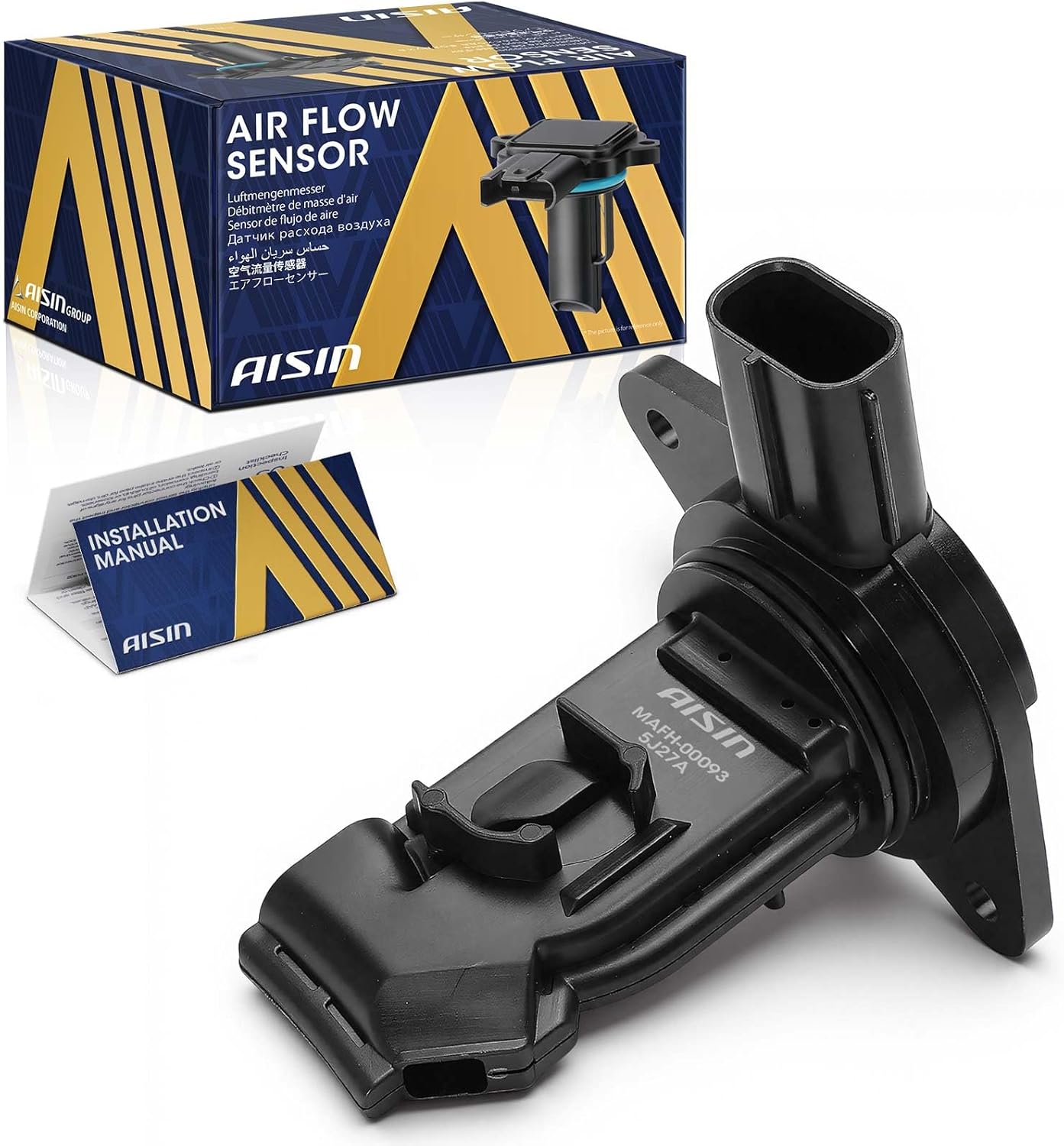
| Model | MAFH-00093 |
|---|---|
| Terminal Quantity | 4 |
| Part Number | 379805BAA01 |
| Brand Name | AISIN |
This Aisin MAF sensor replaces the factory unit and measures intake airflow to help the engine control module set fuel and ignition. It is sold as a plug-and-play 4-pin sensor intended for direct replacement, so installation is typically swapping the old sensor for the new one and reconnecting the factory connector. Aisin emphasizes factory-level engineering, which suggests consistent signal output and stable operation under normal driving. For performance-minded owners this sensor restores proper air measurement after a failed or degraded unit, which reestablishes correct fueling and throttle response without requiring re-tuning. The main limitations are that it is a standard replacement part rather than a performance-tuned or aftermarket calibration device, and any gains from performance modifications will still depend on the vehicle's overall intake and engine management. Fitment covers many Honda platforms including 2018–2022 Accord 1.5L and 2.0L engines, so ensure you select the correct engine variant before ordering.
Best for: Buyers who need a reliable, factory-quality replacement to restore correct airflow measurement and fueling on a 2018–2022 Accord without changing engine calibration.
Less Ideal for: Drivers seeking a sensor to support high-flow modifications or to tune fueling beyond factory limits should look at performance-oriented aftermarket options.
- Direct plug-and-play replacement for compatible Honda models
- Manufactured by a known OEM-tier supplier for factory-quality fit and signal consistency
- 4-pin terminal matches factory electrical connector for straightforward installation
- Not a performance-calibrated or aftermarket tuning sensor so it does not raise airflow limits beyond factory specifications
Verdict: Choose this Aisin MAF when you want a factory-quality, plug-and-play replacement to restore accurate airflow measurement on 2018–2022 Honda Accord engines.
3. MOCA AUTOPARTS Mass Air Flow Sensor AF10674

| Mounting Type | Surface Mount |
|---|---|
| Output Type | Analog |
| Specific Uses For Product | engine |
| Included Components | Mass Air Flow Sensor |
This MOCA mass air flow sensor replaces the vehicle’s factory unit and measures the amount of air entering the engine so the engine control module can set fuel injection correctly. It is a surface-mount, analog-output MAF used the same way as an OEM sensor during normal driving and diagnostics. For routine replacement it offers a straightforward swap-in fit for listed Honda Accord and related models, restoring proper air/fuel metering to improve fuel economy, drivability, and emissions when a failing factory sensor has caused rough idle or poor mileage. The part is built to aftermarket OE-like standards and ships with the single sensor; installation is typical for MAF swaps and can be done by a competent DIYer or a technician. Limitations include the basic analog output and standard aftermarket testing claims rather than documented calibration data, so technicians may want to verify readings after installation and clear any diagnostic codes if present.
Best for: Buyers who want a practical, no-frills replacement to restore factory air/fuel measurement and improve drivability after a failing MAF sensor.
Less Ideal for: Those who need a performance-tuned or digitally calibrated sensor for modified engines or for diagnostic shops that require certified calibration paperwork.
- Direct replacement design for listed Honda and Acura applications
- Surface-mount construction matches factory mounting style for easy installation
- Analog output compatible with standard engine control modules
- Made to aftermarket quality standards intended to restore proper air/fuel metering
- No published calibration or test data provided with the part
Verdict: A straightforward aftermarket replacement MAF that restores proper air/fuel measurement for compatible Accords and similar models.
4. Powerlord PLC06 Mass Airflow Sensor (replacement)

| Brand Name | Powerlord |
|---|---|
| Model | PLC06 |
| Included Components | Mass Airflow Sensor *1 |
| Specific Uses For Product | automotive |
The Powerlord PLC06 is a direct-replacement style mass air flow (MAF) sensor sold as an economy option for compatible Honda and Acura engines. It measures incoming air to the engine management system and is used when a faulty OEM MAF triggers drivability issues, rough idle, poor fuel economy, or check-engine lights. Installation follows the factory sensor swap process and is typically handled in an hour or less by a competent DIYer or a local shop. Notable details include explicit fitment notes for many Accord, Civic, CR-V, HR-V, RDX and TLX model years and a recommended service life of about three years or 60,000 miles. The practical benefit is a low-cost way to restore proper air metering and clear some engine codes without buying an expensive factory part. Limitations are that this is marketed as an economy replacement so long-term durability and exact calibration may not match a factory-quality sensor, and vehicle vacuum or intake leaks should be ruled out before replacing the MAF to avoid persistent symptoms.
Best for: Buyers needing an affordable, quick replacement to restore proper engine air metering on compatible Honda Accords and similar models who prioritize cost savings over long-term OEM-level durability.
Less Ideal for: Drivers seeking a long-term factory-quality or performance-grade sensor or those who prefer dealer-sourced parts and extended service life.
- Designed to match factory wiring and mounting for direct swap on listed Honda and Acura models
- Low-cost option that restores air metering and can clear MAF-related error codes
- Sold as a single unit making replacement straightforward for DIY installation
- Marketed as an economy replacement so longevity and exact calibration may be below factory-quality sensors
Verdict: Choose the Powerlord PLC06 when you want an inexpensive, direct-swap MAF sensor to quickly fix air metering issues on supported Honda Accord years.
5. BDFHYK Mass Air Flow Sensor MAF0033
| Model | MAF0033 |
|---|---|
| Mounting Type | Flange Mount |
| Measurement Accuracy | [HIGH] |
| Included Components | 1x Mass Air Flow Sensor Meter MAF Sensor |
This BDFHYK MAF0033 is a direct-replacement style mass air flow sensor intended to detect the mass of incoming air and relay that signal to the engine control unit so the fuel trim can be adjusted. It is typically used as a like-for-like replacement when a failing MAF causes rough idle, hesitation, loss of power, or a check engine light. The unit ships with a single sensor and flange-mount design that matches factory mounting points for straightforward installation on compatible cars. Users report it works out of the box on many vehicles and offers an affordable option compared with dealer parts. However, feedback is mixed on longevity and consistent calibration, so occasional units may need verification with a scan tool after installation. For a 2018–2022 Honda Accord this sensor can restore normal air/fuel control if the vehicle uses a compatible MAF design, but buyers seeking the highest long-term reliability may prefer a factory-quality replacement or diagnostic confirmation after fitting.
Best for: A buyer who wants an affordable replacement to get a 2018–2022 Honda Accord running properly again and is comfortable verifying operation with a scan tool after installation.
Less Ideal for: Drivers who need guaranteed long-term durability without any post-installation diagnostics should consider a higher-cost factory-quality sensor or dealer-sourced part.
- Flange-mount design fits factory mounting points for straightforward installation
- Sends mass air data to the engine control module to restore proper air/fuel metering
- Includes one complete sensor unit so no additional parts are required
- Affordable alternative to more expensive factory-brand replacements
- Some buyers report premature failures or inconsistent calibration compared with factory-quality sensors
Verdict: A budget-friendly replacement MAF that can quickly restore proper air/fuel control on a 2018–2022 Honda Accord when verified with basic diagnostic checks.
Choosing the Right 2018-2022 Honda Accord Mass Air Flow Sensor: Key Factors to Consider
Fitment and Connector Compatibility
A mass air flow sensor must match the intake duct dimensions, mounting bolt pattern, and the Accord's electrical connector to avoid vacuum leaks or unreliable readings. Even small differences in flange shape or sealing surface can introduce unmetered air, causing lean or rich trim corrections and triggering diagnostic trouble codes.
Connector pinout and wire coding must be correct so the sensor's signal, reference voltage, and ground lines interface cleanly with the factory engine control module. Using a sensor that requires splicing or adapter harnesses increases the risk of wiring faults and complicates future diagnostics, so prioritize direct-fit options when possible.
Electrical Accuracy and Signal Response
Sensors vary in how accurately and quickly they measure mass airflow across idle, partial load, and full-throttle conditions. A sensor with stable signal output helps the engine computer maintain correct fuel delivery and ignition timing, improving throttle response and fuel economy.
Pay attention to the sensor's linearity and how it behaves during transient throttle changes. A sluggish or noisy signal can cause hesitation, uneven idle, or hesitation on acceleration, which are common complaints when a MAF sensor is failing or mismatched.
Durability Against Contaminants
The intake path exposes the mass air flow sensor to dust, oil vapors, and cleaning agents. A durable sensor element and a housing that resists ingress will last longer and maintain accurate output. Some sensors incorporate protective screens or coatings that reduce fouling from oil-heavy aftermarket filters or crankcase vapors.
Consider the local driving environment for the 2018-2022 Accord. Frequent stop-and-go urban driving or dusty roads increase contamination risk, making a more robust sensor desirable to avoid premature drift and repeated replacements.
Calibration and Engine Management Compatibility
The engine control module expects the sensor's output to follow a specific calibration curve so fuel trims and ignition mapping remain within design limits. OE-equivalent calibration means the replacement should not force the PCM to adapt extensively or set off diagnostic trouble codes such as P0100 series events related to airflow circuits.
When possible, choose a sensor specified for the Accord generation so the vehicle's onboard diagnostics and adaptive fuel strategies can operate without extended relearn periods or unexpected limp-home behavior.
Ease of Installation and Serviceability
Installation complexity affects total cost and the likelihood of correct fitment. Direct-fit sensors that use the factory mounting points and connectors typically install with basic hand tools and minimal risk. Sensors that require intake removal or additional hardware increase labor time and the chance of introducing vacuum leaks.
Serviceability includes access for periodic inspection and whether the sensor can be cleaned without damage. If cleaning is an option, the procedure should be straightforward and documented so you can address fouling before it becomes a failure.
Warranty and Replacement Support
Electrical components can fail due to manufacturing defects or exposure to contaminants. A clear warranty period and straightforward replacement policy provide peace of mind and reduce long-term ownership costs. Longer warranties often signal confidence in manufacturing quality and materials.
Check what the warranty covers, whether it includes coverage for connector corrosion or sensor drift, and how claims are handled. Prefer sellers or manufacturers that provide transparent documentation and reasonable return windows for automotive electrical parts.
Common Symptoms of a Failing MAF Sensor on the 2018-2022 Accord
The 2018-2022 Honda Accord may display several telltale symptoms when the mass air flow sensor begins to fail. Typical signs include rough or fluctuating idle, hesitation or stumble on acceleration, and an illuminated check engine light tied to airflow-related codes. Drivers might also notice decreased fuel economy or black exhaust smoke in extreme cases.
Some symptoms overlap with vacuum leaks, dirty throttle bodies, or faulty oxygen sensors, so it is important to interpret MAF-related behavior in context and use diagnostic steps to isolate the sensor as the root cause.
- Unstable idle or frequent stalling shortly after start
- Hesitation during acceleration or poor throttle response
- Engine warning light with airflow or sensor circuit codes
- Noticeable drop in fuel economy
How to Diagnose MAF Issues on Your Accord
Start with a visual inspection of the intake duct and the sensor housing for signs of oil, dirt, or physical damage. Check the electrical connector for corrosion, bent pins, or loose fit. Many intermittent faults stem from simple connector or wiring issues rather than the sensor element itself.
Use basic scan-tool data to monitor the MAF sensor voltage or frequency at idle and during throttle changes. Compare observed values to expected ranges for the 2018-2022 Accord and watch for erratic jumps or values that do not change with throttle input. If your scan tool shows a steady, plausible signal yet symptoms persist, further testing or sensor replacement may be warranted.
- Inspect connector and wiring harness for damage
- Monitor live MAF readings with a scan tool during idle and acceleration
- Look for P0100-series codes that indicate airflow circuit issues
Cleaning Versus Replacement: When to Clean the Sensor
Light contamination from dust or oil can sometimes be resolved by careful mass airflow sensor cleaning, but not all MAF sensors are serviceable. Cleaning may restore correct readings if the contamination is superficial and the sensor element is intact. Use only manufacturer-approved cleaning methods when applicable, and avoid solvents that can damage the sensing element.
If the sensor has electrical faults, physical damage, or persistent erratic output after cleaning, replacement is the safer option. Consider the age of the sensor and how often the vehicle operates in dusty or oily conditions when deciding between cleaning and replacement.
- Cleaning can help with light fouling but is not a guaranteed fix
- Avoid harsh solvents and follow documented cleaning procedures
- Replace if electrical faults or persistent drifting remain after cleaning
Basic Steps to Test a Mass Air Flow Sensor
Testing can start with a scan tool to observe the sensor's output and cross-reference it with engine RPM and throttle position. Sudden mismatches between throttle opening and MAF readings suggest sensor errors. For more direct testing, measure the sensor signal voltage or frequency with a multimeter while following safe test procedures.
Record readings at idle and during a controlled throttle blip to confirm the sensor responds smoothly. If you encounter a stored diagnostic code such as P0100 related to the MAF circuit, follow the code-specific troubleshooting flow: inspect wiring, check for power and ground at the connector, and verify sensor output behavior before concluding replacement.
- Use a scan tool to watch live MAF data during drive or revs
- Confirm power, ground, and signal continuity at the connector
- Perform a controlled throttle response test to assess linearity
Installation Tips for the 2018-2022 Accord
When installing a replacement sensor, ensure the intake duct and sealing surface are clean and free of debris to prevent leaks. Tighten mounting hardware to the specified torque to avoid warping the flange or creating uneven sealing pressure. Reconnect the electrical connector securely and verify there are no diagnostic trouble codes after installation.
After fitting, allow the vehicle to complete any required relearn cycles by running the engine through varied RPMs and load conditions. If the engine computer shows persistent symptoms or codes after installation, recheck connector mating and sensor orientation before pursuing additional diagnostics.
- Clean mating surfaces before installation
- Torque mounting bolts evenly to factory specs
- Verify connector seating and clear any stored codes after install
Still looking for the perfect fit?
Select your Honda Accord configuration to see the most relevant Mass Air Flow Sensors recommendations
How We Chose the Best 2018-2022 Honda Accord Mass Air Flow Sensor
We focused our selection on five mass air flow sensors that match the intake housing, electrical connector, and calibration requirements for the 2018-2022 Honda Accord. Key evaluation criteria included electrical accuracy under varied airflow conditions, connector and flange fitment, response time to throttle changes, and long-term durability against contaminants. We also weighed the availability of OE-equivalent calibration or manufacturer-provided calibration data to ensure compatible engine management behavior.Additional filters covered material quality of the sensor element and housing, warranty terms for automotive electrical components, and the ease of installation for a typical DIY owner or technician. We excluded any units that required intake manifold modification, aftermarket engine management tuning, or ambiguous fitment claims. Units with unclear return or warranty policies, or lacking clear electrical connector compatibility with the Accord wiring harness, were not considered. The final list prioritizes sensors that balance electrical performance, fitment accuracy, and practical reliability for everyday driving.
Our full evaluation process is outlined in our review methodology.
FAQ
What are the most common MAF sensor codes for the 2018-2022 Accord?
Codes related to the mass airflow circuit often include generic P0100-series events that indicate circuit or range/performance issues. These codes usually prompt inspection of the sensor wiring, connector, and the sensor output behavior before deciding on replacement.
Can I clean the MAF sensor myself on my Accord?
You can clean some mass airflow sensors if the element is in good condition and the manufacturer provides safe cleaning guidance. Use a recommended cleaner and gentle technique. If cleaning does not restore consistent readings, replacement is the next step.
How long does a typical MAF sensor last in the 2018-2022 Accord?
Durability varies with driving conditions. Under normal driving a sensor can last many years, but exposure to oil-laden filters, heavy dust, or moisture can shorten service life. Regular inspection helps detect early contamination or connector issues.
Will replacing the MAF sensor clear the check engine light on its own?
Replacing a faulty sensor can clear related codes once the vehicle completes any required drive cycles or the codes are reset. However, if the underlying issue was wiring or vacuum leaks, simply swapping the sensor may not resolve the warning light.
Is professional calibration required after installing a new MAF sensor?
Most direct-fit replacements compatible with the 2018-2022 Accord do not require special calibration beyond normal PCM adaptive relearn. If a sensor requires external calibration, that should be clearly specified, but such sensors were excluded from our primary recommendations.
Final Verdict
Prioritize direct-fit mass air flow sensors that match the 2018-2022 Honda Accord's intake flange and electrical connector while offering stable, accurate output under varying throttle conditions. Balance durability against contaminants with ease of installation and clear warranty coverage to minimize downtime and repeat service.Ultimately, choose a sensor that reduces diagnostic ambiguity: one that fits without modification, shows smooth signal response in basic tests, and has adequate protection against fouling. That approach will restore drivability and prevent recurring airflow-related codes for your Accord.
Explore More:
- Check out all Honda Accord parts & accessories
- Explore Mass Air Flow Sensors Maintenance & Repair Guides
- Explore Engine
- Browse all Auto Parts
