

Note: This article contains affiliate links. If you click on these links and make a purchase, I may earn a small commission at no extra cost to you. This helps support my research and content. Read my full affiliate disclosure here.
If your Ford Ranger feels vague in the steering, pulls to one side, or produces clunks over bumps, the lower control arms are often the cause. Choosing the right lower control arm matters because it directly affects alignment stability, tire wear, and the vehicle's ride quality. This guide presents a shortlist of the top options for the Ford Ranger, chosen for their fitment, durability, and bushing performance. We evaluated build quality and mounting accuracy along with bushing materials and expected longevity.Read on to see the selected picks and the criteria we used to evaluate them.
Looking for other parts? See all Ford Ranger parts & accessories.
Top Picks at a Glance
| Best overall The best all-around choice for most situations | Detroit Axle Front Suspension 12‑Piece Control Arm and Tie Rod Kit |  |
| Best quality Built to a higher standard if you want something more solid | TRQ 4-Piece Front Control Arm and Ball Joint Set |  |
| Best Value The sweet spot between price and what you get | TRQ Front Lower Control Arm with Preinstalled Ball Joint Set for Ford Ranger |  |
| Best Budget The cheapest option that still gets the job done reliably | AutoShack Front Right Lower Control Arm with Ball Joint for Ford Ranger and Mazda B-Series |  |
| Highest Rated A top-rated pick with lots of positive feedback | Detroit Axle Front Left Lower Control Arm with Ball Joint Assembly |  |
| Most Popular A crowd favorite that many people choose with confidence | Detroit Axle Front Lower Control Arms with Ball Joints — Pair |  |
| Best Seller A high-volume bestseller chosen again and again | Marketplace Auto Parts Front Suspension 10-Piece Control Arm, Ball Joint, Sway Bar Link and Tie Rod Kit for 1998–2011 Ford Ranger RWD |  |
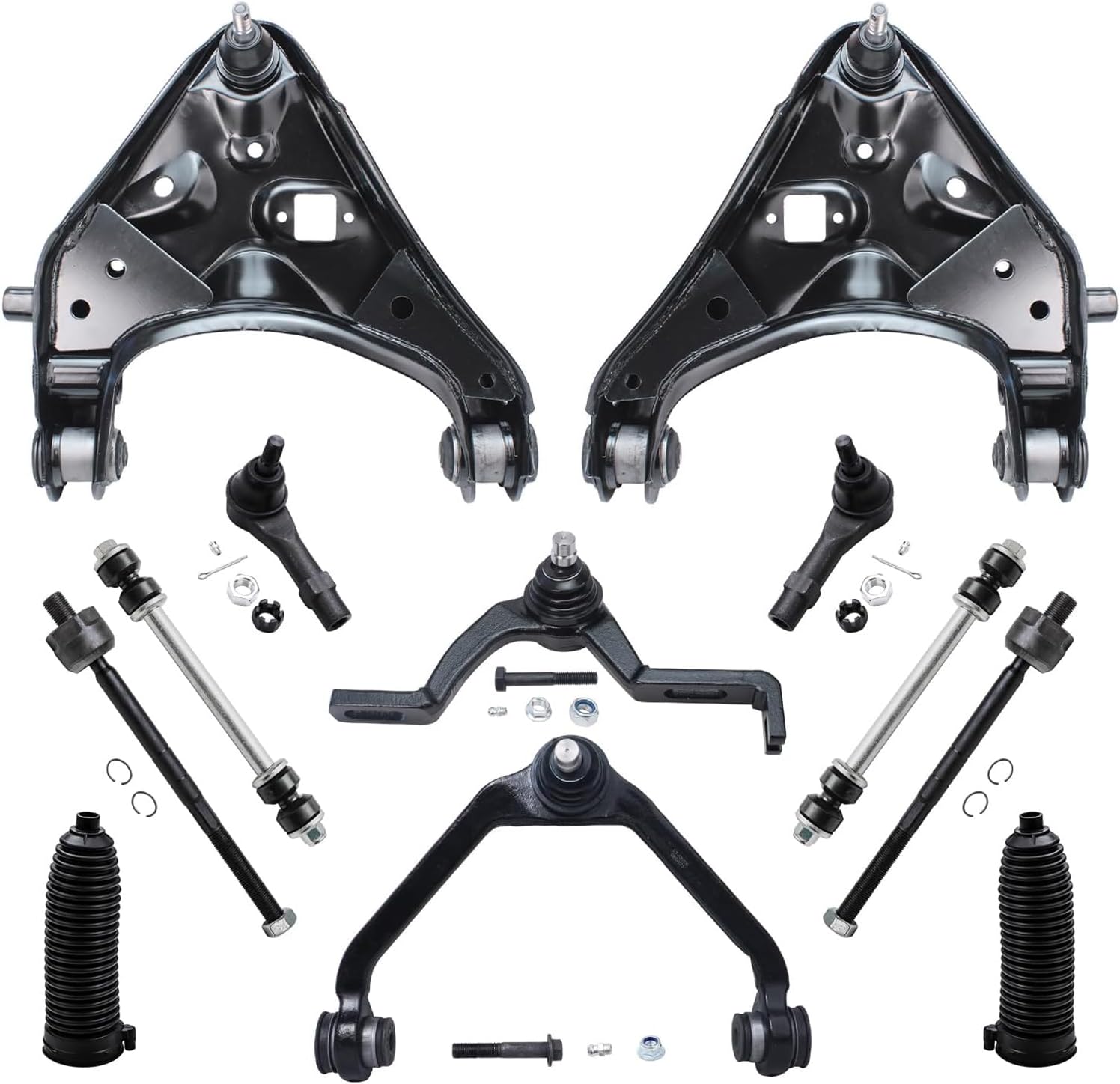
1. Detroit Axle Front Suspension 12‑Piece Control Arm and Tie Rod Kit
| Position | Front |
|---|---|
| Manufacturer | Detroit Axle |
| Manufacturer Part Number | 80679-12B |
| Special Features | Replacement for Ford Ranger torsion bar suspension models |
| Customer Reviews | 4.4 out of 5 stars |
This Detroit Axle kit supplies a complete front-end refresh for Ford Ranger torsion bar suspensions, delivering upper and lower control arms with ball joints plus inner and outer tie rods, sway bars, boots, and related hardware in a single box. Installers typically use it when doing a multi-part front suspension repair or preparing a Ranger for alignment after worn components cause play, uneven tire wear, or vague steering feel. Notable features include preassembled ball joints on the control arms and grease fittings on many components to extend service life. The practical benefit is convenience: you get matched parts that simplify a multi-part replacement and reduce the chance of mixing old and new components. Expect to need alignment after installation and basic front-end tools such as ball-joint separators and tie rod pullers. Some customers report occasional missing pieces or non-greasable upper ball joints on certain builds, so check all parts on arrival and consider replacing small hardware like bolts if your shop prefers new fasteners. The kit aims to balance cost and completeness for an in‑one solution for Ford Ranger front suspension work.
Best for: Balanced owners who want a single, coordinated kit to restore steering and front suspension performance on a Ford Ranger with torsion bar front suspension without sourcing multiple parts separately.
Less Ideal for: Owners who need factory-spec stamped OEM parts or who prefer to replace only one worn component at a time rather than performing a full front‑end refresh should consider alternatives.
- Complete kit covers upper and lower control arms, tie rods, sway bars and necessary boots for a coordinated front-end rebuild.
- Many components include grease fittings, which helps with serviceability and longer joint life.
- Preassembled control arms with ball joints reduce installation time compared with buying separate parts.
- Some buyers have reported missing or defective pieces on arrival, so inspect the box before installation.
- Upper ball joints on some units may lack grease nipples, limiting long-term serviceability for those parts.
Verdict: A convenient, cost-effective all-in-one front suspension kit for Ford Ranger torsion bar models that streamlines a multi-part repair but requires careful inspection on arrival.
2. TRQ 4-Piece Front Control Arm and Ball Joint Set

| Fit Type | Vehicle Specific Fit |
|---|---|
| Auto Part Position | Front |
| Material | Stainless Steel |
| Quantity | 4 Piece |
This TRQ kit supplies two front lower control arms and two greaseable upper control arms with ball joints designed to replace worn front suspension components on compatible Ford Ranger models. It is typically used as a direct-fit repair when front-end play, uneven tire wear, or poor handling signal failing arms or joints. The set is marketed as vehicle-specific fitment for Ford Ranger model years noted in the compatibility chart and aims to simplify installation with pre-assembled components and TRQ installation videos. In practice the machined finish and included ball joints let you restore steering stability and reduce play without fabricating brackets or modifying the chassis. Reported positives include solid fit and ride quality close to factory feel. Important limitations: some buyers report inconsistent fit or missing small hardware on certain applications and occasional premature ball-joint wear, so double-check vehicle-specific fit and inspect the parts on receipt before installing. After replacement a professional alignment is required to restore proper toe and camber.
Best for: Performance-oriented buyers who prioritize restoring crisp steering and stable front-end behavior on a Ford Ranger and prefer a near-factory replacement that simplifies installation and maintenance.
Less Ideal for: Buyers who need an exact OEM-certified part for warranty or show-restoration purposes or those unwilling to verify fitment and inspect delivered parts before installation should consider other options.
- Complete 4-piece kit includes upper and lower arms plus ball joints for a single-side front suspension refresh
- Pre-assembled components intended for direct-fit installation reduce installation time
- Greaseable upper control arms allow periodic maintenance to extend service life
- Machined exterior finish and stainless construction improve corrosion resistance and appearance
- Some buyers report missing small hardware or fitment inconsistencies on certain model years
- There are reports of premature ball-joint wear on a minority of units
Verdict: A practical, near-factory replacement kit for Ford Ranger front suspension that restores handling and simplifies installation, but verify fit and inspect parts due to occasional fitment or ball-joint durability issues.
3. TRQ Front Lower Control Arm with Preinstalled Ball Joint Set for Ford Ranger

| Fitment | 2019-2020 Ford Ranger front driver & passenger side |
|---|---|
| Quantity | 2 Piece set |
| Exterior | Machined |
| Model number | PSA53339 |
This TRQ two-piece front lower control arm set replaces both driver and passenger lower arms and comes with the ball joints preinstalled, which speeds up installation and reduces hands-on labor. It is intended as a direct-fit factory-quality replacement for 2019–2020 Ford Ranger front sides and is typically used when worn arms or failing ball joints cause loose steering, uneven tire wear, or vibration. Notable features include preassembled ball joints, machined exterior finish, and compatibility references that match factory part numbers for Ranger fitment. In practice the set tightens steering feel, restores alignment geometry, and improves ride stability without requiring modifications. Installation is straightforward for a DIYer with basic tools or for a professional shop, and TRQ supplies DIY videos to guide the process. A few users reported premature wear on some applications, so longevity may vary with driving conditions and installation quality. Buyers should plan for a wheel alignment after installation and expect a heavier-than-basic aftermarket arm due to its robust construction.
Best for: Practical optimizers who want a value-minded, ready-to-install replacement that restores steering stability and lets them complete the repair themselves or hand off a simple swap to a shop.
Less Ideal for: Drivers seeking an ultra-lightweight performance upgrade or guaranteed long-term race use should consider specialty performance arms or higher-end brands instead.
- Preinstalled ball joints save installation time and reduce assembly steps.
- Direct-fit design made for 2019–2020 Ford Ranger front lower arms to avoid modifications.
- Machined exterior and heavy construction for improved perceived durability and steering feel.
- Includes both driver and passenger arms so both sides match and wear evenly.
- Some buyers report early noise or ball-joint failure in other vehicle applications, indicating variable long-term durability.
- Heavier, robust construction may be bulkier to handle during installation compared with lighter aftermarket arms.
Verdict: A budget-conscious, ready-to-install replacement set that restores front-end stability for 2019–2020 Ford Ranger owners while offering good immediate value but with mixed long-term reports.
4. AutoShack Front Right Lower Control Arm with Ball Joint for Ford Ranger and Mazda B-Series

| Fit Type | Vehicle Specific Fit |
|---|---|
| Auto Part Position | Front |
| Auto Part Orientation | Passengers Side |
| Material Type | Alloy Steel |
This AutoShack front right lower control arm is a direct replacement part that includes the ball joint and bushings, intended to restore steering geometry and everyday ride control on compatible Ford Ranger and Mazda B-Series trucks. Fitment is vehicle specific, so installers should verify compatibility for the model year and drivetrain before buying. The alloy steel construction and included components mean you receive a ready-to-install arm without sourcing separate bushings or a ball joint, which speeds up repairs and reduces parts hunting. In real-world use this part addresses common front-end wear symptoms such as looseness or uneven tire wear and returns predictable steering feel for daily driving. The unit arrives unfinished so buyers expecting a painted or coated finish may want to prep it before installation. There is a limited six month warranty that covers part defects but not labor, so professional installation costs are not covered. For a budget-focused replacement this control arm offers a practical, no-frills solution that gets the suspension back to factory-style operation.
Best for: Budget-conscious owners who prioritize restoring safe, predictable steering and suspension on a Ford Ranger or Mazda B-Series without buying separate components.
Less Ideal for: Buyers seeking premium corrosion protection, long-term performance upgrades, or extended warranty coverage should consider higher-end replacement arms or aftermarket performance options.
- Includes ball joint and bushings for a single ready-to-install replacement
- Alloy steel construction aimed at durability for daily driving
- Vehicle-specific fitment list for direct fit on covered Ford Ranger and Mazda B-Series years
- Helps restore steering stability and suspension geometry after wear
- Arrives unfinished and may require painting or undercoating to prevent corrosion
- Six month warranty covers part defects only and excludes labor or installation costs
Verdict: A cost-conscious, ready-to-install front right lower control arm that includes the ball joint and bushings to quickly restore steering stability on compatible Rangers and Mazda B-Series trucks.
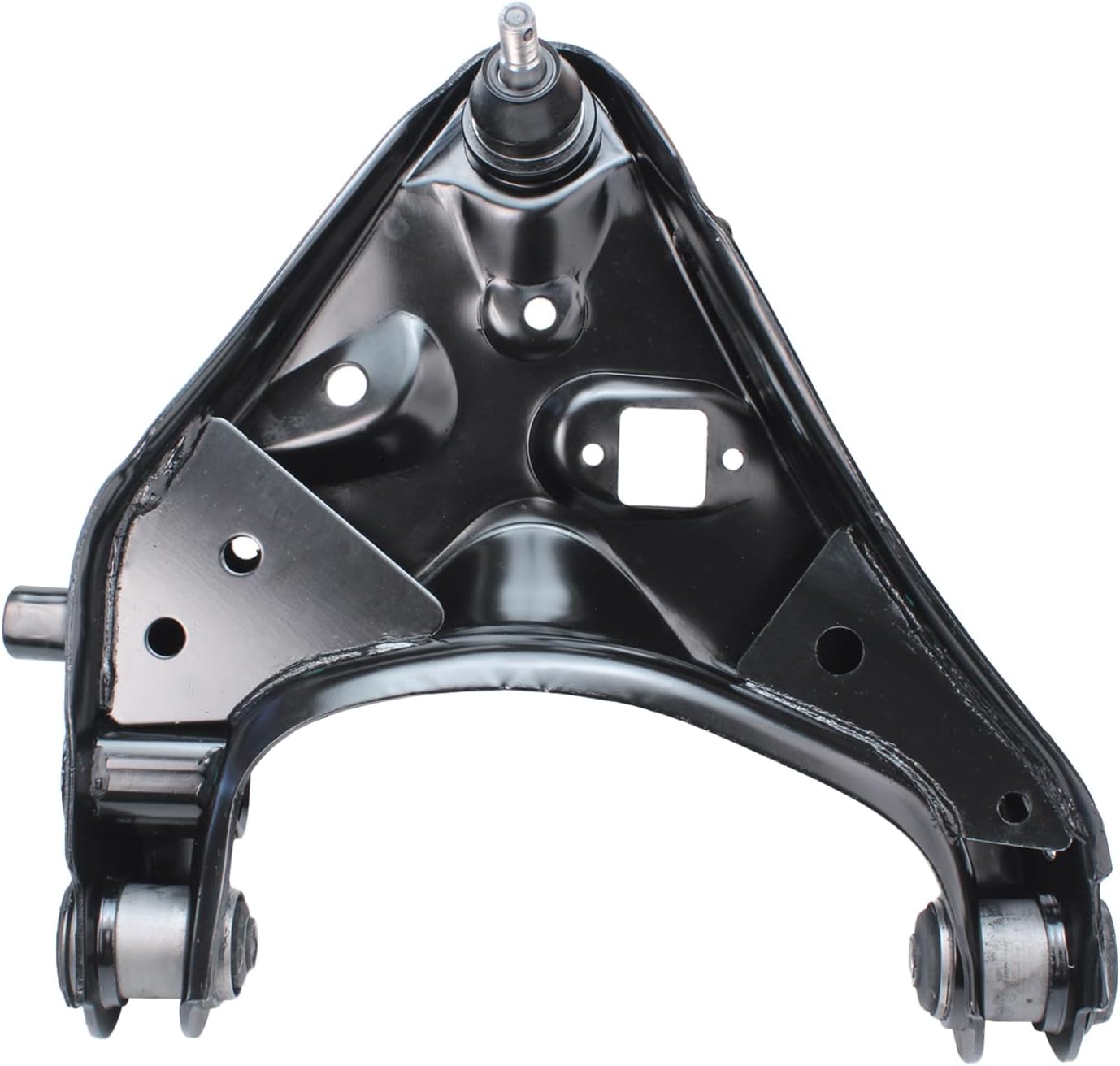
5. Detroit Axle Front Left Lower Control Arm with Ball Joint Assembly
| Fit Type | Vehicle Specific Fit |
|---|---|
| Auto Part Position | Front Left Lower |
| Material | Alloy Steel |
| Orientation | Drivers Side |
This Detroit Axle front left lower control arm replaces the factory unit and includes a pressed-in ball joint for a one-piece installation. It is used to restore proper front suspension geometry and steering feel after a worn arm or failed ball joint causes looseness, clunking, or uneven tire wear. The arm is made from alloy steel and is finished unfinished, matching the fit and mounting points of the specified Ford Ranger and Explorer torsion-bar suspension models. Buyers will appreciate the preassembled ball joint that reduces install steps and the part’s vehicle-specific design, which simplifies fitment on compatible trucks. Expect practical benefits like improved steering stability and quieter operation compared with a worn original. Limitations to consider are that this is a direct replacement for the listed model years and suspension types only, and installation may require basic suspension tools and alignment afterward. Some users report occasional ball joint fitment variance, so confirm vehicle compatibility before installation.
Best for: A reliability-focused buyer who prioritizes a factory-style replacement to restore proper steering and suspension performance on a Ford Ranger or Explorer with torsion-bar front suspension.
Less Ideal for: Drivers seeking a performance-tuned or adjustable aftermarket control arm, or owners of vehicles with different front suspension designs, should look elsewhere.
- Preassembled ball joint simplifies installation and reduces labor steps.
- Vehicle-specific fit for Ford Ranger, Explorer and related models using torsion-bar suspension improves likelihood of correct fitment.
- Alloy steel construction aimed at durability for highway and everyday use.
- Designed to restore steering stability and eliminate clunking from worn suspension components.
- Unfinished surface may require corrosion protection in salty or humid climates.
- Intended for torsion-bar suspension models only so it will not fit other suspension types.
- Some customers reported ball joint fit variance on certain vehicles, requiring inspection before install.
Verdict: A practical, vehicle-specific replacement control arm with a preassembled ball joint for restoring factory steering feel on compatible Ford Rangers and Explorers.
6. Detroit Axle Front Lower Control Arms with Ball Joints — Pair

| Fit Type | Vehicle Specific Fit |
|---|---|
| Auto Part Position | Front |
| Auto Part Orientation | Passengers Side |
These Detroit Axle front lower control arms arrive as a matched left and right pair with pre-installed ball joints to replace worn factory pieces on torsion-bar front suspensions. They are engineered as direct-fit, vehicle-specific replacements for 1995–2005 Explorers, 1998–2011 Rangers (torsion bar only) and several Mazda and Mercury variants, so installation is typically straightforward and uses existing mounting points. The parts are pressed from a premium alloy and finished to resist rust, and the seller positions them as meeting factory-quality fit, form, and function. For a convenience-minded buyer this kit cuts repair time because you replace the whole assembly rather than rebuild bushings or ball joints individually. Expect practical benefits like restored steering stability and a simplified install at the alignment shop. Limitations: the ball joints are sealed assemblies so they cannot be greased after installation, and the kit does not include fasteners in every case so you may need to reuse hardware or obtain new bolts for a complete install.
Best for: Convenience-driven DIYers or mechanics who want a straightforward, ready-to-install replacement that minimizes hands-on labor and avoids rebuilding individual suspension parts.
Less Ideal for: Owners seeking serviceable or greasable ball joints or those who prefer to replace only bushings rather than the entire control arm assembly.
- Direct-fit, vehicle-specific design intended for bolt-in replacement on listed Ford Ranger and Explorer models
- Includes both left and right lower control arms with pre-installed ball joints for faster installation
- Premium alloy construction and rust-resistant finish aimed at improved durability over corroded originals
- Restores steering stability and suspension geometry without rebuilding individual components
- Sealed ball joints are not serviceable or greasable after installation
- Some orders may arrive without new mounting bolts, requiring reuse or purchase of hardware
Verdict: A convenient, vehicle-specific pair of front lower control arms with ball joints that restores steering and suspension performance with minimal installation work.
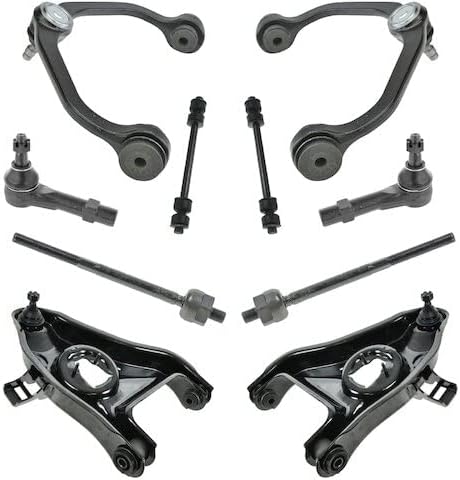
7. Marketplace Auto Parts Front Suspension 10-Piece Control Arm, Ball Joint, Sway Bar Link and Tie Rod Kit for 1998–2011 Ford Ranger RWD
| Fit Type | Vehicle Specific Fit |
|---|---|
| Auto Part Position | Front |
| Material | Alloy Steel |
| Unit Count | 10.0 Count |
| Compatible Models | 1998-2011 Ford Ranger RWD |
This 10-piece front suspension kit bundles the parts needed to refresh the steering and front suspension on RWD Ford Rangers from 1998 through 2011. It includes upper and lower control arms with integrated ball joints, sway bar links, and both inner and outer tie rods so you can replace worn components in one service interval. Typical use is a coordinated front-end overhaul to stop play in the steering, reduce clunking, and restore alignment geometry. The alloy steel construction and vehicle-specific fit aim to match factory mounting points for a straightforward swap. The main practical benefit is convenience and time savings from buying a matched set rather than sourcing individual parts. Limitations to consider are fitment restricted to RWD Ranger variants only and potential variability in part matching noted by some users, so inspect components on receipt before installation and plan for a professional alignment after fitment.
Best for: A risk-averse mainstream buyer who wants a straightforward, factory-style front suspension refresh for a Ford Ranger RWD and prefers buying a matched set to minimize ordering errors and garage time.
Less Ideal for: Not suitable for owners of four-wheel-drive Rangers or those seeking premium aftermarket performance parts or upgraded materials beyond factory-spec replacements.
- Complete 10-piece kit covers upper/lower control arms, ball joints, sway bar links, and inner/outer tie rods for a coordinated front-end refresh
- Vehicle-specific fit for 1998–2011 Ford Ranger RWD reduces modification or fabrication during installation
- Alloy steel parts offer durability suited to suspension components
- Buying as a set saves time sourcing matched components and simplifies a single repair appointment
- Fitment limited to rear-wheel-drive Ford Ranger models only
- Some customers reported occasional incorrect or mismatched pieces requiring inspection before installation
Verdict: A convenient, vehicle-specific 10-piece front suspension kit for RWD Ford Rangers that simplifies a full front-end replacement but requires careful fitment checks on arrival.
Looking for the perfect fit?
Select your Ford Ranger configuration to see the most relevant Lower Control Arms recommendations
Choosing the Right Ford Ranger Lower Control Arm: Key Factors to Consider
Fitment and Mounting Accuracy
Correct fitment ensures the arm aligns with factory mounting points and steering geometry. Poorly fitting arms can force alignment changes and accelerate tire wear, requiring additional alignment work after installation. Look for arms specified for the Ford Ranger model year and trim to avoid modification. Mounting accuracy also affects ball joint preload and can influence steering feel and vibration transfer. Bolts and brackets should mate cleanly with the control arm to prevent movement under load. Precise fitment reduces installation time and minimizes the chance of premature wear on related suspension parts. Consider how closely the part tolerances match OEM dimensions and whether hardware is included to achieve the correct position. A component that holds the factory geometry helps maintain predictable handling and reduces the need for repeated adjustments.
Bushing Material and Design
Bushings control how much movement and noise pass between the arm and chassis. Softer rubber bushings isolate vibration and yield a more comfortable ride, while stiffer polyurethane bushings improve steering response but may transmit more road noise. The design matters too: bonded or pressed-in bushings resist rotation and separation better than loosely fitted sleeves. Consider expected driving conditions; heavy off-road use or frequent potholes favors tougher bushing compounds that resist tearing. High-quality bushing material also reduces common lower control arm symptoms such as looseness, clunking, or accelerated wear. Proper bushing selection balances comfort with the level of control you want from the steering system.
Arm Construction and Corrosion Resistance
The structural integrity of the arm determines how it handles load and impacts. Forged or stamped steel arms typically offer higher strength than flimsy cast pieces, and a clean weld program reduces stress risers. Corrosion protection is important for longevity, especially in climates that use road salt or experience humidity. Powder coatings, e-coating, or zinc plating extend service life and prevent rust-related failures. Inspecting the fabrication method and finish helps you anticipate how long the arm will hold up under daily driving and rough conditions. A well-made arm maintains geometry and resists bending or cracking that could lead to safety issues.
Ball Joint Quality and Serviceability
Some lower control arms include integrated ball joints while others accept replaceable joints. Integrated units simplify installation but require replacing the entire arm when the joint wears. Serviceable designs let you replace only the ball joint, potentially lowering long-term maintenance cost. Ball joint durability affects steering precision and can contribute to lower control arm noise when worn. Check for boots that protect the joint from contaminants and for grease fittings if periodic lubrication is possible. The joint's axial and radial play characteristics influence how the steering will feel and when replacement becomes necessary.
Impact on Alignment and Tire Wear
A new lower control arm can change camber and toe settings if its geometry differs from the original. Arms that preserve OEM geometry help avoid accelerated or uneven tire wear. If a part shifts alignment, plan for a professional check to restore proper settings. Some arms have adjustment features to fine-tune alignment during installation, which can be valuable if your Ranger needs compensation for worn components. Paying attention to how the arm affects caster, camber, and toe will influence handling and tire longevity. Minimizing alignment deviation saves time and cost after installation.
Noise, Ride Quality, and Longevity
How an arm performs over time affects daily comfort and perceived quality. Components with poor bushings or loose joints often cause creaks, clunks, or squeaks, which signal worn lower control arm signs. A durable assembly resists premature wear, maintains ride quality, and reduces the frequency of repeat repairs. Consider the expected service life based on materials and protective finishes, as well as how the arm dampens road inputs. Balance durability against ride comfort depending on whether you prioritize quiet city driving or heavier duty use. Longevity also ties back to warranty support and documented performance in similar use conditions.
How We Chose the Best Ford Ranger Lower Control Arm
We focused on parts that are specifically designed for the Ford Ranger chassis and that address common failure points for this vehicle. Key evaluation criteria included fitment precision to factory mounting points, the quality and material of bushings, the strength and finish of the arm itself, and indications of corrosion resistance for long-term durability. We also considered manufacturing tolerances that affect alignment, warranty support or stated build standards, and user reports related to noise and ride stability.Exclusions: we excluded universal or generic arms that require extensive modification, components lacking clear bushing material specs, and products with insufficient fitment data for the Ford Ranger. The list favors components that minimize alignment changes at install, reduce common lower control arm symptoms such as looseness or clunking, and offer bushing designs that balance comfort with steering responsiveness.
Our full evaluation process is outlined in our review methodology.
FAQ
What are common symptoms that indicate a failing lower control arm?
Common signs include clunking or popping noises when going over bumps, wandering or vague steering, and uneven tire wear. You might also notice vibration in the steering wheel or a pull to one side. These symptoms often develop gradually, so inspection of bushings and joints is important when you observe any of them.
Can I replace a Ford Ranger lower control arm myself?
Many mechanically inclined people can perform the replacement with basic tools, but it requires safely lifting the vehicle and supporting suspension loads. Ball joint separation and correct torque of mounting bolts are important. After replacement, an alignment check is usually necessary to ensure proper steering geometry.
How long do lower control arm bushings typically last?
Bushing life varies with material and driving conditions; rubber bushings often last several years under normal use, while polyurethane can last longer under heavy-duty conditions. Frequent exposure to rough roads, salt, or off-road stress shortens lifespan. Regular inspections help catch wear before it affects steering or causes damage.
Will replacing the lower control arm fix steering pull or uneven tire wear?
Replacing a worn or damaged lower control arm can resolve pull and uneven tire wear when the arm is the root cause. However, other components and alignment settings can also cause similar issues, so a thorough inspection and post-installation alignment check are recommended to confirm the fix.
Are integrated ball joints better than serviceable joints in a lower control arm?
Integrated joints simplify installation and reduce assembly steps, but when they fail you must replace the whole arm. Serviceable joints allow replacing only the worn joint, which can be more economical over time. The best choice depends on maintenance preferences and how often you expect to service suspension components.
Conclusion
When choosing a Ford Ranger lower control arm, prioritize parts that match factory geometry and use durable bushing materials appropriate for your driving style. Fitment accuracy and corrosion-resistant construction will reduce the chance of alignment headaches and premature failures.Balance comfort and control by selecting the right bushing type and consider whether an integrated or serviceable ball joint fits your maintenance plan. After installation, a professional alignment and periodic inspections will help maintain steering precision and extend component life.
Explore More:
- Check out all Ford Ranger parts & accessories
- Explore Lower Control Arms Maintenance & Repair Guides
- Explore Suspension & Steering
- Browse all Auto Parts
