

Note: This article contains affiliate links. If you click on these links and make a purchase, I may earn a small commission at no extra cost to you. This helps support my research and content. Read my full affiliate disclosure here.
If your Honda CR-V is showing loose steering, uneven tire wear, or a clunk over bumps, the lower ball joint is often the cause. Replacing worn lower ball joints restores steering precision, corrects front-end geometry, and reduces wheel vibration for a safer, more predictable driving experience. This guide covers seven shortlisted lower ball joints chosen for solid fitment, durability, and ease of installation specifically for the Honda CR-V.Below you will find practical notes on what matters when selecting a lower ball joint for this vehicle and concise explanations of the evaluation criteria used to pick the top options. Use the quick previews to match a part to your repair approach and driving needs.
Looking for other parts? See all Honda CR-V parts & accessories.
Top Picks at a Glance
| Best Overall The best all-around choice for most situations | DEARMMGG Front Lower Ball Joint Kit (2 pcs) K500103 |  |
| Best Quality Built to a higher standard if you want something more solid | Metrix Premium Chassis Parts Front Lower Ball Joint Kit (2-piece) |  |
| Best Value The sweet spot between price and what you get | Detroit Axle Pair Front Lower Ball Joints (K9802) — 2 Replacement |  |
| Best Budget The cheapest option that still gets the job done reliably | ReliPoti Front Lower Suspension Ball Joints (pair) for 2002–2006 Honda CR-V |  |
| Highest Rated A top-rated pick with lots of positive feedback | HHCM Front Lower Ball Joint Kit K500103 (2 pc) |  |
| Most Popular A crowd favorite that many people choose with confidence | Detroit Axle Front Lower Ball Joints Assembly (pair) |  |
| Best Seller A high-volume bestseller chosen again and again | MOOG K80223 Front Lower Suspension Ball Joint (Lower) |  |
1. DEARMMGG Front Lower Ball Joint Kit (2 pcs) K500103

| Fitment | Acura RDX 2007-2018; Honda CR-V 2007-2009, 2012-2016; Honda HR-V 2016-2019 |
|---|---|
| Package Includes | 2x Front Lower Ball Joints (driver and passenger) |
| Brand | DEARMMGG |
| Manufacturer Part Number | K500103 |
These DEARMMGG front lower ball joints are a direct-replacement style kit sold as two pieces for driver and passenger sides. They are intended to restore steering and suspension geometry by replacing worn lower ball joints on compatible Acura RDX and Honda CR-V/HR-V years. Installation is the typical suspension job: remove the control arm or separate the joint, press or bolt the new ball joint in, and secure with the supplied components. Reviewers report straightforward fitment and good value for money, and the painted finish helps resist corrosion. The kit is positioned as a budget-friendly factory-quality replacement from a manufacturer with long experience supplying aftermarket parts. Limitations to note are that fitment must be checked carefully against the vehicle year and that a cotter pin or retaining hardware is sometimes expected by installers and may need to be sourced separately. For buyers comfortable with DIY suspension work or a mechanic install, these provide a cost-effective way to bring back steering feel and reduce play compared with worn originals.
Best for: Buyers seeking an affordable, factory-style replacement to correct play or steering issues who prioritize fit and value over premium branded parts and are comfortable having the work done by a DIYer or independent shop.
Less Ideal for: Those who want an upgraded, heavy-duty or performance suspension component or who require certified OEM-branded parts for warranty or resale reasons.
- Sold as a matched pair for left and right lower control arms
- Reported to fit specified Acura RDX and Honda CR-V/HR-V model years with minimal modification
- Painted finish offers basic corrosion resistance
- Good value compared with dealer replacement parts
- May not include small retention hardware like cotter pins that some installers expect
- Not advertised as a premium OEM-level part so long-term durability may vary
Verdict: A budget-friendly matched pair of front lower ball joints that restore steering feel and fit the listed Acura and Honda years, making it a practical choice for value-minded repairs.
2. Metrix Premium Chassis Parts Front Lower Ball Joint Kit (2-piece)

| Position | Front Lower |
|---|---|
| Quantity | 2 |
| Material | Steel |
| Manufacturer Part Number | 99228MT |
| Compatible Models | Select Acura RDX and Honda CR-V/HR-V years listed |
This Metrix two-piece front lower ball joint kit replaces worn lower ball joints to restore steering precision and front suspension control on compatible Honda and Acura vehicles. It is intended as a direct-fit replacement and is used during front suspension repairs or when symptoms like clunking, uneven tire wear, or loose steering appear. The joints are steel construction with greasable fittings and include cotter pins, which lets you service and extend their life with routine maintenance. Metrix emphasizes corrosion protection and claims manufacturing to certifications that aim for OEM-like fit and reliability. Practically, the kit simplifies installation for DIYers and technicians by matching factory mounting points and supplying two joints for both sides. The main limitations are that this is a direct replacement component rather than a performance upgrade and fitment is limited to specific model years, so it will not change suspension geometry or handling beyond restoring factory behavior. Buyers should still perform a wheel alignment after installation.
Best for: Buyers who need a reliable factory-quality replacement to restore steering feel and suspension control on the specified Honda CR-V and similar models and who prioritize correct fit and serviceability.
Less Ideal for: Drivers seeking performance lift, lowered ride height, or heavy-duty off-road components should look for specialized aftermarket joints and suspension upgrades instead.
- Direct-fit replacement for listed Honda and Acura front lower ball joints for quicker installation
- Greasable design and included cotter pins allow periodic servicing to extend joint life
- Steel construction with corrosion-resistant coating aimed at OEM-like durability
- Sold as a 2-piece kit so both sides can be replaced together for balanced steering response
- Not a performance or heavy-duty upgrade; restores factory-level performance only
- Compatibility limited to specific model years so verify fitment before purchasing
Verdict: A dependable, serviceable two-piece front lower ball joint kit built to restore factory steering feel and fit directly into the listed Honda and Acura models.
3. Detroit Axle Pair Front Lower Ball Joints (K9802) — 2 Replacement

| Fitment | 1992–2001 Honda/Acura models listed in product details |
|---|---|
| Position | Front lower |
| Kit includes | 2x front lower ball joints (driver & passenger) |
These Detroit Axle front lower ball joints replace the factory units on compatible Honda and Acura models and come as a two-piece kit for both driver and passenger sides. They are built from premium alloy and designed as direct-fit replacements so installation is straightforward with basic press or mechanic tools. In use the joints restore steering feel and suspension stability after worn originals, and many buyers report good fit and quiet operation once installed. The parts include necessary hardware and are manufactured to meet factory-style form and function, which makes them a practical, value-focused repair option. Some users have reported variability in greasing at delivery and a few noted fit tolerance differences requiring attention during press-in; those comfortable checking lubrication and confirming fit will get the best results. These are a budget-friendly choice that balance material strength and ease of installation against the slightly mixed long-term durability experiences reported by some owners.
Best for: Buyers who want a cost-effective, factory-style replacement to restore steering and suspension feel on older Honda/Acura vehicles and who prefer straightforward direct-fit parts they can install or have installed affordably.
Less Ideal for: Drivers seeking a long-term OEM-level lifetime solution or those unwilling to inspect and add grease during installation should consider higher-end factory replacement parts instead.
- Direct-fit design for straightforward installation on listed vehicles
- Made from premium alloy for improved wear resistance and corrosion protection
- Kit includes both left and right lower ball joints plus necessary hardware
- Designed and tested to match factory-style fit, form, and function
- Some units arrive with minimal factory grease and no service fitting for relubrication
- Occasional reports of slightly undersize fit requiring extra care during pressing
Verdict: A practical, affordable direct-fit pair of front lower ball joints that restore steering stability and are ideal for budget-conscious repairs on the listed Honda and Acura models.
4. ReliPoti Front Lower Suspension Ball Joints (pair) for 2002–2006 Honda CR-V

| Brand | ReliPoti |
|---|---|
| Model | K80223 |
| Position | Front Lower |
| Package Contents | 2 pcs front lower ball joints (driver and passenger) |
These ReliPoti front lower ball joints replace the driver and passenger lower joints on 2002–2006 Honda CR-Vs. They come as a two-piece kit with hardware and labeled left/right parts to speed installation for a DIYer or independent shop. The units are machined to factory-style tolerances so they bolt into the control arm with minimal fuss and allow steering pivot movement without play. Buyers note the rubber boots and solid steel construction look comparable to factory replacements and the kit can noticeably tighten front-end feel once installed. Because this is an economy aftermarket part, expect variability in fit and finish across vehicles and occasional units arriving incomplete or with minor misalignment; double-check fit with the vehicle before final installation. The kit is targeted at budget repairs where replacing both lower joints at once is the priority rather than paying dealer prices, and it is simple enough for a backyard mechanic with basic tools to install and align.
Best for: Buyers looking to repair a worn front lower joint on a 2002–2006 Honda CR-V on a tight budget who prefer a DIY or independent-shop install to avoid dealer labor costs.
Less Ideal for: Drivers seeking a long-term premium or heavy-duty upgrade or those unwilling to inspect parts for fit before installation should consider higher-end branded replacements or dealer parts.
- Sold as a pair with hardware and left/right marking for straightforward replacement
- Built from solid steel with factory-style tolerances for a secure fit and smooth steering pivot
- Affordable option that reduces parts cost compared with dealership replacements
- Includes rubber boots and necessary mounting hardware so no extra purchases are typically needed
- As an economy aftermarket part, some units may have fitment variation or arrive incomplete
Verdict: A cost-effective, ready-to-install pair of front lower ball joints for 2002–2006 Honda CR-Vs that lets budget-minded DIYers replace worn joints without dealer prices.
5. HHCM Front Lower Ball Joint Kit K500103 (2 pc)

| Brand | HHCM |
|---|---|
| Model | K500103 |
| Mounting Type | 3 Bolt |
| Position | Front Lower |
| Package Includes | 2pc Ball Joints |
The HHCM K500103 front lower ball joint kit supplies two replacement lower ball joints intended for routine suspension repair on compatible Honda CR-V, HR-V and Acura RDX models. These are pressed-in, 3-bolt mounting lower joints delivered with new hardware and a cotter pin hole for secure fastening. In use you would replace worn, noisy, or sloppy lower joints to restore steering precision and reduce vibration; installers report the parts press in and align without unusual difficulty. HHCM says the joints are made from premium materials and treated to resist abrasion and corrosion, which should help lifespan in typical road conditions. A few buyers noted the included nuts and washers differ from factory fasteners and one variation has a grease fitting that can interfere with clearance, so you may prefer to reuse the stronger OEM nuts and confirm the top clears your axle before pressing. For reliability-focused repairs this kit gives a practical, ready-to-install replacement at a modest cost, but check fastener compatibility and grease fitting details for your vehicle before installation.
Best for: Buyers who prioritize dependable, cost-effective replacements to restore steering and suspension feel on the listed Honda and Acura models and want parts that are ready to install.
Less Ideal for: If you need a direct factory-identical fastener set or have a modified suspension with tight clearance around the axle, consider alternatives or verify fitment before purchase.
- Fits specified Honda CR-V, HR-V and Acura RDX model ranges listed for direct replacement
- 3-bolt mounting with cotter pin hole for a secure, factory-style installation
- Corrosion and abrasion resistant finish intended to extend service life in normal conditions
- Sold as a matched pair with mounting hardware included for straightforward front-end repair
- Included nuts/washers may be lower quality than factory fasteners and some installers reuse OEM hardware
- Some units include a grease fitting that can conflict with axle clearance on certain vehicles
Verdict: A practical, corrosion-resistant matched pair that restores steering feel and suspension reliability on the listed Honda and Acura models.
6. Detroit Axle Front Lower Ball Joints Assembly (pair)
| Kit includes | 2x Front Lower Ball Joints Assembly |
|---|---|
| Manufacturer | Detroit Axle |
| Warranty | 10-Year Warranty |
| Item Weight | 3.22 pounds |
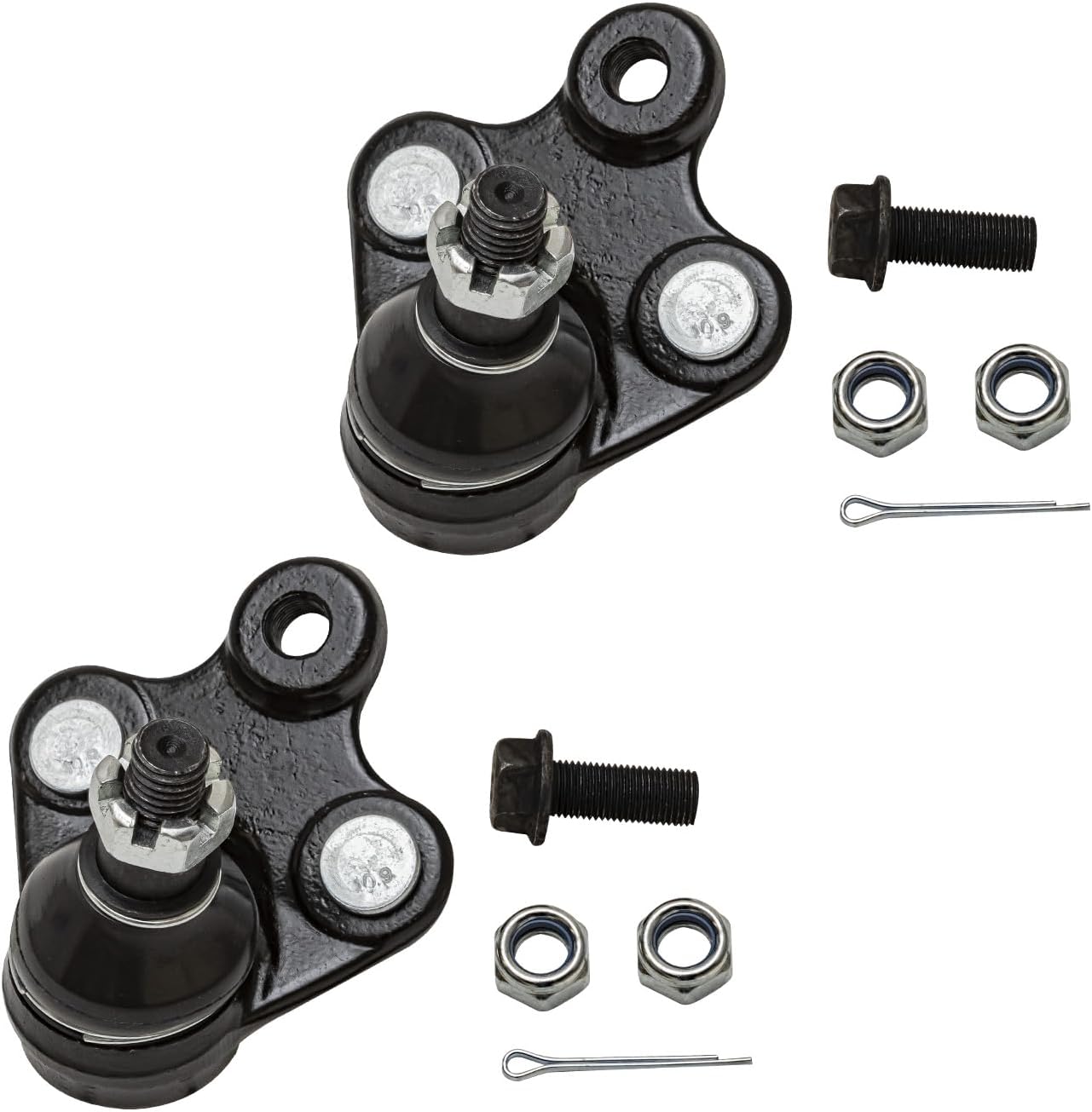
These Detroit Axle lower ball joints come as a matched pair intended to replace worn front lower ball joints on compatible Honda CR-V and related Acura models. They are supplied pre-assembled for straightforward press-in installation and include grease fittings for periodic lubrication. In use they restore steering feel and eliminate clunking or popping associated with worn joints, and many owners report factory-quality fit and long service life when the match is correct. The parts are made to aftermarket quality standards with testing for wear and fatigue and the brand backs them with a 10-year warranty. Fitment errors have been reported on some vehicles, so confirm vehicle application before purchase and be prepared to press them in with a proper press or remove the control arm to avoid installation difficulty. A few buyers have found dimensional mismatches on non-compatible cars, so double-check year and submodel fitment rather than relying solely on generic listings.
Best for: Buyers who prioritize reliable steering feel and want an affordable replacement that performs like factory parts when the correct fit is confirmed; ideal for DIYers or independent shops comfortable using a ball-joint press.
Less Ideal for: People who need a drop-in swap without any chance of fitment checks or those unwilling to use a press or take the control arm off for installation.
- Sold as a matched pair ready for press-in replacement
- Grease fittings allow periodic lubrication for longer life
- Many buyers report factory-quality fit and durable construction
- Covered by a long 10-year warranty from the brand
- Fitment is critical; some listings have mismatches that prevent installation
- May require a hydraulic press or removal of control arm for proper installation
Verdict: A cost-effective, factory-quality replacement pair that restores steering feel for CR-V owners who verify fitment and can handle press-in installation.
7. MOOG K80223 Front Lower Suspension Ball Joint (Lower)
| Position | Lower |
|---|---|
| Manufacturer Part Number | K80223 |
| Compatible Vehicles | 2002-2006 Honda CR-V; 2003-2005 Honda Element |
| Exterior | Painted |
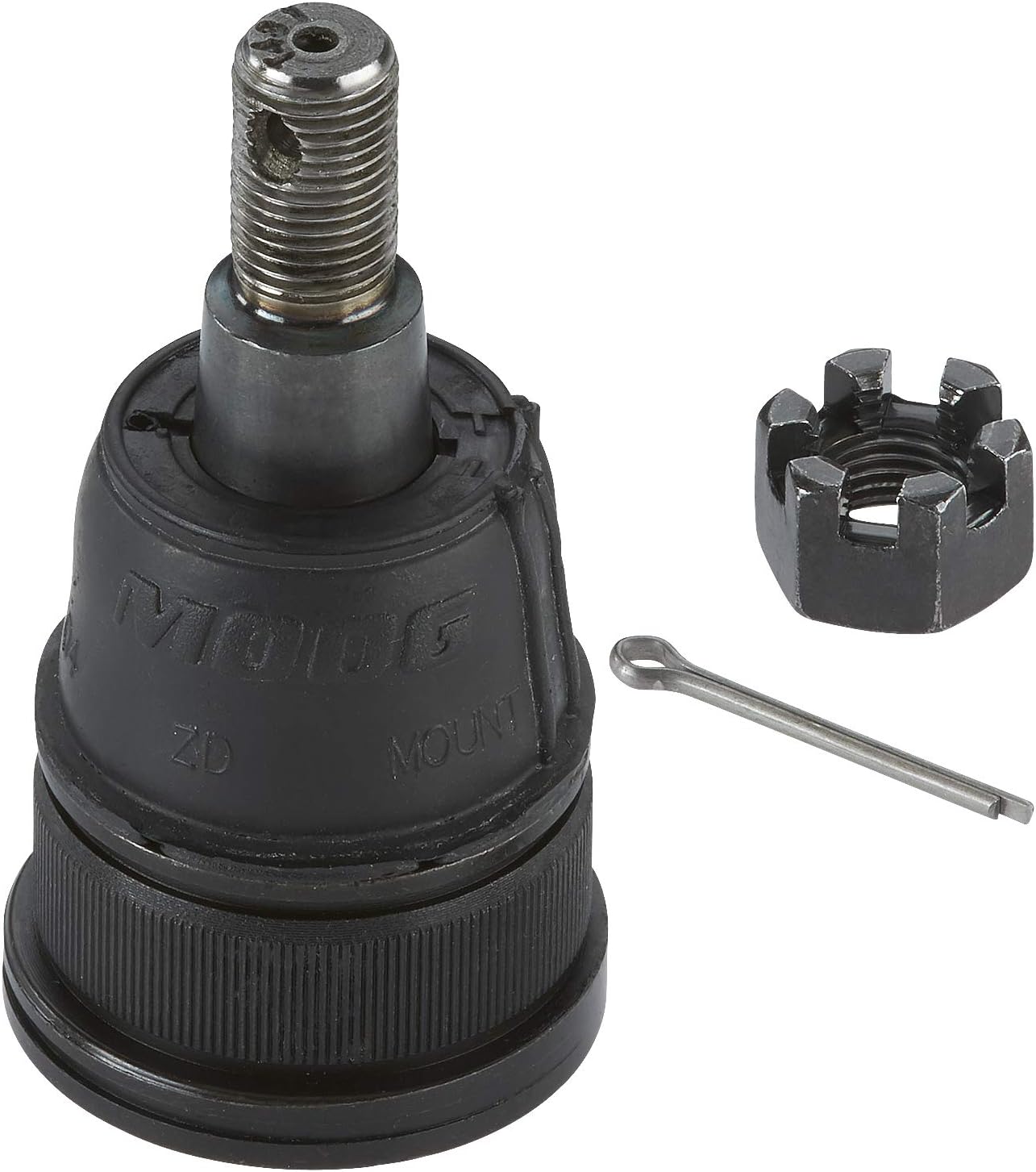
The MOOG K80223 is a front lower suspension ball joint designed as a direct replacement for compatible Honda CR-V and Element applications. It restores the pivot point between the control arm and steering knuckle, which helps eliminate steering looseness, front-end shimmy, and uneven tire wear when the original joint is worn. MOOG highlights heat-treated studs for improved fatigue strength, a pressed-in cover plate to keep out debris, and a greasable/gusher-style bearing design on applicable variants for smoother movement and longer life. In practice this part fits like a factory replacement and is intended for use when a worn joint produces noise, vibration, or alignment issues. Installation typically requires a ball-joint press and the correct Honda adapters; some buyers rented or purchased a press for a clean install. Limitations to note are occasional fitment inconsistency reported by a few users and the lack of accessible grease fittings on some versions because of knuckle clearance. For a cautious buyer who prefers established aftermarket brands and near-factory fit, this MOOG joint is a sensible option but plan to have proper pressing tools or a shop handle the install.
Best for: Buyers who prioritize a reliable, near-factory replacement from a reputable chassis parts brand and prefer a part that addresses steering looseness and tire wear without performance modifications.
Less Ideal for: Do not pick this if you want a DIY swap without any specialty tools or if you need a ball joint with an easily reachable grease fitting for routine greasing on off-road vehicles.
- Direct-fit replacement designed for specified Honda CR-V and Element models
- Heat-treated ball stud improves fatigue strength and resists premature failure
- Pressed-in cover plate seals out debris to reduce looseness and bearing wear
- Greasable or gusher-style bearing design on applicable versions for reduced friction and longer life
- Installation normally requires a ball-joint press and vehicle-specific adapters which adds labor or tool cost
- Some buyers reported occasional fitment variation between units
Verdict: Choose this MOOG lower ball joint when you want a trusted, factory-style replacement that restores steering feel and reduces front-end vibration.
Choosing the Right Honda CR-V Lower Ball Joint: Key Factors to Consider
Fitment and Taper Angle
Correct fitment is essential for safe steering geometry. The ball stud taper and shank dimensions must match the CR-V knuckle seat to ensure a secure press-fit and proper torque retention. If the taper or shank diameter is even slightly off, the joint can loosen under load, causing play in the front end and accelerated wear.
Fitment also covers stud length and stud orientation relative to the control arm and steering components. Verify that the replacement matches the vehicle's original taper angle, stud length, and mounting footprint so alignment settings remain stable after installation. Using a part specified for the Honda CR-V reduces the risk of improper seating or the need for knuckle modifications.
Durability and Materials
Materials and internal construction determine service life under road salt, water, and road debris. Look for hardened ball studs and high-grade bearing surfaces that resist galling and flattening during repeated steering motion. A strong dust boot made from abrasion-resistant elastomer helps keep contaminants out and prolongs lubrication retention.
Also consider corrosion-resistant coatings on the stud and housing. Zinc or phosphate coatings and plated finishes slow rusting where water and salt are common. The better the materials and surface protection, the longer the lower ball joint will maintain tight steering feel and predictable handling.
Boot Design and Sealing
The dust boot and seal are the first line of defense against contaminants. A boot that clamps securely with an integrated retaining ring and a full-coverage profile prevents grit and moisture from reaching the bearing surface. Flexible yet tough boot materials resist cracks and splitting during suspension travel.
Check whether the joint uses a captive or replaceable boot design and whether the seal tolerances match OEM specifications. Boots that fail prematurely are the most common cause of joint contamination, so this element directly affects maintenance intervals and long-term value.
Serviceability and Installation
Ease of installation matters whether you are a DIYer or a technician. Some lower ball joints are serviceable with a common ball joint press tool and do not require knuckle machining, while others may need special tools or additional steps. Choose a unit that matches the CR-V control arm mounting style to minimize labor.
Also consider whether the part includes grease fittings or ships pre-greased. Pre-greased options reduce initial installation steps, while greaseable joints allow re-lubrication during scheduled maintenance. Clear installation guidance and torque specs supplied by the manufacturer help ensure a safe and correct fit.
Load Rating and Performance
Lower ball joints carry steering and suspension loads, so load capacity and bearing contact design affect both safety and ride quality. A joint built with proper load distribution reduces localized wear and keeps steering feel consistent over time. Verify that the replacement's load handling, stud diameter, and ball surface area align with the demands of the CR-V's front suspension.
High-load designs can benefit owners who carry extra cargo or tow occasionally, while standard-duty units suffice for typical commuter use. Matching the joint to anticipated loads helps avoid premature failure and maintains predictable handling.
Warranty and Documentation
Warranty length and the clarity of technical documentation indicate manufacturer confidence. A solid warranty that covers premature failure reduces long-term ownership risk and signals that the maker stands behind fitment and material claims. Technical documentation should include torque values, installation notes, and fitment confirmation for the Honda CR-V.
Absence of documented specifications or a limited warranty increases uncertainty during a repair. Prioritize parts with clear, vehicle-specific documentation and reasonable warranty coverage to protect against early defects and installation questions.
Signs Your CR-V Needs Lower Ball Joint Service
Several common symptoms suggest lower ball joint wear on the Honda CR-V. Excessive play in the front end often manifests as vague or wandering steering, especially at highway speed. Another indicator is unusual tire wear patterns on the inner or outer edges of the front tires caused by changing suspension geometry during cornering or braking.
You may hear a metallic clunk or pop when driving over bumps if the joint has excessive vertical play. Wheel vibration that changes with vehicle speed can also point to a compromised joint, though vibration may have other causes. Inspect the dust boot for cracks and check for grease leakage during a visual inspection; a torn boot usually precedes accelerated joint deterioration.
- Steering wander or looseness at speed
- Inner or outer tire wear on front tires
- Clunking noise over bumps or during turns
- Visible boot damage or grease loss
- Wheel vibration that varies with speed
DIY Vs Professional Replacement Considerations
Deciding whether to tackle a lower ball joint replacement yourself depends on tools, experience, and comfort with front suspension work. Pressing a lower ball joint often requires a ball joint press tool and possibly a bench vise or hydraulic press. Owners with the correct toolset and a solid service manual can perform the job safely, but it is important to follow torque specs and inspection procedures.
Professional service reduces the risk of improper seating and ensures alignment is properly reset after replacement. If the knuckle or control arm shows corrosion that complicates pressing the old joint out, a shop can evaluate whether a replacement control arm or supplemental work is advisable. Factor in the time needed for disassembly, pressing, and post-replacement wheel alignment.
- DIY requires a ball joint press tool and torque wrench
- Professional installation ensures correct seating and alignment
- Evaluate knuckle corrosion before attempting DIY removal
- Allow time for wheel alignment after replacement
Inspection Checklist Before Ordering Parts
Before buying a replacement, perform a basic inspection to confirm that the lower ball joint is the root cause. Safely lift and support the vehicle, then check for vertical and lateral play at the tire while an assistant moves the steering. Look for a torn dust boot, rust at the joint interface, or visible grease leakage. Document the control arm and knuckle condition to determine if additional parts may be needed.
Record the vehicle model year, engine layout, and any suspension package details that affect fitment. When possible, take reference photos of the existing joint and mounting area to compare with the replacement. This reduces ordering errors and prevents returns related to incorrect fitment.
- Lift and support vehicle safely before inspection
- Check for vertical and lateral play at the wheel
- Inspect dust boot, grease, and rust
- Record vehicle details and take reference photos
Preparing for Installation and Alignment
Plan for alignment after replacing lower ball joints because removing and reinstalling suspension pivots alters toe and camber. Gather necessary tools in advance: ball joint press tool, appropriate sockets, torque wrench, penetrating oil, and safety stands. Have new hardware on hand if manufacturer guidance calls for replacement of nuts or bolts during reassembly.
Clean mating surfaces and apply anti-seize where appropriate to facilitate future removal without affecting seating surfaces. Follow the specified torque values and tightening sequence to achieve correct clamping force. After installation, drive cautiously to the alignment shop or perform a preliminary check if you have alignment tools to avoid uneven tire wear.
- Expect a wheel alignment after replacement
- Have a ball joint press tool and torque wrench available
- Use penetrating oil and new hardware when recommended
- Clean mating surfaces and apply anti-seize selectively
Matching Grease and Lubrication Practices
Use the recommended grease type if the replacement joint has a grease fitting. Many manufacturers advise a high-quality chassis grease that resists water washout and maintains lubrication at a wide temperature range. Avoid over-packing a sealed joint as excessive grease can deform the boot or purge when the joint cycles.
For pre-greased, sealed joints, note that periodic re-lubrication is not possible; rely on initial fill quality and boot integrity. If the joint is greaseable, establish a maintenance interval to keep contaminants flushed and bearing surfaces lubricated. Proper lubrication extends service life and helps maintain smooth articulation.
- Use water-resistant chassis grease for greaseable joints
- Do not over-pack sealed joints with grease
- Establish a re-lubrication interval for greaseable units
- Inspect boots each service interval for integrity
Common Installation Pitfalls and How to Avoid Them
A frequent mistake is using excessive force without the correct press adapters, which can damage the control arm or deform the new joint. Ensure you use the proper size adapters and support blocks so the press force is applied to the joint body, not the boot. Avoid hammering the ball stud to seat it unless the service manual specifies that method.
Another pitfall is neglecting to replace worn mounting hardware or failing to torque fasteners to specification. Loose fasteners can allow movement that quickly wears the joint. Finally, not confirming boot orientation or not checking for interference with brake lines and ABS wiring can lead to early failure. Double-check clearances and hardware torque at reassembly.
- Use correct press adapters and support blocks
- Do not hammer the ball stud unless specified
- Replace worn hardware and follow torque specs
- Verify boot orientation and clearance to brake lines
Still looking for the perfect fit?
Select your Honda CR-V configuration to see the most relevant Ball Joints recommendations
How We Chose the Best Honda CR-V Lower Ball Joint
We focused on specific fitment and durability attributes that matter for Honda CR-V lower ball joints. Selection began by filtering for parts explicitly specified for the CR-V suspension geometry and knuckle interface to avoid ambiguous fitment. We prioritized materials and construction details that affect service life, such as stud hardness, ball stud seal design, and robust dust boot retention. Serviceability factors played a major role: units that allow press-in installation without special machining or that match OE taper and grease fittings were rated higher.Performance criteria included articulation smoothness, recommended torque specifications, and resistance to moisture and road contaminants. We also considered warranty coverage and supplier documentation that confirmed load-rating or testing. Exclusions included any listings without explicit fitment data, parts lacking clear warranty information, or components that required irreversible knuckle modification. The final short list balances long-term durability, accurate fitment, and practical service considerations for the Honda CR-V owner performing a front suspension repair.
Our full evaluation process is outlined in our review methodology.
FAQ
How do I tell if my Honda CR-V lower ball joint is bad?
Look for steering looseness, clunking over bumps, uneven front tire wear, or visible boot damage. You can also check for lateral or vertical play at the wheel with the vehicle safely supported.
Can I replace a lower ball joint on my CR-V with basic tools?
It depends. A basic socket set and torque wrench are required, but pressing out and installing a lower ball joint typically needs a ball joint press tool. Owners with the right tool and experience can do it, while shops handle tougher removals safely.
Do I need an alignment after replacing the lower ball joints?
Yes. Replacing suspension pivot points changes toe and camber, so a wheel alignment is recommended to prevent uneven tire wear and restore handling.
How long should a lower ball joint last on a CR-V?
Service life varies by driving conditions and maintenance, but under normal driving a well-made joint should last many tens of thousands of miles. Boots that remain intact and proper lubrication are the biggest factors in longevity.
Is it okay to install a sealed pre-greased joint instead of a greaseable one?
Both options are acceptable. Sealed pre-greased joints eliminate re-lubrication maintenance but rely on initial fill and boot integrity. Greaseable joints allow periodic lubrication which can extend life when maintained properly.
Will a worn upper ball joint cause the same symptoms as a lower ball joint?
Some symptoms overlap, such as steering play or noise, but location of the wear affects how steering and tire wear present. Inspect both upper and lower joints when diagnosing front-end issues to pinpoint the source.
Final Verdict
When replacing lower ball joints on a Honda CR-V, prioritize correct fitment, durable materials, and a secure boot system. Those factors directly affect steering feel, load handling, and long-term resistance to road contaminants. Balance the convenience of a pre-greased, sealed unit against the maintainability of a greaseable joint based on how you service the vehicle.Choose a part that matches the CR-V's taper and mounting details, plan for proper installation and a follow-up alignment, and replace questionable mounting hardware while you have the front end apart. Focusing on these tradeoffs will help you restore safe steering and reliable ride quality with confidence.
Explore More:
- Check out all Honda CR-V parts & accessories
- Explore Ball Joints Maintenance & Repair Guides
- Explore Suspension & Steering
- Browse all Auto Parts
